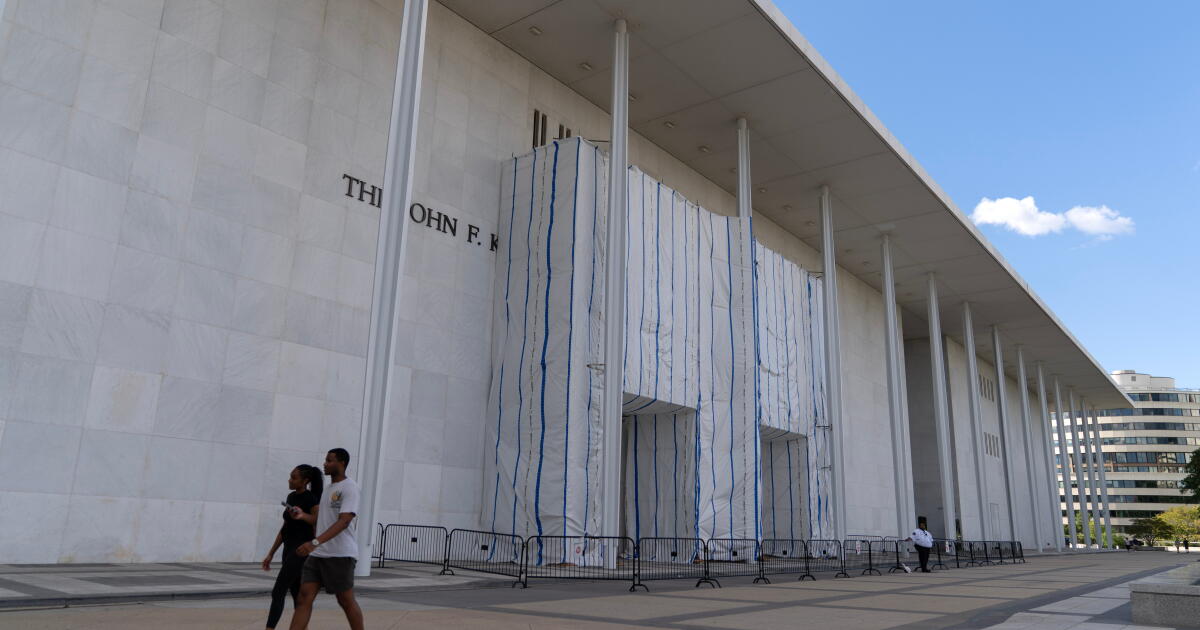
Like any other building from 1971, or a democracy created in 1776, the Kennedy Center could use some attention and possibly some structural repair. But I was a vice president at that arts center in Washington, and I can tell you that maintenance is almost certainly not why it closed its doors last month.
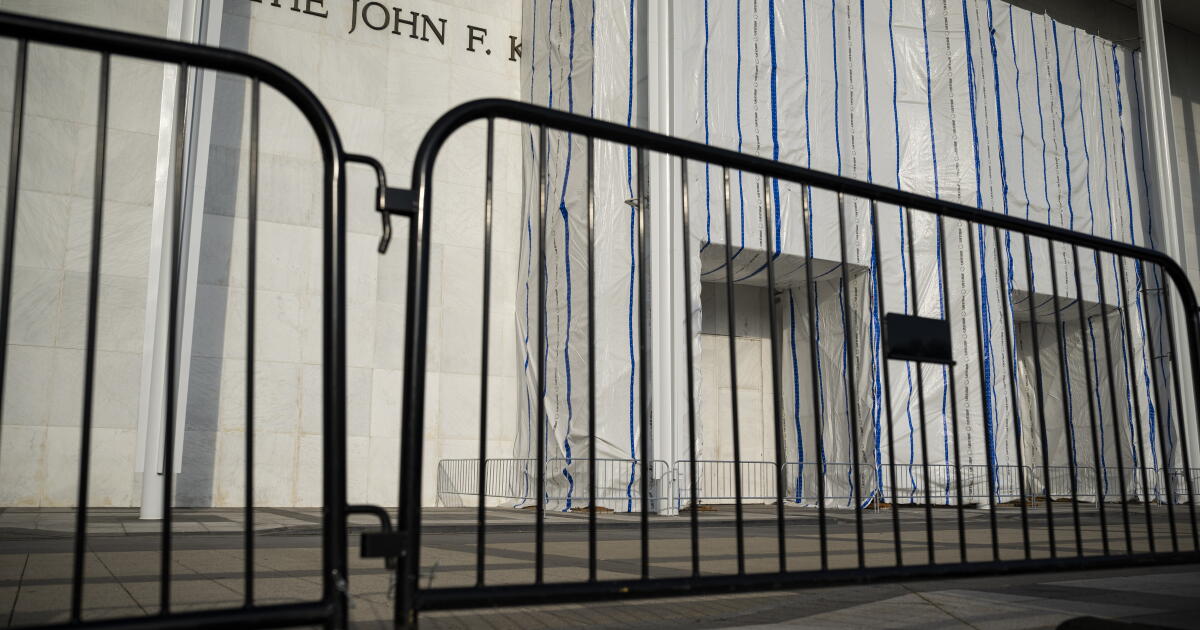
Officially, it’s closed because a section of the Grand Foyer ceiling gave way in a storm, plaster crashing to the floor, and the building needed to be shut down for safety. The Justice Department itself has argued in court filings that there is no real emergency requiring the closure. The board, meanwhile, has approved a quarter-billion-dollar renovation plan, put together without competitive bidding, while the president muses openly about tearing the building down altogether if his own name isn’t affixed to it. This administration is effectively bulldozing arts infrastructure in an attempt to abolish an infrastructure of the imagination.
I watch all of this from the outside now. When the new “leadership” took over last year, my team and I were among the first let go. My department worked on free public programming, on creative equity, on cross-sector community development and on measuring the social impact of art. That we were among the first out the door probably tells you everything you need to know about who was put in charge of the place.
As an American, as an artist and as a former member of its labor force, I understand that the Kennedy Center is more than a building. It is a living memorial to a president who was taken from us too soon, a man who had the audacity to aim for the moon before the science existed to get us there. To honor that kind of visionary, this country built a center for the creative impossible, and gave it his name.
And true to that name, my job at the Kennedy Center was to investigate the correlation between the arts economy and the economy of civic aspiration. As a team, we believed that inspiration erodes apathy and yields empathy. The building is a container of federal infrastructure, but the arts that imbue the Kennedy Center make the argument that inspiration itself is part of the infrastructure of our democracy. An arts center is built to ask: “What are the conditions necessary to dream together in public?”
Who, if not artists, are the authors of the public imagination? When a baby is born, or your daughter gets married, do you read a piece of legislation to commemorate the occasion or do you quote a poem, or dedicate a song? Who, if not artists, might light the path to a post-fear economy?
So why invade an arts center? What could possibly be gained by shuttering a national citadel for creative excellence? How perverse that a president whose policies have underfunded education and the arts would gut a national sanctuary for curiosity, and then demand that his name be emblazoned on the shell of what was. This president has used executive orders to intimidate artists, banned writers and journalists, sabotaged arts education, created oppressive red lines within the National Endowment for the Arts and threatened philanthropic organizations that fund arts and culture, and then he turns around and wants his name on our national cultural center.
When I worked there, the Kennedy Center wasn’t perfect. No institution is. But the business was viable, the staff was talented and reliable, and the work we made together would, often enough, touch something close to the sublime. Our job, like those of so many arts workers across the country, was to activate creative magic in service of social cohesion and well-being.
This is what gets lost in the noise of storms and lawsuits and renovation budgets: Entertainment is everywhere, but inspiration is rare. Sometimes you are sitting in a dark theater with strangers and the right note gets struck, and you hear it with your ears but you feel it somewhere else entirely. In the gut and heart. And the person next to you, a stranger, feels it too, at the exact same moment. You can practically feel the room change. All that magic can happen in one theater, and the Kennedy Center has nine of them. If a solar panel uses the energy of the sun to power a building, an intentionally run theater can use the energy of its inspired audiences to power a city.
Art holds memory. It also holds the horizon, the sense of what a country could still become. Patriotism as enacted by the creative community takes the American experiment seriously enough to question, examine, remember what we’ve forgotten and catalyze collective American dreaming. That is what the Kennedy Center was named for: a president who dreamed of a country unafraid of beauty, unafraid of grace.
Thankfully, America’s creative labor force tirelessly stewards that sense of creative provocation and patriotic inquiry. It is alive everywhere, including in the work of individual artists such as Carrie Mae Weems or in the work of collectives such as For Freedoms and their “America, the Beautiful” initiative.
We, the chronically underwhelmed citizenry of the United States, can’t afford one less pillar of creativity. We should be fighting to reconstitute any and all artistic institutions with an eye toward an inspired future.
Marc Bamuthi Joseph, a spoken-word artist and actor, was vice president for social impact at the Kennedy Center.
The 49th Kennedy Center Honors gala will go on despite the recent closure of the Kennedy Center, with the event moving to the Capital One Arena in Washington, D.C., on Dec. 7. The honorees and a broadcaster for the program will be disclosed at a later date.
The annual event will take place amid an ongoing legal battle as President Trump attempts to add his name to the building.
Hours after a federal judge blocked the president’s attempt to restore his name, the Kennedy Center’s board voted on Sept. 15 to shutter the venue for renovations. Trump, however, threatened on social media to block the $250-million renovation, which he initially proposed, if his name weren’t added to the facade.
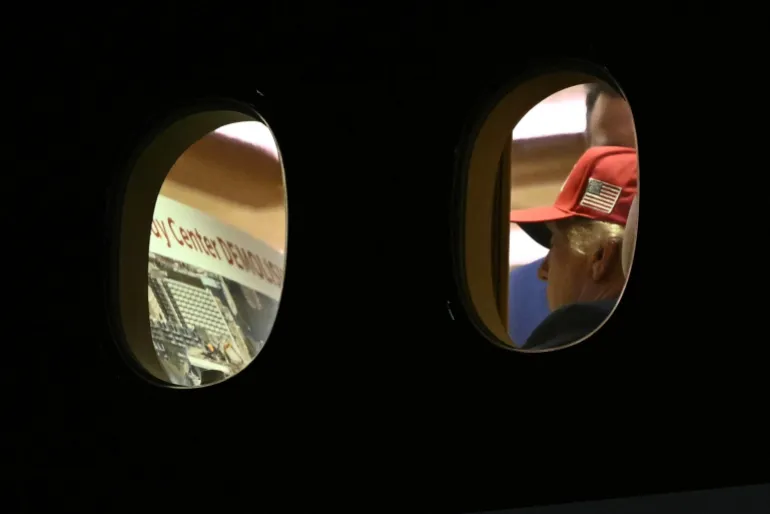
In mid-September, a picture of the president aboard Air Force One reviewing plans that were titled “Kennedy Center Demo[lished]” prompted panic as architectural, preservation and civic organizations asked the court for a “neutral officer to protect the building and institution.”
A federal judge ordered Kennedy Center leaders to provide 30 days’ notice before any changes, including demolition.
Last year’s Kennedy Center Honors gala, which recognizes artists who have contributed to American culture, was hosted by Trump and televised on CBS and Paramount. The ceremony, honoring Sylvester Stallone, Kiss, Gloria Gaynor, Michael Crawford and George Strait, earned the lowest ratings in its history. It was not announced whether Trump would return as master of ceremonies for this year’s event.
The 39th annual Hispanic Heritage Awards — which will honor the contributions and accomplishments of Latinos in the U.S. and Latin America — will air nationwide Friday on PBS.
In a historic decision by the Hispanic Heritage Foundation, which presents the annual awards, the event departed from its home base of Washington. Instead, Latino luminaries gathered at the Orchestra Hall in Minneapolis, where the celebratory occasion was taped for broadcast Sept. 10.
The move to the Midwest was a timely decision for members of the Hispanic Heritage Foundation, a nonprofit organization established by the White House in 1988. They took into consideration Minnesota’s response to a large-scale immigration enforcement campaign that began in December, known as “Operation Metro Surge.”
“We went to Minneapolis because we wanted to recognize what’s great about our community, [our] courage, resilience, strength, unity and looking out for each other,” said Antonio Tijerino, president and CEO of the Hispanic Heritage Foundation, in a phone call with De Los.
The Department of Homeland Security called the undertaking the “largest DHS operation ever” earlier this year on X, with an estimated 2,000 agents deployed to the Minneapolis–St. Paul metropolitan area. Thousands of Minnesota residents rallied against the tactical and militant methods used by Immigration and Customs Enforcement agents.
Civil unrest hit a boiling point following the killings of Renée Good and Alex Pretti on Jan. 7 and 24, respectively, by federal agents.
“ We actually went with a delegation of national Latino leaders to offer our support of the community during this crisis and we were overwhelmed by the heroism,” said Tijerino, who recalled a group visit to Minneapolis in February. There, he and his colleagues learned more about the rapid response efforts underway in the city.
“It was an American story that we wanted to tell,” he added.
At the 39th ceremony, Los Tigres del Norte presented a bit of that story to the people of Minnesota — who were collectively honored with the Humanitarian Award.
“Peaceful, hard-working communities of immigrants and refugees found themselves in fearful chaos as more than 4,000 parents, grandparents, neighbors, friends and families were taken by force, U.S. citizens among them,” Los Tigres del Norte announced in English while presenting the award. The players closed the show with a rendition of their 1984 song “Jaula de Oro,” which speaks to the plight of the undocumented community.
“I think Minnesota [is] a reflection of all of our Latino communities across the nation,” said Henry Jiménez, president and CEO of Propel Nonprofits, who was one of the individuals on stage representing the people of Minnesota.
“It uplifted the people. I think people felt validated for all of their hard work and effort that they’ve had to endure, not just the last couple months, but really a lifetime of work,” said Jiménez, whose organization helps consult and raise funds for budding nonprofits.
The relocation of the Hispanic Heritage Awards also comes as D.C. deals with the temporary closure of the John F. Kennedy Center for the Performing Arts — which hosted the Hispanic Heritage Awards in years prior.
The Kennedy Center closed its doors indefinitely on Sept. 15 after an inspection found acute public safety concerns, among them roofing issues. In a letter to Congress, various former employees allege that leadership was aware of the issues but halted plans for repair in April.
The closing also comes after a federal judge blocked the board’s decision to include President Trump’s name on the building in September. Trump’s takeover of the Kennedy Center began in February 2025, when he dismissed half its board members and installed himself as chairman.
“We were [at the Kennedy Center] for a very long time. It brought a lot of prestige and to fill a historic venue like that with Latinos was wonderful,” said Tijerino. “After many years of being at the Kennedy Center, we decided we wanted to go to another venue.”
In April 2025, the Hispanic Heritage Foundation announced that it would host its 38th annual awards at the Warner Theater instead; previous versions of the ceremony have also taken place at the historic Warner Theater venue, including in 2015 for the 28th Annual Awards and 2017 for the 30th celebration.
Hosted by comedian Anjelah Johnson-Reyes, the other honorees of the 39th Hispanic Heritage Awards included Venezuelan artist Oscar D’León, the salsa singer behind notable hits such as “Llorarás” and “Me Voy Pa’ Cali,” who received the Legend Award for his lifelong contributions to the genre.
Chilean singer-songwriter Mon Laferte, the vocal powerhouse behind power ballads like “Tu Falta de Querer” and “Amárrame (feat. Juanes),” also received the Social Justice Award. The Latin Grammy-winning artist has long championed feminist causes and challenged sexual harassment in the entertainment industry — a topic central to her 2024 Netflix documentary, “Mon Laferte, Te Amo.”
Puerto Rican rapper Eladio Carrión, whose trap flow famously featured in songs like “Coco Chanel” with Bad Bunny and “Sigue Bailandome,” was also honored with the Inspira Award.
Mexican singer-actor Ximena Sariñana, whose early composition appeared on the soundtrack of the 2002 teen film “Amar Te Duele,” received the Music Award as well.
Following the success of their Minneapolis awards show, the Hispanic Heritage Foundation is now toying with the idea that the ceremony can take place anywhere where there is a strong Latino presence.
“Who knows if L.A. is the [next] spot!” said Tijerino, who hails from Long Beach,
Though Jiménez assures that he is not swayed by any particular city at the moment, he offers one idea: “I hope that the community that’s chosen [to host] doesn’t have to go through a difficult time to be chosen.”
Kennedy Center officials were long aware of serious structural issues that they cited as new problems after the abrupt decision to close the performing arts venue this month, a group of former employees allege in a letter to Congress.
The center’s executive director and chief operating officer, Matt Floca, did not treat the roofing issues as priorities and in April halted a funded plan to address them, according to the letter Thursday signed by David Seide, a lawyer representing the anonymous whistleblowers.
Floca denied their allegations, saying recent investigations of the leaks exposed new hazards at the building.
In a September court declaration, Floca noted there were “acute risks to public safety” when the aging building temporarily closed its doors after an inspection of a deteriorating roof terrace canopy and a partial ceiling collapse. The former employees, however, claim those “acute” issues were known previously by Floca, who joined the Kennedy Center as vice president of facilities in 2024.
“More than one year ago, Mr. Floca had requested and received the needed funds to remediate the New Problems he references,” Seide wrote, citing President Trump’s tax cut and spending bill that he signed in the summer of 2025. “Yet six months ago – with the funds in hand – he stopped the remediation process from moving forward.” In the legislation, Congress earmarked $257 million for the Kennedy Center.
The letter, first reported by The New York Times, is the latest in a series of tensions over an iconic Potomac River waterfront building that has become a focus of the Republican president in his remaking of the nation’s capital in his second term. Trump has installed his own leadership to the center’s governing board and had his name placed on the building before a judge ruled the new lettering was illegally added and ordered it removed.
The Trump-aligned board voted earlier this month to close the center indefinitely for repairs hours after U.S. District Judge Christopher Cooper blocked its plans to return Trump’s name to the building.
Cooper has told the center that it must give 30 days’ notice before making any major physical changes to the building, including demolishing it, as Trump has threatened. The Kennedy Center leadership also must file a status report no later than Friday on the temporary closure and emergency repairs.
Asked for a response to the whistleblowers’ claims, a Kennedy Center spokesperson sent a written statement from Floca, who said the safety of patrons, artists and staff is his priority.
“The Kennedy Center has known for years that the roof overhang leaked,” he wrote. “What we did not know until this summer was how far the damage had spread inside it.”
Floca added that rather than halting design plans in April as the whistleblowers alleged, he had reassigned the work to a more comprehensive plan because the contractor’s quote for the initial plans were nearly three times the expected cost.
“That was a change in the approach to procuring and delivering the work, not a determination that the work was unnecessary,” Floca wrote.
Rhode Island Sen. Sheldon Whitehouse, the top Democrat on the Senate Committee on Environment and Public Works, wrote Floca on Thursday after receiving the whistleblower letter. Whitehouse said the documents showed Kennedy Center leadership had “hoarded” congressionally appropriated funding for repairs “while blaming previous leadership for the state of repairs.”
“My initial investigation into misconduct at the Center focused on cronyism and corruption, with documents demonstrating considerable excessive and self-serving spending under President Trump’s chairmanship,” Whitehouse said. “The documents that I attach today seem to reveal deeper financial mismanagement.”
A spokesperson for the committee’s Republican majority did not immediately reply to a request for comment Saturday.
CENTER Parcs has been blasted for offering a 45-minute Christmas activity – which costs an extra £300 per family.
The “Twilight Elf Visit” involves two members of staff in elf costumes visiting a family in their lodge for less than an hour.
Parents have slammed Center Parcs for its pricey new Christmas experience
The visitors will tell stories and share “festive surprises” and “magical moments”, including making a wish for Santa, posing with the elves and receiving keepsakes including a festive ribbon and bauble.
The activity is now available to book in November and December across all locations – but for a very steep price.
Sign up for the Travel newsletter
Thank you!
For one child, the cost is around £300 while for two it’s £350, with the price rising by £50 for every extra child – up to £550 for six kids.
It’s not clear if these prices will change as Christmas approaches.
One said on a Facebook post: “Wow. That’s crazy money.”
Another added: “It’s only 45 mins! It’s a shocking price.”
A third moaned: “What in the name of Scrooge is this? Surely those prices can’t be correct?”
But some families said they would go for it, with one explaining: “Ooh my child (adhd/autistic) would have ADORED this as they loved the elves etc and we’d have happily paid it as they struggled in most settings.
“I think it sounds great!”
The activity description states: “When dusk begins to settle over the forest, a very special Christmas adventure awaits.
Two elves come to the lodgesThe park has revealed the other Christmas events returning this yearCredit: Center ParcsWinter Wonderland is also returningCredit: centerparcs
“Gather in the comfort of your lodge as two magical elves arrive with an enchanting tale to tell.
“Through personalised storytelling, festive surprises and magical moments, you’ll discover the secret connection between the forest and the North Pole, and the important role Christmas wishes play in keeping that magic alive.
“Together, you’ll create a special Christmas wish, enjoy thoughtful keepsakes and share magical moments designed to capture the wonder and belief of the season.
“With personalised touches throughout, it’s a truly memorable way to spend an evening together, creating festive family moments you’ll treasure for years to come.”
The cost comes on top of the holiday itself – we’ve found four-night stays on December 7 for £779, in a basic Woodland Lodge in Sherwood Forest (or £859 for Longleat).
Center Parcs has also revealed the return of its Winter Wonderland from November 6 until January 4.
Taking place every Wednesday and Saturday at 5pm, Santa’s Parade sees his sleigh glide through the village accompanied by a festive cast of entertainers.
Meanwhile, the Enchanted Light Garden invites guests into twinkling light displays, where storybook characters come to life daily from 4pm to 9pm.
Children can also enjoy Elf Playtime, collect their Elf Explorer Passport, and dance along at the Elf Disc.
Lee Carpenter, Head of Leisure at Center Parcs, said: “We’re passionate about creating memorable experiences for families, especially during the festive season.
“As we look ahead to Winter Wonderland this year, we want to continue building on our incredible offers to create something truly immersive and unique, and the Twilight Elf experience brings that vision to life.
“Together with the return of guest favourites and a selection of newly enhanced activities, it offers even more opportunities for families to embrace the magic of Christmas and enjoy a festive break they’ll never forget.”
CENTER Parcs has become the first holiday operator to begin the roll out of new sensory libraries at all of its villages to cater for families with neurodivergent children.
Collaborating with specialist SEN consultancy SENNIES, it has officially opened its sensory library at its Elveden Forest village, where families will be allowed to borrow items for free during their stay.
Center Parcs has become the first holiday operator to begin the roll out of new sensory librariesCredit: SWNSCollaborating with specialist SEN consultancy SENNIES, it has officially opened its sensory library at its Elveden Forest villageCredit: SWNS
Products such as noise-reducing ear defenders, wipe-clean boards, calming lights, fidget toys, feelings wheels, visual timers and pop tubes will be available for families to choose from.
The short break provider plans to roll out libraries at all of its villages by 2028.
Sign up for the Travel newsletter
Thank you!
It follows research of 500 parents and legal guardians of neurodivergent children and those with additional needs, which revealed 80 per cent take a destination’s ability to meet their child’s individual needs into account when deciding where to go.
A further 80 per cent said busy or crowded environments can be challenging for their child, with 75 per cent sometimes avoiding activities or facilities entirely because they prove overwhelming.
Georgia Sargeant, CEO and founder at SENNIES, speaking in partnership with Center Parcs, said: “No two neurodivergent children are the same, so there is no single adjustment that works for every family.
“What matters is choice, a considered range of options from sensory resources and communication aids through to support for self-regulation and co-regulation, so a family can pick what works for their child that day.
“This library turns families’ feedback into practical support and shows how holiday providers can respond meaningfully to changing needs.”
The decision to launch the library comes as 44 per cent of parents polled said many holiday providers don’t offer adequate provisions for their children.
With 70 per cent agreeing further support is needed for neurodivergent children and kids with additional needs.
It emerged 72 per cent of mums and dads bring sensory equipment or comfort items from home on every or most trips.
And 68 per cent said access to sensory and accessibility aids at their destination would improve the holiday experience for their child.
While a further 68 per cent also said if they could obtain a variety of sensory items to loan for the duration of their getaway, it would help their family feel more supported.
Department for Education figures show more than 1.8 million pupils in England now have special educational needs – this is an increase of 5.2 per cent in a year.
And it has seen NHS assessment waitlists reach more than 240,000.
While the Children’s Commissioner’s latest annual briefing found children’s referrals, involving suspected autism, rose 47 per cent in a single year.
And neurodevelopmental referrals increased by 24 per cent.
Richie Williams, village director at Center Parcs Elveden Forest, said: “The number of families looking for more thoughtful, practical support is growing.
“This pilot is the beginning of a journey, and we will listen closely to families using it and learn from their feedback as we consider what comes next and a future rollout to other villages.”
The family holiday park has become the first holiday operator to begin rolling out sensory libraries across all of its villages, offering free-to-borrow sensory aids for families with neurodivergent children
Elveden Forest is the first of the Center Parcs villages to have a sensory library(Image: Cameron Fillery)
Center Parcs has become the first holiday operator to begin the roll out of newsensory libraries across all of its villages, catering for families with neurodivergent children.
Working alongside specialist SEN consultancy SENNIES, the family resort has officially unveiled its sensory library at its Elveden Forest village, where families can borrow items free of charge during their stay. The short break provider intends to roll out the libraries across all of its villages by 2028.
Items such as noise-reducing ear defenders, wipe-clean boards, calming lights, fidget toys, feelings wheels, visual timers and pop tubes will be on offer for families to select from.
Georgia Sargeant, CEO and founder at SENNIES, speaking in partnership with Center Parcs, said: “No two neurodivergent children are the same, so there is no single adjustment that works for every family.
“What matters is choice, a considered range of options from sensory resources and communication aids through to support for self-regulation and co-regulation, so a family can pick what works for their child that day.
“This library turns families’ feedback into practical support and shows how holiday providers can respond meaningfully to changing needs.”
The decision to launch the library follows a survey of 500 parents and legal guardians of neurodivergent children and those with additional needs, which found that 44% believe many holiday providers fail to offer sufficient provisions for their children.
For 80%, busy or crowded environments can prove challenging for their child, while 75% sometimes avoid activities or facilities altogether because they are overwhelming.
Almost two thirds (68%) said that access to sensory and accessibility aids at their chosen destination would enhance the holiday experience for their child.
Similarly, 68% also indicated that if they could borrow sensory items for the duration of their break, it would help their family feel more supported. Currently, 72% of parents bring sensory equipment or comfort items from home on every or most trips.
Department for Education figures reveal that more than 1.8 million pupils in England now have special educational needs – an increase of 5.2% in a year. This has resulted in NHS assessment waiting lists reaching more than 240,000.
Meanwhile, the Children’s Commissioner’s latest annual briefing discovered that children’s referrals involving suspected autism rose 47% in a single year, while neurodevelopmental referrals increased by 24%.
Richie Williams, village director at Center Parcs Elveden Forest, said: “The number of families looking for more thoughtful, practical support is growing.
“This pilot is the beginning of a journey, and we will listen closely to families using it and learn from their feedback as we consider what comes next and a future rollout to other villages.”
WASHINGTON — President Trump on Monday headed into a week full of high-stake meetings with world leaders after spending a 72-hour period banning reporters from the White House, mulling whether it was time to “blow … up” Iran, and proposing to house military drones and snipers in his triumphal arch in the nation’s capital.
The weekend — which also included the announcement of a security deal over Greenland and the creation of a new “A.I. Force” — captured an American president operating unpredictably across multiple fronts even as each one drew friction. The actions now stand to color the backdrop of a week that will feature meetings with world leaders at the United Nations General Assembly in New York and a state visit by Chinese President Xi Jinping in Washington.
Each of those moves carries its own political weight ahead of the diplomatic talks, but also ahead of the midterm elections, where these topics are front and center in key races.
Trump’s handling of the Iran war, its subsequent shocks to the global economy, his push to fast-track the development of artificial intelligence and the Greenland agreement are likely to come up in meetings with world leaders. His deal with Denmark to bolster U.S. military presence in Greenland, a territory Trump has repeatedly tried to annex, is expected to be signed Tuesday in New York, though action is still needed by the Danish and Greenland governments before it can be enforced.
While all the details of the Greenland deal are not public yet, Trump has said it is a “dream come true for the United States of America.”
“This solution is a great one for the United States of America, Denmark, Greenland and all of our Allies,” Trump wrote on social media Friday. “We look forward to working with the wonderful people of Denmark and Greenland toward a magnificent future with respect to this large, and highly strategic, parcel of land. We will be very protective of it.”
In an interview Sunday, Trump also indicated that he was trying to make a decision on Iran as the war stretches into its eighth month. The president said he would “probably be open” to meeting with Iranian President Masoud Pezeshkian during the U.N. General Assembly.
“My question is, if and when do I blow the entire nation up?” Trump told Fox News. “They better behave.”
Of all the actions Trump took, the press dispute has become the most contentious and drawn an immediate legal response. Three major news outlets — CNN, MS NOW and Politico — sued the Trump administration Monday for banning their reporters from the White House grounds, and major television networks suspended their pool coverage of the president’s activities.
In a joint statement, the organizations said the White House has acted “without notice or process” and called the arbitrary decision a “blatant violation” of the 1st Amendment.
Trump, meanwhile, argued Monday that the banned news outlets are “corrupt” and a “threat to our national security.”
Vice President JD Vance defended the press ban.
“He’s not banning media outlets. What he’s doing is saying we’re not going to give you special access to the White House if you engage in what is effectively propaganda,” Vance said Monday, arguing that the three outlets push out “negative” coverage of Trump.
The tense showdown between Trump and the White House press corps led to audio problems during the president’s ribbon-cutting ceremony for a new helipad on the South Lawn. Without television cameras and microphones set up by the major TV networks, it was impossible to hear what Trump was saying through the White House’s official YouTube stream, signaling further technical difficulties in the week ahead.
Behind the public displays of control, news reports have painted a picture of a president increasingly frustrated by the lack of credit he feels he is owed. At a recent closed-door meeting, reported by the Wall Street Journal, Trump told advisors he was aggravated that his allies hadn’t lauded him enough for his efforts to take over the Kennedy Center or other accomplishments made during his second term.
Trump has tried to put his name on the building’s facade and run into resistance from Democrats, arts patrons and a federal judge who blocked the move last week. Trump was then photographed aboard Air Force One looking at a large printout appearing to show demolition plans for the center.
Over the weekend, Trump posted on social media a link to a news article that claimed he was seeking to fix “safety hazards” at the performance center. He then posted an image of him watching the Western Hemisphere with the words, “His Hemisphere,” and wrote that his proposed triumphal arch near the National Mall would be used as a military complex for drones and snipers.
Trump also announced that he would be creating the “A.I. force,” modeled after the Space Force he launched during his first term, to ensure the country does not “in any way hinder or stifle the growth of the industry.” The announcement came amid growing backlash to data centers and the fast-paced development of artificial intelligence, an issue that in recent weeks has prompted stark warnings about the technology’s power and its threats to humanity.
Tech executives, including Dario Amodei and Sam Altman, have even called for a slowdown on the technology’s advancement and last week, four leading AI companies — Anthropic, OpenAI, SpaceXAI and Google — faced a lawsuit claiming they made an illegal deal to slow the pace of their respective AI development.
Trump’s announcement over the weekend comes as lawmakers, including congressional Republicans in tight races, have called for new guardrails on the technology.
Despite technology becoming a political flashpoint during the midterms, Trump has dismissed concerns about AI as a hoax and asserted that those who oppose data centers are intent on being “backwards and poor.”
Sen. John Kennedy (R-La.) is among the lawmakers who have called for action on regulating the technology, and he has warned that not doing so could come at a cost on Nov. 3.
“We really need to send a memo around explaining we’ve got midterm elections coming,” Kennedy told Politico. “I may send that out.”
SACRAMENTO — California’s growing data center industry will have more oversight after Gov. Gavin Newsom signed seven bills to regulate the industry’s electricity costs and track water consumption.
The new laws come amid growing public concerns about environmental and economic impacts of the massive facilities, and are aimed at protecting consumers from growing electricity costs and tracking the centers’ immense energy and water consumption.
Newsom on Monday criticized President Trump for dismissing calls to curtail or regulate the facilities and heralding them as “money machines,” even as states and communities across the nation take action to ban or regulate the centers.
“While the Trump administration moves toward deregulation, communities are left to deal with the consequences — higher electricity demand, grid constraints, water use, and pollution,” Newsom said in a written statement Monday. “With these laws, we are ensuring that Californians remain in the driver’s seat — and that those profiting from data centers aren’t doing so at our expense.”
Senate Bill 886 by Sen. Steve Padilla (D-Chula Vista) and Assembly Bill 2383 by Assemblymember Rick Chavez Zbur (D-Los Angeles) establish special rules for data centers’ electrical use. The law orders California Public Utilities Commission to create special requirements and rates for data centers’ use of electricity, including the costs for new power and for infrastructure upgrades.
Scores of other states have already passed similar legislation, according to utility groups.
Two bills by Assemblymember Diane Papan (D-San Mateo) will require oversight of data center water consumption. One measure will require data center operators, when applying for a business license or permit, to disclose an estimate of their water use and the expected source of water. Another will bar cities and counties from approving a new or expanded data center unless the developer submits a water assessment and a water scarcity plan, and will require developers to cover the cost of any water system upgrade that is necessary.
Newsom vetoed a similar Papan bill last year that would have required new data centers to disclose their expected water use. The governor said he was “reluctant to impose rigid reporting requirements” on “this critically important digital infrastructure” without understanding the full impact on the businesses.
But over the past year, a wave of data center pushback has swept the nation, including California, where dozens of cities and counties have proposed or adopted moratoriums on the facilities. While California lawmakers have hesitated to pursue outright moratoriums and bans that the public is calling for, the political tide has nevertheless turned against the facilities.
Data centers have existed for decades but are rapidly expanding because of the rise of artificial intelligence, or AI. The centers help power everything from streaming services to videoconferencing calls.
Data centers in California are typically smaller than the mammoth, 500+-megawatt AI facilities making headlines in other parts of the country. Electricity costs and state regulations on gas-powered generators limit the vast majority of them to under 100 megawatts.
But as proposals increase in number, opposition has been fierce and growing. A Public Policy Institute of California poll from July showed that 73% of residents oppose the construction of data centers in their communities.
Philip White, a software engineer from Cornwall, has invented a way of bringing those costs down when it comes to booking a family holiday at one of Center Parcs six sites
Philip White’s widget could help you save costs(Image: Supplied)
A dad has invented a tool that helps Center Parcs customers claim back £100s, even after they’re already booked and paid.
Center Parcs is one of the UK’s most beloved holiday parks. It runs six holiday villages throughout the country. It is especially popular for short getaways in its car-free woodland settings, which are perfect for kids to explore while parents relax in the hot tubs and saunas.
While few would question how good Center Parcs’ offering is, it regularly comes in for criticism on price. The holiday park chain ranked close to the bottom in Which?’s latest holiday park survey, almost entirely because of price.
“It’s extraordinarily expensive, at more than twice the price of budget rival Haven. Activities cost even more on top, and you need to secure your preferred slots weeks in advance. The two-star rating for value for money is the joint lowest in our survey. You could save a fortune by choosing a better-rated rival,” the Which? survey noted.
Do you have a travel story to share? Email webtravel@reachplc.com
Philip White, a software engineer from Cornwall, has invented a way of bringing those costs down.
“It started because we were on a family Center Parcs holiday. It was a great time. One of my relations booked straight away for a year later,” Philip told The Mirror. Center Parcs offers guests £50 off if they book again within 30 days of a stay.
As prices may rise or fall throughout the year, booking early can leave you out of pocket, despite the cash back. Which is why Center Parcs offers a ‘price promise’. “Our price promise means that if you see the same break offered for sale at a lower price at any time before you arrive for your break, you will be eligible for a refund of the price difference or a reduction in cost to meet the new price,” its website explains.
Rather than spending his time checking the Center Parcs website in the months before his family’s next stay, Philip created a widget that does the work for you. All you need to do is enter your name and booking details, and it will tell you if there’s been a price drop. Then you can claim the difference back from Center Parcs.
“If you notice the cost drops, they refund the difference against your stay. But they don’t do that for you automatically; you have to manually check it all the time. I tried to automate it on my own. We caught the specific lodge we were trying to get dropped by £150, which was a good saving, especially with the cost of living,” Philip said.
Another feature of Philip’s widget helps guests bag slots on popular activities. “When we were there, a lot of the popular activities for our toddlers were booked out. With Parc Watch, can also check when new bookings open up.”
In the majority of categories in the Which? survey, Center Parcs scored impressively. The company received four stars for activities, entertainment and facilities, alongside quality of accommodation and cleanliness. It secured three stars for customer service and food and drink.
However, its low position in the table, fifth from bottom, came from its value for money rating of merely two stars. It ranked as the third most costly among all the holiday parks in the survey. Even positive assessments of the parks frequently reference the cost. One recent review of Center Parcs Woburn Forest noted: “Amazing place to holiday. Personally, I felt the prices of things on-site were a little high, and that was even going outside of term-time; however, you cannot fault the fun and wonder of being at these parks.”
The UK’s best and worst holiday parks
(Name of resort, overall customer score)
Potters Resorts – 83%
Hoburne Holidays – 81%
Darwin Escapes – 80%
Landal Parks – 80%
Waterside Holiday Group – 80%
Shorefield Holidays – 76%
Away Resorts – 75%
Bluestone Wales – 75%
Park Leisure UK – 75%
Highland Holidays – 74%
Lyons Holiday Parks – 74%
Largo Leisure – 73%
Park Holidays UK – 73%
Warner Coastal Villages – 73%
Forest Holidays – 72%
John Fowler Holidays – 72%
Center Parcs – 69%
Haven Holidays – 68%
Parkdean Resorts – 68%
Butlin’s – 63%
Pontins – 61%
Based on a survey of 2,221 Which? Connect panel members and general public conducted in February and March 2026.
Is President Trump holding the Kennedy Center hostage? The allegation has been made at least twice, most recently by John F. Kennedy’s niece Kerry Kennedy, and earlier by Rep. Joyce Beatty (D-Ohio), an ex-officio member of the board, who has sued to keep Trump’s name off the building.
The Merriam-Webster dictionary defines “hostage” as, “a person taken by force to secure the taker’s demands.” Swap, “person” for the “Kennedy Center” and “taker” for “Trump,” and you have a pretty straightforward “yes.”
The ongoing Kennedy Center dumpster fire points to an unusual presidential obsession with the nation’s premier performing arts venue that dates back to Trump’s first term when he became the first sitting president in history to twice miss the annual Kennedy Center Honors.
In his second term, Trump turned that snub upside down by firing the board and strong-arming his way into being named chairman. If he expected to be welcomed into the arts community with open arms, he was gravely mistaken. His takeover resulted in a wave of high-profile cancellations that ultimately led to a massive dip in ticket sales. The exodus became even worse when the Trump-appointed board voted to add Trump’s name to the building late last year. The reaction, it seems, injured the president’s fragile ego and incurred his wrath.
By early February the president announced he would close the center for a two-year, $257-million renovation. Calling the historic venue “dilapidated,” Trump said he would be the one to restore it to glory. Behind the scenes another story was unfolding, and six months later the Washington Post reported that “ticket sales and fundraising collapsed” after Trump’s name was added to the building, “even as the center’s leaders publicly touted a financial turnaround.”
This week saw chaos at the venue that even the most seasoned journalists struggled to keep up with as the board voted to close the building on the same day that a federal judge upheld an order that Trump’s name could not be restored to its facade after he ordered it removed in late May.
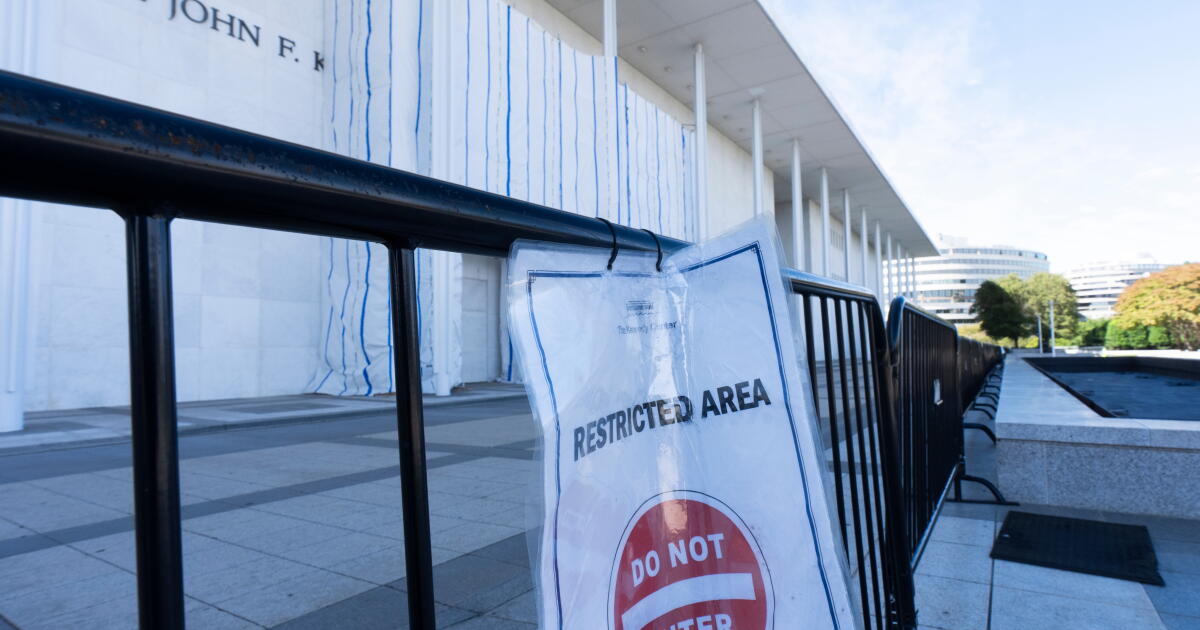
Trump took to social media to decry the decision, threatening to withhold his support for the renovation and noting that the center could be “ripped down” if he wasn’t formally honored with his name on the building. Despite a preliminary injunction barring the venue from closing, people were kicked out of the building and barricades erected in the name of public safety that same day.
Those prone to hyperbole might be tempted to call this presidential tantrum disguised in procedural clothes a constitutional crisis. Or you could just say that Trump has taken the Kennedy Center hostage. The taker wants his name on the building, and the center will not be released for renovation or reopening if that doesn’t happen.
In the meantime an image of Trump on Air Force One was captured that shows him holding a large placard that reads, “Kennedy Center DEMO[LISHED],” leaving concerned parties to wonder just what exactly the chairman of the board has in mind. Is he using a Sharpie at this very moment to slash a line through the image at the center on that board, or is it just a prop to be trotted out in a cruel bit of future social media hazing?
Getting lost in all the drama: a beloved arts venue has gone pointlessly dark, and the people who loved it are heartbroken. If no one is inside to hear the wind whistle, does it make a sound?
I’m Arts editor Jessica Gelt, willing to rustle up a ransom. This is your arts and culture news for the week.
You’re reading Essential Arts
Our critics and reporters guide you through events and happenings in the SoCal arts scene. In your inbox every Friday.
By continuing, you agree to our Terms of Service, which include arbitration and a class action waiver. You agree that we and our third-party vendors may collect and use your information, including through cookies, pixels and similar technologies, for the purposes set forth in our Privacy Policy such as personalizing your experience and ads.
The week ahead: A curated calendar
FRIDAY
Oliver Lee Jackson: Form Follows Feeling The Bay Area painter, sculptor, and printmaker’s work, created over decades, is inspired by the human figure in its composition and structure. Opening reception, 6-8 p.m. Friday; 10 a.m.-6 p.m. Tuesday-Saturday. Lisson, 1037 N. Sycamore Ave. lissongallery.com
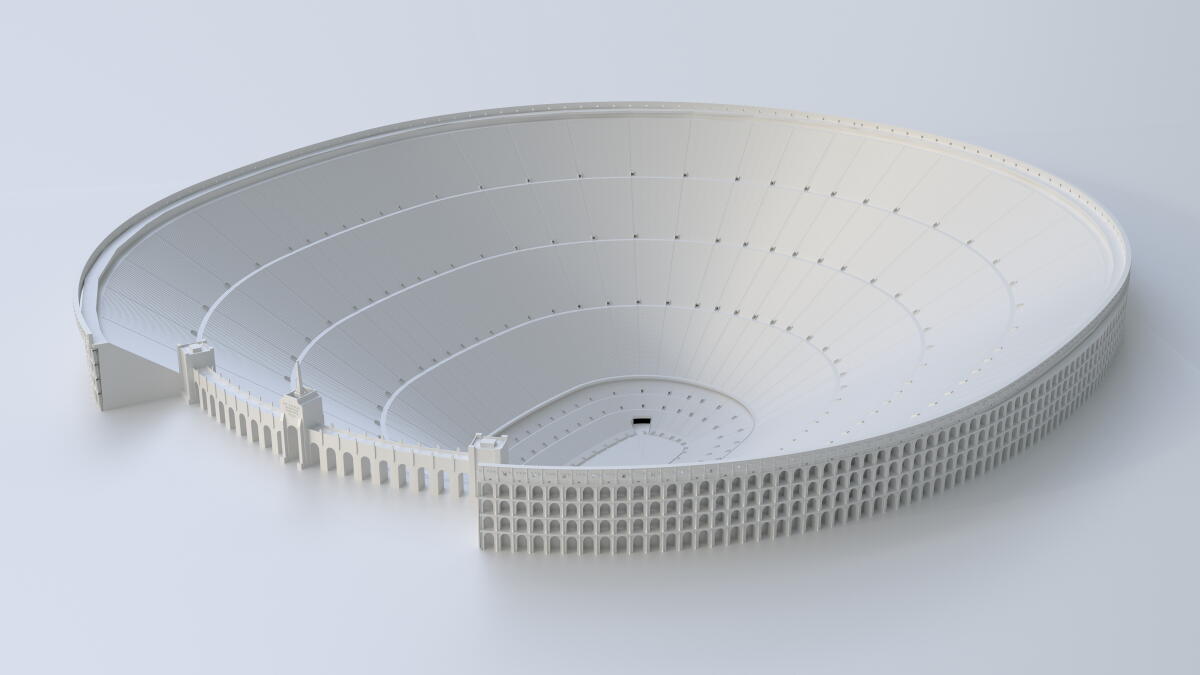
“Vitruvian Figure (Los Angeles Memorial Coliseum),” 2026, 3D model by Paul Pfeiffer.
(Paul Pfeiffer/Perrotin)
Paul Pfeiffer: Olympia In new work focused on Los Angeles, the artist explores the intersection between media, spectacle, architecture and the body ahead of the city hosting the 2028 Olympic Games. Opening reception, 6-8 p.m. Friday; Pfeiffer in conversation with Britt Salvesen, 3 p.m. Saturday; exhibition, 10 a.m.-6 p.m. Tuesday-Saturday, through Nov. 7. Perrotin, 5036 W Pico Blvd. perrotin.com
SATURDAY
“Couple walking, Park Avenue,” 1960.
(Estate of Roy DeCarava)
Roy DeCarava: the sound i saw The exhibition presents more than 130 images created between the late 1940s and 1960s, depicting the photographer’s intense interest in the relationship between the visual and the aural. Accompanying the exhibition, in the gallery next door, will be “SIDE B: the sounds,” a listening room featuring DeCarava’s personal playlists and favorite jazz album. Opening reception, 6-8 p.m.; exhibition runs through Oct. 31. David Zwirner Gallery, 606 and 6166, N. Western Ave. davidzwirner.com
Sutton Foster The two-time Tony winner and TV star performs Broadway hits and standards with Pacific Jazz Orchestra, featuring new arrangements by conductor Chris Walden. 8 p.m. The Soraya, 18111 Nordhoff St., Northridge. thesoraya.org
Mia Middleton: Summoning Cleo New work by the artist explores interpreting familiar forms through a surreal lens. Opening reception, 5-7 p.m. Saturday; exhibition runs through Oct. 24. Roberts Projects, 442 S. La Brea Ave. robertsprojectsla.com
Mrs. Warren’s Profession Real-life mother and daughter Cyndy Fujikawa and Nell Murphy star in this production of George Bernard Shaw’s 1893 play about a Victorian woman coming to terms with how she built a business empire. Directed by Michael Rothaar. Opening night, 8 p.m. Saturday; 8 p.m. Thursdays, Fridays and Saturdays; 3 p.m. Saturdays and Sundays (check website for exceptions), through October 25. Pacific Resident Theatre, 707 Venice Blvd, Venice. pacificresidenttheatre.org
Grammy Award-winning composer and bandleader Arturo O’Farrill and Afro Latin Jazz Orchestra open the Segerstrom Center for the Arts’ Jazz series.
(John Abbott)
Arturo O’Farrill & Afro Latin Jazz Orchestra The pianist and composer, a six-time Grammy winner, and his ensemble kick off the Segerstrom Center for the Arts’ 2026-27 Jazz series with Afro-Cuban rhythm, modern jazz harmony and big-band sounds. 8 p.m. Segerstrom Center for the Arts, 600 Town Center Drive, Costa Mesa. scfta.org
Other Places An alternative art fair devoted to contemporary art spaces and projects, plus workshops, readings, talks and performances. Noon-7 p.m. Angels Gate Cultural Center, 3601 S. Gaffey St., San Pedro. opaf.info
Karma The gallery presents solo exhibitions by painters Randy Wray (“Hothouse”) and Felipe Suzuki, one featuring vivid abstractions, and the other, work created through the lens of memory . Opening reception 6-8 p.m. Saturday; 10 a.m.-6 p.m. Tuesday-Saturday, through Oct. 24. Karma, 7351 Santa Monica Blvd. karmakarma.org
SUNDAY
Alexander Apóstol “Regime: Dramatis Personae” (2017), a series of black-and-white portraits of archetypal figures in both populist and authoritarian governments, uses photography to analyze the intertwining of art and political power in Latin America. 11 a.m.-5 p.m. Tuesday, Wednesday and Friday; 11 a.m.-8 p.m. Thursday; 11 a.m.-6 p.m. Saturday-Sunday; through Jan 3, 2027. Museum of Contemporary Art, 250 S. Grand Ave., downtown L.A. moca.org
Textile Alchemy: The Art of Reiko Sudō and NUNO More than 100 limited-edition textiles, along with numerous objects, including drawings, sketches, raw materials, tools, mock-ups, and prototypes, are part of the largest retrospective ever of the Japanese designer’s work created with her textile collective and other collaborators from throughout Japan, Through March 7, Los Angeles County Museum of Art, Resnick Pavilion, 5905 Wilshire Blvd. lacma.org
TUESDAY
The entrance of the Lucas Museum of Narrative Art in Los Angeles in Exposition Park.
(Ron De Angelis/For The Times)
Lucas Museum Of Narrative Art Where else will you see Luke Skywalker, Vincent Van Gogh, Norman Rockwell, Gordon Parks and Charles Schulz under one roof? The new museum officially opens Tuesday, featuring 100,000 square feet of space spread across more than 30 galleries, exhibiting a mind-bending range of visual storytelling. Check out our full coverage. Public opening, 10 a.m.-5 p.m. Tuesday; regular hours, 10 a.m.-5 p.m. Mondays, Wednesdays and Thursdays; 10 a.m.-5 p.m. Fridays; 9 a.m.-9 p.m. Saturdays; 9 a.m.-5 p.m. Sundays. Lucas Museum of Narrative Art, Exposition Park, 3800 S. Vermont Ave. lucasmuseum.org
THURSDAY
Bilal The Grammy Award-winning singer-songwriter delivers a blend of soul, funk, and jazz. Queens-born R&B musician Yaya Bey is the opening act. 8 p.m. Carpenter Center, 6200 E. Atherton St., Long Beach. carpenterarts.org
Each Other’s Hands: Trans Mutual Aid, 1966—1996 Oxy Arts, Occidental College’s community-based arts hub, presents an exhibition featuring the work of six L.A. artists. curated by Umi Hsu. The opening reception marks the launch of the 2026 CIRCA Queer Histories Festival hosted by One Institute. Opening reception, 7 p.m. Thursday; 11 a.m.-4 p.m. Monday-Saturday. Oxy Arts, 4757 York Blvd. oxyarts.oxy.edu
Arts Anywhere
Robert Wilson and the Civil Wars The newly remastered 4K version of Howard Brookner’s 1987 documentary, the essential yet long elusive film about the 1984 L.A. Olympics Arts Festival, can finally be streamed courtesy of Criterion Channel. It is everything LA28 doesn’t want you know. criterionchannel.com
— Mark Swed
Culture news and the SoCal scene
Christian Barillas, Melinda Page Hamilton and John Lavelle in “The Visit” at Pasadena Playhouse.
(Jeff Lorch)
Pasadena Playhouse opened a new production of Swiss dramatist Friedrich Dürrenmatt’s revenge tragicomedy “The Visit,” and The Times got in on the action. Contributor Jenelle Riley wrote a preview about how the new show features more than a dozen creatives behind the Playhouse’s production of Peter Shaffer’s “Amadeus” earlier this year, including director Darko Tresnjak and actor Jefferson Mays. “Amadeus” was a major hit, so Artistic Director Danny Feldman welcomed the team back with open arms.
Meanwhile, Times theater critic Charles McNulty attended opening night and declared the play a refreshing success (with a few caveats), and expressed “gratitude for the high-level production, gratitude for making the case for why the play still matters, and gratitude for the opportunity of allowing us to make up our own minds about whether the work earns its designation as a modern classic.”
Castulo Guerra as Tlahtoani Klion in a dress rehearsal ahead of its premiere of “Antigone: In the Language of the Kings” by the Latino Theater Company at the Getty Villa.
(Ariana Drehsler/For The Times)
McNulty also headed to the Getty Villa for its annual outdoor theater production. This year, the Villa’s outdoor stage marks its 20th anniversary with a co-production with Latino Theater Company of Sophocles’ “Antigone,” reimagined to take place in pre-conquest Tenochtitlan and performed in English, Spanish and Nahuatl. “If the drama is oversimplified, it nonetheless makes for a gripping spectacle,” McNulty writes.
Finally, a very busy McNulty checked out out a revival of José Rivera’s “Marisol” in an Open Fist Theater Company production at Atwater Village Theatre. The play originally opened in the early 1990s around the same time as Tony Kushner’s “Angels in America,” and McNulty says this new staging is gratifying because it allows a new generation to “embrace the play’s kinetic freedom.”
There are as many acrobats as actors in “Water for Elephants,” which is running at the Hollywood Pantages Theatre through Sept. 27 before heading to Segerstrom Center for the Arts (Nov. 10-22, with stops in Portland, Seattle, Reno, Sacramento, Tempe, Fresno and Eugene in between). Contributor Jenelle Riley headed backstage before opening night to watch the high-stakes performers warm up with poles, hoops, ropes and more. When the curtain raises, there’s a real circus onstage.
Enjoying this newsletter? Consider subscribing to the Los Angeles Times
Long Beach Opera will perform its 2026-27 season aboard the Queen Mary.
(Allen J. Schaben / Los Angeles Times)
Long Beach Opera announced its 2026-27 season, which is slated to be performed aboard the historic Queen Mary. First up: three works by composer Georges Aperghis, with vocal performances from coloratura soprano Habin Kim. Next: soprano Amanda Forsythe and Opera Prima in a performance of “Tormento Seicento.” Four additional productions include: an Anna Schubert recital, Peter Brook’s “Impressions of Pelleas,” Handel’s “Tolomeo” and Ana Sokolović’s “Svadba.”
The Jewish Federation of Greater Los Angeles and Daniel Gryczman, the federation’s board chair, sued Pasadena’s Norton Simon Museum for the return of the diptych “Adam and Eve,” a pair of 16th century masterpieces by Lucas Cranach the Elder. The suit was one of two filed in the state “since California and Congress passed a pair of laws bolstering U.S.-based claims to Nazi-looted artwork around the world,” reports the Times’ Kevin Rector.
Alan Roden hit a three-run homer and drove in a career-high four runs, and Dean Kremer yielded one hit over six stellar innings in the Minnesota Twins’ 8-0 victory over the Angels on Sunday.
Josh Bell had three hits and two RBIs for the Twins (73-83), who have won three of five overall after splitting four games at Angel Stadium with two shutout victories. Brooks Lee added three hits and scored three runs.
Roden had three hits in his first major league game this month, punctuated by a shot to right in the seventh for his third career homer, his first since Aug. 6, 2025.
Kremer (3-1) shut down the Angels in the third consecutive strong start by Minnesota’s deadline acquisition. He walked three, but struck out eight for his most in a start since April.
Minnesota allowed just two singles by the Angels, with Bailey Ober pitching the final three innings to earn his first career save.
Ryan Johnson (5-9) yielded three runs on seven hits and couldn’t get out of the fifth inning despite striking out six for the AL-worst Angels (60-96) in the home finale of their 11th consecutive losing season and their 12th straight non-playoff campaign, both the longest active streaks in the majors.
Bell and Roden singled in runs with two outs in the third, and Bell added another two-out RBI single in the fifth to chase Johnson.
Emmanuel Rodriguez got credit for a double in the sixth even though Jose Siri dropped his catchable fly ball to the warning track in center. Rodriguez beat Siri’s throw to score on a single by Ben Ross, who then stole second and scored when Zach Neto let the throw trickle into center.
Up next for the Angels: Yusei Kikuchi (1-6, 5.02 ERA) makes the 13th start of his injury-plagued season in West Sacramento against the Athletics on Tuesday night.
WASHINGTON — Thousands of people joined outside the John F. Kennedy Center for the Performing Arts on Friday evening to protest President Trump’s plans for the facility, lending their voices to a chorus of organizations and individuals who have been horrified that he might make good on his threat to close and tear down the storied institution.
The crowd streamed in from the nearest subway stop, crowding streets in the Foggy Bottom area of Washington and locking down traffic as they walked, many carrying signs, as they joined in an event dubbed “Hands Around the Kennedy Center.” At one point some held hands, forming a human chain around the center.
Chris Raleigh, co-founder of Hands Off the Arts, which set up the gathering, said in an interview that he hoped it would show that people are willing to fight to keep Trump’s plans for the building at bay.
One of the most iconic buildings on the Potomac River waterfront, the Kennedy Center has been a focus of Trump’s remake of Washington since 2025, when he began installing his loyalists on its governing board. Late last year, he had his named placed on the center in front of that of President Kennedy. A judge ruled that Trump’s name was illegally added and ordered it removed.
The Kennedy Center board, which remains aligned with the president, voted Tuesday to close the center indefinitely for repairs hours after U.S. District Judge Christopher Cooper blocked their plans to return Trump’s name to the building. On Thursday, the judge ordered the Kennedy Center to provide 30 days’ notice before making any major physical changes to the building, including demolishing it.
Raleigh said he, like others, is concerned that Trump could take the step without notifying the court. “Look at the East Wing,” he said, referring to the demolished portion of the White House. “We got up one morning and there was a giant hole there.”
Raleigh said the Kennedy Center is more in the public eye than the East Wing was. He added that he doesn’t believe the president fully understands why people are so upset, “but that’s our job, right? This may be the line that no one expected, but this is where the line is going to be.”
Protesters talked about the importance of the center as the pinnacle of the nation’s performing arts world.
Bud Wilkinson, a local member of the arts community, set up a chalkboard with Trump’s name written on it hundreds of times. Protesters flocked to him to erase the names and replace them with hearts.
“The Kennedy Center is vital to the arts in Washington. We need it. We need this,” Wilkinson said. “This is not just about putting the president’s name on the Kennedy Center. It’s about censoring the performances and the programming. That’s what started all this. So that’s what the nitty-gritty really is about this. So I want to replace all of this with love. That’s why there’s a heart.”
Alina Baciu talked about the opportunities and relationships that students at the Duke Ellington School of the Arts have with the center and how those relationships might be affected by what’s going on.
Her daughter had opportunities to take advantage of all the center had to offer as a student at the Ellington school, she said. “I mean, they borrowed the beautiful costumes and the beautiful dresses from the Washington National Opera for their performances at Duke Ellington,” she said. They also performed on the center’s Millennium Stage.
“All of those things have gone away because of this craziness. And it just hurts my heart,” Baciu said.
Laura Steinberg, a volunteer for the last 10 years, said the loss of performances has already been heart-wrenching. “This reminds me of that picture from Tiananmen Square, where that young man stood in front of the tank,” she said of the throngs present. “This was my visceral response to this. I’ll stand in front of the wrecking ball if it’s going to come to that. My guess is many of these people would come down because we saw what he did to the East Wing. Nobody thought he would actually do it. So I think the shock has mobilized people.”
Friday’s event followed a tumultuous week in federal courts in Washington, where filings and counter-filings flooded the courts as the administration continues pushing for the president’s vanity projects. The administration has made substantive steps to begin work on a number of projects, despite the fact they are still being litigated. Such projects include Trump’s triumphal arch and the administration’s takeover of East Potomac Golf Links and the U.S. Institute of Peace.
Speaking from the Oval Office, Trump said he was willing to save the center, which he said was losing money. He did not address a question about demolishing it.
“We have a lot of people working very hard on it to save it,” he said. “I can save it easily, but why should we be doing that and then raise money for the rest of our lives to keep it afloat? Because that’s what you have to do, if we get no recognition. I think the Trump administration should be recognized as having saved the Kennedy Center.”
The “Hands Around the Kennedy Center” rally drew thousands after Trump-backed board votes to close the iconic arts venue.
Published On 19 Sep 202619 Sep 2026
Thousands of protesters formed a human chain around the Kennedy Center for the Performing Arts in Washington DC to contest its closure, amid fears that United States President Donald Trump could make good on his threat to demolish the venerated landmark.
The crowd filled streets in the Foggy Bottom neighbourhood of the capital on Friday evening, bringing traffic to a standstill as demonstrators made their way to the “Hands Around the Kennedy Center” protest. Many carried signs and some wore costumes, while boos rang out when Trump was mentioned during the programme.
At one point, some protesters linked hands around the building, whose marble facade remained partly concealed by scaffolding and tarpaulins.
Among the most iconic buildings on Washington’s Potomac waterfront, the Kennedy Center has become a battleground over Trump’s bid to assert control over the institution since he returned to office last year, replacing its board with his own appointees and installing himself as chairman.
Protesters in Washington, DC denounce the Kennedy Center board’s vote to close one of the nation’s premier performing arts venues, September 18, 2026 [Leah Millis/Reuters]
Chris Raleigh, co-founder of Hands Off the Arts, which organised the rally, said in an interview with The Associated Press news agency that he hoped the turnout would show that people were prepared to push back against Trump’s plans for the building.
The demonstration comes just days after the Trump-installed board voted to close the centre for repairs that are expected to last up to two years. That came hours after District Judge Christopher Cooper quashed the board’s latest attempt to restore Trump’s name to the building.
Last December, the new board added Trump’s name to the building’s facade after the Kennedy Center said its Board of Trustees had unanimously voted to rename the institution in his honour.
A federal judge blocked those efforts in May, ruling that the board had exceeded its statutory authority by unilaterally renaming the Kennedy Center and adding Trump’s name to its facade without congressional approval. Congress had designated the centre as a memorial to the late 35th US President John F Kennedy.
In August, the board tried again to inscribe Trump’s name on the building, this time with wording along the lines of “The John F. Kennedy Center for the Performing Arts Restored and Renovated By President Donald J. Trump”.
The federal judge scotched the move in September, ruling that it violated his May injunction.
Protesters outside the John F. Kennedy Memorial Center for the Performing Arts in Washington after its board voted to close the venue. September 18, 2026 [Leah Millis/Reuters]
Trump has since declined to rule out demolishing the building, while a federal judge on Thursday ordered the Kennedy Center to give 30 days’ notice before undertaking any major structural changes, including demolition.
Speaking to reporters in North Carolina on Wednesday, Trump argued that his administration deserved recognition for rescuing the Kennedy Center and that without the repairs, the building risked falling into disrepair and ultimately being forced to shut down.
Raleigh said he, like others, is concerned that Trump could move ahead without first notifying the court.
“Look at the East Wing,” he said. “We got up one morning and there was a giant hole there.”
The ruling comes amid legal battle over Trump’s changes to the Kennedy Center, including his effort to rename it.
By AFP and The Associated Press
Published On 17 Sep 202617 Sep 2026
A United States federal judge has ordered the Kennedy Center to provide 30 days’ notice before making major physical changes to the building, including demolition, after President Donald Trump said the Washington performing arts venue could be “ripped down”.
US District Judge Christopher Cooper issued the order on Thursday, saying it would “avoid any confusion” following the centre’s sudden closure this week.
Recommended Stories
list of 3 itemsend of list
The Kennedy Center closed on Wednesday and will remain closed for at least seven days to assess what its executive director Matt Floca called “acute risks to public safety” from structural deterioration. Officials have cited a partial ceiling collapse earlier this month and problems with the building’s roof terrace canopy.
The temporary closure came a day after the center’s board voted to close the facility for an extended renovation. The Trump-aligned board has argued that the building, which opened in 1971, is in serious disrepair.
Trump said on Wednesday that his administration’s efforts to restore the centre deserved recognition and warned that without them, “it’s going to close. It’ll end up being ripped down”.
The judge’s order followed a request from Democratic Representative Joyce Beatty, an ex officio Kennedy Center board member who has challenged Trump’s efforts to overhaul the institution. Judge Cooper rejected Beatty’s request for an emergency hearing but ordered that any major physical changes, including demolition, would require 30 days’ notice.
On Wednesday, an AFP news agency photograph showed Trump on board Air Force One examining a placard that appeared to depict the Kennedy Center being demolished. The image showed the words “Kennedy Center DEMOLIS…” above a picture of heavy machinery clearing rubble.
US President Donald Trump examines a large printout about the Kennedy Center on board Air Force One after landing at Joint Base Andrews, Maryland, on September 16, 2026 [Brendan Smialowski/AFP]
The AFP image was viewed millions of times on social media and made headlines in many US news outlets. The photograph was included in Beatty’s court filing on Thursday.
The legal dispute follows Judge Cooper’s earlier rulings that blocked efforts to add Trump’s name to the Kennedy Center without congressional approval.
BOOKING a weatherproof autumn break with luxurious lodges, woodland spas and tropical indoor waterparks doesn’t have to be expensive.
We’ve tracked down the UK’s ultimate budget-friendly staycations this autumn to save your rainy weekends – from less than £3pp per night.
You won’t be stuck for things to do on rainy days with these weatherproof UK holidaysCredit: GettyFinlake Resort & Spa offers unique lodge stays and activities that feel like a dupe for Center Parcs
From clever Center Parcs dupes in stunning forests, to mega family holiday parks with tropical pool complexes, these sites guarantee a great time even when the British weather turns grim.
Whether you want to float along a lazy river while rain taps against the window, or enjoy a drink in a private hot tub under the pine trees, we’ve found some unbeatable breaks for the cheapest rates this autumn.
Finlake Resort & Spa
Finlake Resort and Spa offers luxury wooden lodge stays in the forestCredit: Supplied
Set across 130 acres of Devonshire woodland, Finlake gives you the premium forest village feel of Center Parcs – but for far less money.
Fill your days with an action-packed itinerary of axe-throwing, Segways, laser tag, den building, horse riding and more. Activities start from £7, and there are plenty of free options, too.
When rainy days hit, Finlake Falls is your best friend. This indoor waterpark boasts a spacious indoor pool heated to 30C with a ‘beach style’ entrance for little ones, where they can gently wade into shallow waters.
For older kids and young-at-heart adults, there’s high-speed waterslides and flumes – plus activities like Seascooters, where you can twist and glide through the water holding onto a propeller.
Similar to Center Parcs, there’s also a woodland spa here, the Sirona Spa, where you can enjoy a soothing massage or Elemis skincare treatments.
The holiday resort is only two miles from Dartmoor National Park, where you can spot wild ponies, and three miles from Canonteign Falls – a breathtaking waterfall with a friendly gift shop and cafe nearby.
Four people can spend a week in Scandinavian-style woodland cabin with a log burner from £265 this autumn, working out at £9.46pp per night. A luxury woodland lodge won’t cost you much more, with a week from £305.
In contrast, we found a seven-night October break at Center Parcs Longleat Forest in their cheapest accommodation for £1,458. That’s a saving of £1,193.
Bluestone National Park Resort, Wales
Bluestone National Park Resort in Wales is a fantastic rural retreat
If you’re wanting a luxury woodland break this autumn that won’t break the bank, book in at Bluestone National Park Resort in Pembrokeshire.
The crown jewel of Bluestone is the Blue Lagoon Water Park, a massive, heated, subtropical indoor pool complex that is completely free for guests.
The subtropical waterpark has a huge wave machine, four twisting, high-speed flumes, a lazy river and even warm, bubbling spa pools to retreat to.
Little ones can make a splash in Nippers Cove, a shallow pool with its own mini waterslide, water cannons and indoor rockpools.
You might even find mermaids and pirates at the waterpark during themed events.
Outside of the pool, you can try an indoor zipline, take an electric bike tour through the woods, tackle a climbing wall or even have a go at bushcraft skills including fire lighting and outdoor cooking.
As for accommodation, you can stay in everything from a stylish apartment, to a cosy pastel-coloured cottage, to a mega six-bedroom wooden lodge.
We found a three-night break in a silver lodge sleeping four for £420, working out at £35pp per night.
Highfield Grange, Essex
Parkdean Resorts Highfield Grange recently received a £5million upgrade
This newly-upgraded Essex holiday park reopened in spring of this year, packed with £5million worth of shiny new activities.
Parkdean has pumped serious money into weather-proofing this park, with new Bear Grylls escape rooms, an expanded soft play area, and even an indoor Chocolate Factory where families can create their own concoctions.
Another new addition is the Hat Tricks Sports Bar, where you can spend rainy afternoons indoors playing shuffleboard, darts, pool and mini golf.
To cut costs, there’s also an all-inclusive food and drinks package, starting from £25 per day for adults and £10 per day for kids.
This includes three meals a day plus unlimited soft drinks and Costa Coffee, so you and the kids can cosy up with a hot chocolate whenever you please.
This park is only 10 minutes’ drive from Clacton-on-Sea, where you can stroll quiet beaches on dog walks or take a trip to the amusements without the frantic summer crowds.
We found a deal for a two-night break in a Bronze Caravan sleeping up to six for £99. That works out at £8.25pp per night.
Haven Hafan y Mor
Hafan y Mor is home to a huge indoor water complex, perfect for rainy days
Hafan y Mor is one of Haven’s biggest holiday parks, and is one of the top-rated, too, as a three-time winner of the AA 5-Platinum Star award.
On dry days, head to the Dragon Lakes Adventure Village for mini 4×4 off-roading, high ropes courses, and to battle it out at a NERF training camp.
Inside, Splashaway Bay is one of the biggest and best holiday park pool complexes in the UK, with a lazy river, giant tipping buckets and a four-lane waterslide.
For food and drink you can grab a bite from Chopstix, Slim Chickens, and family restaurant The Coast House Bar and Grill.
As for getting out and about, you can take a breezy beach walk just steps from the park or take a 10-minute drive to the pretty seaside town of Criccieth, where you can explore a historic 13th-centurycastle.
We found a deal for a four night stay in October for six people in a Bronze Caravan for £69 total, which works out at a tiny £2.88pp per night.
Vauxhall, Great Yarmouth
Vauxhall Holiday Park in Great Yarmouth has plenty of indoor attractions and activitiesCredit: Parkdean Resorts
Vauxhall Holiday Park is another that has recently undergone a £5million mega-revamp, and it may just be one of the best UK parks when it comes to rainy day activities.
Kids can spend hours in the massive Tropical Waterworld, complete with slides and a splash zone, or burn off energy tackling the indoorsoft play.
If you visit in October you’ll see the park go all-out for Halloween with spooky ghost walks, costume contests and creative craft workshops – plus the Parkdean chain-wide Monster Ball party.
The fairground indoor golf is a real highlight here, with a sparkly-new course decorated with swirls and pinstripes just as colourful as the sticks of rock and sweets sold on Great Yarmouth‘s Pier.
Twinning with Highfield Grange, this site also has a new Hat Tricks Sports Bar – but you can also hang out in the site’s other two entertainment venues, and take part in quizzes, bingo or rock and roll nights.
You can book a three night stay for four people in a Bronze Caravan this October for £135, which works out at £11.25pp per night.
Parkdean Resorts Warmwell
Parkdean Resorts Warmwell is a peaceful park, with wooden lodge accommodation and a large lakeCredit: Refer to Source
Parkdean’s Warmwell Resort in Dorset is a lodge-only park, meaning that you won’t find static caravans here – just cosy wooden lodges that are perfect for autumn.
Tucked away among the trees, these cabins offer instant access to the lake for swimming and fishing. And if you want to dial up the luxury, you can book a stay with a private hot tub.
You can even practice your skiing at this Dorset holiday park, with a 110-metre dry ski slope which you can tackle via skis, snowboard or sledge.
If the weather plays up, you can whizz around in the massive indoor roller rink, spend spare change in the amusements or warm up in the heated indoor pool – and yes it has a waterslide.
Autumn stays here are all about throwing on a coat, tearing through the woodland trails on biks, and returning to a cosy, heated lodge afterwards.
You can book a three-night stay in a superior lodge sleeping eight for £266 this October, working out at £11.08pp per night.
WASHINGTON — The Kennedy Center Board of Trustees is planning to propose adding President Trump’s name to the facility’s exterior in recognition of his saving the building from its “precarious fiscal position,” according to a new court filing in a suit aimed at blocking the move.
It’s the latest development in the case revolving around adding the president’s name to the exterior of the cultural and arts facility that sits along the Potomac River in Washington and reflects the Trump-aligned board’s efforts to honor the president.
The new information came out of a court filing made by Democratic Rep. Joyce Beatty of Ohio, an ex-officio member of the board. Beatty, who has led an effort to block Trump from putting his name on the building, said in a filing she was alerting the court to the proposal because it could implicate a pending decision before the court.
Both the court and the Kennedy Center board are expected to hold meetings Tuesday.
Beatty’s filing includes two exhibits. One is a draft vote to shut the center down, asserting the building is unsafe for occupancy. That assertion incorrectly cites a consulting group’s finding, “which expressly disclaimed providing any such opinion,” according to Beatty.
The other document asserts the center faces dire financial straits. It specifically calls for Trump’s name to be placed in marble beneath the name of the center on the building’s exterior. It offers 10 options for a possible inscription, including “Renovation and endowment overseen by President Donald J. Trump and the Trump Kennedy Center Fund.” Another proposes: “With Gratitude for Support from President Donald J. Trump and the Trump Kennedy Center Fund.”
“The Board understands that without such appropriate recognition it is unlikely that President Trump will provide the fundamental oversight of the renovation of the main building and lead the fiscal rescue of the Center,” the board wrote in the proposed resolution.
Trump has spent much of his second term reshaping Washington, demolishing the East Wing of the White House to make way for a ballroom and planning a triumphal arch near Arlington National Cemetery as well as a renovated golf course along the Potomac River.
The Kennedy Center has been a stumbling block in that effort after a judge ruled in May that Trump’s name was added to the building illegally, ordering it to be removed.
Trump and his allies, however, have continued to fight the ruling.
The board voted last month to inscribe his name on the venue’s facade to read “The John F. Kennedy Center for the Performing Arts Restored and Renovated By President Donald J. Trump.”
If the Trump Kennedy Center Fund reached $100 million, another inscription would be added reading: “Endowed by the Trump Kennedy Center Fund.”
Board of trustees recommending that the main building be closed immediately due to costs, US newspaper reports.
Published On 14 Sep 202614 Sep 2026
The John F Kennedy Center for the Performing Arts in Washington, DC, is on the brink of bankruptcy and could close as soon as Tuesday, The Washington Post has reported.
According to the report in the United States newspaper on Sunday, the institution’s board of trustees, of which President Donald Trump is the chairman, has argued that putting the president’s name on the facade could be the only way to avoid imminent and “certain fiscal collapse”.
Recommended Stories
list of 3 itemsend of list
The trustees also say the institution will not be able to pay employees or meet maintenance costs within a few weeks.
The assessment was set out in a 57-page report before a special meeting on Tuesday, when the Trump-led board is expected to consider the two main issues affecting the performing arts centre: A financial crisis and a physical one, as the building needs renovation.
The Post reported that board members are recommending that the main building be closed immediately due to costs.
The Post also said Trump would help the Kennedy Center if his involvement is acknowledged. The trustees’ report represents “a remarkable new phase in Trump’s takeover of the Kennedy Center, which has been engulfed by financial turmoil, leadership upheaval and litigation since he installed himself as chairman last year”, the paper said.
The Kennedy Center was named in honour of the late US president who championed civil rights before he was assassinated in 1963.
Trump placed himself as chairman of the Kennedy Centre shortly after beginning his second term last year, and in December his hand-picked board voted to rename it the “Trump-Kennedy” Centre, a move later blocked in court.
In response to Trump’s takeover, a host of artists have cancelled concerts, with US media reporting that ticket sales had fallen to their lowest levels since the COVID-19 pandemic.
The Post reported that the centre was expected to collect about $124m of the projected $220m in revenue that it had budgeted, “leaving a roughly $23 million deficit even after substantial spending cuts” this past fiscal year.
It added that a spokesperson for the centre blamed the problems on “financial mismanagement by previous leadership” and said Trump’s name had attracted new donors.
Jake Slaughter’s teammates could only laugh as the rookie center was swarmed by reporters asking him questions in the Chargers’ locker room.
“I don’t think he does too good with the cameras and stuff,” Isaiah World said as he recorded the spectacle with his phone. “He’s real old school.”
Whether he minds it or not, the precocious 23-year-old is living in the spotlight. Slaughter enters the Chargers’ season opener against the Arizona Cardinals as the starting center.
The second-round pick out of Florida took over the role after Tyler Biadasz, who signed a three-year deal with the Chargers last offseason, tore an anterior cruciate ligament in practice last month.
“Jake didn’t bat an eye,” offensive tackle Rashawn Slater said. “The way he’s built … he’s not going to hesitate.”
The 6-foot-4, 308-pound Slaughter, who started 33 games at center at Florida, is ready for his moment.
“You’re kind of foolish if you go into a football season not thinking you’re going to be the guy at some point,” Slaughter said. “You got to prepare like you’re going to play every snap of every series, every game … and that’s kind of been my approach since I’ve been here.”
At the time of Biadasz’s injury, Slaughter was a leading candidate in the team’s left guard competition. But the Chargers knew from the day they drafted him that he was fully capable of playing center if needed.
“Truthfully, I was like, dude, he’s going to be able to do either one,” general manager Joe Hortiz said.
Chargers defensive end Akheem Mesidor isn’t surprised by Slaughter’s seamless adjustment to center. The former edge rusher at the University of Miami remembers Slaughter’s time at Florida well.
“When we would scout him … it was always like … ‘I don’t like him,’” Mesidor said. “But then you get to meet him in person — he’s a great guy, bro. … Nothing like we portrayed him.”
Slaughter has shown the most important trait in new offensive coordinator Mike McDaniel’s system: conviction.
Grasping all of McDaniel’s concepts is no easy feat — even if they’re all Slaughter knows at the professional level. Yet the Chargers’ newest playcaller has been impressed with Slaughter’s comprehension and attention to detail.
“You can’t really compliment him. Not because he turns it down; he’s just not interested in hearing about his good play,” McDaniel said. “He wants to be corrected, and he wants to do the job right for the team. I feel like he’s wise … where he gets that regard, respect and trust of veterans — the end-all, be-all for rookies; he understands that.”
“You can tell he’s confident out there,” offensive tackle Joe Alt added. “We trust him. He trusts us.”
Chargers quarterback Justin Herbert built trust with Slaughter this preseason.
(Ryan Sun / Associated Press)
Slaughter also has built trust with the franchise’s most important player: Justin Herbert.
The Chargers need to do a better job of protecting the seventh-year quarterback — and Slaughter needs to play a key role in that effort.
“He’s been awesome,” Herbert said. “He’s done such a great job of picking up the offense and playing like a veteran out there. Great to have a guy like that. He’s playing a lot earlier than I think he would have thought, but that hasn’t slowed him down.”
Slaughter credits his teammates and coaches for getting him up to speed after he was thrown into the fire.
Wide receiver Ladd McConkey said the locker room has “bought into” the Chargers’ new starting center. Offensive lineman Trey Pipkins III, meanwhile, took his praise for Slaughter a step further.
“He might be one of the smartest rookies I’ve ever seen,” Pipkins said.
Slaughter, however, earned veteran approval long before any cameras were crammed in his face. Coach Jim Harbaugh insisted he knew Slaughter was a starting-caliber player in early August.
“You know when you see it,” Harbaugh said.
But before the rookie can lose himself in any pressure or nerves on Sunday, he’s simply happy for the opportunity.
“That’s an experience I hope I’ll never forget,” Slaughter said about his upcoming NFL debut. “Something I really never thought I’d get to do growing up. It’s a really unique honor, and I’m really thankful I can be out there and play ball.”
Potters Resort has been crowned the UK’s best holiday park by Which? readers – and the all-inclusive family favourite has a location just over an hour from Cambridge
Potters Resorts was named as the best-rated UK holiday park by Which?(Image: Potters Resorts)
Britain’s best holiday park is an all-inclusive gem that costs a little more but offers a lot.
There are plent of excellent holiday parks across the UK, from the cheap and cheerful Butlin’s and Park Dean, to the more upmarket Center Parcs and Bluestone. However, they have all missed out on being named the best in the UK.
Potters Resort has topped the Which? holiday park rankings, with its Norfolk and Essex sites winning a customer score of 83%.
Stays start from £88 per person per night, which is higher than most comparable holiday parks, yet guests have still awarded the resort 4/5 for value. It is worth noting that Potters is the only holiday park in Britain to offer a truly all-inclusive experience, with four meals a day included alongside a wide selection of drinks – from wines and beers to G&Ts.
The resort keeps guests busy throughout the day with a packed programme of activities. Whether you fancy a go on the rally karts, a session in virtual reality, a spin at the silent disco or a splash in the water at Five Lakes, there is something to suit every taste and age group. Wellness enthusiasts are also well catered for, with Pilates, yoga, Nordic walking and birdwatching all part of the package at no extra cost.
Come the evening, the entertainment steps up a gear. Resident show Musical Icons takes to the stage nightly, performing tributes to iconic acts spanning the Motown era, Carole King, ABBA, the Bee Gees and beyond, with a showstopping Bohemian Rhapsody finale rounding off proceedings.
“After opening its doors in the 1920s, family-run Potters claims to be the first-ever holiday park, and its all-inclusive model still sets it apart. The nightly rate at its two parks – in Essex and Norfolk – may be higher than rivals, but you stay in suites or bungalow-style accommodation (there isn’t a caravan in sight) and all food and drink (which is excellent) is thrown in. It was the only park to clinch the full five stars for its entertainment and activities (also included), which range from birdwatching to go-karting.
“Guests loved that they could soak in the spa and play all the rounds of pitch ‘n’ putt without worrying about their final bill spiralling out of control. ‘Great entertainment, all staff helpful and polite, good food and plenty of it,’ one happy customer remarked. Forget everything you think you know about holiday parks, as Potters’ attentive service and first-class facilities will wow you – with no sneaky extra charges later on.”
The Mirror’s Mikey Smith paid a visit to Potters with his family and had a brilliant time.
“Imagine the good old British ‘holiday camp’ atmosphere – family fun by the sea, with nightly entertainment and everything you need on-site – but brought bang up to date, with comfortable rooms and high quality amenities. And then imagine it borrowed a few ideas from luxury cruise ships. Then you’re getting somewhere near what Potters is,” Mikey wrote.
“For many, the phrase ‘all-inclusive resort’ conjures images of lukewarm buffets, piled high with chips and pizza slices, perhaps the occasional chicken nugget and long benches of weird-looking salad. Not so at Potters. Each lunchtime and evening menu offers three or four restaurant-quality starter and main options. During my stay I had a buttery, flaky Sea Bass fillet, some deliciously crispy deep fried Halloumi and a perfectly cooked chicken breast with mushroom and thyme sauce.
“None of them would trouble a Michelin star – but they’d give any of the foodie pubs near me a solid run for their money. And that’s before we come to the carvery, which is served every evening with a different roast meat.”
Mike Scott, managing director of Potters, said: “To be named the UK’s Best Holiday Parks and Resorts by Which? readers is a fantastic achievement. To have topped the list in three consecutive surveys since 2022 is something we’re immensely proud of, especially among so many well-known UK break providers. Recognition from Which? means so much because it reflects the honest opinions and experiences of guests. It tells people what it’s really like to stay with us and makes this achievement all the more special.
“As a family-owned business, we can’t compete with the household names on marketing budgets, and we don’t try to. Instead, we focus on giving every guest an exceptional experience. Our breaks are fully inclusive, so we’re not constantly trying to upsell or charge guests for every little extra. It means our guests can simply relax and have fun, while our team can focus entirely on looking after them and making their stay memorable.
“This recognition reinforces what we’ve always believed: Potters Resorts offers the best breaks in the UK. And, of course, a huge thank you must go to our amazing team and our lovely guests, who together have made Potters such a special place.”
The UK’s best and worst holiday parks
(Name of resort, overall customer score)
Potters Resorts – 83%
Hoburne Holidays – 81%
Darwin Escapes – 80%
Landal Parks – 80%
Waterside Holiday Group – 80%
Shorefield Holidays – 76%
Away Resorts – 75%
Bluestone Wales – 75%
Park Leisure UK – 75%
Highland Holidays – 74%
Lyons Holiday Parks – 74%
Largo Leisure – 73%
Park Holidays UK – 73%
Warner Coastal Villages – 73%
Forest Holidays – 72%
John Fowler Holidays – 72%
Center Parcs – 69%
Haven Holidays – 68%
Parkdean Resorts – 68%
Butlin’s – 63%
Pontins – 61%
The rankings are drawn from a survey of 2,221 Which? Connect panel members and members of the general public, conducted in February and March 2026.
If the Ber months are your favourite, then enjoy them with an autumnal staycation. These holiday parks will be offering lots of themed fun in October and beyond including Halloween celebrations
This article contains affiliate links, we will receive a commission on any sales we generate from it. Learn more
Butlin’s will have themed Halloween shows(Image: Butlin’s)
While parents have only just waved the kids back to school, we all know how quickly October half term sneaks up on us, and if you’re looking to book a staycation, now is the time.
Holiday parks across the UK will be offering special October half-term breaks, including themed activities and entertainment, so here’s a breakdown of what some of the major brands will be doing for the spookiest month.
Butlin’s – from £205
Butlin’s will be offering a range of Spooktober breaks midweek through October and during half term, which kick off with a welcome party that’s “full of Halloween hits and spooky surprises”. Its fairgrounds are being turned into Scaregrounds, with fog machines, atmospheric lights, and lots of scary monsters lurking in dark corners, while some rides will operate after dark for extra thrills.
The evening entertainment, usually known as Nights at Reds, will become Frights at Reds, billed as: “Think spine-tingling singalongs, killer party dances, ghoulish games, DJ sets that’ll raise the dead, and our brand-new Eerily Silent Disco.” There will also be daytime activities, and of course, you get access to Butlin’s waterparks and all the other fun things you’d expect from its breaks.
Haven is offering a range of Halloween breaks across its parks for October 2026, including half-term dates, with parks offering a variety of spooky entertainment and activities, depending on location and date.
You can enjoy a Halloween Parade at selected parks, and the usual Haven entertainment with a cute autumn edge, such as a Halloween version of the Seaside Squad Let’s Dance show. Once you’ve booked your break, you can add extras such as pumpkin carving, Halloween Make a Bear, or themed slime workshops.
Center Parcs’ lodges are the perfect backdrop for an autumn break, and its parks will also be offering a range of Halloween activities for those visiting during half term. Parents can book their kids into a Halloween Bash, a party that includes games and crafts, or fun sessions such as broomstick making.
You can also enjoy the crisp autumn weather with a forest stroll, or enjoy the parks’ playgrounds, and of course, there’s the subtropical swimming paradises, which are always popular with families visiting Center Parcs.
Parkdean will be running Halloween activities in 59 of its parks from October 2 to November 1, promising “live entertainment and thrilling activities”. Depending on the date you visit and the park, you could enjoy a Creepy Disco, watch a Halloween-themed show, Disturbia, or take part in a kid-friendly ghost walk.
Kids can take part in pumpkin crafts, Halloween-themed slime workshops, sand art, or pottery, and some parks will host a Monster Ball with competitions, fancy-dress, live performances, and more.
PHOENIX — The staff caring for Jakob Blodgett said he already had been sneaking candy and refused to take his insulin. An employee at the Arizona group home where the 9-year-old boy was being cared for texted a supervisor about the boy’s elevated blood-glucose reading.
The response? Give him water.
After two missed doses of the long-lasting insulin he needed, he was taken to the hospital. He was diagnosed with brain swelling, put on a ventilator and died in 2022 of complications from Type 1 diabetes.
There were no penalties imposed for Blodgett’s death, and Arizona’s largest group home provider now stands at the center of a political controversy swirling as Democratic Gov. Katie Hobbs seeks reelection. Records show Sunshine Residential Homes made political donations beneficial to Hobbs and months later received a rate increase from the state for providing beds for children.
The Arizona attorney general, a fellow Democrat, found no evidence of bribery. But Republican legislators are pushing back with their own questions, and the state auditor general’s office is conducting a separate investigation.
The boy’s death and the pay-to-play allegations highlight questions about Arizona’s congregate-care capacity for children, training for workers who care for them and oversight of providers and other contractors who hold leverage over the state simply due to their size and influence.
Alleged political favors become campaign fodder
Hobbs maintains she wasn’t involved in the decision to increase rates for Sunshine Residential Homes. But Republican challenger, U.S. Rep. Andy Biggs, has made the scandal a centerpiece of his campaign to unseat her.
“That was all handled by the department,” Hobbs said, “and they made the decision based on what was in the best interest of the department and the kids in their care.”
The allegations were first reported by The Arizona Republic and prompted an investigation by Democratic Attorney General Kris Mayes. However, Mayes’ office said it couldn’t find evidence to support bribery charges against Hobbs and concluded that Sunshine’s rate increases were the result of its “outsized leverage” as the state’s largest group home provider, not because of politics.
The company had threatened to reduce its bed capacity if it didn’t get an increase, saying it would instead use beds to house unaccompanied immigrant children for the federal government, officials said. Child welfare officials have said a reduction in Sunshine’s beds would significantly affect the state’s ability to place children in homes and would likely lead to siblings in foster care being split up and sent to different homes.
In all, Sunshine made $550,000 in contributions, including $100,000 to Hobbs’ inaugural fund in December 2022 and $150,000 to a legal defense fund for Hobbs between November 2023 and May 2024, according to records.
A separate investigation by the state auditor general’s office and Maricopa County Attorney Rachel Mitchell, a Republican, is continuing.
The Maricopa County Sheriff’s Office also has interviewed several Sunshine employees as part of an ongoing criminal investigation into Blodgett’s death. No one has been charged.
Blodgett isn’t the only diabetic child to die after a stay at an Arizona group home. In July 2024, a 15-year-old boy staying at a group home in Mesa operated by another company died of diabetic ketoacidosis after staff said the boy refused to take insulin, according to records.
Text messages outline concerns over a diabetic coma
Blodgett was staying at a foster home in metro Phoenix where only the house manager was trained in managing his diabetes.
Staff members said the boy was refusing to take his medicine. The manager advised an employee via text to tell the boy that the manager would be called if he refused to take his medicine.
“We don’t want him to go into a diabetic coma,” the manager texted.
The employee texted back about whether the child should get insulin. The manager didn’t respond.
The next day, the employee texted the boy’s blood glucose reading to the manager and asked what to do. The manager said to give Blodgett water but didn’t give any instructions about insulin, according to lawyers for the state and Blodgett’s family. The day after missing his second dose, Blodgett was taken to a hospital.
Violation nets no penalties
Two weeks before approving a 30% rate increase in May 2023, the Arizona Department of Child Safety issued a licensing violation against Sunshine over Blodgett’s case. The agency declined to specify to The Associated Press which policy was violated.
Robert Pastor, an attorney representing the family in a wrongful death lawsuit, said the violation was for not giving Blodgett the insulin as prescribed. The lawyer said Sunshine’s staff missed the signs of ketoacidosis, a serious complication caused by a lack of insulin, and waited too long to take Blodgett to the hospital. He also disputed claims that the boy had refused medication.
The state didn’t fine Sunshine or suspend or revoke its license as a result of the violation, according to court records. The agency said it detailed the steps Sunshine had to take to come into compliance, but declined to reveal to the AP what those steps were.
Pastor agreed with the attorney general’s conclusion that Sunshine has a lot of leverage over the state due to reliance on the company’s beds.
“That leverage gave Sunshine an increased rate increase,” Pastor said. “We also know that that leverage that Sunshine has over DCS means that when they kill a child, there will be no consequences. There will be no accountability.”
In a statement, Sunshine spokesperson Tommy McKone said the wrongful death lawsuit remains active, but declined to comment on the licensing violation and the company’s policy on responding to children who refuse medications.
“Sunshine Residential followed all policies and procedures for the required care, throughout his stay at our homes, under state law,” McKone said.
In court records, lawyers for Sunshine said the state indicated Blodgett’s medical needs were minimal and didn’t inform the group home provider that Blodgett’s diabetes management was complex.
Boy was hospitalized before heading to group home
Blodgett went into foster care in December 2022 after his father was jailed on a drug charge. His blood glucose levels were high when he was brought to a welcome center operated by the Department of Child Safety, which sought medical help for Blodgett from a children’s hospital where he was treated over several days.
Once discharged, Blodgett went to a Sunshine home.
While he went two days without getting the long-lasting insulin he needed before going to bed, the staff did give him another type of insulin — fast-acting insulin after eating meals — over both days. After the boy missed a long-lasting dose, the house manager contacted the same hospital to talk about how to improve his blood glucose levels.
In a deposition, the house manager testified there was nothing the staff could do if the child refused his medication. Pastor said the claim that the boy refused insulin is a false narrative aimed at blaming the child.
More workers should have been trained
Myriam Villarreal, an official in the Department of Child Safety’s operation that licenses group homes, testified in an April 2025 deposition that Blodgett’s condition wasn’t caught in time because group home workers weren’t trained in spotting the signs of ketoacidosis.
Pressed on why the company didn’t face any penalties, Villarreal testified that the state asked for policy modifications from the company. And she said training should have been provided to the staff members who directly cared for the boy, not just the house manager.
“We didn’t look that every single staff (member) had the appropriate training,” Villarreal testified.