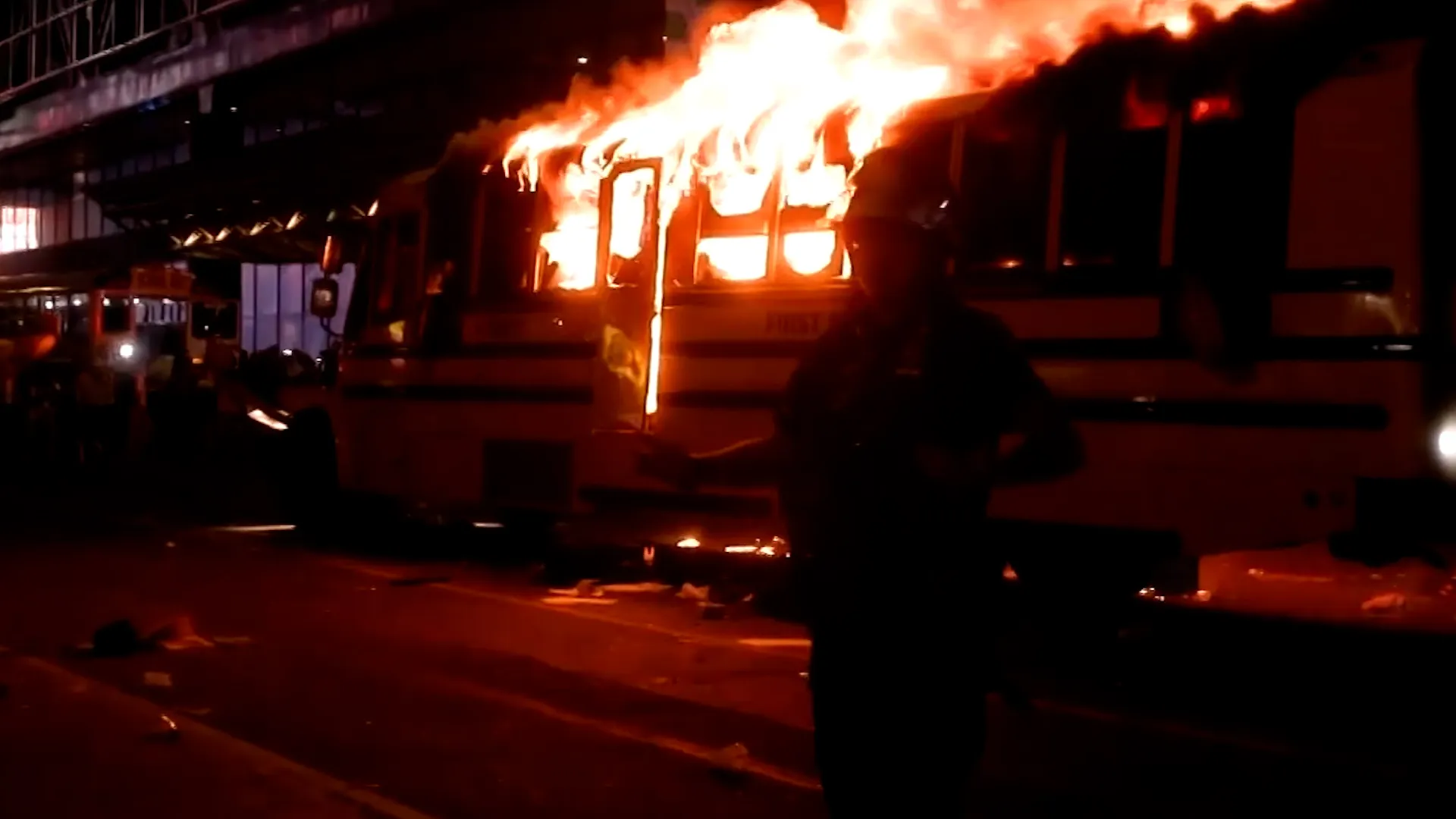
Tragedy struck in the Salamanca province when a 13-year-old died during celebrations for the win against Argentina.
Published On 20 Jul 202620 Jul 2026
A 13-year-old died and another child was among the injured when a fountain partially collapsed in western Spain during mass celebrations of the country’s second football World Cup final victory, regional emergency services have said.
The accident occurred shortly after midnight on Monday in Ciudad Rodrigo, a walled medieval city of about 12,000 in Salamanca province, near the border with Portugal.
Recommended Stories
list of 4 itemsend of list
Hundreds of residents had gathered at the Arbol Gordo fountain in the city’s centre when the upper part of the monument broke loose and struck several people, emergency services said.
In a statement, Ciudad Rodrigo’s town hall expressed condolences for the victim.
“The entire city feels this loss and accompanies the minor’s friends and family in their grief … What should have been a celebration of the Spanish national team’s World Cup victory has turned into a tragedy,” it said.
It is understood that the fountain collapsed under the weight of numerous people who had climbed onto it to celebrate Spain’s first World Cup victory since 2010.
“A few minutes after 12:30 am local time, rescue services received calls over a fountain collapsing on numerous people,” emergency services said in a post on X, adding that another youth, believed to be in a serious condition with a broken leg, was among the injured.
Spain beat Argentina 1-0 to win the 2026 edition of FIFA’s showpiece global event, which was staged at New York New Jersey Stadium by cohosts United States.
The match was 0-0 after regulation time, forcing the game to extra time where Ferran Torres scored the only goal of the game.
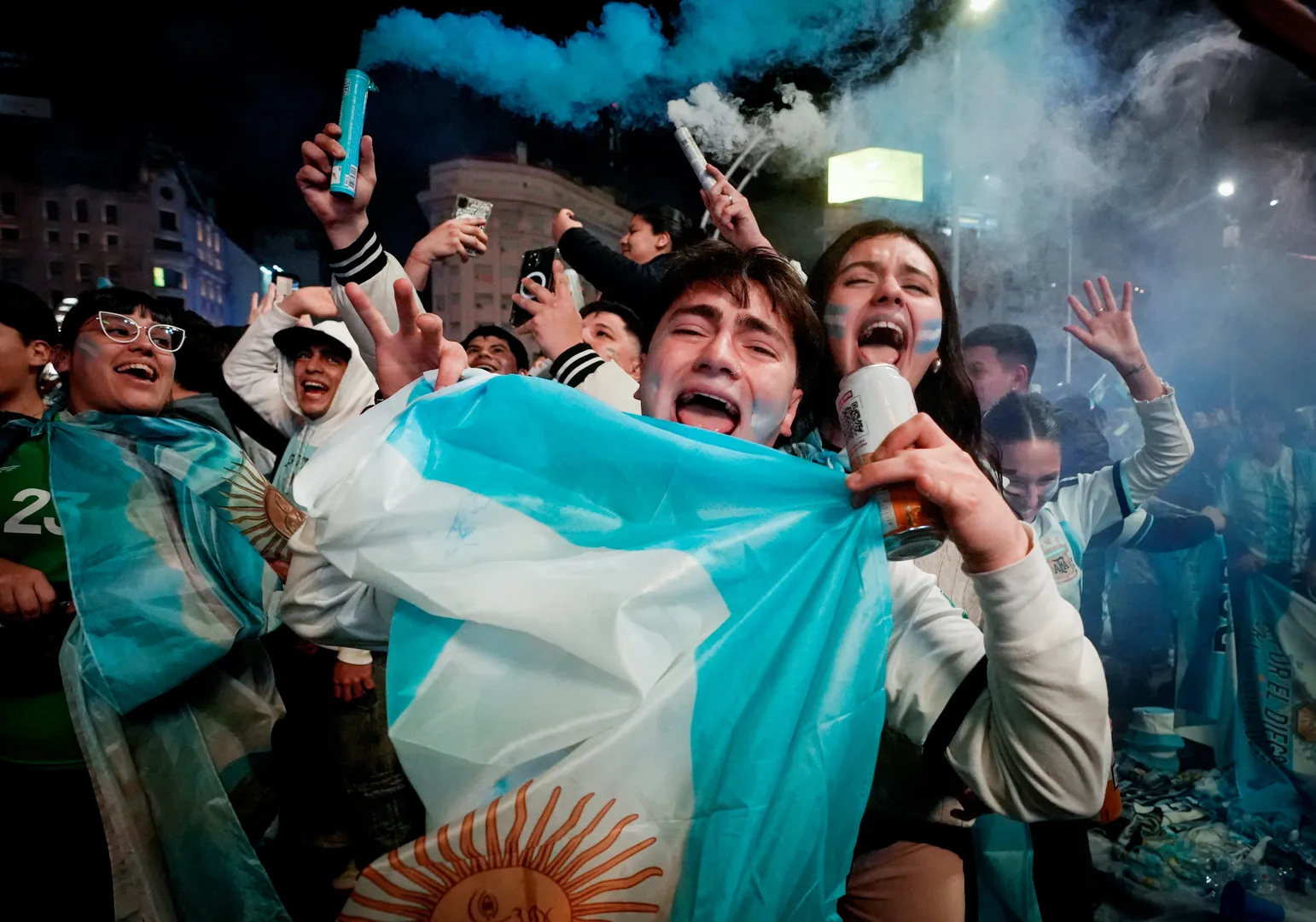
Jubilant fans leapt with joy in Buenos Aires after Argentina defeated England 2-1 in Wednesday’s World Cup semifinal match. The defending champions will take on Spain in Sunday’s final.
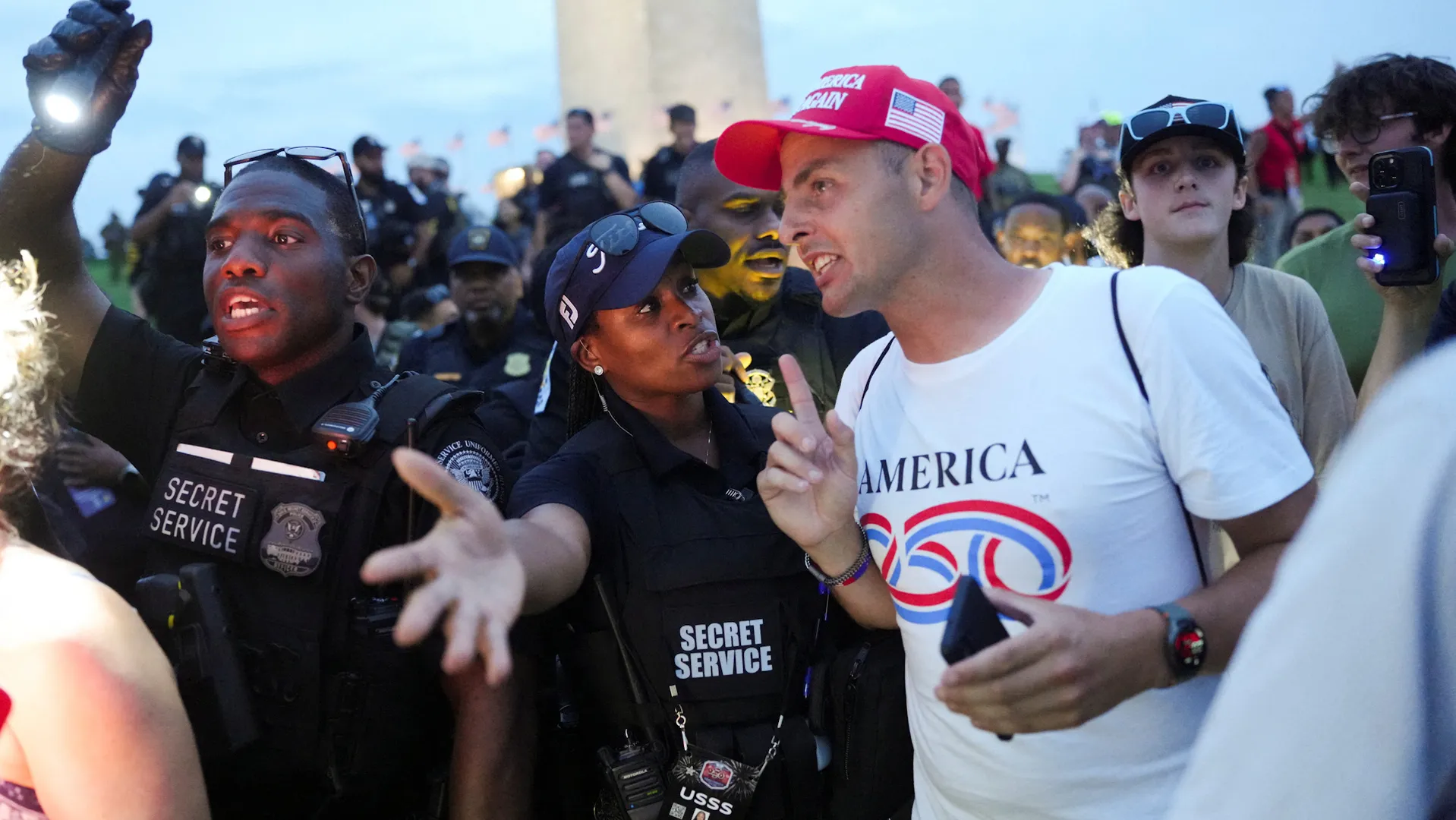
Extreme weather disrupted the US’s 250th anniversary celebrations, forcing evacuations, cancellations and delays. Despite setbacks including a National Mall evacuation and a fireworks display setting the Brooklyn Bridge on fire, Trump called the day ‘one of the most joyous and glorious’ in US history.
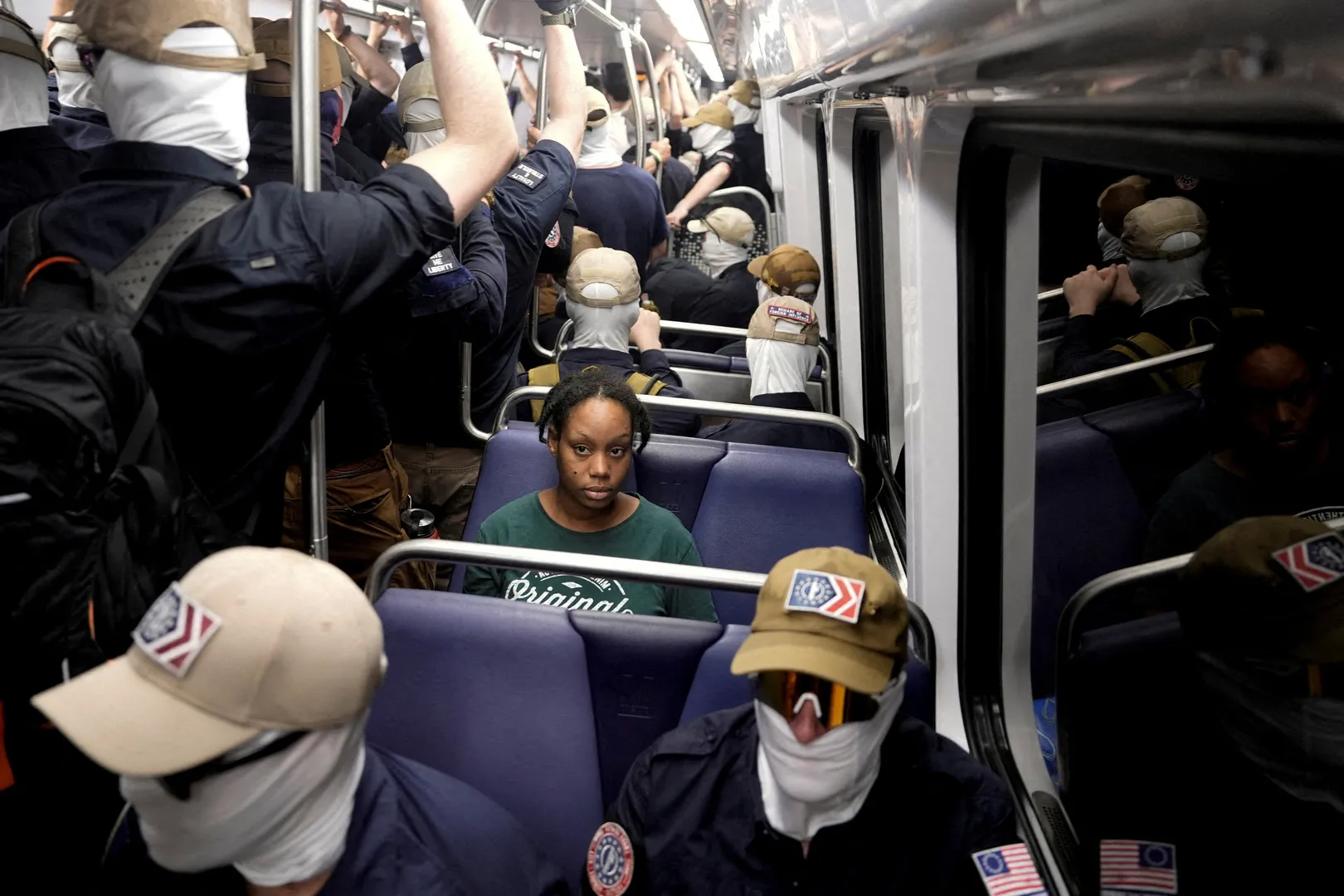
Hundreds of masked white nationalists marched on Washington DC waving Confederate flags and chanting anti-immigrant slogans on the 250th anniversary of the founding of the United States.
Weekly insights and analysis on the latest developments in military technology, strategy, and foreign policy.
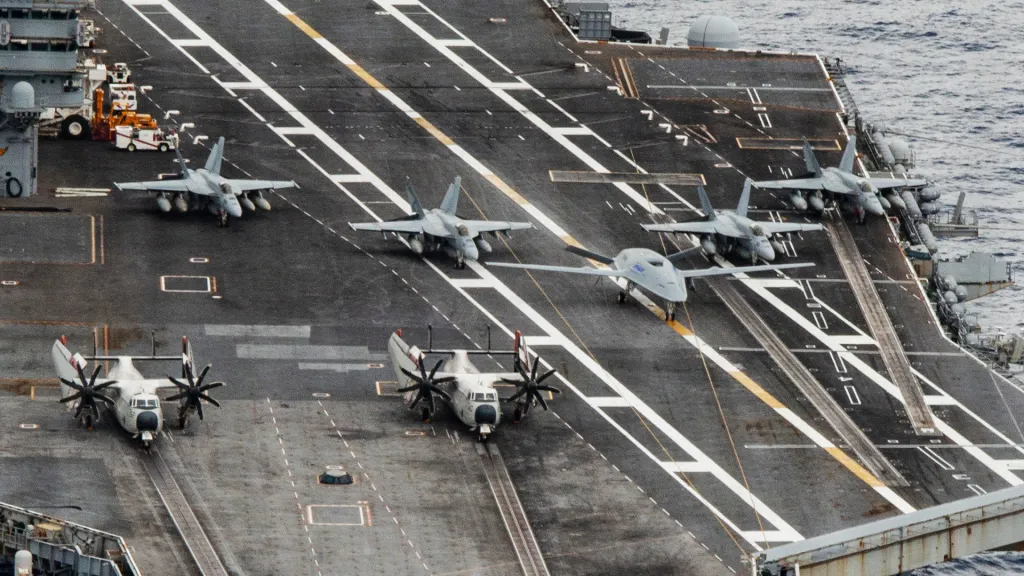
The U.S. Navy has confirmed to TWZ that the MQ-25 Stingray demonstrator drone, also known as T-1, is embarked on the supercarrier USS Nimitz. Pictures of Nimitz with the uncrewed aircraft on its deck had prompted questions about whether the initial production representative MQ-25, which made its maiden flight in April, had now gone aboard a carrier for the first time. We now know that is not the case. Regardless, the images of T-1 aboard Nimitz still underscore just how big the Navy’s first advanced carrier-based drone actually is, especially when placed next to other aircraft in the air wings. Production MQ-25s will be an important and imposing presence when they enter operational service, something the service hopes will finally start next year.
“We do indeed have a Boeing-owned T-1 prototype currently onboard,” a Navy spokesperson told TWZ today when asked about the drone seen on Nimitz‘s deck.
A view of T-1 and other aircraft on the deck of USS Nimitz. USN/Seaman Johnathan McCune
The spokesperson directed us to contact Naval Air Systems Command (NAVAIR) for more information about the current status of the MQ-25 program. T-1 has been flying since 2019 and has taken part in a slew of testing in support of the development of the Stingray in the air and on the ground. This also includes deck handling testing aboard the Nimitz class carrier USS George H.W. Bush in December 2021, something we will come back to later on. T-1 has never taken off from or landed aboard a Navy carrier, and would have had to be transported aboard Nimitz.
Another view of Nimitz, with the T-1 MQ-25 demonstrator and other aircraft on its deck, taking part in a group sail photo op as part of Fleet Exercise 250 on June 25, 2026. USN
“To honor the United States’ 250th anniversary, the MQ-25A T1 prototype is aboard the USS Nimitz, offering a glimpse of the Navy’s carrier air wing of the future,” Boeing has now also written in a post on X. “The special ‘Boeing Backs America’ mark highlights our support for U.S. aviation.”
The USS Nimitz has been sailing in the Atlantic Ocean as part of Fleet Exercise 250 (FLEETEX 250). This is a large, multi-national event that is running concurrently with several celebrations marking the 250th anniversary of the United States. In addition to the United States, Belgium, Brazil, Canada, Cameroon, Côte d’Ivoire, Cyprus, Denmark, France, Germany, Mexico, Morocco, the Netherlands, Norway, Peru, Senegal, Spain, Turkey, and the United Kingdom are also taking part, according to the Navy. As part of FLEETEX 250 activities last week, Nimitz had taken the lead in a group sail photo exercise that included 25 other naval vessels from 13 of the participating countries.
A full view of the ships participating in the FLEETEX 250 group sail photo op on June 25, 2026. USN
“USS Nimitz is underway taking part in Fleet Exercise (FLEETEX) 250 alongside 25 other warships, multi-national aircraft, and their crews, conducting a series of structured training events at-sea,” a Navy spokesperson had also told TWZ last week in response to queries about that ship after it was spotted leaving Mayport, Florida, on June 25. “Following FLEETEX, we are scheduled to take part in another major event celebrating our nation’s 250th birthday.”
The T-1 demonstrator was lashed to the carrier’s deck for the pictures, along with four F/A-18E Super Hornet fighters and two C-2A Greyhound carrier onboard delivery aircraft. The drone notably has new “250” markings written in blue on both sides of the fuselage.
A picture offering a look at the current markings on T-1. US Navy via BoeingAnother view of T-1’s new markings. USN
As noted, T-1’s size stands out when parked next to the F/A-18Es, which are themselves not small aircraft. The production MQ-25 has a wingspan of 75 feet, according to Boeing. With its wings folded, the drone is still 31.3 feet across, as well as 51 feet long. For comparison, the Super Hornet’s wingspan is nearly 45 feet and it is just over 60 feet long, per the Navy.
T-1 looks large even when contrasted with the C-2As, at least with their wings folded. With its wings extended, the Greyhound is 80 feet, seven inches from tip to tip, according to the Navy. It is also 56 feet, 10 inches in length.
A close-up view of T-1 on Nimitz’s deck offering more of a visual comparison to the F/A-18Es parked alongside, as well as the C-2A at bottom left. USN
All of this underscores the amount of work the Navy will have to do to get production MQ-25s ready for routine operational use. As we wrote roughly a year ago, when the start of ground testing of the production representative Stingray was announced:
The Stingrays will also have to be woven into the existing cadence of flight deck operations, including just figuring out how to move them around amid the hustle and bustle of other activity. Carrier decks are very constrained environments physically, and present very different conditions to operate in compared to bases on land. This is true even for crewed aircraft operations, where individuals onboard can provide additional situational awareness. A wearable glove-like system that personnel could use for deck handling was notably used during testing of the X-47B. A different kind of portable control device has been used in testing of the T-1 MQ-25 demonstrator in the past, as well. The video released today does not appear to offer any major new insights into how the Navy plans to maneuver the Stingray around on carrier decks.
T-1 seen during deck handling testing aboard the USS George H.W. Bush. USN
This is on top of more general flight testing, including demonstrating that the drones can safely take off from and land on Navy carriers, as well as integration with the control systems on those ships. The MQ-25 will bring new tactics, techniques, and procedures to the service’s carrier air wings, as well as open the door to further operational developments.
Right now, the MQ-25’s principal mission will be extending the reach of other aircraft in the carrier air wing. This is a critical capability for the Navy as adversary anti-access and area denial bubbles, especially ones that China’s People’s Liberation Army (PLA) has established and continues to expand, threaten to push carriers out of reach of target areas.
By extension, the Stingray will also eliminate the need to use crewed F/A-18F Super Hornets in the tanker role, freeing them up for other missions and reducing wear and tear on those airframes.
The drones will also come with a built-in secondary intelligence, surveillance, and reconnaissance (ISR) capability, thanks primarily to a sensor turret under the nose. The size of the MQ-25, its extreme range potential, and other attributes of the design could well lead it to be adapted to other roles in the future, such as a long-range strike platform, as TWZ has previously explored in detail.
A look at T-1 in flight from below. Boeing
Showcasing the T-1 during FLEETEX 250 does highlight the Stingray program and its importance to the Navy. The effort has faced significant delays and cost growth in recent years, with the original goal being for the MQ-25 to have reached initial operational capability (IOC) in 2024. As noted, the first production representative example only flew in April, despite a major push by the Navy and Boeing to hit that milestone before the end of 2025. When that drone might make its first appearance on a carrier deck remains to be seen, but the Navy is now aiming to reach IOC sometime next year.
As an aside, carrying T-1 for display during FLEETEX 250 and associated events may be the extent to which Nimitz ever embarks any MQ-25s. The Navy has extended the carrier’s service life due to a number of factors, but only into March of next year. The USS George H.W. Bush received a first-of-its-kind drone control center in 2024. The Navy subsequently moved to install that equipment on the USS Carl Vinson, USS Theodore Roosevelt, and USS Ronald Reagan, creating an initial group of Nimitz class carriers that will be able to operate the Stingrays.
USN
The Navy also sees the MQ-25 as a ‘pathfinder’ to future uncrewed additions to its carrier air wings. This is set to include carrier-based Collaborative Combat Aircraft (CCA) drones, an effort that is still very much in its infancy. Navy officials have talked in the past about a goal to see the makeup of future carrier air wings be 60 percent or more uncrewed.
In the meantime, T-1’s latest appearance on the deck of the USS Nimitz has already underscored the big changes coming to Navy carrier air wings, both figuratively and literally.
The United States is about to celebrate its 250th birthday, but as millions across the country prepare to gather this weekend for parades, concerts and festivals, an intense heat wave has settled over much of the eastern US.
Officials across the region are warning that the extreme heat could pose serious health risks over the Fourth of July weekend.
Recommended Stories
list of 3 itemsend of list
Here’s what you need to know about how the weather will affect the celebrations.
What is America’s 250th anniversary?
It has been 250 years since the United States adopted the Declaration of Independence on July 4, 1776. Unlike a typical Independence Day, this year’s celebrations are unfolding on a much bigger scale, capping years of preparation and planning.
Landing in the midst of a highly polarised moment in American politics, planning for the anniversary has also been contentious.
A decade ago, Congress tasked a bipartisan commission known as America250 with organising the celebrations.
But last year, US President Donald Trump issued an executive order to put his own “Freedom 250” planning committee in charge of many of the anniversary’s marquee events, including the Great American State Fair on the National Mall.
Initially, a variety of musicians were announced as performers for the fair, including country singer Martina McBride, the soul group The Commodores and the pop duo Milli Vanilli. But many withdrew in late May and early June over concerns over the fair’s affiliation with Trump.
Last week, in lieu of the performers, the US president delivered a speech to open the fair, billing himself as the “Number One Attraction anywhere in the World”.
He has also promised to mark the July 4 holiday in Washington, DC, with “the most spectacular TRUMP RALLY of them all”.
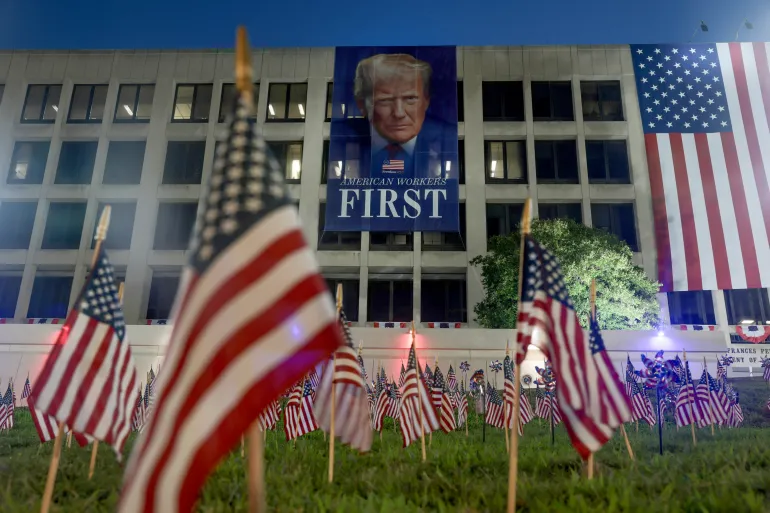
The Department of Labor building in Washington, DC, displays US flags on the eve of July 4th festivities [Joe Raedle/Getty Images/AFP]
What will celebrations look like across the country?
Among thousands of smaller, locally organised celebrations nationwide — including historical reenactments, picnics, concerts and fireworks displays — some of the highest-profile events include:
Washington, DC: Hundreds of thousands are expected to arrive in the city, where the Great American State Fair will be held along the National Mall, the 2.5 km (1.5 mile) promenade linking the US Capitol to the Washington Monument. It will feature state pavilions, food, live music and a Ferris wheel. Trump has also promised “the largest fireworks show in history.” Around one million people attended the fireworks display for the US’s bicentennial anniversary in 1976.
Los Angeles: As part of its America’s Block Party event, America250 will hold a benefit concert hosted by Queen Latifah, featuring artists such as Chris Stapleton, Maren Morris and the Smashing Pumpkins.
Philadelphia: The city where the Declaration of Independence was signed is hosting one of the country’s biggest commemorations, including the burial of a 400kg (900 pounds) time capsule, containing artefacts from across the country, meant to be opened at the next semiquincentennial in 250 years.
New York: More than 40 tall ships are expected to sail into New York Harbour with almost 20,000 sailors aboard, while more than 200 aircraft fly overhead.
Boston: Celebrations will include the annual Boston Pops Fireworks Spectacular — a free concert followed by a fireworks display — and a public reading of the Declaration of Independence from the balcony where it was first read aloud to Bostonians in 1776.
How will the heat affect celebrations?
Some celebrations are already being disrupted, with organisers forced to adapt to extreme heat.
On Friday, the Great American State Fair temporarily closed as temperatures reached over 39 degrees Celsius (102 degrees Fahrenheit) in parts of Washington, DC.
But the capital was not the only area affected by the extreme heat.
In Philadelphia, for example, officials announced that the Salute to Independence Semiquincentennial Parade was cancelled, after initially planning to shorten the route to mitigate heat-related risks.
A celebration in Pennsylvania’s Lower Windsor Township was also rescheduled for July 8, while in nearby Norristown, officials cancelled another parade, citing safety concerns.
The heat is also affecting transportation. Amtrak announced several train cancellations in the northeast region and warned that other trains could face delays due to high temperatures, which can affect railway infrastructure.
“Extreme heat can cause rail, bridge and overhead wires to expand,” it said in a statement on Thursday. “As a precaution, Amtrak may enact heat restrictions, which can require locomotive engineers to operate trains at lower speeds, resulting in potential delays.”
What will it actually feel like outside?
While air temperatures in cities such as Philadelphia and Boston are expected to reach around 38 degrees Celsius (100 degrees Fahrenheit), high humidity can make it feel significantly hotter.
That’s because humidity makes it harder for sweat to evaporate and cool the body. Weather agencies use the heat index, often called the “feels like” temperature, to estimate what people will actually be experiencing.
Experts also warn that cities can become even hotter than forecasts suggest as concrete, asphalt and steel absorb heat.
“The number on your phone may actually not reflect the true temperature profile that you’re going out into,” Vijay Limaye, a climate scientist at the Natural Resources Defense Council, told The Associated Press.
What precautions are officials taking?
Aside from changing or cancelling some Fourth of July events, cities across the eastern United States are rolling out broader measures to help people cope with the heat.
In New York City, for example, more than 200 teams of government workers and volunteers are checking on homeless residents and directing people to hundreds of cooling centres, including public buildings, mobile cooling vans and outdoor sites equipped with misting fans.
Mayor Zohran Mamdani urged people to stay inside and avoid “extraordinary temperatures”. He also asked residents to set their air conditioners to 26 degrees Celsius (78 Fahrenheit) to avoid straining the power grid.
Boston is offering residents free admission to several air-conditioned museums, while Providence, Rhode Island, has extended hours at public pools and water parks.
How can people stay safe?
The National Weather Service (NWS) recommends drinking a lot of water, even if you don’t feel thirsty, especially if you’re spending an extended amount of time outside and taking hourly breaks in shade or air conditioning.
Health authorities also urge people to occasionally check in on seniors and other vulnerable populations.
Alcohol can make dehydration worse, so experts also recommend limiting drinking during long outdoor events.
Signs of heat illness include cramping, rapid pulse, heavy sweating, hot red skin, dizziness, confusion, nausea and vomiting, according to the NWS. If you see any of those warning signs, seek medical attention immediately.
WASHINGTON — Festivities commemorating the 250th anniversary of American independence from Great Britain kick into higher gear across the United States on Friday as celebrations are balanced with efforts to stay safe as much of the country bakes under extreme heat.
President Trump will travel to South Dakota to deliver a speech and watch fireworks at Mt. Rushmore. And in a novel twist, there will be a ball drop in New York City’s Times Square at midnight to usher in the July Fourth holiday with much the same revelry that is typically reserved for New Year’s Eve.
The activity culminates in the main event Saturday, when fireworks will erupt in communities across the U.S., along with backyard cookouts and block parties. Trump will deliver another speech at the National Mall in Washington before what is being billed as a historically massive fireworks show.
But for all the celebrations, there are also serious safety considerations as potentially record heat grips much of the Midwest and East Coast. Officials have warned those celebrating the holiday to stay hydrated and take air-conditioned breaks as needed.
The heat has already affected some of the programming surrounding the holiday. In Washington, organizers of the Capitol Fourth concert banned the public from attending a Thursday rehearsal because of the heat.
The concert Friday, a staple of Washington’s Independence Day traditions, is on, but the gates will open to the public later than usual, at 7 p.m. EDT, an hour before the show. Organizers of celebrations in Washington on Saturday said they were adding water stations along with cooling resources and medical support.
From Boston to Norristown, Penn., and Gettysburg National Military Park, plans were shifting to accommodate the soaring temperatures. Amtrak canceled some trains in the Northeast due to excessive heat that could affect the tracks.
The holiday is unfolding at a unique time in the U.S. The anniversary has served as an opportunity for the country to reflect on its history while also reminding it of the political polarization of the moment.
Even the celebrations themselves have not quite escaped the divide.
Freedom 250, an organization aligned with the White House, has come to rival America250, a bipartisan group founded by Congress a decade ago. Freedom 250 has organized much of the activity in Washington, including the Great American State Fair, which has gained attention for the relatively small crowds it has attracted. America250 is behind the ball drops unfolding in many cities, including New York, and will host a concert in Los Angeles on Saturday.
Sloan writes for the Associated Press. Associated Press writers John Hanna in Topeka, Kan., Michael Casey in Cambridge, Mass., and Calvin Woodward in Washington contributed to this report.
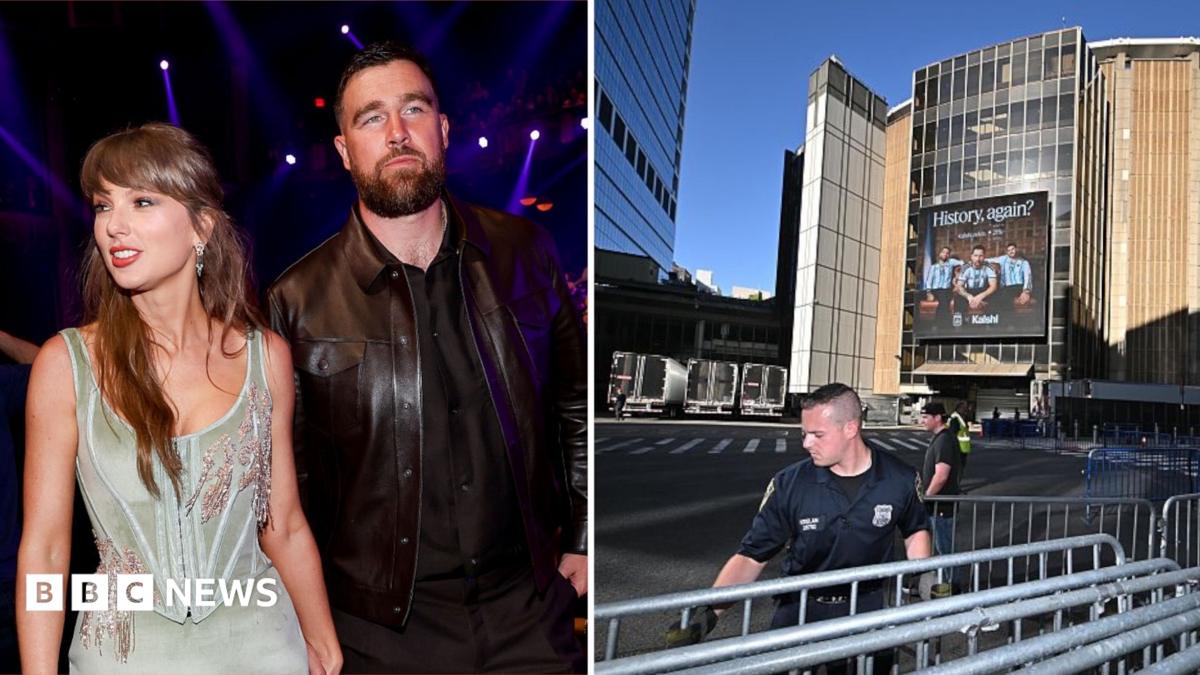
THE White House has shared its own Taylor Swift-inspired post ahead of the popstar’s lavish wedding to Travis Kelce.
The official White House Instagram account shared a photo of “America’s Eras Tour” in the same style as Taylor’s iconic Eras Tour poster.
Sign up for the Showbiz newsletter
Thank you!
The White House shared a poster on Instagram featuring Donald Trump in a similar style to Taylor Swift’s Eras Tour posterCredit: Getty Images for Theodore RoosevThe post included photos of Trump alongside previous presidents and moments in US history, such as the moon landingCredit: Instagram / WhitehouseTaylor is expected to get married at Madison Square Garden over the Fourth of July weekendCredit: Getty Images for TAS Rights ManaCrews were seen outside of Madison Square Garden unloading items ahead of Taylor and Travis’ weddingCredit: Felipe Ramales for the U.S. Sun
The image showed President Donald Trump in the middle with his fist raised, surrounded by ten photos depicting moments in American history.
There were other images showing a hockey game, the moon landing, and a photo from the end of World War II showing a US Navy sailor kissing a woman in Times Square.
“It’s been a long time coming…” the caption read, a nod to Taylor’s lyrics.
The timing of the post appeared to throw some shade toward Taylor, whose wedding extravaganza is taking place around the Fourth of July weekend and the celebration of America’s 250th anniversary.
Trump and Taylor have had a longtime feud, where the president blasted the singer as “no longer hot” in a Truth Social post from 2025.
“Has anyone noticed that, since I said ‘I hate Taylor Swift,’ she’s no longer ‘hot?’” he wrote.
“The only one that had a tougher night than the Kansas City Chiefs was Taylor Swift,” he wrote on Truth Social after making history as the first sitting president to attend the Super Bowl.
For several days, media outlets have watched every move outside the arena. They spotted trucks with cryptic labels like “GP” and “garden party” on it and crews unloading tons of equipment and things like large white staircase prop and large mirror ball. Earlier in the week, workers were seen rolling out a red carpet, which was hastily withdrawn.
New York City Mayor Zohran Mamdani, an astute student of both politics and pop culture, has coyly alluded to the wedding chatter during press conferences.
City officials confirmed to the BBC that somebody applied for street closure permits in the area, but did not reveal whom.
But the city was not likely to have shut down Manhattan’s busiest corridor on a holiday weekend for just anybody. And not just a holiday weekend, July 4th weekend. And Not only July 4th weekend, but America’s 250th birthday weekend – while the city also hosts the World Cup.
The speculation heightened.
Then the celebrities started to emerge.
Paparazzi captured images of Antonoff, Swift’s longtime producer, sporting a tux and a toothpick dangling out of his mouth, reportedly heading to Thursday’s event at the Garden.
His sister Rachel Antonoff, a designer, followed closely behind in a bubblegum-pink dress.
US tabloid Page Six reported Bradley Cooper and Gigi Hadid, a longtime member of Swift’s friend circle, had also arrived at the venue.
Pop star and actress Selena Gomez posted images of herself on Instagram wearing a black gown with gem earrings and heading to an unspecified event.
People Magazine published video Dunham, who created the series Girls, being chauffeured through Manhattan in a black SUV.
Mexican soccer fans react during the Round of 32 match of the 2026 FIFA World Cup between Mexico and Ecuador in Mexico City, Mexico, Tuesday. Three people died by asphyxiation during the celebration. Photo by Sashenka Gutierrez/EPA
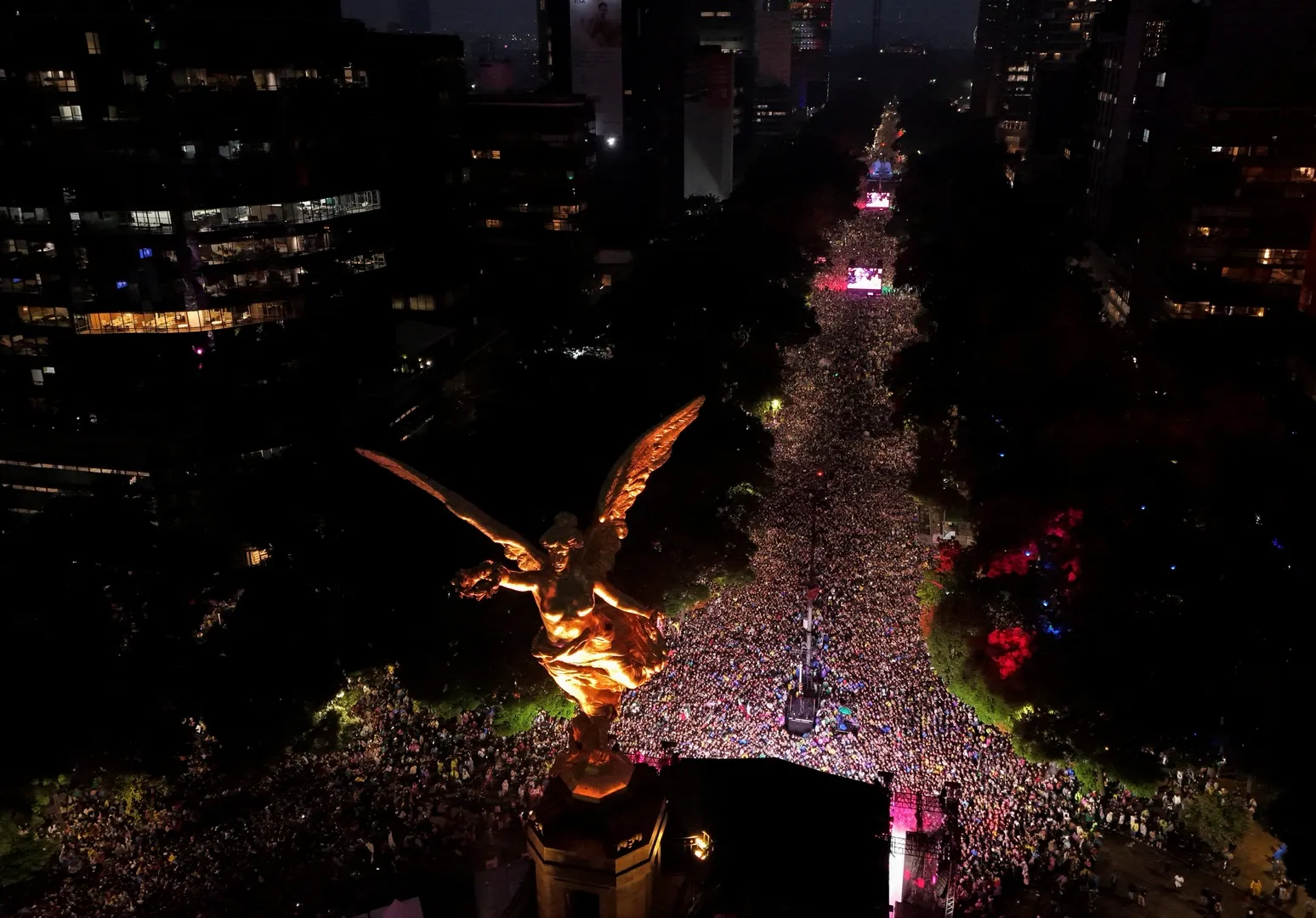
July 1 (UPI) — Three people died of asphyxiation in Mexico City as about a million people flooded the streets to celebrate Mexico’s 2-0 World Cup win over Ecuador in the first knockout round.
A 19-year-old woman, a 48-year-old woman and a 44-year-old man were found unresponsive in the crowd Tuesday night. They were each given emergency resuscitation and taken to a hospital where they died.
The celebrations mostly happened around the Angel of Independence monument in downtown Mexico City. The game ended in the first knockout round win for Mexico since 1986.
Mexico City’s health department confirmed that emergency responders treated the three people at different locations around Paseo de la Reforma before taking them to the hospital.
“After performing first aid and CPR techniques on the patients, they were transferred to a hospital for specialized medical care,” the city’s health authority said.
The hospital confirmed they all had died of suffocation.
Mexico City Mayor Clara Brugada offered her “most sincere condolences” to the victims’ families.
In a post on X, Brugada said: “With my heart in my hand, I send a hug and my most sincere condolences to their loved ones. We reiterate the call to always celebrate with responsibility, care, and empathy.”
Mexico City’s metropolitan area is one of the most densely populated places on Earth. More than 20 million people live there.
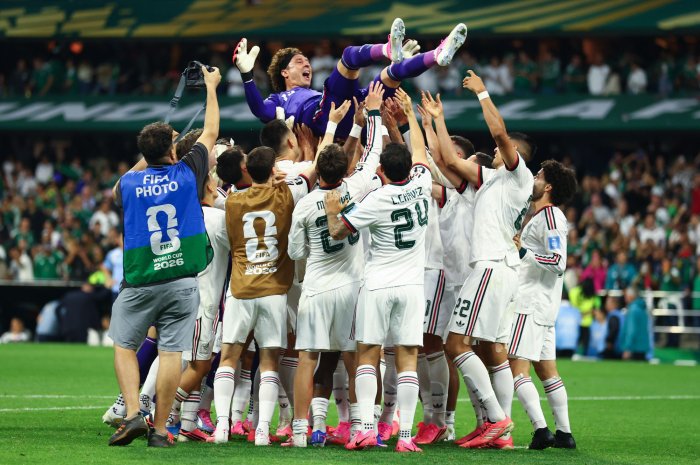
Mexico players throw goalkeeper Guillermo Ochoa in the air after defeating Czechia 3-0 in their FIFA World Cup match at Mexico City Stadium in Mexico City on June 24, 2026. Photo by Christian Brunskill/UPI | License Photo
Health officials say three people died during massive celebrations in Mexico City after Mexico’s 2-0 World Cup win over Ecuador. The victims — a 19-year-old woman, a 48-year-old woman and a 44-year-old man — died of asphyxiation. Thousands had crowded into the streets to celebrate Mexico’s first World Cup knockout-round win since 1986.
WASHINGTON — Federal law enforcement authorities are preparing for one of Washington’s largest and most complex security operations as the nation’s capital gears up to celebrate the 250th anniversary of the nation’s freedom.
With rising political violence, including recent incidents near the White House, and a president who enjoys being at the center of public pomp yet has repeatedly faced attempts on his life, a major security challenge awaits.
“It comes as no surprise to you that D.C. on a normal day is a target-rich environment,” said Darren B. Cox assistant director in charge of the FBI’s Washington field office at a recent news conference detailing the security preparations. “We are prepared for any threats.”
Hundreds of thousands of people are expected to visit Washington in the coming weeks for the festivities.
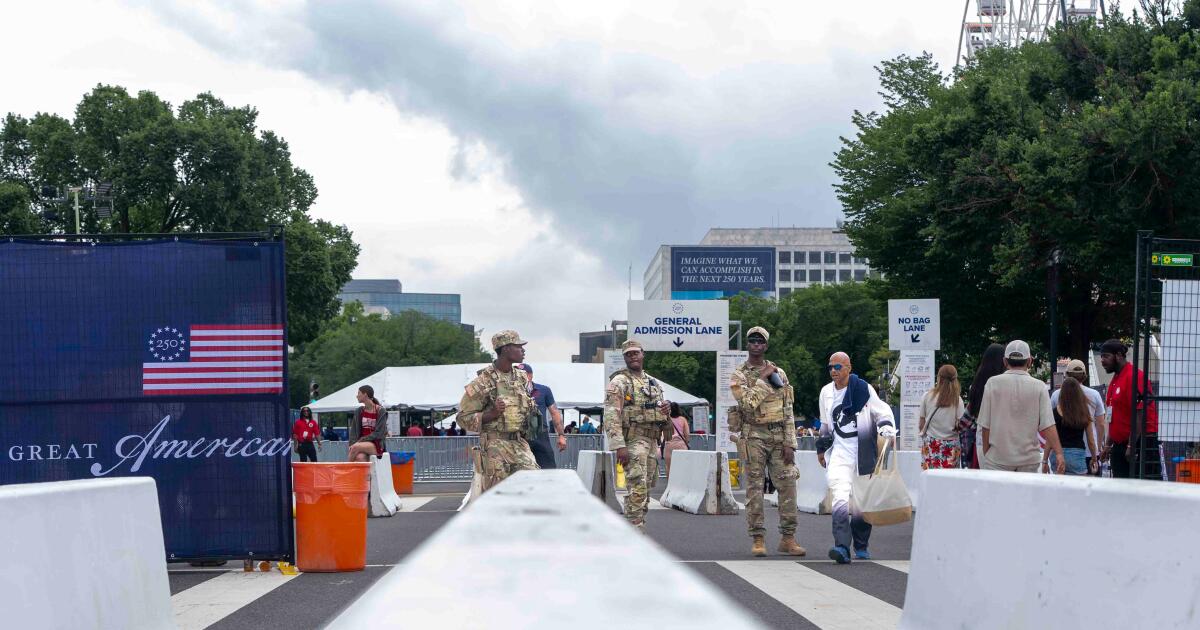
The throngs will be joined by thousands of law enforcement officers and agents and 5,000 National Guard troops, along with military-style vehicles and other hardware they don’t often see on the streets of America.
Authorities are preparing for a major security operation
The largest crowds are expected July 4, with multiple events happening simultaneously, including the Great American State Fair, a showcase for each state and a signature attraction of the celebrations that stretches across the National Mall.
The annual fireworks display that night is designated a National Security Special Event for the first time by the Department of Homeland Security, the highest classification for federal security coordination.
For visitors, that means strict ID requirements, long lines and magnetometers, similar to air travel security. Snipers are also expected to be deployed at some events.
Flights at Ronald Reagan Washington National Airport, which is across the Potomac River from Washington, will be suspended longer than in other years because of the scope of the celebrations — from noon on July 4 until the next day. Other America 250 events that include flyovers or parachute jumps could prompt more flight disruptions.
The FBI, Secret Service, U.S. Capitol Police, U.S. Park Police and D.C. National Guard have all been involved in security coordination for the events. At the news conference earlier this month, equipment that could be deployed to guard the city was on display, including BearCat armored SWAT vehicles, Mine-Resistant Ambush Protected vehicles, known as MRAPs, as well as communication vans and FBI diving boats.
“Our protective model is meant to adjust to any type of direct or indirect threats that we come across,” said Tara McLeese, special agent in charge of the Secret Service Washington field office. “I can assure you that we have no lack of imagination as to the potential threats out there.”
Brig. Gen. Leland Blanchard II, interim commander of the D.C. National Guard, said the planning had been underway for months and included rehearsals.
Blanchard said the Guard members would continue the roles they have served the last 10 months as part of a deployment to the city President Trump says is meant to fight crime. Blanchard highlighted that guard members, including military police officers, would be helping with duties like traffic and crowd control as well as responding to emergencies around the events.
President Trump, who has already attended several events leading up to July 4, including the kickoff rally last week launching the Great American State Fair, has said on Truth Social that he would hold a rally on the National Mall.
Speaking at a news conference Monday updating the upcoming security preparations, Cox reiterated that “at this time we are not tracking any credible threats related to the July 4 event, but we always remain vigilant.”
Recent violence has shaped the threat picture
The festivities come at a fraught moment, with recent political violence creating a complex threat environment for authorities. One man, Cole Tomas Allen, has been charged with attempting to assassinate the president after he sprinted past security at the White House Correspondents’ Assn. dinner in April. Allen has pleaded not guilty.
In the following weeks, two men on two separate occasions opened fired at Secret Service officers, the service said. Each incident happened in the vicinity of the White House.
More recently, the FBI announced it had thwarted a planned attack targeting Trump’s UFC cage-fighting show at the White House. Several suspects have been arrested in that case.
Security was already enhanced on the National Mall ahead of the launch of festivities, as Trump claimed without providing evidence that vandals had damaged the Reflecting Pool that he had recently renovated.
Matt Dallek, a political scientist at George Washington University who studies extremism, said Trump posed a unique security challenge because he is “both an accelerant and a target of political violence.”
The nation’s bicentennial offers a historical parallel
Observers draw some parallels to the 1976 bicentennial. The nation was coming off Watergate and Vietnam, and 10 months before the celebration there were two assassination attempts against then-President Ford.
“There was a lot of sourness in the country in ’76, a lot of cynicism about the direction of the country,” Dallek said. But both Ford and his Democratic opponent Jimmy Carter understood the threat political divisions posed and “were looking to bring down the level of vitriol.”
Angelyn Spaulding Flowers, professor of Homeland Security & Administration of Justice at the University of the District of Columbia, said the amount of security was unparalleled for the city, citing the ongoing and open-ended National Guard presence that has flooded Washington with additional security patrols for months.
Iranian state TV broadcast scenes of celebration in Tehran as missiles flew overhead en route to Israel. Iran says the launch was retaliation for Israel’s earlier attack in Beirut, and other US-Israeli ceasefire breaches.