CBS

Former ‘CBS Mornings’ executive producer joins MS NOW as political director

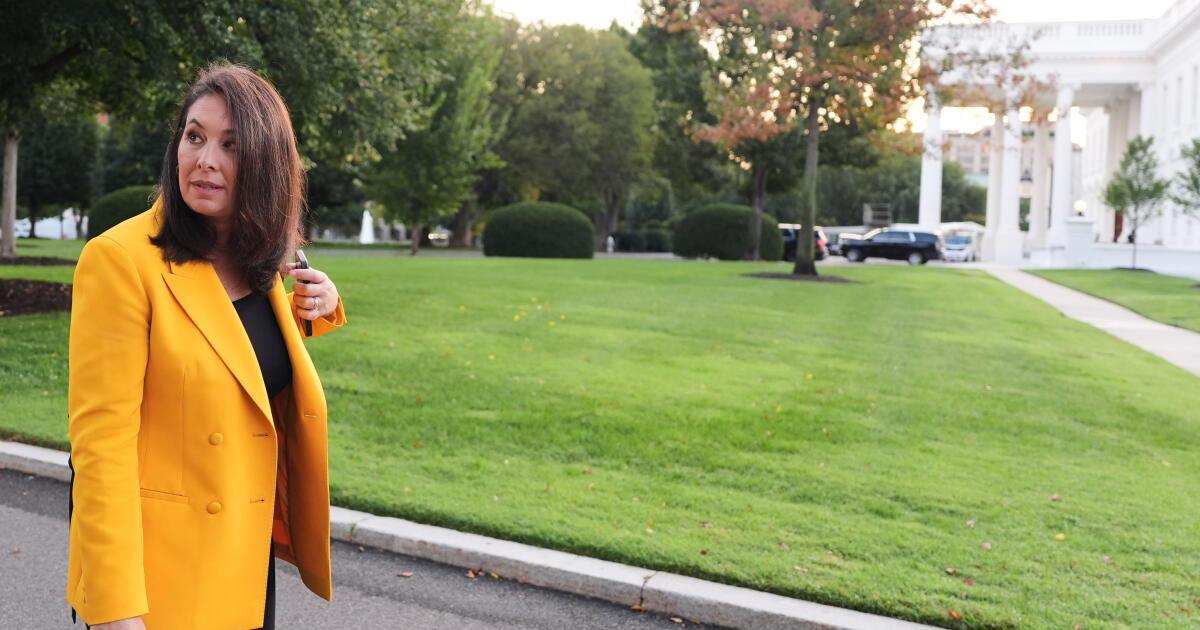
Shawna Thomas, who exited CBS News earlier this year, has joined MS NOW as political director.

The cable network formerly known as MSNBC announced Wednesday that Thomas will lead the organization’s political unit and direct coverage of campaigns and elections. She will also appear as an on-air analyst.

Thomas lands at the progressive-leaning MS NOW after five years as executive producer for “CBS Mornings.” She announced her departure from the program last month, just as co-host Gayle King was signed to a new deal.

Thomas is among a number of executives and on-air talent who have left CBS News since the arrival of editor-in-chief Bari Weiss, although she told colleagues her decision was about getting away from the grind of early morning television.

MS NOW is owned by Versant, a company created out of the cable assets spun off by Comcast. The new company chose not to rely on the news-gathering resources of NBC News, which oversaw MSNBC, and is building its own editorial operation.

Last month, MS NOW poached long time NBC News White House correspondent Peter Alexander, who will have a daily program on MS NOW and handle extended breaking news coverage starting later this year.

Thomas is a veteran of political coverage. She is a former Washington bureau chief for the news division at Vice Media, overseeing politics and policy stories for the HBO series “Vice News Tonight.”

Thomas spent a decade working for NBC News in various production roles, including planning its election coverage. She also had a stint as an executive at Quibi, the short-form streaming video platform.

Source link

Post-Stephen Colbert, CBS still wants an original late-night show

CBS hasn’t given up on producing an original late-night show — despite easing Stephen Colbert out the door.

“The Late Show With Stephen Colbert” ends next month after CBS canceled the popular program, citing financial pressures. The network’s top two executives told reporters during a press briefing in Hollywood on Wednesday that the network still wants to be a player in the 11:35 p.m. hour.

CBS struck a one-year deal with media mogul Byron Allen to bring his “Comics Unleashed” syndicated show to the prominent time slot once occupied by David Letterman until Colbert took the mantle a decade ago. President Trump, in social media posts, has taken credit for getting Colbert, whom he dislikes, tossed off the air.

Colbert’s final broadcast will be May 21.

Beyond the stop-gap arrangement with Allen, network executives acknowledged they don’t have a long-term plan for the late-night hours — but development executives are working on it.

“We are still going to develop other ideas, other concepts,” said George Cheeks, whose role as chair of TV Media at Paramount includes running CBS. He added that Allen’s programs, including “Funny You Should Ask” at 12:35 a.m., will allow the company to immediately turn a small profit — an increasingly critical mandate as CBS prepares to absorb the high cost of keeping NFL football on its schedule.

“If we are going to go back into that space, we have to go back into that space with a different financial model,” Cheeks said, in contrast to a show set in a theater with a band, live audience and large group of writers and support staff to stage a nightly show with numerous guests.

“I grew up in late night — I believe in late night,” Cheeks said. “The reality is that the reach is still there, but the reach is primarily on YouTube.”

It’s become increasingly difficult for CBS or other major networks to make money on a topical show when the majority of the audience, particularly younger viewers, watch snippets on YouTube.

CBS Entertainment President Amy Reisenbach acknowledged the network wasn’t actively developing a replacement late-night show; instead the effort was in the brainstorming stage. “They’re just conversations at this point,” she said.

CBS can make money on “Comics Unleashed” because Allen pays CBS for the hours and covers production costs. In return, Allen’s company receives most of the commercial spots in the programs, which his company can sell to advertisers to defray its costs.

Cheeks dismissed concerns that Allen’s programs, which have been in syndication for years, would not be viewed as “CBS-level quality.” He called Allen “a great partner.”

“Comics Unleashed” has run at 12:35 a.m., but CBS is moving it one hour earlier on the schedule, where it will have more exposure and benefit from running immediately after TV stations’ local late news. “Funny You Should Ask” will air in the 12:35 a.m. time slot.

“I actually think the shows are strong. … They have a point of view,” Cheeks said of Allen’s programs. “It’s a change in format … a change from what people are used to.”

It’s been a rough year for CBS.

The last 12 months have included a nasty spat with Trump over a “60 Minutes” segment with Kamala Harris, which Paramount ended by paying the president $16 million. Then came the tempest over Colbert’s cancellation just days after he called the Trump settlement “a big fat bribe.”

The network got new owners — David Ellison and Skydance Media — in August and Ellison promptly installed a new boss at CBS News, Bari Weiss, who has made talent moves to shake up the division.

Six weeks ago, Paramount prevailed in the bidding war for Warner Bros. Discovery — a deal that will bring more turmoil to Paramount, CBS and Hollywood production.

Because of last year’s Paramount change in ownership, the NFL has the ability to reopen the network’s TV license deal, which is expected to increase the cost of retaining the NFL by as much as $1 billion a year, potentially cutting into CBS’ programming budget.

“Capital allocation is always a major consideration,” Cheeks said. “But I would harken back to something that David Ellison said recently, which was content investment was mission critical to the future of this company.”

CBS unveiled its new fall schedule Wednesday, announcing that fan-favorite LL Cool J was returning to star in a new show, “NCIS: New York,” with Scott Caan, and the introduction of a new legal drama, “Cupertino,” from hit-making executive producers Robert and Michelle King. CBS will serve up two other new shows, including a comedic drama, “Einstein,” and a half-hour vampire family comedy, “Eternally Yours.”

Cheeks also acknowledged that, for the first time in 18 years, CBS would not end the television season in first place in viewers. This year, that honor goes to NBC, which broadcast a blockbuster February with the Super Bowl and the Winter Olympics.

Source link

What happens to KNX and other stations when CBS News Radio goes away?

The announcement of the end of CBS News Radio last Friday was met with elegiac tributes to the service that built the foundation of William Paley’s company nearly 100 years ago and brought the heroic work of journalists such as Edward R. Murrow to millions of listeners.

But for the 700 affiliates carrying CBS News Radio, the concerns are more practical as they are faced with finding new national programming that will replace it. CBS Radio News will go silent on May 22.

The shutdown of the historic radio division was part of a division-wide staff cut that will affect 6% of the CBS News workforce. Affiliate stations learned of the decision only minutes before it was released to the press.

The local all-news radio stations carrying the service had to post messages on social media to assure listeners that they were not disappearing — only the national newscasts that were provided by CBS.

KNX, the all-news station in Los Angeles that has carried CBS programming since 1936, posted a lengthy segment on the impending closure and explained how “KNX News is not going anywhere.”

KNX was owned by CBS until 2017. The New York-based Audacy, under its previous name Entercom, acquired the CBS radio stations in 2017. KNX and the other Audacy news stations such as WBBM in Chicago, KCBS in San Francisco and WWJ in Detroit remained CBS affiliates, carrying the hourly CBS newscasts.

The Audacy all-news outlets, which reach around 9 million listeners a month, provided about one-third of U.S. coverage for CBS News Radio, the most of any station group carrying the service.

Audacy said it will find a replacement for CBS News Radio to provide national and international coverage, noting that the mission of its all-news stations will not be affected.

“The vast majority of our news and talk programming remains original and locally-produced, and we are beginning conversations with other national news providers to ensure our listeners continue to have access to world-class programming they value and trust.” said Chris Oliviero, chief business officer for Audacy.

Educating the listening public and advertisers that the stations will be fundamentally the same once CBS is gone will require some effort. KNX and the other Audacy all-news stations have a long association with CBS, which launched their formats starting in the late 1960s.

Along with the hourly newscasts, the stations carried “The Osgood Files,” a massively popular commentary segment hosted by the late former “CBS Sunday Morning” host Charles Osgood, for 46 years until 2017. The jingles and sounders used to identify CBS News network programming heard on the stations for decades have also been part of the listening experience.

Among the possible replacements for CBS News Radio is ABC News Audio, which is the largest network radio news service in the U.S. with 1,500 affiliates. The Audacy stations currently use ABC News content outside of its hourly newscasts.

KFI-AM currently carries the ABC News Audio newscasts in Los Angeles. Exclusivity of the ABC News Audio affiliations are determined on a market-by-market basis, according to a representative at the network.

Fox News Media, the home of the conservative-leaning cable channel, also offers a radio service with hourly newscasts and dedicated reporters, which airs on several hundred stations (the company does not supply a specific number).

While Fox News Radio delivers straight reporting, the service is likely to find a home on some of the conservative talk stations that are currently CBS News affiliates.

Source link

CBS News shuts down radio unit amid division-wide cuts

In a stunning move, CBS News is shutting down its radio division, getting out of the medium where its storied history began nearly 100 years ago.

CBS News Radio will stop offering its service to its 700 affiliate stations on May 22.

“While this was a necessary decision, it was not an easy one,” the company said in a memo obtained by The Times. “A shift in radio station programming strategies, coupled with challenging economic realities, has made it impossible to continue the service.”

CBS sold its own radio stations in 2017, but continued to offer hourly network newscasts to affiliate stations, including “World News Roundup,” which has been on the air since 1938. Legendary CBS News journalist Edward R. Murrow delivered his first report on the program.

The news of the shutdown comes as dozens of CBS News employees are learning Friday if they have a future at the struggling news division.

A morning email from CBS News President Tom Cibrowski and editor-in-chief Bari Weiss that was obtained by The Times said staff affected by a new round of job reductions will be notified by the end of the day. About 6% of the 1,000 CBS News employees will be affected.

The cuts had been hinted at earlier this year by Weiss, when she said her business goal for the division is to expand its reach on digital platforms. Weiss and Cibrowski raised the same issue in their note informing employees of the cuts.

“It’s no secret that the news business is changing radically, and that we need to change along with it,” they wrote. “New audiences are burgeoning in new places and we are pressing forward with ambitious plans to grow and invest so that we can be there for them.”

CBS News has been dealing with a decline in revenue for its TV programs, as viewers have gravitated toward streaming platforms and social media.

The network’s daily programs “CBS Evening News with Tony Dokoupil” and “CBS Mornings,” both run well behind their competition in the ratings. It does have two strong weekend franchises in “60 Minutes” and “CBS Sunday Morning.”

CBS News is expected to be under the same corporate ownership as CNN once parent company Paramount closes its $111 billion deal to acquire Warner Bros. Discovery. The two divisions are likely to share news gathering costs, which could lead to the closure of bureaus and a reduction of personnel.

CBS News lost about 100 employees in October as part of a massive round of cuts enacted at Paramount after the company was acquired by Skydance Media.

Weiss had joined CBS News earlier that month and was not directly involved in the staff reductions. She is said to be more personally involved in the cuts occurring Friday.

Source link

Why the FCC is unlikely to pull TV licenses over Iran news coverage

Federal Communications Commission Chairman Brendan Carr is using his bully pulpit to push back against coverage of the U.S. military action in Iran that his boss President Trump doesn’t like, marking an extraordinary escalation in his clashes with the media.

On Saturday, Carr posted a message on X suggesting TV stations could lose their government licenses to use the public airwaves if they “don’t operate in the public interest.”

Underneath his statement, Carr shared a social media post from Trump, who complained about the New York Times and Wall Street Journal stories on the five refueling tankers were hit during an Iranian missile strike on the Prince Sultan Air Base in Saudi Arabia.

Carr seized on Trump’s missive to issue a warning to TV outlets, which are frequently threatened by the president when he is angry at their coverage.

It’s the latest attempt by the FCC chair to apply pressure on media companies that irritate Trump with critical coverage of his administration.

Since becoming FCC chairman last year, Carr has repeatedly threatened to use the levers of power he has to punish TV and radio stations when they get in Trump’s crosshairs. His behavior has alarmed free speech advocates.

“Broadcasters that are running hoaxes and news distortions — also known as the fake news — have a chance now to correct course before their license renewals come up,” Carr wrote, without providing evidence to back up his claims. “The law is clear. Broadcasters must operate in the public interest, and they will lose their licenses if they do not.”

Carr’s threats are based on his assertions that said he wants to enforce the FCC’s public interest obligation for broadcasters that use the airwaves. He made similar remarks in the fall, which prompted two major TV station groups to keep ABC’s “Jimmy Kimmel Live!” off the air for a week due to remarks the host made regarding slain right-wing activist Charlie Kirk.

Trump and Defense Secretary Pete Hegseth have repeatedly attacked news organizations for any reporting that doesn’t say the war in Iran is anything but a rousing success.

On Friday, Hegseth said took aim at CNN and said “the sooner David Ellison takes over that network the better.”

Ellison, the chief executive of Paramount who, along with his father, has forged strong ties to the White House, will have control over CNN in addition to CBS if the company’s deal to acquire the news outlet’s parent Warner Bros. Discovery is completed.

Carr made the appointment of an ombudsman for CBS News a condition to approve Ellison’s Skydance Partners deal to acquire Paramount last year. Paramount also drew scrutiny over its controversial decision to pay $16 million to settle Trump’s legal salvo against “60 Minutes” over the editing of an interview with his 2024 opponent, then-Vice President Kamala Harris. Most legal analysts viewed the case as frivolous.

The FCC has no jurisdiction over CNN, which is why most of Carr’s barbs are aimed at ABC, CBS and NBC, which air on local TV stations. He once wrote on X, “More Americans trust gas station sushi than the legacy national media.”

Trump said in a social media post Sunday that he was “thrilled” with Carr’s remarks and would support his efforts to go after what he called “Highly Unpatriotic ‘News’ Organizations.”

“They get Billions of Dollars of FREE American Airwaves, and use it to perpetuate LIES, both in News and almost all of their Shows, including the Late Night Morons, who get gigantic Salaries for horrible ratings,” Trump wrote.

Andrew Jay Schwartzman, a Washington-based public interest communications attorney, believes Carr’s conduct and threats violate the 1st Amendment, adding that any serious attempt to revoke licenses would be tied up in legal challenges.

“Even if he started to try to deny a license renewal as quickly as he could, Brendan Carr would be long gone before that case would be over,” Schwartzman said. “The law intentionally sets out a very steep burden for the FCC to deny a license renewal; the process takes many years, during which time the licensee continues to operate normally under ‘continuing operating authority.’”

Carr’s remarks Saturday drew immediate blowback from Democrats and 1st Amendment advocates, noting the FCC’s role does not include policing the free press.

“Once again, this FCC pretends it has the power to control news coverage,” FCC Commissioner Anna Gomez said Monday in a statement. “In reality, the FCC has vanishingly little power over national news networks. It licenses local broadcast stations, not networks, and no licenses are up for renewal until 2028.”

Calif. Gov. Gavin Newsom weighed in as well, posting, “If Trump doesn’t like your coverage of the war, his FCC will pull your broadcast license. That is flagrantly unconstitutional.”

Sen. Ron Johnson (R-Wis.), usually a reliable voice of support for the Trump administration, expressed his concerns over Carr’s remarks.

“I’m a big supporter of the 1st Amendment,” Johnson told Fox News on Sunday. “I do not like the heavy hand of government no matter who’s wielding it. I’d rather the federal government stay out of the private sector as much as possible.”

Gomez added that while attempts to pull licenses border on folly, Carr’s threats and attacks on the media can create a chilling effect and erode the public’s confidence in the press.

“Over the past year, this FCC has attacked the media as part of a years-long campaign by this Administration and its allies to discredit factual, independent coverage while blaming the press for growing public distrust,” Gomez said. “Meanwhile, it is the FCC’s own credibility and public trust that are rapidly eroding.”

Trump is not the first president to target TV station licenses in response to negative news coverage. At the height of the Watergate scandal in the 1970s, Richard Nixon’s allies attempted to challenge the TV licenses for three stations owned at the time by the Washington Post.

The effort didn’t get far.

The last Los Angeles outlet to lose its broadcast license was KHJ in 1987, when the station was part of RKO General, a media company owned by the General Tire and Rubber Co. The case was related to corporate malfeasance and not broadcast content on the stations.

The process to revoke the RKO licenses took seven years from the moment the FCC voted in favor of the move.

“Since then, only small mom-and-pop radio stations have been litigated,” Schwartzman said. “The cases nearly always involve lying to the government, felony convictions or failure to pay regulatory fees. In one recent case, a small owner convicted of tax evasion still kept his license.”

There would be other logistical hurdles to the FCC making good on Carr’s threats.

As Gomez noted, Carr’s FCC only has regulatory control over the TV stations that carry the network signals. If stations were drop network programming for any reason, they could violate their affiliation contracts and lose the right to carry NFL football and other content that delivers big ratings and revenue.

Sinclair Broadcast Group wanted Kimmel to apologize to Kirk‘s family and contribute to his organization Turning Point USA before putting the host’s late night show on the air.

That did not happen and “Jimmy Kimmel Live!” returned to Sinclair’s stations anyway.

Source link