From car-free tropical islands to beach cities

IF you’re planning your 2027 holiday already, then you can get ahead of the curve with these 10 destinations.
A new report released by Expedia has revealed the trending hotspots for next year, which have seen a boom in searches.
Along with the soon-to-be-popular destinations, it also looked at other trends, such as set-jetting (destinations popular after being featured in films or TV shows) as well as ‘trip snacking’ which are shorter, sometimes only 24-hour, trips.
Called the Unpack ’27, Expedia Group CEO Ariane Gorin explained: “In 2027, travellers are being more intentional in choosing their next adventure, seeking experiences that are more personal and purposeful to them.
“We’re making it easier to discover, plan, and book the right trip, so travellers can spend less time managing the details and more time enjoying the moments that matter.”
Here are the 10 destinations set to be big next year.


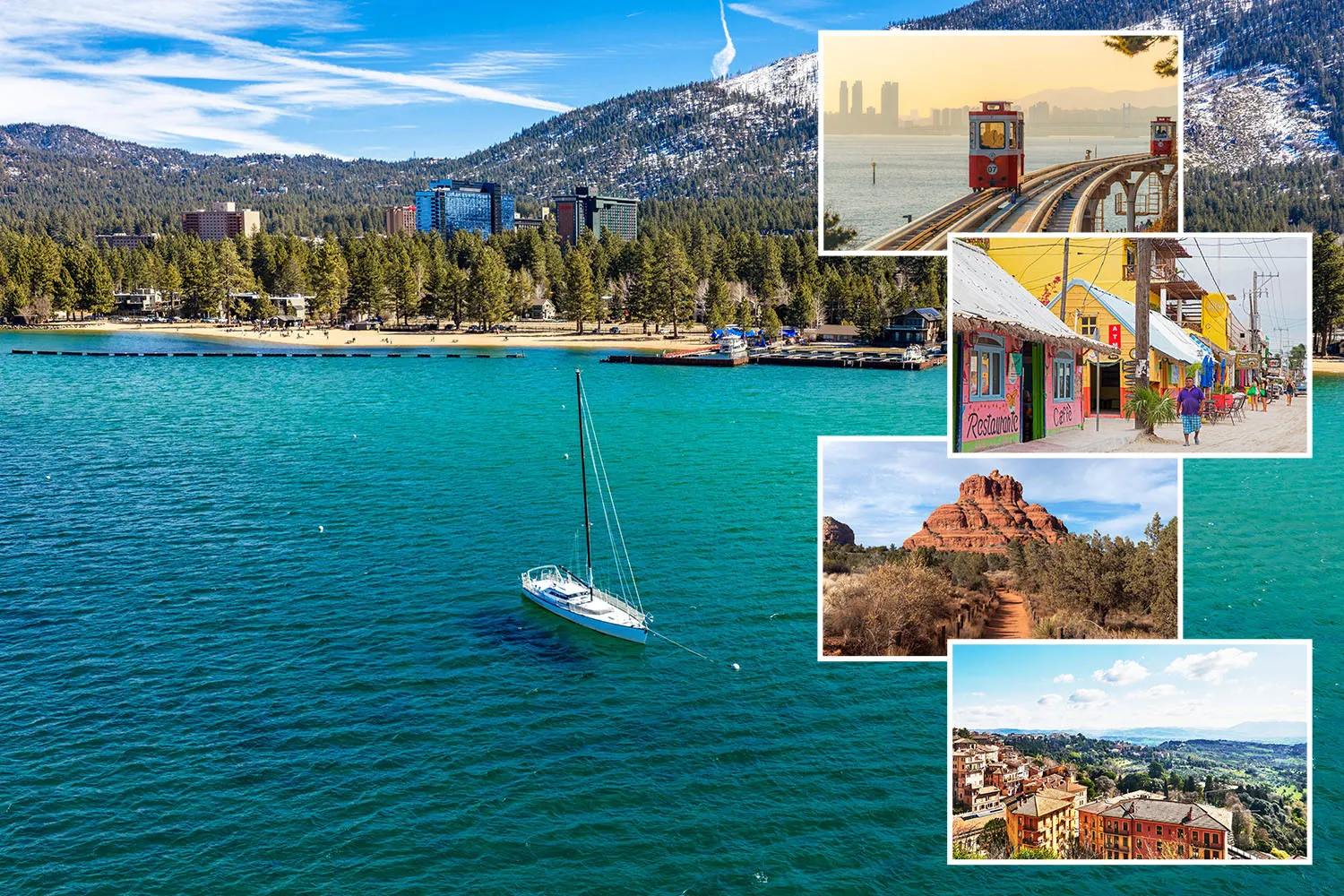
South Lake Tahoe, US
The destination that has seen the biggest jump in searches is South Lake Tahoe, up 195%.
This is one for the outdoor enthusiasts, thanks to its beautiful mountain ranges and huge lake.
It is a year-round resort, meaning it is great for hiking in the summer skiing in the winter.
Brits will need to fly to the main Reno-Tahoe International Airport in Nevada, which requires a layover at another US airport.
Hyogo, Japan
Japan is on everyone’s lips right now, but ditch Tokyo and Kyoto for Hyogo.
The prefecture in the Kansai region has seen searches increase by 95%.
It’s main attraction is Himeji Castle, as well as its hot springs too and world-famous Kobe beef.
To get there, Brits can fly to Tokyo or Osaka, then hop on a domestic flight or high speed train.
Punta del Este, Uruguay
Nicknamed the St Tropez or Monaco of South America, searches to Uruguay‘s Punta del Este are up 65%.
This is where the rich and the famous often visit, with luxury beach resorts lining the beach visited by celebs such as Shakira and Naomi Campbell.
While it is mainly known for its resort like, with yacht clubs, casinos and nightclubs, make sure to visit the unusual La Mano, a huge human hand sculpture from the 1980s.
Flights here from the UK will require a stopover, most likely in Madrid or Brazil.
Sedona, US
The desert city of Sedona in Arizona is also booming in popularity.
With searches up 55%, the destination is most known for its huge red rock formations, which have hundreds of walking and hiking trails.
It’s unique landscape means it was also used to film a number of movies (mainly Westerns between 1940 and 1960), leading to it’s nickname of Arizona’s Little Hollywood.
Brits wanting to visit should fly to Phoenix Airport, then rent a car to drive there.
Busan, South Korea
KPop Demon Hunters, KBeauty and new Virgin Atlantic flights from the UK – it’s safe to say Korea is having a moment.
But outside of Seoul, the city of Busan has seen searches up by 50 per cent.
The second-largest city in the country, it is known for its huge sandy beach (best seen from the Busan X the Sky observation deck on floor 100) and the huge Lotte World Adventure theme park.
To get there, fly to Seoul from the UK then take the high speed train to Busan.
Holbox, Mexico
The tiny, car-free island of Holbox has been a popular destination with backpackers wanting to get off the beaten track.
But the Mexican island has since seen a jump in searches, up 45%.
Beautiful soft sand beaches, clean blue waters and colorful streets of graffiti and cheap tacos – what more could you want?
Fly to Cancun Airport, then take a bus and a ferry to get to the island.
Perugia, Italy
The only mainland European destination to make the list, Perugia has seen searches increase by 35%.
Found on the hilltop, the Umbria capital is one for the foodies, being famous for its chocolate (and annual chocolate festival).
There is also Jazz festivals, historic fortresses and beautiful architecture to explore as well.
It is super easy to get to as well – Ryanair have direct flights from London Stansted from £20.
The Tweed, Australia
Most people won’t have heard of The Tweed in Australia,
But searches for the New South Wales region have gone up by 35%, according to Expedia.
It is known for its river trails and national parks, sharing a border with Queensland.
This makes it easier to get to, with Brits needing to fly to Sydney of Melbourne followed by an internal flight.
Niagara-on-the-Lake, Canada
The Ontario town, Niagara-on-the-Lake, has seen searches 35% up.
It is often said to be one of the region’s prettiest towns, and is where Niagara River meets Lake Ontario.
Expect Victorian architecture – it was built by Brits as a military defence – and unique ice wines.
Brits need to fly to Toronto Pearson Airport, followed by a drive to get there.
Chichester, UK
Bizarrely, the English city of Chichester made the list as well.
With searches up 30, the city is known for its 1,000 year old cathedral as well as its even older 2,000 year old Roman history.
It is also the only city in West Sussex, although remains one of the UK’s smallest with just 29,000 locals.