car

As crowds build at Yosemite, visitors worry the high season will be a disaster

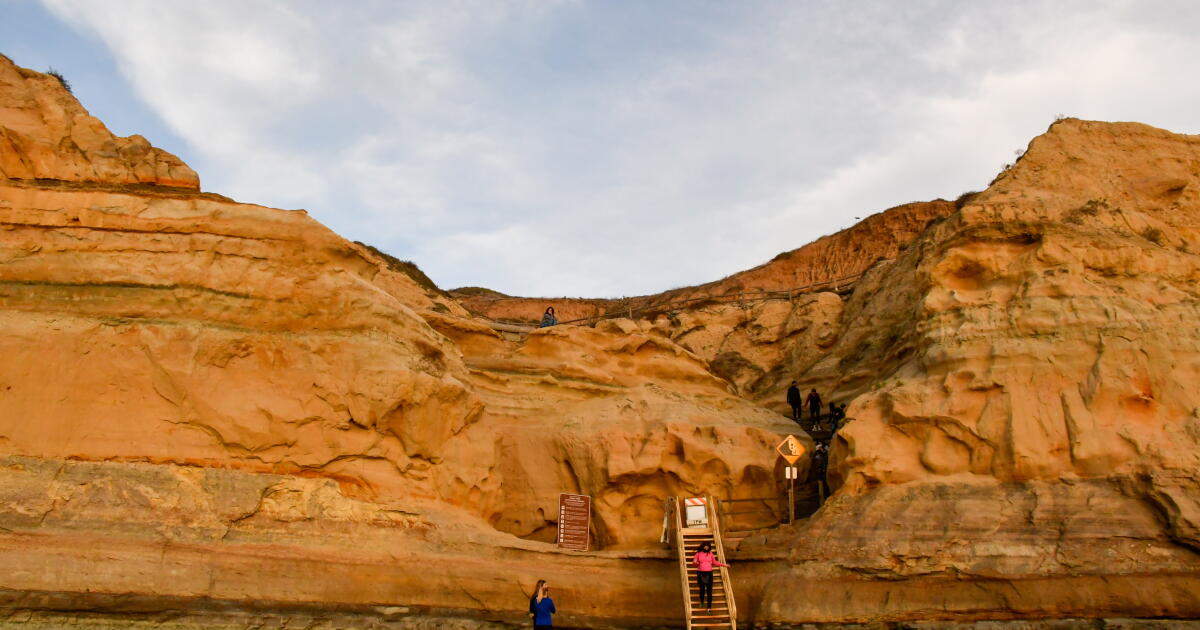
From California Rock, 1,100 feet above Yosemite Valley, the crown jewel of America’s beloved national parks spreads out beneath you.

The jaw-dropping north face of 8,800-foot Half Dome towers to the east. The silky green ribbon of the Merced River meanders through the valley floor below, astonishingly lush during the spring snow melt. Even cars in the parking lots look fabulous, their roofs and windshields sparkling in the golden sunshine like so many tiny gems.

And then you realize those gems are everywhere — as far as the eye can see — because every single parking space in the valley is full.

On the way down from that vantage point, Upper Yosemite Falls Trail, which was practically empty at 9 a.m., had turned into a human conveyor belt by 11 a.m. Hundreds of people trudged up the steep switchbacks in single file.

People hike the Upper Yosemite Falls trail in Yosemite National Park on Saturday.

People hike the Upper Yosemite Falls trail in Yosemite National Park on Saturday.

(Eric Thayer/Los Angeles Times)

That’s what’s giving parks enthusiasts heartburn this spring.

Even before the summer rush, which begins in earnest in a few days with Memorial Day weekend, California’s most visited national park is seeing enormous crowds. There have been more than 836,000 visits so far in 2026, according to National Park System data — about 100,000 more than this time last year.

The reason, according to parks advocates, is the Trump administration’s decision to abandon a reservation system implemented in 2020 to limit crowds during the COVID-19 pandemic. The system has been used on and off since then to help control the number of visitors and preserve a sense of natural tranquility.

On Saturday, there seemed to be an uneasy balance: The crowds were large but well-managed, with some visitors worried about the months ahead.

On the valley floor, as hundreds of people pressed together to gaze in awe at Lower Yosemite Falls, Jeff Wilson of Folsom said he was having flashbacks to 2023, the last time the park allowed entry without permits.

“It was just absolute bumper-to-bumper traffic all the way around the loop. Zero places to park, cars just circling all day, and people pulling off into just random spots,” Wilson said. “It was an absolute mess.”

People walk to the bottom of Yosemite Falls in Yosemite National Park on Saturday.

People walk to the bottom of Yosemite Falls in Yosemite National Park on Saturday.

(Eric Thayer/Los Angeles Times)

There were echoes of that everywhere on Saturday. Parking lots filled up fast — the lot at Curry Village was full by 8 a.m. — and cars were stashed in every unmarked flat spot their owners thought they could get away with.

Once people found somewhere to leave their cars, they didn’t dare move them. Most relied on the free shuttle that circles the valley floor. The big white buses were jammed to capacity by midday, as were the bus stops, where people often had to wait for several shuttles to pass before one arrived with room.

Still, the lines were reasonable to enter the park and pay the fee — $35 per car for U.S. residents and President Trump’s new $100 per person extra charge for foreigners. That means a family of four from abroad would have to pay $435.

People who arrived very early breezed through the toll booths, and even those who showed up after 9 a.m. said they waited only about 15 to 30 minutes. That was a dramatic improvement over recent weekends, when social media lit up with complaints of hour-and-a-half ordeals.

Traffic flowed slowly but smoothly on the main paved roads around the valley floor. There was the occasional outburst as angry drivers leaned heavily on their horns, filling the peaceful meadow with a sudden blast of urban agita, but in general, things remained calm.

“We thought it would be more crowded,” said Laura Yuen, from the Bay Area. “But it’s actually manageable. We’re on bikes, and people are making room and are courteous.”

Arriving early and stashing the car was key for Yuen and her companion.

“A couple of sights have been crowded — those were the really touristy spots. But other than that, it has been beautiful,” she said. “This is a great time of year to come.”

Whether the good times will last once the high season begins is the question.

People board a shuttle in Yosemite National Park on Saturday.

People board a shuttle in Yosemite National Park on Saturday.

(Eric Thayer/Los Angeles Times)

Since Trump returned to office in 2025 and unleashed Elon Musk’s Department of Government Efficiency on the federal work force, the National Park System has lost nearly a quarter of its employees to layoffs and buyouts, according to the nonprofit National Parks Conservation Assn.

And the Trump administration has proposed about 3,000 more job cuts — roughly another 25% — in the coming year. Trump has also proposed slashing nearly $800 million from the park system’s roughly $3-billion operating budget.

All of which risks tipping the delicate balance into chaos and gridlock, critics warn.

By 2 p.m., a flashing sign at the entrance to Curry Village advised that the parking lot was full and directed people to try their luck elsewhere.

Still, dozens of drivers crept around the lot, hoping to pounce if someone pulled out. It looked like an especially depressing way to spend an afternoon surrounded by some of the most celebrated natural wonders on Earth.

Kunal Khandwala of San José was among those searching for a spot until he gave up and pulled over, blocking a few cars but ready to move if their owners returned and needed to leave.

His friends had hopped out and joined the line at the Curry Village Pizza Deck, waiting to grab some food and go find a quiet spot for a picnic — far from the village.

The situation was “testing,” Khandwala said, but not intolerable if you relaxed and remained patient.

And anything was better than subjecting yourself to the shuttle, he joked.

People raft down the Merced River with Yosemite Falls in the background in Yosemite National Park on Saturday.

People raft down the Merced River with Yosemite Falls in the background in Yosemite National Park on Saturday.

(Eric Thayer/Los Angeles Times)

“The waits are insane,” he said, pitying people who had only a day in the park and were hoping to hit all of the highlights by bus. “There’s no way. You’re not going to see everything you want if you rely on the shuttle.”

Parks officials were unable to provide the number of visitors who arrived on Saturday, or compare that to the crowds on recent weekends.

But with Memorial Day looming, this weekend felt like the calm before the storm.

Which is why Wilson, the frequent visitor from Folsom, said he is “very, very much pro-reservation. It is a hassle — you have to plan ahead — but it just makes it a better experience for everybody.”

He had also brought his bike, which seemed to be the best way to elude the masses.

“This is my favorite place in the world, no matter what the crowds are like,” he said before pedaling off. “As long as you can get in, come, have a good time, you’ll love it.”

Source link

EastEnders fans ‘work out’ who Mark Fowler ‘kills’ after car fire twist

EastEnders’ Mark Fowler has resorted to desperate tactics to clear his debt to gangster Delaney, but fans think there’s a further twist on the way that will be fatal for one character

EastEnders fans are convinced Mark Fowler’s latest desperate antics will prove fatal for one character. In Thursday’s episode, airing on 14 May, Mark learned that his debt to gangster Russell Delaney had been doubled after his father, Grant Mitchell, threatened the drug lord. In his panic, his aunt Sam, managed to convince him to do something drastic.

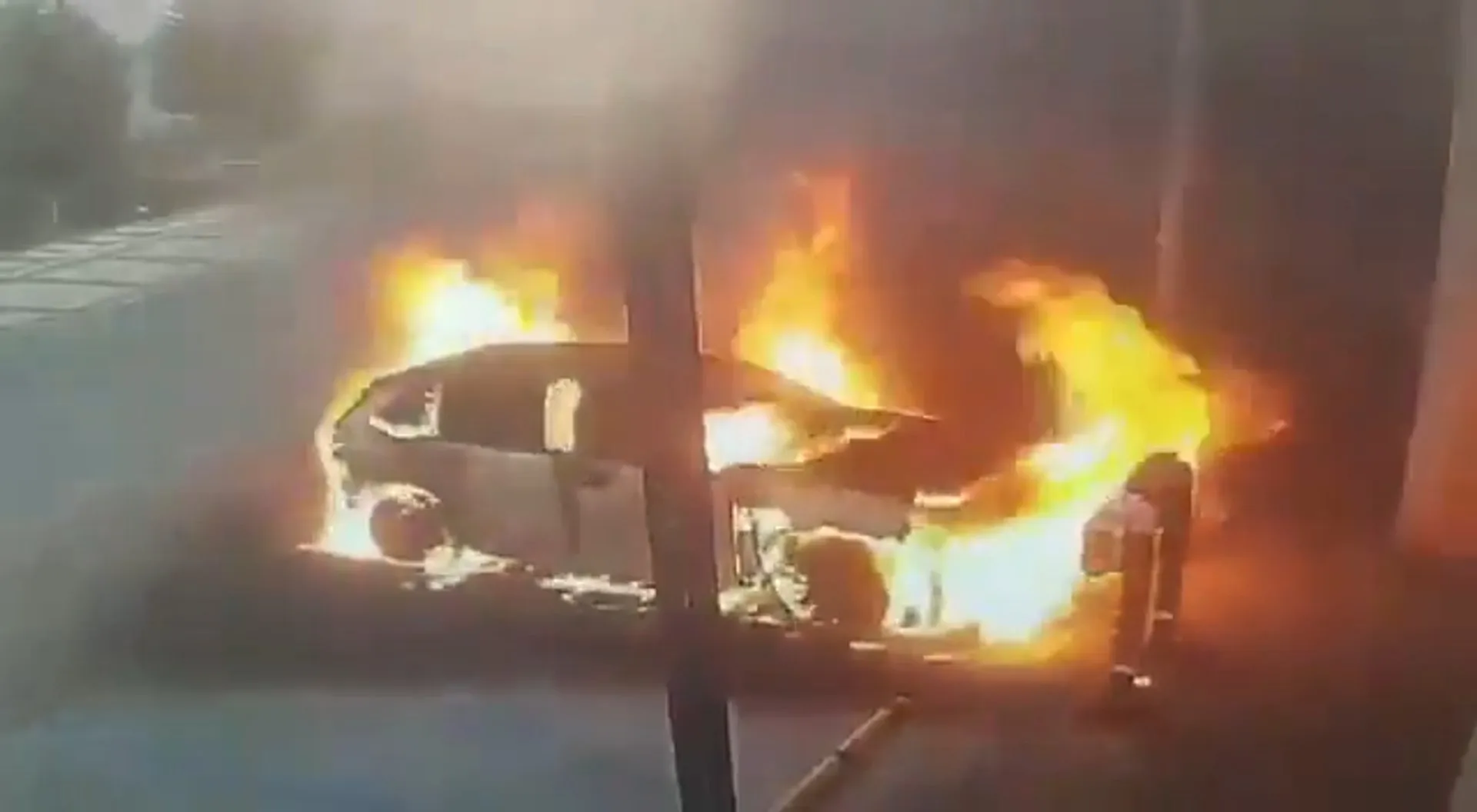
Sam told Mark that he needed Lauren Beale to start working with him on stealing cars and selling them on her car lot. Lauren refused to do that before but Sam suggested that if Mark made it so that she had no choice but to turn to him, then he could get his money. As such, they took a car Lauren was due to sell and set fire to it.

READ MORE: EastEnders’ Cindy’s real plan for Max ‘uncovered’ by fans after Ian commentREAD MORE: Emmerdale villain Patsy Kensit makes bombshell return as Sadie King after 20 years

Fans noticed that just before this scene, Bea Pollard, who had been kicked out of Honey and Billy Mitchell’s home after stealing Honey’s identity, was sleeping rough on some bin bags. Some thought she might be too close to the fire and die as a result, as the character is thought to be leaving soon.

“I think Bea was bedding down in one of the lock ups by the car,” one fan said. “Hopefully that will be her leaving scene.” Another added: “Was that Bea asleep on the ground when Mark threw petrol all over the car and put a lighter to it?” A third said: “I thought the same thing. Near the car – bet she saw it all.”

But others pointed out that it looked more like Bea was in McClunky’s, the chicken shop where she works. One wrote: “Bea camping out at mcklunky’s on a bin bag…”

Another said: “Sure she was in the chicken shop.” A third added: “She was in the chicken shop, you could see counter in the background.”

This comes as Bea’s actions left Honey hospitalised. When it was revealed that Bea used Honey’s identity to open a credit card account, which landed her friend in £5,000 debt, Bea tried to convince Honey that it was all a misunderstanding.

When that didn’t work, she said she only did it so that she could buy things for people and make them like her. It was close to persuading Honey to let her stay, until Honey’s husband Billy came home.

Billy threw Bea out on her ear. In a fit of rage, Bea flipped the safety lever on his ladder, so that when he went up to clear the drains, he would fall.

But in a sick twist, it was Honey who went up the ladder. She fell from the ladder and couldn’t be roused by Billy, as Bea watched on from the shadows.

Honey was rushed to hospital, where she eventually woke up. But despite convincing everyone that she wasn’t responsible for Honey’s fall, Bea was not allowed to stay with them in Walford and was told to leave.

Like this story? For more of the latest showbiz news and gossip, follow Mirror Celebs on TikTok, Snapchat, Instagram, Twitter, Facebook, YouTube and Threads.


Source link

How Route 66 inspired Disney’s ‘Cars’ and Car

Route 66 has its tendrils throughout SoCal, and especially in the L.A. area, winding through Pasadena, West Hollywood and culminating in Santa Monica. But the most loving ode to Route 66 may in fact be at the Disneyland Resort, specifically at Disney California Adventure.

Stories, photos and travel recommendations from America’s Mother Road

Cars Land opened in 2012 as part of a reworking of the theme park and at long last gave it a striking land that could rival — and in many cases surpass — those of its next-door neighbor, Disneyland. Flanked by sun-scarred, reddish rocks that look lifted from Arizona, Cars Land is a marvel of a theme park land, with its backdrop mountain range ever so slightly nodding to the fins of classic Cadillacs from 1957 to 1962. That design element is a salute to the Cadillac Ranch in Amarillo, Texas, where 10 vintage Cadillacs are buried nose-first in the ground that to many resembles a 20th century Stonehenge.

Yet before the area was attached to the 2006 film, it was envisioned as a theme park destination dedicated to roadside attractions and trips along the so-called Mother Road. Cars Land is a make-believe area based on a fictional town from an animated film, but its roots are decidedly real.

Cadillac Ranch has become one of Amarillo's top attractions. Visitors are invited to add their own spray-painted touches.

Cadillac Ranch, an artwork made from 10 old cars by the Ant Farm artists’ collective in the 1970s, has become one of Amarillo’s top attractions. Visitors are invited to add their own spray-painted touches.

(Christopher Reynolds / Los Angeles Times)

A theme park mountain range with a street inspired by Route 66.

The backdrop mountain range of Radiator Springs Racers is a nod to Cadillac Ranch. The peaks are designed to look like the tail fins of classic cars.

(Mark Boster / Los Angeles Times)

“We very much acknowledge that up front, that you’re walking down Route 66,” says Kathy Mangum, the retired Walt Disney Imagineer who served as the executive producer of Cars Land.

“But you’re also not walking down a part of Route 66 that exists anywhere,” Mangum continues. “There’s no part of Route 66 where you’re looking up at a Cadillac range surrounded by red rocks. It’s the spirit of Route 66. I wouldn’t even call it a ‘best-of.’ It’s just a little bit of this, a little bit of that, and combined it feels real.”

Tour guide Michael Wallis, left, and Walt Disney Imagineer Kevin Rafferty during a research trip at Cadillac Ranch in 2008.

Tour guide Michael Wallis, left, and Walt Disney Imagineer Kevin Rafferty during a research trip at Cadillac Ranch in 2008.

(Kevin Rafferty)

Before those at Walt Disney Imagineering, the secretive arm of the company devoted to theme park experiences, were even aware that Pixar Animation Studios was working on the “Cars” film, an automotive-focused land was in the planning stages for Disney California Adventure. The park had opened in 2001 and had struggled in its early years to pull in crowds, with audiences zeroing in on a lack of Disneyland-style attractions and an absence of grandly designed vistas.

In an effort to rejuvenate the park, then-Imagineer Kevin Rafferty envisioned an area to be called Car Land — without the “s” — pulling heavily from his family’s road trips and Route 66-like roadside attractions and oddities. Among its standout attractions was to be one initially named Scoot 66, later changed to Road Trip, USA, a slow-moving ride that took guests on a cross-country journey through nature and roadside quirkiness, although its showcase scene would have been a trip trough a miniaturized Carlsbad Caverns, a bit of a detour from Route 66.

“It was kind of tongue-in-cheek,” says Rafferty, now retired, of the never-built ride. “You were going to be seeing all these roadside attractions that would draw you in, like giant bunnies.”

Mater's Junkyard Jamboree in Cars Land in the Disney California Adventure Park.

Mater’s Junkyard Jamboree brings the rusty, old tow truck character from the “Cars” movie to life in Cars Land at Disney California Adventure. (Mark Boster / Los Angeles Times)

An artwork in Seligman, Ariz., pays homage to the Disney-Pixar "Cars" movie, which was heavily inspired by the town.

An artwork in Seligman, Ariz., pays homage to the Disney-Pixar “Cars” movie, which was heavily inspired by the town. (Mark Lipczynski / For The Times)

Rafferty believed a place such as Car Land would be ripe for exploration in a Disney park, as it was to be set from the late 1950s to the early 1960s and tap into a collective nostalgia for a time when a vehicle meant the freedom to explore the open road. Cars Land today still has some of that ageless energy, boasting a vintage rock ’n’ roll soundtrack and a strip of a street filled with colorful neon, its lights, especially at night, beckoning guests to come closer.

“The reason why I thought it would fit into a Disney park, especially Disney California Adventure, is because cars are so much a part of the California story,” Rafferty says. “Cars are designed in California, even though they’re built elsewhere. There’s more custom shops in California. There’s more design studios in California. There’s more car clubs. And all the cars songs. ‘She’s so fine, my 409.’ It was all the Beach Boys and Jan and Dean.”

A smattering of neon signs against the night sky in a theme park.

The neon signs of Radiator Springs. Flo’s V8 Cafe isn’t a direct match for any Route 66 diner, but it was inspired in spirit by the Midpoint Cafe in Adrian, Texas.

(Paul Hiffmeyer / Disneyland Resort)

Development on Rafferty’s Car Land idea would change course when Imagineering and Pixar eventually aligned. But it was also a shift that would more formally ground the area in the culture of Route 66, which heavily influenced the film. Both the filmmakers and, later, those with Imagineering, embarked on 10-day research trips along the road led by historian Michael Wallis, author of “Route 66: The Mother Road.” Those at Pixar, in fact, were so charmed by Wallis’ tours that the author was asked to voice the role of the film’s sheriff.

Wallis says he took the teams out in rented Cadillacs. “I like to stop every 300 yards,” Wallis says. “If I’m doing a road trip, I get into it. So we stopped to move box turtles off the road. I waded them into winter wheat to dance, to pick wild grapes. I introduced them to people that I guaran-damn-tee that they never would have met, the great characters of the road, and I showed them the man-made and natural sites of the road.”

Though the fictional “Cars” and Cars Land community of Radiator Springs has no single inspiration, it echoes the scenery and history of several small towns between Tulsa, Okla., and Kingman, Ariz., including Tucumcari, N.M., Seligman, Ariz., and Oatman, Ariz. And the single, graceful bridge that is centered upon the land’s backdrop mountain range closely resembles Pasadena’s own Colorado Street Bridge, although there’s no roaring waterfall next to the original.

A small collection of roadside shops along a dusty Route 66 road.

Scenes from Route 66 in Seligman, Ariz. The town was one of the inspirations for the fictional “Cars” and Cars Land town of Radiator Springs.

(Mark Lipczynski / For The Times)

Cars Land showcasing characters and settings from the Disney-Pixar film, "Cars."

The centerpiece bridge of the Cars Land mountain range was modeled after a local landmark. (Paul Hiffmeyer / Disneyland Resort)

The Colorado Street Bridge in Pasadena, an inspiration for the Cars Land structure.

The Colorado Street Bridge in Pasadena, an inspiration for the Cars Land structure. (Adam Markovitz)

Elsewhere, Ramone’s House of Body Art connects with the U-Drop Inn, a 1936 Art Deco gas station in Shamrock, Texas, that now serves as a visitor center and cafe. The Cozy Cone Motel nods to the Wigwam motel chain, which once included seven locations from Kentucky to California. Two remain in business along Route 66: the Wigwam in San Bernardino and another in Holbrook, Ariz.

While Imagineers had visual references from the animated film, Mangum says the research trip was invaluable in lending authenticity to the park.

“We could walk into a building in Shamrock, Texas, that looks so much like what Ramone’s House of Body Art looks like and see that those tiles are made of raised terra-cotta,” Mangum says. “So we could get the actual texture. It’s a movie world, but it’s also a real world.”

Flo’s V8 Cafe isn’t a direct match with any Route 66 eatery, the Imagineers say, but was certainly influenced in spirit by the Midpoint Cafe in Adrian, Texas.

The Midpoint Cafe in Adrian, Texas, celebrates the halfway point on Route 66 between Chicago and Los Angeles.

The Midpoint Cafe in Adrian, Texas, celebrates the halfway point on Route 66 between Chicago and Los Angeles.

(Christopher Reynolds / Los Angeles Times)

“We sampled all their pies and food and made copious notes on this stuff,” Rafferty says. “The two women who owned the Midpoint Cafe had what they said was their mother’s recipe for ‘ugly crust pies.’ We fell in love with ugly crust pies. I met with the head chef of Disneyland, who was a Frenchman at the time, and I said we wanted to serve ugly crust pies at Flo’s V8 Cafe. And he said, ‘No, no, no, nothing at Disneyland will be ugly.’”

No, but it may be influenced by abandoned buildings. Mangum says a key locale for the land was the deserted structures of Two Guns, Ariz. Gas station remains led to sketches that would inspire parts of the “Stanley’s Oasis” area of the Radiator Springs Racers queue, which Rafferty and company filled out with an oil service station and then a building composed of empty oil bottles. The story goes that Stanley’s Oasis is a roadside attraction settlement that led to the development of the town of Radiator Springs.

A hand holds up a chocolate and vanilla swirled soft serve cone in front of an orange cone-shaped stand

At the Cozy Cone Motel, a string of cone-shaped food stalls sell quick bites such as swirled soft-serve cones. (Stephanie Breijo / Los Angeles Times)

The Cozy Cone is based on the real-life Wigwam Motels.

The Cozy Cone is based on the real-life Wigwam Motels. (Christopher Reynolds / Los Angeles Times)

“That kind of Route 66-inspired story was all made up,” Rafferty says. “It wasn’t in the film.” That backstory, however, would inform the 2012 short “Time Travel Mater.”

The enduring strength of the land, however, isn’t just due to the popularity of the animated properties that led to it. While Route 66 wasn’t magic for everyone — the history of the road is dotted with tales of extreme poverty and horrific racism — it’s become romanticized as a slice of Americana and stands as a jumping-off point to further delve into our past.

The land is, in a word, timeless. It’s also representative of the ideal of a working small town, the sort of place we forever long for. “It may not be the America of today,” Mangum says, “but in a way it is.”

Times staff writer Christopher Reynolds contributed to this report.

Source link

‘I found one of Britain’s best road trips, and tried it in an electric car’

From castles and coastlines to moorland views, we drove the Northumberland 250 in an electric car to see how easy it was to manage the rural route

‘We’re driving the Northumberland 250,’ I told my husband. He looked at me cautiously.

‘It’s the most spectacular route in England, past more than 20 castles, up the Northumberland coast and over the Lindisfarne causeway – which you can only drive at low tide. Then it nips over to Scotland, to a town where Mary Queen of Scots stayed, and back down through England’s biggest forest and the UK Dark Sky Reserve, and along Hadrian’s Wall.’

‘That does actually sound brilliant,’ he said.

‘We’re doing it in an electric car so we can see how easy it is.’

‘Oh no,’ he said.

With petrol prices rocketing, a road trip feels like a luxury too far at the moment, and I liked the environmental appeal of not bringing our exhaust fumes all the way north with us. But we don’t actually have an electric car so – confident that we would find enough charging points – we borrowed one.

Our Škoda Enyaq was a nippy SUV, that made short work of brine-soaked causeways, forest track off-roading and 20% hills, even with junctions at the top (oh, hill starts with an electric engine – where have you been all my life?). It promised as much as 300 miles on a full charge but, bearing in mind that most road trips end up at at least double the loop mileage, we plotted two charging points every day, and kept our fingers crossed that they would a) be working, and b) not have petrol cars parked in them.

Electric car charging on a UK road trip: what to expect

Charging electric cars is still a bit of a lottery – slightly different at every machine. You never rock up at a petrol station forecourt and wonder, ‘how does this pump work, then?’ – but you do with chargers. Most have an app you have to download to use them, so there are moments standing in the rain trying to get signal. A saving grace is other electric car users who are amazingly helpful. Less helpful are petrol drivers who park on the charging spaces.

Charging anxiety got me once, as I poured over the map on our way to Jedburgh, where only one charger showed as working, and nothing else was reachable, but it turned out fine – it was a fast charger so we only had to wait 15 minutes for the previous car to top up before we could.

The Northumberland 250 route: castles, coast and countryside

Northumberland has so many castles. One could get castle-fatigue if they weren’t so incredibly impressive. Bamburgh makes a play for Most Spectacular Castle Anywhere. Alnwick is where Harry Potter learns to fly his Nimbus 2000. Lindisfarne is so remote it becomes an island twice a day. Most deserve at least half a day to do them (and their entrance fee) justice, so my advice is pick one or two and see the rest in passing.

Dunstanburgh was my favourite – a mighty, atmospheric ruin we saw on a sunset walk from the fishing village of Craster. It felt like going back in time – there wasn’t another soul about. But I also loved smaller, free-to-visit places like Edlingham and Twizzel. In Alnwick we skipped the castle in favour of super-sized cherry scones at the Strawberry Lounge café and at Bamburgh we marvelled at the fortress from the beach, but visited The Potted Lobster for lunch instead (one of my best decisions: the Smoked Haddock Chowder).

Holy Island (Lindisfarne) took a little planning around tide times and we arrived in a rainstorm (a rare letdown in a sunny trip). Too wet to even leave the car, we returned the next day to see it in sunshine – the causeway was worth driving four times.

Leaving the coast at Berwick-upon-Tweed I worried the best was behind us, but the drive only got more beautiful. We skipped back and forth over the Scottish border, and headed through Kielder Forest along the 12-mile off-road track, Forest Drive, then down to the wide horizons of the North Pennines.

Where to stay on the Northumberland 250: hotels, lodges and pubs

Picking our pitstops was one of the highlights of the trip. I favoured places with EV charging, but in the end, we only plugged-in for one overnight, fast-charging instead in towns where we lunched. There is a charger on Holy Island, for instance, and one at Kielder Castle – remoteness is no obstacle. I loved the pace this brought to the trip, forcing stops in places we’d normally have driven straight through. It meant we discovered little gems, like Fountain Cottage Café in Bellingham.

We stayed in the lakeside lodge at Blossom Plantation (no EV charging), and drank cava in the hot tub under the stars. The Most Northerly Hotel in England, Marshall Meadows just beyond Berwick, is a ritzy venue and country house hotel. The Pheasant Inn at Kielder Water is everything you could want from a cosy fireside pub, family run with home cooking by Robin, favouring local ingredients – some from their own garden.

I finished the trip with three revelatory resolutions. One, that Northumberland was an epic holiday destination, offering far more than you can pack into five days. Two, that driving the route in an electric car is not only possible, but adds something unexpected – a more thoughtful way to travel. And three, that my next car will be electric.

The Northumberland 250 Itinerary: 5-day trip breakdown

Day 1

Newcastle to Dunstanburgh, via Alnwick, Warksworth and Craster

Highlights and stops: Edlingham Castle (free), Alnwick town for cream tea at The Strawberry Louge, Warkworth Castle, Alnmouth village and beach, Caster village and walk to Dunstanburgh Castle.

Overnight: Zambezi Lodge at Blossom Plantation, near Fallodon

Day 2

Dunstanburgh to Berwick-up-Tweed, via Bamburgh and Lindisfarne

Highlights and stops: Holy Island causeway / Lindisfarne (first thing, due to tide times), Bamburgh Castle, beach and lighthouse, lunch at The Potted Lobster. Berwick-up-Tweed for fish and chips.

Overnight: Marshall Meadows Manor House Hotel, Scottish Border

Day 3

Berwick to Kielder Water, via Twizel, Jedburgh and the Kielder Forest Drive (with a quick return visit to Lindisfarne first thing)

Highlights and stops: Norham Castle, Kirk O’Steil church, Twizel Caslte and river walk to Twizel Viaduct, Jedburgh town, Hindhope Linn waterfall, Kielder Forest Drive

Overnight: The Pheasant Inn, Kielder

Day 4

Kielder to Blanchland, via Hadrian’s Wall and Allenheads

Highlights and stops: Kielder Water and Northumberland National Park, Hadrian’s Wall, Sycamore Gap Tree Memorial, North Pennines National Landscape

Overnight: The Lord Crewe Arms, Blanchland

Day 5

Blanchland to Newcastle, to get the train home

Highlights and stops: Hexham (with its Abbey) Corbridge town, Prudhoe Castle

We drove the route – a total of 530 miles including all our detours and extras – in a fully electric Škoda Enyaq

Source link

Three police officers killed in car bomb attack in northwest Pakistan | Armed Groups News

Bomber and several fighters detonate explosives-laden vehicle near security post in Bannu, Khyber Pakhtunkhwa, near Afghanistan.

A car bombing at ⁠a police post followed by an intense firefight has killed at least three officers ⁠in northwestern Pakistan, according to police and security sources.

The attack took place in Bannu, a district in Khyber Pakhtunkhwa province bordering Afghanistan, late on Saturday.

Recommended Stories

list of 3 itemsend of list

Police official Zahid Khan told The Associated Press that a suicide bomber and several fighters detonated an explosives-laden vehicle near a security post. Shortly after, multiple explosions were heard and the security post collapsed from the impact of the blast, he said.

Pakistan’s Dawn reported that nearby civilian areas also suffered severe damage due to the blasts, and two civilians were injured.

The Reuters news agency, citing security officials, reported that after the bombing, there was an ambush on police personnel rushing ⁠to the scene to provide backup.

Police official Sajjad Khan told Reuters that more casualties were feared. He added that fighting was ongoing and the extent of the damage would only be known once ‌the operation was over.

Police sources told Reuters ⁠the aggressors also used drones in the attack.

Ambulances from ⁠rescue agencies and civil hospitals were dispatched to the scene, with officials saying a state of emergency has been declared in government hospitals in Bannu.

No group immediately claimed responsibility. However, such attacks have the potential to reignite fighting along Pakistan’s border ⁠with Afghanistan.

The worst fighting in years erupted ⁠between the allies-turned-foes in February, with Pakistani air strikes inside Afghanistan that Islamabad said targeted fighters’ strongholds.

Fighting has since eased, with occasional skirmishes breaking out along the border, but no official ceasefire ‌has been brokered.

Islamabad blames Kabul for harbouring armed groups who use Afghan soil to plot attacks in Pakistan. The Taliban has denied the allegations and ‌said ‌militancy in Pakistan is an internal problem.

The Pakistan Taliban, known as Tehrik-e-Taliban Pakistan (TTP), and allied fighter groups have carried out similar attacks in the past. The Pakistan Taliban is a separate group but is often aligned with the Afghan Taliban, who seized power in Afghanistan in 2021.

Source link

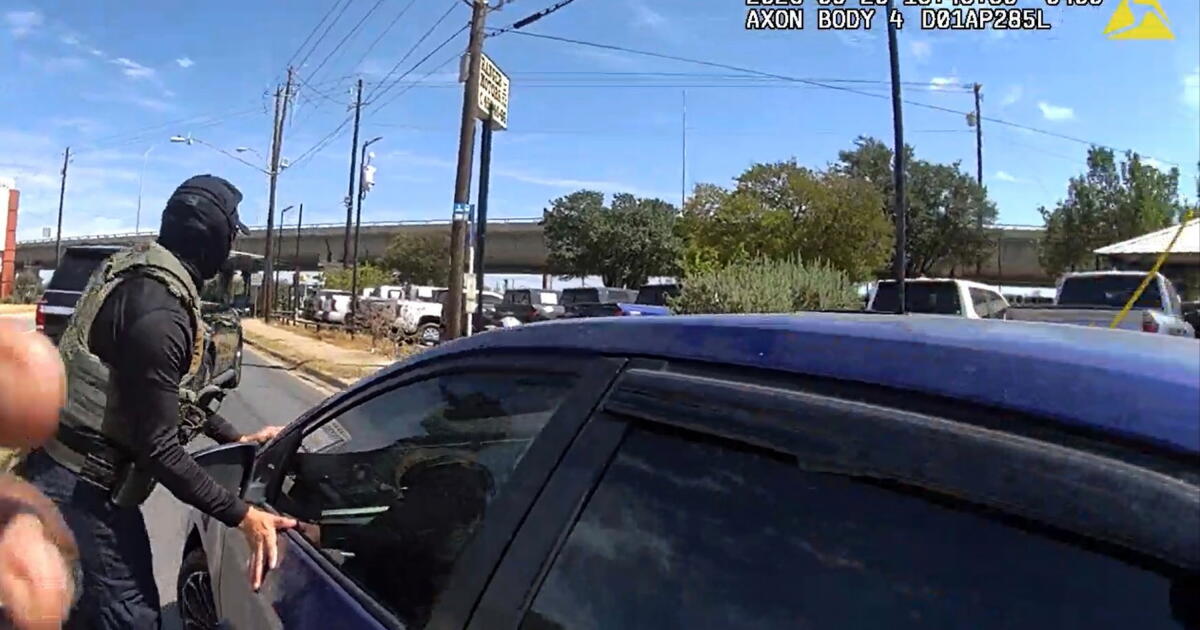
Standoff ends in surrender after man barricaded in car blocks streets near state Capitol

The streets near the state Capitol emptied Monday after a man barricaded himself in his parked car near the building for more than two hours, prompting fears of a possible bomb attack.

Sacramento police and the California Highway Patrol cordoned off several city blocks as SWAT officers and hostage negotiators attempted to make contact with the man, who had scrawled “cops or criminals” and “I just want justice” on his Mazda sedan and plastered the car windows with paper signs.

He voluntarily surrendered without incident just over two hours after police were called to the scene at 1:47 p.m. The Sacramento Bee identified the man as Edgar Napoles-Rodriguez, 27, of Sacramento, though the suspect’s name has not yet been released by officials.

According to court records, the former roommate of Napoles-Rodriguez was granted a temporary restraining order against him last week. The roommate alleged in a legal filing with the Sacramento County Superior Court that Napoles-Rodriguez threatened her with a baseball bat and also threatened to burn down her house.

————

FOR THE RECORD

April 20, 11 a.m.: An earlier version of this post referred to Edgar Napoles-Rodriguez’s female former roommate as a man. It also misstated Napoles-Rodriguez’s age as 28; he is 27.

————

Law enforcement snipers were spotted on the roof of the Capitol during the standoff. A police robot was used when officers attempted to contact the suspect in his car, which was parked on L Street directly in front of the Capitol building. Before surrendering, the man exited the car and began shouting, “Want to shoot me? Shoot me!”

“He may have not had the best of intentions or be the clearest of mind,” said Officer Matthew McPhail, spokesman for the Sacramento Police Department.

The Capitol was not evacuated during the incident, but one entrance was closed.

The Assembly adjourned early Monday but was scheduled to vote on several big issues, including a ban on smoking on college campuses. It wrapped up the meeting abruptly before 3 p.m.

The Senate went through its full agenda as planned and wished Sen. Jerry Hill (D-San Rafael) a happy birthday before adjourning after 3 p.m. without any announcement of the security situation going on outside the building.

Asked about the situation, Claire Conlon, a spokeswoman for the Senate President Pro Tem Kevin de León said, “It’s our policy not to discuss Capitol security details.”

The state Capitol’s security has been ramped up considerably over the last decade.

The most significant incident came late on the night of Jan. 16, 2001, when a big-rig truck smashed into the south side of the historic building during a late-night legislative session on California’s energy crisis. The driver, a 37-year-old man with a history of prison time and mental health issues, slammed his tractor-trailer into the granite portico of the building, and it erupted in flames.

That, plus the terrorist attacks in New York City and Washington, D.C., that fall, sparked a slow but steady move toward increased security around the 142-year-old building.

Now, the perimeter is surrounded by barricades that rise up from the sidewalk, and all public visitors are routed through metal detectors and bag-scanning areas on the north and south sides of the building.

Times staff writers Liam Dillon and Patrick McGreevy contributed to this report.

phil.willon@latimes.com

Follow @philwillon on Twitter for the latest news on California politics

ALSO

Are you an independent voter? You aren’t if you checked this box

Los Angeles Times wins Pulitzer for San Bernardino terrorist attack coverage

California doesn’t have enough housing, and lawmakers aren’t doing much about it


Source link

Car left on beach submerged by sea and rowed over by paddleboarder

Nobody seems to know whose car it is or why it was left there

Car swallowed by sea and rowed over by paddleboarder

Video shows a car left on a beach submerged by the sea – and rowed over by paddleboarders. Locals in the Welsh seaside village of Abersoch were left stunned after seeing the luxury 4×4 become fully engulfed by the tide.

Beach-goers spotted the Land Rover Discovery half-submerged in the water on Sunday – less than two miles away from Bear Grylls’ private island.

The expensive car, which sells for around £80,000 was spotted by one paddleboarder at around 7.30am, just over two hours before high tide. The car could be seen floating in the water still attached to a tow rope.

The paddleboarder’s husband, who was walking his dog, then used his drone – which he had brought to the beach in an effort to spot dolphins – to capture imagery of the vehicle as it became fully submerged.

The 45-year-old then took video as she paddle boarded over the top of the car at around 8.55am – still just under an hour before high tide. Locals in the village say they have no idea who the car belongs to.

“It’s gone mental in this tiny little Welsh village,” the paddleboarder said. “I don’t know (whose car it is).

“The local farm pulled it out with about three tractors and diggers. It’s a very, very popular seasonal tourist village. Everyone thinks it’s hilarious, wonderful – there was a big crowd watching it being pulled out, but still no-one knows whose it is.”

The paddleboarder suspects the car must have been placed there overnight – with the previous low tide at around 4.30 in the morning.

She added: “Because of the tide, you know there was some kind of foul play on the beach at night, around 3 or 4am, for the tide to come in over it.

“It happens, but they usually get towed out. Because it was the middle of the night, it didn’t. It did have a tow rope on the back that was floating up out the water, so maybe someone tried to pull it out.”

Source link

With ‘Eterno,’ Calle 24 is ready to move on from the glitz

Like most of his música mexicana contemporaries, Diego Millán, better known artistically as Calle 24, sang about the excesses of living the rock star life — the money, the cars, the booze and the women.

Since signing with Street Mob Records — the independent label founded by Fuerza Regida frontman Jesús “JOP” Ortiz Paz — in 2020, the singer-songwriter has been responsible for hits like “Que Onda, ” which featured labelmates Chino Pacas and Fuerza Regida. The trombone-laced earworm about a deboucherous tryst was a breakthrough for Millán, reaching No. 61 on the Billboard Hot 100 after it debuted in August 2023.

These days, the 23-year-old Chihuahua-born artist is dialing down the glitz, opting for songs that aren’t about living the luxurious life.

“Money brings more problems,” Millán tells me inside an Italian restaurant at the Americana at Brand, Glendale’s monument to opulent consumerism. “Because the more money you have, the more things you have to support.”

In April, Millán released “Eterno,” his fourth studio album. The 15-track LP largely forgoes the boisterous brass section that’s become a staple in the genre in favor of stripped-down tracks about being disillusioned with newfound wealth (“10 de mayo”), his mental health (the gritty “Si Me Ven”) and romantic heartbreak and anguish (“Solo”). He also touches on a topic that might be too taboo to discuss: Mexico’s widespread systemic relationship of organized crime (“El Sentrita”).

Millán says this is the most authentic he’s ever been in his music, something he attributes to moving back to Mexico, a country he believes is deeply misunderstood and has profoundlyshaped his personality.

“[Mexico] is filled with deep values, strong ethics and a profound sense of social understanding,” he said.

While música mexicana artists might feel compelled to move to the states in search of fame and fortune, Millán now finds freedom in his native country — and through “Eterno.”

“Now, I can be myself,” he said.

The follwing interview was conducted in Spanish, and has been condensed and edited for clarity.

In “Solo” you talk about romantic loneliness. Why was that vulnerability important to include in this album?

I prefer to approach those themes from a more grounded perspective. With that song, I wanted to really open myself up to that feeling and express regret, that sense of loneliness that comes with saying “I screwed things up.” I feel that’s how you establish a deeper connection with your audience. After all, so many people out there don’t have luxuries or material things like that so how do you get to them? With emotion. A feeling that expresses regret, including with the phrase: “I know I’m a piece of s—, but you know that I love you.”

It reminds me of Joan Sebastian’s “Un Idiota,” in which the singer admits he still loves the person he wronged, and that he knows he messed up.

That’s what I wanted to do too, talk about the human experience and what it is. I wanted people to listen to it as they’re drinking, and all of a sudden that wave of feelings just hits you like a slap to the face.

The song “Si Me Ven” talks about burnout and the idea that money isn’t as fulfilling as one might think. Did you base it out of your own personal experiences?

This song fits like a ring on my finger. They say that money won’t make you happy and it’s true. In my case, I spent five years without seeing my family and missed many things.

On Instagram, you told fans: “I feel like I am more human than artist, I hope you all can understand. Sometimes I wake up wanting to do nothing, or sometimes asking myself what am I doing? Where am I going?” Do you feel drained by this career?

Of course [being a successful musician] is my dream, but I didn’t know all that it would entail. To this day, it has been draining, and there’s some days where I don’t feel like doing anything because I’m more of a person than an artist. There are some colleagues that do live life as if it were a movie, but I’m more of a homebody.

How do you make sense of the industry where part of the allure is tied to wealth, fancy cars and material goods?

I obviously love cars. Any normal person would love those types of things. And when you work hard, of course you fill the gaps you had when you were younger. But I don’t like putting it in people’s faces.

You say this, but your “Eterno” album cover shows you with a stack of money.

[Laughs] But there’s something curious about that cover. I was feeling down that day, there was just a lot of sadness around that time. Yet there I am, surrounded by all that stuff and that’s where the clash lies, you know? That contrast is what gives my album cover its depth.

Let’s talk about “El Sentrita.” The song contextualizes organized crime as a systemic issue. What prompted you to write about this topic?

I wanted to frame it as social commentary, addressing what has been going on in Mexico for decades, as well as the obstacles we face as artists who aren’t allowed to express ourselves or certain themes through music. Just as we were discussing right now, rap used to be how artists delivered social commentary through the medium of music. I would like to do that as well.

I figured if the government tells me I can’t sing a corrido, then I’ll use a corrido to offer them some criticism instead. You have to pay close attention to follow the character’s storyline as it unfolds. At the end of the song, it hits you, none of this would have happened if someone would have given him a chance. The goal was to raise awareness, to show that there are so many dreams within [Mexico] but they need to be given the opportunity to pursue them so that they don’t end up on the wrong path.

The music video for “El Sentrita” shows how one young boy gets roped into organized crime. It feels less of a choice and more a result of the system. Tell me more about this decision to give dimension to the character.

That’s the question: Who is the victim in this system? The way I saw it was that he was a good person who fell in with bad people and ended up becoming a bad person himself. If we look at it from a different angle, one where you don’t judge whether a person is good or bad, he was simply someone operating in that world out of necessity.

That’s when you have to question yourself and ask: how can we call someone a bad person when society leaves them with no other choice. I also wanted to do this to show young people that life in that world isn’t easy. Society right now is deeply damaged. This new generation of youth needs a lot of attention.

There is a phrase at the end of the song where you say, “You don’t sing about what you do, you sing about what you see.” What did you mean by that?

Because it’s not like we’re out there doing those things, you know? We aren’t engaging in any kind of criminal activity whatsoever. We simply sing, literally, about what we see, about what goes down in [Mexico] every single day. Because it’s not just some isolated incident; it’s something that happens constantly — day in, day out, without fail.

Source link

Lesser-known DVLA rule that means speed limit ‘is lower than for a car’

Some drivers could be risking fines and penalty points without realising

Drivers heading out across the UK in the weeks and months to come have been alerted to a lesser-known DVLA rule.

With numerous Britons choosing road trips and staycations, campervans and motorhomes have become the preferred option for many people’s summer travels. However, not all vehicles receive equal treatment and how your campervan is registered could impact how fast you are legally permitted to drive.

If a campervan remains classified as a commercial vehicle, it may be subject to reduced speed limits compared to a standard car. This can surprise drivers, particularly as limits differ depending on weight, road type and whether a trailer is being towed.

The Highway Code establishes clear regulations for different vehicle categories and failing to adhere to them could lead to fines or penalty points. Grasping the distinction before departing could help drivers sidestep unexpected penalties and keep journeys running smoothly.

Speed limit rules for campervans and motorhomes

Paul Gorry, vehicle expert at luxury motorhome manufacturer Auto-Trail, explained: “Many drivers assume their campervan follows the same speed limits as a car, but that is not always the case, especially if the vehicle is still registered as a commercial van. If a campervan is classed as a light goods vehicle up to 3.5 tonnes, the national speed limit is typically 50mph on single carriageways and 60mph on dual carriageways, which is 10mph lower than a car. This difference often comes down to how the vehicle is registered rather than how it is being used, which can lead to confusion for owners who have converted a van into a camper.

“Vehicles still classified as vans must follow lower speed limits on certain roads, particularly single carriageways, which can catch drivers out if they assume they are treated the same as a motorhome. This misunderstanding can lead to speeding fines, especially for those new to campervan ownership.”

£1,000 fines and points

Paul added: “Exceeding the correct speed limit for your vehicle can lead to penalties including fines of up to £1,000 and points on your licence. With modern speed cameras using number plate recognition to identify vehicle type, drivers are far more likely to be caught if they are travelling at car speeds in a vehicle classed as a van.”

How weight changes the rules

He said: “Speed limits for campervans and motorhomes are largely based on weight, with 3.05 tonnes being a key threshold that determines whether car or van limits apply. For vehicles under 3.05 tonnes, drivers can follow standard car limits, including 60mph on single carriageways and 70mph on dual carriageways and motorways.

“Once a campervan exceeds that weight, the limits drop to 50mph on single carriageways and 60mph on dual carriageways, even though motorway speeds can remain at 70mph.”

Towing and larger vehicles bring further restrictions

Paul said: “Drivers also need to be aware that towing a trailer reduces speed limits further, with motorway speeds dropping to 60mph and similar reductions across other road types.

“For larger motorhomes or caravans over 3.05 tonnes or longer than 12 metres, the lower limits of 50mph on single carriageways and 60mph on dual carriageways and motorways apply more consistently.

“Many people only realise these differences when they are already on the road, which can increase the risk of speeding without intending to.”

Why checking your vehicle classification matters

Paul concluded: “Before heading off on a trip, drivers should check both the weight of their campervan and how it is registered with the DVLA. A campervan that looks like a leisure vehicle may still be legally treated as a commercial van, which changes the speed limits that apply. Taking a few minutes to confirm this can help drivers avoid fines and keep their journey running smoothly.”

Source link

New IRA linked to car bomb outside police station in Northern Ireland

Deputy Chief Constable Bobby Singleton, pictured Sunday morning visiting officers and staff at the Dunmurry police station in west Belfast after a car bombing nearby last night, said the attack is thought to have involved the New IRA. Photo by Police Service of Northern Ireland/Facebook

April 26 (UPI) — Police in Northern Ireland said Sunday morning that the New IRA is believed to have been involved in a car bombing near a police station in Belfast.

Detectives are treating a car bombing outside a police station in the Dunmurry area of outer Belfast as an attempted murder, and said called it a miracle that nobody was injured, The Guardian and the Belfast Telegraph reported.

A delivery car was hijacked late Saturday night in West Belfast, an explosive device was placed in the car’s boot and the delivery driver was told to drive to the police station and abandon it there, police said.

Bobby Singleton, deputy chief constable of the Police Service of Northern Ireland, told reporters that the attack was nearly identical to an attack earlier this year.

“As a consequence of that, our early working hypothesis is that this may well be the work of the New IRA, who claimed responsibility for the attack in Lurgen,” Singleton said.

“Thanks to the swift actions of police, no one has been injured, which is nothing short of miraculous,” he said.

The attempt on a Lurgen police station in March was unsuccessful because the device did not detonate, but the method — hijacking a car and forcing the driver to abandon the bomb on wheels somewhere — was nearly the same, Singleton said.

President Donald Trump and first lady Melania Trump participate in the 2026 White House Correspondents’ Association Dinner in Washington on April 25, 2026. Photo by Yuri Gripas/UPI | License Photo

Source link

Not a BMW, Audi or Tesla – the best car for a road trip revealed

The RAC has named the best cars on the market for a road trip in the UK, with an unexpected vehicle coming out on top thanks to its fuel efficiency and fun driving experience

Despite soaring fuel costs, motorists across the UK will still be eager to hit the open road this summer and enjoy a good old-fashioned road trip.

Whether it’s a group of mates touring Cornwall, tackling Scotland‘s legendary North Coast 500, or conquering the Welsh hills, there’s no shortage of thrilling routes to choose from.

With this in mind, the RAC has compiled a list of the finest road trip cars currently on sale in the UK. However, the top pick may well raise a few eyebrows – and so might the runner-up.

Taking the top spot is the £17,095 Kia Picanto city car which, while not an obvious choice, the RAC’s Lawrence Allan explained how its compact performance made it more exhilarating to drive than many far pricier and more powerful alternatives on the market.

He explained: “Road trips are rarely dull when you’re pushing a car to its limits, and you can do that in the little Kia and still be under the speed limit. You’ll sip fuel, too – a bonus with unpredictable fuel prices.

“What’s more, the Picanto is good fun to drive on the kind of tight, twisty roads that are found in most of our top 10 best road trips in the UK. Then, when you head into a nearby town for dinner, parking is a doddle.”

Pipped to second place behind the Kia Picanto was the electric variant of the Mercedes-Benz CLA, which Lawrence described as the ultimate electric vehicle for hitting the road.

Lawrence cited the primary reason for this as the distance the £45,615 car could cover on a single charge, boasting a range of up to 484 miles — sufficient to travel from London all the way to Dundee in Scotland.

He further noted that the vehicle impressed with its efficiency and rapid charging capability, making pit stops noticeably less lengthy than those required by other electric cars over the past decade.

Taking third place was the £34,875 Nissan Qashqai e-Power. Lawrence attributed its bronze position partly to its efficiency, which allows drivers to achieve over 770 miles from a tank of fuel, as well as its outstanding practicality.

While the Kia and Mercedes offer 255 and 407 litres of boot space respectively, the Nissan boasts a generous 504 litres. The Nissan also edges ahead of the Kia on fuel economy, with the Kia capable of 51.4mpg compared to the Nissan’s 64.2mpg — a crucial factor during a period of rising fuel costs.

On the subject of fuel, some experts have cautioned against filling up between 10am and 2pm, amongst them Interfuels’ Gordon Walllis.

He explained to the Express: “By late morning, many retailers have already adjusted their prices to reflect overnight changes in wholesale costs. That means drivers filling up around midday are often paying a premium.

“Late morning and early afternoon tend to be busy periods, with people stopping during errands, commutes or lunch breaks. When demand is steady, there is less pressure on retailers to keep prices low.”

Source link

How Alex Palou found IndyCar fame — and why he rejected F1

Alex Palou’s 2025 season was the best for an IndyCar driver in nearly 20 years.

He won a career-high eight races, including the Indianapolis 500. He won his third straight series title and his fourth championship overall. He made the podium 13 times in 17 races.

Yet if you ask Palou, he’ll tell you he’s going into Saturday’s qualifying for Sunday’s Grand Prix of Long Beach needing to prove himself all over again.

“Who cares about what we did last year?” he said. “It’s cool to have four championships, but the only important year is 2026. Everybody started with zero points on the board and we need to do it all over again.”

That’s far easier said than done, although Palou is off to a fast start in his quest for a fifth championship having won two of the first four races on the IndyCar schedule to stand second in the driver standings, two points behind defending Long Beach champion Kyle Kirkwood.

“Last year was magical,” said Palou, who has captured 10 of the last 21 checkered flags, dating to 2024. “As an athlete you always want to keep on improving, but I need to be realistic and understand that to win eight races in IndyCar in the same year, it’s pretty tough to beat.

“So although I want to achieve that, we just need to take 2026 separately and just try our best, try to win as many races as possible and then obviously fight for the [Indy] 500 and the championship.”

Winning Long Beach, one of the few prizes on the IndyCar circuit that has eluded him, would be a big step in that drive for five. But that won’t be easy since passing on the tight 1.968-mile street course, with its 11 turns, is difficult. That makes track position important, putting a premium on Saturday’s qualifying and on pit stops in Sunday’s race.

“It’s always super tough to be competitive there,” Palou said of Long Beach, where he finished second last April, giving him three straight podium finishes. “One of the only bad things about street racing [is] that it’s really tough for us to overtake with how tight the tracks are and all the bumps.

“It just makes it super challenging.”

Alex Palou competes during the Grand Prix of St. Petersburg in Florida on March 1.

Alex Palou competes during the Grand Prix of St. Petersburg in Florida on March 1.

(David Jensen / Getty Images)

Not as challenging as the race Palou, the most successful Spanish driver in IndyCar history, had to run just to get into a race car.

As a boy growing up in the tiny Catalan village of Sant Antoni de Vilamajor, Palou started kart racing about the same time he started grade school. He was 15 when he finished second in the 2012 European karting championship yet he didn’t see much of a future beyond that.

Lewis Hamilton had finished in the same spot 13 years earlier, then went on to become the most successful Formula One driver in history. But England has a long-established history with open-wheel racing and Spain did not.

“He came from nothing, showing up at a carting track and then having these big dreams and aspirations. And here he is,” said Barry Wanser, the senior manager of IndyCar operations for Chip Ganassi Racing.

“I know he’s very proud he’s the first Spaniard to win the Indianapolis 500. That’s just absolutely incredible.”

But that was never the goal.

“Honestly,” Palou said, “my goal was just to have fun. When we started, I never wanted to be a race car driver for a living. I never thought that it would be possible.”

Before Palou, Fernando Alonso, a two-time F1 champion, was Spain’s most successful open-wheel driver. After Alonso is Carlos Sainz Jr., who has won four F1 races; Pedro de la Rosa, who made more than 100 F1 starts but climbed the podium just once; and Oriol Servià, who ran 79 IndyCar races in nine years but never placed higher than fourth before retiring in 2019, one year before Palou made his debut in the series.

Aside from Alonso, those drivers were good but not great, leaving the road from Spain to success in open-wheel racing a narrow one. That’s a path Palou is now widening.

“I would say that for sure it’s helping future generations that I’m here and that I had success,” he said, “just because they can know that with a normal European background you can come to the U.S. and fight for wins and championships.”

Alex Palou celebrates after winning the Grand Prix of St. Petersburg on March 1.

Alex Palou celebrates after winning the Grand Prix of St. Petersburg on March 1.

(David Jensen / Getty Images)

Wanser said what makes Palou so good is his feel for both the car and the track and his ability to communicate with his team.

“He has a very unique ability to understand what he needs the car to do to maximize performance on the tires,” said Wanser, the race strategist for Ganassi’s No. 10 car who has sometimes been called Palou’s indispensable partner. “You’re talking about road courses, street courses, for the primary [tires] — the hards and the softs — and understanding what he needs for qualifying and also what the car needs for reducing tire deg[redation] during the race.”

For now Palou, who turned 29 earlier this month, appears content with mastering those skills in IndyCar rather that following the natural progression into an F1 ride.

He said he went “all in” to win an F1 seat following his first IndyCar title in 2021, but doubts about whether he’d be given a competitive car led him to back out. Rumors linking him to Red Bull’s F1 team surfaced after last year’s Indy 500, but Palou shot those down too, saying he was staying with Ganassi.

Wanser, obviously, is happy with that decision and hopes it will pay off Sunday in Long Beach.

“Alex is very young, right?” he said. “IndyCar is so competitive that we could never, ever think about being complacent. If we start heading down that road, we will get beat and get beat often.

“It’s nonstop trying to constantly improve, knowing every weekend we show up to the racetrack it’s going to be difficult to win.”

Source link

Jesy Nelson devastated as car with her sick twins’ life-saving hospital equipment is stolen

An image collage containing 2 images, Image 1 shows Twin babies holding hands in a hospital bed with medical equipment in the background, Image 2 shows Jesy Nelson on the 'This Morning' TV show

JESY Nelson’s £100k car packed with her sick twins’ life-saving hospital equipment has been stolen from outside her home.

The former Little Mix star begged fans for help in trying to locate the missing vehicle.

Jesy Nelson’s car was taken overnight Credit: Shutterstock Editorial
Her baby twins’ hospital equipment is in the car Credit: Instagram

She wrote on social media: “My car got stolen off of my drive way in the early hours of this morning.

“If anyone sees a black defender Reg plate JJ73SSY please if any of you have seen or know of any information can you dm me or contact the police .

The 34-year-old gave birth to her daughters Story and Ocean in May last year following a high-risk pregnancy.

The girls were later diagnosed with Spinal Muscular Atrophy Type 1 — the most severe form of a rare disease (SMA) affecting muscle strength and movement.

LITTLE BY LITTLE

Little Mix reunion is possible & rift with Simon is over, reveals Jesy


round two

Future of Jesy Nelson’s bombshell new Little Mix documentary confirmed

This causes an individual to lose the ability to walk, eat and breathe.

Jesy added in her post: “I have so much of my girls hospital equipment in that car that’s really needed.”

She shared this message on social media Credit: Instagram/jesynelson

Source link

County prosecutor charges ICE agent with assault for pointing gun at people on Minneapolis highway

An ICE agent is charged with assault for allegedly pointing his gun at people in a car while driving on a Minneapolis highway, prosecutors in Minnesota said Thursday.

An arrest warrant in Hennepin County, which includes Minneapolis, says Gregory Donnell Morgan Jr. is charged with two counts of second-degree aggravated assault. The warrant says Morgan was working as an Immigration and Customs Enforcement officer in the Minneapolis area on Feb. 5 when he pointed a gun at the occupants of a vehicle on Minnesota State Highway 62.

Hennepin County Atty. Mary Moriarty said she believes it is the first criminal case brought against a federal immigration officer involved in the Trump administration’s crackdown on immigration enforcement that surged federal authorities into cities including Los Angeles, Chicago, Portland and New Orleans.

Department of Homeland Security and Justice Department officials didn’t immediately respond to emails seeking comment. The Associated Press called a number associated with Morgan and sent a message to his possible email address but did not receive any immediate response.

Moriarty said during a news conference that Morgan was driving a rented, unmarked SUV on the shoulder of the highway when a car on the road moved into the shoulder to try to slow Morgan down, not knowing he was a federal officer. After the car returned into the legal lane, Morgan pulled up alongside and pointed his service weapon at the people in the car.

Morgan, 35, and his partner, who was not charged, were on their way to the federal building to end their shift when they were caught in traffic. Charging documents note Morgan did not say the incident occurred during an enforcement action.

According to the charging documents, Morgan told a Minnesota State Patrol officer that he pulled up alongside the victim’s vehicle, drew his firearm and yelled “Police Stop.” The warrant says the victims couldn’t hear him because their windows were up.

Morgan is charged with two counts of assault because he threatened both people in the vehicle, and there is a warrant out for his arrest, Moriarty said.

The charges could intensify a clash between the Trump administration and Minnesota officials over the crackdown. Todd Blanche, the acting attorney general, has warned that the Justice Department could investigate and prosecute state or local officials who arrest federal agents for performing their official duties.

Moriarty said she is not concerned about blowback from the Trump administration and that her office’s goal is to “hold people accountable if they violate the laws of the state,” she said.

She said Morgan’s actions were beyond the scope of a federal officers’ authority.

“There is no such thing as absolute immunity for federal agents who violate the law in the state of Minnesota,” she said.

In Minnesota, felony second-degree assault is punishable by up to seven years in prison, or up to 10 years imprisonment if the assault inflicted “substantial bodily harm.”

The Department of Homeland Security deployed about 3,000 federal officers to the Minneapolis-St. Paul area from December through February in what the agency called its “largest immigration enforcement operation ever.” The Minnesota operation led to thousands of arrests, angry mass protests and the fatal shootings of two U.S. citizens.

Backlash over the aggressive tactics mounted, and two of the crackdown’s most high-profile leaders were soon gone. Trump fired Homeland Security Secretary Kristi Noem in March shortly after the Minnesota surge ended. That same month, Gregory Bovino, the Border Patrol sector chief who led immigration operations in several large cities, announced his retirement.

In a letter to California officials last year, then-Deputy Atty. Gen. Blanche wrote that “the Justice Department views any arrests of federal agents and officers in the performance of their official duties as both illegal and futile.”

“Numerous federal laws prohibit interfering with and impeding immigration or other law-enforcement operations,” Blanche wrote. “The Department of Justice will investigate and prosecute any state or local official who violates these federal statutes (or directs or conspires with others to violate them).”

Sullivan and Bynum write for the Associated Press. Bynum reported from Savannah, Ga. AP reporter Alanna Durkin Richer in Washington, contributed to this report.

Source link

Ex-Arsenal and Liverpool keeper Manninger killed in car crash with train | Sport News

Alex Manninger played for Arsenal, Liverpool and Juventus at peak of his career while winning 33 Austria caps.

Former Austria goalkeeper Alex Manninger, who played for Arsenal and a string of Italian clubs, has died at ⁠the age of 48 when the car he was driving was hit by a train at a crossing near Salzburg.

The Austrian Football Association (OEFB) and clubs associated with ⁠the player, who retired as a professional in 2017, mourned his passing on Thursday.

Recommended Stories

list of 4 itemsend of list

Manninger made 33 appearances for Austria and played for Arsenal from 1997 to 2001 with the club winning the league title and FA Cup in the 1997-1998 season. He ‌ended his career at Liverpool in 2017.

In Italy, the Austrian played for Fiorentina, Torino, Bologna, Siena, Udinese and Juventus.

“Alexander Manninger was an outstanding ambassador of Austrian football on and off the pitch,” OEFB Sporting Director Peter Schoettel said in a statement.

“With his international career, he has set standards and inspired and shaped many young goalkeepers. His professionalism, his calmness and his reliability made him an ⁠important part of his teams and also of the national ⁠team.”

Salzburg police said in a statement that the accident happened about 8:20am (06:20 GMT). First responders freed the driver from the vehicle, but resuscitation was unsuccessful.

“According to initial investigations, the car was ⁠hit by a railcar of the Salzburger Lokalbahn while crossing the railway crossing and dragged along. The driver was alone ⁠in the vehicle. The train driver was uninjured,” ⁠the police said.

Fiorentina said they will observe a minute’s silence and wear black armbands for Thursday’s home Conference League game with Crystal Palace while league leaders Arsenal conveyed their shock on social media.

Other clubs, including ‌Liverpool, issued statements of condolence.

“Today is a very sad day. We have lost not only a great athlete, but a man of rare values: humility, dedication, and ‌an ‌exceptional sense of professionalism,” Juventus said

“Alex Manninger will be remembered for the example he set, on and off the pitch.”

Source link

Everything you need to know about the 2026 Long Beach Grand Prix

p]:text-cms-story-body-color-text clearfix”>

The high-powered Indy cars that will be racing in Sunday’s Grand Prix of Long Beach will burn about two gallons of fuel on each of their 90 trips around the tight 1.968-mile street course.

So if all 27 cars that start the race also finish it, the field will use 4,860 gallons of fuel. And that doesn’t include the fuel used in qualifying or in the other five classifications of cars that will be participating in the three days of racing in Long Beach.

That’s a lot of fuel for drivers who will end up in the same place they started, especially when seven weeks of war in the Middle East has driven the price of gasoline to record highs. However, the fuel the IndyCar series uses differs significantly from what that comes out of the pump at the gas station.

“This year marks the fourth season that IndyCar has used 100% renewable race fuel for the NTT IndyCar Series — the first motorsport series in North America to utilize this type of fuel,” an IndyCar spokesperson wrote in a statement. “Developed through a collaboration with Shell, this innovative fuel consists of a blend of second-generation ethanol derived from sugarcane waste and other biofuels mainly derived from animal waste. The use of this renewable race fuel enables a 60% reduction in life cycle greenhouse gas emissions.”

So while driving Indy cars 177 miles in a circle may seem wasteful during a gas crunch, Sunday’s race will have a negligible affect on the price and availability of fuel at service stations. The greater impact will be made by fans driving to Long Beach; last year’s three-day race weekend drew more than 200,000 people.

Source link