Content creator Sophie Royston shares how she’s ditched hotels and embraced car camping for stunning views and flexibility
17:12, 07 Apr 2026Updated 17:22, 07 Apr 2026
Fitness and travel blogger Sophie camps in a Dacia
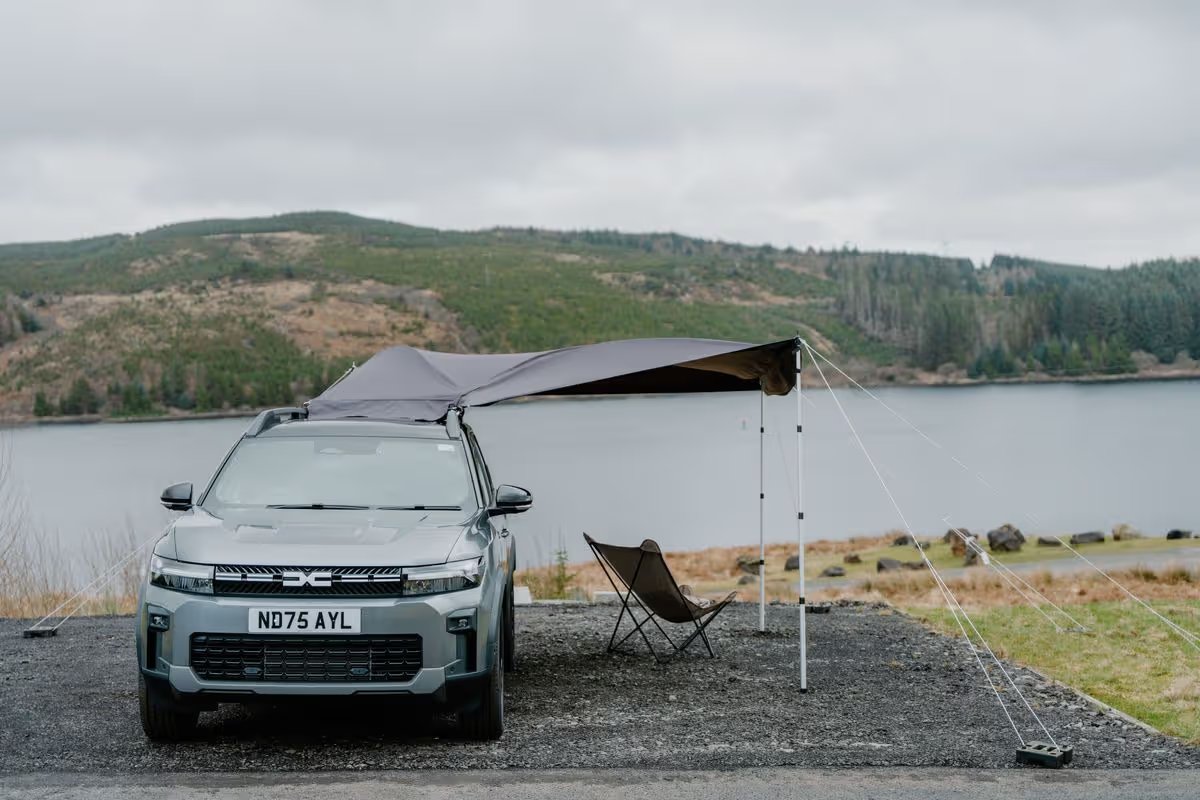
Adventurers are swapping hotels for cars in an emerging trend which sees them use their trusty cars as their hotel for the night. Sophie Royston, like countless other keen globe-trotters, has adopted the trend, using her Dacia as a mobile camper. The content creator insists the “freedom”, “incredible views” and simplicity of converting your car into accommodation beats the hassle of reserving a hotel.
The adventurous traveller, who boasts thousands of Instagram followers, embraced the trend with the intention to cut costs and save money, but confessed she now does it to reach stunning locations away from the tourist trail.
“I love the freedom of it. If I find somewhere beautiful, I can just stay there,” said Sophie. “Waking up and opening the back of the car to an incredible view is the best part.
“It was initially about saving money and using what I’d saved on a hotel to enjoy experiences. But this soon turned into the benefit of flexibility and spontaneity, as well as the spirit of adventure and essentialism.
“More people are realising you don’t need a campervan to enjoy an amazing road trip.”
Sophie used her car to camp beside a Scottish Loch as well as the snow-covered peaks of the Alps, using her vehicle as a home away from home. The 31 year old insists she gets a better night’s sleep in her car than she ever did when stopping in hotels.
She claims this is down to a new Sleep Pack that easily fits into her Dacia Bigster, which is available with a number of Dacia’s cars. “It makes me feel more free to sleep in my Dacia rather than stay in a hotel,” she added.
“I have stayed in hotels where you can see a beach in the distance, but with camping in my car, I can actually be on that beach. Quite the difference and quite the experience.”
As an avid hiker, she admits that car camping makes everything simpler, allowing her to reach her destination and recuperate on-site ahead of walking the next day.
With the trend gaining momentum and more people following in Sophie’s footsteps, she says: “It’s amazing to see more people embrace outdoor travel.
“There are so many solutions available to make this easier and more accessible like the Sleep Pack and the set up in the Dacia Bigster. I think this is why it’s growing in popularity.”
To get the most out of the experience, she recommends curling up with a good book or treating yourself to a hot chocolate before settling down for the night.
She adds: “Find the perfect park spot, get the Sleep Pack set up, cook some tasty food and then get cosy for the evening. I always make sure I get into some warm, comfy clothing, especially when car camping in winter, have a nice hot chocolate and then climb into the cosy set up and wind down for the evening.”
Van-life traveller Lana says this gorgeous UK village with cobbled streets and turquoise waters is so ‘quaint and dreamy’ it’s like stepping back into the past
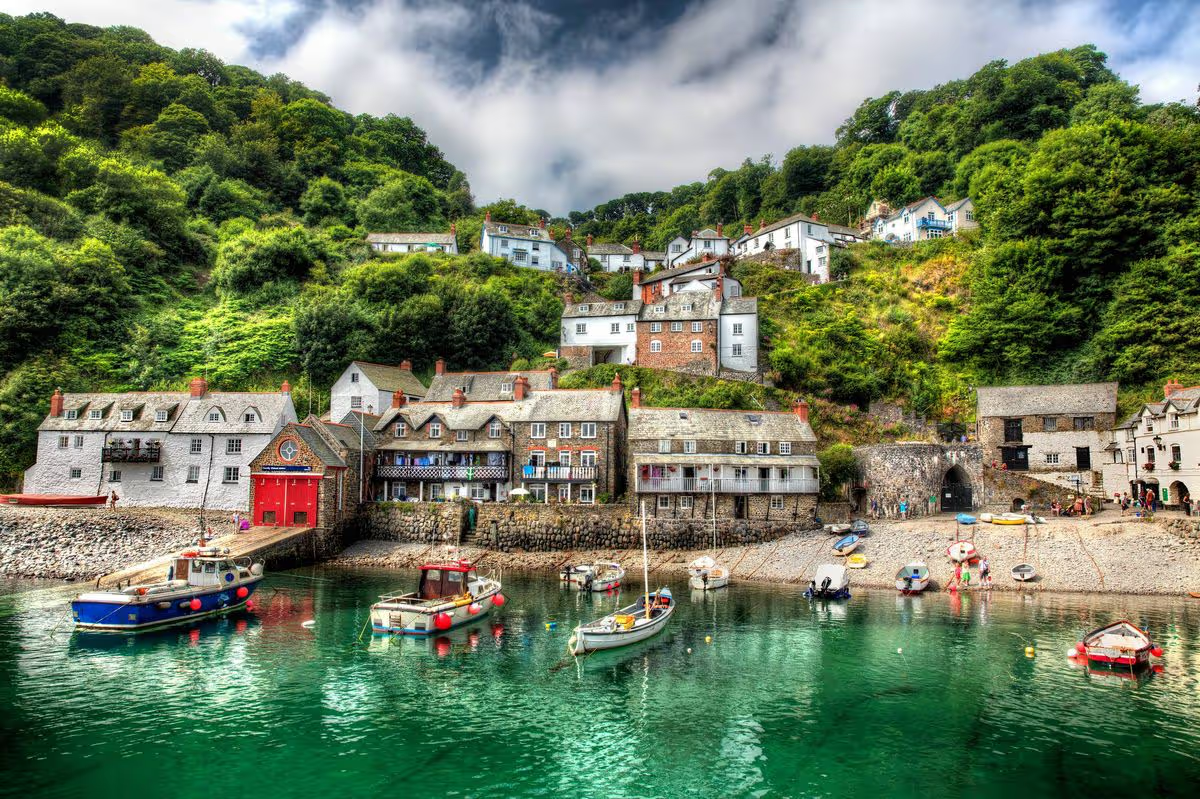
Clovelly is located in north Devon and has stunning views making it feel like Greece(Image: RolfSt via Getty Images)
This pretty UK village has narrow cobbled lanes and cute shopfronts that will make you feel like it’s the good old days.
Lana, who explores Britain while living in her van, is encouraging people to make the journey to Clovelly in north Devon.
The content creator said: “I had a solo trip to this quaint and dreamy little place with the most picturesque scenery! It was like stepping back in time with no cars allowed and had a kind of a Greece feel to it with the cobbled streets, bright white houses, hanging flower baskets over looking a turquoise ocean.”
She adored spotting donkeys at the top of the village, as well as taking in the breathtaking vistas and indulging in a scrumptious afternoon tea.
Content cannot be displayed without consent
Clovelly boasts dramatic views over the Bristol Channel, a small working harbour, and a really distinctive layout that makes a visit feel like an experience rather than just a stop-off.
People come for the cobbled main street that drops steeply down to the water, the photogenic cottages and flower-filled walls, and the slower pace created by the fact cars don’t use the village streets.
Another reason if feels like stepping back to the past is that goods are traditionally moved by handcarts, and you’ll often see donkeys referenced as part of the village’s heritage.
If you’re planning on visiting, Lana said there’s an entrance fee for the village as it has remained privately owned since Elizabethan times. Visitor charges are roughly £8.75 per person.
Clovelly Court Gardens are an absolute must-see when exploring this famous village, boasting immaculately maintained grounds and beautifully restored Victorian greenhouses.
Be sure to pop into the Kingley Museum or head up to Mount Pleasant – widely regarded as the finest picnic spot in the village
There are also a handful of charming pubs, craft workshops to get stuck into, as well as shops stocking unique and handmade goods.
For ale fans, the Clovelly Brewery sits proudly at the top of this stunning village.
But Lana warned: “It’s on a steep cliff so be prepared for a bit of a walk and don’t be like me and wear flip flops – which also broke so that was interesting on steep cobbled paths.”
Lana recommends visiting on a weekday where possible to sidestep the crowds – and people agree that it’s well worth the journey.
Commenting on the viral video showcasing the village’s stunning beauty, one user said: “Beautiful Clovelly, worth the £9 per adult. Absolutely stunning the £9 ticket is valid for seven days so definitely worth it. Visited the garden too – bought a little plant.”
Another said: “I visited Clovelly some years ago, it’s lovely.” And a third added: “Clovelly, prettiest village ever, been few times.”
Actor Tori Spelling and seven children were injured after being involved in an accident Thursday in Temecula.
Spelling and all the children were taken to a local hospital, where they were treated for injuries, according to NBC News and multiple reports.
She is the mother of four of the children traveling in the SUV she was driving when it was struck by another vehicle that was allegedly speeding and ran a red light.
The Riverside County Sheriff’s office told People in a statement Sunday that deputies responded to a crash at 5:45 p.m. Thursday in Temecula, 80 miles outside of Los Angeles.
The drivers and passengers were evaluated at the scene, and no arrests were made. The cause of the collision remains under investigation.
Spelling is the daughter of the TV producer Aaron Spelling and is best known as a co-star of the 1990s hit Fox drama “Beverly Hills, 90210.” She is the mother of five children, Liam, 19, Stella, 17, Hattie, 14, Finn, 13, and Beau, 9, whom she shares with her ex-husband, Dean McDermott.
In 2011, Spelling was involved in a crash with her children in a vehicle that she said was prompted by paparazzi. Spelling was pregnant at the time of the incident, and her oldest two children were in the car. “Paparazzi chased me w/the kids 2school,” she wrote in a post on Twitter. “I was trying to get away from him and had a pretty big accident. Took down whole wall of school.”
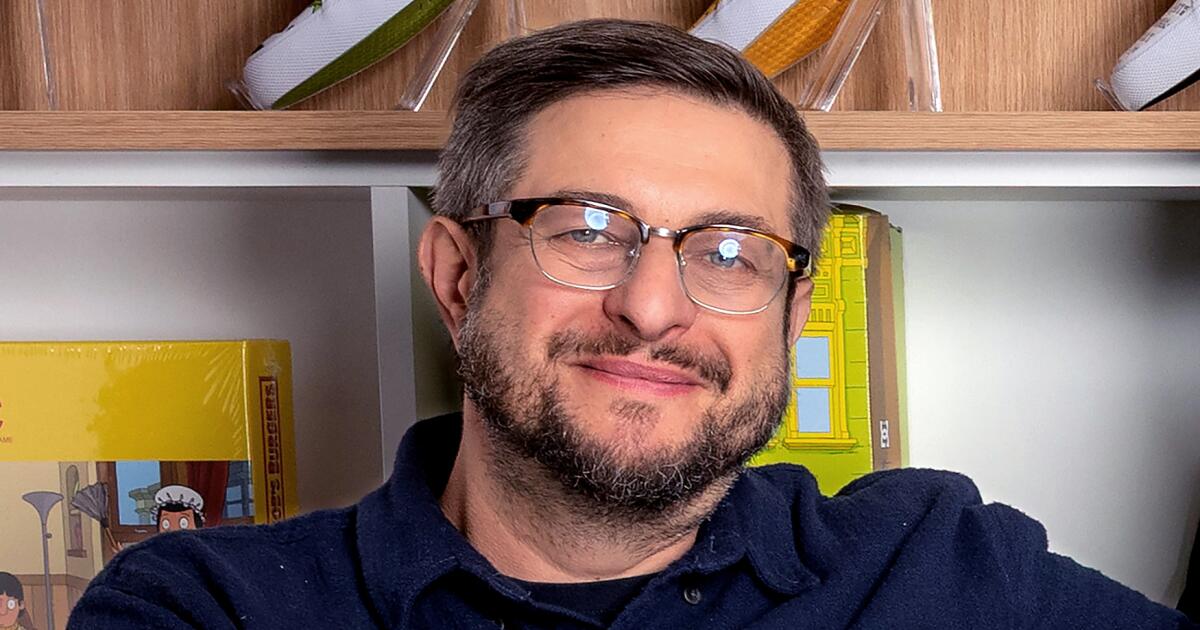
Eugene Mirman appears to be in good spirits after being injured in a fiery car crash.
The comedian and “Bob’s Burgers” actor shared an Instagram update Friday to reassure fans he is “doing relatively alright, all things considered.” Mirman was hospitalized for serious injuries on Tuesday after being pulled out of the window of his Lucid Gravity that had caught fire after crashing into the Bedford Toll Plaza in New Hampshire.
“I am extraordinarily thankful to the heroic people that pulled me from the car and to the warm, kind and talented staff at the hospital that cared for me and got me on the mend!” Mirman wrote in the caption accompanying a photo of himself bandaged up and holding a piece of art that reads “Life is an Adventure.” “I am thankful beyond words to be here and doing relatively alright, all things considered.”
He also thanked everyone who had reached out with “well wishes, love and kind messages.” While Mirman appears a bit banged up in the photo, it did not keep him from including a dash of humor in his update.
“I don’t have my phone, so haven’t been online much,” his post continued. “I do not recommend my method of decreasing screen-time. If you’re a friend who sent a kind, loving message, you should know that it was hard to not respond with, ‘I’d love to be on your podcast.’ I love you all and please take care of yourselves.”
Among those who helped Mirman before first responders arrived were New Hampshire Gov. Kelly Ayotte and her security detail.
“I want to thank the Trooper on my security detail and the bystanders who stepped up to help at the scene of the crash for their brave lifesaving efforts today,” Ayotte wrote Tuesday in a post on X. “Joe and I are praying for the full recovery of the driver who was injured today.”
Mirman voices middle child Gene Belcher in Fox’s animated comedy “Bob’s Burgers,” which is currently in its 16th season.
Authorities in New Iberia, Louisiana, have said the incident does not appear to be an intentional car-ramming.
Published On 4 Apr 20264 Apr 2026
An estimated 15 people have been injured in Louisiana’s Iberia Parish, after a car struck participants at a Lao New Year parade in the United States.
According to a statement from the Iberia Parish Sheriff’s Office on Saturday, some attendees were seriously injured.
Recommended Stories
list of 3 itemsend of list
“Based on the preliminary investigation, this does not appear to be an intentional act,” said Rebecca Melancon, a sheriff’s office spokesperson.
The Acadian Ambulance company confirmed on social media that it had taken 11 people to the hospital using ground transport, and another two victims were airlifted to seek urgent care. Ten ambulances and two medical helicopters were deployed to the scene.
The incident took place in New Iberia, a city of more than 28,000 in Iberia Parish, some 34km (21 miles) south of Lafayette, Louisiana. It is situated roughly 214km (130 miles) west of New Orleans.
The Louisiana Lao New Year Festival parade is an annual tradition on Easter weekend in the parish, and the celebration features live music, food vendors and a beauty pageant.
In the aftermath of the car crash, the festival issued a statement on social media, saying that all of its security resources had been surged to the scene.
“We are profoundly saddened by the news of the incident near the festival grounds,” festival organisers wrote. “We are awaiting additional details from authorities as they become available.”
They added that Saturday’s musical events were cancelled, though vendors were permitted to stay open until 9pm local time (2:00am GMT, Sunday).
“We are praying for the victims and for their families during this difficult time,” the organisers wrote. “As of now, and if security resources are restored for tomorrow (Sunday) we will reopen only the religious services of the festival, and vendors will stay open.”
The Lao New Year is a tradition typically associated with Buddhism, and it takes place each year in April, as the dry heat in Laos gives way to the wet monsoon season.
Louisiana is home to a small but vibrant Lao community. In New Iberia, one neighbourhood is called Lanexang Village — roughly translated to the “million elephants” village — and it is reportedly home to hundreds of Lao people.
Many arrived as a result of the Vietnam War, which bled into Laos, with communist and US-backed forces clashing over the course of nearly 16 years.
The Pathet Lao, a communist movement, ultimately took over the country in 1975, ending Laos’s monarchy. Hundreds of thousands of people fled in the aftermath, with many resettling in countries like Thailand and the US.
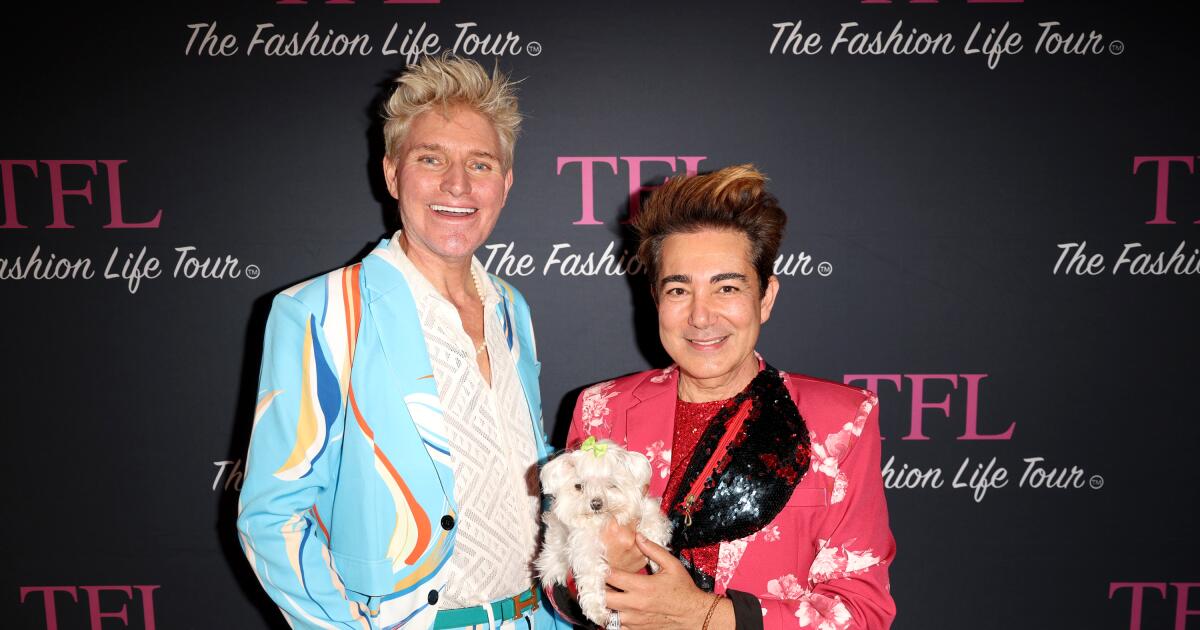
The L.A. man who was filmed punching and kicking the Mercedes-Benz of “Gown and Out in Beverly Hills” stars Patrik Simpson and Pol’ Atteu in Hollywood was arrested this week and booked on felony vandalism.
The reality stars shared the dramatic video of the incident on social media with the caption, “Emergency! We need your help! We were just attacked at an intersection.”
“This man just blocked the intersection of our car at Melrose and Vine and then kicked our door in attacking us. Police were called and the license plate is on the video. If you know who this is, call the police immediately and send me a DM. He is dangerous and the police are looking for him!”
In the video, a man wearing a Cheech & Chong tee that reads “Don’t Panic, It’s Organic” blocked the Melrose Avenue and Vine Street intersection Sunday around 9:20 a.m. and hopped out of his Toyota 4Runner.
Contrary to instructions on the man’s shirt, the married co-stars of the Amazon Prime reality series did begin to panic as the man, who has been identified as Los Angeles resident Kevin Antonio Hernandez, approached their vehicle and punched the driver’s side window and kicked the driver’s side door. “Lock the door!” Simpson is heard saying in the video. “Call the police!”
Hernandez continued to yell at the fashionistas as he returned to his vehicle, but it’s unclear what he was saying because the techno music playing on the radio in Simpson and Atteu’s Benz drowned out any outside noise. Hernandez climbed into the driver’s side of his Toyota and pointed at the couple, yelling one last time, before speeding off.
“Go get him!” Simpson is heard yelling as they continue to film, while chasing the Toyota through the streets of Hollywood and calling 911. The reality stars’ exchange with the emergency dispatcher played out in the video, with the dispatcher urging the couple to stop following the car.
According to Simpson and Atteu, Hernandez had a baby in the car during the heated exchange and ran stop signs and ignored traffic lights as he sped away.
“This is it, I’m going to die here,” Atteu told KTLA of his headspace during the ordeal. “I’ve never been faced with that kind of fear in my life on the streets of L.A.”
The Los Angeles Police Department told The Times that Hernandez was arrested Wednesday. He has since been released.
The ex-guitarist of Turnstile has been arrested for allegedly intentionally hitting the lead singer’s father with a car.
Brady Ebert, a founding member of the Baltimore hardcore punk band, was arrested Tuesday in Silver Spring, Md., on charges of attempted murder in the second degree and first-degree assault.
Montgomery County Police responded to a call Sunday saying a pedestrian had been struck by a car. Upon arrival at the front yard of a home, officers discovered William Yates, the 79-year-old father of Turnstile frontman Brendan Yates, with “trauma to his lower extremities,” the Baltimore Banner reported.
William Yates and his family told police that Ebert first drove up to their house “honking his horn and yelling obscenities,” per Fox 5 in Washington, D.C. Ebert then allegedly returned and hit the elder Yates with his car.
According to the Banner, police obtained surveillance video of the incident that shows Yates moving out of the way and throwing a rock at Ebert’s vehicle and Ebert then accelerating up the driveway before swerving and striking Yates with his car. Yates told police that before first responders arrived, Ebert returned once again to yell that he “deserved it.”
Turnstile told Pitchfork in a statement that Yates underwent surgery for the “severe physical trauma” he sustained during the altercation and that the band’s members are “hoping for the best possible outcome in his recovery.”
“Turnstile cut ties with Brady Ebert in 2022 in response to a consistent pattern of harmful behavior affecting himself, the band, and the community,” the “Never Enough” band said in the statement. “After exhausting every available resource to support his access to help and recovery, a boundary ultimately had to be set when healthy communication was no longer possible and he began threatening violence.”
“We have no language left for Brady,” the band added.
Formed in 2010, Turnstile broke into the mainstream with the 2021 album “Glow On,” which earned the band its first Grammy nominations. The band’s first Grammys came in February 2026 for metal performance (“Birds”) and rock album (“Never Enough”). Turnstile is scheduled to perform at both weekends of the Coachella Valley Music and Arts Festival later this month.
Plea comes hours after sheriff’s report said the golfer showed signs of impairment at the scene of last week’s crash.
Published On 31 Mar 202631 Mar 2026
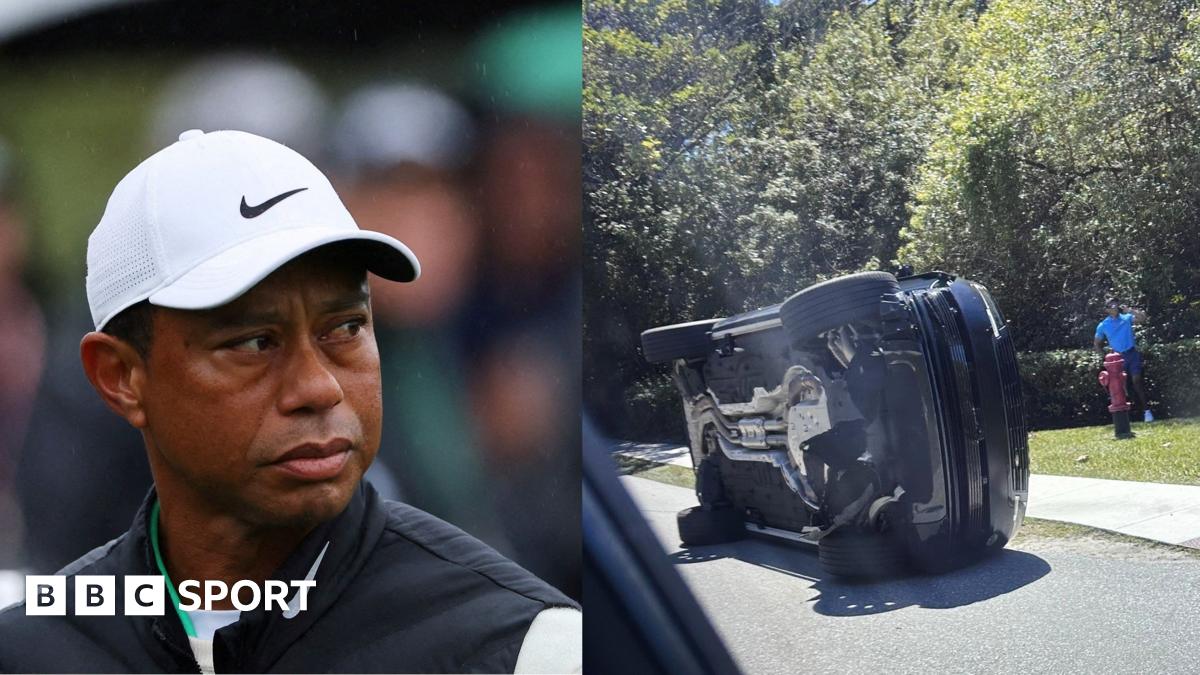
Golfer Tiger Woods pleaded not guilty in his driving under the influence case in Florida on Tuesday, hours after a sheriff’s report said he had pain pills and showed signs of impairment at the scene of the crash last week.
The online court docket for Martin County, Florida, showed that Woods entered a written plea of not guilty and planned to waive his appearance during an arraignment hearing next month.
Recommended Stories
list of 4 itemsend of list
Woods’s eyes were bloodshot and glassy, his pupils were dilated, and he had opioid pills in his pocket when interviewed at the scene of the crash, according to the arrest report released by the Martin County Sheriff’s Office.
The golfer’s movements were slow and lethargic, and he was sweating as he talked to deputies and told them he had taken prescription medication earlier in the morning, according to the report. Woods told deputies he had been looking at his phone and fiddling with the radio before he clipped a truck in front of him, the report said.
Deputies found two white pills, which were identified as the opioid hydrocodone, used to treat pain, in his pocket, the report said.
When asked by a deputy if he took any prescription medications, Woods said, “I take a few.”
Woods’s agent at Excel Sports, Mark Steinberg, has not responded to multiple messages seeking comment.
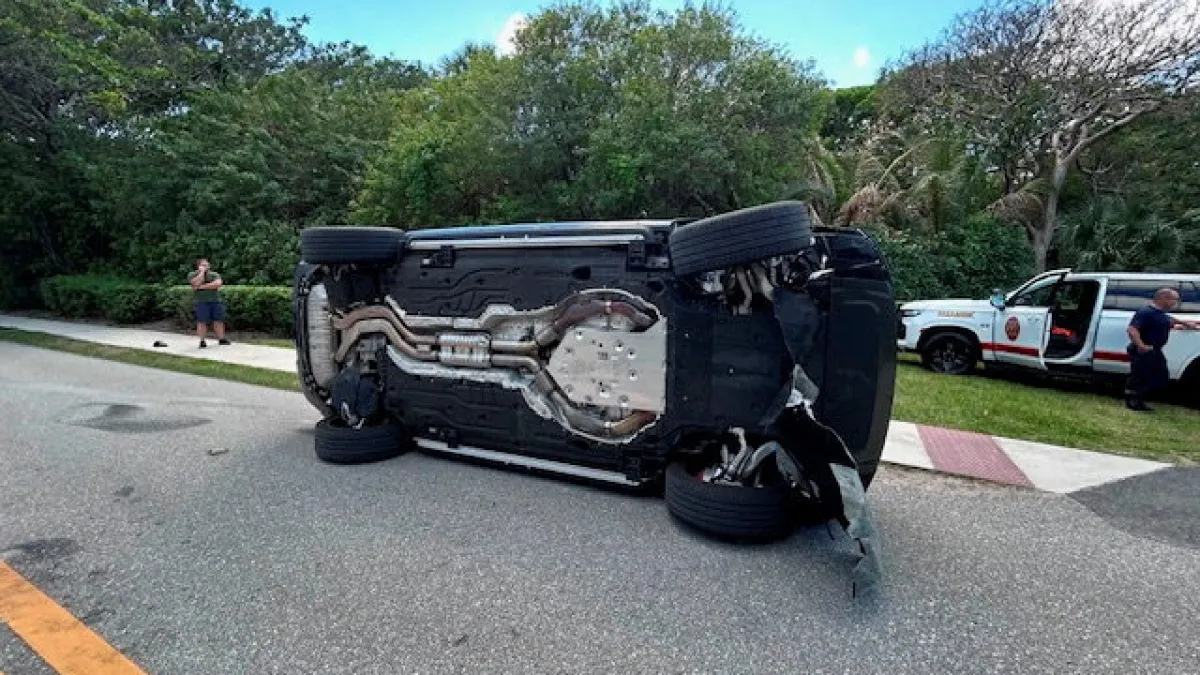
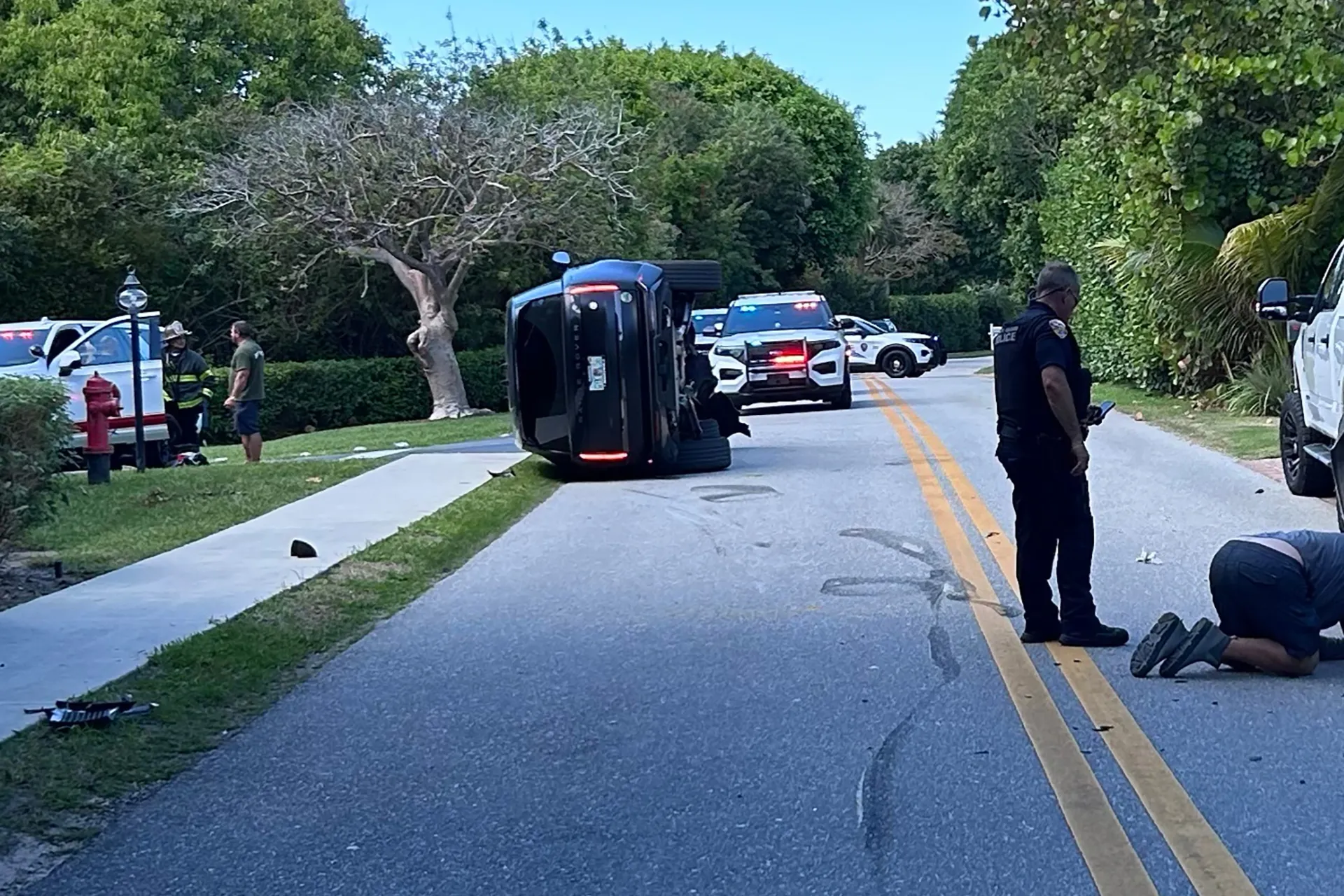
The golfer was travelling at high speeds on a beachside, residential road on Jupiter Island when his Land Rover clipped the truck and rolled onto its side, according to the sheriff’s office, which noted that Woods had shown signs of impairment.
The truck had $5,000 in damage, according to the report.
The truck driver and another person helped Woods out of his vehicle, with the golfer needing to climb out from the passenger side. Neither Woods nor the truck driver was injured.
During a field sobriety test, deputies noticed Woods limping and that he had a compression sock over his right knee. The golfer explained he had undergone seven back surgeries and more than 20 leg operations, and that his ankle seizes up while walking. Woods, who was hiccupping during the questioning, continuously moved his head during one of the sobriety tests, and deputies had to instruct him several times to keep his head straight, the report said.
“Based on my observations of Woods, how he performed the exercises and based on my training, knowledge, and experience, I believed that Woods’ normal faculties were impaired, and he was unable to safely operate the motor vehicle,” the deputy wrote after the tests.
Woods, 50, is the most influential figure in golf and has become as recognisable as any athlete in the world. The first person of Black heritage to win the Masters in 1997, he has captivated golf fans with records likely never to be broken.
But his injuries kept him from accomplishing more, including those suffered in a 2021 car crash that damaged his right leg so badly he said doctors considered amputation.
At this latest crash, Woods agreed to a breathalyser test, which showed no signs of alcohol, but he refused a urine test, authorities said. He was arrested and released on bail eight hours later.
No one from Woods’s camp or the PGA Tour – he is on the board and is the chairman of the committee reshaping the competition model – has commented since his arrest.
Woods, who has been involved in many crashes over the years, is charged with driving under the influence, with property damage and refusal to submit to a lawful test. He is scheduled for arraignment on April 23. Online court records do not list a lawyer for him.
Under a change to Florida law last year, refusing a law enforcement officer’s request to take a breath, blood or urine test has become a misdemeanour, even for a first offence.
A rolling wave of “No Kings” protests swelled through America’s small towns and big cities Saturday, with crowds gathering to blast President Trump, Immigration and Customs Enforcement crackdowns, the war in Iran and high gas and food prices.
Saturday’s demonstrations were expected to draw millions of people nationwide, including thousands for a downtown Los Angeles rally. More than 40 protests were planned for L.A., Orange and Ventura counties, part of the national “No Kings Day of Nonviolent Action.”
No Kings Coalition organizers were hoping that turnout for the rallies in all 50 states could combine to form the largest single-day protest in U.S. history. They pointed to growing anger over the country’s direction, including fatal ICE shootings and troops dispatched to the Middle East, since the first “No Kings” demonstration was held last June.
On Saturday morning, hundreds gathered around the reflecting pool at Pasadena City College. A band rolled through with a fascism-themed parody of Johnny Cash’s “Folsom Prison Blues.” Sign-toting protesters lined Colorado Boulevard, drawing a constant stream of honking from the cars driving by. For many, the Iran war was top of mind.
“Every time we protest, there’s something completely new, which speaks to the chaos of the Trump administration,” Cindy Campbell told The Times. “ICE raids last year, Epstein files a few months ago. Now, war.”
“This administration doesn’t serve us. It serves billionaires,” said Kent Miller, of Monrovia, who participated in the Pasadena protest. “War with Iran is only making life harder for working people.”
Miller pointed to a Chevron gas station advertising gas for $6.45 per gallon.
“See?” he said.
National coordinators said there has been increased interest in smaller communities, including Republican bastions, with higher-than-expected attendance during Saturday’s protests.
“I’m out here because I’m disgusted with what I’m seeing,” said Kersty Kinsey, a mother who was protesting near the Beaufort, S.C., City Hall. “People are suffering, and he’s playing golf. People are suffering, and he’s going other places and blowing things up.”
In Beaufort, an antebellum city founded in 1711, an estimated 3,000 people turned out — a marked increase over earlier “No Kings” rallies, said Barb Nash, one of the coordinators. Amid the moss-draped live oaks and blooming pink and white azaleas, a person in a purple Barney dinosaur costume held a sign reading: “Dino’s for Democracy.” A young girl handed out homemade “Resistance Cookies.”
Los Angeles coordinators said they expect more than 100,000 people at the local events, which were being planned for Beverly Hills, Burbank, West Covina, West Hollywood and Thousand Oaks. One group planned a “Road Outrage” car caravan to motor through Mid City with flapping flags calling for “No War,” and “ICE Out of LA.” At a Torrance gathering, cars honked, protesters waved flags, and a person in an inflatable green cow costume hoisted a large American flag.
The White House, in a Saturday statement, dismissed the protests as a “Trump Derangement Therapy Session.”
Organizers said they have been particularly encouraged by the surge of interest from groups in rural communities that wanted to join the loose-knit No Kings Coalition and hold protests.
Jaynie Parrish, founder of the Arizona Native Vote project, started planning a protest for her tiny town of Kayenta, on the Navajo Nation in northern Arizona, only earlier this week.
“My dad, who’s a [military] veteran and an elder, said: ‘We should go,’ and I said, ‘OK,’” Parrish told The Times.
“Our folks don’t always protest for things, but this was very important,” Parrish said. “A lot of our families are feeling the impacts right now of higher prices and things being cut. A lot of our healthcare benefits are being cut … and our tribal sovereignty is being threatened.”
Upbeat Midwestern activists withstood whipping winds to form a line of protesters stretching nearly three blocks of Burlington Avenue in Hastings, Neb. Under the crisp blue skies, one of the protesters, Drew Fausett, told The Times in a phone interview that he is a registered Republican in the decidedly red state.
“My politics haven’t really changed — but the party around me has,” Fausett said. “It used to be the two parties were two sides of the same coin, and they would work together — but not anymore.”
He and his wife, Becky, have attended “No Kings” and other protests because “it’s the only way to show that people have different opinions,” he said. “People are out here speaking for their families and their neighbors. That’s what this is all about.”
Trump’s policies are hurting many in Nebraska — including farmers, said Debby Thompson, one of the Hastings organizers.
“We want to urge our representatives in Congress to not just rubber stamp whatever Trump wants because it’s really hurting rural folks and farmers,” Thompson said. “The tariffs and huge increase in prices on fertilizer are hitting farmers really hard.”
The “No Kings” campaign sprouted in June as an act of defiance on Trump’s 79th birthday. He wanted a military parade in Washington to mark his milestone, and anti-Trump protesters came out in force — an estimated 5 million people around the country — with their own display. At the time, Trump’s second-term policies were coming into focus, including ramping up immigration raids, deploying the National Guard to L.A. in response to protests, and mass firings within the federal government.
A subsequent event in mid-October drew even larger crowds, with an estimated 7 million people protesting around the country.
Saturday’s event coincided with a dip in Trump’s approval ratings. A Reuters/Ipsos poll last week found 36% approve of Trump’s job performance, marking the lowest level since his return to office last year. In a separate Fox News Poll released last week, 59% disapproved of his job performance.
“Since the last ‘No Kings,’ we’re seeing higher gas prices and groceries, all while there’s an illegal war in Iran,” national organizer Sarah Parker of the organization 50501 said during a Thursday press briefing. “We’ve also seen our neighbors executed — American citizens executed.”
Widespread protests and candlelight vigils followed January’s fatal shootings by ICE agents in Minneapolis of Renee Good, a 37-year-old mother of three, and Alex Pretti, a 37-year-old intensive care unit nurse.
“The defining story of this Saturday’s mobilization is not just how many people are protesting — but where they are protesting,” Leah Greenberg, co-founder of Indivisible, said during the press briefing. She said two-thirds of the RSVPs to national organizers came from outside of major urban centers.
The Los Angeles event was organized by the local chapter of 50501 (short for “50 protests, 50 states, 1 movement”) and other progressive groups, including the ACLU, Human Rights Campaign, Indivisible and Public Citizen, as well as labor unions such as Unite Here Local 11 and the Service Workers International Union.
“There’s an affordability crisis in this country — people can’t afford groceries or healthcare,” Joseph Bryant, SEIU executive vice president, said in a statement. “But this administration is focused on expanding its power, starting unnecessary wars that benefit billionaires, and targeting immigrants and citizens who dare to stand up for them.”
Police are charging professional golfer Tiger Woods with driving under the influence for a second time after he rolled his Land Rover SUV near his Florida home.
Sheriff Budensiek told reporters at a news conference that the crash happened after Woods allegedly attempted to overtake a pressure cleaner truck at “a high rate of speed”.
DUI investigators came to the scene and “Mr Woods did exemplify signs of impairment”, the sheriff said.
“They did several tests on him,” Budensiek told reporters. “He did explain the injuries and surgeries that he’s had and we did take that into account, but they did some in-depth roadside tests.”
He was placed under arrest after the incident, which took place on Beach Road in Jupiter Island just before 14:00 local time on Friday (about 19:00 GMT).
The sheriff explained that investigators at the scene and jail were “really not suspicious of alcohol being involved” and Woods ultimately passed a breathalyser test with “triple zeros”. But, he added, Woods then refused a urine test.
Budensiek also said Woods had been “co-operative but was trying not to incriminate himself”.
“He has a right to refuse that test,” added the sheriff. “There is a statute which he will be charged with for refusing to take that test, but we will never get definitive results as to what he was impaired on at the time of the crash.”
US president Donald Trump was asked about the crash on Friday, saying: “I feel so badly. [Woods has] got some difficulty. There was an accident. That’s all I know.
“He’s a very close friend of mine, he’s an amazing person, an amazing man.”
Sheriff Budensiek said Woods would remain in jail for eight hours then be released on bond. The charges are misdemeanours, not felonies.
The BBC has contacted the golfer’s representatives for comment.
Viewers of NBC’s morning program learned Friday that Guthrie will be back to her hosting duties at the network’s Rockefeller Plaza studio in New York on April 6.
Guthrie has been absent from “Today” since Feb. 2, the day after learning her mother Nancy was abducted from her Tucson home. She appeared on the program this week in a taped interview with Hoda Kotb, her first since her mother went missing..
Guthrie’s re-entry on “Today” is certain to generate significant viewer interest. Her 84-year-old mother’s case, still being investigated by law enforcement, generated an outpouring of public affection for the co-host.
Many media industry insiders expressed serious doubts over whether Guthrie would return to television before law enforcement determined what happened to Nancy Guthrie. But people close to Guthrie believe her grit and deep religious faith will provide her with the strength to move forward.
Guthrie’s daily presence on “Today” will also help keep her mother’s case in the public eye. NBC is also airing a special “Dateline” episode on the abduction on Friday.
Guthrie has spent most of the last seven weeks in Tucson with her family. She canceled plans to be a part of NBC’s coverage of the Winter Olympics in Milan and before this week only appeared on TV and social media in taped messages asking for the help in finding her mother.
Nancy Guthrie was last seen Jan. 31, when she spent the evening with family members. Law enforcement officials believe she was removed from her Catalina Foothills home later that night against her will as her phone, wallet, car and medication were left behind.
Surveillance videos of a masked man who was outside Guthrie’s front door on the night she disappeared were released by the FBI.
Dodgers fans generally hiss at the mention of Frank McCourt — the former owner took the team into bankruptcy, after all — but today is about tipping our cap to him.
Without him, fans would have no option to take public transit directly to Dodger Stadium. On his watch, the Dodgers helped secure government funding for the shuttle buses that provide free rides between Union Station and Dodger Stadium.
Sixteen years later, beyond the addition of a sister shuttle from the South Bay, that’s it.
The Dodgers boast the best team in the world. Shohei Ohtani is a tourist attraction. So is their historic ballpark. The Dodgers sold a record 4 million tickets last year.
In 1990, the last year Fernando Valenzuela pitched for the Dodgers, Los Angeles County unveiled a report that suggested ways to improve access to Dodger Stadium “for those who cannot or do not wish to drive.”
The options: a monorail, people mover, or light rail extension from the Chinatown Metro station; the shuttle buses that McCourt and Metro launched 20 years later; the gondola that McCourt first pitched in 2018 and continues to pursue; and a walking path.
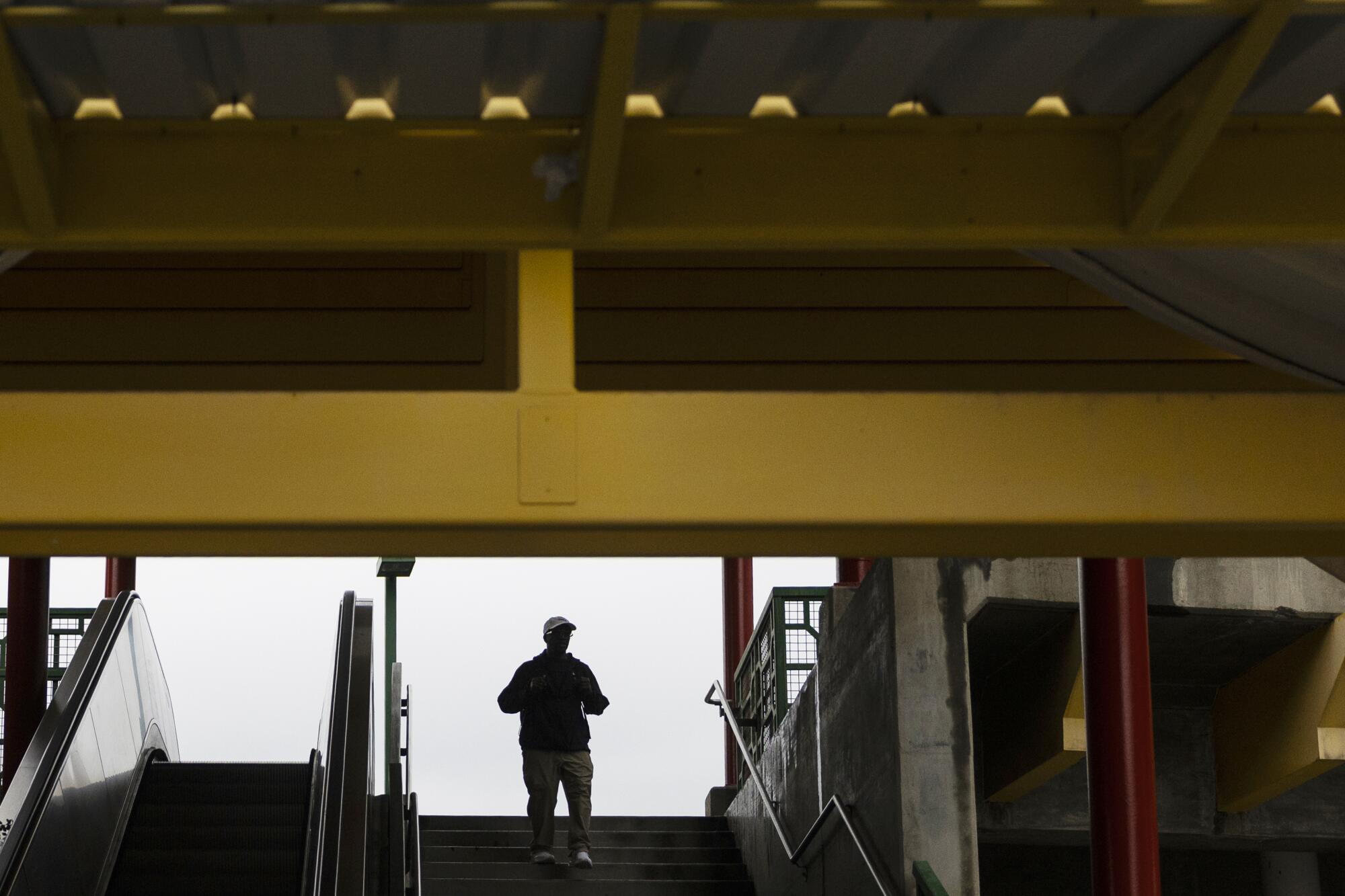
A passenger exits the Chinatown Metro station in January.
(Etienne Laurent/For The Times)
L.A. is all about the car. You will most likely drive to Dodger Stadium, and so will your children.
For decades, the Dodgers have promised to ease traffic by adding amenities that encourage fans to come early and stick around after the game. That has not materialized, and notorious congestion within and around the stadium is as much a tradition as Dodger Dogs.
What if you could walk, for real? What if you could head into the stadium along a beautifully landscaped and wide Dodgers-themed path, a blue ribbon of fans coalescing into a community, with decorations and food carts, shade and lighting, and chants of “Let’s Go Dodgers!” along the way?
You can walk now, sort of. It’s about a mile.
There’s a map at the Chinatown Metro station displaying the pedestrian path toward Dodger Stadium.
(Etienne Laurent/For The Times)
At one end of the Chinatown station, there is a map with a pedestrian route, in a glass case that faces away from Dodger Stadium. If you walk out of the station at the other end, or if you just start heading in the direction of Dodger Stadium, good luck finding the map.
There are Metro signs leading you back to the station from Dodger Stadium, but none leading you along the route there.
The Dodgers actually would prefer you did not take that route, or at least the last part of it. I walked it with Alissa Walker, whose Torched newsletter is the go-to place to learn how major sporting events impact the everyday lives of Angelenos.
We entered the Dodger Stadium property at an intersection with no crosswalks, where cars enter and exit the 110 freeway. We stood atop a dirt patch next to a crumbling curb.
“To go a very short distance safely with a feeling that you’re not going to die,” Walker said, “is very difficult.”
With Game 3 of the World Series underway at Dodger Stadium last October, a few folks scurried across a pedestrian bridge with LED lights and blue glow sticks.
The bridge connects Chinatown with Dodger Stadium, traversing the 110. Without this bridge, there is no walking path to Dodger Stadium.
“Our goal was, just by adding some lights, to make the really dark path at the top of the bridge at night a little bit brighter, so that it felt a little less scary,” transit advocate Jeremy Stutes said, “and to add a little bit of fun and whimsy.”
Glow sticks forming the “LA” logo of the Dodgers were placed on a pedestrian bridge over the 110 Freeway connecting Chinatown to the area where Dodger Stadium is located during the World Series and for several months after. As of last week, the glow sticks were no longer there.
(Etienne Laurent/For The Times)
From the Chinatown Metro station, the bridge is three blocks up College Street and one block down Yale Street. It’s an easy walk, and for now you pass an elementary school, a church, a row of Chinese restaurants, a dirt lot where a hospital once stood, parking lots, and an auto repair facility with a Dodgers flag hung on a wall.
When I did the walk last week, the trash at the foot of the bridge included a plastic cup, socks, a piece of rotting fruit, a half-full bottle of tequila, and half of a turkey sandwich, peeking out from torn plastic wrapping that indicated the sandwich had gone bad three days earlier. On the bridge: shopping bags, a pair of flip-flops, stray clothes scattered at one end, and graffiti everywhere.
A sign painted on the sidewalk indicates the direction toward the Chinatown Metro station.
(Etienne Laurent/For The Times)
That was the point those volunteers made last October: Clean up the bridge and light up the bridge — as they did for three days — and fans will walk there.
“It’s not that it’s not used,” Stutes said. “It’s not designed to be a safe space to use as an alternative to driving.”
When you cross the bridge, you can turn right or left along Stadium Way to get to a stadium entrance.
Turn right, as the map tells you to do, and you’ll encounter decaying sidewalks, with cracked and buckled concrete that turns a modest uphill walk into an obstacle course. Once you get onto the stadium grounds, the paint is fading along the pedestrian path, which offers you no protection from passing cars.
Turn left, and you’ll have to walk part of the way in the street, on an unprotected bike lane. You also could walk along the road behind the Fire Department training center, a path with no sidewalks and passing fire trucks. Either route takes longer than the one on the map, but you would enter Dodger Stadium through a pair of protected and brightly painted pedestrian paths. (That entrance, along Vin Scully Avenue, is a quarter-mile from Sunset Boulevard, where two Metro bus routes stop.)
If the primary choices for getting out of Dodger Stadium after a game are car congestion or Dodger Stadium Express shuttle bus congestion, a downhill walk to Chinatown Metro station — 12 minutes, Metro says — would be a nice option. That’s why those folks lit up the bridge over the freeway during the World Series.
“The lights were just a fun way,” transit advocate Kevin Dedicatoria said, “to show, ‘Hey, here’s a bridge so you don’t have to play, ‘Dude, where’s my car?’ or have to worry about waiting for the bus.’”
McCourt hails from Boston, where the local subway drops Red Sox fans a few short blocks from Fenway Park. When McCourt owned the Dodgers, I asked him if he could envision a subway or light rail extension to Dodger Stadium.
He’d love it, he said then, but the Dodgers were a private business, and government should pay for public transit.
Homes line a street in Eylsian Park, where Dodger Stadium is located.
(ETIENNE LAURENT/For The Times)
It was a fair point. The Dodgers pay taxes. In an era where teams regularly demand stadium and arena deals that exempt them from property tax, the Dodgers have paid $12.8 million in property taxes over the past three years, according to Los Angeles County tax collection records.
Would demand for public transit amid a car culture justify the investment? The Dodger Stadium Express indicates it could: Ridership has just about quadrupled since its inaugural season, from 122,273 in 2010 to 463,147 last year, according to Metro.
Even along the poorly maintained, poorly lit and poorly advertised pedestrian path, Metro said more than 700 riders returned to the Chinatown station on each of the three nights of World Series home games last year.
“As seen in social media videos during the 2025 postseason, the walking path continues to explode in popularity,” Metro spokesman Jose Ubaldo said.
Next steps?
“It’s astonishing to me that the Dodgers have not taken it upon themselves, as this great community partner, to fix this problem,” Walker said. “It is the city’s responsibility, but the Dodgers should be doing this, as part of what they want to represent to this community.”
The walking path includes segments along city streets, a Caltrans bridge, and Dodger Stadium property. Just who is the responsible party?
A Caltrans spokesman said the city is responsible for maintaining the bridge. A spokesman for the city’s department of street services did not provide an answer. A spokesman for the Dodgers declined to comment.
You could almost hear the sigh from city councilwoman Eunisses Hernandez, whose district includes Dodger Stadium.
“That’s what my job is: to bring people and agencies and organizations together to accomplish a goal,” Hernandez said. “We’re already in conversation with all these entities.
“We’re looking at some of the things we can enhance to make this a more walkable and accessible option for people.”
City Council member Eunisses Hernandez, center, talks with Circle outreach workers in Los Angeles.
(Allen J. Schaben/Los Angeles Times)
How much might those enhancements cost?
Without a look at a city-commissioned Dodger Stadium traffic mitigation study, expected to be completed this fall, Hernandez said she could not put a price tag on it.
“What I can tell you,” she said, “is that it will be less than half a billion dollars, for sure.”
By year’s end, the Los Angeles City Council is expected to vote on McCourt’s gondola project, estimated to cost $500 million and proposed as privately financed. Last November, the council voted 12-1 to urge Metro to kill the project.
Metro granted its approval, but with conditions that included a requirement to explore supplementing the gondola with other Dodger Stadium transit options, including more buses along Sunset Boulevard and a designated walkway from there to the stadium.
The walking path proposed in that 1990 study would have avoided Sunset Boulevard and the current Stadium Way routes — the ones with crumbling sidewalks, or no sidewalks at all — by using escalators and walkways to get fans up and down the hill between Lookout Drive, just off Stadium Way, and Dodger Stadium.
“Pedestrians could be directed through Chinatown,” the study read, “where numerous restaurants, shops and pedestrian amenities are provided.”
It’s hard to sell Chinatown businesses on the benefits of the gondola when fans would ride between Union Station and Dodger Stadium, soaring over Chinatown. It would be easier if a walking path led at least some of those fans through Chinatown, even if only on the way back from the game.
Even if the gondola system really can accomplish what its proponents say it can — loading 35 people into a cabin every 23 seconds — thousands of riders leaving when the game ends could mean a long line to board.
One of the entrances to Dodger Stadium on Stadium Way, the easiest access when walking from Chinatown Metro station.
(Etienne Laurent/For The Times)
“Also,” the 1990 study said, “passenger waiting following a game is psychologically perceived as being three to four times longer than actual waiting time.”
From this perspective, McCourt might win a few council votes by funding a first-class walking path. The cost, I’m told, would depend on what the enhancements include: signs, lights, trees, shade canopies, sidewalk repairs, escalators, and so on. For something close to $5 million — one one-hundredth of the projected cost of gondola construction — McCourt likely could do an exceptional job.
Is there any sign of progress here? Happily, yes.
In an internal report last December, Metro said Zero Emissions Transit (ZET) — the nonprofit organization now shepherding the gondola project — is pursuing ways to link pedestrians and bicyclists to the transit system and to Dodger Stadium. Those potential improvements include sidewalk repairs and a revitalized pedestrian pathway from the Chinatown Metro station to the bridge across the 110 and then across Stadium Way, to Lookout Drive and the hill above.
“Dodger Walk is envisioned as a series of switchbacks,” the report said, “inspired by the original walking path up Lookout Mountain that existed prior to the construction of Dodger Stadium.”
Whether such switchbacks would make the walk to the stadium longer or shorter than the current path remains to be determined.
In a statement, ZET said: “We embrace and include active transit solutions to increase pedestrian and bike access throughout the project area.” In particular, ZET said, it was “supportive” of a walking path to Dodger Stadium.
The Metro report cautioned the concepts “are in the early planning stage,” so L.A. might get an extravagant walking path, a utilitarian one, or none at all.
Here’s hoping McCourt gives us a path of some kind — whether the city approves the gondola or not — because a pretty walk generations can enjoy would be a prettier civic legacy than driving a team into bankruptcy.
Call them the Geek Squad, the Surfer Dudes or the Genius Squad from Redondo Union High.
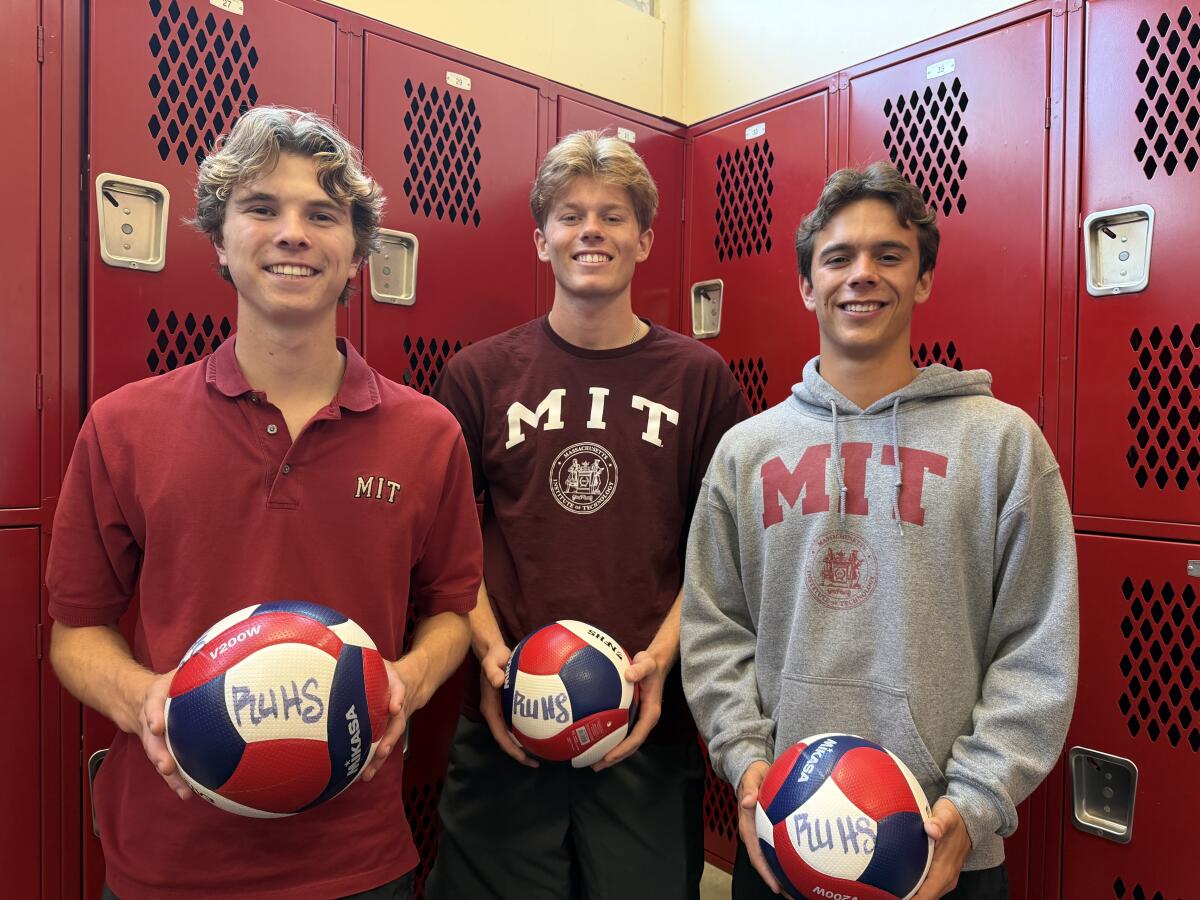
In an unprecedented achievement, three starters for the Sea Hawks’ 13-2 volleyball team — Tommy Spalding, Vaughan Flaherty and Carter Mirabal — are headed to MIT this fall.
Their final assignment in Advanced Placement Physics 2 should be figuring out the astronomical odds of how three best friends from the same volleyball team could be admitted to one of the most prestigious universities in the world.
“There’s no way,” was the reaction of Mirabal’s father when he heard the news.
“It’s crazy,” coach Kevin Norman said.
Steve Jobs and Steve Wozniak founded Apple hanging out in a garage. Who knows what inventions, ideas or technological feats will be imagined in gyms or on surfboards as these three Southern California teenagers unleash their brain power and love for having fun on the East Coast.
“Probably twice a week, I’ll call him, ‘Yo, I have this idea,’” Spalding said of his conversations with Mirabal. “Ninety-nine percent of the time, we usually don’t do anything about it. But it’s throwing ideas out there and hopefully one is going to stick.”
One Spalding idea: “When I was driving home from Joshua Tree, I was stuck in traffic. I was like, ‘Dude, what if we made a Google Maps type of app that utilized AI and had a camera in your car that analyzed the road, tells you what lane to be in to go the fastest and also be able to look at the traffic lights and tell you if this left arrow is red, then go straight, turn left at the next street.”
Elon Musk, beware.
MIT-bound Redondo Union volleyball players Tommy Spalding, left, Vaughan Flaherty and Carter Mirabal.
(Eric Sondheimer / Los Angeles Times)
They’ve formed a band, “Ratiohead,” a parody of the English rock band Radiohead, with lyrics from math. They’re preparing for the battle of the bands. Spalding is the vocalist, Maribal is on keyboard and Flaherty, the 6-foot-5 redhead, plays guitar.
“We’re looking for a drummer,” Spalding said.
Spalding has a 4.65 GPA and 1490 SAT score. Flaherty is at 4.4 and 1560. Mirabal is at 4.4 and 1510. Spalding said his hardest class was AP European history. Mirabal chose honors chemistry. Each received one B in four years of high school. Flaherty has received multiple Bs and said, “I think it goes to show you that you don’t have to be perfect to get into these schools if you have the potential and you’re willing to work hard and be a good fit.”
Flaherty is so witty he might be able to do a comedy routine, with Spalding serving as his wing man.
“Someone might have messed up, but I’m not going to tell them,” Flaherty said of the threesome earning a spot in the MIT class of 2030.
“Maybe it was chemistry,” Spalding quipped.
If they can make a movie, “The Social Network,” about the invention of Facebook. and a TV series, “Big Bang Theory,” about smart geeks, just wait until someone figures out the entertainment value following around this threesome.
Coming Wednesday in L.A. Times is one of my favorite stories. How 3 Redondo Union volleyball players were accepted to . . . MIT. Yes, it’s hard to believe and the players are talented in many things. Here’s Tommy Spalding and Carter Miribal, part of the new band, “Ratiohead.” pic.twitter.com/MBWvPXvIxF
Spalding has all the attributes of a future entrepreneur and loves tinkering with cars. He sent a two-minute video to MIT as part of his application process that showed himself and his father, Michael, turning a 2002 yellow school bus into an RV.
Mirabal has his own YouTube channel, “Carter’s Stuff Review.” He wants to be a mechanical engineer and explore the business side. Flaherty would be happy sending rockets and satellites into space while living near the beach.
All three hang out at the beach, either playing volleyball or surfing. Spalding brought his grandfather’s ping-pong table to the volleyball room at school for more fun. Cornhole is another game they play.
None set out at the beginning of high school seeking a path that leads to MIT, which accepts only about five students for every 100 applicants. “We weren’t taking the classes because we want to go to MIT,” Spalding said. “We just enjoy the subjects.”
There are smart genes in their families. Spalding’s parents are both educators, one an AP physics teacher at Peninsula High, the other a middle school vice principal. Mirabal’s father is an accountant. Flaherty’s father owns two Handel’s ice cream stores (everyone wants to hang out with Flaherty on a hot day).
Each has a story to tell about how they learned of being accepted to MIT.
Mirabal was playing volleyball in his backyard on Dec. 15 with teammates. He was going to wait until his friends left to check the email for fear of rejection. Instead, with them huddled around, he opened the email and everyone started screaming, “Yo!”
Spalding was with Mirabal and headed home to share the moment with his parents when he received a text from the MIT volleyball coach walking out the door congratulating him. “Welcome to the MIT family,” it read.
Flaherty had to wait until March 14 — Pi Day — to see if he was going to make it three for three.
He was driving home from Joshua Tree national park with his girlfriend and Tommy’s girlfriend in the car. The traffic was so bad it came to a standstill so he checked his cellphone.
“I opened it up. I saw the confetti but didn’t realize what it meant until I got a couple lines down,” he said. “The first reaction was disbelief because I thought there was no chance after these two got in.”
In fact, Flaherty said the person doing the MIT interview admitted later, “I’m not going to lie. I thought that was the killer for your application.”
They’ll be playing NCAA Division III volleyball. Mirabal and Spalding will be roommates. “Vaughan will room with someone else because he said he’d be too comfortable with us and be a bad roommate,” Spalding said.
So are they really OK leaving Southern California?
“I wouldn’t say OK with it,” Spalding said.
“It is a sacrifice,” Mirabal said.
Just know the beach will always draw them back to sunny Southern California as the three sat in the Redondo Union volleyball locker room wearing shorts, sandals and their MIT shirts.
“As much as we study, I feel at the end of the day we want to have fun,” Spalding said.
They’re not expecting to re-create “Animal House” at MIT, but let’s see what happens when three surfer dudes from the same high school in California show up with open minds and lots of ideas to explore.
JESSIE J has been rushed to hospital following a car injury which left her with fears she’d ‘broken her neck’.
The singer, 37, has undergone an MRI scan following the incident as she updated fans on her health scare.
Sign up for the Showbiz newsletter
Thank you!
Jessie J was rushed to hospital for an MRI Scan following a shock car injuryCredit: instagram/@jessiejThe incident left her with fears she’d ‘broken her neck’Credit: instagram/@jessiejJessie has updated fans on her recovery as she continues to performCredit: instagram/@jessiej
Jessie is currently in China for her No Secrets Tour and suffered an unlikely injury after hitting her head on the roof of a car.
Taking to Instagram, the Price Tag hitmaker shared a clip of her climbing into a black vehicle at her latest concert, whilst admitting she “didn’t mind squashing in the back”.
The video then cuts to Jessie in hospital undergoing an MRI scan after suffering the neck injury.
In an additional update, whilst backstage at one of her shows, Jessie goes on to relay the severity of her condition.
But the star now seems to be doing well and is back performing shows just under a year since her diagnosis.
Jessie J diagnosed with breast cancer in 2025Credit: PAJessie underwent two surgeries during her health battle which included a mastectomyCredit: Getty
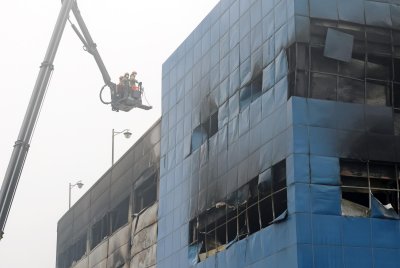
1 of 2 | Firefighters search for missing people at a car parts plant after a large fire engulfed the building in Daejeon, South Korea, Friday. Photo by Yonhap/EPA
March 21 (UPI) — A fire at a Daejeon, South Korea, car parts factory Friday has killed at least 14 people and injured dozens more.
There were nearly 60 injured in the fire in a three-floor plant. The Ministry of the Interior and Safety said that some of the injured had inhaled smoke, and some were injured when they jumped from the building. It said 25 were seriously injured, but it didn’t say if any were in life-threatening condition. There were 170 people inside when the fire erupted.
Nam Deuk-woo, fire chief of the city’s Daedeok district, said almost all of the bodies were found inside a third-floor space that had been used as a gym locker room, The New York Times reported. Some bodies were so badly burned it will take DNA testing to identify them.
Nam said workers recovered more than 220 pounds of highly reactive chemicals from the site before firefighters could spray water on the fire, and some witnesses have reported that there was an explosion when the fire began.
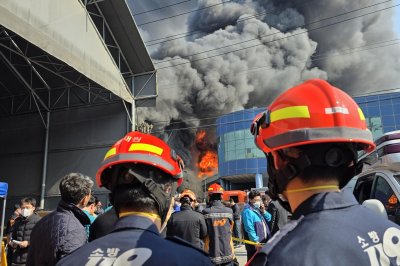
Fire authorities are on the scene of a fire that broke out at a car parts plant in the central city of Daejeon on Friday, injuring at least 53 people, with 14 others unaccounted for. Photo by Yonhap
A fire broke out at a car parts plant in the central city of Daejeon on Friday, injuring at least 53 people, with 14 others unaccounted for, authorities said.
The fire was reported at around 1:17 p.m., prompting the National Fire Agency to issue a national firefighting mobilization order, which is given when the scale of the fire is deemed to surpass the firefighting capacity of the local government.
A total of 170 workers were inside the plant when the blaze started, and 14 of them have been unreachable, officials said.
Of the injured, including 24 with serious injuries, many had inhaled toxic gas or fallen from the building, they said.
More than 200 firefighters and 90 pieces of equipment have been deployed to the scene to put out the blaze, aided by helicopters from the forestry service.
Of the two buildings making up the plant, one has completely burned down, while the other is still burning. Firefighters have not been able to enter the structure due to concerns it could collapse.
Also complicating the firefighting effort is 200 kilograms of sodium inside the building, which could explode if poorly handled.
President Lee Jae Myung ordered authorities to mobilize all available resources to rescue the victims and contain the fire, his office said.
Earlier, Prime Minister Kim Min-seok gave similar instructions to the interior ministry and the fire agency, while ordering the Daejeon metropolitan government and the police to ensure no further damage by implementing traffic control and evacuation measures.
Copyright (c) Yonhap News Agency prohibits its content from being redistributed or reprinted without consent, and forbids the content from being learned and used by artificial intelligence systems.
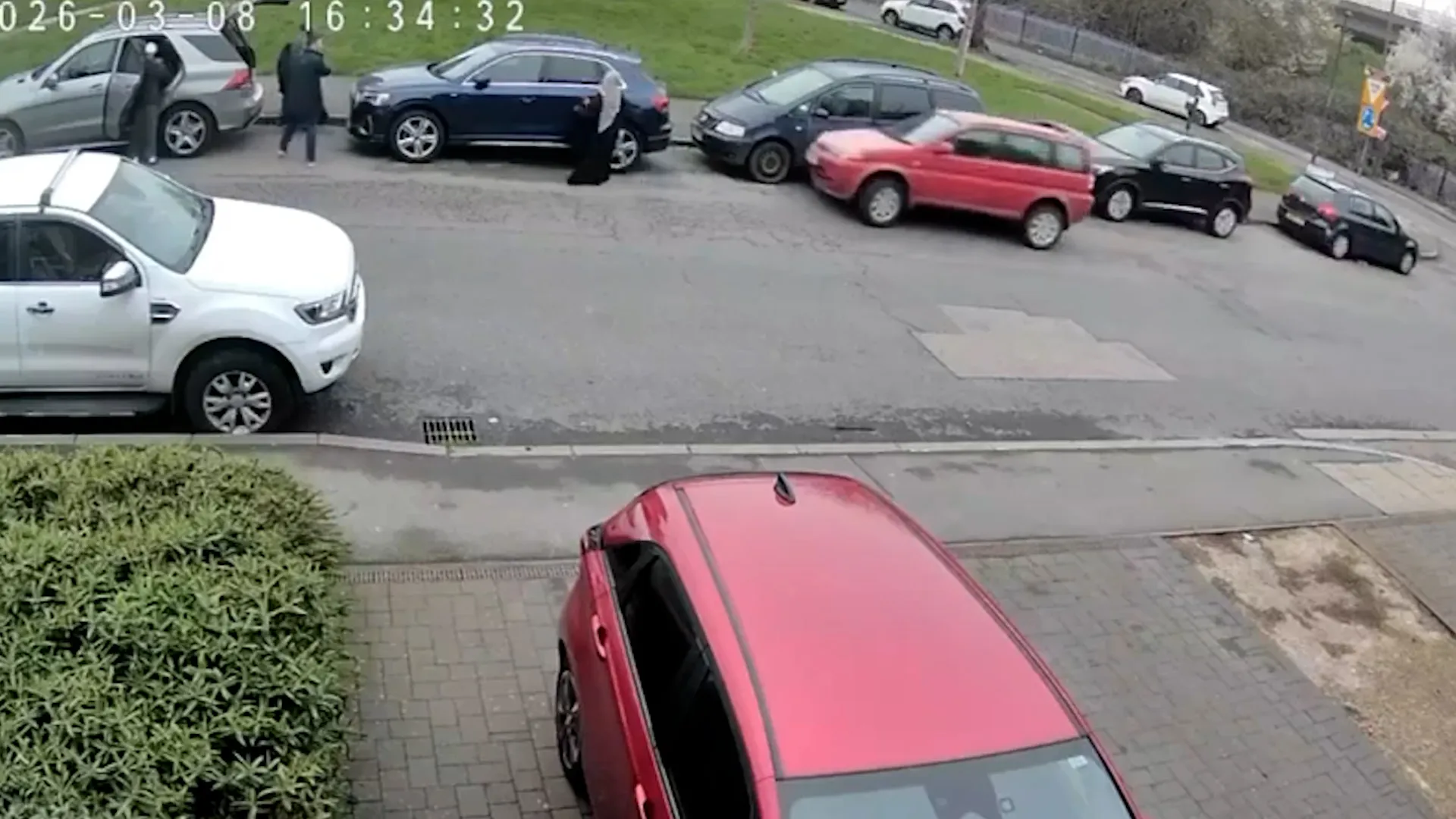
CCTV shows the moment a car hits a Muslim woman in broad daylight in southeast London before the driver speeds away. The woman survived, and an investigation is ongoing, but no suspects have been arrested yet.
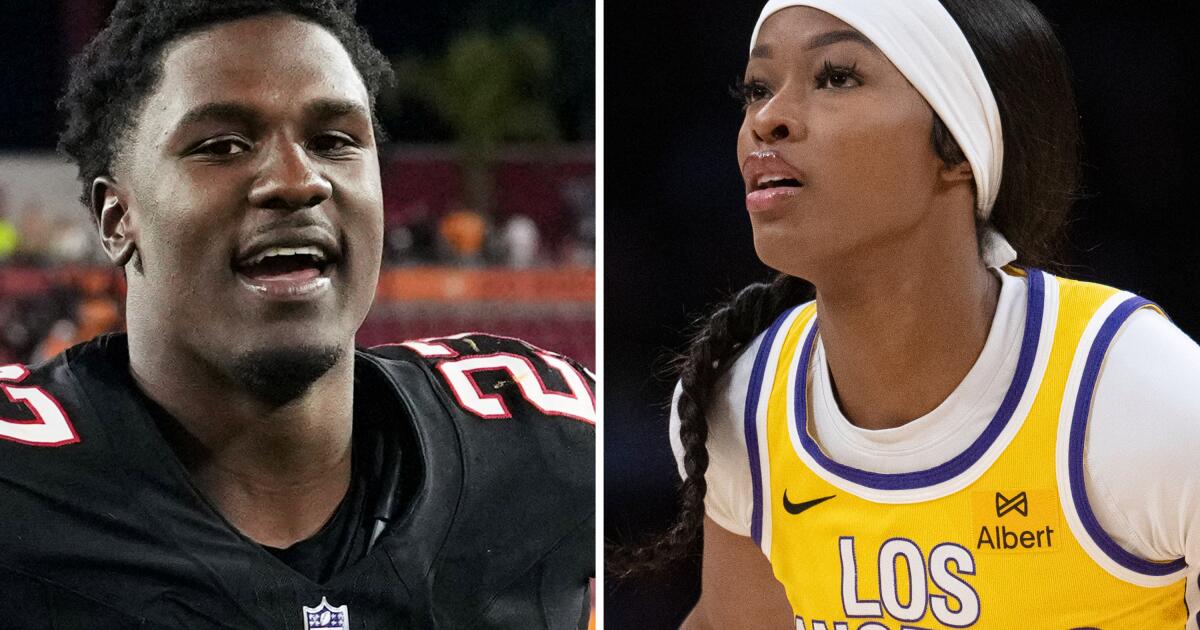
Stating that she fears for her life, Sparks forward Rickea Jackson has filed a petition for protection against her ex-boyfriend, Atlanta Falcons edge rusher James Pearce Jr.
Miami-Dade (Fla.) County Judge Heloiza Correa granted Jackson’s initial request for protection Feb. 9, and a permanent injunction hearing is set for April 21. Pearce is under order not to have contact with Jackson or come within 500 feet of her home or place of employment.
“James has threatened to kill me, James has threatened to harm me, James has threatened to injure me, James has threatened to place a bag over my head, and James has verbally and physically abused me on more than one occasion,” Jackson wrote in her statement to the court.
Jackson, 24, also filed notice with the court that she is willing to testify against Pearce. Her original petition for injunction for protection against dating violence — essentially a restraining order — was filed two days after Pearce’s arrest Feb. 7 for allegedly ramming his Lamborghini SUV into her car more than once, and doing the same to a police car in Doral, Fla.
Pearce, 22, faces felony charges of aggravated battery with a deadly weapon, aggravated stalking, aggravated battery and fleeing from a police officer. He also faces a misdemeanor charge of resisting an officer and nine traffic violations.
“Mr. Pearce maintains his innocence and urges the public to understand that while allegations have the power to shape a narrative, that it is hardly the full, complete story,” Pearce’s attorney, Jacob Nunez, told AP shortly after the arrest. “We look forward to vigorously defending our client.”
In a court filing, Jackson said that she broke up with Pearce weeks before the incident that led to his arrest. She said Pearce offered her $200,000 to remain in a relationship with him and that his behavior toward her became increasingly alarming. According to ESPN, at least seven other 911 calls to police in the months before the Feb. 7 incident reported Pearce to be stalking or harassing an unnamed girlfriend.
A police report says the relationship between Jackson and Pearce began three years ago when both were star athletes at Tennessee.
Pearce was taken by the Falcons in the first round of the 2025 draft with a pick acquired from the Rams. The 6-foot-5, 243-pound edge rusher finished third for AP Defensive Rookie of the Year after recording 10.5 sacks.
Jackson was a first-round pick of the Sparks in 2024. The 6-2 forward emerged as a star in her second season, picking up MVP votes after averaging 14.7 points, 3.2 rebounds and 1.7 assists.
“She’s a smooth person, smooth athlete, smooth basketball player,” Sparks coach Lynne Roberts said in 2025. “She makes hard things look really easy … she makes things look effortless, and I know they’re not.”
The relationship between Jackson and Pearce became volatile in January when the Falcons star admitted in a police report obtained by ESPN that he thought Jackson was cheating on him.
The Feb. 7 incident was described in Jackson’s court filing and a police report. Jackson was attempting to get away from Pearce, who followed her in his car, tried to open her car door at a stop and slammed into her car more than once while she tried to enter the Doral Police Department parking lot “because I knew James was going to hurt me,” Jackson said.
An officer pulled a gun on Pearce and ordered him to get on the ground. However, Pearce jumped back into his car. The officer attempted to open the door, but Pearce shut it and drove away, his car clipping an officer’s left knee.
Police gave chase and Pearce crashed at an intersection before fleeing on foot. Officers said that they caught up with him and he resisted arrest. He was released after posting a $20,500 bond.