Canyon

This remote canyon near L.A. offers a quiet escape with fall foliage

The air was cool and crisp, and yellow-orange mushrooms were bursting out of the soil near mossy hillsides. Deep in the canyon, I could see bright yellow leaves of Western sycamores. It was what I’ve come to learn as the quintessential Southern California autumnal experience.

You are reading The Wild newsletter

Sign up to get expert tips on the best of Southern California’s beaches, trails, parks, deserts, forests and mountains in your inbox every Thursday.

And somehow, I had it all to myself.

In this week’s edition of The Wild, I will explain how you can replicate my hike through Devil’s Canyon, a moderate 5.9-mile out-and-back trek through a pristine gulch in the San Gabriel Mountains that features a creek with short cascades that flow down into deep pools. It ends at a trail camp where I hope to one day backpack and spend the night, as it offers a gorgeous open view of the night sky and is next to a creek with a steady flow.

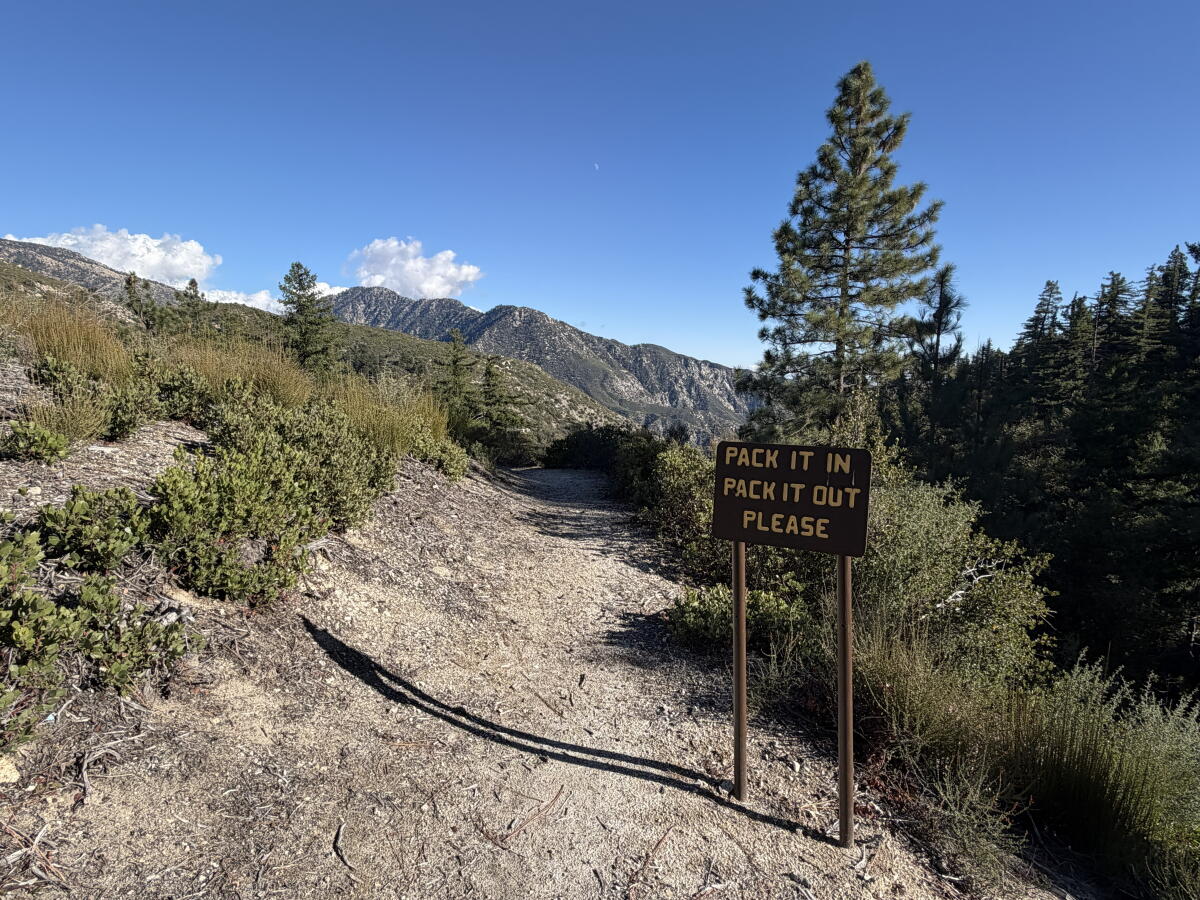
A short brown sign that reads "Pack it in, Pack it out please" next to a dirt trail and tall pine tree

A sign at the start of Devil’s Canyon trail reminds you to leave no trace.

(Jaclyn Cosgrove / Los Angeles times)

Before we dive in, though, I wanted to let you know: There won’t be an edition of The Wild next week, as it falls on Thanksgiving. In the interim, if you’d like to go on a leaf-peeping adventure with your family, check out the article I wrote last year where I outline how to best identify trails that will feature fall foliage. I hope you and yours have a wonderful Thanksgiving!

A few quick safety notes before we dive in:

  • You will almost certainly not have cellphone reception at the trailhead or during this hike. Make sure to tell someone where you’re going and consider leaving a completed copy of this form on your vehicle’s dash.
  • The trail below has several narrow spots. As such, I recommend hiking down with trekking poles and then using them on the hike back up when the trail narrows. Tired legs = less balance.
  • Download a map and consider bringing a paper one. Most of the trail is easy to follow, but once you make it to the canyon bottom, it becomes more challenging to notice the route. A previous forest goer left orange flagging tape, which I understand is controversial as it’s arguably litter, but regardless, those markings may help you find your way.
  • The elevation at the start of this hike is around 5,300 feet. Read: Cold in fall and colder in winter. Around 2:15 p.m., my car’s thermometer read 46 degrees. At night, it can easily dip into the 30s. This time of year, I pack a dry bag with an extra long-sleeve shirt, my puffer jacket, thermal underwear, a beanie and insulated gloves. I recommend you do similar. This is the time of year when packing your bag like you’re spending the night can save your life.
  • With a strong El Niño increasing the odds of a wet winter, make sure to check the forecast before leaving for the forest.
Several rolling hillsides covered in green conifer trees

Hikers are treated to stunning views of the mountains and hillsides around Devil’s Canyon.

(Jaclyn Cosgrove / Los Angeles Times)

OK, let’s talk about this stunning sylvan sanctuary!

To begin, you will park at the Devil’s Canyon lot and remember to display your Adventure or America the Beautiful pass. Note: The Angeles National Forest website cites this trailhead as closed because of damage to Angeles Crest Highway. This is dated information and no longer accurate. The highway closure, prompted after serious storm damage, begins just under 4 miles northeast.

You’ll head east and cross over Angeles Crest Highway to the trailhead. Be careful as you cross, as there’s a tight corner near the crossing and undoubtedly someone in a sports car is doing 90 mph not too far off.

You’ll find a trail register at the trailhead where you should leave your name, the time you enter and the time you leave. This helps trail managers collect trail usage data and can help search-and-rescue teams know when you entered an area, should an emergency occur.

A narrow dirt route past spindly spiky shrubs and through a grass hillside with the sun shining on mountains in the distance

The narrow trail near the top of the Devil’s Canyon.

(Jaclyn Cosgrove / Los Angeles Times)

The only downside of this trail, really, is that it starts downhill, meaning you will have to climb back up the 1,400 feet you descend. I personally took my ascent as an opportunity to appreciate the views!

As you trudge over pea gravel and crunchy leaves, make sure to look down. I have never seen as many mushrooms as I did on this hike. I used iNaturalist to try to identify them, and the app suggested I documented common milkcaps, brittlegills and maybe Western painted suillus. I also loved how much moss and lichens were living along the hillsides and boulders. I am from a hilly forested area of Oklahoma, and for a moment, I felt like I was walking along a childhood route.

You will soon find a tree that’s fallen across the path where it appears safest to crawl under rather than over. Quickly thereafter, you’ll start seeing incredible views of the surrounding peaks, including West Twin near Twin Peaks.

One of several mushroom species growing in Devil's Canyon in the San Gabriel Mountains.

One of several mushroom species growing in Devil’s Canyon in the San Gabriel Mountains.

(Jaclyn Cosgrove / Los Angeles Times)

This was about the time I started noticing bear scat and possibly some fresh bear tracks. I carry bear spray when in the backcountry, as it is legal to carry in Angeles National Forest. I’d advise similar. I kept my eyes peeled for a furry blob in the distance, but only saw “bear trees,” as I call them: Burned-out logs that resemble our ursine neighbors (and still can give you quite a fright!).

I thought I also spotted poodle-dog bush, which can give you a serious rash if you brush against it, but again, I used iNaturalist. The app suggested the plant was instead hairy yerba santa. I also quickly spotted sage plants and buckwheat turning a deep red.

About 1.2 miles in, I started to spot the yellow leaves of the sycamore trees and grew excited over what was to come. Once down in the canyon, I passed dozens of sycamores sporting picturesque fall foliage and heaps of yellow and light orange leaves covering the path.

Here at the canyon bottom, the trail will start to become less clear, especially around 2.5 miles in, where you need to maneuver around a short tree and splash through the creek bed to continue onward. I really lost the trail, though, when I was closest to the camp, and although I enjoyed looking at the pinkish rock lining the creek, I was ready to eat my lunch. At one point, I fell, briefly lost my phone and laughed at myself, the professional adventurer. This all underscores why it’s important to have a map and a compass, as I checked mine after I took that tumble.

Sycamore leaves line the trail across Devil's Canyon.

Sycamore leaves line the trail across Devil’s Canyon.

(Jaclyn Cosgrove / Los Angeles Times)

Soon, I arrived at the trail camp, and I sat down at the makeshift fire pit where I enjoyed the day’s lunch (which included a slightly squished hummus wrap from Trader Joe’s).

I couldn’t find how Devil’s Canyon got its name. I saw no hornlike rocks shooting out of the mountain or a creepy cave that whispered my name. Maybe I’ve been watching too much “Widow’s Bay”?

Regardless, this area has been called Devil’s Canyon for more than 100 years. The earliest Times reference I found was in a 1911 story about hunting. Then I dug deeper and found this 1903 U.S. Geological Survey map that includes Devil’s Canyon. If you happen to know anything further, please let me know!

A short waterfall with a pool of clear water and orange leaves.

A short waterfall with a pool of clear water and orange leaves.

(Jaclyn Cosgrove / Los Angeles Times)

I was alone the entire hike, which delighted and confused me. I’d driven past the Switzer Falls upper parking lot, which had at least a dozen cars. This magnificent hike — with its sweeping views, diverse flora and fauna and a crystal clear creek — is far and away worth the extra 30 minutes to drive to the Devil’s Canyon trailhead instead.

But maybe it’s the name keeping people away. Admittedly, I have driven past the trailhead several times on my way to hikes deeper in the backcountry. I imagined a place called Devil’s Canyon to be dry, rocky and exposed to the heat. That’s far from what I found.

The Devil's Canyon Trail Camp, a backcountry destination in Angeles National Forest.

The Devil’s Canyon Trail Camp, a backcountry destination in Angeles National Forest.

(Jaclyn Cosgrove / Los Angeles Times)

That did get me to thinking: Maybe we should rename some of the overcrowded trails after the most notorious biblical villain. Would people still flock to Switzer Falls if we renamed it Satan’s Sanctuary? What about Beelzebub’s Brook for Trail Canyon Falls?

Regardless, the only thing devilish I found about this hike was my longing to stay in the canyon, full of fall foliage, orange-yellow fungi and a healthy creek that reflected back a most heavenly view of the forest.

Editor’s note: In last week’s newsletter, we forgot to include the full name of Norma Edith García-González, director of L.A. County Department of Parks and Recreation.

A wiggly line break

3 things to do

A bearded man in sunglasses, a helmet and yellow gloves holds a rake or similar tool on a trail with fresh dirt.

Alex Keller, Mount Wilson Bicycling Assn. president, during a trail work day along the Gabrielino National Recreation Trail.

(Mount Wilson Bicycling Assn.)

1. Patch up a path near L.A.
The Mount Wilson Bicycling Assn. needs volunteers from 8 a.m. to 3 p.m. Saturday in the San Gabriel Mountains. Participants will hike or bike up a segment of Strawberry Peak Trail before making repairs. Carpooling is encouraged. No prior trail work experience required. Register at eventbrite.com.

2. Take a liking to lichens in Calabasas
The UCLA Stunt Ranch Reserve will host a free two-hour workshop about lichen biology and ecology from 10 a.m. to noon Saturday at its Santa Monica Mountains Reserve in Calabasas. Botanist Hank Dingman will teach participants about local lichens and then lead a hike in the reserve to observe members of the taxonomic group. Register at eventbrite.com.

3. Meditate among mule deer in Coto de Caza
The Orange County California Native Plant Society will host a two-mile, slow-paced meditation hike at 2:30 p.m. Saturday in Thomas F. Riley Wilderness Park in Coto de Caza. After a grounding practice, participants will mosey past coastal sage scrub, grassland and woodland habitat. For the final 30 minutes, guests will participate in a seated, guided meditation. Parking is $3. Register at eventbrite.com.

A wiggly line break

The must-read

Mendocino Grove Campsgiving.

Mendocino Grove Campsgiving.

(Mendocino Grove)

As I read Times staff writer Christopher Reynolds’ story about camping on Thanksgiving, I asked myself: “Why have I never done this?” Campsgiving, as it has become known, is a growing tradition among friends and families who are ditching the dinner table for the Dutch oven. Campsgiving “is by far my favorite time for guests to gather at the campground during our seven-month season,” said Teresa Raffo, owner and co-founder of Mendocino Grove, in an email. “… Campers who didn’t come together end up together and usually back together the following year.”

Pardon me while I search the internet for the best way to make a pecan pie over a campfire.

Happy adventuring,

Jaclyn Cosgrove's signature

P.S.

I bought my satellite communicator — the discontinued (but still awesome) Garmin inReach Explorer+ — in the summer of 2021 after signing up for my first SoCal Six Pack of Peaks Challenge. My Garmin has not only brought me amazing peace of mind but also allowed me to communicate with my friends and family, including when I’m running late. If you’ve been considering whether to buy your own satellite communicator, now is the time. Through REI’s annual holiday sale, you can buy a satellite communicator starting at 20% off. I carry my Garmin device along with an iPhone that can send satellite messages. I prefer the Garmin for its consistency and ease of sending messages. I hope you are able to score a great deal that empowers you to take more adventures!

For more insider tips on Southern California’s beaches, trails and parks, check out past editions of The Wild. And to view this newsletter in your browser, click here.

Source link

Supreme Court OKs border wall construction in Big Bend area of Texas

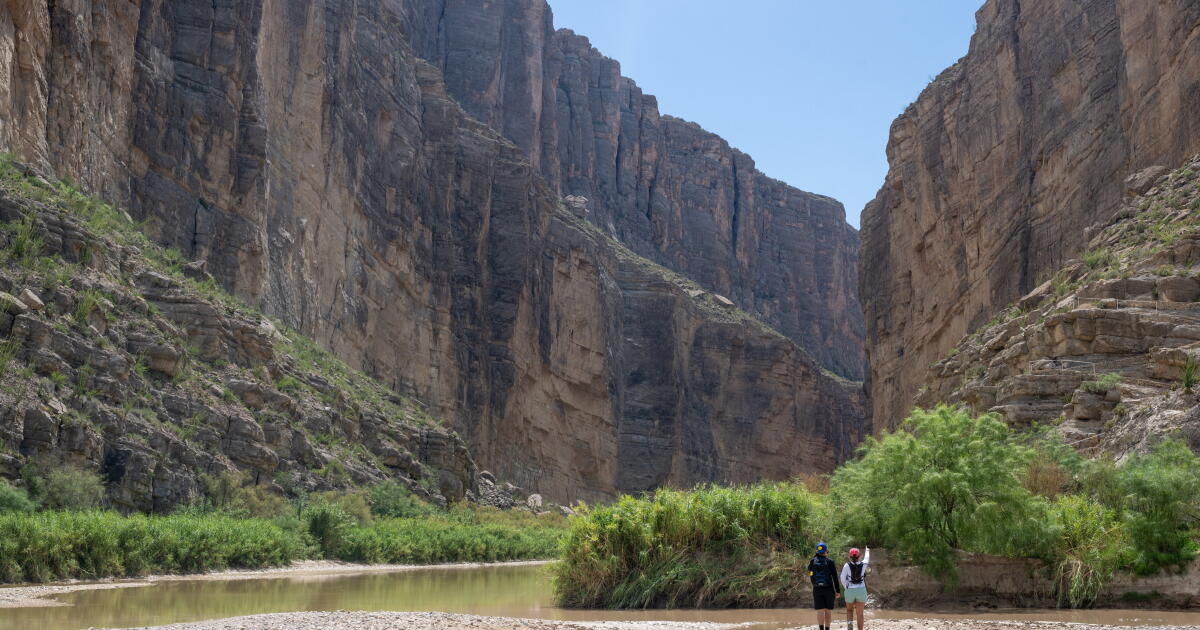
The Supreme Court has cleared the way for the Trump administration to build a border wall through the scenic and rugged Big Bend sector of west Texas.

The justices on Monday granted an emergency appeal from Trump’s lawyers and set aside a judge’s order that had paused further construction along a 517-mile section of the Rio Grande.

Justice Ketanji Brown Jackson dissented alone and without an explanation.

In an unsigned opinion, the court said federal courts did not have the authority to stand in the way and block efforts along the border.

“The balance of the equities also favors the government,” the court said. “Construction in the Big Bend Sector will diminish the [plaintiffs’] ability to use and enjoy the area. But Congress’s enactment of [the special law] — which permits the Secretary to waive the requirements of environmental protection and other conservation laws — reflects a clear preference for expeditious border construction over the very harms” cited by the opponents.

A broad coalition of environmentalists, cattle ranchers, farmers, river boat guides, outdoor activists and church leaders had gone to court in El Paso seeking to stop the construction.

“The Trump administration and its contractors are hellbent on destroying one of America’s greatest national parks, and the Supreme Court just gave them the green light,” said Laiken Jordahl, national public lands advocate at the Center for Biological Diversity. “This horrific decision clears the way for contractors to bulldoze pristine desert and dynamite canyon walls before the courts have even decided whether this destruction is legal.”

But Trump’s lawyers pointed to unusual measures adopted by Congress that gave the Department of Homeland Security broad authority to construct border barriers “to deter illegal crossings in areas of high illegal entry.” One provision authorized the department’s secretary to “waive all legal requirements” that stood in the way, including environmental protection measures.

U.S. Customs and Border Protection said it does not plan to build a border wall in the Big Bend National Park, with its steep canyons, but said new patrol roads and vehicle barriers would be added.

However, U.S. District Judge Kathleen Cardone, an appointee of President George W. Bush, issued a preliminary injunction on Oct. 2 to halt further work on the border barriers. She said the government’s own evidence showed illegal entries and drug smuggling were much less common in the Big Bend sector.

“For ‘high illegal entry’ to impose any limit, it must at least mean, not ‘the lowest rate of illegal entry,’” she said. “The Bend Sector has the lowest rate of illegal entry along the entire U.S.-Mexico border.”

Solicitor Gen. D. John Sauer filed a fast-track appeal at the Supreme Court and urged the justices to set aside her order and to rule on the underlying legal question. He cited evidence that over four years, there were 89,000 apprehensions of illegal migrants in the Big Bend sector which covers nearly one-fourth of the U.S.-Mexico border.

“The Sinaloa and Juarez cartels operate south of this sector across the Mexico border and seek to exploit any vulnerabilities in United States border protection to traffic humans, drugs and weapons across the border and infiltrate the United States,” he told the court. “Leaving a 300-plus-mile gap in border defenses would act as a dangerous magnet for cartels and other bad actors to exploit as other routes close off.”

Source link

Mater Dei beats Sierra Canyon for Division 1 girls’ volleyball title

Upon hammering her 19th kill on a cross-court attack, Westley Matavao leaped into the arms of her teammates to celebrate Mater Dei’s 24-26, 25-23, 25-21, 25-23 triumph over Sierra Canyon in the CIF Southern Section Division 1 girls’ volleyball final Saturday night at Cerritos College.

Having avenged a loss in the section finals last season, the Monarchs’ next goal is to defend their state championship, and they will be the top seed when the Southern California Regional Open Division bracket is released Sunday.

Westley Matavao goes on the attack for Mater Dei against Sierra Canyon.

Westley Matavao goes on the attack for Mater Dei against Sierra Canyon in the CIF Southern Section Division 1 girls’ volleyball championship match on Nov. 7, 2026.

(Steve Galluzzo / For The Times)

“This season it’s important for us to win everything because I’ve been here all four years, this is my last one and I wasn’t going to take losing as an answer,” said Matavao, a senior outside hitter headed to UCLA.

The Monarchs (39-1) have dealt Sierra Canyon (32-2) its only losses this season and the top two programs in the nation could meet for a third time, but for now Mater Dei reigns supreme after earning its second section title in three years. It swept the Trailblazers in the finals two years ago.

Freshman Jimin Seung had 14 kills, Cal-bound middle blocker Emma Kingston had 11 kills and sophomore libero Sienna Cicero finished with a match-high 23 digs, diving all over the floor to keep points alive.

“It was definitely tougher this time around — over half of them are high Division I level players — so you can’t underestimate a team like that,” Cicero said. “Our blockers played great and funneled the ball perfectly for me. My mentality is we’re going to win no matter what.”

Mater Dei beat Sierra Canyon, 25-18, 25-17, in the gold division final at the Durango Fall Classic in September before suffering its only loss to Trinity League rival Santa Margarita 11 days later.

Katherine Nowak, center, celebrates a kill with Mater Dei teammates Jael Smith, left, and Riley Stringer.

Katherine Nowak, center, celebrates a kill with Mater Dei teammates Jael Smith, left, and Riley Stringer against Sierra Canyon in the CIF Southern Section Division 1 final on Saturday.

(Steve Galluzzo / For The Times)

Sierra Canyon trailed by seven points midway through the first set but rallied to take an 18-17 lead on an ace by McKenna McIntosh, who blasted through a left-side block on the Trailblazers’ first set point. McIntosh, a hitter headed to USC, finished with 10 kills and 19 digs and Nebraska-bound middle blocker Kendall Omoruyi had a match-high 22 kills.

The Monarchs were clinging to a 21-20 lead in the second set when Matavao took control, hammering spikes for her team’s last four points. An ace by Kalea Lee gave Mater Dei a 21-19 lead in the third set and another by Matavao had the Trinity League champions one set away from victory.

Lee (22 assists) and fellow setter Riley Stringer (25 assists) ran the Monarchs’ offense with precision and Matavao, the cousin of Trailblazers setter Lucky Fasavalu, who is committed to Missouri, added 14 digs.

Sierra Canyon’s Kendall Omoruyi hits over Mater Dei blockers Emma Kingston, center, and Jimin Seung.

Sierra Canyon’s Kendall Omoruyi hits over Mater Dei blockers Emma Kingston, center, and Jimin Seung in the CIF Southern Section Division 1 championship on Saturday.

(Steve Galluzzo / For The Times)

Concentrating on the task at hand, Matavao said the two did not talk before the match.

“I’m grateful to be part of this team,” Matavao said. “We did all this together.”

In the preceding Division 2 final, Long Beach Poly trailed 14-12 in the fifth set before reeling off the last four points to beat Redondo Union, 25-19, 20-25, 25-18, 23-25, 16-14. It marked the second section title in three seasons for the Jackrabbits, who won the Division 3 title in 2024.

Avery Milburn had 18 kills for second-seeded Poly (29-7) and blocked the Sea Hawks’ top hitter, Asofiafia So’oto, on match point.

“I could see her approach going angle and I knew I had to get my right hand on it and make it the best block ever,” said Milburn, who got a kill to thwart the first of the Sea Hawks’ two chances to end it.

Long Beach Poly’s Alison Wetteland plays a ball at the net in the CIF Southern Section Division 2 girls' volleyball final.

Long Beach Poly’s Alison Wetteland plays a ball at the net in the CIF Southern Section Division 2 girls’ volleyball final against Redondo Union on Saturday.

(Steve Galluzzo / For The Times)

McKennah Iamaleava had 29 kills, 15 digs and two aces and teamed with Alison Wetteland for a block to level the final set at 14-14. Mina Orbiso finished with 32 assists, Cedra Talaga had 20 digs and Aleeya Salima added 18 kills and seven digs for Poly.

So’oto had 17 kills, Abigail Hairrell had 11 kills and Leah Blair had nine kills and 14 digs and Addison Uphoff had five blocks, including one to end the fourth set for Redondo Union (22-12), which had upset No. 1-seeded Newport Harbor in the quarterfinals and No. 4 San Juan Hills in the semifinals.

In the Division 3 final, Corona del Mar outlasted Newbury Park 24-26, 25-20, 25-15, 22-25, 15-13 to capture its first section title in 22 years and the eighth in program history.

Corona del Mar's Sofia Dajnowiec, right, tips the ball over two Newbury Park blockers.

Corona del Mar’s Sofia Dajnowiec, right, tips the ball over two Newbury Park blockers in the CIF Southern Section Division 3 girls’ volleyball championship on Saturday.

(Steve Galluzzo / For The Times)

“I’m glad I was able to score that final point,” said senior outside hitter Sofia Dajnowiec, who pounded her 36th kill to end the match. “To win this means everything, it’s the best thing that could happen. We really worked hard in practice and stuck together as a team.”

Isabella Spinella dished out 44 assists, Savannah Dennis had 14 kills and 18 digs, Olivia Rosowski had 25 digs and Dajnowiec added 17 digs for the Sea Kings (26-9), who served 13 aces.

Charley Knupp had 18 kills and 15 digs, Emmery Reynolds had 10 kills and 10 digs, Olena Harasymowycz added 29 digs and Keira Overbeck handed out 32 assists for the Panthers (34-10), who were making their second finals appearance in three seasons, having lost the Division 4 title match to Campbell Hall in 2024.

Taft takes City Section Open Division title

Making its fourth finals appearance in five seasons, Taft defeated West Valley League rival Cleveland in five thrilling sets at Birmingham High to claim the Open Division championship — its seventh City title under coach Arman Mercado since he took over the program in 2000.

The fourth-seeded Toreadors (34-7) avenged two league losses to the third-seeded Cavaliers (31-12), who were vying for their first section crown after going 10-0 in the West Valley League to capture their first outright league title since 2004.

Mercado piloted the Toreadors to the City championship in 2006, the Invitational title in 2008, Division II titles in 2009, 2013 and 2014 and their first Open Division championship in 2024.

Second-seeded Granada Hills Kennedy upset top-seeded Sherman Oaks Center for Enriched Studies in four sets in the Division I final.

Source link

It’s Mater Dei vs. Sierra Canyon in girls’ volleyball showdown

The two best high school girls’ volleyball teams in California, and possibly America, will meet for the Southern Section Division 1 volleyball title at 6:30 p.m. Saturday at Cerritos College, where top-seeded Mater Dei takes on second-seeded Sierra Canyon.

The Trailblazers from Chatsworth and Monarchs from Santa Ana are meeting in the finals for a third consecutive season. Mater Dei swept the title match in 2024 and Sierra Canyon prevailed in four sets last November.

Both teams are loaded with talent. Mater Dei is led by UCLA-bound outside hitter Westley Matavao, middle blocker and Cal commit Emma Kingston, libero and San Francisco State commit Savanah Capinpin and outside hitters Saaliyah Brown (Long Beach State) and Katherine Nowak (Georgetown). Sierra Canyon counters with Missouri-bound setter Lucky Fasavalu (Matavao’s cousin), Nebraska-bound middle blocker Kendall Omoruyi, Tennessee-bound opposite hitter Eva Jeffries and outside hitters McKenna McIntosh (USC) and Hanna McGinest (Texas Tech).

Mater Dei (38-1) dealt the Trailblazers their only loss, 25-18, 25-17, in the gold division final at the Durango Fall Classic in Las Vegas on Sept. 19. The Monarchs’ lone defeat came 11 days later at Trinity League rival Santa Margarita. Sierra Canyon (32-1) swept Santa Margarita in nonleague play Sept. 16.

In the preceding Division 2 final at 3:30, Redondo Union takes on Long Beach Poly in a rematch of the teams’ nonleague meeting just before the playoffs in which the visiting Jackrabbits (28-7) prevailed in five sets. Pacing the Sea Hawks (22-11) is libero Addison Choi, who is committed to play beach volleyball at Oregon. Poly is led by Irvine-bound outside hitter McKennah Iamaleava.

West Valley League rivals Taft and Cleveland will battle for the City Section Open Division championship at 6 p.m. Saturday at Birmingham High. Mayli Hernandez had 22 kills in the fourth-seeded Toreadors’ five-set semifinal upset of No. 1 Venice. Taft (33-7) is making its fourth finals appearance in five seasons and is chasing its sixth title. AnaJoleen Bell and fellow hitter Cate Friedman lead the third-seeded Cavaliers (31-11), who beat Taft twice in league play and are after their first section crown.

Source link