candidates

For all the chatter by mayoral candidates, can anyone fix L.A.’s enduring problems?

I’m going to start this story on a quiet tree-lined street in Mar Vista, where a couple I met with on Thursday — the day after the L.A. mayoral debate — have a problem.

It’s not an unusual matter, as things go in Los Angeles. On both sides of the street, the sidewalk rises and falls, uprooted and cracked by shallow roots because over many decades, the trees were not properly maintained.

John Coanda, 61, who grew up in Los Angeles, was never bothered by torn-up sidewalks as a kid.

“In fact,” he said when he first emailed me about his predicament, “my friends and I sometimes used the ramping pavement as jumps for our bicycles.”

But his wife, Barbara, was diagnosed in 2024 with ALS, and she uses a wheelchair. When John pushes her, they can’t use the sidewalk if they want to go to the store or meet with friends, or just enjoy a nice pass through the neighborhood without getting into a vehicle.

So John pushes Barbara’s wheelchair in the street, which creates an obvious safety problem. And despite John’s best efforts to get City Hall to fix the sidewalks, he’s not expecting help anytime soon.

I’ll circle back to this story in a bit, but first, about that debate.

I recruited a half-dozen L.A. residents to watch and send me their thoughts about how the candidates tackled the important issues. And then I felt guilty for having done so, because the candidates didn’t do much tackling at all.

Spencer Pratt is shown on a television while journalists work during the 2026 Los Angeles mayoral debate.

Candidate Spencer Pratt is shown on a television while journalists work during the 2026 Los Angeles mayoral debate at Skirball Cultural Center.

(Jason Armond / Los Angeles Times)

They hit their talking points, for sure, and Mayor Karen Bass, Councilmember Nithya Raman and TV personality Spencer Pratt each had their moments. But by the end of the debate, and two straight nights of gubernatorial debates as well, I came away thinking there were no clear winners, but there was a definite loser.

Voters.

This is the fault of the format more than of the candidates themselves. The deck is stacked against meaningful, substantive discussions, especially when moderators ask — as they did several times — for one-word answers.

“Moderator questions are so meaningless … and they make it easy for candidates to take potshots at each other,” said longtime political sage Darry Sragow. “The format is guaranteed to elicit nothing that matters.”

It’d be better to have single-issue debates, and to have candidates pressed for details by journalists who cover those issues and can push back against unrealistic promises and expose a lack of depth.

My debate watchers did some of that themselves. CSUN librarian Yi Ding had praise and criticism for each candidate, but was looking for concrete plans and didn’t get many.

Ding was also disappointed that two other mayoral candidates — Ray Huang and Adam Miller — were not invited to the debate, and I agree with her. Both have been polling low, but with so many undecided voters, and such high unfavorability ratings for Bass, they should have been in the mix.

Mike Washington, a retired pharmacist and West Adams resident, said Bass has done better than previous mayors on homelessness and he didn’t think Raman or Pratt came off as worthy of bumping her out of City Hall.

“The public would have benefited from more questions related to the challenges young people are facing,” said Juan Solorio Jr., president of the San Fernando Valley Young Democrats club. His colleague David Ramirez agreed, saying he was hoping for “more discussion about the cost of living for young adults,” but he and Solorio are both backing Bass.

West L.A. software developer Mike Eveloff asked the million-dollar question in one of his many observations during the debate:

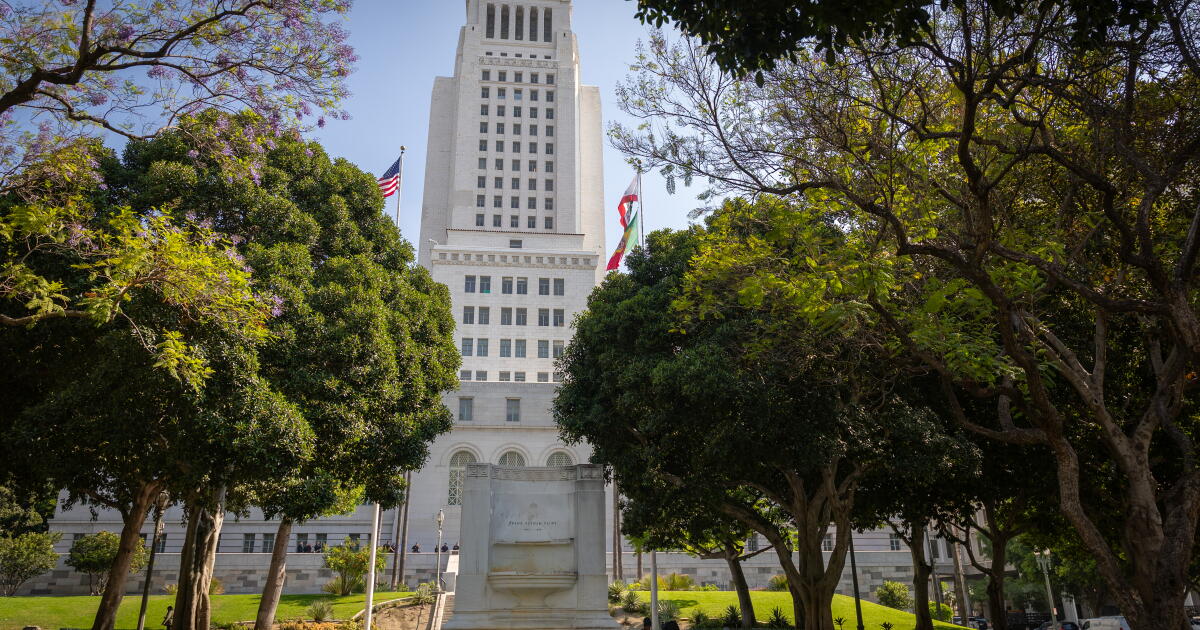
“Why is LA spending record amounts on homelessness, fire, police, and infrastructure while results deteriorate? Streets and sidewalks crumble. Even the city emblem right in front of City Hall is deteriorated. With the World Cup and Olympics approaching, voters need to know: Do these leaders have the financial discipline and operational competence to manage a fourteen billion dollar city?”

Venice resident Dennis Hathaway, author of “An Octogenarian’s Journal,” said he thinks “these kinds of debates are pretty non-edifying.” And, as someone I wrote about two years ago regarding busted sidewalks in his neighborhood, he shared this lament about Thursday’s debate:

“No mention of broken sidewalks, potholed streets, other deteriorated infrastructure. To me, that’s a much more important subject than non-citizens voting in city elections.”

(Bass did say during the debate that there was a new infrastucture plan in place, and that’s a step in the right direction. But there was no discussion, and when you read the details, 2028 Olympics projects will be prioritized, and it’ll take years to figure out how to fund thousands of additional much-needed fixes.)

The Coandas live not far from Hathaway, and their lives have been upended first by Barbara’s diagnosis and then by John getting laid off in February from his job as a data analyst. Barbara still teaches French via Zoom, and John is tending to her needs. They started a Gofundme campaign to help pay their bills.

With Barbara in a wheelchair, John contacted the city’s Safe Sidewalks L.A. program last fall, and I think it’s fair to say that name is somewhere between a misnomer and a bad joke.

The “program” responded by email on Halloween, appropriately enough, informing him that under the City Council-approved “Sidewalk Repair Program Prioritization and Scoring System,” his request for help merits only 15 points out of a possible 45.

“Currently,” he was informed, “the estimated wait time for completion of an Access Request with a score of 15 is in excess of 10 years.”

Happy Halloween.

Over the years, responsibility for sidewalk repairs has shifted between the city and homeowners. There’s a rebate program available to people who repair their own sidewalks, but it’s capped at an amount that doesn’t always cover the costs. And ruptured pavement is keeping lots of lawyers busy with trip-and-fall lawsuits that cost the city millions each year.

Barbara Durieux Coanda and her husband, John Coanda, make their way down the ramp in front of their home in Mar Vista.

Barbara Durieux Coanda, who has ALS, and her husband, John Coanda, make their way down the ramp in front of their home in Mar Vista.

(Genaro Molina / Los Angeles Times)

Coanda told me he doesn’t have the funds at the moment to pay for repairs, and even if he did, there are several more sidewalk disaster zones on both sides of his street, so he’d still have to push his wife’s wheelchair in the street even if he fixed the cracks in front of his own house.

Barbara graciously said she thinks the city has other, higher priorities, but in November her husband contacted the office of Councilmember Traci Park, saying he was told that he would have to wait 10 years for repairs.

“Sadly,” he wrote, “I don’t think my wife will live that long.”

A Park staffer wrote back, saying, “The turnaround time does sound realistic given the budgetary crisis the city finds itself in.” But, the staffer added, maybe the council member’s office could “help move the needle on this request.”

Coanda said he’s been too busy with his wife’s issues to follow up. But Pete Brown, Park’s communications director, told me Friday afternoon that the office is exploring ways to pay for fixes that don’t take 10 years, including the use of discretionary funds.

I don’t know how that might play out, but I do know that L.A. doesn’t need another debate like the last one.

We need a mayor and council members who refuse to accept that it takes 10 years to create safe passage for a wheelchair.

In the national capital of broken sidewalks, we need concrete plans.

steve.lopez@latimes.com

Source link

Primaries: GOP voters in Indiana, Ohio back Trump-aligned candidates

May 6 (UPI) — Republican voters in Indiana and Ohio largely backed Trump-aligned candidates Tuesday in primaries seen as tests of President Donald Trump‘s influence within the GOP.

Both states held their party primaries on Tuesday to decide candidates for hundreds of races for November’s midterm elections, but most eyes were on contests for the Indiana state Senate, where incumbent Republicans had rejected Trump’s redistricting push.

Indiana

Though too late to influence Indiana’s congressional map before the midterms, Trump endorsed challengers to incumbents who had opposed his effort to redraw the map to add Republican seats.

Trump’s influence within the GOP in the Hoosier State appeared strong: Of his seven endorsed challengers against Indiana Republican state senators who opposed his gerrymandering push, five appeared poised to win outright, one seemed to have lost and another was in a tight race.

“Big night for MAGA in Indiana,” Sen. Jim Banks, R-Ind., said in a social media statement, referring to the acronym for Trump’s far-right nationalist Make American Great Again movement.

“Proud to have helped elect more conservative Republicans to the Indiana State Senate.”

Nearly 90% of all Indiana precincts were reporting as of early Wednesday, according to the Indiana Election Division, but five of the seven Trump-backed candidates had already declared victory.

Those five are Trevor De Vries, Brian Schmutzler, Blake Fiechter, Tracey Powell and Michelle Davis.

“Thank you to every Hoosier who came out to vote today,” De Vries said in a social media post late Tuesday.

“And special thanks to President @DonaldTrump for his endorsement that helped seal the deal and showed Indianapolis what real Hoosiers wanted.

“We did it, Indiana! Time to get to work.”

De Vries beat incumbent Daniel Dernulc, state senator for District 1, in a landslide. According to the unofficial results, De Vries secured 75.1% of the vote to Dernulc’s 23.3%.

Schmutzler was poised to beat state Sen. Linda Rogers in a 55.8% to 44.2% split, Fiechter over state Sen. Travis Holdman 61.5% to 38.5%, Powell’s 64.7% led state Sen. Jim Buck’s 35.3% and Davis led state Sen. Greg Walker 58.8% to 41.2%.

Trump-endorsed Paula Copenhaver also declared victory in her race against Sen. Spencer Deery despite being in a virtual tie. According to unofficial state results, she was trailing Deery by three ballots.

“After all provisional ballots are counted, we will prevail and be declared the winner of this race,” she said on X.

“I want to thank President Donald Trump for his unwavering support and endorsement. President Trump is the leader of our party, and it showed clearly tonight in his victories across the state.”

The only Trump-endorsed candidate to lose was Brenda Wilson. State Sen. Greg Goode was poised to win with 53.6% of the vote to Wilson’s 36%, according to the unofficial results.

A sixth incumbent who stood against redistricting, Sen. Rich Niemeyer, also appeared poised to lose his seat to challenger Jay Starkey, who was not endorsed by Trump.

Ohio

In Ohio, the race to watch was on the GOP gubernatorial primary.

With incumbent Republican Gov. Mike DeWine barred by term limits from running again, Ohio’s governor’s mansion will have a new occupant.

Amy Acton and her running mate David Pepper ran unopposed in the Democratic primary for governor and lieutenant governor, respectively.

Republican voters in the state nominated Trump ally Vivek Ramaswamy for governor and Robert McColley for lieutenant governor in a landslide.

According to unofficial results from the Office of Ohio Secretary of State, the Ramaswamy-McColley ticket secured 82.47% of the vote compared to the 17.53% that Casey Putsch and Kimberly Georgeton received.

“I speak for Rob and myself here: We are in this because we believe that together — with the complementary skills that we bring to the table — we are the two people in this state who can work together as a team to lead Ohio back to our true potential,” he said Tuesday night during his victory speech.

“To our greatest heights to put more money in your pocket, to bring down those costs and to give your kids the world-class education that is the birthright of every Ohioan.”

Trump had endorsed Ramaswamy for governor.

“I know Vivek well, competed against him and he is something SPECIAL,” Trump said earlier Tuesday.

“Vivek Ramaswamy will be a GREAT Governor of Ohio.”

Ramaswamy gained national attention during the 2024 GOP presidential primary, running against Trump. Instead of attacking the former New York real estate mogul, Ramaswamy aligned himself with Trump’s America First movement, often praising him.

“Thank you, Mr. President!” Ramaswamy said in response to Trump’s endorsement.

“It’s time to make Ohio greater than ever.”

Source link

GOP Meets to Select New Chairman : Republicans: All five candidates talk of party renewal at the grass-roots level. But their differences mirror the divisions in the political organization.

Still smarting from their election loss and scornful of their departing leaders, ranking Republicans met Thursday to select a new party chairman, eyeing five candidates who stress unity but whose links to opposing factions and presidential hopefuls mirror the party’s deep clefts.

On the surface, the three-day meeting of the 165-member Republican National Committee to pick a new leader opened Thursday with a collegial sense of purpose: All five men seeking the post are conservatives who talk of renewing the party at the grass-roots level and loosening ties to the Washington Establishment that called the shots for 12 years.

But the mounting heat produced by this campaign has burnished the differences between the candidates and exposed hints of their ties to the forces buffeting the party–presidential aspirants, religious and anti-abortion elements, even the tattered remains of George Bush’s reelection apparatus.

Party veterans say none of the five–retiring Missouri Gov. John Ashcroft, Mississippi lawyer and political consultant Haley Barbour, Republican Congressional Committee Co-Chairman L. Spencer Abraham, former Army Secretary Howard H. (Bo) Calloway and Oregon party Chairman Craig L. Berkman–appear to have enough support to muster a first-ballot victory this afternoon.

Party regulars described Barbour and Abraham as the perceived front-runners, with Ashcroft, who gained national exposure last fall as a Bush campaign speaker, not far behind. But arriving committee members said up to 40% of the voting members appeared uncommitted.

Committed or not, some of the arriving committee members projected a prickly impatience with the soothing promises made by consultants and cellular phone-wielding floor whips. After 12 years of taking orders from Administration officials, some party officials gleefully flexed their independence.

Outside one reception, a Midwestern committeeman poked a startled staffer in the chest and huffed: “You’re beginning to sound exactly like the dolts we had to endure for the last four years.”

Karen Hughes, the executive director of the Texas Republican Party, said a “strong anti-Washington Establishment” mood pervades the gathering. “I think the deciding factor in the vote is who the members believe will allow them to be part of the process,” she said. “You don’t mind being a rubber stamp body when you win. But when you lose . . . .”

As they lobbied near well-stocked buffet tables in Hyatt Regency hotel hospitality suites and in secluded speeches in spare meeting rooms, the five contestants tried to capitalize on that sense of frustration. They echoed a growing cadre of party regulars who think that Bush’s presidential campaign was fatally flawed by the party’s failure to project a “big tent” image to a diverse nation.

“The sense that the party needs to be inclusionary is playing pretty well here,” said Eddie Mahe, a Republican political consultant who flew in from Washington to lobby for Calloway.

That yearning for a broader, more tolerant Republican Party masks a fear among many stalwarts that they are in danger of a grass-roots takeover by the religious right.

Mary Alice Lair, a national committeewoman from the small southeast Kansas town of Piqua, worries about the “new people,” her hushed description of Christian right volunteers who have swelled party membership rolls in her Republican precinct.

“We need to find ways to show the new people that we’re OK and to teach them how to operate as one group,” Lair said. “We need a chairman who can show the precincts how to organize properly.”

But even as candidates talked earnestly about tinkering with the grass roots, listening to regulars outside the Washington Beltway and turning a deaf ear to well-heeled consultants, they were relying on time-tested Capitol contacts and imported consultants to sway uncommitted members.

And, as they promised a turn in the party’s fortunes by welcoming all of its embittered factions, the five candidates were busy attacking each other for their links to future presidential contenders as varied as former Vice President Dan Quayle and Texas Sen. Phil Gramm, to Christian fundamentalist leaders like Pat Robertson and even to CBS News.

Abraham, a Michigan Republican leader, is selling himself as a leading candidate for change based on his roles in revitalizing his state’s party, in paring consultants’ costs and, as chairman of the congressional campaign committee, in funneling more money last year to Republican House candidates. But his opponents have attacked him for being openly supported by Quayle, who employed him as an aide.

Barbour, one of the earliest to announce his candidacy, has been criticized for his close ties to Gramm–thought to be a presidential possibility–and for representing CBS News against the Bush Administration in a battle over a cable TV bill last year.

Ashcroft has emphasized his recent role as a party spokesman in his bid to do similar work as party chairman. But it is Ashcroft’s very influence that may have prevented him from gaining an edge. His prominence in drafting the party’s platform last year has hurt him, some moderates say. And, like Abraham, he is burdened by his links to some of the powerful influences aiding him. Current RNC Chairman Richard N. Bond is said to favor him, as are a number of influential Christian right figures impressed with his strong anti-abortion stance. That kind of backing hurts the former governor as much as it aids him, party regulars said.

Calloway, who runs a political action committee founded by Rep. Newt Gingrich (R-Ga.), is beloved by many committee members. But he is believed to be a long shot because, at 67, “he’s just too old,” one Abraham backer said.

Berkman, an Oregon moderate who prefers that the party move away from its anti-abortion and anti-gay-rights planks, is said to be limited by his regional support.

Source link

L.A. city attorney election guide: Feldstein Soto vs. three challengers

p]:text-cms-story-body-color-text clearfix”>

The city attorney’s office is charged with prosecuting a wide array of misdemeanors, including drunk driving, public intoxication, petty theft, trespassing and other lower level crimes.

Roy, 34, has promised to place a heavy emphasis on the legal process known as diversion, which allows defendants to avoid incarceration and instead obtain court-supervised social services, such as anger management or addiction counseling. In cases involving nonviolent crimes, diversion is more likely than jail to keep people from becoming repeat offenders, she said.

“It makes not only the person whole, but the community safer,” she said.

Ashouri, 43, said she is the only candidate to work within the city attorney’s criminal branch, handling cases involving guns, drunk driving and domestic violence. During a one-year stint as a reserve deputy city attorney, she concluded that too many minor cases were heading to trial.

“We need to focus on cases that are harming people,” she said. “Los Angeles is the capital of hit-and-runs. The city doesn’t take vehicular crimes seriously.”

McKinney, 58, pointed to his lengthy history prosecuting felony offenses, many of them homicides. In an interview, he argued that the city is not properly prosecuting quality-of-life crimes, which has in turn left the city feeling less safe.

“It looks dirty. It looks dingy. It looks chaotic. It feels chaotic,” he said.

McKinney criticized Feldstein Soto for dismantling specialized units in her office, including those focused on domestic violence and gangs and guns.

Feldstein Soto, 67, cast those changes in a different light, saying she carried out “a strategic rebalancing” of the criminal branch that redistributed the office’s workload. She said the office’s gang unit “lost its primary mission” in 2021, because of a legal settlement that effectively ended enforcement of the city’s 46 gang injunctions.

On the campaign trail, Feldstein Soto has highlighted her work fighting sex trafficking on the city’s notorious Figueroa Corridor and, more recently, nearby Western Avenue. She said the city has shifted emphasis away from arresting sex workers and toward the prosecutions of the johns.

The city attorney said she also has worked to expand “restorative justice” programs, including one that holds outdoor court proceedings on Skid Row.

Source link

L.A. City Council District 3 voter guide: Gaspar vs. Girvan vs. Celona

p]:text-cms-story-body-color-text clearfix”>

The candidates are largely in sync on big-picture public safety issues. All three support Mayor Karen Bass’ long-term goal of restoring the Los Angeles Police Department to 9,500 officers. (Last month, it had 8,640.)

Gaspar, 44, thinks that goal doesn’t go far enough. He wants the department to have 10,000 officers, which it last had in 2020. He points to his own experience from a few years ago when his family’s home was burglarized.

“When I called 911, this is no exaggeration, I was on hold for 30 minutes before I got a person. Thirty full minutes,” he said. “That is something that points to the city being broken.”

Worth Girvan, 42, said she too wants the LAPD to return to 10,000 officers, a goal first accomplished in 2013 by former Mayor Antonio Villaraigosa, who was her boss for several years.

Celona, 46, was less specific about the number of officers needed but voiced general support for the mayor’s hiring goal.

All three also spoke in favor of the pay increases Bass negotiated with the city’s police union, which critics have derided as too expensive. Supporters say the pay hikes will keep officers, particularly new hires, from being lured away by other law enforcement agencies.

“I have met with many LAPD officers, and what they they tell me consistently is that they train here, but then we lose them,” Worth Girvan said.

Source link

L.A. City Council District 1 election voter guide: Five run in an Eastside district

p]:text-cms-story-body-color-text clearfix”>

The challengers say Hernandez has failed to making meaningful headway on homeless encampments in Chinatown, Lincoln Heights and other parts of the district.

“People feel they do not have safe and walkable streets,” Robledo said. “People are disappointed, and I am too.”

Robledo, 67, wants to shut down the Los Angeles Homeless Services Authority, the city-county agency that oversees social services at the city’s hotels, motels and other interim housing.

Hernandez touts a $6.3-million state grant she helped secure to house homeless people living in or near the Arroyo Seco riverbed. She’s bringing a new 65-bed interim housing facility to Cypress Park and has worked to beef up services near MacArthur Park.

“I’m not focused on what folks are saying about us not delivering the services,” Hernandez said. “I know in my district we’re doing the work.”

Hernandez supports Mayor Karen Bass’ Inside Safe program, which has cleared encampments across the city, but wants greater transparency on how its money is spent.

Grande and Robledo also favor Inside Safe but say it is too expensive and needs to be reworked. Claros is the only candidate in the race who outright opposes the program, saying he would vote against any additional funds to keep it going.

“When we look at it now and we just do the numbers, it’s been a failure,” Claros said. “We’ve got to completely course correct and get away from that.”

Calanche, 57, supports Inside Safe but believes it isn’t addressing the root causes of homelessness, particularly mental health and drug addiction. Those issues are the responsibility of county government, which has its own public health and mental health agencies, she said.

To make real progress on those issues, the city should create its own public health department, similar to those found in Long Beach and Pasadena, Calanche said.

“There needs to be a different vision to address this issue,” she said.

Calanche, Claros, Grande and Robledo support Municipal Code 41.18, which prohibits homeless encampments within 500 feet of schools and daycare centers. That law allows the council to create 41.18 zones around “sensitive use” locations, such as public libraries and freeway overpasses.

Hernandez is a longtime opponent of 41.18, calling it ineffective and inhumane. She has voted against dozens of 41.18 zones that were created by her colleagues in the San Fernando Valley, the Westside and South Los Angeles.

Source link

L.A. County’s proposed healthcare sales tax election voter guide

p]:text-cms-story-body-color-text clearfix”>

Supervisor Kathryn Barger was the only supervisor against it. She pointed to the fact that the tax was a “general” tax, meaning the money won’t be earmarked for healthcare costs. That means politicians have final say over how the money gets spent rather than voters, she said.

Some cities within L.A. County say they’re also rattled over the tax, unleashing a stream of opposition letters against the tax. The California Contract Cities Assn. argues a sales tax hike would “disproportionately burden the very residents the County seeks to protect.” Shoppers near the county line, they warn, likely would start crossing it to shop.

Some of these cities say they have the trust issues when it comes to county ballot measures. When voters approved Measure B in 2002 to fund the county’s trauma center network, an audit years later found the county couldn’t account for whether the money actually had been spent on emergency medical services. And some cities feel they never got their fair share of funds from Measure H, the homelessness services tax measure passed in 2017.

Source link

L.A. city controller election guide: Kenneth Mejia vs. Zach Sokoloff

p]:text-cms-story-body-color-text clearfix”>

Kenneth Mejia, 35, is a certified public accountant who lives in Westlake. In 2022, he won the most votes of any controller candidate in city history, despite lacking name recognition and running against a sitting city council member, Paul Koretz.

Mejia, who is of Filipino ancestry, became the first Asian American to hold citywide elected office in Los Angeles.

He’s well-known online, and his two corgis, Killa and Kirby, are a constant presence in his campaign as well as on the official controller’s website. He points to his audits of city spending on homelessness, police, housing and animal services.

“We said we were going to provide more financial transparency and accountability and oversight, and we’ve done that,” Mejia said in an interview.

The controller’s waste, fraud and abuse team began investigating a homeless service provider after receiving a phone call alleging fraud. Mejia said it became the catalyst for a federal investigation into Alexander Soofer, who in January was charged with wire fraud amid allegations that he took $23 million in public funds meant for homeless people.

“Because of the work that we do, it also forces agencies to better look at their internal controls, to hold service providers accountable,” Mejia said. “These events can lead to systemic change, and that’s what it did.”

Zach Sokoloff, 37, lives in Westwood with his wife, two kids and two rescue dogs. He was born and raised in the Westwood area. He graduated from Yale University, received a master’s in education policy and administration from Loyola Marymount University and an MBA from Harvard University before teaching algebra at a middle school in Boyle Heights and a high school in Watts.

Since joining Hackman in 2018, he has worked on multibillion projects transforming legacy studio lots. The company is considered one of Hollywood’s largest landlords.

Sokoloff points to his experience managing large-scale projects as key to navigating the city’s budget and bureaucracy. He said he would work collaboratively across different departments.

“Angelenos are tired of reports. They want results, and so my approach balances accountability and collaboration,” Sokoloff said.

Source link

California state schools superintendent election voter guide

p]:text-cms-story-body-color-text clearfix”>

Every Democrat on this list could be expected to work in general harmony with a Democratic governor and in opposition to key Trump administration policies.

There are differences in their backgrounds, but only minor policy divergences, including on the participation of trans athletes in women’s and girls’ sports.

Listed in alphabetical order, with an excerpt from their survey responses:

Richard Barrera, 59, is a longtime school board member in San Diego Unified, the state’s second-largest school system, a senior advisor to Thurmond and before that was a local labor union executive.

“The three experiences that best qualify me for this office are the ones that required me to govern a public school system, execute policy inside the state agency, and understand workforce realities in practice,” Barrera said.

Wendy Castañeda-Leal, 42, has pursued a career in more rural areas, currently serving as superintendent for the Semitropic Elementary School District, which has one TK-8 school with about 140 students off Highway 46 in Kern County. She’s also been director of whole child education for Roseland School District and a secondary alternative school principal.

“I lead districtwide efforts aligned with California’s priorities by advancing equity, strengthening academic achievement, and expanding supports for the whole child, including multilingual learners and underserved student populations,” Castañeda-Leal said. “I also bring extensive site leadership experience as a principal at the elementary, middle and high school levels, where I improved student outcomes.”

Nichelle Henderson

Nichelle Henderson

(Courtesy of Nichelle Henderson.)

Nichelle Henderson, 57, is an elected trustee of the Los Angeles Community College District. Her education career began as a teaching assistant. She later taught sixth grade math and science in Compton Unified. She’s currently a faculty advisor and clinical field supervisor in a Cal State teacher preparation program.

“What it is clear among Democratic candidates is that there are candidates that are seeking this position because they want a safe place to land after having termed out,” Henderson said. “My goal is to build the capacity of our TK-12 public schools to prepare students for higher education and to participate in the local and global workforce.”

Ainye Long, 41, a San Francisco Unified middle school math department chair, ran four years ago with no significant resources and came within less than 1 percentage point of making the runoff. It helped then that no Democrat ran against Thurmond and that Republican challengers divided the Republican vote. Long also had then — and still has — the ballot designation: “public school teacher.” She also is a past senior administrator at a charter-school group.

“One job of the [state superintendent] is to measure the effectiveness [in practice — what actually happens] of our laws, and help to find better ways to educate our body,” Long said. “The people closest to the work are closest to the problems of practice, so they’re the first to see the solution.”

Al Muratsuchi

Al Muratsuchi

(Photo courtesy of Al Muratsuchi)

Al Muratsuchi, 61, represents the 66th Assembly District, encompassing parts of the South Bay, and has been the chair of the state Assembly education committee. He taught briefly at the college level and served as an elected board member of the Torrance Unified School District.

“I am the only candidate running for State Superintendent of Public Instruction with the combined experience of statewide education policy leadership, … local school district governance as a former Torrance Unified School District board trustee, and classroom educator,” Muratsuchi said, adding that he authored 23 education-related bills that were signed into law.

Josh Newman

Josh Newman

(Josh Newman)

Josh Newman, 61, has been a state senator, including chairing the education committee, and a technology company executive. He served in the Army and taught briefly both at the college and middle school levels.

“Among the Democrats in this race, the most significant distinction is between candidates whose approach to this office is primarily organized around labor relationships and funding advocacy, and my own, which emphasizes accountability, outcomes, and the full range of students’ needs alongside continued investment,” Newman said.

Anthony Rendon

Anthony Rendon

(Photo courtesy of Rendon campaign)

Anthony Rendon, 58, was state Assembly Speaker from 2016-23, previously directed Plaza de la Raza Child Development Services and served as chief operating officer for Mexican American Opportunity Foundation.

He spoke of “the role that technology is playing in the degradation of youth mental health and happiness. The next superintendent needs to properly implement California’s ban on phones in classrooms, be ahead of the curve in establishing policies on generative AI use, and make sure teachers have the training and support they need to make sure the classroom is about learning.”

No candidate received enough votes to win the Democratic Party endorsement. The tally was as follows: Henderson: 24.75%; Muratsuchi 21.97%; Rendon 17.43%; Newman 16.82%; Barrera 12.77%.

Source link

L.A. City Council District 15 election guide: Tim McOsker vs. Jordan Rivers

p]:text-cms-story-body-color-text clearfix”>

McOsker said Mayor Karen Bass’ Inside Safe program has been effective in clearing homeless encampments and moving the residents inside. He supports reducing costs by doubling people up in rooms and cutting underutilized contracts.

“It’s unsustainable as it is to spend this much, and I think everyone recognizes that,” he said.

McOsker said he supports “no encampment” zones, per Municipal Code 41.18, around places like schools, day care centers, libraries and homeless shelters.

It’s especially important to keep encampments away from shelters, he said, so people can get help without distractions nearby.

“We really need to make that break and give folks an opportunity to put their lives together,” he said.

Rivers equated the no-encampment zones to federal immigration operations in the city, arguing that they enable law enforcement to snatch people off the street without giving them a place to go.

“Just moving homelessness doesn’t all of a sudden solve it,” he said.

Instead, Rivers wants to establish “safe shelter” zones where people can get their needs met instead of being chased out.

Rivers believes that Inside Safe contractors should be audited and that there should be “full transparency” in the amount of money spent to house each person.

“We need to actually have a track record of where these funds are going to,” so it’s clear the money actually is helping to resolve homelessness, he said.

Source link

L.A. school board District 4 election guide: Melvoin vs. Patel

p]:text-cms-story-body-color-text clearfix”>

Three seats — two contested — are on the June 2 primary ballot for the seven-member Los Angeles Unified School District Board of Education.

The nation’s second-largest school system, with close to 400,000 students, faces evolving challenges and uncertainties that could alter the direction of the district for years.

In mid-April L.A. Unified officials barely averted a strike by agreeing to significant employee raises, rescinding about 200 layoffs and agreeing to hundreds of new hires of counselors, school psychologists and other student support staff. The contracts with three district unions, including teachers, will cost nearly $1.2 billion a year, and board members now must find a way to pay for them amid budget pressures.

Standardized test scores have trended upward since the nadir of the COVID-19 pandemic, recovering faster than the state average, but the pace remains too incremental for critics.

The future of L.A. schools Supt. Alberto Carvalho is uncertain. He’s on paid administrative leave following FBI raids of his San Pedro home and downtown office. At least part of the investigation centers on a failed chatbot project that was supposed to revolutionize and individualize education.

Carvalho said he’s done nothing wrong and would like to return to work. If he does not return — and cannot serve out his new four-year contract — board members would select a superintendent.

L.A. Unified also faces declining enrollment — which reduces state funding and increases pressure to save money by closing many campuses.

Heightened federal immigration enforcement also has affected enrollment and attendance while creating anxiety that spills over into the classroom. Officials responded by declaring L.A. Unified a sanctuary district — both for immigrants and for the LGBTQ+ community, which also has been a target of some conservative groups.

Carvalho’s central focus on improving test scores has led to increased tutoring, repeated diagnostic measures and phonics training. In addition, the district put a successful school bond on the ballot to continue renovations, worked to lower student absenteeism and emphasized greener campuses.

The board majority consists of candidates elected with the endorsement of the powerful teachers union — United Teachers Los Angeles. This election will not change that balance because five seats are held by union-friendly incumbents. But the outcome will determine whether UTLA can further strengthen its hand or whether other constituencies will gain a measure of power at the union’s expense.

UTLA is the most reliable funder of school board campaigns — and the union’s spending is not controlled by candidates.

Also exerting influence in recent elections is the district’s other largest union: Local 99 of Service Employees International Union. It represents some 30,000 bus drivers, teacher aides, custodians, gardeners, cafeteria workers and technical support staff. This union has yet to endorse candidates.

A potential but diminished source of election-funding firepower would be charter school advocates — who once routinely outspent the unions.
Retired businessman Bill Bloomfield — a charter school ally who makes his own calls about whom to support — has been a big spender in recent elections, typically as a counter to teachers-union-endorsed candidates. He has not committed to being involved in this school board election cycle.

The material below was assembled through reporting and surveys provided to candidates. Some responses are paraphrased for clarity or condensed for brevity.

Source link

L.A. Measure CB voter guide: taxing illegal cannabis businesses

p]:text-cms-story-body-color-text clearfix”>

A nonprofit advocacy group, Social Equity LA, organized with local cannabis business owners to oppose the measure in letters to Mayor Karen Bass.

Luis Rivera, executive director of the nonprofit, said Measure CB risks legitimizing the illegal cannabis industry while linking city finances to the tax revenue the businesses would generate. The measure also would undermine Proposition 64, the state law that requires cannabis businesses to be licensed, he said. And amid the city’s struggles to track and close illegal cannabis businesses, Rivera said it will be difficult to force them to pay up.

“There’s no guarantee or mechanism to assure that illegal operators will pay the taxes or fulfill their obligations,” Rivera said.

Even if they pay taxes, illegal operators could undercut legal businesses by selling unregulated products and avoiding requirements, such as code inspections and safety tests for merchandise, that legal businesses must fulfill to keep their licenses, he said. For an already struggling industry, the answer isn’t taxing more businesses, he said — it’s lowering taxes.

Source link

L.A. County District 3 supervisor’s election voter guide

p]:text-cms-story-body-color-text clearfix”>

Lindsey Horvath was a West Hollywood city councilmember in 2022 when she ran for L.A. County supervisor in a six-person primary that featured a pair of state senators, Bob Hertzberg (D-Van Nuys) and Henry Stern (D-Malibu).

Hertzberg and Horvath advanced to the general election, where she won by 29,000 votes.

As a supervisor, Horvath helped lead a historic push to remake county government. Measure G, passed by voters in 2024, will nearly double the size of the Board of Supervisors and create an elected chief executive position as well as an independent ethics commission. But the passage of Measure G had the unintended effect of wiping out Measure J, which funds anti-incarceration programs, leaving county officials scrambling for solutions.

Tonia Arey is a real estate agent who said she decided to “enter public service out of concern for the direction of Los Angeles County and a desire to bring stronger accountability to local government.”

She calls herself a “Jewish woman challenging the incumbent” and is centering her campaign on public safety, including law enforcement, fire and probation, emergency preparedness and confronting antisemitism.

Tomás Sidenfaden is a software developer and startup founder who has lived in Los Angeles for nearly three decades.

“Three generations of my family have called this region our home, and I’m tired of waiting around for other people to fix it,” he said.

Carmenlina Minasova is a San Fernando Valley reform advocate who did not respond to requests for comment.

Source link

L.A. City Council District 5 election guide: challenge for Yaroslavsky

p]:text-cms-story-body-color-text clearfix”>

Katy Young Yaroslavsky

Katy Young Yaroslavsky is running for L.A. City Council District 5.

(Campaign of Katy Young Yaroslavsky for City Council)

Yaroslavsky, 45, was named the council’s budget committee chair at the beginning of last year, a job that carries immense influence over city spending and that requires her to balance lofty political expectations with fiscal reality.

Yaroslavsky began her career as a land use attorney and lobbyist and later worked as a top aide to former Los Angeles County Supervisor Sheila Kuehl for more than six years. She is the daughter-in-law of former Fifth District City Councilmember Zev Yaroslavsky, who later served on the county board of supervisors.

“We need people in office who are interested in problem solving, not focused on gotcha politics. Who are not super ideological but are just really there to solve problems. And that’s what I’m there for,” Yaroslavsky said.

Henry Mantel, candidate for City Council, stands in front of a lush background in a blue suit jacket and white shirt.

Henry Mantel is running for L.A. City Council District 5.

(Handout from Matt Mantel)

Mantel, 33, has worked on a handful of political campaigns, according to his campaign website, including Carolyn Ramsay’s unsuccessful campaign for the 4th District council seat in 2015. Mantel graduated from the McGeorge School of Law in Sacramento in 2020. As a lawyer, he says he has represented tenants in disputes with landlords, including contesting evictions.

“The extent of the crisis really weighed on me, and watching the City Council continue to refuse to do nothing was just unbearable,” Mantel said.

Morgan Oyler, a City Council candidate, in front of a blue background wearing black suit jacket, light blue button-up shirt.

Morgan Oyler is running for L.A. City Council District 5.

( Cory Aycock)

Oyler, 42, is a longtime accountant for Haus of Portraiture, a fine art portrait studio in Santa Monica. He was born and raised in L.A., attending high school in Santa Monica, and returned to live in Westwood about a decade ago. He sought election to the Washington statehouse in 2010 and 2012, running as a Republican and losing both times. He says he became a Democrat a decade ago, after becoming uneasy with President Trump’s influence on the GOP.

Oyler felt compelled to run because he sees Yaroslavsky’s policies as a barrier to sustainable housing growth.

Source link

California Congressional District 27 primary election voter guide

p]:text-cms-story-body-color-text clearfix”>

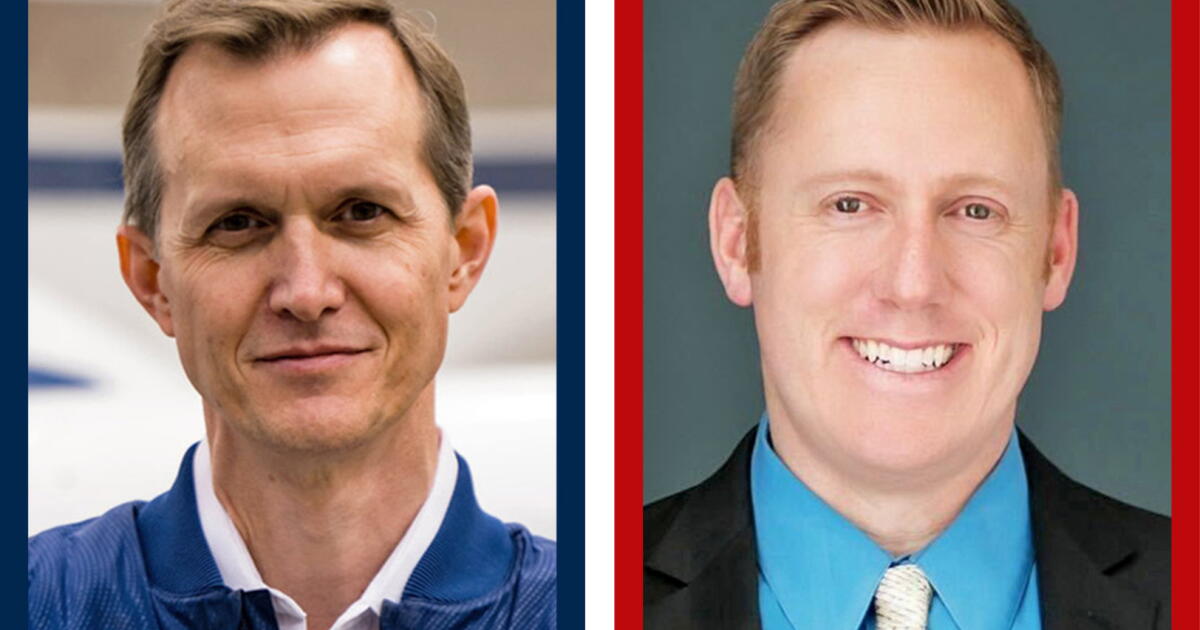
  • Jason Gibbs: Republican, Santa Clarita City Council member, mechanical engineer

Gibbs has been a member of the Santa Clarita City Council since 2020 and was chosen by his peers to serve as the city’s mayor in 2023. He earned his bachelor’s and master’s degrees in mechanical engineering at Cal Poly and went on to work in the aerospace industry, according to his campaign website. He has lived in Santa Clarita for nearly a decade while raising two young children, his bio says, and has served on the local boards of the Boys and Girls Club, the Valley Industry Assn. and the Salvation Army.

  • George Whitesides: Democrat, incumbent

Whitesides defeated Republican incumbent Mike Garcia to represent the 27th Congressional District in 2024. Whitesides worked on President Obama’s transition team in 2008 and served as NASA chief of staff during the Obama administration, according to his campaign bio. He was the first chief executive of Virgin Galactic, co-founded Megafire Action, a nonprofit that advocates for legislation to address the growing problem of massive wildfires, and was a board member for the Antelope Valley Economic Development and Growth Enterprise, his bio says.

Others:

  • Roberto Ramos: Democrat, Marine veteran, UCLA master’s student
  • Caleb Norwood: Democrat, college student

A representative for David Neidhart, a Republican candidate, said he has withdrawn from the race. His name still will appear on the ballot.

Source link

California secretary of state election voter guide

p]:text-cms-story-body-color-text clearfix”>

Across the country, debates over voter identification laws have become a flash point in broader fights about election security and voting access.

Supporters of voter ID laws say they are needed to prevent election fraud and ensure only eligible voters cast ballots. Critics argue there is little evidence of noncitizens voting and say the requirements instead would reduce voter participation in elections.

Under California law, voters in the state are not required to show or provide identification when casting a ballot in person or by mail. The state does require ID when registering to vote, and residents must swear under penalty of perjury that they are eligible to vote and they are a U.S. citizen.

Weber has opposed proposals that would require voters to show identification in order to cast a ballot. She and many Democratic leaders argue that voter ID laws can create barriers for eligible voters, particularly those who may not have easy access to government-issued identification.

Weber believes Voter ID efforts are meant to sow doubt in the integrity of the elections system.

“When you really get to it, Voter ID is a smoke screen for trying to create the idea that this is a corrupt system,” she said.

Weber instead supports policies aimed at expanding participation among eligible voters, including vote-by-mail ballots and automatic registration.

Conversely, Wagner wants the state to require voters to show ID at the polls. He argues that requiring identification would strengthen public trust in election results and align California with practices used in many other states. He said it’s patronizing to minorities when critics argue it’s hard for them to get identification.

“You need an ID to drive,” he said. “You need an ID to fly in a plane. You need one to buy alcohol. You need it to buy tobacco.”

Wagner has been working with proponents of the Voter ID ballot measure to raise money and helped gather signatures. That statewide ballot measure would require state or local elections officials to verify that Californians registering to vote are U.S. citizens by “using government data,” which according to supporters could include information in the federal Social Security Administration database, jury summons information and other government records.

“What I’m pledging the people of California is that if they pass voter ID, I will protect it. I will sue if I have to,” Wagner said. “If I am secretary of state, I will implement it and hold the registrars accountable and hold my office and myself accountable for doing the will of the people.”

Source link

L.A. County Sheriff’s election guide: Luna faces slew of challengers

p]:text-cms-story-body-color-text clearfix”>

Los Angeles County Sheriff Robert Luna

Robert Luna seeks a second term as L.A. County Sheriff but faces nine challengers, including predecessor Alex Villanueva, whom he defeated in 2022.

(Eric Thayer/Los Angeles Times)

Robert Luna is hoping to be the first L.A. County Sheriff to win a second term in more than 10 years. He points to a reduction in crime for the county during his term and says he brought stability after a series of one-term sheriffs since 2014.

Last year, deputy-patrolled areas of the county experienced a 12.5% drop in serious crimes from the previous year, including a drop of 12% in murders and 20% in auto thefts.

Perhaps the most vocal and well-known of Luna’s opponents is his predecessor, Alex Villanueva, who paints a picture of a department in disarray, with low morale and trouble in recruiting. Villanueva claims his return would keep deputies from leaving and appeal to new hires.

Former sheriff’s Lt. Eric Strong, who also served as chief of campus safety and security operations at the county probation office, has entered the fray once again after finishing third in 2022. Strong has called for increased transparency by the department, advocating for the agency to work with oversight bodies like the Office of Inspector General and the Civilian Oversight Committee.

“Nothing has really changed, and that’s why I’m running,” Strong said.

Mike Bornman, a retired former captain, also is vying for the job. He’s looking to lift morale inside the department, which he said has faced a series of challenges with social movements that have been “anti-cop,” such as the George Floyd protests of 2020 and calls to defund the police.

“There’s been no real pushback from law enforcement; there’s been nothing coming from this office relative to that,” Bornman said.

He said the department is struggling with difficulty in recruitment, significant overtime hours and deputies at risk of burnout.

Sgt. Karla Carranza is running again after an unsuccessful campaign in 2022. At one point assigned to the Twin Towers Correctional Facility in downtown L.A., Carranza has made jail reform one of her top campaign focuses, promising to reduce violence and lower the risk of lawsuits and what she says are preventable inmate deaths.

Brendan Corbett, also running for the job, served as assistant sheriff during Villanueva’s tenure. He’s looking to restructure the department, focus resources on patrol and line functions and increase the reserve program.

Lt. Oscar Martinez, assigned to the department’s Palmdale station, is running to unseat his boss and criticizes Luna for fostering relationships with the county board of supervisors and oversight bodies, saying his focus should be on law enforcement, not politics .

“The sheriff is more interested in protecting the political establishment,” Martinez said. “Under my leadership, the mission of the sheriff’s department is to fight crime. Our job is not to fix politics.”

Andre White, a detective with about 11 years at the department, also vowed to take a “community-oriented approach” if elected.

Some voters may recognize Sonia Montejano, a former senior deputy in the department’s court services division, as the court bailiff in the television court program “Judge Joe Brown.”

Montejano filed paperwork for the position and listed her personal website on campaign forms. Her website, however, makes no mention of her campaign or position on issues involving the department. She did not respond to requests for comment.

Source link

L.A. school board District 2 election guide: Rivas vs. Zamora

p]:text-cms-story-body-color-text clearfix”>

Three seats — two contested — are on the June 2 primary ballot for the seven-member Los Angeles Unified School District Board of Education.

The nation’s second-largest school system, with about 390,000 students, faces evolving challenges and uncertainties that could alter the direction of the district for years.

In mid-April L.A. Unified officials barely averted a strike by agreeing to significant employee raises, rescinding about 200 layoffs and agreeing to hundreds of new hires of counselors, school psychologists and other student support staff. The contracts with three district unions, including teachers, will cost nearly $1.2 billion a year, and board members now must find a way to pay for them amid budget pressures.

Standardized test scores have trended upward since the nadir of the COVID-19 pandemic, recovering faster than the state average, but the pace remains too incremental for critics.

The future of L.A. schools Supt. Alberto Carvalho is uncertain. He’s on paid administrative leave following FBI raids of his San Pedro home and downtown office. At least part of the investigation centers on a failed chatbot project that was supposed to revolutionize and individualize education.

Carvalho said he’s done nothing wrong and would like to return to work. If he does not return — and cannot serve out his new four-year contract — board members would select a superintendent.

L.A. Unified also faces declining enrollment — which reduces state funding and increases pressure to save money by closing many campuses.

Heightened federal immigration enforcement also has affected enrollment and attendance while creating anxiety that spills over into the classroom. Officials responded by declaring L.A. Unified a sanctuary district — both for immigrants and for the LGBTQ+ community, which also has been a target of some conservative groups.

Carvalho’s central focus on improving test scores has led to increased tutoring, repeated diagnostic measures and phonics training. In addition, the district put a successful school bond on the ballot to continue renovations, worked to lower student absenteeism and emphasized greener campuses.

The board majority consists of candidates elected with the endorsement of the powerful teachers union — United Teachers Los Angeles. This election will not change that balance because five seats are held by union-friendly incumbents. But the outcome will determine whether UTLA can further strengthen its hand or whether other constituencies will gain a measure of power at the union’s expense.

UTLA is the most reliable funder of school board campaigns — and the union’s spending is not controlled by candidates.

Also exerting influence in recent elections has been the district’s other largest union: Local 99 of Service Employees International Union. It represents some 30,000 bus drivers, teacher aides, custodians, gardeners, cafeteria workers and technical support staff. This union has yet to endorse candidates.

A potential but diminished source of election-funding firepower would be charter school advocates — who once routinely outspent the unions.
Retired businessman Bill Bloomfield — a charter school ally who makes his own calls about whom to support — has been a big spender inrecent elections, typically as a counter to teachers-union-endorsed candidates. He has not committed to being involved in this school board election cycle.

The material below was assembled through reporting and surveys provided to candidates. Some responses are paraphrased for clarity or condensed for brevity.

Source link

L.A. school board District 6 election guide: Gonez is unopposed

p]:text-cms-story-body-color-text clearfix”>

Three seats are on the June 2 primary ballot for the seven-member Los Angeles Unified School District Board of Education, but the District 6 race is essentially a foregone conclusion: The only name on the ballot is two-term incumbent Kelly Gonez.

The nation’s second-largest school system, with close to 400,000 students, faces evolving challenges and uncertainties that could alter the direction of the district for years.

In mid-April L.A. Unified officials barely averted a strike by agreeing to significant employee raises, rescinding about 200 layoffs and agreeing to hundreds of new hires of counselors, school psychologists and other student support staff. The contracts with three district unions, including teachers, will cost nearly $1.2 billion a year, and board members now must find a way to pay for them amid budget pressures.

Standardized test scores have trended upward since the nadir of the COVID-19 pandemic, recovering faster than the state average, but the pace remains too incremental for critics.

The future of L.A. schools Supt. Alberto Carvalho is uncertain. He’s on paid administrative leave following FBI raids of his San Pedro home and downtown office. At least part of the investigation centers on a failed chatbot project that was supposed to revolutionize and individualize education.

Carvalho said he’s done nothing wrong and would like to return to work. If he does not return — and cannot serve out his new four-year contract — board members would select a superintendent.

L.A. Unified also faces declining enrollment — which reduces state funding and increases pressure to save money by closing many campuses.

Heightened federal immigration enforcement also has affected enrollment and attendance while creating anxiety that spills over into the classroom. Officials responded by declaring L.A. Unified a sanctuary district — both for immigrants and for the LGBTQ+ community, which also has been a target of some conservative groups.

Carvalho’s central focus on improving test scores has led to increased tutoring, repeated diagnostic measures and phonics training. In addition, the district put a successful school bond on the ballot to continue renovations, worked to lower student absenteeism and emphasized greener campuses.

The board majority consists of candidates elected with the endorsement of the powerful teachers union — United Teachers Los Angeles. This election will not change that balance because five seats are held by union-friendly incumbents. But the outcome will determine whether UTLA can further strengthen its hand or whether other constituencies will gain a measure of power at that union’s expense.

The material below was assembled through reporting and a survey provided to Gonez. Some responses are paraphrased for clarity or condensed for brevity.

Source link

California governor debate: Candidates scrap over gas tax, homelessness

The top candidates for California governor clashed over the high costs of gas, housing and homeowner’s insurance in a testy debate Tuesday evening, a fiery exchange that may finally draw voter attention as the June 2 primary election fast approaches.

Former U.S. Health and Human Services Secretary Xavier Becerra, whose campaign blossomed after former Rep. Eric Swalwell dropped out amid sexual assault and misconduct allegations, came under persistent attack during the 90-minute debate but also went on the offensive.

Former Fox News host Steve Hilton, a Republican who leads all candidates in the most recent opinion polls, ripped Becerra for promising to declare a state of emergency to address rising homeowner’s insurance rates, saying the governor lacks that constitutional authority.

“We can’t have a governor who doesn’t understand how the government works,” Hilton said.

Becerra, who served as California attorney general before joining the Biden administration, quickly defended himself, saying he knows the law better than Hilton does.

“We don’t need a talking head from Fox News to tell us how the government works,” he said.

And that was after Becerra got in an early dig at Hilton, who has been endorsed by President Trump, by referring to Trump as “Hilton’s daddy.”

The debate was broadcast and livestreamed by CBS stations around the state. Hundreds of people watched from Pomona College’s historic Bridges Auditorium, a Renaissance Revival-style landmark with Art Deco flourishes that was once among the premier performance venues in Southern California.

With eight major candidates from both parties participating, CBS moderators billed it as “the largest and most inclusive debate of the election.” Becerra and Hilton were joined by Republican candidate Riverside County Sheriff Chad Bianco and Democratic candidates San José Mayor Matt Mahan, former Orange County Rep. Katie Porter, billionaire Tom Steyer, state Supt. of Public Instruction Tony Thurmond and former Los Angeles Mayor Antonio Villaraigosa.

Some takeaways from the debate:

Candidates didn’t shy away from the top issues

Moderators set the theme for the first half-hour of the debate as “affordability,” a top concern among California voters, and almost immediately the candidates began sniping and talking over one another.

Almost all of them vowed to accelerate home construction in California, pivotal to reducing the state’s high cost of housing.

There was no shortage of ideas for other ways to ease the financial burdens facing Californians, but few specifics on how they would deliver on those promises given the state’s complex and arduous legislative process.

Hilton promised to cap the price of gas at $3 per gallon, and Mahan vowed to suspend the state gas tax. Bianco said Democrats have long overregulated and overtaxed Californians, and the state’s supermajority Democratic Legislature would have to get in line with him and end those things if he’s elected.

Becerra said he would reduce prescription drug prices. Thurmond said he would provide down-payment assistance grants to those trying to own their first home.

Barbs traded over climate-caused emergencies

Anchors and reporters from local CBS stations moderated the debate, including Los Angeles anchor Pat Harvey, Sacramento anchor Tony Lopez, Bay Area anchor Ryan Yamamoto and national investigative correspondent Julie Watts. They were joined by Sara Sadhwani, an assistant professor of politics at Pomona College and a member of California’s independent redistricting commission.

Moderators pointed to the surge in catastrophic wildfires across the state in recent years due to climate change, as well as the threat of earthquakes, and asked the candidates how they would respond to future emergencies.

As he did throughout most of the debate, Bianco responded by bashing California’s Democratic leadership, which he said created most of the ills facing the state.

Bianco said the root causes of fire disasters in the state are “not because of climate change” but due to “failed environmental activist policies” that prevented fire departments from clearing highly flammable brush around communities for years.

Mahan, after touting his actions as a Silicon Valley mayor during emergencies, quickly pivoted to take shots at Becerra and his role as U.S. Health and Human Services secretary during the pandemic.

He said Becerra had “never met a crisis that he couldn’t ignore” and accused Becerra of failing to deal with COVID-19, monkeypox and the surge of unaccompanied minors at the U.S.-Mexico border during the Biden administration.

Becerra responded by saying that his agency dealt with the crises by working with all 50 states and the federal government to quickly roll out vaccines and other resources.

“You’re not wearing a mask, are you, Matt? You’re not worried about catching monkeypox, right?” Becerra said.

Steyer also came under attack when he starting discussing his plans to “make polluters pay” for the effects of climate change. Porter criticized the former San Francisco hedge-fund founder for making millions off the oil and gas industry, and using those profits to fund his campaign for governor. Steyer has spent more than $143 million of his own money on his campaign, according to fundraising disclosures filed with the California secretary of state’s office.

“How about profiteers pay? You pay the lowest tax rate on this stage, and yet you made the billions that you’re using to fund your campaign off fossil fuels,” Porter said to Steyer.

Steyer responded that he is a “change agent” candidate opposed by special interests and pointed to campaign committees funded by utility and other industry groups opposing his bid. PG&E, the California Chamber of Commerce and the California Assn. of Realtors have put more than $29 million into a pair of committees to fund attack ads against the billionaire.

Republicans focus on blaming Democrats

Just weeks before the June 2 primary, the race to replace term-limited Newsom remains wide open, with many voters still undecided.

Republicans Hilton and Bianco have led numerous public opinion polls while the large field of Democrats have split the vote, leading to fears among Democrats that the party could get shut out of the general election, despite outnumbering Republicans nearly two-to-one among the state’s registered voters. In California’s open primary, the top two finishers advance to the general election, regardless of party affiliation.

The two Republicans avoided overtly attacking each other at the debate but were regularly the targets of other candidates on the stage.

Becerra, speaking about federal healthcare funding cuts approved by President Trump and congressional Republicans last year, referred to the president’s endorsement of Hilton. “The first thing we have to do is stop Steve Hilton’s daddy,” Becerra said.

Hilton responded jokingly that his father, who was the goalie for the Hungarian national ice hockey team, hadn’t weighed in on the race. And he said Becerra’s comment pointed to what is wrong with California politics — a fixation on Trump despite Democrats controlling the state for more than a decade.

“We’ve had the same people in charge for 16 years now, and it’s such a disaster and such a high cost of living for everyone, and the highest poverty rate in the country and the highest unemployment rate in the country, and the worst business plan,” Hilton said. “All these things going wrong, they can’t do anything except blame Trump. Let’s see how many times you hear that tonight.”

Bianco grew visibly frustrated several times over the debate’s format and his opponents’ answers. At different points, he compared the event to “The Twilight Zone” and called it “the hour and a half that [viewers] are never going to get back.”

Pressed on what he would do differently if elected, the Riverside sheriff also focused on criticizing Democrats and accusing them of lying.

“We have a group of of 20-ish-year-old kids and we’re just sitting here lying to them about broken Democrat policies in California for the last 20 years, and we’re going to sit here and blame a president who’s been president for a year. This is absolutely ridiculous,” he said.

Hilton has seen a bump in his polling numbers since he was endorsed by President Trump earlier this month. A CBS News/YouGov poll of more than 1,400 registered voters released Monday showed Hilton leading with 16%, followed by Steyer with 15%, Becerra with 13%, Bianco with 10%, Porter with 9%, Mahan and Villaraigosa with 4% and Thurmond with 1%. The largest group of voters — 26% — was undecided.

Nixon reported from Sacramento and Mehta reported from Claremont. Times staff writers Kevin Rector, Dakota Smith and Blanca Begert contributed to this report.

Source link

These mayoral candidates aren’t up for debate

A much-anticipated debate featuring leading candidates in the Los Angeles mayor’s race is set for Cinco de Mayo before the Sherman Oaks Homeowners Assn. But it won’t include all the leading candidates.

The influential homeowners group has invited just incumbent Karen Bass and City Councilmember Nithya Raman, and not the three other top contenders Spencer Pratt, Adam Miller and Rae Huang.

The group explained its decision by saying that big, crowded debates can often feel chaotic.

“Rather than hosting a stage filled with a long list of candidates, we have chosen to invite these two leaders specifically because they represent Sherman Oaks on two critical — and complementary — levels of government. This format allows for a deeper, more meaningful discussion about the issues that directly impact our neighborhood and our city,” the group wrote in its description of the debate.

Some of the other top candidates took issue with being excluded.

“If the SOHA wanted a real debate on topics like public housing, a public bank, free and fast transit, and the things that matter to Angelenos all over the city, they should call off their gate-keeping process that keeps the system and the establishment protected,” Huang spokesman Emel Shaikh said in a statement.

From the Miller camp, spokesperson Jaime Sarachit called it “a missed opportunity for these voters not to hear directly from a candidate offering a different approach to solving L.A.’s biggest issues, especially on housing, homelessness and public safety.”

Pratt didn’t respond to a request for comment.

Angelenos could have a chance to see more of the major candidates the next day, May 6, for a televised debate featuring Colleen Williams and Conan Nolan of NBC4 and Enrique Chiabra of Telemundo 52. KNBC hasn’t yet confirmed the lineup, but the station said to participate candidates must have received at least 5% support in two reliable 2026 polls.

You’re reading the L.A. on the Record newsletter

Sign up to make sense of the often unexplained world of L.A. politics.

Homeless camp skirmish

Raman scouted out a Harbor Freeway overpass in South L.A. last month after parents at nearby 61st Street Elementary voiced concerns about a homeless camp that students had to pass on their way to school. Raman documented her visit with a post on Instagram, saying “these parents have tried again and again to get someone to listen to their needs — and again and again their concerns have fallen on deaf ears.”

But when City Councilmember Curren Price on Tuesday proposed making the area an anti-encampment zone under the city’s municipal code 41.18, Raman voted against the motion, which passed anyway.

Raman routinely votes against 41.18 zones, saying that reducing homelessness requires connecting people to housing.

“This provision at best shifts encampments around a neighborhood.” Raman said in a statement. “Our working protocols are dependent on that. However, enforcement alone does not drive reductions in homelessness. What works is connecting people to shelter and housing.”

That explanation didn’t stop Bass and Curren, who represents the area in question, from throwing shade Raman’s way.

“It is frustrating when efforts to move forward are met with opposition from those who are not fielding these calls, not hearing from parents, and not seeing these conditions firsthand,” said Price spokesperson Angelina Valencia-Dumarot.

Bass campaign spokesman Alex Stack chimed in: “Raman went to this very school to make an Instagram post about how nobody was helping them, and then turned around three weeks later and voted to allow the encampments to return.”

It’s Miller Time!

Adam Miller has scooped up a couple of names from Bass’ past.

Bill Burton, Miller’s senior advisor, who was a deputy press secretary under then-President Barack Obama — also moonlighted for Bass’ 2022 mayoral campaign as a stand-in for Rick Caruso during Bass’ debate prep, though he didn’t work for the campaign in a formal role.

Burton said during that campaign that the race between Bass and Caruso was “essentially a Democrat versus a Republican.”

Now, Burton is running the campaign for Miller, who voted for Caruso in 2022, though he describes himself as a lifelong Democrat.

Separately, Sarah Sheehan, who worked as Bass’ communications director on her 2022 campaign, is working as a consultant for the Miller campaign.

Sheehan said in a statement that the city needs an outsider.

“That is why I decided to work with Adam Miller,” she said.

Lauren Perez-Rangel, who also worked on Bass’ 2022 campaign as a spokesperson, is also working for Miller.

State of play

— BUDGET: Mayor Bass released her $14.9-billion spending plan Monday, which included a proposal to hire 510 police officers — roughly enough to cover retirements and resignations. The budget must be approved by the City Council, and will be the subject of weeks of hearings.

— COVER UP: The Department of Water & Power has drained the Santa Ynez Reservoir in Pacific Palisades to replace the damaged floating cover, frustrating residents who fear there won’t be water to fight potential wildfires.

— EYE OF THE STORMWATER: Los Angeles officials announced a $40-million project at MacArthur Park this week that’s aimed at turning rainstorm runoff into lake water — and maybe improving the park’s tarnished reputation as well. The project will also include new landscaping, walking paths and other features to enhance the location’s appeal as a park.

— LAHSA LAYOFFS: The Los Angeles Homeless Services Authority announced Monday it plans to lay off nearly 300 employees, citing the county’s decision to withdraw funding and set up its own homeless services department.

— INTO THE BREACH: After the massive leak of LAPD files due to a data breach in the L.A. city attorney’s office, officials are seeking explanations from the city’s top lawyer. City Councilmember Ysabel Jurado said she expected City Atty. Hydee Feldstein Soto to appear before a council committee this week about the data leak. “When did the city attorney’s office become aware, what actions were taken, and why were city officials not notified promptly?” Jurado said. “Right now, we’re still left to question and trying to assemble the information.”

— CULTURE OF FEAR: In the LAFD, firefighters rarely question orders because doing so could invite retribution from bosses. That culture was evident in firefighters’ testimony about the Lachman fire, which reignited into the Palisades fire days later.

QUICK HITS

  • Where is Inside Safe? The mayor’s signature program was in Echo Park and Venice this week, bringing inside more than 40 Angelenos and clearing eight RVs and trailers off the streets.
  • On the docket next week: The City Council will continue to meet to speak about Bass’ proposed budget.

Stay in touch

That’s it for this week! Send your questions, comments and gossip to LAontheRecord@latimes.com. Did a friend forward you this email? Sign up here to get it in your inbox every Saturday morning.


Source link

Potential 2028 presidential candidates gather in L.A. for Democratic fundraiser

Prominent Democratic governors, some considering 2028 presidential bids, gathered Thursday in Los Angeles for a high-dollar fundraiser.

Tickets to attend the event cost up to $100,000, according to an invitation. Closed to the press, it was expected to raise more than $1.5 million for the Democratic Governors Assn., among the largest amount the group has ever raised at a fundraiser in Los Angeles.

Gov. Gavin Newsom introduced fellow Democratic Govs. Andy Beshear of Kentucky, Maura Healey of Massachusetts, Laura Kelly of Kansas, Katie Hobbs of Arizona, Wes Moore of Maryland, Josh Stein of North Carolina, Tim Walz of Minnesota and Gretchen Whitmer of Michigan.

Several attendees, including Newson, Beshear and Whitmore, are widely believed to be eyeing a presidential run in 2028. Walz was then-Vice President Kamala Harris’ running mate in her unsuccessful 2024 bid for the presidency.

Beshear moderated the conversation among the state leaders at the Los Angeles-area home of liquor heiress Ellen Bronfman Hauptman and her husband, former Chicago Fire soccer club owner Andrew Hauptman. Attendees enjoyed cocktails and passed hors d’oeuvres
around the pool before settling in for a conversation in the house that focused on how governors must focus on results more than ideological disputes, and how that ought to be a model for federal elected officials.

About 45 donors attended, including Damon Lindelof, the creator of “Lost,” and Scott Budnick, the executive producer of “The Hangover” movie series. Others who supported the event included director J.J. Abrams and former Walt Disney Studios Chairman Alan Horn.

Source link