Talks broke down this week that would lead to widespread disruption for travellers over Easter to airports in places like Mallorca and the Canary Islands
Robert Rowlands Deputy editor, money and lifestyle, content hub and Maria Ortega
13:52, 27 Mar 2026
Palma de Mallorca Airport is one of the airports that has been at the centre of debate over industrial action(Image: Getty)
UK tourists have been given a significant update over planned strike action at multiple airports in Spain. Talks broke down this week before officials announced that strikes would be held over several dates in March and April.
Airports set to be affected by the measures included Barcelona, Palma de Mallorca, , Gran Canaria, Málaga, Alicante, and Tenerife (South and North). Now an update has been reported in the Spanish press.
Two sets of strikes at Spanish airports have been partly cancelled, according to Spanish media reports. There had been concerns about extensive disruption at major airports throughout Spain owing to industrial action.
Larazon now reports that trade unions have postponed imminent strikes due to start today that would have seen staff at airport services operators Groundforce and Menzies walk out. The update comes after advances in wage negotiations – but strikes planned for later on have yet to be cancelled, according to local media.
Spanish reports say that trade unions have called off the first day of strike action at Groundforce, Air Europa’s ground handling company, and the first two days of the strike scheduled for this weekend at Menzies, another airport ground handling operator. This is according to sources from the UGT trade union speaking to Efe.
The partial and indefinite strikes planned Groundforce strikes were set to began this Friday. They would have coincided with the beginning of the Easter holiday exodus.
Ultimahora reports that the industrial action at Groundforce had been scheduled for the morning, afternoon and night shifts (from 5am to 7am, from 11am to 5pm, and from 10pm to midnight) with plans set to continue indefinitely. Additionally, the UGT has agreed to call off the first two days of industrial action at Menzies, planned for this Saturday and Sunday. In Menzies’ case, the strike had been called exclusively by UGT – the main union at the firm – for 28 and 29 March, and between 2 and 6 April.
The English language Majorca Daily Bulletin reports that 24-hour strikes for Menzies staff from April 2 to April 6 have not yet been scrapped. It also reported that there is no sign of further suspensions to the other planned strike action for Groundforce staff.
The strike notice at the ground handling operator covered all businesses within the group (Menzies Aviation Ibérica and Menzies Ground Services) and around 3,000 employees. The union had cautioned that, should no deal be struck with the company, the strikes would be rolled out to every weekend until the year’s end.
Groundforce operates at Madrid, Barcelona, Palma de Mallorca, Alicante, Málaga, Gran Canaria, Valencia, Ibiza, Bilbao, Lanzarote and Fuerteventura. Menzies operates at Barcelona, Palma de Mallorca, Málaga, Alicante, Gran Canaria, Tenerife South and Tenerife North.
Delays are expected at check-in, baggage handling and other services affecting UK holidaymakers
Robert Rowlands Deputy editor, money and lifestyle, content hub and Maria Ortega
15:11, 26 Mar 2026Updated 15:12, 26 Mar 2026
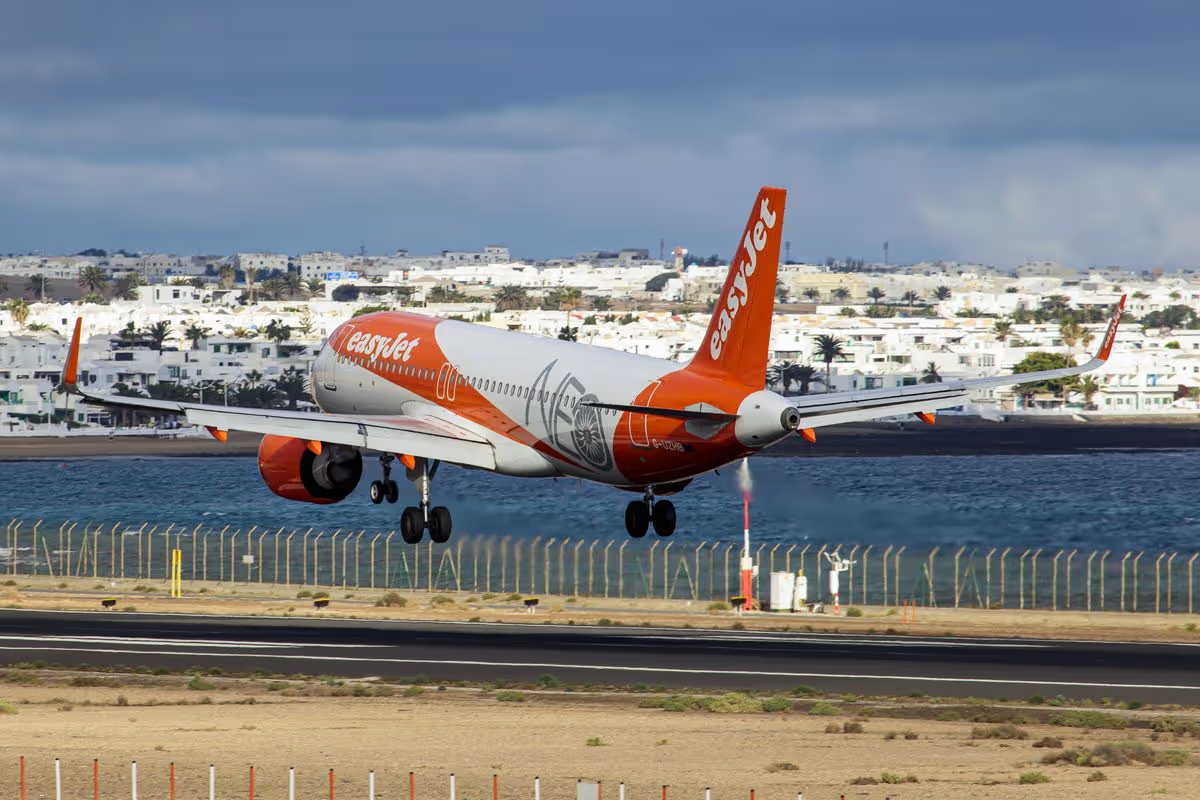
An EasyJet Airbus 320 NEO landing at Lanzarote airport – file image(Image: Getty)
Major UK tourist hotspots are set to face disruption within days due to widespread strike action. The Canary Islands in Spain is getting ready as unions prepare to go on strike this and next month.
Airports across the Canary Islands are bracing themselves for industrial action by ground handling staff over the Easter period. Trade unions representing workers at Menzies and Groundforce have announced walkouts.
More than 1,500 employees throughout the islands are expected to take part, according to Spanish website Canarias7. Aviation hubs in the Canary Islands are making preparations for the ground handling strike announced for Easter week, which forms part of a nationwide protest.
Three major spots used by Brits are set to be affected, according to the website. Gran Canaria, Lanzarote, and Fuerteventura are all set for disruption.
The industrial action has been organised by staff at Menzies and Groundforce. Reports say the action will almost certainly lead to hold-ups in ground operations – including check-in, baggage processing and collection.
Menzies has a workforce over 600 and handles operations for carriers including Norwegian, British Airways, and EasyJet, among others. It operates at Gran Canaria, Tenerife North, and Tenerife South airports, as well as on the mainland at major airports such as Barcelona, Palma de Mallorca, Málaga and Alicante.
The UGT union-coordinated action will kick off this weekend (28th and 29th March), with further stoppages planned for 2nd, 3rd, 4th, 5th, and 6th April, during the peak travel period for Easter week. Groundforce is a Globalia group firm providing services to Air Europa. We reported earlier this week that the action is taking place over rights and working conditions for staff.
Unions say they are taking strike action over the implementation of pay scales among other things. Close to 900 employees across the Canary Islands – encompassing Gran Canaria, Lanzarote, and Fuerteventura – face disruption. The Groundforce industrial action is set to begin tomorrow, 27th March, with walkouts planned for Mondays, Wednesdays, and Fridays across staggered time slots: 5:00-7:00am; 11:00am-5:00pm; and 10:00pm-midnight.
On the Menzies action, Spanish media reports say that should no agreement be reached, the strikes will continue every Saturday and Sunday until 31 December, following the same timetable. That could lead to months of disruption.
Storm Therese has wreaked havoc across the Canary Islands, but a British expat is urging holidaymakers not to cancel as he claims big changes are coming at the start of April
Alice Sjoberg Social News Reporter
15:21, 25 Mar 2026
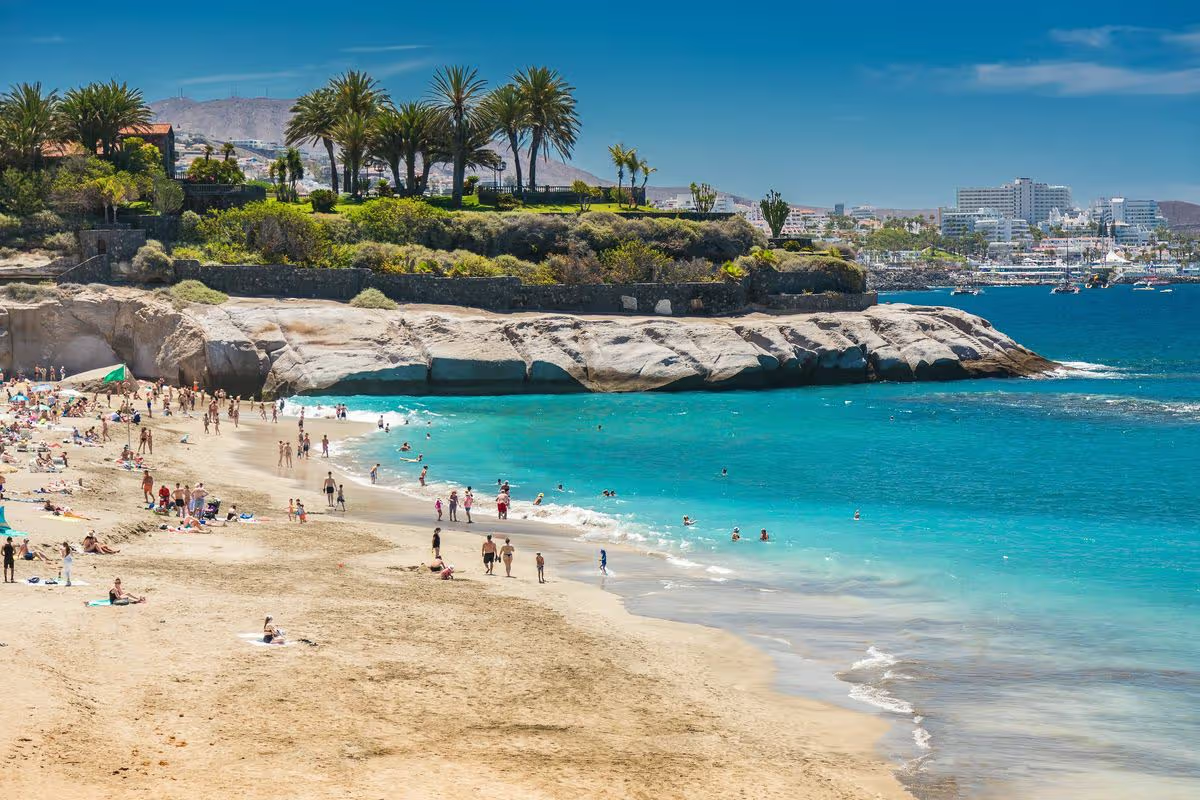
Holiday paradise Tenerife was recently hit by severe weather in Storm Therese (stock image)(Image: Getty Images)
Weather chaos has been wreaking havoc across Spain recently as Storm Therese sweeps through the Canary Islands, particularly Tenerife and La Palma – prompting numerous holidaymakers to abandon their plans after anticipating days basking in the sunshine.
The storm is currently bringing an unusual mix of torrential rain, 100 km/h (62 mph) winds, and significant snowfall at higher elevations. Authorities have issued a full-scale emergency in Tenerife, calling it one of the most serious storms to strike the archipelago in more than a decade. Despite this, it appears locals are beginning to see light at the end of the tunnel, as they’re encouraging people to maintain their holiday plans.
Taking to TikTok, one British expat named Mattie Barnett posted on the Tenerife First Excursions account, where he works, to reveal that a major shift is anticipated to arrive in Tenerife in April.
“Bollocks to the rain in Tenerife,” Mattie declared at the opening of the video, before briefly outlining that they’d been forced to endure days of rainfall in the Spanish holiday hotspot. But now, the sunshine had finally returned.
Content cannot be displayed without consent
Gesturing towards the popular Playa del Camisón beach, he remarked: “There were people queuing at eight this morning to get the sun beds after half a day of rain.”
Mattie, who hails from Lincolnshire, went on to predict that the weather will likely remain sunny with pleasant temperatures of around 24 degrees through to the weekend. While early April may bring some overcast conditions, Mattie expressed optimism that the warm summery weather would return shortly afterwards.
It appears holidaymakers are placing their trust in Mattie’s forecast, as numerous people confirmed they’re pressing ahead with their travel plans.
“Coming next Wednesday. Need to be seeing blue skies, palm trees and everything in between,” one person commented. Another user stated: “I come on the 28th hopefully still good weather.”
Spain’s meteorological agency, AEMET, is forecasting that the rainfall will cease by Friday, 27 March, when sunshine will return, with temperatures hovering around 21 degrees for the remainder of the week and throughout Easter weekend, which is typical for this period.
Meanwhile, weather maps from WXCharts suggest that portions of the UK could be battered by heavy snowfall and temperatures plummeting to -9C between April 3 and April 5 – Easter weekend.
Weather charts indicate the snow zone stretching approximately 480 miles from the Scottish Highlands across northern England and the Midlands down towards areas of southern England.
At least 12 major cities could find themselves in the trajectory of the wintry conditions, which may trigger worries about travel chaos, school closures and hazardous driving conditions.
Storm Therese is battering the Canary Islands with heavy rain, 100km/h winds and snow at high altitudes, causing flight cancellations and travel disruption, with some holidaymakers even cancelling their breaks
Samantha Bartlett Assistant Editor, Social News
11:02, 22 Mar 2026Updated 12:32, 22 Mar 2026
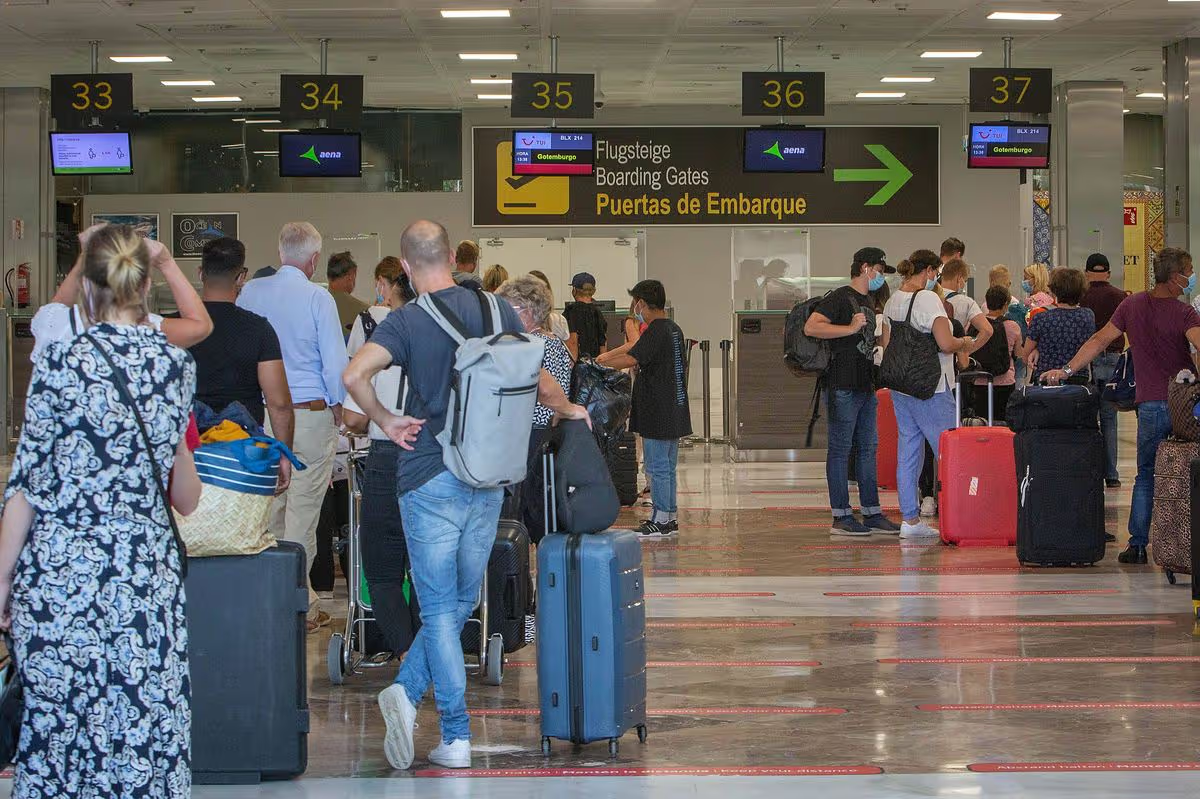
Many people have branded Tenerife South Airport as ‘chaos’ (stock image)(Image: DESIREE MARTIN, AFP via Getty Images)
Many people book a holiday to Spain for some much-needed sunshine, however some are now choosing to cancel their trips as Storm Therese is currently causing chaos across the Canary Islands, particularly Tenerife and La Palma.
The storm is currently delivering an unusual combination of heavy rain, 100 km/h (62 mph) winds, and substantial snow at high altitudes. Authorities have declared a full-scale emergency in Tenerife, describing it as one of the most severe storms to hit the archipelago in over a decade. Spain’s meteorological agency, AEMET, has issued several alerts that will stay active throughout the weekend. Orange (high risk) warnings have been dispatched for northern Tenerife and parts of La Palma due to wind gusts reaching 90–100 km/h and heavy rainfall.
Meanwhile, yellow warnings are in effect across all seven islands for rain, thunderstorms, and choppy seas with waves reaching up to 6 metres (20 feet).
Content cannot be displayed without consent
Unusually for this time of year, significant snowfall has also covered Mount Teide and surrounding peaks above 1,800–2,000 metres.
One Tenerife resident, known as @theknightstrider1 on TikTok, took to his account on Saturday (March 21) to discuss the ‘wild’ weather in the area.
The car hire and bar owner filmed himself as he said: “The Tenerife weather is just wild at the moment. It’s on for another at least four days this crazy weather. He explained the Santa Cruz de Tenerife area had just experienced a “torrential downpour”, but then he turned the other way to reveal “blue skies with the sun shining”. However, he noted, within the next minute, the rain is “bouncing down” again.
The Tenerife resident also mentioned the drains “just can’t handle” the rainfall and they end up “bursting up” fairly regularly.
He continued: “The good news is, it is mixed. I suppose that’s kind of good news, you can get a bit of sunshine, but it was absolutely hammering it down a minute ago.
“So there you go, another four days or so of this. If you’re here, expect a mixed bag – heavy rain, a bit of sunshine now… towards Las Americas looks alright. But you’re going to want to do your indoor activities.”
He stated when the sun is out, it’s “about 22 degrees”, but it’s “around 18 degrees” in the shade, the rain and the wind.
Numerous followers amongst his 115,000-strong audience who were heading on Tenerife holidays confessed they were concerned about their break.
One person commented: “When will it be finished? We come Friday.”
Content cannot be displayed without consent
Whilst another added: “Praying it passes by Tuesday.”
A third chimed in: “I’m coming Monday, really hope it picks up!”
Nevertheless, others admitted they were calling off their breaks as the Tenerife resident posted another clip of the rainfall, with one person writing: “We cancelled our week away at the last minute.”
Another replied: “Snap – we’ve rebooked for April 12 onwards.” The storm has resulted in widespread cancellations and safety shutdowns across the islands. Over 40 flights were cancelled or diverted by Friday, 20 March, mainly at Tenerife North and South airports. Travellers are urged to verify their flight status via Flightradar24 or their airline.
Numerous individuals on TikTok and Facebook have branded Tenerife South Airport as ‘chaos’, claiming that the luggage queue is taking hours and some people are missing their flights.
Others have also alleged that the E-gates aren’t functioning and hundreds of people have been queuing “to see one passport officer who was having to re-scan face/finger prints”.
Sharing another video from Tenerife South Airport, @theknightstrider1 described it as “rammed” in the caption and said arrivals was particularly crowded so holidaymakers should “be prepared”.
He added in the clip: “If you’re wondering if Tenerife is busy, it certainly is. This is the arrivals area and it’s absolutely rammed. People are still pouring in.
“If you come to the airport, I do recommend you get here nice and early if you’re leaving, there’s bound to be queues when you’ve got this many people around.”
Aena said in a comment: “In Spain border control is the responsibility of the National Police, not the airport. The airport has provided the necessary infrastructure for the implementation of the Entry Exit System but its availability depends primarily on the number and performance of police officers at the border post.”
When will Storm Therese be over?
Storm Therese is expected to subside across most of its affected areas by Monday, 23 March 2026. While the worst of the weather occurred between Thursday and Saturday, some impacts and weather warnings will persist through early next week.
Storm effects are currently continuing today (Sunday March 22) with rain and strong winds. Orange wind warnings (up to 100 km/h) remain in place for Tenerife, La Gomera, El Hierro, and western La Palma.
Weather is forecast to “ease off” on Monday (March 23) with wind speeds dropping and rainfall decreasing significantly. However, yellow and orange warnings remain active for several islands, and some schools in El Hierro, La Gomera, and parts of Tenerife will stay closed as a precaution. Conditions are expected to improve throughout the week.
Storm Therese is battering the Canary Islands with heavy rain, 100km/h winds and significant snowfall, with over 40 flights cancelled and schools closed across the islands
Samantha Bartlett Assistant Editor, Social News
10:41, 21 Mar 2026
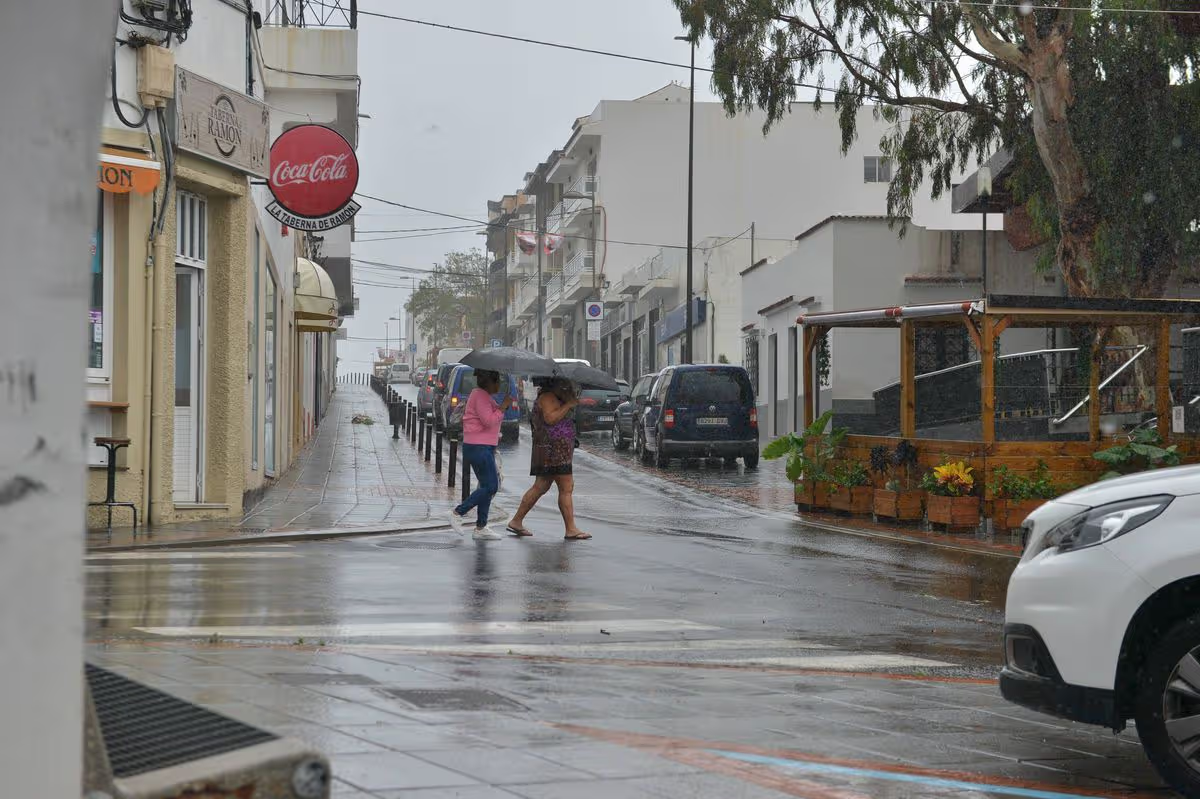
Storm Therese is currently battering the Canary Islands (stock image)(Image: Europa Press News, Europa Press via Getty Images)
Storm Therese is currently wreaking havoc on the Canary Islands, particularly Tenerife and La Palma, with an unusual mix of heavy rain, 100 km/h (62 mph) winds, and significant snowfall at high altitudes. Authorities have declared a full-scale emergency in Tenerife, labelling it as one of the most severe storms to batter the archipelago in over a decade.
Spain‘s meteorological agency, AEMET, has issued several alerts that will remain active throughout the weekend. Orange (high risk) warnings have been dispatched for northern Tenerife and parts of La Palma due to wind gusts reaching 90–100 km/h and heavy rainfall. Concurrently, yellow warnings are in place across all seven islands for rain, thunderstorms, and choppy seas with waves reaching up to 6 metres (20 feet).
Unusually for this time of year, significant snowfall has also blanketed Mount Teide and surrounding peaks above 1,800–2,000 metres.
Content cannot be displayed without consent
The storm has led to widespread cancellations and safety closures across the islands. Over 40 flights were cancelled or rerouted by Friday, March 20, primarily at Tenerife North and South airports. Travellers are advised to check their flight status via Flightradar24 or their airline.
Schools and universities in Tenerife, Gran Canaria, and several other islands were shut on Thursday and Friday, whilst key roads, including access to Teide National Park and the TF-445 to Punta de Teno, are closed due to ice and snow.
Major international events such as the Tenerife Bluetrail 2026 race have been cancelled or postponed.
Providing an update on the weather situation on Friday (March 20), one Tenerife resident known as @theknightstrider1 on TikTok took to the platform to share details with his 115,000 followers.
The car hire and bar owner, who is based in Playa de las Américas, was heard saying: “A little weather update for you then, it’s raining… it’s pretty grim and it’s gone really overcast as well.
“The rain showers are on and off, we haven’t really had any rain until now. It was okay this morning, but yeah it is raining. The current temperature’s around 18 degrees, not too cold but the umbrella’s are out, people are sheltering and it’s really not that nice.”
Content cannot be displayed without consent
He added: “Bear in mind, you might get caught in the rain, have a brolly with you. Maybe some of the rain macs as well if you’ve got any, if not buy some because it’s on and off.”
One person wrote: “Weather’s been awful the last three days, can’t wait to go home.”
Whilst another added: “Arrive tomorrow, packed a brolly.”
A third chimed in: “This makes me so happy as someone who was going to go this week and changed to last week! Phew.”
Whilst a fourth asked: “Why is it every time it’s sunny in the UK it rains in Tenerife?”
Another resident of the Canary Islands also posted a weather update on TikTok from Santa Cruz de Tenerife, captioning the clip, ‘Rain, wind and choppy ocean. Flights cancelled and diverted. Flooding in El Médano and roads closed. The storms Theresa and Samuel are hitting Canary Islands.’
He then said in the video: “Here if your weather update from Tenerife South on Friday March 20th, 2026. The two storms – Theresa and Samuel – are hitting the Canary Islands with force.
“As you can see here, we have quite a lot of waves here in the Troya area of Las Americas. The storms have caused quite a few incidents on the island, we have had 11 flights cancelled yesterday, 10 flights have been cancelled during the day today.
“We have had quite a few flights deviated to other airports as well and we have had ferries that have been cancelled because of the conditions out on the see.”
He explained the temperature was currently hovering around 19 degrees and there had been some rain which was “coming and going” along with overcast skies.
Are flights from the UK to Tenerife being cancelled?
Yes, flights from the UK to Tenerife are currently experiencing cancellations and significant disruptions due to severe weather from Storm Therese.
As of Saturday, 21 March 2026, authorities in Tenerife have declared an island-wide emergency due to extreme conditions including heavy rain, strong winds, and rare snowfall over high ground.
Over 36 flights were cancelled earlier this week, with further disruptions reported today. While many cancellations involve inter-island services, several international flights have been diverted or cancelled due to poor visibility and high winds.
Currently, the most affected airport is Tenerife North (TFN), which has seen the greatest impact, though Tenerife South (TFS) – where most UK flights land –is also experiencing delays and some rerouted services.
Conditions are expected to remain hazardous through Saturday, with a gradual improvement predicted for Sunday, 22 March.
Major airlines serving the UK to Tenerife route, such as Ryanair, easyJet, Jet2, and TUI, are urging passengers to check their flight status before heading to the airport
If your flight is cancelled, contact your airline immediately to discuss rebooking or refund options.
Planning your summer holiday but want to avoid crowded tourist hotspots? These three stunning European destinations offer beautiful beaches and coastal charm without the crowds.
La Gomera has some gorgeous beaches(Image: Getty)
Spring has finally sprung, meaning summer is just round the corner. Britain is fortunate to have countless stunning countries within easy reach, and if you’re pondering where to head this year, you’re in for a treat.
One of the most frustrating aspects of arranging a holiday is deciding on a destination – and with hordes of tourists flocking to all the popular spots, finding somewhere peaceful and relaxing can prove even more challenging.
If you’re after coastal beauty without thousands of holidaymakers crowding the beaches with towels and parasols, these are the three European locations you need to consider, reports the Express.
In contrast to Tenerife or Lanzarote, this stunning island remains relatively undiscovered and experiences fewer crowds during peak season than the British favourites.
Laura Evans-Fisk from eurochange commented: “It’s the perfect tranquil, peaceful alternative to the more popular islands. You could stay here for a restful few days or make a day trip from Tenerife by hopping on the ferry.
“La Gomera is also a great spot for hikers and nature lovers, home to the lush UNESCO-listed Garajonay National Park.
“Its beaches are much more secluded than the ones you’ll find on the other islands, and you’ll encounter no large-scale resorts or nightlife.”
“Like other islands in the region, La Gomera benefits from pleasant temperatures throughout the year too. And, its low light pollution means it’s an excellent spot for stargazing.”
Renowned for its breathtaking turquoise waters and pristine sand beaches, this stretch of Albania is known as the “Albanian Riviera”. It’s becoming increasingly popular with holidaymakers, yet sections of it remain largely undiscovered.
Laura explained: “Ksamil, an area often coined the ‘Maldives of Europe’, is one of the most beautiful and popular beaches, with white sands and strikingly clear waters.
“For a more relaxed vibe, visit Porto Palermo – this stunning bay has a small peninsula connecting it to the mainland, and an impressive 19th-century castle, Ali Pasha.”
The Algarve is frequently packed with tourists, but further north in Alentejo there’s a far more laid-back atmosphere. With its picturesque coastal landscapes and gorgeous beaches it provides the ideal summer getaway.
Laura commented: “Further North than the Algarve, this coastline surrounds the city of Lisbon, making charming towns like Cascais, Estoril and Azenhas do Mar perfect day excursions from the capital.”
Breaks at the DWO Sirius -Adults Only start from £249 per person in MayCredit: UnknownThe hotel has an outdoor swimming pool with plenty of sun loungersCredit: loveholidays
The most affordable, but still with everything you need for a sunshine filled break, is at the DWO Sirius -Adults Only hotel on the Costa Brava in Spain.
The hotel has 161 rooms all decked out with modern amenities and air conditioning – which you might need in May as average temperatures can be as high as 24C.
Take a dip in the outdoor freshwater swimmingpool or relax on one of the sunloungers.
There’s a sun terrace too, restaurant, cafe, poolside snack bar, as well as an on-site gym – it’ll be quiet too as only guests age 16 and over are allowed.
The Spanish resort is a popular destination near PortAventura World, a theme park with over 40 attractions and huge rollercoasters.
It’s also close to sandy beaches likePlatja de Llevant, and the scenicCamí de Rondacoastal walk.
The hotel itself has rooms with air con, a TV, minibar and private bathroom.
It also has an outdoor swimming pool, restaurant, two bars along with evening entertainment and shows.
One visitor wrote: “Such lovely staff, food and hotel and we would go back again and didn’t want to leave.”
With loveholidays you can take a seven night break from May 2, 2026 from £269 per person.
This includes breakfast and return flights from London Stansted with Ryanair.
The four-star Hotel Best Punta Dorada is Salou on the Costa Dorada coastlineCredit: loveholidaysThe Gara Suites Golf & Spa has over 400 rooms and three outdoor poolsCredit: loveholidays
Or if you fancy jetting off to Tenerife, head to the Gara Suites Golf & Spa in Playa de las Americas.
In May, Tenerife temperatures can reach highs of 30C with around 10 hours of sunshine each day.
The Gara Suites Golf & Spa is a big resort with over 400 rooms as well as three outdoor pools and plenty of dining options.
It’s a top spot for families as it has a smaller pool especially for children, as well as a kids’ club and playground.
For golfing fans, there’s also a golf course short walk away – and the famous Siam Park waterpark is just a three-minutes drive away.
A seven night stay from May 14, 2026 starts from £339 per person – this includes breakfast and flights departing from London Stansted with Ryanair.
The Samos Hotel in Magaluf has a palm-tree shaped swimming poolCredit: Unknown
Another seven-night stay from £339 per person is available to book at the Samos Hotel in Magaluf.
The four-star Samos Hotel is right next to the beach and has a palm-tree-shaped lagoon pool.
It has 444 rooms spread across nine floors – some of which have sea views.
Inside there’s a spa with a small indoor pool, sauna, Jacuzzi and a range of spa treatments.
During the evening, there’s a full-on entertainment programme from shows to live music, bingo and karaoke.
The beach is an eight-minute walk away where there are lots of bars and restaurants.
You can eat at the hotel too as it has multiple bars, and restaurants that serve up classic Spanish food as well as international options too.
Majorca’s capital, Palma, is reachable within half an hour by car.
Escape the UK’s unpredictable weather with these toasty March and April holiday destinations within easy reach of Britain — cheap flights and even cheaper pints, what’s not to love?
06:00, 10 Mar 2026Updated 08:20, 10 Mar 2026
Think fun in the sun as you swim in pristine waters surrounded by the most dramatic scenery(Image: e55evu via Getty Images)
With British weather continuing to swing between dreary downpours and (marginally) pleasant spring sunshine, holidaymakers are still hunting for getaway spots with guaranteed warmth and gentle breezes. That’s where we step in.
If you’re seeking holiday destinations within easy reach of Britain that are gloriously warm at this time of year, whilst remaining incredibly budget-friendly, look no further, because we’ve got you covered.
As the UK starts to shake off winter’s chill, we’ve compiled the finest options for a March-April escape in the meantime, with temperatures across these destinations hovering between 16C to 24C.
Travellers keen to beat the bag charges without breaking the budget have made an Amazon travel bag a bestseller. Rated 4.7 stars out of 5 from almost 3,000 reviews, the Xkdoai bag comes in six colours with prices from £14.99, saving 29% on the usual price.
Without further delay, here’s our selection of sunny destinations within easy reach of the UK you can explore in March and April without emptying your wallet, reports the Express.
La Graciosa
This diminutive Canary Islands treasure is remarkable in every respect – it features absolutely no tarmac roads owing to its heavily protected designation as the largest Marine Reserve in Europe and as a National Park, meaning there are no vehicles on this island whatsoever.
It’s the first hidden island on our list, and an absolute paradise for travellers yearning for tranquillity and isolation, with the island’s untamed, pristine and genuinely secluded nature ideal for those weary of overcrowded tourist hotspots and constant travel mayhem. Reaching La Graciosa couldn’t be simpler.
Take a direct flight from the UK to Lanzarote followed by a short ferry crossing to the island. At the time of writing, a direct one-way flight from London Stansted Airport to César Manrique-Lanzarote Airport on March 11 costs just £29.
From there, jump on a 30-minute ferry from the port of Órzola, which will carry you across to La Graciosa. Prices on this tiny island haven are affordable, with a pint of local beer costing around £2.
Caleta del Sabo, the island’s only village, is a must-see attraction during your stay and Playa de las Conchas is the island’s most celebrated beach.
The breathtaking sandy stretches of Playa de las Cocinas and Playa Francesa are also top-rated draws, providing magnificent views of the imposing Famara cliffs over in Lanzarote.
Del Ámbar, Del Salado, and De la Laja are among the other pristine beaches found on Graciosa. You can even indulge in a boat excursion to the neighbouring Isla de Lobos for some birdwatching.
Comino
The relatively unknown Maltese island of Comino, famous for its dazzlingly brilliant Blue Lagoon, is a gem hiding in plain sight, and our second under-the-radar secret island haven.
With no towns – and therefore no cars – visiting Comino is truly an experience like no other.
Considered a haven for swimmers, snorkellers, hikers and photographers – tourists are known to travel from around the world just to sample a slice of life in this deserted paradise.
To get to Comino, travellers can fly into Malta International Airport – a one-way flight from London Stansted Airport to Malta International Airport on 12 March would set holidaymakers back £51 – and then from mainland Malta, you can hop on one of the regular ferries from Cirkewwa Ferry Terminal, which will whisk you off to Comino in roughly 35 minutes.
As for beverages, pints on Comino can cost anywhere between £2.60 to £4.
Undeniably, the crown jewel of Comino – and arguably the entire Maltese archipelago – is the world-renowned Blue Lagoon, enticing visitors with its pristine white sands and shimmering turquoise waters all year round.
Santa Marija Bay, nestled on the quieter side of Comino, offers a serene beach, shallow waters and none of the tourist throngs found at the Blue Lagoon.
The Santa Marija Caves are another major draw on this island, and trekking up to the iconic Santa Marija Tower is a favourite pastime.
Gran Canaria
Often described as a ‘miniature continent’ due to its near-circular shape, Gran Canaria offers affordable flights, with a direct one-way flight on 13 March (including one carry-on bag) from London Luton Airport to Gran Canaria Airport priced at £29 at the time of writing.
A pint of beer in many spots across Gran Canaria will only set you back £2, and if that’s not tempting enough – there are numerous pubs offering the famed Canary Islands Happy-Hour €1 pints, which equates to roughly £0.87.
Las Alcaravaneras and Las Canteras, sandy beaches bordering Las Palmas – Gran Canaria’s biggest city, are major tourist attractions catering extensively to holidaymakers.
Additional popular beaches across the island include Maspalomas, Playa del Inglés, San Agustín, Amadores, and Puerto de Mogán. The bustling tourist destination of Puerto Rico is also essential viewing for those wanting a vibrant atmosphere.
Anfi del Mar, Playa de Taurito, and Meloneras Beach are equally excellent choices for visitors to explore.
Roque Nublo, the 80-metre volcanic monolith rock is a major draw for hikers, whilst the ‘Dragon’s Tail’ in the Tamadaba Natural Park offers unrivalled panoramic vistas of the island in the north west.
Charming villages such as Tejada, Artenara, Fataga, and beautiful towns including Santa Lucía de Tirajana and Agüimes are equally worth exploring.
Natural pools, secluded coves off dramatic coastlines, untamed beaches, and vibrant cities – Gran Canaria offers everything.
Lanzarote
As the fourth biggest island in the perpetually popular Canary Islands in Spain, Lanzarote is a breathtaking destination.
Boasting black sand beaches in one area and a rocky landscape in another, the island’s terrain features the Famara mountain ranges in the north and Ajaches to the south.
At the time of writing, a direct one-way flight from London Stansted Airport to César Manrique-Lanzarote Airport on March 11 was just £29, and pints will set you back just £1.30 on this tropical paradise. Lanzarote’s all-inclusive resorts are a massive hit with budget-conscious holidaymakers, with luxurious options available for those looking to indulge.
The island’s unique landscape is another magnet for tourists – boasting mountains, vast craters, red terrain, black sand beaches, crystal clear turquoise waters, white sands, and the cherry on top; an active volcano named Mount Timanfaya which features lava fields formed centuries ago.
When it comes to leisure activities, there’s a wealth of options on this compact island, with activities such as surfing, scuba diving, kiteboarding, and windsurfing popular amongst visitors. Lanzarote also boasts numerous family-friendly beaches, particularly suitable for young children.
Gozo
Despite its small size, Gozo delivers in spades. The island can be accessed via various routes – initially by flying to Malta’s main international airport, then either taking a short yet scenic 25-minute ferry from Cirkewwa Terminal in northern Malta or a 45-minute ferry from the stunning capital Valletta to Gozo.
At the time of writing, a one-way ticket from London Stansted Airport to Malta International Airport on March 12 cost £51. The best part?
Drinks in Gozo are reasonably priced – chilled pints of delicious local beer for just £1.80.
Ramla Bay, regarded as one of Gozo’s best beaches, is a popular attraction, whilst the gantija temples, among the world’s oldest and best-preserved free-standing structures, are must-sees.
The Ta’ Kola Windmill stands as another significant landmark on the island, whilst the Cittadella, Gozo’s recently refurbished historic settlement at the heart of the island’s capital Victoria (Rabat), is another essential destination should you travel to this magnificent retreat.
It’s not just spectacular views on offer in Gozo, as the island also boasts four Michelin guide restaurants – Tmun, Level Nine at The Grand, Al Sale, and Ta’ Frenc.
The culinary and wine scene in Gozo is unmatched, with food and wine tours proving a popular activity amongst visitors.
For those wanting distinctive experiences, look no further than the traditional milking of sheep and goats in Gozo, which is then transformed into traditional Gozitan cheese.
For activity fans, clifftop hiking, kayaking and cycling are superb options for a perfect day out.
Fuerteventura
The oldest island in the Canary Islands Archipelago, Fuerteventura is genuinely stunning. Recognised as an ideal destination for watersports, especially for those passionate about surfing, waterskiing, and windsurfing, this exotic Spanish island embodies sun-drenched enjoyment.
A direct one-way flight from London Luton Airport to Fuerteventura Airport on March 15 costs just £29, and pints are reasonably priced at £1.70 on this vibrant island. With a staggering 152 individual beaches, this Canary Islands jewel boasts a unique landscape.
Some of Fuerteventura’s top beaches include Playa de Sotavento, Playas de Corralejo, Playas de El Cotillo, Playa de Cofete, Playas de Jandia, and Playa de Ajuy.
Popular resort destinations such as Corralejo, Caleta de Fuste and El Cotillo draw in hordes of tourists, with Corralejo’s historic quarter exuding authentic Spanish charm through its narrow lanes, tapas bars and seafood eateries.
The area is particularly renowned for the Corralejo Dunes, while the Calderón Hondo volcano trail is just a stone’s throw away, offering breathtaking panoramic views.
Family-oriented Caleta de Fuste boasts an upscale marina and traditional markets, making it a must-visit on any Fuerteventura itinerary.
El Cotillo is a charming, bustling fishing village famed for its surfing conditions and serene lagoon, whilst the secluded Cofete Beach and the ancient Ajuy Caves are also must-see attractions on the island.
Madeira
Madeira is a truly awe-inspiring destination offering a plethora of activities and experiences for travellers to indulge in, and getting to the island is remarkably straightforward.
A direct one-way flight from London Luton Airport to Madeira Airport on March 16 costs £43 at the time of writing, whilst the average price of a pint of beer is around £2.10.
Often dubbed the ‘Pearl of the Atlantic’, this small Portuguese volcanic island certainly deserves its glowing reputation, with one social media user calling it “unfairly beautiful”, whilst another labelled it “Europe’s Hawaii”.
Calheta Beach and Machico Beach rank amongst the island’s most popular destinations, whilst the Natural Pools of Porto Moniz represent another jewel in this Portuguese island’s collection – and undoubtedly its most famous attraction.
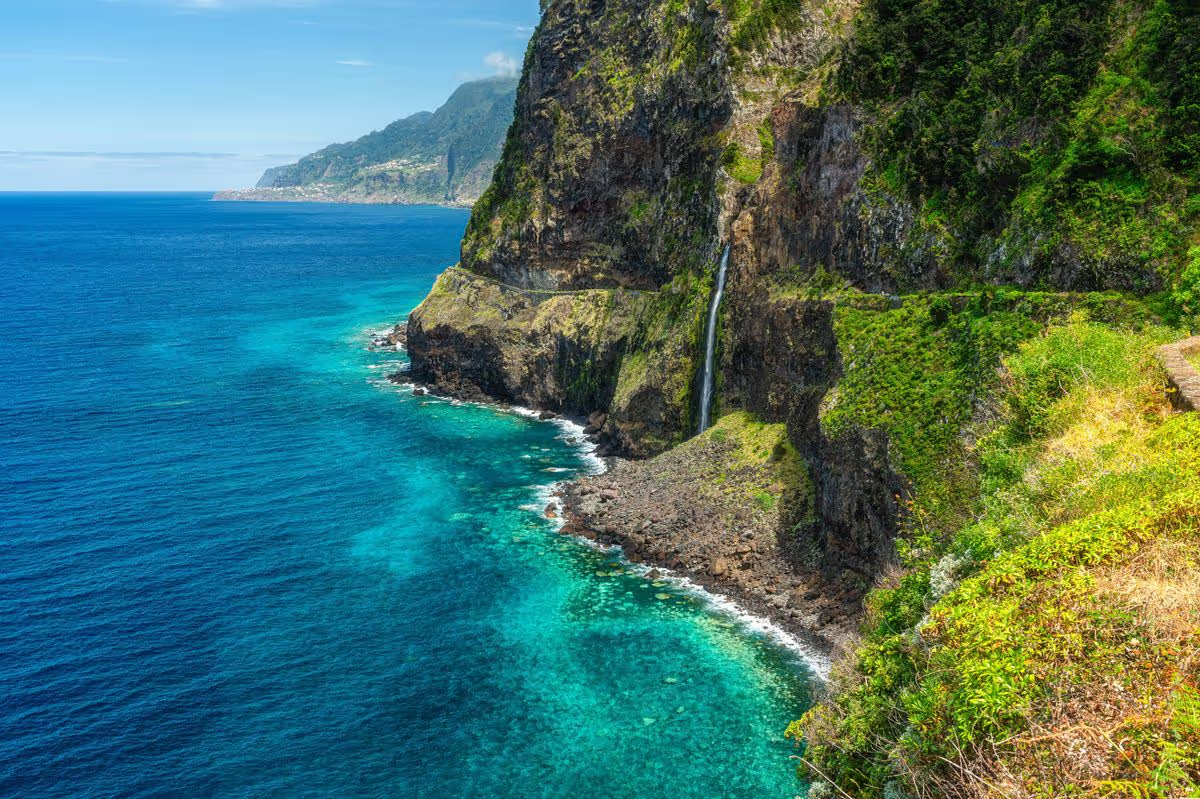
Another essential location in Madeira is Seixal Beach – a stunning natural black sand beach celebrated for its striking lush green setting, towering cliffs and the tumbling waterfall, Miradouro do Veu da Noiva, which flows straight into the sea and presents a magnificent spectacle.
Funchal, the lively historic capital of Madeira, proves a major attraction, with the city famous for the Old Town (Zona Velha), Monte Cable Car & Toboggan Ride, the Monte Palace Tropical Garden, and the Mercado dos Lavradores market.
The Laurissilva of Madeira is a 20-million year old forest praised for its incredible biodiversity, and a walk along its woodland paths is essential. Pico do Areeiro – Madeira’s third-tallest peak represents another unmissable spot, especially for keen hikers.
The trek from Pico do Areeiro to Pico Ruivo delivers an exciting mountain expedition, connecting the island’s three loftiest peaks whilst providing unforgettable panoramas.
A nod to Madeira’s famous wine is unavoidable, with Funchal, the town of Câmara de Lobos, and the adjacent island of Porto Santo celebrated as the premier destinations for wine tastings and vineyard excursions.
Tenerife
Those visiting this breathtaking island can enjoy palm-lined beaches, dramatic volcanoes, enchanting landscapes, verdant forests, and mouth-watering cuisine – all during a single holiday.
The white sand, 1.3-kilometre-long Playa de las Teresitas beach remains a firm favourite with holidaymakers, as does the 850-metre long golden sand expanse of Playa de las Vistas.
Playa Jardin beach with its volcanic black sand also draws those wanting something distinctive during their coastal getaway.
Direct flights to this sun-drenched holiday island are wallet-friendly – at the time of writing, a one-way flight from London Luton Airport to Tenerife South Airport on March 24 was priced at £27 with one free cabin bag allowance, whilst pints cost just £1.30 on average.
The sophisticated Playa del Duque is ideal for upscale dining and relaxed family activities, whilst the sprawling natural beach of Playa de la Tejita provides stunning views of Montaña Roja aka the Red Mountain.
The secluded cove of Playa de Abama is celebrated for its golden sands and excellent snorkelling, and arguably, Tenerife’s most magnificent beach, Playa de Benijo is perfect for an isolated retreat surrounded by nature, remarkable cliffs and gorgeous black sand.
The south-west coastline of Tenerife, especially the area between Los Gigantes, Costa Adeje, and Los Cristianos, is renowned for dolphin and whale watching, while a visit to the Teide National Park and the Corona Forestal Natural Park is absolutely essential.
The colonial town of San Cristobal de la Laguna provides a unique retreat within Tenerife, whilst the island’s capital, Santa Cruz de Tenerife, acts as the lively heart of this sun-drenched paradise.
Carol Hutchins had been looking forward to a sunny break in the TUI Magic Life Hotel in Fuerteventura with her daughter, Layla, at the end of October, but she didn’t get further than the airport
Layla and Carol Hutchins had been looking forward to their holiday in Fuerteventura
A disabled woman has been left “very upset” after she missed her holiday to the Canary Islands because of her mobility scooter battery.
Carol Hutchins had been looking forward to a sunny break in the TUI Magic Life Hotel in Fuerteventura with her daughter, Layla, at the end of October. However, the mum-and-daughter duo’s dream trip ended at Manchester Airport, where staff told them Carol’s scooter couldn’t be loaded onto the plane.
Carol has been left “very upset” by the missed holiday and the fact that she’s over £1,000 out of pocket. There is no suggestion that TUI did not follow protocol. However, Carol and Layla’s experience serves as a warning to Brits travelling overseas with a mobility scooter.
A TUI spokesperson explained: “We’re sorry that Ms Hutchins wasn’t able to travel on her holiday, and we recognise how upsetting that must have been for her. This was due to them not having the required documentation and battery identification information for their electric mobility aid, which meant it couldn’t be cleared to fly under safety guidance. The TUI airport team supported her on the day and explored alternative options, which she chose not to accept.”
Carol booked her holiday to the sun-soaked Canary Islands at the TUI Doncaster store on 23 October 2025. As the booking was made within two weeks of departure, the travel agent called the welfare team while Carol was in the shop, to make sure the mobility scooter was added to the booking.
When a mobility aid is added to a holiday booking, customers receive the Conditions of Carriage, which include important instructions passengers must follow before their flight.
They state: “The battery or batteries should clearly be labelled showing the type and the watt-hour (Wh) rating. Failure to show this can lead to refusal of battery or batteries. Please carry the manufacturer’s operating instructions with you, which will help you and the airport staff to block the vehicle’s electric circuits and remove the battery if necessary.”
According to TUI, the Conditions of Carriage were emailed to Ms Hutchins four times as her booking was updated, and given twice again alongside ticket documentation.
When Carol and Layla arrived at Manchester Airport on October 29, her battery did not have any visible ID label, meaning airport staff could not legally clear it under safety regulations.
An on-site duty manager contacted the resort team in Fuerteventura to find an alternative mobility scooter she could use on her holiday.
However, according to Layla, Carol did not feel comfortable travelling without her own or with the idea that she might be without one for a period once at her destination.
According to TUI, Carol and Layla turned down the offer of two alternative flights and goodwill vouchers.
TUI’s website has a section that explains what customers on mobility scooters need to know and do before they travel.
Before flying with your electric mobility aid, you’ll need to:
Check your battery type and specifications
Provide battery details to TUI in advance
Bring manufacturer documentation to the airport
TUI accepts these battery types:
Non-spillable batteries (like AGM, Gel Cell, SLA)
Lithium batteries with specific watt-hour limits:
Single battery: maximum 300Wh
Two batteries: maximum 160Wh each
However, wet cell (spillable) batteries are not permitted on TUI flights.
Important pre-flight steps:
Share your device’s battery details with TUI as early as possible
This stunning resort town offers the perfect combination of beautiful beaches, vibrant nightlife and exceptional value for money with cheap flights and affordable pints – what’s not to love?
This resort town is a traveller’s dream destination(Image: wallix via Getty Images)
Despite the tourism explosion witnessed over recent decades, this dynamic resort has succeeded in preserving its authentic appeal and distinctive personality, positioning it as the perfect spot for those wanting to effortlessly jet away without breaking the bank.
Perched on Fuerteventura’s northern extremity in the Canary Islands, Corralejo delivers a bright and cheerful holiday experience packed with countless entertaining pursuits, reports the Express.
Amazon cabin bag meets Ryanair requirements for less than £15
This article contains affiliate links, we will receive a commission on any sales we generate from it. Learn more
Travellers keen to beat the bag charges without breaking the budget have made an Amazon travel bag a bestseller. Rated 4.7 stars out of 5 from almost 3,000 reviews, the Xkdoai bag comes in six colours with prices from £14.99, saving 29% on the usual price.
Within La Oliva’s municipality, Corralejo’s surrounding landscape proves both extraordinary and spectacular – golden-white sand dunes, rugged volcanic terrain and seaside ambience blended with historic town character.
Corralejo merges its classic maritime heritage with a youthful and dynamic spirit, offering holidaymakers the perfect combination. Getting to this resort on Fuerteventura’s northern coastline is a doddle – and won’t break the bank.
Direct one-way flights from London Stansted Airport and London Luton Airport to Fuerteventura Airport in early March cost as little as £27, with a free allowance for one cabin bag included.
And it’s not just the airfare that’s easy on the wallet – a refreshing pint will set you back a mere £1.70 in this stunning tropical haven. Combine that with Fuerteventura’s glorious 21C March temperatures, and you’ve got all the ingredients for the perfect early spring escape.
Nestled just across the water from the breathtaking – and tiny – island of Los Lobos, the resort town of Corralejo is as postcard-perfect as it gets. Brimming with outstanding restaurants, delightful boutiques, and buzzing bars, it truly is the complete package.
A resort town with humble beginnings
Corralejo was once nothing more than a traditional fishing village, home to a handful of residents and little else. In fact, right up until the 1950s, the entire town boasted only around 11 surnames and a modest population of just over 100 people.
From those quiet beginnings, the resort has grown beyond all recognition to become what it is today: Fuerteventura’s most beloved tourist destination.
The area encompassing Corralejo and its iconic surrounding dunes was also where conqueror and crusader Gadifer de la Salle and his expedition first set foot on Fuerteventura back in 1402.
According to folklore handed down through the ages, Corralejo’s origins trace back to approximately 1810, though some historians argue that genuine settlement didn’t occur until at least the 1850s.
The earliest residents are known to have built their homes using stone and readily available materials sourced from the surrounding area.
Corralejo remained a modest fishing hamlet until the mid-20th century, with its economy and inhabitants heavily reliant upon the neighbouring municipality of La Oliva and goods shipped in from overseas.
Throughout much of its unassuming past, Corralejo existed as an unremarkable fishing settlement where a small number of impoverished fishermen toiled long hours to support their households.
The early 1970s marked the beginning of Corralejo’s tourism explosion, as its magnificent beaches and breathtaking dunes (at last) began drawing holidaymakers to its spectacular coastline.
Things to do in Corralejo
This Fuerteventura destination proves ideal for watersports, especially windsurfing and kitesurfing, thanks to the region’s reliable winds and perfect wave conditions.
Scuba diving, water skiing, jet skiing and snorkelling also rank amongst favourite pursuits for tourists, courtesy of Corralejo’s superb translucent waters.
Adjacent to the harbour, Town Beach (Playa del Viejo) suits those based in or around the town centre, whilst the Galera Beach vicinity and Waikiki Beach located at the town’s core are renowned for their tranquil waters, vibrant beach bars, and convivial ambience.
Playa Vista Lobos is another essential destination, renowned for its distinctive ‘popcorn’ shoreline and spectacular vistas of Lobos Island visible from the coast.
Flag Beach and Glass Beach are perfect spots for enthusiasts keen to enjoy windsurfing or kitesurfing.
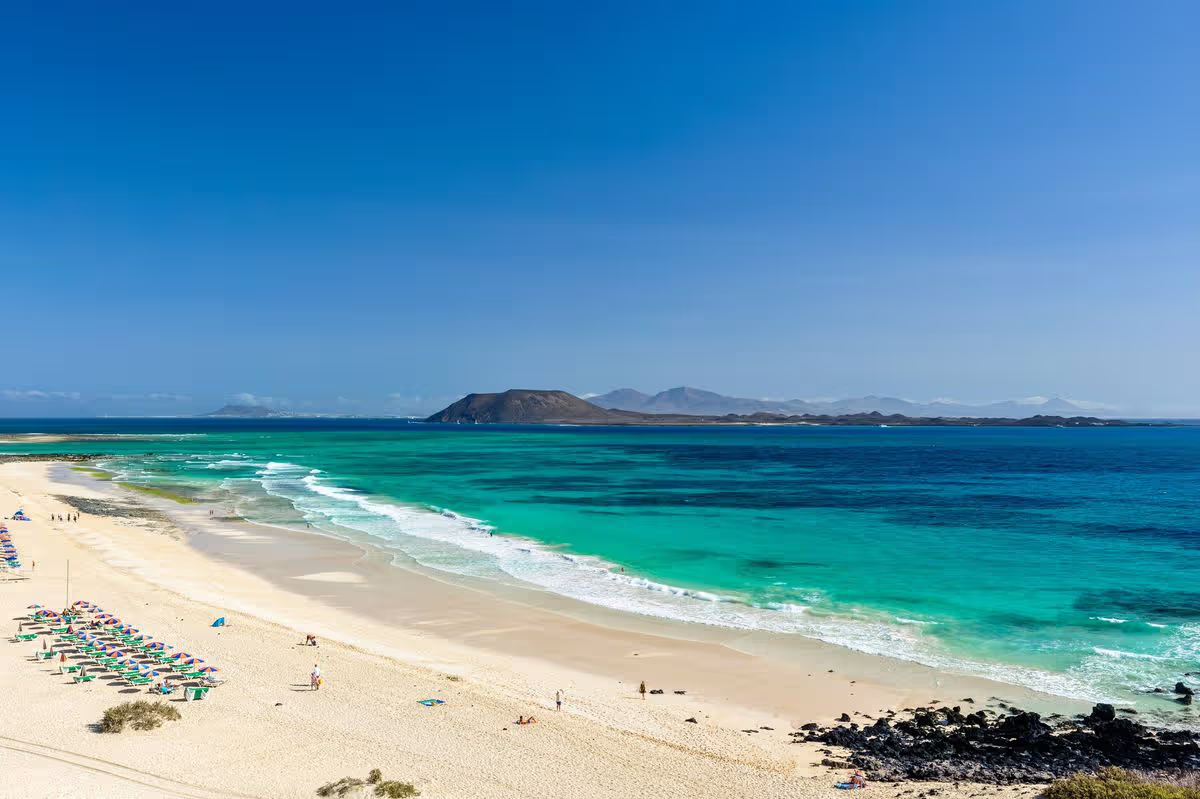
The Corralejo Dunes, or Grandes Playas, nestled within the sprawling 11-kilometre Corralejo Natural Park, stand out as arguably the resort’s most celebrated attraction – and justifiably so.
The unspoilt white sand dunes form an untouched coastal haven unlike anywhere else, cementing its status as an essential destination for anyone exploring Corralejo.
Stunning panoramas of Los Lobos and neighbouring Lanzarote further enhance the location’s allure. Native plant and animal species thriving within the Natural Park provide an extra treat for nature lovers.
The old town in Corralejo serves as the resort’s beating heart, featuring delightful narrow lanes packed with seafood restaurants and outstanding dining establishments – a haven for culinary enthusiasts.
Corralejo Old Town teems with characteristic whitewashed buildings, intimate bars and independent retailers, alongside a working harbour where fishing boats still operate.
Avenida General Franco, commonly referred to as Main Street, extends from the old town and hosts some of the resort’s most celebrated international restaurants, shopping complexes, and the bustling Music Square.
Visitors can also depart from Corralejo’s harbour to discover the neighbouring volcanic islands of Lobos and Lanzarote, either through glass-bottom boat excursions or by hopping aboard the regularly scheduled ferry services that connect the Canary Islands.
Ensure our latest headlines always appear at the top of your Google Search by making us a Preferred Source. Click here to activate or add us as your Preferred Source in your Google search settings.