cameron hamilton

Trump’s pick to lead FEMA pledges to be ‘fair and reasonable’ in assessing aid requests

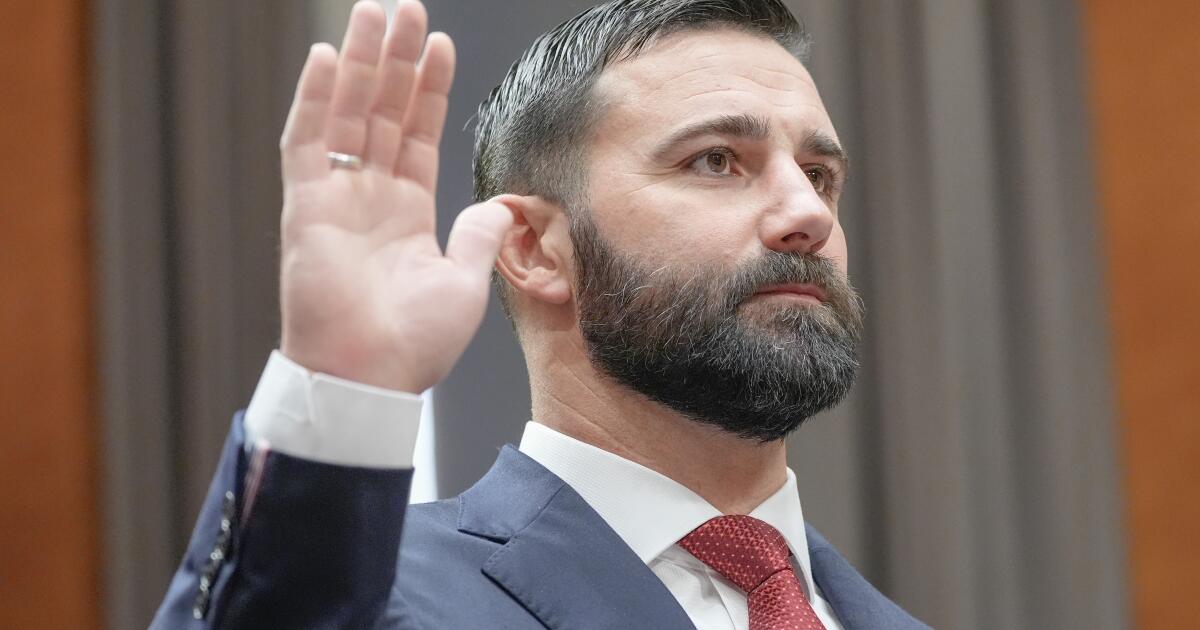
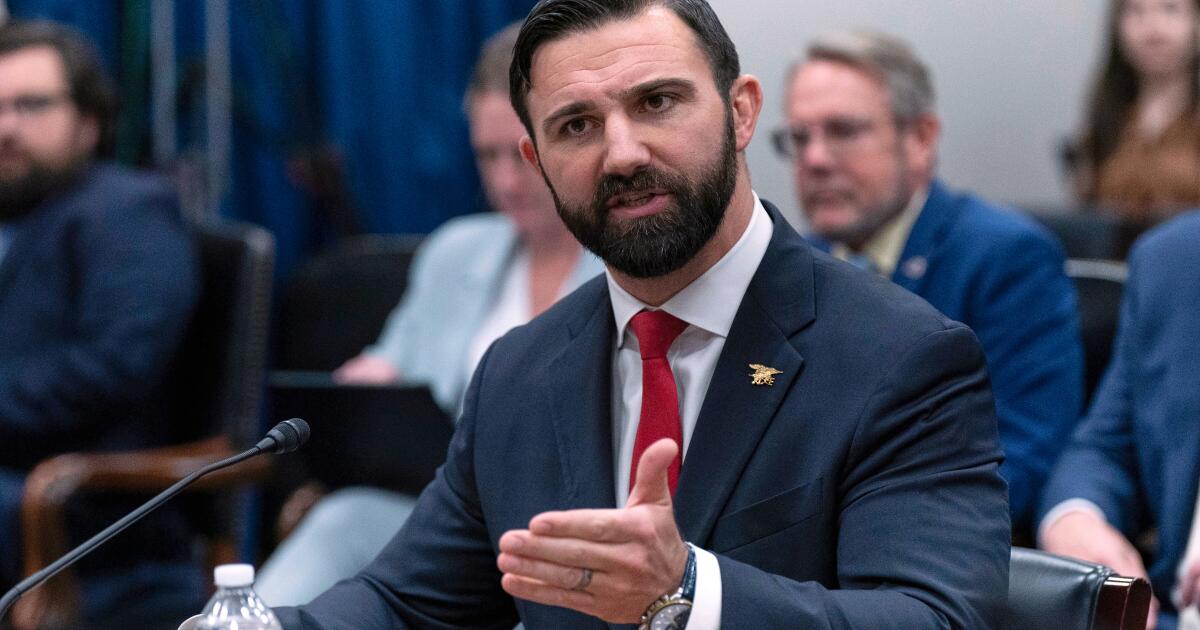
Cameron Hamilton, President Trump’s nominee to lead the Federal Emergency Management Agency, pledged to senators Wednesday to be “fair and reasonable” in assessing requests for disaster aid as he seeks to run an agency roiled by the administration’s threats to dismantle it.

Hamilton appeared before the Senate Committee on Homeland Security and Governmental Affairs at a hearing where lawmakers assessed a group of 10 nominees for administration posts.

“My focus will be to ensure that FEMA is objective, is fair and reasonable, follows the law, and is consistent” in how it reviews disaster declaration requests, Hamilton told Michigan Sen. Gary Peters, the top Democrat on the committee. Peters had asked about partisanship in granting major disaster declarations.

Hamilton had a brief tenure as FEMA’s temporary leader early last year but was ousted after defending the agency’s existence. At a House hearing in May 2025, he said he did not “believe it is in the best interest of the American people to eliminate” FEMA. He was fired the next day.

His nomination comes as the Republican administration has increasingly signaled it is backing away from promises to dismantle an agency that the president has heavily criticized.

If confirmed, he would be FEMA’s first permanent administrator in Trump’s second term. He will need to lead FEMA through what is expected to be a busy summer disaster season, while answering to Trump, who is likely to expect major changes after a council he appointed recommended sweeping moves at the agency that is part of the Department of Homeland Security.

Hamilton distanced himself from some FEMA controversies

Nominees did not give opening statements, but Hamilton received the bulk of lawmakers’ questions while appearing with four others in the first half of the hearing.

His answers suggested a departure from some of the more aggressive policies considered and enacted during Kristi Noem’s turbulent leadership at DHS. FEMA’s workforce has been worn down by mass staff departures, policies that hamstrung operations and a protracted DHS shutdown.

Hamilton expressed faith in the FEMA staff and praised the recent opening of 350 positions to counteract some of the cuts. He said that if confirmed by the Senate, he would do what he could to speed up disaster declaration decisions and reimbursements to states, tribes and territories.

“We owe you answers, I think, much faster,” he told Sen. Josh Hawley (R-Mo), adding that many FEMA processes needed to be simplified.

Hamilton disavowed a recommendation he included in an April 2025 memo to quadruple the threshold of financial damages a state needed to prove to receive FEMA public assistance. He also noted the importance of resilience funding, despite halting billions in resilience grants during his previous tenure.

Republican and Democratic senators at the hearing expressed support for FEMA’s mission, despite Trump’s early threats to eliminate it. “I think what your agency does is hugely important,” Hawley told Hamilton.

But multiple Democrats echoed Peters’ concern that Trump was approving far more disaster declaration requests from Republican states than Democratic ones.

Of the state disaster declaration requests Trump answered through the end of May, he approved about 82% from states that voted for him in the last election and 44% from states that voted for Democrat Kamala Harris, according to an analysis of public FEMA data by Andrew Rumbach, senior fellow at the nonpartisan think tank Urban Institute.

Hamilton, a former Navy SEAL, has never worked as a state or local emergency manager and has publicly criticized FEMA in the past. He has held positions at DHS and the State Department related to emergency response.

No senator questioned Hamilton’s suitability for the position.

Federal law requires the FEMA administrator to have “a demonstrated ability in and knowledge of emergency management and homeland security” and at least five years of “executive leadership and management experience.”

Criticism over hearing format

Peters criticized the committee chairman, Sen. Rand Paul (R-Ky.), for scheduling so many nominees at once, saying that made it more difficult for senators to properly screen them.

“The lineup today severely limits our ability to have transparency for the American public,” Peters said. He noted that Hamilton was among two nominees whose FBI background investigations were not yet complete, and that two others had not submitted their financial disclosure reports.

Others who appeared included Trump’s pick for deputy director of the Office of Management and Budget, Hal Duncan, and administrator of the Transportation Security Administration, David Cummins.

Paul said the committee would only vote on the nominees when their financial and background checks were complete.
Source link

Trump nominates Cameron Hamilton to lead FEMA, a year after he was fired from the role

President Trump nominated Cameron Hamilton on Monday to lead the Federal Emergency Management Agency, a surprising comeback for the former Navy SEAL who was fired from his role as FEMA’s temporary leader last year after he defended its existence.

His nomination comes as the Trump administration has increasingly signaled it is backing away from promises to dismantle FEMA, an agency that has faced withering criticism by the president. The nomination of Hamilton, who argued abolishing FEMA was not in the country’s best interests, is the latest indication of that change.

If confirmed, Hamilton would be the principal advisor to Trump and Homeland Security Secretary Markwayne Mullin on emergency management and FEMA’s first permanent administrator in Trump’s second term. The agency has gone through three temporary leaders, including Hamilton’s brief tenure from January to May 2025.

He would take over an embattled agency still reeling from Kristi Noem’s turbulent leadership of the Department of Homeland Security, of which FEMA is part. FEMA’s workforce has been worn down by mass staff departures, policies that hamstrung operations and a 75-day-long Homeland Security shutdown that ended April 30.

Hamilton will need to ensure the agency is prepared for summer disaster season, just weeks away, while answering to Trump, who is likely to expect major reforms after a council he appointed recommended sweeping changes on Friday.

“Now is the opportunity to stabilize FEMA,” said Michael Coen, the agency’s chief of staff in the Obama and Biden administrations.

Fired after defending FEMA

Hamilton, who had never been a state or local emergency management director and who had publicly criticized FEMA in the past, was a controversial choice when Trump named him temporary leader in January 2025, just days before the president floated the idea of “getting rid” of FEMA.

His rupture with Homeland Security officials began as he defended a federal role in supporting disaster-affected states, tribes and territories.

“Once the conversation shifted to, ‘Now we’re going to abolish,’ I immediately expressed concern,” he said in September on the “Disaster Tough” podcast with John Scardena, a former FEMA incident management team leader.

Homeland Security officials even subjected him to a polygraph test, accusing him and other officials of leaking details of a private meeting. He passed but said he knew his dismissal was inevitable.

At a May 7, 2025, appearance before a House Appropriations subcommittee, Rep. Rosa DeLauro, a Connecticut Democrat, asked Hamilton if he believed FEMA should be abolished.

“I do not believe it is in the best interest of the American people to eliminate the Federal Emergency Management Agency,” he replied. The next day, he was fired.

Hamilton will have to rebuild trust

Defending FEMA despite knowing it would probably cost him his job generated respect and trust among people whose job it is to lead communities through crisis, said Scardena, now president of the consultancy Doberman Emergency Management Group, which trains emergency managers.

“He won myself over and I think a lot of people by what he did,” Scardena said.

But multiple current FEMA employees who requested anonymity for fear of retribution for speaking publicly told the Associated Press they had concerns over some of the actions taken under Hamilton.

In 2024, Hamilton shared posts on X promoting misinformation about FEMA spending during Hurricane Helene.

During his temporary leadership, FEMA ceased door-to-door canvassing to reach survivors after disasters, and canceled a multibillion-dollar resilience grant program, since restored by a federal judge. The Department of Government Efficiency gained access to internal FEMA networks containing survivors’ private information. FEMA staff were fired for fulfilling a reimbursement payment to New York City for housing undocumented immigrants as part of FEMA’s Shelter and Services program.

Hamilton has said he believes FEMA needs major reform. He has said that he wants FEMA to move faster, that the agency is saddled with responsibilities he sees as outside its remit, and that some states have become too dependent on the agency. A Trump-appointed council last week urged sweeping changes to FEMA, which would require congressional action.

“I think he’s going to need to rebuild trust across the agency,” said Deanne Criswell, FEMA administrator under former President Biden, adding that she believes Hamilton cares about FEMA and she appreciated his outreach to emergency management directors and former officials during and after his tenure.

Senate confirmation process could raise questions of experience

Hamilton could face pushback in the Senate confirmation process over never having led an emergency management agency, a common stepping stone to becoming administrator of an agency with over 21,000 employees.

Federal law requires the FEMA administrator to have “a demonstrated ability in and knowledge of emergency management and homeland security” and at least five years of “executive leadership and management experience.”

Hamilton trained as a Navy hospital corpsman before spending a decade as a Navy SEAL on SEAL Team Eight. He then became a U.S. State Department emergency management specialist handling overseas crisis response, then directed emergency medical services at the Department of Homeland Security.

Angueira writes for the Associated Press.

Source link