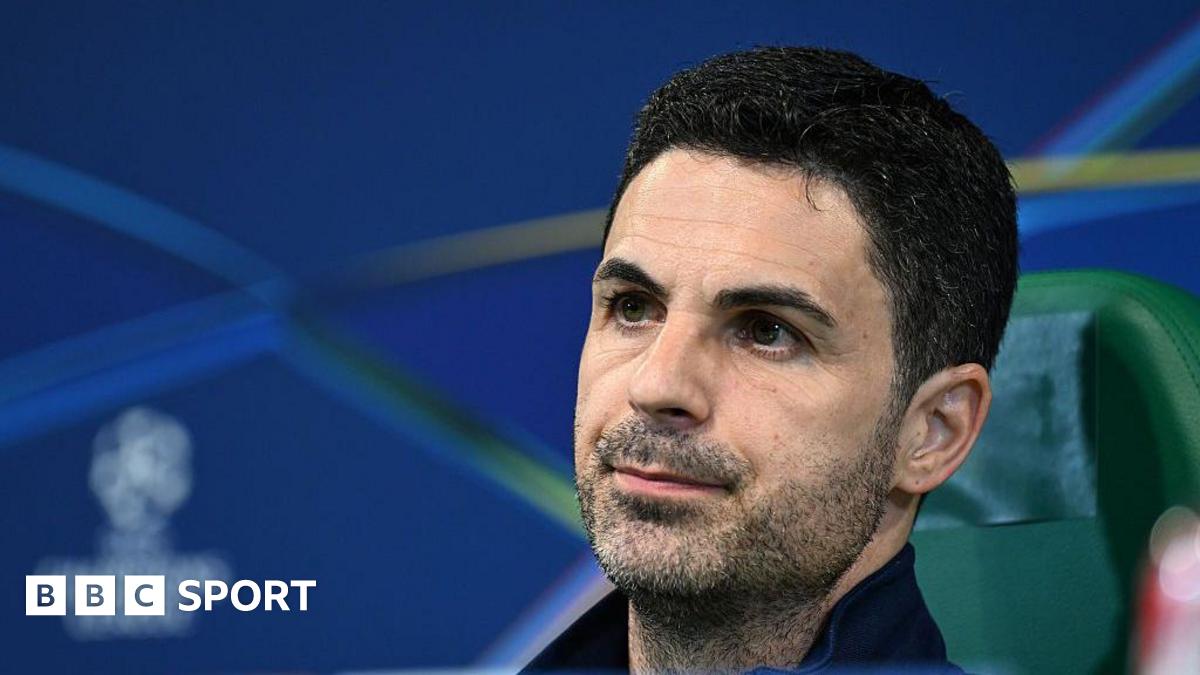
When Arsenal face Sporting in their Champions League quarter-final first leg on Wednesday, there will be much more riding on the game than just a knockout match in Lisbon.
For many, this is where the Gunners need to show back-to-back defeats, against Manchester City in the Carabao Cup final and the damaging loss to Southampton in the FA Cup quarter-final, will not leak into their European and Premier League campaigns.
Arsenal have been tagged as the ‘nearly men’ under Mikel Arteta with three successive second-placed finishes in the Premier League in the last three seasons.
But the Gunners have played a ruthless style of football this season, which has seen them establish a nine-point lead in the Premier League, reach the final of one cup competition and, depending what happens in two legs against Sporting, at least the quarter-final stage of the two other cup campaigns they began.
Their style of play has been questioned at times but now it is the team’s mentality that is coming under the spotlight.
The Gunners have been so impressive this season that their defeats by City and Saints are the first time they have lost successive matches this campaign, while the loss on the south coast was just the fifth of the season.
But, with the Champions League and Premier League the top prizes for the Gunners, this is where Arteta needs to show the pain of coming so close in precious campaigns is not going to overwhelm his side as they look to win their first major trophy since 2020.
“Have some perspective about how difficult it is what we have done until now,” said Arteta, when asked how he and the team prevent a longer run of defeats.
“Feel the pain, feel the emotion and use it to be better and improve.”
Deontay Wilder has raised the possibility of a fight with Anthony Joshua, telling the Briton “let’s do it” following the American’s points victory over Derek Chisora.
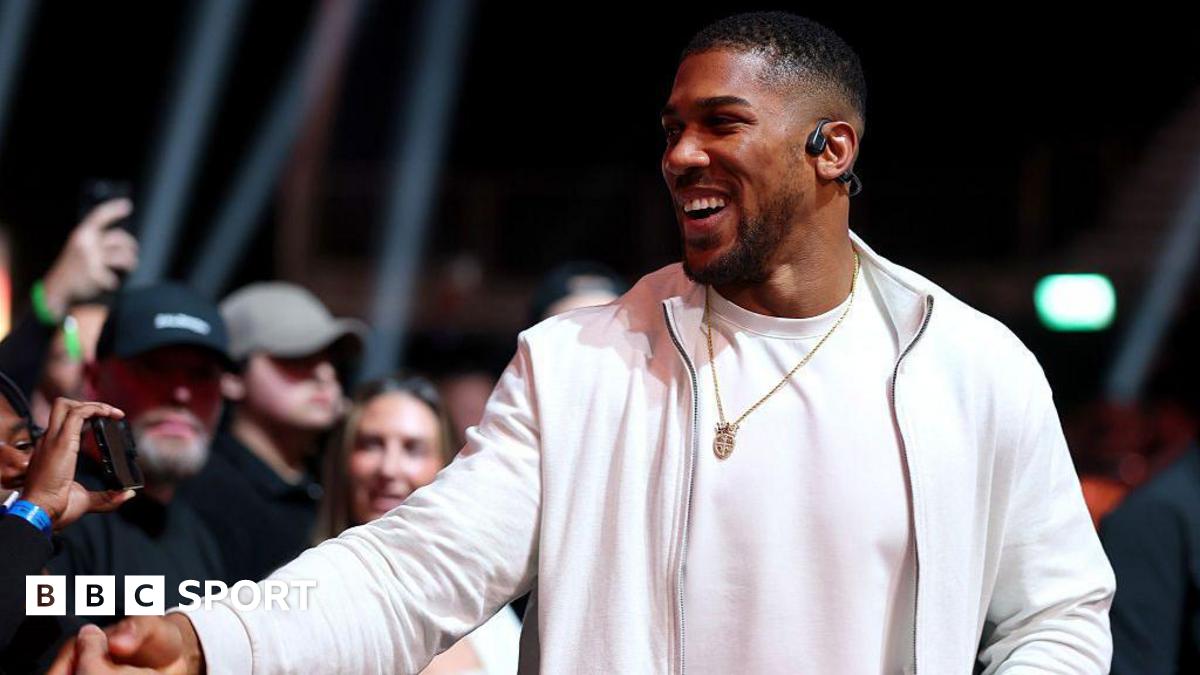
Two-time world heavyweight champion Joshua was ringside at London’s O2 Arena on Saturday to support his friend Chisora for what is expected to have been the beaten fighter’s final professional bout.
Joshua has largely remained out of the spotlight since he was a passenger in a car crash that killed two of his friends in Nigeria on 29 December.
The 36-year-old sustained minor injuries in the crash that killed Sina Ghami and Latif ‘Latz’ Ayodele.
He last fought on 19 December, when he stopped YouTuber-turned-boxer Jake Paul in the sixth round.
After that victory, which improved his record to 29 wins and four defeats, Joshua said he was ready to face long-term rival Tyson Fury next.
Fury ended his latest spell of retirement in January when he announced he would be returning to fight Arslanbek Makhmudov in the UK on 11 April.
On Saturday, Wilder, 40, walked past Joshua, fist-bumped him and said “let’s do it”, before he could be heard saying “He’s scared” as he walked away.
Later, former world champion Wilder addressed the exchange, saying: “It wasn’t a few words, I dapped it up with him and I said: ‘Now let’s get it on.’
“I’m ready for whoever, long as these guys are in the heavyweight division, I am here.
“You can call me Mr Clean, because I want to clean up the whole division. The division is nothing without Deontay Wilder.”
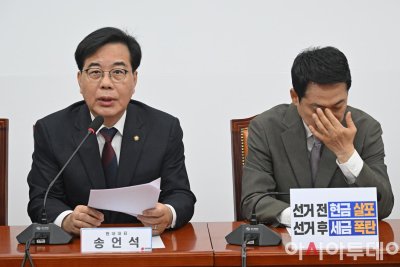
Song Eon-seok, floor leader of the People Power Party, speaks at a party Supreme Council meeting at the National Assembly in Seoul on Wednesday. At right is party leader Jang Dong-hyuk. Photo by Asia Today
April 3 (Asia Today) — Song Eon-seok, floor leader of the People Power Party, on Thursday criticized the government’s proposed 26.2 trillion won (about $19.6 billion) supplementary budget, calling it a “misguided plan” that relies on cash handouts instead of addressing the impact of high oil prices.
Speaking at a party strategy meeting at the National Assembly, Song said the proposal “diagnoses high oil prices but prescribes cash handouts,” arguing that it fails to support those most affected by rising fuel costs.
He said the government has become overly focused on distributing cash while neglecting vulnerable groups, adding that one-time payments of 100,000 won (about $75) would not meaningfully help people facing mounting living costs.
Song also criticized the exclusion of workers directly impacted by fuel prices, including truck drivers, delivery workers and taxi drivers, from key support measures.
“We will transform this supplementary budget from a war-related or election-driven budget into a ‘people’s survival budget,'” he said, pledging to shift from broad cash payments to targeted assistance.
He said the party would seek to cut spending items deemed unrelated to high oil prices during the review process, including renewable energy projects, independent film production support and regional development programs in Changwon. Savings from those cuts, he added, would be redirected to groups most affected by fuel price increases.
Song proposed expanding the fuel tax reduction from 15% to 30% and providing fuel subsidies of 600,000 won (about $450) to roughly 700,000 workers in transportation and delivery sectors.
He also suggested additional support measures, including subsidies for delivery and takeout packaging costs for about 670,000 self-employed business owners, as well as a 50% discount on the K-Pass public transportation program for six months.
Regarding the government’s plan to implement an odd-even license plate driving system, Song said the policy should be reconsidered. If implemented, he said, it should be accompanied by adequate compensation for affected citizens.
A broker for U.S. Defense Secretary Pete Hegseth sought to make a large investment in major defense firms in the lead-up to the Iran war, according to the Financial Times. The Pentagon has dismissed the report.
A watered-down resolution calling for Congress to “repair” the nation’s “historically broken” immigration laws won bipartisan support by the state Senate on Monday.
The Senate voted 32 to 0 to support Senate Joint Resolution 8 by Sen. Lou Correa (D-Santa Ana).
The measure originally called for illegal immigrants to have access to “a logical and streamlined path to citizenship,” but it was changed to provide that path for “individuals after they gain legal status.”
The resolution also originally said: “This reform should also include a way to help families remain together throughout the lengthy bureaucratic process,” but that provision was removed. It now calls for the reform to “recognize the societal and cultural benefits of keeping the family unit intact.”
Senate Republican leader Robert Huff of Diamond Bar noted that California is home to a large number of illegal immigrants, many of them providing important work in agriculture, and he said immigration laws are not working.
“The status quo is hurting our state,” Huff said.
Sen. Anthony Cannella of Ceres is among the Republicans who have supported proposals in Washington that include a path to citizenship for illegal immigrants.
“We must recognize the hard work and contribution of our immigrant community,” Cannella told his colleagues Monday.
France’s sports minister has called the International Olympic Committee’s decision to introduce genetic testing for women’s events a “step backwards”, warning it raises major ethical, legal and scientific concerns, while US President Donald Trump praised the IOC’s new policy.
France “takes note” of the decision to require athletes to undergo testing based on the SRY gene, but opposes any broad use of genetic screening, Marina Ferrari said in a statement on Friday.
Recommended Stories
list of 4 itemsend of list
“On behalf of the French government, I wish to express our deep concern regarding this decision,” she said. “We oppose a generalisation of genetic testing that raises numerous ethical, legal and medical questions, particularly in light of French bioethics legislation.”
The IOC said on Thursday that only biological female athletes would be eligible for women’s events from the Los Angeles 2028 Olympics onwards, following a one-time gene test designed to identify male sex development. The move essentially bars transgender athletes from competing in the female category.
The rule is in line with an executive order by Trump from February 2025 that banned transgender athletes from competing in girls’ and women’s sports.
“Congratulations to the International Olympic Committee on their decision to ban Men from Women’s Sports,” Trump said late on Thursday on the Truth Social platform.
“This is only happening because of my powerful Executive Order, standing up for Women and Girls!”
However, Ferrari said that: “These tests, introduced in 1967, were discontinued in 1999 due to strong reservations within the scientific community regarding their relevance. France regrets this step backwards.”
She added that the policy risked undermining equality by specifically targeting women.
“This decision raises major concerns, as it specifically targets women by introducing a distinction that undermines the principle of equality,” she said.
Ferrari also warned that the approach failed to reflect biological diversity, particularly among intersex individuals.
“It defines the female sex without taking into account the biological specificities of intersex individuals, whose sexual characteristics present natural variations, leading to a reductive and potentially stigmatising approach,” she said.
New Zealand’s Olympic Committee said on Friday that the IOC policy would bring greater “clarity” and “fairness” to future Games.
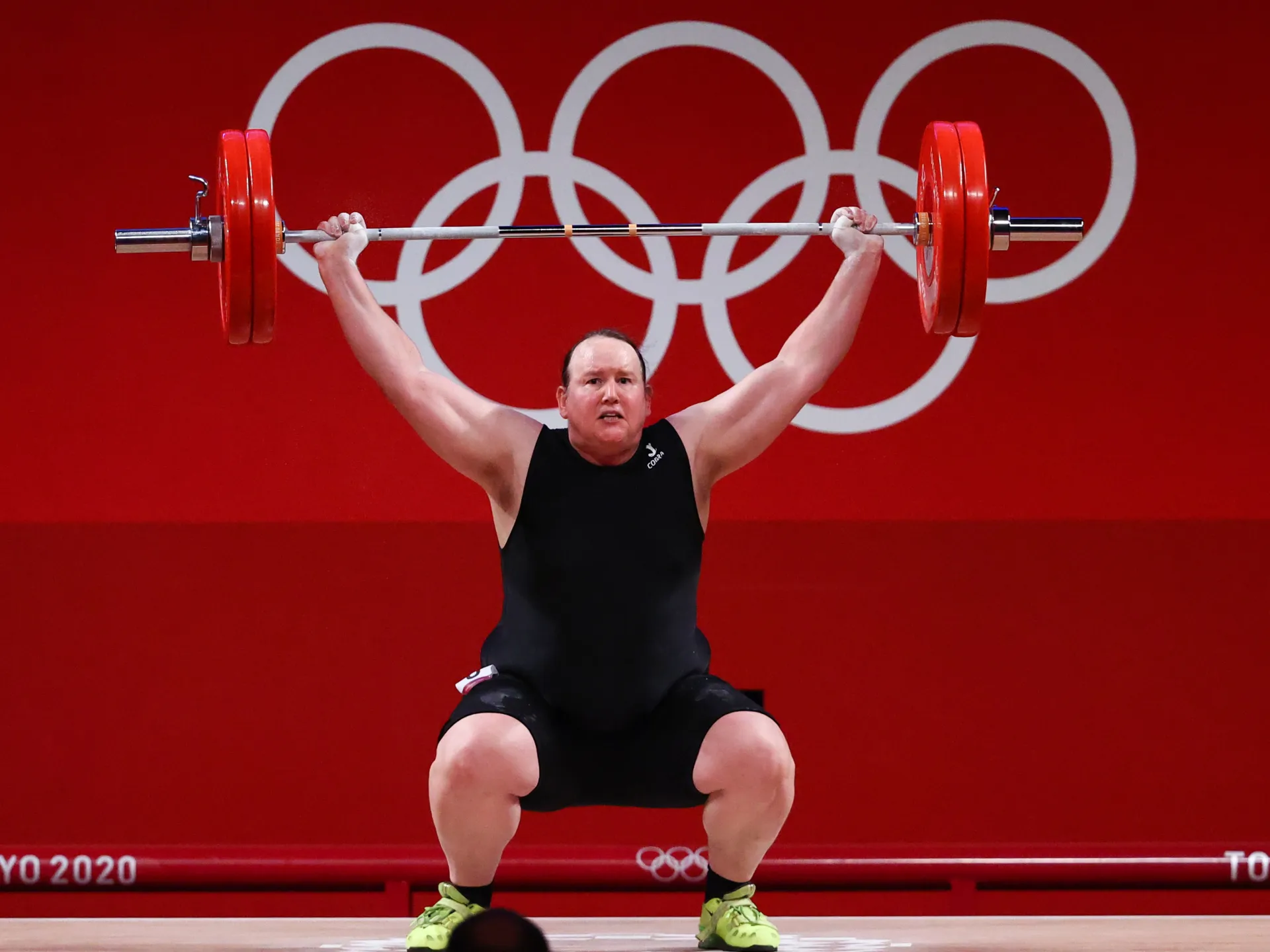
New Zealand weightlifter Laurel Hubbard became the first openly transgender woman to compete in the Olympics at Tokyo in 2021.
NZOC chief executive Nicki Nicol said the organisation recognised the “extensive consultation and expert input that has informed this policy”, particularly from athletes.
She said it would bring “greater clarity, consistency and fairness to eligibility for the female category at the Olympic level”.
“This is a complex and sensitive area that directly affects people, not just policy,” she added.
After competing in 2021, Hubbard, who failed in all of her lifting attempts in Tokyo, said she was aware of the controversy surrounding her participation.
Friday’s NZOC comments did not refer to Hubbard, who has kept a very low profile since her games appearance.
Also reacting to Thursday’s IOC announcement, Australian Olympic Committee president Ian Chesterman said the IOC had comprehensively investigated what he called a “complex issue”.
“Without doubt, this is a challenging and complex subject, and at the AOC we approach it with empathy and understanding.”
He added: “This decision provides clarity for elite female athletes who compete at the highest level and demonstrates a commitment to fairness, safety and integrity in Olympic competition, all of which are fundamental principles of the Olympic Movement.
“As the IOC has stated, at the highest level of sport, the smallest margins can determine outcomes, and clarity around eligibility is critical for female athletes to continue to compete on a level playing field.”
A high-ranking diplomatic source has confirmed that Iran received a 15-point plan from the United States aimed at ending the US-Israeli war on the country.
But the source told Al Jazeera on Wednesday that Tehran described the US proposal as “extremely maximalist and unreasonable”.
“It is not beautiful even on paper,” the source added, calling the plan deceptive and misleading in its presentation.
The comments come as US President Donald Trump has claimed – despite Iranian denials – that negotiations are under way between Washington and Tehran to reach an agreement to end the nearly one-month conflict.
The source explained that Iran has a clear understanding of what conditions it requires for a ceasefire and what it will reject.
The source also stated that there have been no direct Iran-United States talks since the war began – however, messages have been exchanged through a number of mediators.
The response from Iran came hours after sources confirmed to Al Jazeera that Pakistan had shared the US’ ceasefire demands with Iran.
Mediators are pushing for possible in-person talks between the Iranians and the Americans, as early as Friday in Pakistan, Egyptian and Pakistani officials said on Wednesday.
According to Al Jazeera’s Osama Bin Javaid, Pakistan is in a unique position as a mediator because it has a Shia minority, and relatively good ties with Iran including cross-border trade.
It also has a defence agreement with Saudi Arabia, and a Sunni majority that is closely aligned with the Gulf states, he said. Pakistan’s military leader also has a relationship with Trump, Javaid added.
“So, all of this puts Pakistan in a unique position to act between these two sides: it has no US bases on its soil, so Iran cannot accuse it of being used by the United States, and it is a state that has historically tried to mend relations between these actors,” he said.
Egypt’s Foreign Minister Badr Abdelatty, meanwhile, said Cairo was ready to host any meetings related to Iran as long as it serves de-escalation.
Abdelatty said in a news conference that Egypt supported Trump’s initiative to negotiate with Iran.
On Iran’s response to the US plan, he said “we have to continue our efforts, it’s all about diplomacy and negotiations”.
Turkiye has also been been trying to position itself as a possible mediator, with Harun Armagan, a vice chairman for foreign affairs in Turkiye’s ruling AK Party, telling the Reuters news agency that Ankara has been “playing a role passing messages” between Tehran and Washington.
Iran counters with own conditions to end war
Iranian state television’s English-language broadcaster, Press TV, quoted an anonymous official also stating that Iran rejected the US ceasefire proposal.
“Iran will end the war when it decides to do so and when its own conditions are met,” Press TV quoted the official as saying.
The official offered Iran’s own five-point plan, which included a halt to killings of its officials, means to make sure no other war is waged against it, reparations for the war, the end of hostilities and Iran’s “exercise of sovereignty over the Strait of Hormuz”.
Earlier, two officials from Pakistan described the 15-point US proposal broadly, saying it addressed sanctions relief, a rollback of Iran’s nuclear program, limits on missiles and reopening the Strait of Hormuz, through which a fifth of the world’s oil is shipped.
An Egyptian official involved in the mediation efforts said the proposal also includes restrictions on Iran’s support for armed groups.
Israeli officials, who have been advocating for Trump to continue the war against Iran, were surprised by the submission of a ceasefire plan, the Associated Press news agency reported, citing an anonymous source.
Iran remains highly suspicious of the United States, which twice under the Trump administration has attacked during high-level diplomatic talks, including with the February 28 strikes that started the current war.
Iran’s rejection of the US proposal came as Israel launched air attacks on Tehran and Washington deployed paratroopers and more Marines to the region.
Iran, meanwhile, launched more attacks on Israel and Gulf Arab countries, including an assault that sparked a huge fire at Kuwait International Airport.
Molly-Mae was left shocked by a cheeky comment made by Tommy FuryCredit: YouTube / Tommy FuryThe saucy star made the comment with Bambi in the backseatCredit: YouTube / Tommy FuryMolly called Tommy ‘terrible’ after his commentCredit: YouTube / Tommy Fury
Opening up about the future, she revealed: “All I want in this life is to be with him, and to have another baby with him, and to grow old as a family.
“And to live in a nice house together and have a nice life together. That’s all I want.”
Molly-Mae revealed she was expecting her second child in a sweet video last monthCredit: InstagramThe proud mum has been showing off her baby bumpCredit: Instagram
Molly also dropped various clues about her pregnancy before announcing her joyous news, which is said to have strengthened her relationship with boxer Tommy.
A source told The Sun: “Finding out Molly is pregnant has really helped bring them close together again.
“Tommy is determined to do things right this time he has cancelled all of his summer trips with his friends, as he wants to stand by Molly every step of the way.
“Their new home is in a better place for both of them and has more than enough space for two children.”
Oh Se-hoon, right, sits with other prospective candidates during a Seoul mayoral nomination interview at the People Power Party headquarters in Seoul on Sunday. Photo by Asia Today
March 22 (Asia Today) — Seoul Mayor Oh Se-hoon on Sunday renewed his call for the formation of a campaign committee aimed at broadening the party’s appeal to centrist voters, as he completed an interview for the ruling party’s Seoul mayoral nomination.
Oh, who entered the People Power Party primary late, urged party leaders to quickly launch what he described as an “innovation campaign committee” led by figures capable of attracting moderate voters.
Speaking to reporters after the interview at the party’s headquarters in Yeouido, Oh said recent opinion polls show a significant gap in party approval ratings, underscoring the need for a strategy that resonates with centrist voters in the Seoul metropolitan area.
“Without a campaign structure that can expand toward the center, winning the election will be difficult,” he said.
Oh dismissed suggestions that his proposal amounts to sidelining the party leadership under Jang Dong-hyuk, saying his goal is to balance the party’s confrontational stance against the opposition with broader electoral appeal.
“At this point, it would not make sense to ask the leadership to weaken its political stance,” he said.
He also pushed back against media reports portraying his proposal as an attempt to take control of the party or position himself for the next party convention, calling such interpretations “unintended.”
Tensions between Oh and the party leadership are expected to continue. Jang has previously rejected calls for an early launch of the campaign committee, saying it should be formed after the nomination process is completed.
While both sides agree on the need for a campaign body with wider appeal, they remain divided over the timing of its formation.
The interview marked the confirmation of a six-way race for the party’s Seoul mayoral nomination. Other candidates include Rep. Park Soo-min, former Gangdong District Mayor Kim Chung-hwan, former lawmaker Yoon Hee-sook, party official Lee Sang-kyu and business executive Lee Seung-hyun.
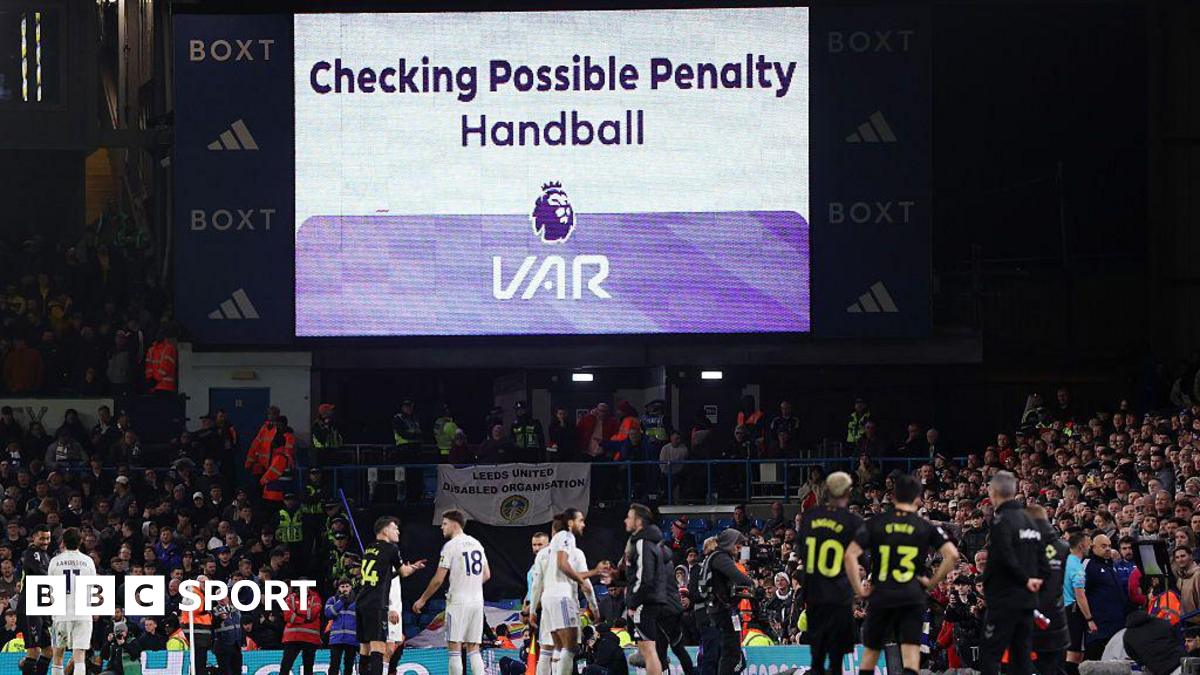
Europe’s top leagues have been summoned to a meeting with Uefa in the summer to discuss how video assistant referee (VAR) technology is being used.
The summit of referee chiefs from the Premier League, La Liga, Serie A, the Bundesliga and Ligue 1 will discuss how to reset VAR to its intended interpretation of only intervening in the clearest of errors.
Roberto Rosetti – the head of Uefa’s referees – called the meeting after saying last month the game must not “go in this direction of microscopic VAR interventions”.
Uefa wants to discuss with leagues how they use VAR, and the thresholds applied.
“I believe that we forgot the reason why VAR was introduced,” Rosetti said.
“In objective decisions, it is fantastic. For interpretations, subjective evaluation is more difficult.
“That’s why we started to speak about clear and obvious mistakes – clear evidence.”
VAR is operated very differently across Europe.
The Premier League has the lowest VAR intervention rate this season – 0.275 per game – thought that has not meant less controversy over decisions.
Figures released last month showed the Bundesliga and La Liga come next at 0.38 interventions per game, with Serie A at 0.44 and Ligue 1 at 0.47.
In the Champions League, interventions are at a rate of 0.45 per game.
Rosetti also wants all leagues to speak “only one technical language” after controversy over the inconsistent application of laws such as handball.
It is hoped the meeting could lead to a more universal approach to the laws and with how VAR is used.
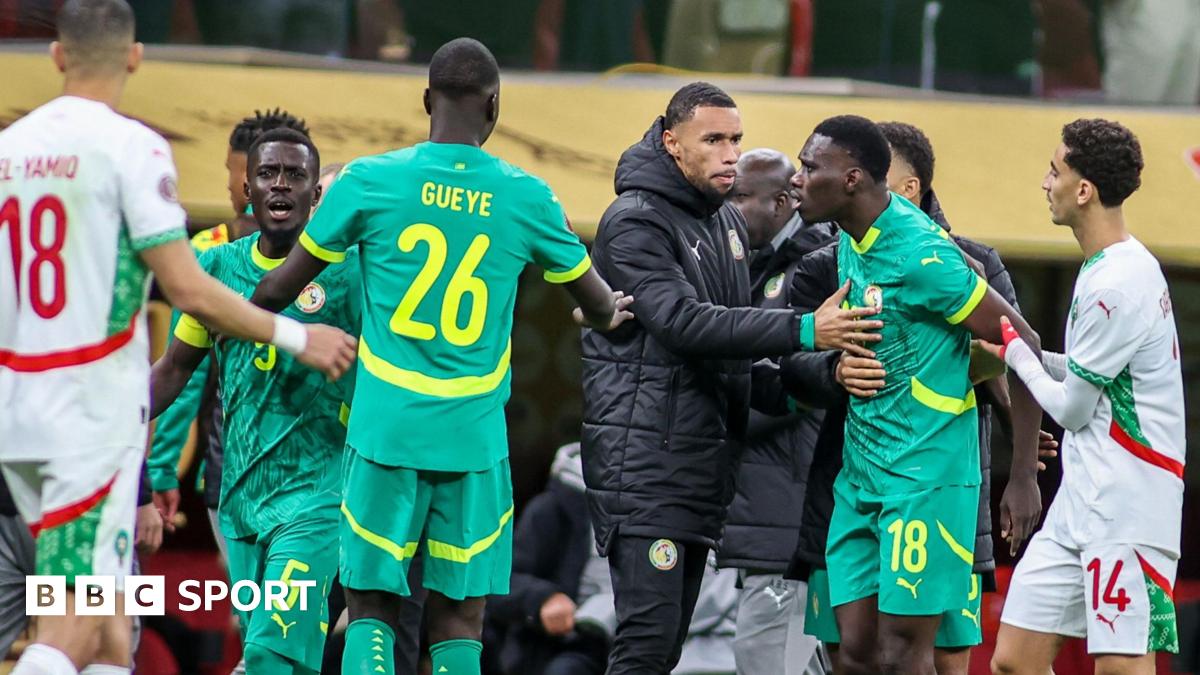
In its ruling to award Morocco the title, Caf also “partially upheld” an appeal against an incident involving ball boys in the final, and reduced the Moroccan FA’s fine for the incident.
In torrential rain, Senegal goalkeeper Edouard Mendy regularly dried his gloves, but the ball boys repeatedly tried to discard his towel.
At one point Senegal reserve goalkeeper Yehvann Diouf was tackled to the ground by three ball boys and dragged around on the floor when he tried to intervene.
A fine for fans shining lasers at players on the pitch was also reduced by Caf.
Caf’s former head of disciplinary, Raymond Hack, questioned the decisions made by African football’s governing body and suggested there is a perception of “political interference” as “the president of the Moroccan Football Association [Fouzi Lekjaa] is the first vice-president of Caf”.
“The circus continues,” Hack told BBC World Service.
“A lot will depend on the referee’s written report, but the fact that the referee allowed the game to continue and they went into extra time gives the impression that he was satisfied that the game will continue.
“He is the only person who can call an end to the game. Not the authorities, not the governing bodies, only the referee.
“Otherwise you’re going to have situation worldwide where every time someone disagrees with a decision, they’re going to go on appeal or take it to court or something ridiculous like that.
“The game should be won on the field of play not in a boardroom.”
Hack, a lawyer and a member of Fifa’s disciplinary committee, said the Morocco players should have informed the referee they were playing under protest if they intended to challenge the result.
He also said it could take six months for Cas to rule on Senegal’s appeal.
Moroccan journalist Jalal Bounar told Newsday that Caf’s decision had been welcomed “with great excitement and joy across the country”.
“Morocco appealed the decision to the confederation of African football because they believed that Senegal had broken the rules during the match, and that’s why Moroccans went out to celebrate,” he said.
“If they give it to Senegal, it won’t be the end of the world. We will accept because we are satisfied that we reached the final.”
However, north African journalist Maher Mezahi said such a sentiment is not matched across the continent.
“It does seem like the rest of Africa feels outraged by this because it seems like, once again, the Confederation of African Football has almost disgraced the sport,” he told BBC Radio 5 Live.
Mezahi cited Caf’s decision to ban Togo from two Africa Cup of Nations for quitting the 2010 competition following a gun attack on their team bus in Angola two days before the tournament.
Referring back to Caf’s decision on the 2025 final, he said: “They have, unfortunately, come up with a habit of releasing decisions like this – whether it’s the disciplinary committee or the appeals board – that eventually do get shot down at the Court of Arbitration for Sport, but it makes the entire thing look very amateurish.”
WASHINGTON — President Trump expressed frustration Monday that U.S. allies were not enthusiastic about sending warships to protect merchant vessels passing through the Strait of Hormuz, a sign of Washington’s growing isolation as it tries to stabilize one of the world’s most critical shipping lanes amid its war against Iran.
Trump declined to name the “numerous countries” he said had agreed to help reopen the oil route, which has come under the threat of retaliation from Iran, but was annoyed that most longtime allies were hesitant about joining his international police force. He said they should be “jumping to help us.”
“Some countries that we have helped for many, many years, we’ve protected them from horrible outside sources and they weren’t that enthusiastic — and the level of enthusiasm, it matters to me,” Trump said at the White House.
For Trump, securing allies’ help is as much a domestic economic need as it is international diplomacy. Since the hostilities against Iran began on Feb. 28, Tehran has retaliated by targeting regional oil facilities and at least 20 vessels operating in and around the Persian Gulf, the Strait of Hormuz and the Gulf of Oman.
The result has been “the largest supply disruption in the history of the global oil market,” according to the International Energy Agency, and it has led to international oil prices surging more than 30% to over $100 a barrel as the war entered its third week with no clear end in sight.
The diplomatic friction, meanwhile, reflects the limits of Trump’s influence at a moment when the global economy is absorbing one of the worst oil supply shocks in modern history, a dynamic that has prompted Trump to warn that countries refusing to help may find Washington a far less generous partner in turn.
Despite Trump‘s demands, several key allies have publicly rebuffed his calls for support.
French President Emmanuel Macron formally rejected the request, saying that France would maintain a “defensive and protective” posture focused on stability rather than escalation.
German Foreign Minister Boris Pistorius was blunter, saying, “This is not our war; we didn’t start it.”
British Prime Minister Keir Starmer also declined to commit, saying the U.K. “will not be drawn into the wider war.” Italy, Spain, Australia and Japan similarly declined, while South Korea and China have not publicly stated their intentions.
The rejections seems to have only sharpened Trump’s demands. At one point during an event Monday, the president turned to House Speaker Mike Johnson (R-La.) and said he would share a list of nations that declined to help, suggesting Congress could have a role in any retaliatory measures against reluctant allies.
“Why are we protecting countries that don’t protect us?” Trump said.
Yet Trump also sent conflicting signals about how much allied help he actually needs. At one point he claimed the United States did not require assistance from other countries.
“We don’t need them, but it’s interesting — I am doing it, in some cases, not because we need them, but because I want to see how they react,” Trump said.
On the threat to merchant ships, Trump projected uncertainty. He said the possibility of mines was “enough to keep people” from transiting the waterway, but said that “we don’t even know” if Iran has placed any mines in the strait.
“They may have no mines,” he said. “We hit every one of their mine ships. Every one of them is gone — but it only takes one.”
Speaking aboard Air Force One on Sunday, Trump also sent mixed messages about the threats and the need for help. He said the United States was coordinating with roughly seven countries to deploy naval forces to “police the straits — before adding, in the same remarks, that “maybe we shouldn’t even be there at all.”
He suggested American forces should not be there because other nations depend more heavily on oil shipments through the oil route, an about-face that drew criticism from allies, who said it created confusion about Washington’s strategy in a conflict the United States had itself started.
“To keep the strait open, I have a very hard time believing that China and the other countries the president enlisted are really going to be escorting ships through the strait. That just really doesn’t add up to me,” Sen. Adam Schiff (D-Calif.) said in an NBC “Meet the Press” interview Sunday.
“The bottom line is, we really don’t know how long this war is going to be,” he added.
Trump, however, is keeping the pressure on allied countries, making the future of the conflict more open-ended depending on their response.
Trump insisted Monday that “numerous countries have told me they are on their way,” but said he would “rather not say” who they are.
He then said the tepid responses from some U.S. allies had reinforced his skepticism about the value of the NATO alliance, echoing comments he made over the weekend when he warned that a failure to assist would be “very bad for the future of NATO” and that the U.S. would “remember” those who did not step up.
When asked if he was confident Macron will help with the reopening of the strait, Trump told reporters: “Yeah, I mean sure. … I think he’s gonna help. I mean I’ll let you know.”
Europe has nonetheless been drawn deeper into the conflict.
The U.K. initially refused to support U.S. military operations, but softened its position after Trump mocked Starmer as “no Winston Churchill” and called Britain a “once great ally.” France also said last week that it was preparing a separate “purely defensive” naval mission to escort commercial vessels through the strait once it was safe to do so.
Moving forward, it is unclear how the European Union and other nations around the world will respond to Trump’s pressure.
“Nobody wants to go actively in this war. And of course, everybody is concerned what will be the outcome,” Kaja Kallas, the European Union’s top diplomat, said Monday after a meeting of foreign ministers in Brussels. “This is not Europe’s war, but Europe’s interests are directly at stake.”
United States President Donald Trump has called for a naval coalition to deploy warships to secure the Strait of Hormuz, through which one-fifth of world oil shipments transit, as oil markets reel from supply disruptions caused by the US-Israeli war with Iran.
What is essentially the closure of the Strait of Hormuz by Iran in response to the attacks by the US and Israel has sent oil prices soaring to more than $100 per barrel.
Iran’s new supreme leader, Mojtaba Khamenei, has promised to keep the maritime artery closed while another top official in Tehran warned that oil prices could shoot up beyond $200 per barrel.
Trump said he hoped a naval coalition could secure the vital waterway, which connects the Gulf to the Gulf of Oman and the Arabian Sea. Iran has struck more than a dozen ships trying to sail through the narrow waterway since the hostilities started two weeks ago.
But will Trump’s solution work?
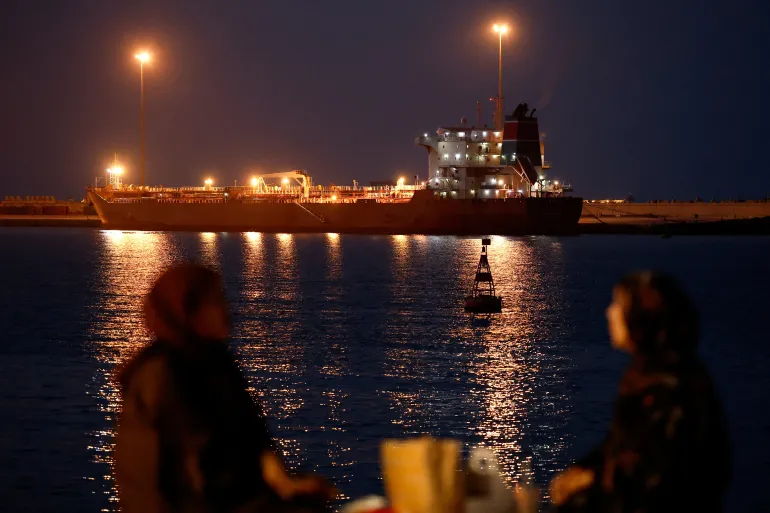
A tanker sits at anchor in Port Sultan Qaboos in Muscat, Oman, as oil shipments through the Strait of Hormuz have plummeted [File: Benoit Tessier/Reuters]
What has Trump said?
The US president has been facing domestic pressure over starting the war alongside Israel with no endgame or off-ramps in sight.
“On the strait of Hormuz, they had NO PLAN,” US Democratic Senator Chris Murphy wrote in a post on X. “I can’t go into more detail about how Iran gums up the Strait, but suffice it [to] say, right now, they don’t know how to get it safely back open.”
After threatening to bomb Iran more, Trump called on China, France, Japan, South Korea and the United Kingdom to send warships to secure the strait.
Trump claimed “100% of Iran’s military capability” had already been destroyed but added that Tehran could still “send a drone or two, drop a mine, or deliver a close-range missile somewhere along, or in, this waterway”.
“Hopefully China, France, Japan, South Korea, the UK, and others, that are affected by this artificial constraint will send ships to the area so that the Hormuz Strait will no longer be a threat by a nation that has been totally decapitated,” Trump wrote in a post on his Truth Social platform.
“In the meantime, the United States will be bombing the hell out of the shoreline, and continually shooting Iranian Boats and Ships out of the water. One way or the other, we will soon get the Hormuz Strait OPEN, SAFE, and FREE!”
Not long after, Trump returned to the keyboard, extending the invitation to all “the Countries of the World that receive Oil through the Hormuz Strait” to send warships, adding that the US would provide “a lot” of support to those who participated.
Israeli soldiers walk by a billboard commissioned by the evangelical Christian group Friends of Zion during the US-Israel war on Iran in Tel Aviv, Israel [File: Nir Elias/Reuters]
What has Iran said?
Alireza Tangsiri, commander of the Islamic Revolutionary Guard Corps Navy, said in a statement that claims by the US about destroying Iran’s navy or providing safe escort for oil tankers were false.
“The Strait of Hormuz has not been militarily blocked and is merely under control,” he said in a statement.
Iranian Foreign Minister Abbas Araghchi later doubled down on this, saying the strait remained open to international shipping except for vessels belonging to the US and its allies.
“The Strait of Hormuz is open. It is only closed to the tankers and ships belonging to our enemies, to those who are attacking us and their allies. Others are free to pass,” Araghchi said.
Khamenei – son of the late Supreme Leader Ali Khamenei, who was killed on the first day of the US-Israeli strikes – suggested in his first statement since taking power that the Strait of Hormuz would remain closed to provide leverage for Iran during the conflict.
F-18 combat aircraft are parked on the deck of the USS Abraham Lincoln aircraft carrier in the Gulf of Oman near the Strait of Hormuz during a 2019 deployment [File: Ahmed Jadallah/Reuters]
What are the challenges in the Strait of Hormuz?
The strait, which is just 21 nautical miles (39km) wide at its narrowest point, is the only maritime passage into the Arabian Gulf (known as the Persian Gulf in Iran). Shipping lanes in the waterway are even narrower and more vulnerable to attacks.
It separates Iran on one side from Oman and the United Arab Emirates on the other.
In brief, there is no way in or out by sea when the Strait of Hormuz is closed.
Alexandru Hudisteanu, a maritime security expert who served 13 years in the Romanian navy, told Al Jazeera that in the type of coalition that Trump is hinting at, “interoperability is the biggest hurdle.”
“That’s the ability of cruises to work together or with different units and different doctrine when basic communication would be an issue,” he said.
Then, there is the geography of the Strait of Hormuz: “a very unforgiving environment to sail with this type of wartime threats”, Hudisteanu said. “Especially difficult under missile threats and these asymmetric potential mines or unmanned systems that could damage or destroy ships.”
Providing escorts to ships would be a costly option, and it would pose risks to participating foreign warships from possible Iranian attacks, which would likely further drag more countries into the ongoing war.
From Iran’s point of view, “the fact that the shoreline is so close and the actual maritime passage is highly congested and confined is an advantage by default,” Hudisteanu added. Geographically, Iran keeps it as a gauntlet, with no way out for the ships unless Tehran allows it.
Another major challenge for any naval coalition trying to secure the passage would be the timeline of any operation. ”The security of the strait could be achieved. It’s just a matter of how much time you need and how many assets you need,” the analyst said. Rushing through it “could have negative implications for the security of the mission and the region”.
Smoke rises from the Thai bulk carrier Mayuree Naree near the Strait of Hormuz after an attack on March 11, 2026 [Handout/Royal Thai Navy via AFP]
How have countries responded?
No country has so far publicly agreed to Trump’s call to send warships to secure the Strait of Hormuz.
London said it is “intensively looking” at what it can do to help reopen the maritime passage. British Energy Secretary Ed Miliband said: “We are intensively looking with our allies at what can be done because it’s so important that we get the strait reopened.”
Chinese Ministry of Foreign Affairs officials said Beijing is calling for hostilities to stop and “all parties have the responsibility to ensure stable and unimpeded energy supply.”
Japan said the threshold is “extremely high” to send its warships on such a mission. “Legally speaking, we do not rule out the possibility, but given the current situation in which this conflict is ongoing, I believe this is something that must be considered with great caution,” said Takayuki Kobayashi, policy chief of Japan’s ruling Liberal Democratic Party.
France also confirmed that it will not send ships. The Ministry for Europe and Foreign Affairs said in a statement on Saturday: “Posture has not changed: defensive it is,” in reference to President Emanuel Macron’s assertion that France will not join the war against Iran.
South Korea, which imports 70 percent of its oil from the Gulf, said it was “closely monitoring” Trump’s statements and “comprehensively considering and exploring various measures … to ensure the safety of energy transport routes”.
(Al Jazeera)
Are countries negotiating with Iran?
Some countries have been negotiating with Iran to secure passage for their petroleum shipments.
Two Indian-flagged tankers carrying liquefied petroleum gas (LPG) have sailed through the Strait of Hormuz. New Delhi depends on this passage for 80 percent of its LPG imports.
The war on Iran has caused a critical shortage of cooking gas for India’s 333 million households. New Delhi has long had ties with Iran, but the government of Prime Minister Narendra Modi has not condemned the killing of Ali Khamenei. It has condemned Iran’s retaliatory attacks on Gulf countries, where millions of Indian citizens work and send $51bn in remittances home every year.
Iran’s ambassador to India, Mohammad Fathali, said Tehran had allowed some Indian vessels to pass through the Strait of Hormuz in a rare exception to the blockade but did not confirm the number of vessels.
A Turkish-owned vessel was similarly granted permission last week after Ankara negotiated passage directly with Tehran. Fourteen more Turkish vessels are awaiting clearance.
France and Italy also reportedly opened talks with Iranian officials to negotiate a deal to allow their vessels through the strait, but there has been no official confirmation yet.
“Iran is affecting maritime supply,” Hudisteanu said. “It’s affecting the maritime security of the region and the entire ecosystem and bringing the entire world to the table as the global price for oil and gas increases.”
March 13 (UPI) — Michigan Gov. Gretchen Whitmer on Friday thanked security personnel for risking their lives to thwart a potentially deadly attack on a temple this week.
Whitmer spoke at a news conference one day after a person drove a vehicle into Temple Israel in West Bloomfield, Mich., calling the attack “anti-Semitism at its absolute worst.”
Her comments followed the attack at the temple on Thursday, where more than 100 children were attending school at the time.
“I want to thank Temple Israel’s security personnel — they were selfless in their courage and they saved lives,” Whitmer said. “Let’s be very clear: Yes, this is a place of worship, but at the time that this attack occurred, it was a school. One hundred and four children aged 5 and younger.”
The attacker, according to police, drove through the doors of the temple and down a hallway “with purpose” when a fire started inside the vehicle.
A security guard was hit by the vehicle, but security guards also responded to the driver with gunfire and the driver died.
Temple Israel is one of the largest reform Jewish congregations in the country, Whitmer noted, attracting more than 1,000 people for Friday night Shabbat services.
“Parents bring their children to daycare and school, and it’s a place of peace, unity, light and life,” Whitmer said. “Yesterday’s attack was anti-Semitism. It was hate, plain and simple.”
“We will fight this ancient and rampant evil,” she said.
There has been an uptick in anti-Semitic incidents in recent years and, according to the American Jewish Committee, roughly 70% of all religiously motivated hate crimes in the United States are committed against Jewish people.
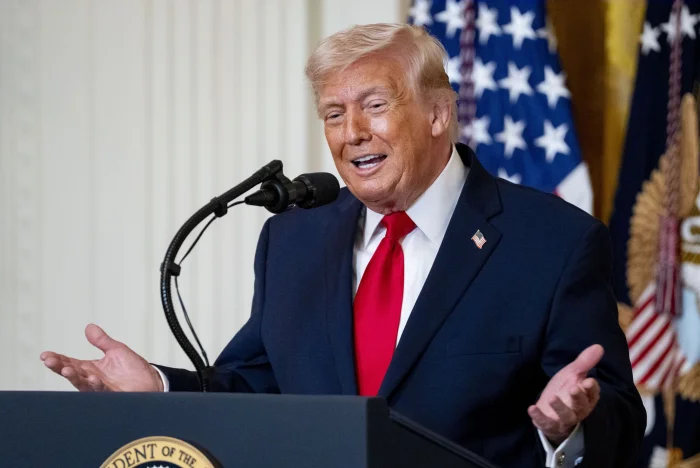
President Donald Trump speaks during an event celebrating Women’s History Month in the East Room of the White House on Thursday. Photo by Bonnie Cash/UPI | License Photo
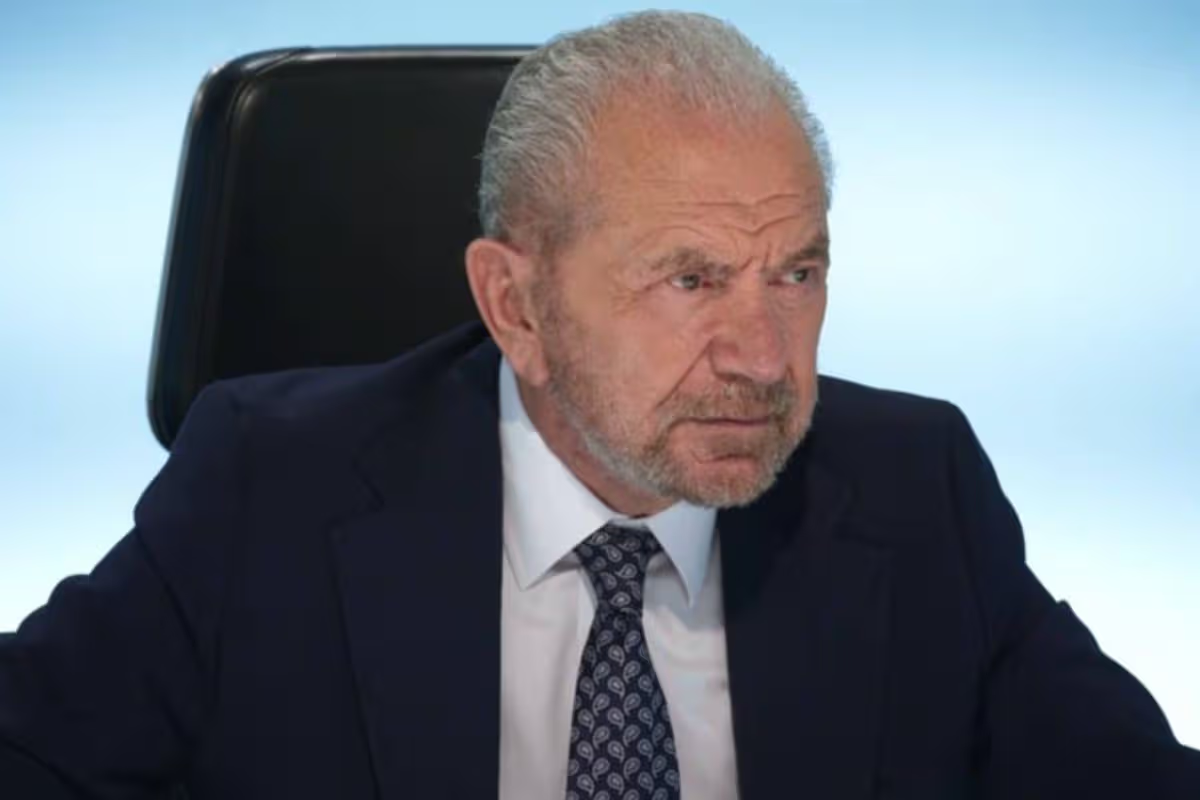
Tensions rose in The Apprentice as a candidate shared a decision he would “regret for the rest of my life”.
22:10, 12 Mar 2026Updated 22:35, 12 Mar 2026
The Apprentice’s Lord Sugar calls out ‘nasty move’ as candidate admits ‘regret’(Image: BBC)
BBC The Apprentice said goodbye to yet another candidate this week but not before Lord Sugar addressed someone’s “slimey” actions.
In week seven of the hit BBC business show, the remaining candidates took on virtual reality fitness where they were tasked with building demos and brands before chasing investment.
Unfortunately, when it came to the boardroom, it was game over for Team Eclipse, headed up by project manager Lawrence Rosenberg who scored an investment four times lower than Team Alpha.
The drama really began in the boardroom when it came to Lawrence choosing who he would be bringing back with him.
He first decided to pick Rajan Gill for his “lack of contributions” before sharing the controversial reason for his second choice of Levi Hague.
Lawrence said: “With respect Lord Sugar, I think you have made it quite clear about your mind on Levi so I will need to bring back Levi as well.”
Prior to his decision, Lord Sugar had questioned Levi what he had achieved in the past seven weeks of the process but despite his own reservations, The Apprentice legend wasn’t happy with this “naughty”, tactic.
“This is not how this process is supposed to work, you’re supposed to bring people back in who you think did not contribute to this task.”
Lord Sugar described it as a “nasty move” with Lawrence apologetically saying that “I’ll regret it for the rest of my life”.
The Apprentice legend said he was going to be “fair” to Levi though and keep him for another week, putting him forward as next week’s project manager with the candidate laughing “happy days”.
Despite this business between Lawrence and Levi, it was actually Rajan’s turn to be fired for his lack of contributions to the task.
This didn’t stop Lord Sugar from giving Lawrence one last telling off though as he warned: “You were this close to getting out of here.”
The drama wasn’t quite over yet though as when the saved pair went back to the house, Lawrence admitted to the rest of the group that he was “beyond embarassed”, having made a “weak decision”.
Levi wasn’t going to let him off the hook just yet though as he simply stated to the remaining candidates: “Don’t ever use me as a scapegoat in there, don’t ever do that to me.”
The Apprentice continues every Thursday at 9pm on BBC One.
For the latest showbiz, TV, movie and streaming news, go to the new **Everything Gossip** website.