california lawmaker

As AI ‘therapists’ dish out advice, California lawmakers try to set some limits

In a matter of a few clicks and keystrokes, anyone can find themselves deep in conversation with “Psychologist,” a chatbot character that describes itself as an expert in “empathy” and “active listening.”

It responds to messages of anxiety and sadness with reassurance. It asks questions and offers advice; it even responds with italicized nonverbal cues: “The psychologist’s expression softens with compassion.” In smaller font, a disclaimer reads: “This is A.I. and not a real person. Treat everything it says as fiction.”

As more people turn to chatbots for mental health help and advice — including by some estimates one in eight teens and young adults — legislators are in a race to keep up with the quickly developing technology. Among the latest efforts is a bill that would add restrictions around the use of chatbot companions and other artificial intelligence-powered tools that people use to support mental healthcare or in lieu of professional help.

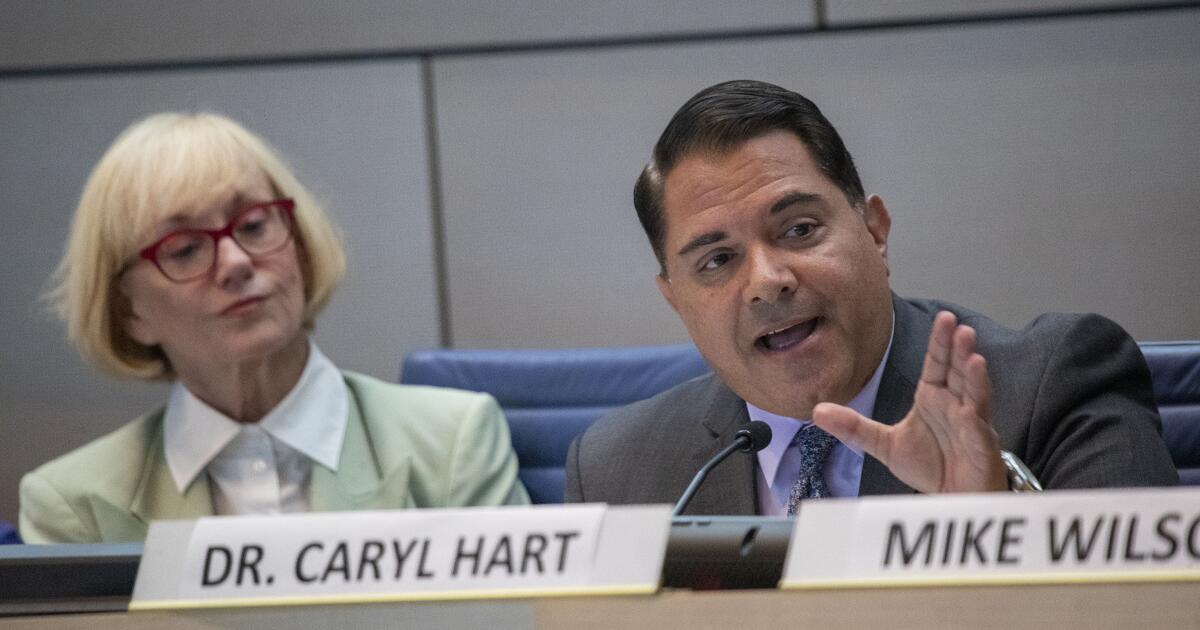
State Sen. Steve Padilla, a San Diego Democrat and the bill’s author, said the intent is to draw a line: AI can be used for administrative purposes and to support clinicians, but it cannot practice psychotherapy.

“We’re dealing with a new impactful technology that is unfolding and is deployed in our world at light speed, and so it is both extremely powerful and consequential,” Padilla said.

The debate has taken on new urgency amid wrongful death lawsuits — some playing out in California federal courts — that accuse AI chatbot makers of contributing to users’ suicides.

Senate Bill 903 would ban companies from advertising chatbots as therapy. It would prohibit AI from making therapeutic decisions without the review of a licensed professional and require health providers to disclose and get a patient’s permission before using AI tools to record therapy sessions or to triage mental healthcare.

Consumer protections vs. innovation

The bill is backed by professional associations that represent psychologists, therapists and counselors. Also behind the bill is the National Union of Healthcare Workers, which has been leading a push against unchecked use of artificial intelligence and digital tools in mental healthcare. Most recently, the union filed a complaint with state regulators against Kaiser Permanente for its alleged use of an automated algorithm in mental health triaging.

Padilla and supporters argue that the legislation is needed to protect consumers from AI in formal and informal spaces, but also to protect licensed professionals from being displaced by AI.

Le Ondra Clark Harvey, chief executive officer at the California Behavioral Health Assn., told lawmakers that without clear safeguards, chatbots can provide inaccurate information or mishandle crisis situations. “The difference between a licensed clinician and an automated response is not technical. It can be life altering,” Harvey said.

Opposition to the bill has largely focused on the restrictions of AI use in formal clinical spaces. TechNet, which represents tech-sector companies, argues the legislation could restrict beneficial uses of AI in healthcare and stifle innovation. Robert Boykin, TechNet’s executive director for California, said the bill could limit the use of tools that help expand access to mental healthcare.

“At a time when every county in California faces a shortage of behavioral healthcare workers, SB 903 still puts a clinician bottleneck in front of the intake and screening tools that help patients reach care faster,” Boykin said in an emailed statement.

The bill awaits its next vote in the Assembly’s fiscal committee.

Every day millions of people turn to AI chatbots through programs such as ChatGPT and Character.ai to help with research, work tasks and troubleshooting. But the top use of chatbots over the last two years has been companionship and “therapy,” research shows.

Experts say that’s in part because of a tremendous amount of loneliness, especially among young people. It is often hard or costly to get timely mental healthcare at the same time there is a spike in mental health diagnoses.

People turn to chatbots “because they have unmet needs,” said Dr. Jodi Halpern, professor of bioethics and medical humanities at UC Berkeley. But once people start using chatbots in this informal way, she said companies rely on a business model built around maximizing engagement “including by manipulative tactics,” such as praise and agreement.

General chatbots are largely free, available 24/7, and involve no hassle with insurance, making them appealing to many. But they function with no oversight from licensed professionals. In addition to general chatbots, there has also been a rapid uptick in AI-powered mental health apps — often requiring paid subscriptions and advertised as “pocket therapists” or “AI coaches.”

Groups like the American Psychological Assn. warn that chatbots are not a safe or effective replacement for true therapy. Trained clinicians look for cues like tone of voice, eye contact and body language and can detect more serious conditions; AI is not equipped to manage urgent symptoms, such as suicidal ideation, even though people increasingly share such thoughts with chatbots.

OpenAI, the maker of ChatGPT, revealed in a report last fall that about 1.2 million users a week share thoughts of suicide on the platform. OpenAI said that in such cases, it recommends people speak to a professional and directs them to resources like the 988 hotline. Families who have filed wrongful death lawsuits against OpenAI and other companies claim chatbots assisted their loved ones through their suicide plans.

The cases have helped raise the stakes for lawmakers around the country. Last year, Illinois became the first state to pass a law prohibiting the use of AI in therapy services. A handful of other states have since followed with similar restrictions.

AI use in health spaces

One gray area in the discussion is exactly which tools this bill applies to.

NUHW’s complaint against Kaiser targets its e-visit screening tool, which evaluates patients who think they may be experiencing anxiety or depression. According to the complaint, patients answer a multiple choice questionnaire and the tool “automatically and instantaneously generates care recommendations and referral pathways based on the responses provided.”

The union argues that because care recommendations are generated so quickly, it is unlikely that a licensed professional is reviewing patients’ answers — which it says puts patients at risk and violates state law.

It’s not clear whether SB 903 would apply to Kaiser’s e-visit tool.

“That tool is in a black box. Kaiser is not sharing with us or others about exactly how it works and exactly what it does,” said Benjamin Eichert, NUHW’s director of public policy.

In response to the complaint, Kaiser told CalMatters its e-visit tool “does not use AI to diagnose patients, make clinical decisions, or determine medical necessity.”

Eichert said many other behavioral health provider groups are already advertising using AI during triage — a practice he said would fall under SB 903’s requirements.

“That intake process, that triage and screening process, is where implementation [of AI] has happened fastest,” Eichert said. “That’s why those provisions were proposed because it’s an area where this technology is already being used without guardrails.”

For NUHW, the bill and the complaint against Kaiser represent two tracks toward the same goal: reasserting the place of practitioners in spaces increasingly taken over by algorithms. State regulators are investigating the union’s complaint.

Ibarra writes for CalMatters.
Source link

Ban of forever chemicals for California farms nixed by state lawmakers

California lawmakers rejected legislation that would have banned pesticides with so-called “forever” chemicals from use on California’s farms, a restriction strongly opposed by the state’s billion-dollar agriculture community.

Assembly Bill 1603 by Assemblymember Nick Schultz (D-Burbank) would have phased out the use of pesticides that contain perfluoroalkyl and polyfluoroalkyl substances, known as PFAS chemicals, a family of compounds that can be lasting and harmful to humans.

Representatives for agricultural groups argued at committee hearings last month that banning the chemicals was an overreach that would result in higher numbers of imports of food from other states and stifle innovation in developing new pesticides.

The latest version of the bill, which will be considered when the state legislature resumes its session next month, requires the state to list pesticides with PFAS in its public database.

“I’m disappointed,” Schultz said in an interview with the Times, adding that he intends to still push to phase out PFAS chemicals.

The bill marks the latest back-and-forth over PFAS, chemicals that are found in many different consumer, commercial and industrial products and are known as forever chemicals because some of their components don’t easily break down.

State regulators and environmental groups disagree on the definition of the chemicals, making it difficult to find a consensus on regulations or health risks.

Gov. Gavin Newsom last year vetoed a bill that would have prohibited the sale and distribution of popular consumer products, including cookware, dental floss and cleaning products, that contain PFAS chemicals.

The governor, in his veto message, cited affordability concerns. At the same time, the state has passed various laws intended to protect people from PFAS, including banning them in food packaging and firefighting foam.

Studies show that exposure to certain levels of PFAS may lead to decreased fertility and developmental delays in children and increase the risk of cancers, according to the Environmental Protection Agency, and the vast majority of PFAS chemicals have not been tested for human health effects.

The Environmental Working Group, or EWG, an advocacy group based in Washington, D.C., released a study in March that found that nearly 40% of California’s conventionally grown fruits and vegetables tested contained PFAS residues, including 90% of peaches and nectarines.

The EWG, one of the bill’s supporters, uses a broader criteria to define PFAS than the state and federal authorities.

A spokesperson for California’s Dept. of Pesticide Regulation, which oversees pesticide use, said the EWG report looked at detections of the PFAS, but the state “looks at how the detections compare to federal tolerance levels.”

At a June Senate committee hearing on Schultz’s bill, EWG’s chief science officer, David Andrews, said that PFAS pesticides “fall into a regulatory blind spot.” He also said regulators, including the state, have “been inadequate with respect to evaluating immune system harm or the cumulative impacts of these very small PFAS.”

A spokesperson for the Dept. of Pesticide Regulation declined to comment on Schultz’s bill.

Taylor Triffo, a representative for a coalition of California agricultural associations, said at a different Senate hearing in June that the bill’s original language to ban new PFAS chemicals “would deny California farmers access to [the] next generation of crop protection tools that are safer, more targeted, require lower use rates and help address emerging pests and diseases.”

Representatives for agriculture groups said at hearings last month that they don’t object to the state flagging PFAS chemicals in the state database.

Nearly half of the country’s vegetables and more than three-quarters of its fruits and nuts come from California, according to the state.

Sen. Anna Caballero (D-Merced), chair of the Senate Committee on Agriculture, called pesticide use a “balance” at the June hearing before voting for the amended version.

“Part of the challenge agriculture is facing right now is pest invasion from other countries where the critters have moved on plants and in soil and have come into the state,” she said. “We’ve got to do everything, I think, we can to maintain our agricultural production, because we produce products that are produced almost nowhere else in the country.”

Isabella Quinonez, assistant director of Public Affairs at the California Farm Bureau, said her group objected to the original bill because it would have restricted products based on their chemical class rather than on a pesticide’s scientific evaluation of risk.

“We’re confident in the Department of Pesticide Regulation’s rigorous, science-based regulatory process, which includes residue studies, groundwater monitoring, and ongoing reevaluations,” Quinonez said.

Schultz told The Times he hopes to work with the Dept. of Pesticide Regulation on oversight in the coming years. He rejected any premise that there is “absolutely nothing to worry about, nothing off [with PFAS], because that’s just inconsistent with the science.”

Times staff writer Susanne Rust contributed to this report.

Source link

In governor’s race, voters face stark choice on immigrant healthcare

For decades, Californians have generally said immigrants, who make up more than a quarter of the state’s population and a third of its labor force, are beneficial to the state and its economy. But budget instability and concerns about rising costs are spilling into a debate over the controversial and expensive policy of allowing low-income immigrants without legal status to receive state-funded health coverage.

Now, Democrat Xavier Becerra and Republican Steve Hilton present a stark choice to voters in the race to be the next governor at a moment when public support for the state’s generous safety net is starting to fray.

Both frame the choice as an economic one.

Becerra, former secretary of Health and Human Services under President Biden, has said it would be “foolish” to exclude the poorest immigrants from routine care and push them into expensive emergency rooms on the taxpayer’s dime. Hilton, a conservative commentator backed by President Trump, has promised to eliminate their coverage and has echoed national Republicans who have skewered California’s expansions to bolster their claims of fraud and abuse in the Medicaid program.

With voters nationwide worried about inflation and the rising cost of living, some Californians might feel less inclined to provide full healthcare coverage to those lacking legal status. What the state does next could have profound implications for its healthcare system and sprawling economy.

Over the past decade, California lawmakers used state dollars to expand Medi-Cal, offering all low-income residents comprehensive coverage regardless of immigration status. But enrollment surpassed initial projections, as did the cost. Medi-Cal coverage of immigrants without legal status costs the state roughly $10 billion a year, according to California’s nonpartisan Legislative Analyst’s Office, more than double the initial estimates.

California lawmakers and Democratic Gov. Gavin Newsom, who championed the program, have approved major rollbacks of benefits for those residents. They said the state can’t afford ballooning healthcare costs amid massive federal cuts from the GOP tax-and-spending law known as the One Big Beautiful Bill Act; the California Health and Human Services Agency projected up to 3.4 million Medi-Cal enrollees could lose coverage and the state could lose more than $30 billion a year in federal funding under the law, causing major disruptions in the safety net health program.Medi-Cal’s budget for fiscal year 2026-27 is $217 billion, and the program serves more than 14 million Californians.

Meanwhile, many legal U.S. residents and citizens have seen their health premium payments skyrocket this year after Congress let enhanced federal Affordable Care Act subsidies expire at the end of December.

As the state grappled with a deficit last year, a majority of likely voters in California said — for the first time in nearly a decade — they opposed providing health insurance to immigrants without legal status, according to a poll by the Public Policy Institute of California.

“The state faces major challenges, and healthcare is one of the major expenditures,” said Mark Baldassare, the institute’s survey director. “People have become more selective about how they want to see those limited healthcare dollars spent.”

Hilton, running on a platform of affordability and lowering taxes, has seized on the sentiment, casting health coverage for immigrants without legal status as deeply unfair and a direct threat to the state’s ability to help citizens.

“Stop taking money from California taxpayers who can barely afford their healthcare to give free healthcare to citizens of other countries who shouldn’t even be here,” Hilton said in a Facebook video the morning of the June 2 primary.

In campaign stump speeches, Hilton promised to use the savings to lower healthcare costs for other Californians without detailing how. Hilton did not respond to requests from KFF Health News for comment.

“Their messaging is very, very simple: It’s an us vs. them,” said Roger Salazar, a Democratic political consultant who represents a coalition of healthcare advocates who argue providing coverage to people who can’t afford it strengthens the workforce and, as a result, the economy. “It’s just a question of convincing the average voter that it’s much better economically.”

A son of immigrants, Becerra for decades pushed to extend safety net benefits in Congress and has made a similar pitch in his campaign for governor. He did not respond to requests for comment.

“Immigrants, whether documented or not, work hard. They pay taxes, and sometimes they get injured on the job or their children get sick,” Becerra said during a debate last month. “It would be foolish to tell a family that they don’t have access to the pediatrician or the family doc.”

Becerra, who could become California’s first elected Latino governor, objected last year when Newsom and legislative leaders decided to freeze Medi-Cal enrollment for adults without legal status, cut benefits, and impose monthly premiums.

“Stop treating coverage as a budget variable that expands in good years and contracts when revenue dips,” Becerra wrote last month in response to an Orange County Register candidate questionnaire. He has vowed to pursue new, steady revenue to fund basic services, such as by upping taxes on corporations and the wealthiest Californians.

In 2023, California was home to about 2.3 million people without legal status, representing roughly 8% of the state’s labor force, according to the Pew Research Center. And 1 in 5 California children live in a family that includes at least one member without legal status, according to the California Department of Education. Healthcare economists say giving people access to preventive healthcare saves taxpayers money in the long run by keeping the workforce healthy and relieving pressure on an overburdened system.

That, Baldassare said, wasn’t a hard argument to make during the COVID-19 pandemic, when immigrants were celebrated as essential workers and the link between individual well-being and public health was more obvious.

But Medi-Cal costs to cover roughly 1.4 million immigrants have ballooned, according to the latest estimates from the Department of Health Care Services. Because only some lawfully present immigrants are eligible for federal Medicaid benefits, states like California that cover other populations must do so exclusively with state funding.

California’s budget experts have warned that maintaining full Medi-Cal coverage for immigrants without seeking additional revenue would destabilize the state’s long-term fiscal outlook.

In a legislative hearing last year, Republican Assemblymember Carl DeMaio questioned whether California taxpayers would prioritize the expansions, saying he doubted “illegal immigrant healthcare in the general fund would be at the top of their list.”

After lawmakers approved the spending reductions, support for immigrant health coverage dropped, Baldassare said. Now lawmakers and Newsom are negotiating further cuts.

David Hayes-Bautista, who has spent his career studying the economic contributions of Latinos and immigrants, said Californians without legal status have higher labor force participation and tend to work in industries and occupations that don’t offer employer-based health insurance. As a result, many resort to Medi-Cal, saddling the state with the healthcare costs instead of employers.

“California, as a state, has the world’s fourth-largest GDP, which is true thanks to Latinos,” Hayes-Bautista, director of the Center for the Study of Latino Health and Culture at UCLA, said. Without contributions from Latinos, many without legal status, it drops to eighth place, about the size of Italy’s economy, he added.

Immigrant advocates hope to have a more vocal champion in Becerra, the favorite to become governor in a state where Democrats outnumber Republicans nearly 2 to 1.

“He will fight, he will push back, he will do all that he can,” said state Sen. María Elena Durazo, a former labor leader who has championed the immigrant healthcare expansions. “That’s the most we could expect.”

Mai-Duc writes for KFF Health News, a national newsroom that produces in-depth journalism about health issues and is one of the core operating programs at KFF — an independent source of health policy research, polling, and journalism.

Source link