Financial Jobs Slump in July as Payroll Gains Stall
Falling job-growth numbers drive more people to the gig economy to supplement their income.
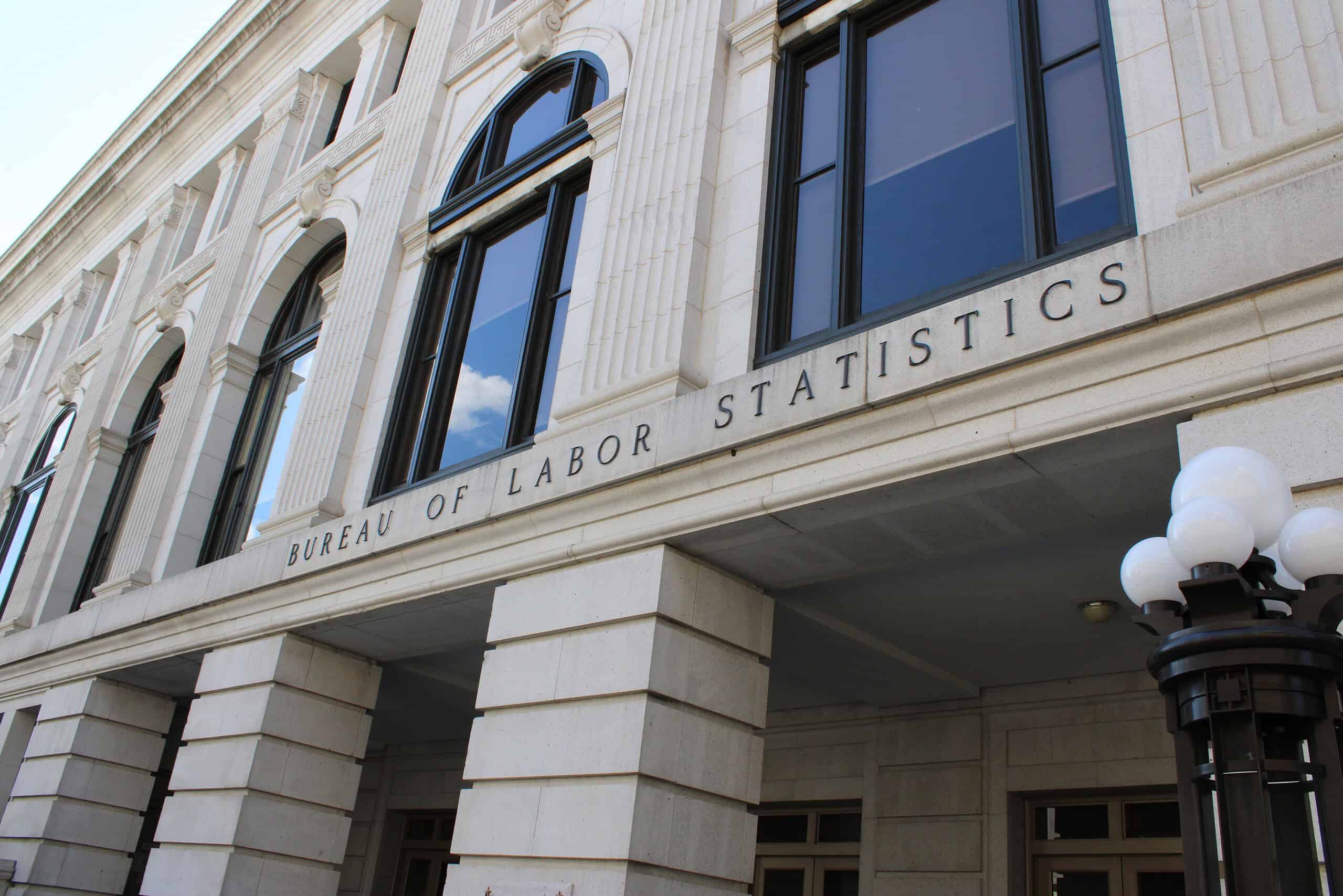
The preliminary and seasonally adjusted job-growth numbers for July issued by the U.S. Bureau of Labor Statistics on August 7, paint a picture of a continuing slowing economy, as the agency reported an overall loss of 23,000 non-farm jobs over the month.
The numbers come on the heels of the Bureau’s revised May and June numbers, which reduced the total number of jobs by 103,000, resulting in 63,000 and 20,000 added jobs, respectively.
“The three-month average payroll gain collapsed by more than a third,” wrote Frances Donal, chief economist at RBC, and Mike Reid, head of US economics at RBC, in an analysis note released before the BLS report. “Net revisions to the prior two months subtracted more jobs than were created in June.”
Financial activities lost 14,000 jobs, with credit intermediation and related activities losing 9,000, while insurance carriers and related activities lost 7,000. The sub-sector for securities, commodity contracts, funds, trusts, other financial vehicles, investments, and related activities added a modest 1,000 jobs over the same period.
Healthcare was a standout in July, adding 22,000 jobs.
Disconnect in Numbers
Once again, there is little correlation between the employment data issued by the Bureau and that published in the ADP National Employment Report for the month, which is slightly more optimistic.
Using its own methodology developed with the Stanford Digital Economy Lab, the authors of the ADP report estimated a gain of 44,000 in U.S. private employment in July, with financial activities gaining 10,000 jobs. Only education and health services beat that gain by adding an estimated 36,000 new jobs. Professional and business services experienced the third-largest gain, adding 9,000 jobs last month.
More Side Hustles
Findings of the Bank of America Institute’s Employment Report for July, based on anonymized client data, suggest that what job growth occurred in July came from lower-income households, which saw an estimated 2% year-on-year growth, up from 1.7% in June. Higher-income households saw approximately a third of the job growth of lower-income households, while middle-income households saw jobs contract by less than 1%.
The report’s authors noted that the share of fully employed clients active in the gig economy, which has continued to grow over the past three years, is not abating.
The authors conclude that some households are using gig work to “top up” their regular paychecks. In June, nearly half of the gig workers earned income from gig work for only one month in the past 12 months, while 74% of gig workers earned income for three months over the same timeframe.
The gig work that has seen the greatest growth in participation since 2024 is “social commerce,” as thrifting becomes increasingly important to households, the authors write. The number of households seeking to make a little extra via ridesharing, food delivery, content creation, and vacation rentals has returned to close to 2024 levels, with little change.
Rob Daly covers fintech and the economy. Contact him at rdaly@gfmag.com.