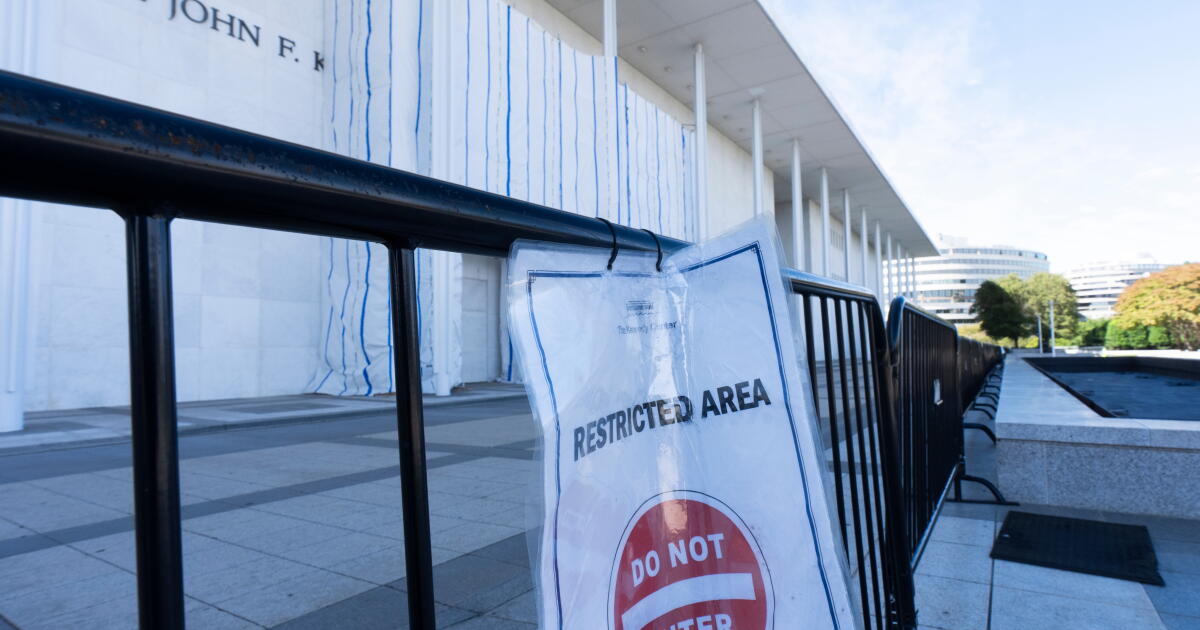
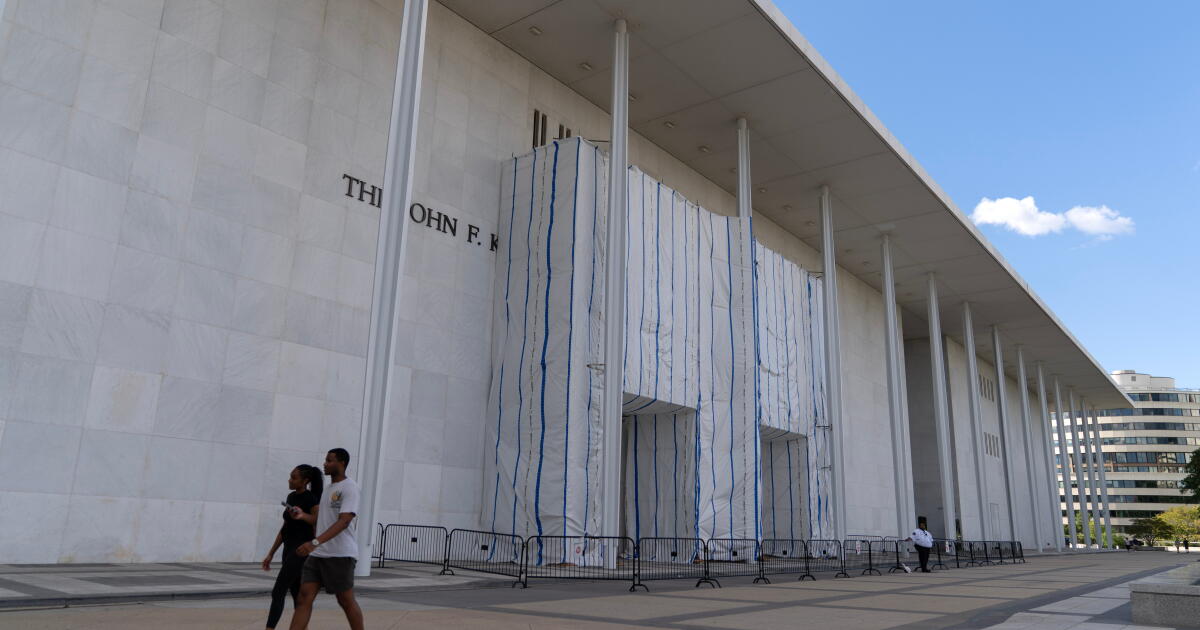
The 49th Kennedy Center Honors gala will go on despite the recent closure of the Kennedy Center, with the event moving to the Capital One Arena in Washington, D.C., on Dec. 7. The honorees and a broadcaster for the program will be disclosed at a later date.
The annual event will take place amid an ongoing legal battle as President Trump attempts to add his name to the building.
Hours after a federal judge blocked the president’s attempt to restore his name, the Kennedy Center’s board voted on Sept. 15 to shutter the venue for renovations. Trump, however, threatened on social media to block the $250-million renovation, which he initially proposed, if his name weren’t added to the facade.
In mid-September, a picture of the president aboard Air Force One reviewing plans that were titled “Kennedy Center Demo[lished]” prompted panic as architectural, preservation and civic organizations asked the court for a “neutral officer to protect the building and institution.”
A federal judge ordered Kennedy Center leaders to provide 30 days’ notice before any changes, including demolition.
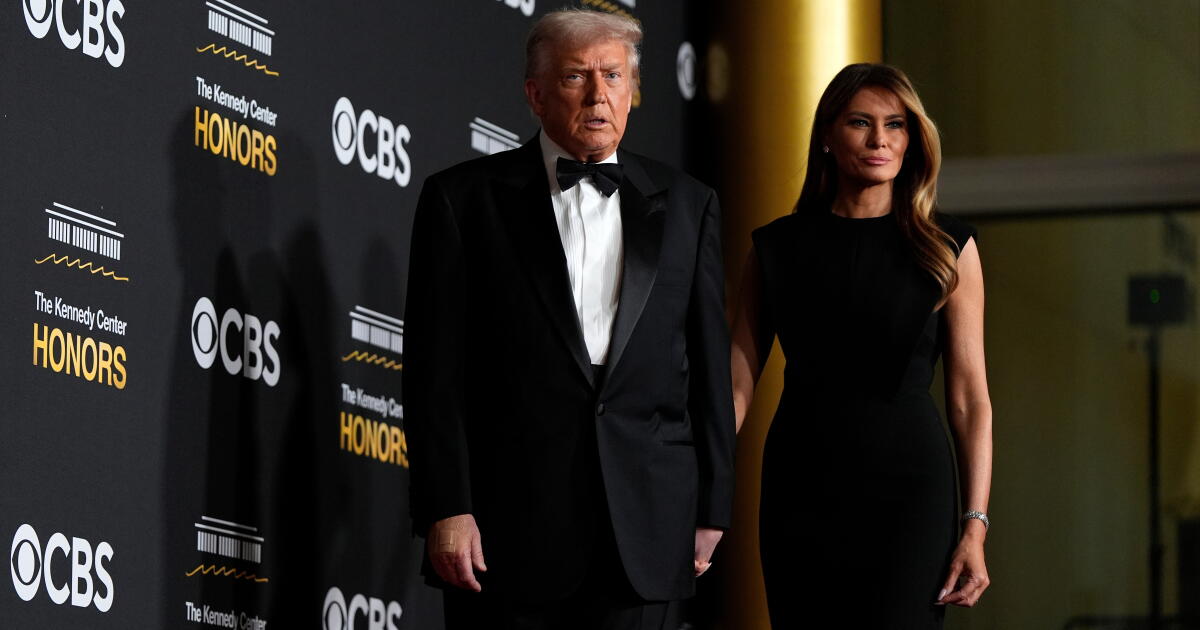
Last year’s Kennedy Center Honors gala, which recognizes artists who have contributed to American culture, was hosted by Trump and televised on CBS and Paramount. The ceremony, honoring Sylvester Stallone, Kiss, Gloria Gaynor, Michael Crawford and George Strait, earned the lowest ratings in its history. It was not announced whether Trump would return as master of ceremonies for this year’s event.
The Lucas Museum of Narrative Art’s central plaza, which spreads out beneath the building’s curved, hovering form, was always meant to be a generous civic space. Ma Yansong, the museum’s architect, has called it the “Gateway” between the museum and Los Angeles, opening to both Expo Park and the surrounding South L.A. neighborhood.
But that gateway, it turns out, is more like a gate.
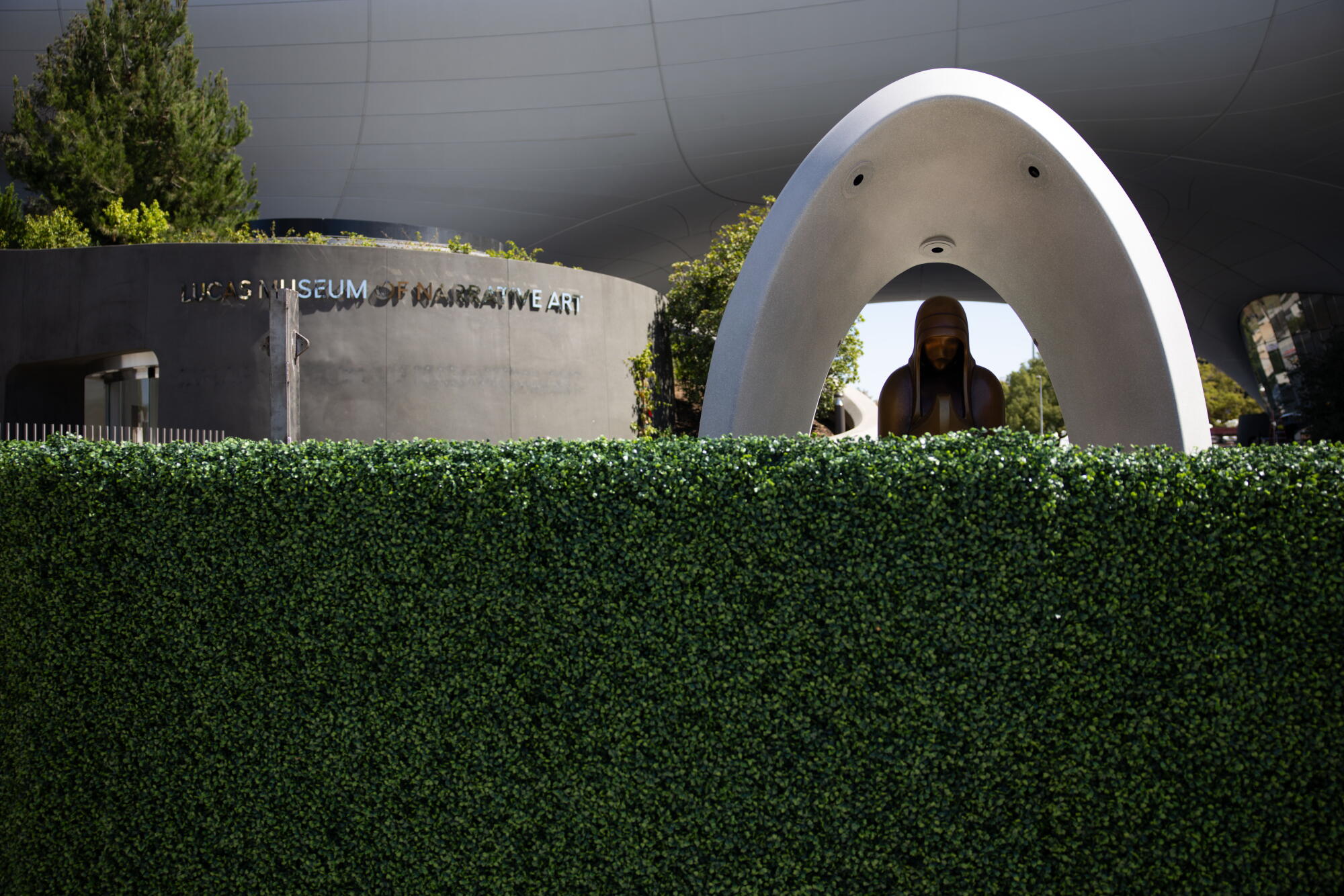
This weekend — the first that the museum was open to the public — fences covered in plastic greenery blocked entry to the plaza from both sides. Standing sentry, bizarrely, were tall, cartoonish statues — half storm troopers, half USC Trojans. Visitors were directed to enter through the museum’s two enclosed security booths off the plaza.
In the coming weeks, permanent plaza fences will be erected here — curvy stainless-steel structures that MAD Architects principal Dixon Junliang Lu compared to the lacy filigree of Art Nouveau architecture. Lu added that they would eventually be draped in real greenery, not the plastic version.
While certainly an improvement on the current barriers (which are a shockingly makeshift solution for a museum that cost over $1 billion), the plaza’s main entryways will remain gated off, confirmed both Lu and Lucas Museum spokesperson Seth Fowler.
Gates have been erected around the main courtyard of the Lucas Museum of Narrative Art.
(Kayla Bartkowski / Los Angeles Times)
“It’s about creating the best possible visitor experience when you’re there, with an eye on safety,” said Fowler, who cited a need to protect the plaza from car traffic on both sides and the ability to control visitor flow among the reasons for the enclosure.
Visitors without tickets, Fowler added, are still able to enter the plaza, as well as the museum’s cafe and gift shop, after passing through security, “pending capacity limits.” They can enter the museum’s adjacent park without security screening.
Museums of course have legitimate security concerns, especially in and around such a high-traffic location. A growing list of threats, from violence to vandalism, has changed the calculus for what’s acceptable in public life. But surely the building’s talented design team could have developed a security plan that better preserved the plaza’s open arms? Lu acknowledged that the fence design had “evolved as the project developed and the operational and security requirements became more defined.”
The plaza is one of the museum’s most powerful gestures, creating much-needed civic room for Expo Park, and the city. The gates blocking it, and the security checkpoints along its flanks, will dramatically limit the public’s desire to enter, and change the tenor and experience of a space that should feel porous and inclusive. What could have been a grand welcome has become a gated off, highly controlled space that now feels separate from the park and the neighborhood. Sure, anyone can come, but they are no longer invited.
Art Nouveau style fencing will eventually replace the temporary green fencing, but guests will still be directed through security in order to enter the museum’s main courtyard.
(Kayla Bartkowski / Los Angeles Times)
Just a few miles away at LACMA’s new David Geffen Galleries, visitors can enter the plazas beneath that building without first passing through security. In fact, I don’t know of a single civic plaza (and there are not enough!) in Los Angeles that requires passing through security checkpoints to enter. Think about this scenario in other cities. In New York, can you imagine having to go through metal detectors to sit at the Met steps? Or to enter Central Park?
Speaking of parks, it’s inconsistent and puzzling that the museum’s beautiful park, which edges right up to the building, can be entered without having to also pass through security. I, for one, am thankful. Access to this area is already being limited to some degree. Its long fences, with relatively small openings, are not exactly screaming “come in.” The green space, as it was this Saturday, will be closed to nonticket holders on USC game days. And if locals who live to the west of the museum want to reach Expo Park outside of the Lucas park’s hours — 8 a.m. to sunset — they need to make their way around the entire complex; which a few are already grumbling about.
It’s hard not to wonder whether these barriers represent something more than security: the extension into public space of the gated, closely guarded world inhabited by co-founders George Lucas, Mellody Hobson and those in their orbit. Is this truly what museum security requires, or has the logic of a private compound shaped an institution that was supposed to welcome the city? That is the uneasy promise of privately controlled public space: It looks open to everyone, but access ultimately depends on the owner’s discretion.
It is an especially peculiar contradiction for a museum whose site is being leased from the state at just $30 a year and was founded to celebrate the “people’s art” — comics, illustrations, movie imagery — and to bring that art to the broadest possible public. Renderings introducing the project never showed the walls and fences that now cover the plaza’s perimeter. (A model produced later, now in the museum, does.)
Temporary fencing around the Lucas Museum, alongside the Art Nouveau style fencing that will eventually replace it.
(Kayla Bartkowski / Los Angeles Times)
I last encountered this type of scenario when visiting the Eiffel Tower, whose base has been closed since Paris’s 2015 terrorist attacks. (The attacks did not occur at the tower itself.) Its sealed perimeter, only accessible via lines and screening, now makes one of the world’s wonders feel less like a wondrous part of the city than an attraction held behind glass.
I’m not suggesting we leave major public spaces vulnerable. But security can be built into buildings’ plazas in myriad ways without sealing them off: reinforced planters and seating can stop vehicles; grade changes, landscapes and water features can establish protective distance; clear sight lines, lighting, cameras and visible staff can improve oversight; and retractable barriers can be deployed during large events or credible threats. Screening can remain at the museum doors, leaving outdoor space free.
At the end of the day, civic space depends on a willingness to share some level of uncertainty. A public plaza brings all kinds of people together, including those we don’t know and can’t entirely predict. If every risk leads us to add another checkpoint, fence or barrier, we may gain a sense of control but lose the ability to create the kind of public togetherness that forms a bonded city.
If this plaza, and this museum, are truly meant to serve the public it should be clear that all are welcome once they arrive. Openness is more than an architectural effect: It depends on having the freedom to enter without having to justify our presence.
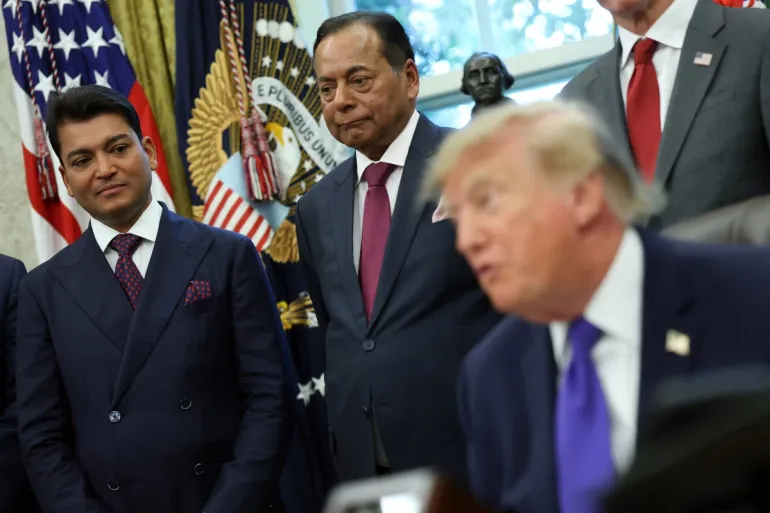
As US President Donald Trump announced a $15bn steel megaplant while seated at his Oval Office desk on Monday, he had a lineup of mostly US politicians standing behind him – from cabinet members to elected representatives from Iowa, where the mill is to be built. There was one exception: an Indian man with a receding hairline and a lilac pocket handkerchief, standing behind the US president’s right shoulder.
Ravi Ruia is a cofounder of the Essar Group, which owns Mesabi Metallics, the Minnesota-based firm that’s building the steel mill, which is expected to be the United States’s largest once it is complete. A decade earlier, in October 2016, his brother Shashi was in the photo frame with a different president during the signing of another major deal: Russian leader Vladimir Putin.
Steel and metallics aren’t Essar’s only association with minerals and natural resources. The conglomerate had been involved for years with oil, before it sold one of India’s largest private oil refineries to a Russian-led consortium in 2016 for nearly $13bn. Essar Oil was rebranded as Nayara Energy.
Today, Nayara Energy is half-owned by Russian gas major Rosneft, which is under heavy US and European sanctions over Moscow’s war on Ukraine. Nayara has also emerged as a supplier of petroleum products to Russia at a time when the country is facing a fuel crisis following multiple Ukrainian attacks on its oil and gas depots.
And as part of a 99-year deal, Nayara is continuing to use Essar’s branding in India, where the company runs thousands of petrol stations. Nayara is under European Union sanctions.
The White House is touting the Iowa steel project, unveiled just before the US midterm elections, as a major economic win for Americans, promising hundreds of jobs and billions of dollars in revenue. And there is no evidence that the steel project is in violation of any Russia-specific US sanctions.
But Trump’s announcement of a mega project with an Indian firm closely tied to Russian investments under Western sanctions underscores how the US has struggled to isolate Moscow economically despite an unprecedented economic pressure campaign.
And the timing of the steel mill announcement raises questions, because it comes days after Trump signed a law that empowers him to punish countries that buy Russian oil with up to 100 percent tariffs. India is Russia’s second-largest oil buyer. But the legacy Indian conglomerate that best epitomises the country’s links to Russian energy is now also behind the US’s biggest steel factory.
Rewant Ruia, left, chairman of Mesabi Metallics, and Ravi Ruia, centre, board member of Mesabi Metallics and director of Essar Capital, listen as US President Donald Trump delivers remarks in the Oval Office at the White House on September 28, 2026, in Washington, DC [Kevin Dietsch/Getty Images]
What’s the steel factory project about?
The new project would integrate its iron ore mining operations in Minnesota’s Mesabi Iron Range with the upcoming steel complex in Iowa.
The White House and the company’s announcements said that the Iowa steel plant is expected to create at least 1,750 permanent jobs – “while continuing to work with suppliers and businesses throughout Iowa and the Midwest” – and support up to 6,000 construction jobs.
Washington also noted that the mill will produce 7.5 million tonnes of steel per year in its first phase, expected to rise to 10 million tonnes. First steel production is expected in 2030.
The first phase of the project is expected to generate $95bn in total economic impact during construction and its first 10 years of operation, according to the White House.
Trump’s commerce secretary, Howard Lutnick, told the reporters that “these are your 232 tariffs, the steel tariffs at work.” He added: “Without those tariffs, this mine and steel plant doesn’t get built.”
Trump chipped in, too. “Soon after my inauguration, I imposed powerful 50 percent tariffs on all foreign steel, and now our steel industry is roaring back to life,” Trump said. “Everyone’s building their plant here because they don’t want to pay tariffs.”
But the steel project is also evidence of how countries and companies have skirted US economic pressure – and how it gives them leverage to continue to do so.
An Essar petrol station with pumps showing no fuel in Stanley, County Durham, UK, September 27, 2021 [Lee Smith/Reuters]
What are Essar’s ties to Russia?
Essar Oil, the group’s energy arm, began refining crude in 2008 at its refinery in Vadinar on the coast of the western Indian state of Gujarat.
But by 2016, the company was in deep debt, listed as a defaulter by the Reserve Bank of India, the country’s central bank, and desperately looking for a buyer who would take over its oil operations. The timing was opportune. President Putin in Russia was at the time trying to get Rosneft, his country’s energy giant, to offload some stakes in exchange for foreign capital.
Indian Prime Minister Narendra Modi played matchmaker, helping stitch together a series of deals between 2014 and 2016 that helped Rosneft and Essar. First, Indian public sector oil majors bought stakes in Rosneft, giving it the cash it needed. Rosneft, in turn, joined hands with other investors to buy the Vadinar refinery, freeing Essar from its debts.
Essar Oil became Nayara Energy – a company in which Rosneft owns a 49 percent stake, and United Capital Partners, a Russian asset management company, owns another 49 percent. The buyers paid Essar $12.9bn for the deal. As part of the agreement, Nayara got to use Essar’s branding – including on thousands of petrol stations across India – for 99 years.
Logo of Nayara is seen at its fuel station on the outskirts of Ahmedabad, India, November 16, 2022 [Amit Dave/Reuters]
Is Nayara under Western sanctions?
Yes. The European Union imposed sanctions on Nayara in July last year as part of the broader 18th package of sanctions against Russian oil.
The sanctions banned the import of petroleum products processed using Russian crude oil and restricted the refinery’s access to EU shipping insurance, as well as financial and other services.
Nayara’s Vadinar refinery in western India has been processing only Russian oil since other suppliers backed out following the sanctions. Since then, Nayara has relied on international traders to import crude and export refined fuels.
In July this year, Nayara Energy sold petroleum to Russia as Ukrainian attacks targeted oil refineries across the country, triggering a fuel crisis.
In recent months, Ukrainian forces have targeted Russian oil facilities, setting them ablaze and causing long lines for fuel across the country, including in the capital, Moscow. The fuel crisis, unprecedented for Russia, a country that is one of the world’s biggest energy producers, has led to rationing in many regions.
These Russian links have brought Nayara Energy under wider scrutiny, prompting companies, including SAP, to suspend services to the refiner, citing sanctions and obligations under EU law.
Nayara challenged the move in the Delhi High Court, which ordered SAP India to restore its services earlier this month.
Are Essar or the steel plant violating any sanctions?
While Nayara is under EU sanctions, Essar does not face any US or EU sanctions.
In October 2016, after Essar struck its deal with Rosneft and United Capital Partners to sell the Vadinar refinery, the US – at the time under the Barack Obama administration – said that the agreement was not in violation of any sanctions.
“I don’t think we see any violation of any US-EU sanctions stemming from this deal,” State Department spokesperson Mark Toner said at the time. Essar also said that the deal was compliant with US sanctions.
There is no evidence of any sanctions breach in Essar’s investment in Mesabi, or in the planned investment to set up the steel factory in Iowa.
But Essar’s relations with Russia have nevertheless attracted scrutiny, including in the United Kingdom, where the Ruia brothers have long had major investments.
At the time of the sale of the Vadinar refinery to Russian buyers, the Russian bank VTB also gave Essar a $3.9bn loan for debt reconstruction.
The bank was hit by major US and EU sanctions in February 2022, right after Russia’s full-fledged invasion of Ukraine. Essar, reporting published in April 2026 by The Guardian and investigative journalism platform SourceMaterial, showed, moved the VTB loan to Mauritius, a tax haven, allegedly to avoid the sanctions. Essar owns the Stanlow oil refinery in the UK.
US President Donald Trump waves as he walks to board Marine One as he departs from the South Lawn of the White House in Washington, DC, on September 26, 2026 [AFP]
Why is the timing of the steel plant announcement significant?
Trump’s Republican Party is heading for crucial midterm congressional elections in November, while his approval rating has been plumbing all-time lows in the face of voter concerns about inflation, the cost of living, and the war on Iran.
In his second term, Trump has made tariffs and a revival of US manufacturing a cornerstone of his economic vision, claiming that higher barriers to imports will drive investment back to the US.
Moreover, Washington introduced legislation that would allow the president to impose tariffs of up to 100 percent on imports from countries that continue economic engagement with Russia or Iran, aiming to put pressure on countries that continue buying Russian energy.
New Delhi is particularly exposed since it became one of the largest buyers of discounted Russian crude after the invasion of Ukraine in 2022. Trump imposed an additional 25 percent tariff on Indian imports in 2025 over the issue, before removing it in February 2026 after India committed to stop buying Russian crude.
Russia has remained India’s largest source of crude, although purchases have declined as the threat of US penalties has grown. The news agency Reuters reported that India imported approximately 2.1 million barrels per day of Russian crude in August.
There is also a recent parallel to underscore the incentives for investment in Trump’s US. In May this year, Washington moved to dismiss the criminal fraud and bribery charges against Indian billionaire Gautam Adani, while his lawyers had told the Justice Department that Adani was prepared to invest $10bn in the United States. A federal judge subsequently dismissed the criminal case in August.
Kennedy Center officials were long aware of serious structural issues that they cited as new problems after the abrupt decision to close the performing arts venue this month, a group of former employees allege in a letter to Congress.
The center’s executive director and chief operating officer, Matt Floca, did not treat the roofing issues as priorities and in April halted a funded plan to address them, according to the letter Thursday signed by David Seide, a lawyer representing the anonymous whistleblowers.
Floca denied their allegations, saying recent investigations of the leaks exposed new hazards at the building.
In a September court declaration, Floca noted there were “acute risks to public safety” when the aging building temporarily closed its doors after an inspection of a deteriorating roof terrace canopy and a partial ceiling collapse. The former employees, however, claim those “acute” issues were known previously by Floca, who joined the Kennedy Center as vice president of facilities in 2024.
“More than one year ago, Mr. Floca had requested and received the needed funds to remediate the New Problems he references,” Seide wrote, citing President Trump’s tax cut and spending bill that he signed in the summer of 2025. “Yet six months ago – with the funds in hand – he stopped the remediation process from moving forward.” In the legislation, Congress earmarked $257 million for the Kennedy Center.
The letter, first reported by The New York Times, is the latest in a series of tensions over an iconic Potomac River waterfront building that has become a focus of the Republican president in his remaking of the nation’s capital in his second term. Trump has installed his own leadership to the center’s governing board and had his name placed on the building before a judge ruled the new lettering was illegally added and ordered it removed.
The Trump-aligned board voted earlier this month to close the center indefinitely for repairs hours after U.S. District Judge Christopher Cooper blocked its plans to return Trump’s name to the building.
Cooper has told the center that it must give 30 days’ notice before making any major physical changes to the building, including demolishing it, as Trump has threatened. The Kennedy Center leadership also must file a status report no later than Friday on the temporary closure and emergency repairs.
Asked for a response to the whistleblowers’ claims, a Kennedy Center spokesperson sent a written statement from Floca, who said the safety of patrons, artists and staff is his priority.
“The Kennedy Center has known for years that the roof overhang leaked,” he wrote. “What we did not know until this summer was how far the damage had spread inside it.”
Floca added that rather than halting design plans in April as the whistleblowers alleged, he had reassigned the work to a more comprehensive plan because the contractor’s quote for the initial plans were nearly three times the expected cost.
“That was a change in the approach to procuring and delivering the work, not a determination that the work was unnecessary,” Floca wrote.
Rhode Island Sen. Sheldon Whitehouse, the top Democrat on the Senate Committee on Environment and Public Works, wrote Floca on Thursday after receiving the whistleblower letter. Whitehouse said the documents showed Kennedy Center leadership had “hoarded” congressionally appropriated funding for repairs “while blaming previous leadership for the state of repairs.”
“My initial investigation into misconduct at the Center focused on cronyism and corruption, with documents demonstrating considerable excessive and self-serving spending under President Trump’s chairmanship,” Whitehouse said. “The documents that I attach today seem to reveal deeper financial mismanagement.”
A spokesperson for the committee’s Republican majority did not immediately reply to a request for comment Saturday.
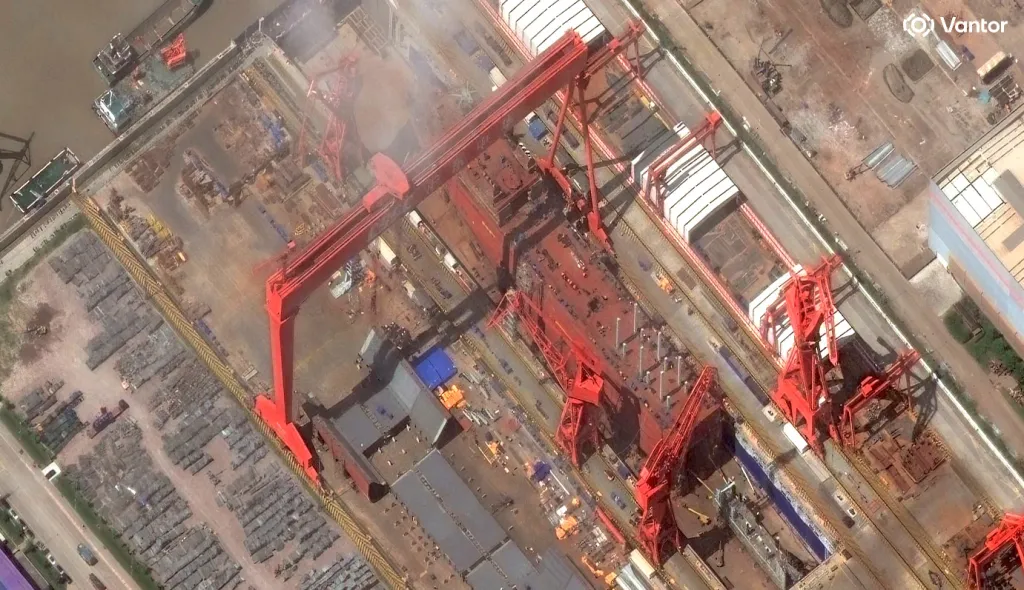
For the past six months or so, a curious-looking vessel with a very boxy superstructure has been taking shape at a shipyard in the Chinese city of Shanghai. A new satellite image lends credence to an earlier assessment that this is a mothership to support China’s growing fleets of ever-larger submersible drones, though it could also have other roles.
TWZ obtained the image of the ship in question, which was taken on September 10, from Vantor. Since then, it has also received an overall coat of gray paint, pointing to future service with the People’s Liberation Army Navy (PLAN). It is some 669 feet (204 meters) long and around 98 feet (30 meters) at its widest. In terms of basic length and width, the vessel being built now is very roughly comparable to China’s Type 071 amphibious warfare ship. However, it appears to be much taller overall than the Type 071.
The new ship has been under construction at the Hudong-Zhonghua Shipyard on Changxing Island in Shanghai since at least April. This yard produces a variety of naval vessels, including surface combatants and amphibious assault ships, as well as commercial designs.
The September 10 image, which shows the ship from the stern, is interesting for a number of reasons. It notably confirms that the design not only has a well deck, but that it is sized around what looks to be a large cradle-like platform visible in the shot. The very roughly 164-feet (50-meter) long rectangular platform has an arch-shaped structure at one end and two teardrop-shaped ones at the other, as well as six pillars, three on each side, in between. The teardrop-shaped structures, in particular, point to the platform being at least a semi-submersible, as they would help with stability and otherwise guide the flow of water while being pulled along.
The satellite image also clearly shows six large struts extending from the top of the stern end of the superstructure, each one which is paired with a shorter strut, for a total of 12. Earlier this month, independent naval analyst H.I. Sutton, who tracks undersea warfare developments in particular, posited that these struts could be used to lower a platform or some other similar structure below the hull of the ship. He also assessed that they could be used as part of a larger system capable of moving payloads between decks internally. This would help account for the configuration of the core superstructure, especially how high it is all the way from the front to the back. Overall, signs point to the inside of the superstructure being largely hangars and other open work spaces, allowing for multiple large UUVs to be carried and supported. Individual UUVs would be launched and recovered, one at a time, via the cradle.
In making his assessment, Sutton drew specific attention to a previously shown rendering of a proposed Chinese scientific research vessel with a roughly similar strut-based system at the stern for deploying submersibles and other large payloads. However, on that design, the system was entirely exposed rather than contained with an extended superstructure.
The rendering of the proposed scientific research vessel with a system for deploying payloads at the stern that features four struts. Chinese internet via H.I. Sutton
The platform seen immediately behind the ship being built at the Hudong-Zhonghua Shipyard aligns with Sutton’s assessment about the purpose of the struts. At the same time, launches and recoveries could also be conducted in a more traditional manner via the well deck. The design of the cradle-like platform would seem to suggest the latter option is at least part of the plan.
The image from September 10, as well as other recent views of the ship, highlight other features that are now taking shape. This includes a large opening on the starboard side, which could be for launching and/or recovering lifeboats or other watercraft, or moving payloads to and from the pier while docked, as well as a multi-pronged mast on top of the bridge. An additional part of the ship’s superstructure extends behind the bridge area, and there is what looks to be a hangar inside. There is no attached helipad present now, but one could well be added later on somewhere on top of the superstructure. Many naval auxiliaries, as well as commercial ships designed for offshore support and other specialized tasks, have open helipads on raised frames attached to different parts of the superstructures.
Though there is growing clarity about the ship’s design, many questions do remain about the full breadth of its intended purpose. In Sutton’s view, the PLAN has a need, just in general, for a dedicated mothership to support its growing uncrewed underwater vehicle (UUV) fleets. The PLAN is pursuing various tiers of UUVs to perform a host of different missions, including intelligence, surveillance, and reconnaissance (ISR), as well as mine-laying, special operations support, and even launching direct attacks on enemy vessels. Larger and larger UUV designs have been steadily emerging in China, which could require more specialized launch and recovery options to be feasibly employed operationally, especially from other vessels at sea. Deployment and retrieval at sea could, in turn, support very long duration missions far from China’s own shores.
“With smaller UUVs, even up to 20 meters like the AJX-002 and HSU-100 paraded in Beijing last year, they are road mobile. Truck mounted cranes should be sufficient for getting them in and out of the water making operations much simpler. With these latest, much larger XXLUUVs [extra-extra large uncrewed underwater vehicles] however, China will start to need dedicated port facilities,” Sutton wrote previously on his website. “Until now China has been using floating docks to house the two XXLUUV prototypes being tested on Hainan. One of these docks was purpose built while the other may have been taken up from general use.”
A Chinese AJX-002 UUV, or a mockup thereof, seen ahead of a major military parade in Beijing in 2025. Chinese internet via X
China’s naval unmanned systems.
Consisting of (in order), AI enabled unmanned submersible (HSU-100), used for detection and attack.
Unmanned patrol boat.
Unmanned mine-laying/attack submersible (AJX-002), this was previously mistaken for a nuclear powered torpedo. Because the… pic.twitter.com/Mlj55XLNBH
“This arrangement also has a significant drawback: each floating dock can only carry a single XXLUUV,” Sutton added. “Or if more than one, then they both need to be placed in the water at the same time. Because the whole dock floods, there cannot be one undergoing maintenance while another is being launched or recovered.”
A mothership vessel able to discreetly deploy and recover large uncrewed and crewed submersibles and other large payloads underwater could be tasked with more specialized missions, including cutting cables, retrieving objects from the seabed, and other kinds of undersea espionage. There is overlap here with more benign roles, such as submarine rescue, salvage, and even deep-sea scientific research. There is also the matter of servicing an expanding array of Chinese underwater infrastructure, including sensor and communications networks. As something of a corollary, Russia’s spy ship Yantar is officially described as an oceanic research vessel. In China, the line between military and non-military assets and capabilities, including ships, is often very blurry, to begin with, as TWZ regularly highlights. This dichotomy was observed right at the Hudong-Zhonghua Shipyard around the end of last year after pictures of a commercial cargo ship being used to showcase a new family of containerized weapons, sensors, and other systems went viral online.
It is also worth pointing out that the boxy and largely enclosed design of the ship now being built at Hudong-Zhonghua Shipyard will inherently make it difficult to observe any activities onboard. This will have the additional knock-on effect of helping keep any payloads, as well as the crew, shielded from the elements. This could be valuable for operations in harsher locales, including waters in and around the Arctic, an ever-more strategic part of the world where China is working to be more engaged.
We also do not know if the apparent mothership vessel is intended to be a one-off or part of a larger class. It could be a stepping stone to broader plans or be part of an already extensive fleet of bespoke naval auxiliaries, as well as unique ostensibly commercial vessels, in service in China today. The PLAN’s aforementioned UUV ambitions will bring along significant test and evaluation requirements, as well as the need to support actual future operations.
If nothing else, evidence is only growing that the new ship under construction at the Hudong-Zhonghua Shipyard is intended to serve, at least in part, as a mothership for large submersible drones.
Actor D’Arcy Carden stopped by early, beating the cadre of guests crowding the main plaza beneath the now-famous oculus of the 300,000-square-foot Ma Yansong-designed building. A Stormtrooper drove by on a flatbed truck, shortly before R2-D2 greeted visitors in the courtyard, wearing an official staff badge. (The line for a selfie with the droll droid stretched as far as the eye could see.) Museum leaders have long said that “Star Wars” artifacts account for about 7% of the 100,000 square feet of gallery space, but one worker quipped 90% of opening-day attendees likely had a vested interest in the franchise.
This proved true, for the most part: Many visitors clearly knew and loved “Star Wars,” and Princess Leia buns and Yoda ears abounded. (Two Padmé Amidalas ran into each other, and according to a restaurant worker, one brave soul showed up in “Star Trek” gear.)
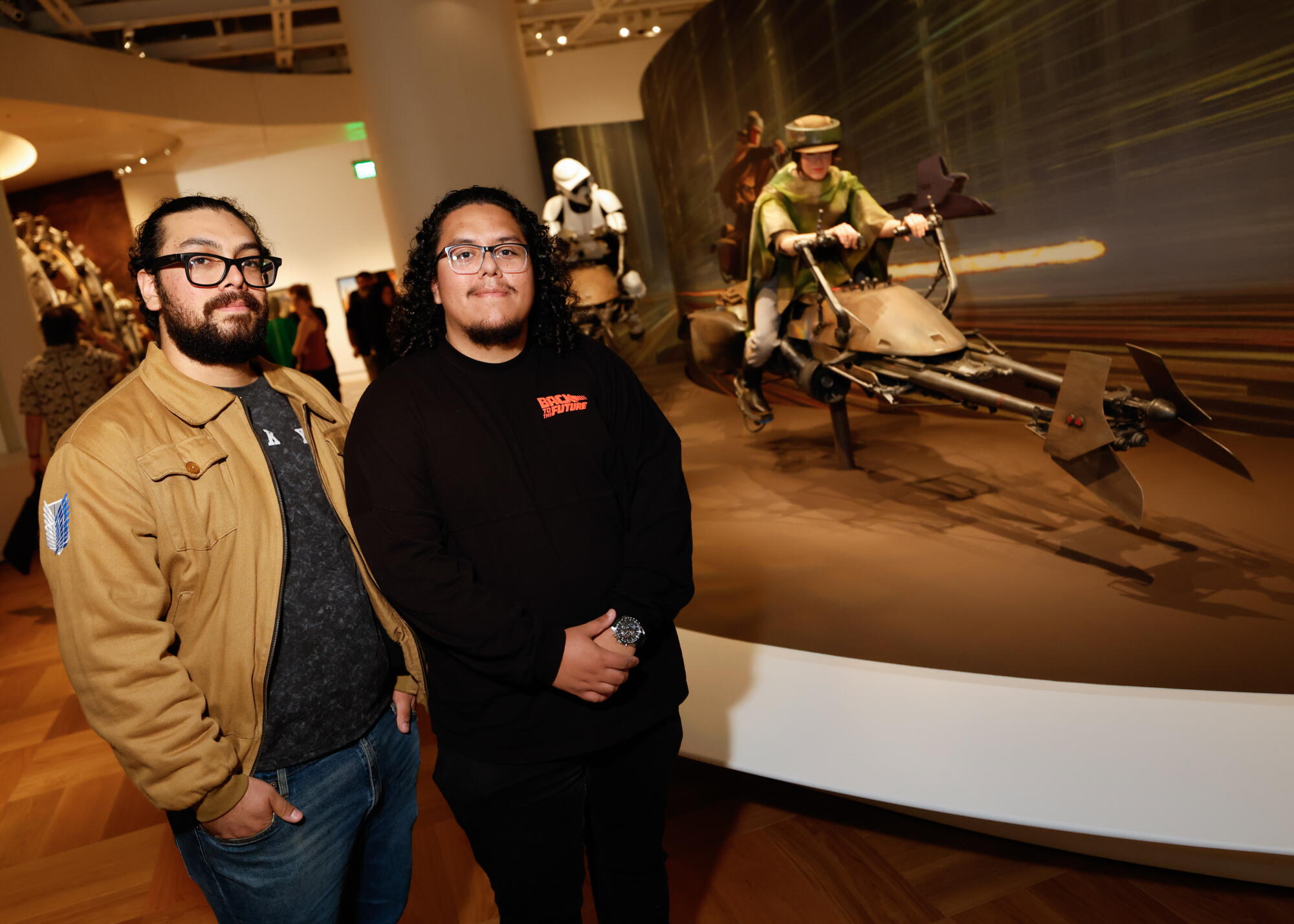
David Perez, 27, (right) donned his “Back to the Future” gear, hoping to see art from the movie. But he and his brother Carlos Perez, 28, (left) were quite pleased with the “Star Wars” artifacts in the Cinema section.
(Carlin Stiehl / For The Times)
Still, the museum, as its famous co-founder George Lucas has repeatedly said, is about more than just one story, however beloved. That sentiment cropped up repeatedly in interviews, too: Early guests seemed to believe the museum’s brochure, which notes that the galleries are about the “narrative art” of illustrating stories.
Co-founders Lucas and businesswoman Mellody Hobson (also Lucas’ wife) gave remarks early Tuesday to the first 100 visitors, consisting of students from USC, Los Angeles Technology Center, Otis College of Art and Design and Los Angeles City College, who were all handed free tickets.
A yellow Naboo N-1 Starfighter hangs above the education lobby, across from the main plaza, guarding the research library.
(Carlin Stiehl / For The Times)
“I’ve spent more than 50 years collecting the work of artists who don’t always get their due — illustrators, cartoonists, muralists, painters — because I believe their images are as vital as any other art form,” Lucas said. “They deserve to be in a museum.”
“This is a museum of the ‘people’s art’ — the images are illustrations of the beliefs we live with every day,” said Hobson, “and for that reason, this art belongs to everyone.”
Later that day, The Times asked visitors to share their impressions of a museum that, until now, has lived largely in the imaginations of fans and in abundant social media posts online. The museum has drawn loads of applause but also plenty of criticism, mostly for its lack of context via wall text, and for displaying art that not everyone agrees should be elevated.
Do the people love the “people’s art”?
Responses have been edited for length and clarity.
Alden Chang and his wife flew 6,800 miles from Taiwan to thank George Lucas for creating the “Star Wars” films and franchise. Chang told The Times that he also wrote an academic paper examining “Star Wars” fan culture in Taiwan.
(Carlin Stiehl / For The Times)
Alden Chang, 32, green product engineer from Taiwan
You flew all the way from Taiwan, just for this?
Chang: Yeah, halfway across the world to meet George Lucas and Miss [Mellody] Hobson.
Did you get to meet them?
Chang: Yeah, I just shook hands with them this morning. It’s like a dream come true.
How long ago did you and your wife get here,and how long are you staying?
Chang: For eight days. We came here on Sept. 18.
Is this the highlight of the trip?
Chang: Sure. [Laughs.] It’s my main mission and my main goal.
(Later, in an email, Chang told The Times that he also wrote an academic paper examining “Star Wars” fan culture in Taiwan.)
Friends Robert Meier, left, and Marc Downing used to work as ushers at the Music Center together. Growing up, Marc rode his bike where the Lucas Museum now stands.
(Carlin Stiehl / For The Times)
Marc Downing, 71, retired, from Exposition Park and Robert Meier, 70, educator, from Highland Park
Downing: I go to all the museums. This was the newest museum, so I had to come and see this.
How does this compare to the other L.A. museums?
Downing: This is ultra modern, ultra space-future. I’m glad the museum is here; highly recommend it. And I’m proud that it’s in my city, and I’m glad that it’s in the neighborhood that I grew up with.
What made you want to be a member of the museum, Robert?
Meier: It’s giving to the neighborhood. I’ve admired George Lucas — I used to have a relative in Marin County, and growing up, we’d go to lunch, and I’d see George Lucas and his family. We’d be at the same restaurant together.
Downing: Well, speaking of this neighborhood: This used to be a parking lot. I remember it very well. And I used to come here and ride my bike in this neighborhood as a kid.
C.S. Lee sits on a bench at the south viewpoint of the museum, gazing out onto the sculpture garden below. “This is why you live in Southern California. This is why you live in L.A.: for days like these.”
(Carlin Stiehl / For The Times)
C.S. Lee, 54, actor, from Koreatown
Lee: “Star Wars” was the very first movie I ever saw in my life as a 4-year-old when I immigrated here from Korea. We landed in Hawaii, in Waikiki Beach. Our family friends took us to a drive-in movie cinema place, and they said, “You want to come see a movie?” And it was “Star Wars” and “King Kong,” double billing. And my mom said when I saw the screen, my eyes popped out of my head because I’d never seen a movie before.
How do you think “Star Wars” impacted how you saw narrative and story?
Lee: I think I carried that all through my life: the story of “Star Wars.” I was like, “Oh, the good guys won!” And it was such an uplifting thing for me to hold on [to] all these years.
What did you think about the rest of the museum?
Lee: It’s so beautifully done: all the curves, all the light. You got the wind coming through the trees that they planted. I mean, honestly, I was just looking out, thinking to myself, “Wow, this is why you live in Southern California. This is why you live in L.A.: for days like these.”
The view of the sculpture garden and grounds beyond that C.S. Lee was contemplating from the south viewpoint.
(Carlin Stiehl / For The Times)
What about the building itself?
Lee: We rarely get to see architecture like this. But I think it’s good for people to see the artistry and the imagination of what people can build.
Janet Jacobs, 62, architect and Hanjin Jacobs, 25, audio equipment manufacturer technician, mother and son on a family trip from Portland (pictured at the top of the story)
I see you’re wearing a “Star Wars” T-shirt.
Janet: Yes, I am — actually from 1977.
Wow, really?
Janet: Yeah, I’ve had it for that long [laughs].
What was your overall takeaway from the museum?
Janet: I know George Lucas wanted to create this museum in a different way, like he didn’t have a sequence of events or a roadmap, he just wanted people to experience it the way they wanted to, so that’s all great. We do wish some of the things were explained a little more. Like, I know who Ralph McQuarrie is; [my kids] do not. So that would’ve been nice. Like in a typical museum, you do have a little blurb.
[My son] brought up a really good point: how ironic it is that it’s about storytelling, but yet there seems to be no storyline.
Andrew Liu, left, and Matthew Haak hang loose in front of a KAWS sculpture. They actually didn’t know it was opening day, but were happy to be there anyway.
(Carlin Stiehl / For The Times)
Matthew Haak, 26, architectural designer, and Andrew Liu, 26, behavioral therapy assistant, both from University Park
Haak: We are not “Star Wars” fans. I haven’t watched a single “Star Wars” movie. I’ve somehow evaded them my entire life.
So, if not for “Star Wars,” why did you come out today?
Haak: I’ve been watching this building being constructed for the past two years. I’m just geeking out over the organic curvilinear forms. Not a single hallway has been straight. And they even have real expensive details, like light coves on the base [of the wall]. All of these things really stand out to me. Also, curved walls like this are so expensive; architects never get a budget to do stuff like that.
I was just surprised: It’s not just “Star Wars” stuff. There’s so much art; it’s so cool.
Nicole Garcia — dressed as Padmé Amidala in her lakeside gown — poses in front of a statue of Princess Leia.
(Carlin Stiehl / For The Times)
Nicole Garcia, 24, cosplayer/costumer from Corona and Veronica Antonucci, 40, administrative assistant from Orange County
So, this might be an obvious question [given their fun outfits], but what brought you guys out today?
Antonucci: This little thing called “Star Wars”!
Garcia: Growing up with “Star Wars,” I always loved all the pieces, knowing that, for example, there’s miniature pieces that look just huge on-screen, and seeing them in-person is just, like, I want to shrink myself down and just be there.
Antonucci: It’s also amazing that it’s not just “Star Wars,” and it’s also so much more that everyone should come out and see.
Is there anything else you were particularly excited to see?
Antonucci: I was really excited to see the Frida [Kahlo]. I didn’t know she was gonna be here, so I think when I saw her, I gasped.
Is there anything else you’d like to add?
Garcia: I just hope the future generations of kids come back to see this, growing up with museums more often, and just learning how to make art — like, physically make art — and be inspired.
Antonucci: Actually, we talked about feeling jealous of all the kids who are going to be here on their school field trips, because we didn’t get to experience this.
Nikki Foster, left, loves a good field trip. She texted her group chat to visit the museum, and her bestie, Shalonda Dean, responded, so they both cleared their calendars for the visit.
(Carlin Stiehl/For The Times)
Shalonda Dean, 47, consulting business founder and president, and Nikki Foster, 45, live event production executive, both from Beverly Hills
Dean: Being a Black woman, I can identify with this little Black girl. Even in 2026, I think this painting depicts a lot of what Black women are going through today, whether it be in the workplace, navigating motherhood, navigating life. And I think this is an example of the barriers that we’re constantly breaking through every day, even today.
Foster: I’ve never seen it in person until now. So when we saw it, we were like, “It’s here, it’s here!” Just to be able to lay our eyes on it, and not have to go to another country, another state — here in Los Angeles. This is divine. It’s a divine day.
“I love meeting people,” Vincent Zabierowski said. “People are my main inspiration. I’m very lucky I get to be in a place where people want to be, and people want to soak up all that creative energy and just experience art.”
(Carlin Stiehl / For The Times)
Vincent Zabierowski, 23, host at the Skywalker Grill and freelance illustrator, lives near Downtown L.A.
As an artist yourself, what are your favorite pieces in the museum?
Zabierowski: I love a lot of the things that are in the graphic novel collection, like the Jack Kirby, the Garfields. My favorite is the Art Nouveau artist Alphonse Mucha. The Diego Rivera mural, that one was really amazing — and just the history here, having it be in L.A.
How does your work as an illustrator inform how you see these pieces?
Zabierowski: When I was going through it with some of my co-workers, I would [ask] “Do you know why they use a blue pencil?” And it’s because, when you take a photograph or a scan, that blue pencil disappears. So it was just really cool to see the behind-the-scenes and understand.
So seeing those blue pencil marks tells you that a piece is real?
Zabierowski: A person made it! I feel like a lot of people see artwork in textbooks, or they see artwork on their phones, or they see artworks on posters, and it takes a lot of skill and intelligence and training to be able to do those pieces of artwork.
WASHINGTON — Thousands of people joined outside the John F. Kennedy Center for the Performing Arts on Friday evening to protest President Trump’s plans for the facility, lending their voices to a chorus of organizations and individuals who have been horrified that he might make good on his threat to close and tear down the storied institution.
The crowd streamed in from the nearest subway stop, crowding streets in the Foggy Bottom area of Washington and locking down traffic as they walked, many carrying signs, as they joined in an event dubbed “Hands Around the Kennedy Center.” At one point some held hands, forming a human chain around the center.
Chris Raleigh, co-founder of Hands Off the Arts, which set up the gathering, said in an interview that he hoped it would show that people are willing to fight to keep Trump’s plans for the building at bay.
One of the most iconic buildings on the Potomac River waterfront, the Kennedy Center has been a focus of Trump’s remake of Washington since 2025, when he began installing his loyalists on its governing board. Late last year, he had his named placed on the center in front of that of President Kennedy. A judge ruled that Trump’s name was illegally added and ordered it removed.
The Kennedy Center board, which remains aligned with the president, voted Tuesday to close the center indefinitely for repairs hours after U.S. District Judge Christopher Cooper blocked their plans to return Trump’s name to the building. On Thursday, the judge ordered the Kennedy Center to provide 30 days’ notice before making any major physical changes to the building, including demolishing it.
Raleigh said he, like others, is concerned that Trump could take the step without notifying the court. “Look at the East Wing,” he said, referring to the demolished portion of the White House. “We got up one morning and there was a giant hole there.”
Raleigh said the Kennedy Center is more in the public eye than the East Wing was. He added that he doesn’t believe the president fully understands why people are so upset, “but that’s our job, right? This may be the line that no one expected, but this is where the line is going to be.”
Protesters talked about the importance of the center as the pinnacle of the nation’s performing arts world.
Bud Wilkinson, a local member of the arts community, set up a chalkboard with Trump’s name written on it hundreds of times. Protesters flocked to him to erase the names and replace them with hearts.
“The Kennedy Center is vital to the arts in Washington. We need it. We need this,” Wilkinson said. “This is not just about putting the president’s name on the Kennedy Center. It’s about censoring the performances and the programming. That’s what started all this. So that’s what the nitty-gritty really is about this. So I want to replace all of this with love. That’s why there’s a heart.”
Alina Baciu talked about the opportunities and relationships that students at the Duke Ellington School of the Arts have with the center and how those relationships might be affected by what’s going on.
Her daughter had opportunities to take advantage of all the center had to offer as a student at the Ellington school, she said. “I mean, they borrowed the beautiful costumes and the beautiful dresses from the Washington National Opera for their performances at Duke Ellington,” she said. They also performed on the center’s Millennium Stage.
“All of those things have gone away because of this craziness. And it just hurts my heart,” Baciu said.
Laura Steinberg, a volunteer for the last 10 years, said the loss of performances has already been heart-wrenching. “This reminds me of that picture from Tiananmen Square, where that young man stood in front of the tank,” she said of the throngs present. “This was my visceral response to this. I’ll stand in front of the wrecking ball if it’s going to come to that. My guess is many of these people would come down because we saw what he did to the East Wing. Nobody thought he would actually do it. So I think the shock has mobilized people.”
Friday’s event followed a tumultuous week in federal courts in Washington, where filings and counter-filings flooded the courts as the administration continues pushing for the president’s vanity projects. The administration has made substantive steps to begin work on a number of projects, despite the fact they are still being litigated. Such projects include Trump’s triumphal arch and the administration’s takeover of East Potomac Golf Links and the U.S. Institute of Peace.
Speaking from the Oval Office, Trump said he was willing to save the center, which he said was losing money. He did not address a question about demolishing it.
“We have a lot of people working very hard on it to save it,” he said. “I can save it easily, but why should we be doing that and then raise money for the rest of our lives to keep it afloat? Because that’s what you have to do, if we get no recognition. I think the Trump administration should be recognized as having saved the Kennedy Center.”
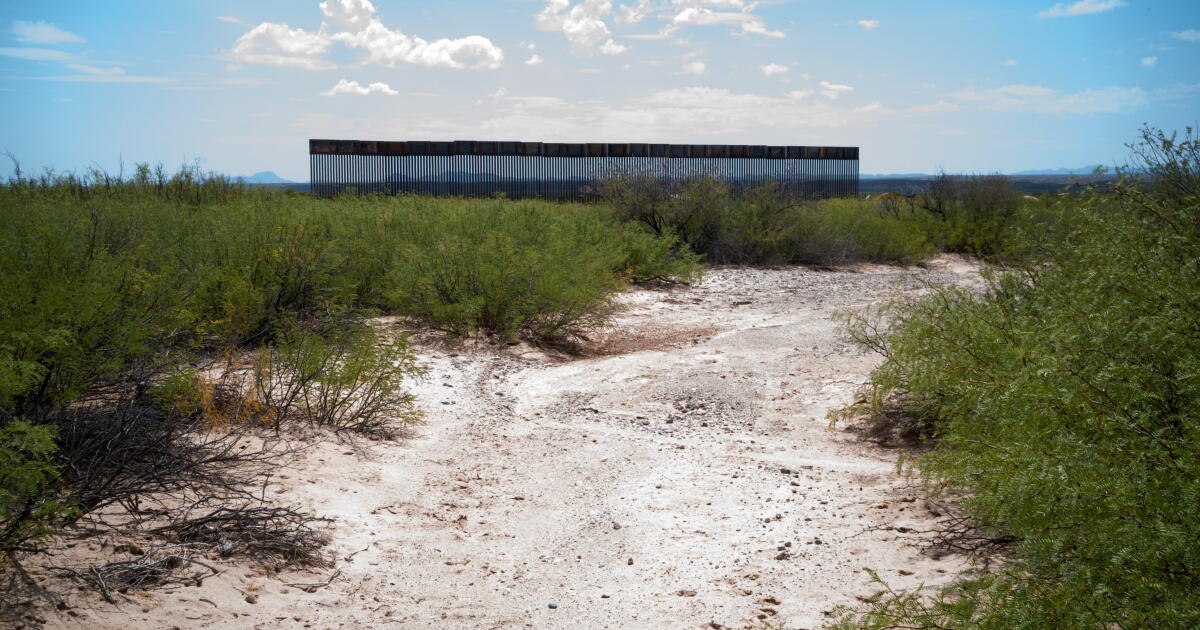
COMSTOCK, Texas — The Trump administration has started building a border wall through a west Texas section of the Big Bend region, marking the first major construction in an area of the U.S.-Mexico border where the administration’s plans have met heavy, bipartisan opposition.
The start of construction marks a milestone in the administration’s $46-billion efforts to line the border with walls, barriers, roads and technology as it seeks to make good on a campaign promise by President Trump to finish the wall. And it comes as Customs and Border Protection says it has doubled the pace at which it is building the wall across the border.
Customs and Border Protection said in a statement to the Associated Press that “border wall panel installation is underway” in a 47-mile stretch of Hudspeth County in west Texas known as Big Bend 1. There are five project areas that make up the roughly 500-mile Big Bend region stretching from an area of Hudspeth County south of El Paso to Lake Amistad.
CBP said the first panels were erected Wednesday. On a map on the agency’s website where it posts updates of wall construction along the southern border, a photo showed a crane lifting one of the 30-foot-tall steel wall panels into place as construction workers looked on.
The new activity was separate from a border infrastructure project in the nearby Big Bend National Park, where the administration has suspended construction in an attempt to reach out to opponents.
In the broader Big Bend region of Texas, CBP has run up against concerted opposition from landowners, environmental groups, business owners and ranchers who say the remote region isn’t a high-traffic area for illegal immigration. Political leaders from both parties, including U.S. Sen. John Cornyn (R-Texas), have joined the opposition.
Activists said Friday they would continue opposing the border infrastructure projects in the rest of the Big Bend region, even as the panels were being installed.
Clara Benson, one of the founders of the No Big Bend Wall Coalition, which has been fighting against CBP’s plans, said in an interview Friday that the organization had been receiving reports of trucks moving supplies into the remote area along the Rio Grande and that contractors had been clearing yards to stage supplies.
Speaking from Washington, D.C., where she and others in the coalition were meeting with lawmakers, she said that the organization and others would continue to fight the wall-building plans across the region.
“We will continue to fight for this land no matter what the outcome is. We will continue fighting to the end,” said Benson. “You talk to people in west Texas and they say even if they put it up, we’ll fight for them to take it down. So this fight is not over.”
The news comes as the administration is speeding forward with a plan to line the entire border with a combination of 30-foot-tall steel bollard walls, barriers designed to stop vehicles from crossing the border, new patrol roads, and various technologies to deter and detect migrants or smugglers from crossing the border.
Customs and Border Protection said it is building an average of 12 miles of barriers per week along the 2,000-mile border with Mexico and recently reached a milestone of 200 miles of new barriers built since the second Trump administration took office. The 12-miles-a-week average is double the pace that the agency’s head, Rodney Scott, cited earlier this year.
The agency has faced opposition from environmental groups, a small town that worries the wall will cause flooding in its area, Native Americans who say the construction is disturbing sacred sites and landowners who say the construction will infringe on their land.
In Texas, much of the opposition has centered on the agency’s plans for Big Bend National Park, in the state’s southwest on the Rio Grande that is a draw for tourists from around the world. But up- and downriver outside the park, much of the land is owned by private landowners, many of whom have organized against the government’s efforts.
Earlier this week, landowners, ranchers and business owners in the Big Bend region along with a nonprofit organization dedicated to protecting the region’s landscape and heritage sued to stop the administration’s plans.
Activists and landowners have also shown up at county meetings to push their elected officials not to cooperate with contractors hired by CBP to build the wall, and many landowners have refused to allow government officials or contractors onto their land to survey it.
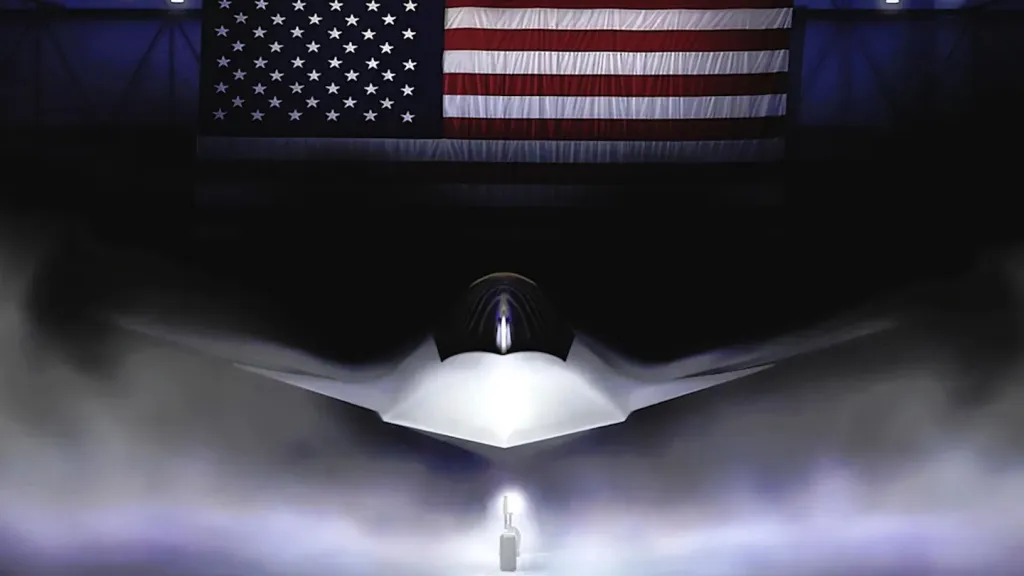
As both the Navy and the USAF were racing to field a new generation of advanced tactical jets, the seagoing service’s program hit a wall. A major reason behind this from the Pentagon was concern that the U.S. industrial base could not handle simultaneous final development and production of two extremely complex new fighter aircraft. This was a controversial justification that many had a hard time swallowing. The Navy’s program, dubbed F/A-XX, is supposedly back on and a down-select on who will build it is coming soon, but that concern appears to linger among at least one of the Department of War’s top acquisition officials.
Though he remains confident that the U.S. Air Force F-47 sixth-generation fighter will fly in the next two years, Air Force Gen. Dale R. White, Director, Critical Major Weapon Systems — the service’s leading weapons procurement advisor — remains concerned about the overall capacity of industry to provide the military with the aircraft it needs, including two new fighters. His comments were in response to questions about the Navy’s challenges in building its own sixth-gen fighter alongside F-47.
The concerns are “not unique” to the F-47 or the Navy’s program but the problem exists to various degrees across the industrial base too, White told reporters Tuesday during a media roundtable at the Air & Space Forces Air, Space and Cyber Conference that TWZ is attending.
White has a dual-hatted role, serving as the Pentagon’s top weapon’s procurement officer and as the senior acquisition advisor to the Secretary of the Air Force for all acquisition matters.
A rendering of the F-47. (U.S. Air Force) U.S. Air Force
“We’re seeing it in multiple platforms,” said White, who did not elaborate. “And so what we’re having to do is, at some point, we’re having to make some trade space in between some of these.”
“I see Boeing making smart investments,” White said of the prime contractor of the F-47, selected for the U.S. Air Force’s Next Generation Air Dominance (NGAD) ‘fighter’ initiative. “They have a lot of CAPEX [capital expenditure] that they’re pouring in, but we have to get through the process of the design piece, getting that completed and closed out. Then we all hit some major milestones with things like flight tests and software and those things.”
F-47 specifications infographic (USAF)
“Really, it’s just being able to manage the overall resourcing as it relates to number one, people resources,” the general added. “Number two, when you start getting into the production conversation, do we have enough capacity to be able to produce at that rate? And so, by and large, I have concerns. I have concerns about the capacity of our industrial base, but they are not unique to F-47 or to any program.”
As for the F-47, White said the program “continues to progress exceptionally well.”
“As you know, many, many years in tech maturation and risk reduction gave us a tremendous head start on this program,” White explained. “Extremely proud of what the team has done, what they continue to do each and every day. We are still absolutely on path to be able to hit the mark of flying within this administration. So we see no issues in front of us right now.”
While the first example of the F-47 has been in production for about a year now, the Navy has yet to even select a prime contractor for its next generation fighter. The current competitors for the F/A-XX are Boeing and Northrop Grumman. A decision was supposed to have been made by last month.
“The F/A-XX program remains on track, and we have no further information to provide at this time,” a Navy official told us last week.
In response to a question from TWZ earlier this year, the Chief of Naval Operations acknowledged the uncertainty over the F/A-XX program.
“One of the challenges we’re seeing is, not only [are] our peer competitors improving their capability for anti-air, either air-to-air or surface-to-air, but the lower cost of entry of very capable weapons is also making more players on the field in which that level of stealth and technology is required,” Adm. Daryl Caudle told us back in April at the Sea-Air-Space 2026 exposition. “So this is not about the need for a peer adversary. This is just having an aircraft that can operate with a level of uncertainty and with the acceptable level of risk.”
With Boeing as a finalist, it is also possible that F/A-XX could be a variant of the F-47. As we noted in a past story, the Boeing render for its F/A-XX concept is remarkably similar to artwork for its F-47.
Last year, Steve Parker, Boeing Defense and Space CEO, said he didn’t see a problem with his company building both jets stating that this had been part of the strategy all along.
If this is the case, the company’s claim that it would not have a problem building both the Navy and Air Force next-generation fighters would make more sense. There are a number of advantages when it comes to establishing a high-degree of commonality between F/A-XX and F-47, although there would also be challenges, especially when it comes to getting the most out of a design that was not meant to operate from a carrier deck and scaling production up for both services. There is already significant sharing of elements of both the Navy’s and Air Force’s sixth-generation fighter programs. So commonality in some subsystems and interoperability is already baked in.
We should hopefully finally get a clearer picture in the coming weeks about the status of the F/A-XX and possibly the answer to who will actually build it, which will give us a better idea of what the industrial base impact actually will be.
WASHINGTON — The Kennedy Center Board of Trustees is planning to propose adding President Trump’s name to the facility’s exterior in recognition of his saving the building from its “precarious fiscal position,” according to a new court filing in a suit aimed at blocking the move.
It’s the latest development in the case revolving around adding the president’s name to the exterior of the cultural and arts facility that sits along the Potomac River in Washington and reflects the Trump-aligned board’s efforts to honor the president.
The new information came out of a court filing made by Democratic Rep. Joyce Beatty of Ohio, an ex-officio member of the board. Beatty, who has led an effort to block Trump from putting his name on the building, said in a filing she was alerting the court to the proposal because it could implicate a pending decision before the court.
Both the court and the Kennedy Center board are expected to hold meetings Tuesday.
Beatty’s filing includes two exhibits. One is a draft vote to shut the center down, asserting the building is unsafe for occupancy. That assertion incorrectly cites a consulting group’s finding, “which expressly disclaimed providing any such opinion,” according to Beatty.
The other document asserts the center faces dire financial straits. It specifically calls for Trump’s name to be placed in marble beneath the name of the center on the building’s exterior. It offers 10 options for a possible inscription, including “Renovation and endowment overseen by President Donald J. Trump and the Trump Kennedy Center Fund.” Another proposes: “With Gratitude for Support from President Donald J. Trump and the Trump Kennedy Center Fund.”
“The Board understands that without such appropriate recognition it is unlikely that President Trump will provide the fundamental oversight of the renovation of the main building and lead the fiscal rescue of the Center,” the board wrote in the proposed resolution.
Trump has spent much of his second term reshaping Washington, demolishing the East Wing of the White House to make way for a ballroom and planning a triumphal arch near Arlington National Cemetery as well as a renovated golf course along the Potomac River.
The Kennedy Center has been a stumbling block in that effort after a judge ruled in May that Trump’s name was added to the building illegally, ordering it to be removed.
Trump and his allies, however, have continued to fight the ruling.
The board voted last month to inscribe his name on the venue’s facade to read “The John F. Kennedy Center for the Performing Arts Restored and Renovated By President Donald J. Trump.”
If the Trump Kennedy Center Fund reached $100 million, another inscription would be added reading: “Endowed by the Trump Kennedy Center Fund.”
At age 14, Glen Walsh started surfing because of a crush. He was a boogie boarder until the object of his adoration told him, “What are you riding that for? You should be surfing. Get a surfboard.” So, he did. “I was terrible at it, but I kept going. I was super persistent.”
That resilience proved useful. As a gay teenager in Santa Monica, Walsh was often called slurs on the Venice Pier. “You think you’re like a unicorn — a weirdo,” he says. He felt at odds with the local surf community. To Walsh, surfing was “super straight, very hypermasculine, very intimidating.” Yet his love of the ocean — and sure, crush-worthy surfers — kept him returning to the water. “I wanted to be around them, and surf with them,” he says.
When Instagram launched in 2010, Walsh began posting one of his early loves — only this time, it was morning surf conditions. Every morning, before surfers paddled out, the longtime Venice resident described swells, winds and surf conditions to his followers, becoming for some the town’s trusted surf chronicler.
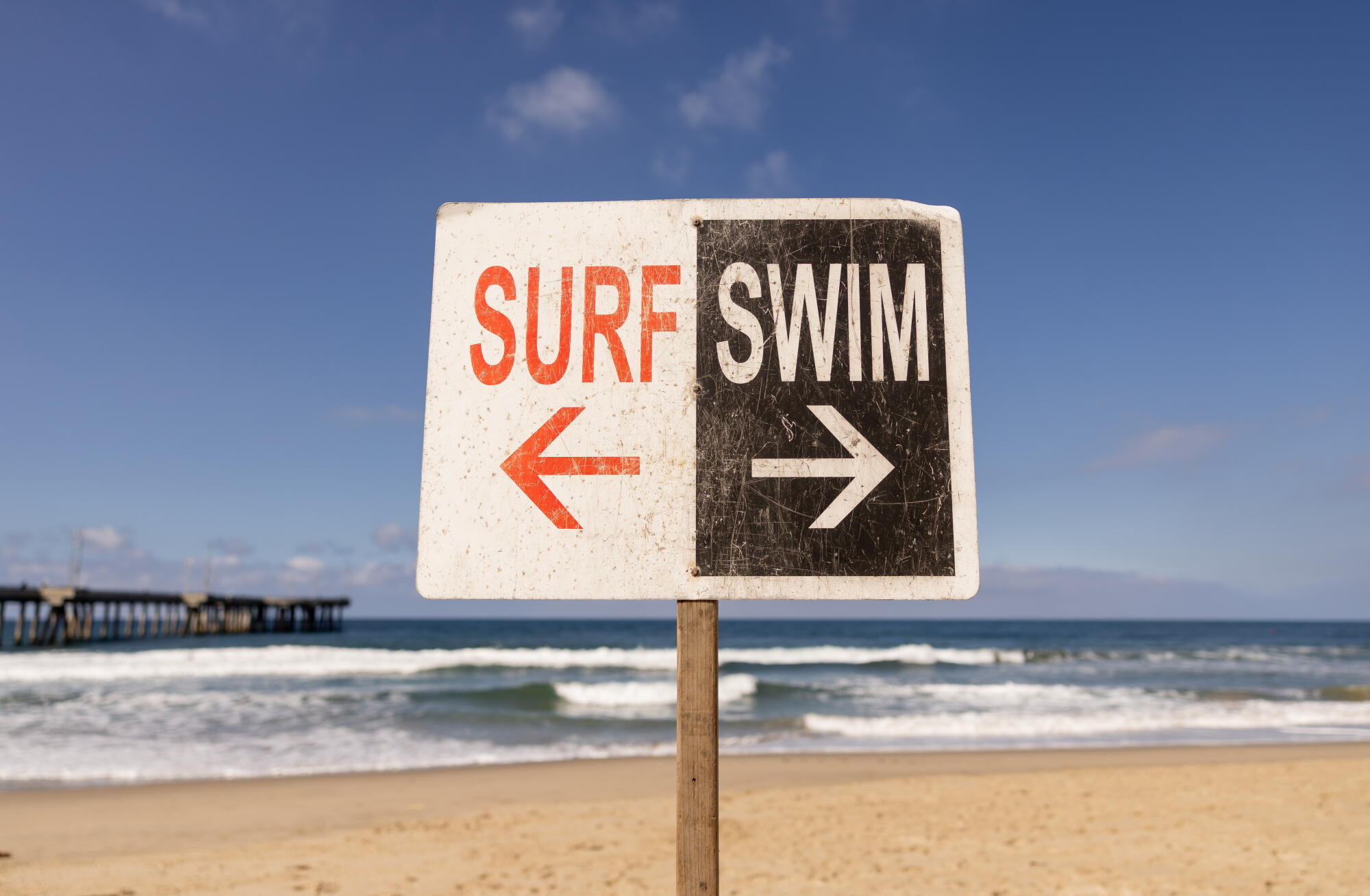
A “Surf Swim” sign greets beachgoers at Venice Beach — a stretch of coast where daily surf reports and grassroots organizing have helped break down traditional surf stereotypes.
(Christina House / Los Angeles Times)
His videos combined informative dispatches with the laid-back vibe of surfer ASMR. “Light offshore wind. Clean, glassy barrels,” he declares softly to the camera as gray waves break behind him. “Lumpy close-out with hollow barrels with low tide, fam.”
At first, the account functioned like a group chat for local surfers. “Friends were asking me how the waves were, and I was texting them. I figured I’d jump on Instagram and start doing it for them,” says Walsh, who has been a Venice resident for 15 years.
What began as a practical update for a handful of friends eventually attracted followers in London, Berlin and Tokyo — people who checked in daily to see whether the surf was firing in Venice Beach. The account has amassed over 10,000 followers, inspiring imitator accounts. “Now it’s just for everybody,” says Walsh. “I built a community around the surf reports. It really blew me away. I didn’t realize that people were so interested.”
His surf reports have made him an unofficial mayor of Venice surf culture, getting recognized at the beach town’s local hangouts like Hinano Cafe and the Cow’s End. “People stop me and tell me they love my surf reports. They don’t even surf, but they see it every day,” says Walsh. “I always tell people I’m very popular between Washington Boulevard, Lincoln Boulevard and Rose Avenue.” His nickname around town is Glenice Venice.
However, the real triumph wasn’t becoming recognizable around Venice — it was finding other queer surfers, something that felt elusive in Walsh’s youth in Southern California. “I had met a lot of other surfers from all over the world and built a queer community of surfers here in L.A.,” says Walsh. “It was pretty awesome.”
Walsh saw an opportunity to use his surf report to not only report on the condition of the ocean — which is especially unpredictable during our current El Niño cycles — but to also create a burgeoning queer space in the Venice surf scene. “I could set up a community-based surf report for everybody, and the fact that I happen to be queer made it a little more unique,” he says. He began to connect with gay surfers, organizing trips with them and building lasting friendships. “It was just a lot of fun, building a little team.”
Later, Walsh became a co-producer and music supervisor of a movie about homophobia in surfing titled “Out in the Line-Up” that premiered at film festivals across the world in cities such as New York, San Francisco and Sydney, Australia. “The movie kind of spoke for itself. It was a worldwide issue — homophobia in surfing.” Since then, Walsh has served on panels about queer people in the surf world. Last June, the film had a 10th anniversary screening in Venice, hosted by the Venice Surfing Assn. “At some point, I brought some diversity to this culture. I put my name on it,” he says.
In recent years, others have joined Walsh’s efforts to create a burgeoning queer surf scene at Venice Beach. In 2020, Shelly Guidera relocated to Venice and noticed that there wasn’t a strong queer presence in surfing. “My friend and I were maybe the only queer people some of these surfers had ever seen,” she says. Shortly after, Guidera started Dream Team Surf, a collective for queer surfers to meet up and build camaraderie.
Its mission is simple. “It’s all of us looking out for each other,” Guidera says. “ Having a team of people makes the experience that much more enriching and safe.”
Surfers ride the waves near the Venice Pier, where Glen Walsh does his daily surf reports.
(Eric Thayer / Los Angeles Times)
Early on, Guidera was inspired by Walsh’s uplifting presence in the Venice surf scene. “This person is respected in the community for what he brings, which is knowledge and insight and fun and flair,” says Guidera. In turn, Walsh has championed Dream Team Surf.
In January 2025, Dream Team Surf hosted a Pride beach party with a banner that read: “Trans bodies belong on the beach.” In some San Diego area beaches, Guidera says, queer representation can still feel like an anomaly. “It’s so funny because it’s like these people have maybe never seen a woman in a bathing suit with hairy legs,” she says. “I’m like, ‘Oh my God, it’s not that deep.’”
Guidera is certified in surf therapy, taking courses through Groundswell Community Project, a surf therapy program that uses surf to promote holistic healing. The mental health benefits of surfing are lifelong, Guidera explains. “Growing up as a swimmer, surfing was a form of play and wellness,” she says. “It eased the brakes on competition and the structure within competitive swimming.”
Group photo of Dream Team Surf, which hosted a Pride beach party.
(Sara Werner)
Even if you don’t shred waves, being in the ocean can promote healing. “To give people access to the ocean that is in and of itself a form of wellness,” she says. “There’s a level of surrender and humility that comes with surfing and that comes with being in nature. … You have to be so present in such a way that makes you a stronger person.”
Like Guidera, Walsh also works as a surf instructor with a similar goal to instill confidence in his students. “I was teaching a lot of people to surf, mostly women who didn’t want a straight man to teach them how to surf because it feels vulnerable enough,” says Walsh. “I try to break down the stereotypes and have a little fun with them and let them become a kid again.”
When done correctly, he argues, surfing can invite expansiveness. “I love seeing people out there. Feel the fear and do it anyway,” says Walsh. “And creating a lifestyle around it — going to different beaches — and meeting friends.”




![US President Donald Trump waves as he walks to board Marine One as he departs from the South Lawn of the White House in Washington, DC, on September 26, 2026 [AFP]](https://i0.wp.com/occasionaldigest.com/wp-content/uploads/2026/09/1790693783_407_afp_6ab7d4f7ee67-1790432503.jpg?w=640&ssl=1)