British defense contractor Babcock has confirmed that it is putting itself forward for the U.S. Navy’s future frigate program, with its Arrowhead 140 general-purpose frigate, the design behind the Royal Navy’s Type 31 class, expected to form the basis of its proposal. The move adds another foreign-designed warship to Washington’s search for a relatively mature frigate that can be built quickly and in significant numbers.
Babcock has held preliminary discussions with Pentagon officials and is expected to submit an expression of interest before the end of October, according to recent reporting by The Telegraph and Navy Lookout. The proposal is understood to potentially involve Huntington Ingalls Industries (HII), America’s largest military shipbuilder, with the two companies exploring an arrangement that could see the Arrowhead 140 built in the United States under license.
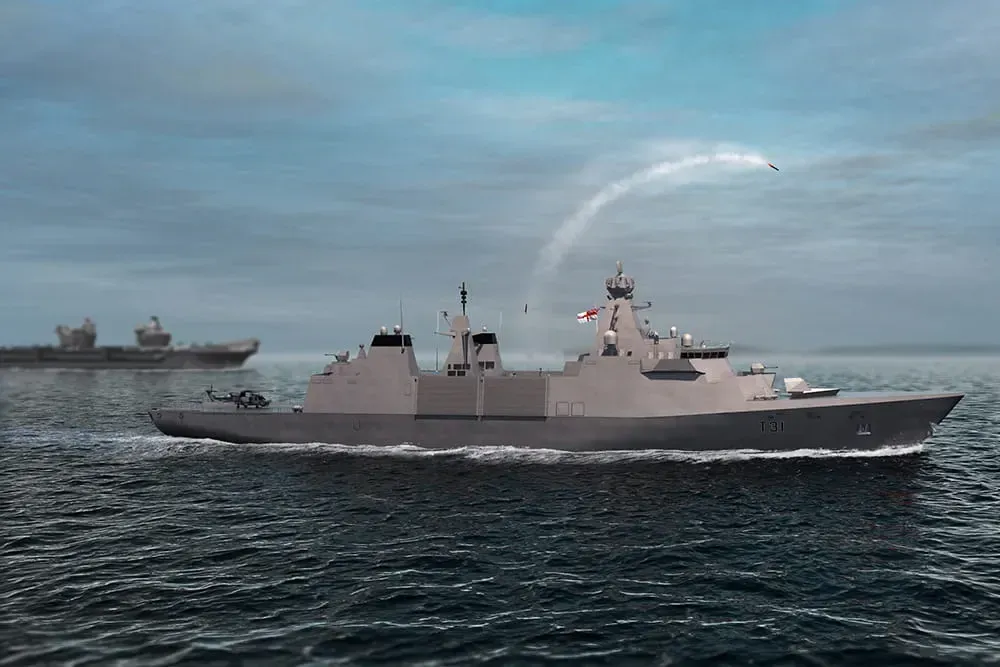
An artist’s impression of the U.K. Royal Navy Type 31 general-purpose frigate. Royal Navy
“Of course we’re interested. We have a world-class frigate, close links to the U.S. and U.S. industry. It would be insane for us not to respond,” Sir Nick Hine, head of Babcock’s marine business and a former Second Sea Lord, toldThe Telegraph.
The initiative comes as the U.S. Navy seeks to accelerate the acquisition of smaller surface combatants after the troubled Constellation class frigate program was axed. Japan’s upgraded Mogami class, South Korea’s Chungnam class, and Turkey’s Istanbul class have also been reported as candidates for the Navy’s international frigate effort. You can read more about all three designs here.
The Japan Maritime Self-Defense Force’s (JMSDF) first-in-class JS Mogami. JMSDFThe South Korean Navy’s ROKS Chungnam seen during sea trials before its delivery in 2024. HD Hyundai Heavy IndustriesThe future TCG Izmir from Turkey’s Istanbul class. Anadolu Shipyard
Meanwhile, German defense contractor Rheinmetall, a newcomer to the surface combatant market, recently unveiled its GMF 140 frigate, which it has said it plans to offer “initially as part of a procurement project in North America” before pursuing opportunities with other allied navies.
For Babcock, the opportunity would be a major expansion of its relationship with the U.S. defense industry. If successful, the company would likely provide the design, engineering expertise, and potentially the intellectual property needed for American shipyards to manufacture the frigates.
This would mirror the process for the Polish Navy’s Project 106 Miecznik (Swordfish) class, which is building three new multirole frigates in Poland, rather than using the company’s own facilities in Britain.
The future Polish Navy frigate Wicher under construction in Gdynia, Poland. Photo by Mateusz Wlodarczyk/NurPhoto
The Navy’s assessment of potential options is due by November 12. No contract has been awarded, and the details of any Babcock-HII proposal remain unconfirmed.
The Arrowhead 140 is the foundation of the Royal Navy’s five-ship Type 31 program, which is being built at Babcock’s Rosyth shipyard in Scotland. The design is derived from the Danish Iver Huitfeldt class frigate. As well as Poland, the warship has also been selected for Indonesia.
The Type 31 Frigate in action
The Arrowhead 140 has a baseline length of approximately 455 feet, a beam of 65 feet, and a displacement of around 5,700 tonnes, although national variants may be considerably heavier. The vessel uses a conventional combined diesel-and-diesel (CODAD) propulsion system and can achieve speeds exceeding 28 knots. Its design emphasises long endurance, with a baseline endurance of approximately one to two months. The AH140 incorporates a flight deck and hangar for naval helicopter operations, accommodation for embarked personnel, boat-handling facilities, and adaptable mission spaces. Its modular architecture allows customers to integrate different sensors, combat management systems, electronic warfare equipment, and weapons according to national requirements.
Taking the Polish Navy’s Project 106 class as an example of an Arrowhead 140 iteration, this is a notably heavily armed adaptation, featuring a 76mm Leonardo Strales main gun, a 32-cell Mk 41 vertical launch system for surface-to-air missiles, eight Naval Strike Missiles for anti-ship strike, and lightweight torpedo launchers. The Polish variant is reported to have a maximum displacement of approximately 7,700 tonnes.
Wicher, the first of the Polish Navy’s Project 106 Miecznik (Swordfish) class. PGZ SW
The Type 31 is a general-purpose warship capable of undertaking maritime security, escort, and surface warfare missions. Its relatively large hull offers considerable internal volume for weapons, sensors, aviation facilities, and future upgrades.
That could make it attractive to a U.S. Navy looking for a ship able to protect convoys, operate independently, and supplement its larger destroyers. A frigate with a significantly lower operating cost than an Arleigh Burke class destroyer could still take on a range of missions, freeing more capable combatants for broad area air and missile air defense, sustained strike operations, and other more demanding tasks.
The Arleigh Burke class destroyer USS James E. Williams underway. U.S. Navy courtesy photo The USS James E. Williams. USN
The Arrowhead 140’s size could also provide flexibility in accommodating American weapons and combat systems. However, a U.S. version would require a defined configuration, and there is no publicly established weapons fit for a potential American variant.
At the same time, the Royal Navy’s Type 31 frigate has not yet entered operational service, and its baseline configuration is not optimized for every mission the U.S. Navy may require. In particular, the integration of the sonar and other systems needed for sustained anti-submarine warfare would be a significant undertaking.
The Navy will also have to wrestle with how much of the existing design can be retained while meeting its own requirements. One of the major lessons from the Constellation program was that extensive modifications to an existing foreign design can create huge cost and schedule risks. With so little left of the original design after it was adapted to Navy specifications, this eventually doomed the program.
A rendering of a now-cancelled Constellation class frigate. U.S. Navy
For Babcock, it will be essential to keep the Arrowhead 140 as close as possible to its established configuration, while integrating essential American equipment, to keep the proposal competitive.
Babcock does not operate a shipyard in the United States, making an American industrial partner central to its approach.
HII, which operates major shipbuilding facilities at Newport News and Ingalls, would offer substantial experience constructing warships for the U.S. Navy. Babcock and HII already have an established relationship in the submarine sector, including work supporting the Virginia class attack submarine program.
Babcock’s facilities in Rosyth and Bristol manufacture tactical missile-tube assemblies for General Dynamics Electric Boat, supporting the Common Missile Compartment used by the U.S. Navy’s Columbia class and the Royal Navy’s Dreadnought class ballistic missile submarines. HII has also expanded its relationship with Babcock through work involving Virginia class submarine components.
An artist’s conception of one of the Royal Navy’s future Dreadnought class submarines. BAE Systems
Those existing industrial relationships could provide a foundation for a surface-ship partnership. Under a potential arrangement, Babcock could transfer the necessary design rights and provide technical support while an American yard undertakes construction.
Such an arrangement would fit the Trump administration’s stated goal of using allied expertise to accelerate warship production while rebuilding domestic shipbuilding capacity. It would also allow Babcock to pursue a potentially significant U.S. order without requiring Rosyth to absorb a large new construction program alongside its Royal Navy commitments.
The prospect of HII supporting more than one design raises questions about production capacity, program priorities, and how the company would manage competing demands on its shipyards.
More generally, the administration’s interest in foreign frigates reflects growing concern about the time and expense involved in developing new American warships.
The Constellation class program was supposed to provide a modern replacement for the Navy’s retired Oliver Hazard Perry class frigates. Based on the European FREMM design, it underwent extensive modifications for American service before suffering serious schedule and cost problems. The Navy subsequently abandoned the program.
Oliver Hazard Perry class USS Carr is seen in 2006. The last of the type was retired from U.S. service in 2015. U.S. Navy
The service is now pursuing FF(X), a patrol frigate intended to be easier to build and field. Its initial configuration, however, is not expected to include a vertical launch system, limiting its ability to provide some of the capabilities associated with a more heavily armed multi-mission combatant.
A rendering of the FF(X) frigate. U.S. Navy
HII is building the FF(X) frigate, based on the Coast Guard’s Legend class National Security Cutter. It is somewhat telling that they would partner with Babcock on the foreign frigate offering considering they already have the FF(X) contract.
The Coast Guard’s Legend class cutter USCGC Hamilton. U.S. Coast Guard
The international frigate effort is intended to examine whether a ship based on an existing allied design could provide a different balance of capability, cost, and delivery speed.
An August presidential memorandum opened a route for the Navy to consider allied designs and, under limited circumstances, overseas construction through a national security waiver. The approach has been compared with a model in which an initial small number of ships could be constructed abroad before production moves to U.S. yards.
The reported framework limits overseas construction to no more than two ships and ties it to investment in American shipbuilding. Any eventual Babcock proposal would therefore need to demonstrate how the design could be transferred and produced domestically at the required pace.
That could be a big challenge. Babcock’s own Type 31 production line is already committed to the five ships ordered by the Royal Navy, while setting up an American production line would require workforce training, supply-chain development, and the transfer of manufacturing knowledge.
HMS Bulldog has officially entered build.
The ceremonial Steel Cut for our fourth Type 31 frigate marks another major step forward for our programme, joining a production line that is gathering real speed.
The Navy will also need to establish whether a foreign design can meet its minimum operational requirements without undergoing the kind of extensive redesign that dogged the Constellation program.
Babcock enters a field that already includes several established frigate designs from Japan, South Korea, and Turkey — and potentially more.
Each offers a different combination of design maturity, combat systems, production capacity, and potential industrial arrangements. The Mogami and Chungnam programs have operational ships in service, while the Arrowhead 140 has been selected for multiple export programs but is yet to enter operational service.
Introducing the Babcock Arrowhead 140
Babcock’s selling point is likely to be the Arrowhead 140’s size, adaptability, and established design pedigree, combined with the prospect of American production through HII.
With the Arrowhead 140 adopted by multiple navies, this brings potential cost savings through economies of scale, shared design evolution, and collaborative upgrades across the fleet. A wider international user base also brings the possibility of overseas industrial partnerships, including training and logistical support around the globe.
At the same time, U.S. Navy selection would represent a major endorsement of the platform and would further strengthen its position in other export markets.
For now, Babcock’s confirmation that it intends to pursue the opportunity adds another contender to the Navy’s search for a new frigate. Whether the Arrowhead 140 advances beyond the initial expression of interest will depend on how its capabilities and production prospects compare with the other candidates. And critically, Babcock and its U.S. partners will need to convince the Pentagon that they deliver a ship that meets the Navy’s requirements without repeating the delays and redesign challenges of the Constellation program.
PRINCESS Andre may be a household name here in the UK, but the aspiring beauty mogul is set to conquer the US next year.
Insiders tell us she is taking her cosmetics brand By Princess to the States in a bid to give Kylie Jenner a run for her money.
Princess Andre is said to be setting her sights on the US in a bid to go global with her fameCredit: SplashThe star is working on her own cosmetics line, By PrincessCredit: Instagram
And a source close to Princess’s camp says has big aspirations for the brand, as they share: “Princess is a smart cookie and her goal is global domination, make no mistake about it.
“She is going to America next summer, that’s already planned and she will be spending a fair bit of time over there. It’s a big country and takes real commitment and time to crack, but Princess isn’t afraid of hard work and it’s always been her dream to break America.
We’re told Princess is hoping to become the ‘British Kylie Jenner’Credit: Instagram/KylieJennerIt comes as she recently filmed for Celebrity Race Across The World with her brother Junior AndreCredit: PA
“The blueprint for her and her team is to make her Britain’s answer to Kylie Jenner, and she is laser focused on making that a reality. The plan is to go over there in 2027 to do some media appearances and meet beauty retailers, and then launch her range in US stores the following year.”
And she has a secret weapon in her arsenal.
Our source explains: “She has a powerhouse team behind her as the company making her products are the same team behind Made By Mitchell, the massively successful brand launched by make up artist Mitchell Halliday.
“Made By Mitchell recently broke America and is now stocked in Ulta Beauty, the largest speciality beauty retailer in America, so the team behind that will hopefully help Princess follow in the same footsteps in the US as they have so many connections over there.
Our mole adds: “It’s a notoriously tricky market to crack but Princess has taken her time and worked on this brand for two years. Her goal was always great products at affordable prices, and there is a real gap in the market for that, both here and Stateside.”
The Sun understands that America has already come calling for Princess, and she was recently offered a huge US show.
Our insider reveals: “Princess was approached to appear on a massive American TV show recently, but she turned it down. It wasn’t because it wasn’t an amazing opportunity, it’s more that it’s all about the timing and the timing wasn’t quite right at the moment. It might be the right move for her in a year or two though, so watch this space.”
Princess has the support of her singer dad Peter Andre, who has previously appeared on her ITV showCredit: InstagramWhilst she is also getting tips from glamour model mum Katie PriceCredit: Getty
The source adds that the programme was not Love Island USA or the upcoming US version I’m A Celebrity.
“It’s not the kind of show people would expect,” they teased.
Sources tell us the products will soon launch in high street store Boots too.
“Getting into Boots is huge,” spills our insider. “It’s the biggest beauty retailer in Britain and they don’t just take any celebrity beauty range, so it’s a huge coup for Princess and her team and will take the brand to the next level.”
And while it has not been officially announced yet, we understand she has also scored another series of The Princess Diaries.
“Cameras were following Princess on the red carpet at the Pride of Britain awards earlier this week, and they were shooting scenes for the next series,” our insider confirms. “It’s been a massive success for ITV and ITVX, so it’s no surprise they want more.”
The fashion world is also snapping at Princess’s heels and she wore her first couture dress to Pride of Britain earlier this week, being dressed by designer Tabja.
“Couture houses are taking note of Princess and want to dress her,” says a source close to the young mogul. “She was voted second best dressed teenager last year by Tatler magazine and that really made fashion circles sit up and take notice.”
The Sun has approached a rep for Princess for comment.
HM Passport Office is reminding people of the rule
14:08, 23 Oct 2026Updated 14:24, 23 Oct 2026
HMPO issued a social media alert on Friday(Image: clubfoto via Getty Images)
HM Passport Office has moved to explain a two-year rule some people may not know about.
Whether you’re applying for a new passport for a child or an adult, it’s likely you’ll need someone to confirm your identity. This is also the case if you’re replacing a lost, stolen, or damaged passport, renewing a child’s passport, or if your appearance has changed significantly. In a new alert on X, formerly Twitter, HMPO moved to explain the rules for ‘referees’.
Part of the post clarifies that “a referee must have known the person applying for at least 2 years and confirm their identity”. Additional guidance on GOV.UK outlines who is eligible to verify a person’s identity.
To qualify, a referee must be 18 years of age or older, reside in the UK, and currently hold a British or Irish passport. They must also have been acquainted with the applicant for a minimum of two years (this refers to the adult submitting the application if the passport is for a child under 16), and must know the applicant as a friend, neighbour or colleague, rather than someone they know purely in a professional capacity.
Content cannot be displayed without consent
Referees must also be employed in, or retired from, a “recognised profession”. These include:
accountant
airline pilot
articled clerk of a limited company
assurance agent of recognised company
bank or building society official
barrister
chairman or director of a limited company
chiropodist
commissioner for oaths
councillor, for example local or county
civil servant (permanent)
dentist
director, manager or personnel officer of a VAT-registered company
engineer with professional qualifications
financial services intermediary, for example a stockbroker or insurance broker
fire service official
funeral director
insurance agent (full time) of a recognised company
journalist
Justice of the Peace
legal secretary (fellow or associate member of the Institute of Legal Secretaries and PAs)
licensee of a public house
local government officer
manager or personnel officer of a limited company
member, associate or fellow of a professional body
Member of Parliament
Merchant Navy officer
minister of a recognised religion (including Christian Science)
nurse (RGN or RMN)
officer of the armed services
optician
paralegal (certified paralegal, qualified paralegal or associate member of the Institute of Paralegals)
person with honours, for example an OBE or MBE
pharmacist
photographer (professional)
police officer
Post Office official
president or secretary of a recognised organisation
Salvation Army officer
social worker
solicitor
surveyor
teacher or lecturer
trade union officer
travel agent (qualified)
valuer or auctioneer (fellow or associate members of the incorporated society)
Warrant Officers and Chief Petty Officers
You cannot confirm someone’s identity if:
you’re related by birth or marriage
you’re in a relationship with them or live together
you work for HM Passport Office
you work for UK Visas and Immigration (UKVI) on British citizenship or right of abode applications
you’re a doctor – unless you know the person who has asked you well (for example, you’re a good friend)
The immense pride which Kartal felt about becoming the British number one came shining through, describing it as being “up there” in her career achievements.
While she will only initially hold the status for a week, Kartal’s impressive comeback and Boulter’s decent run creates a fascinating subplot for the leading British women in the final throes of the season – and the start of 2027.
Boulter will have the chance to further improve her ranking when she plays in Tokyo and Hong Kong in the coming weeks, with Kartal’s plans for the rest of the season still uncertain as she sensibly manages her workload.
And don’t forget about Emma Raducanu. It seems increasingly unlikely she will play again this season because of the shin injury which ruled her out of Wimbledon, but is clearly too good a player not to be pushing back into the top 50 when she does return.
When all three are back competing on the WTA Tour at the same time, it promises to be an interesting tussle between them in the rankings.
Boulter and Raducanu both insisted they were not transfixed by the British number one spot when they exchanged positions in 2025, instead preferring to focus on their own career paths and the bigger picture of the world rankings.
But there is no doubt that Boulter, in particular, could see the opportunity to cement her place as the nation’s best player as an extra incentive to continue finishing 2026 strongly.
A MAJOR airport is about to spend billions on a huge upgraded terminal.
Not only that, but British Airways is launching the new route in January with year-round flights every day.
Melbourne Airport is upgrading is preparing to upgrade its International TerminalCredit: Melbourne AirportThere will be more space in arrivals and departure due to a rise in demandCredit: Instagram/melbourneairportau
Melbourne Airport has announced its one step closer to its $4.5 billion (£2.35million) International Terminal expansion.
New designs show off expanded check-in, arrivals and departure areas.
Sign up for the Travel newsletter
Thank you!
It will have a larger check-in hall with high-tech, common-user systems and expanded baggage claim with additional carousels.
Five additional aircraft stands will accommodate more flights.
Throughout the International Terminal will be windows to maximise natural light for a calming atmosphere.
There will also be more retail, dining and lounge options as well we improved waiting areas for passengers.
Works will coincide along the construction of Melbourne Airport’s third runway.
Stats revealed that in January, more than 1.26million passengers travelled through the international terminal which was their busiest month on record.
Just last month the airport opened its new Pick up and Drop off zones for Terminals 1,2 and 3 and a new pedestrian bridge linking passengers to the terminals.
For anyone who lands and immediately wants a slice of Australia, the famous “kangaroo spotting trail” is right next door to the airport at Woodlands Historic Park.
Melbourne Airport had a record breaking 1.26 million international passengers in JanuaryCredit: Instagram/melbourneairportau
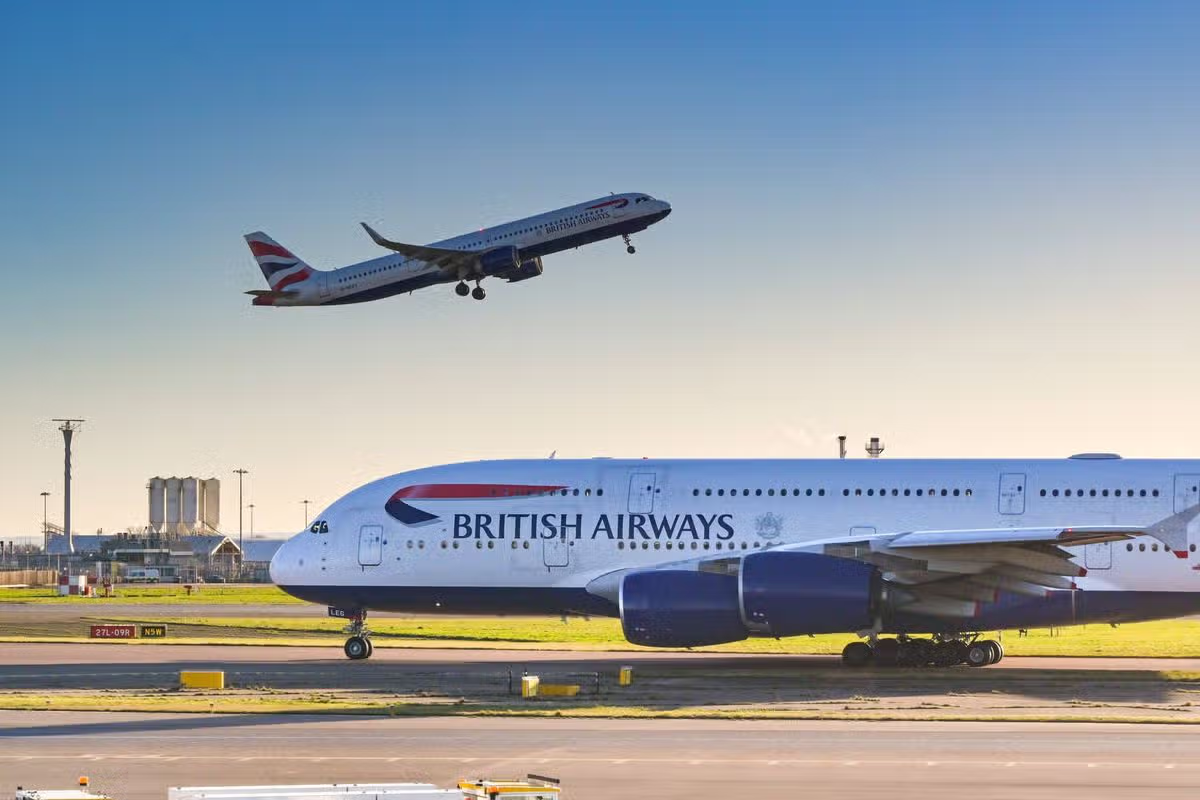
British Airways is launching its Melbourne route on January 9, 2027 – flights will operate year-round from London Heathrow, via Kuala Lumpur, on a daily basis.
Flights will take off from Heathrow at 9.10pm and land in Kuala Lumpur at 6.05pm the following day.
The plane will then take off again at 7.45pm and land in Melbourne the following morning at 6.40am.
Return flights will start on January 11, taking off each day at 4.35pm and landing in Kuala Lumpur at 9.35pm.
It will have also have five additional aircraft gatesCredit: Melbourne AirportIt comes after the airport upgraded its Terminals 1,2 and 3 with drop off zones and a walkwayCredit: Melbourne Airport
The flight will then take off from Kuala Lumpur at 11.15pm and land back at Heathrow the following day at 5.20am.
Loyal British Airways customers should be aware that the UK’s flag carrier is making a change to its Avios loyalty points scheme that will come into force on November 24
British Airways is updating its Avios system(Image: Ceri Breeze via Getty Images)
British Airways passengers should put November 24 in their diaries, as the UK flag carrier is preparing to make a change that’ll impact repeat customers.
Avios is the loyalty scheme of more than 30 major airlines, including British Airways, Iberia and Aer Lingus. It allows you to earn points that you can then exchange for flights, although you still need to pay taxes and fees.
Last year, BA announced a change to the scheme that left some repeat customers fuming. The price of trips booked through the scheme went up.
An off-peak return trip in economy from London to New York bought through Avios used to cost 50,000 points and £100 fee, now it costs 55,000 and £120. Similar hikes were introduced across premium economy, business, and first class.
However, now the airline has announced another change that will be a little more welcome. British Airways Holidays is updating its Avios offering. Launching on 24 November 2026, members of The British Airways Club booking a holiday package with British Airways Holidays can collect six Avios for every £1 spent on the total package price.
Avios will be calculated on the full booking value and then divided equally between all travellers on the booking. Club members will be able to collect their individual share or choose to pool their Avios through a Household Account.
BA has said that the change will make “booking with British Airways Holidays even more rewarding”. It replaces the current approach, in which all customers collect Avios on the flight element of their holiday package and the lead passenger can also collect one bonus Avios for every £1 spent on the holiday package booking.
BA has shared an example of how the new system could be better for customers. Two people heading to Crete could see each traveller collect 11,316 Avios – enough for them to secure a one-way Reward Flight to Paris each, using 10,000 Avios, plus a £2.50 fee. Previously, the lead booker could have collected 5,462 Avios and the second traveller 1,690 Avios from just the flight element of the booking.
Andrew Flintham, managing director at British Airways Holidays, said: “For many people, a holiday is the ultimate reward, so we want booking one to feel rewarding too. For Avios collectors, that relationship should be symbiotic. A holiday should not only be somewhere they can spend their Avios; it should also help them build their balance towards whatever comes next. Our aim is to create a simpler and more compelling offer for our Club members. Whether those Avios help reduce the cost of another holiday, contribute towards a future flight or make an upgrade possible, it means the value of the holiday can continue long after customers return home.”
WHO doesn’t love a holiday bargain? Well, British Airways is launching new flights that cost less than the average UK pint.
However, the two return journeys to the beautiful Mediterranean islands come with a small catch.
British Airways is launching return flights for £5 – but there is a catchCredit: AlamyAnyone wanting to take advantage of the cheap flights needs to have Avios pointsCredit: Getty
British Airways is launching two Avios-Only flights nextsummer – so you have enough points on its reward scheme to go on them.
The new return flights will be to Palma in Majorca and Heraklion in Crete.
Sign up for the Travel newsletter
Thank you!
Flights to the Greek island of Crete will depart on August 14, 2027 and returning a week later on August 21.
Seats will be available for 35,500 Avios + £5 return in Euro Traveller.
For a return flight in Club Europe its 60,000 Avios + £40.
Crete is the largest island in Greece and one of the biggest in the Mediterranean Sea.
On the same dates, British Airways will also have an Avios-Only flight to Palma, Majorca.
Seats will be available for 28,000 Avios + £5 return in Euro Traveller.
In Club Europe, seats are available for 49,000 Avios + £40 return with checked baggage included as standard.
Majorca meanwhile has a beautiful coastline, picturesque villages and its busy capital of Palma has lots of bustling restaurants and a huge cathedral in the centre.
Heraklion in Crete has a Venetian port and pretty beachesCredit: Getty Images
Once you’ve joined the British Airways Club, you can earn points by shopping online through the Avios portal, booking hotels and car hire, using co-branded credit cards, or converting Nectar points.
If you’re a frequent flier, you can earn through BA flights, as well as other IAG airlines like Iberia, Aer Lingus, Vueling and LEVEL, as well as partner airlines Qatar Airways, Finnair, and Loganair.
Other brands associated with IAG loyalty include brands like Domino’s, Deliveroo, River Island, Marks and Spencer and Boots.
For a more in-depth look at Avios and how to claim points, read more here.
The British Airways Avios-Only flights go on sale tomorrow.
Katie Boulter moved into the quarter-finals of the Japan Open after she beat Viktorija Golubic in less than an hour.
The British number two defeated her Swiss opponent 6-2 6-1 in Osaka and will face either Croatia’s Antonia Ruzic or American Kayla Day in the next round.
Boulter saved a break point in the opening game but dominated from 2-2 in the first set, winning nine games in a row before Golubic took the penultimate game of the match.
Boulter, who is seeded eighth in the competition, said she was pleased with how she handled “difficult conditions”, with a strong wind affecting play.
“I think one of the biggest things for me is staying patient in the wind,” she said.
“Sometimes I can get a little frustrated, and I’m very pleased that I didn’t allow that to affect me today and I think I ended up playing some really good tennis in the second set. I’m really pleased with the performance.”
A British Airways flight from a tourist hotspot was forced to divert in the early hours to land at Gatwick rather than Heathrow
A British Airways jet was forced to land at Gatwick(Image: Ceri Breeze via Getty Images)
A British Airways flight has been forced to divert from Heathrow to Gatwick after falling foul of strict rules over its landing time.
The BA707 flight from holiday hotspot Larnaca was diverted to the London airport after the four hour journey, according to AirNav Radar.
The flight had to be diverted to Gatwick after missing the curfew at Heathrow.
The plane left the Cyprus airport at 9.32pm, over three hours after scheduled take off.
It then landed at Gatwick at 12.12am on Tuesday.
Flights heading to Heathrow are often diverted to Gatwick or other regional hubs if they miss Heathrow’s strict nighttime curfew.
Heathrow enforces rigorous restrictions on movements late at night in order to reduce noice pollution for the millions of residents that live under its flight paths.
The core curfew means that scheduled flights are heavily restricted to land and take off between 11pm and 6am.
The airport operates under a strict ‘night quota’ system between 11pm and 6am which limits both the absolute number of flights allowed to land and the total amount of aircraft noise allowed.
Unless an official emergency is declared then air traffic control will deny landing rights past the curfew, forcing a diversion.
HMPO issued an update on Friday(Image: Geography Photos/Universal Images Group via Getty Images)
HM Passport Office urgent alert to UK passport holders – what you need to know:
HM Passport Office (HMPO) has issued an alert to British passport holders, urging those who have lost their passport to act “as soon as possible”.
HMPO shared the warning on X, formerly Twitter, stating: “Lost your passport? Report it as soon as possible. Doing so helps protect against misuse and allows you to apply for a replacement.” GOV.UK guidance adds that reporting a lost or stolen passport straight away will “reduce the risk of anyone else using your passport or your identity”.
It’s worth knowing that your passport never truly belongs to you. It remains government property and can be revoked or withdrawn at any point. A passport can also be withheld or confiscated if the holder is under suspicion of a serious crime, on bail, or has been repatriated to the UK at the government’s expense without repaying the sum.
For those who urgently need a replacement, a one-day service is available for adult passport renewals at a cost of £239.50, with the new passport ready to collect four hours after your appointment. Note that the earliest you can get an appointment is two days after applying, and you must surrender your old passport at the appointment.
Those who find themselves abroad without valid travel documents can apply for an emergency travel document, which will automatically cancel any existing passport as part of the process.
Amanda Cannon was taken ill while on holiday with her daughter
08:10, 19 Oct 2026Updated 08:16, 19 Oct 2026
Amanda Cannon is fighting for her life in Turkey(Image: Marisa White/SWNS)
A British nan is fighting for her life in Turkey after suffering a heart attack while on holiday as her family faces a £25,000 hospital bill.
Amanda Cannon, 58, was rushed to intensive care after collapsing during a trip with her daughter Marisa White on October 10. The grandmother-of-nine from Redhill, Surrey, reportedly went without oxygen for 10 minutes after suffering what doctors believe was an epileptic seizure and cardiac arrest.
She is currently on life support in a private hospital in Antalya, Turkey. Relatives say her treatment is costing around €3,500 (£3,000) a day, with the bill already reaching €30,000 (£25,000).
Hannah Cooper, the mum of Amanda’s grandchildren, flew to Turkey with her five-year-old daughter after receiving a distressing call from Marisa. She said Amanda suddenly “jolted backwards”, turned blue and stopped breathing. Marisa immediately began CPR before paramedics arrived and took over.
No travel insurance
But because she has no travel insurance, her former daughter-in-law Hannah said Turkish medics would not stop treatment for religious reasons. They fear the mounting costs could run into hundreds of thousands of pounds if her condition does not improve.
Hannah, 33, from Shoreham-by-Sea, Sussex, told Talk to the Press: “She’s now in a deep coma. She’s got kidney failure, liver failure. They said there’s a 20 per cent chance that she’ll wake up and if she does, she’ll be in a vegetative state.”
She added: “I got a phone call from her daughter saying that she just suddenly jolted backwards, went grey, purple, blue, started foaming from the mouth and stopped breathing. Her daughter gave her CPR. Then when the ambulance got there, they took over. She went without oxygen for about 10 minutes.”
Doctors later told the family Amanda had suffered what appeared to be a seizure as well as a heart attack. She was placed on life support and remains in coma.
Amanda travelled to Turkey with daughter Marisa, who Hannah said suffered from many severe physical and mental health conditions. Concerned she would struggle to deal with the crisis alone, Hannah booked flights and travelled out to support her.
She said: “She doesn’t have the mental capacity to cope with what’s going on. The language barrier is so hard. We have to keep going on Google Translate to speak to the doctor because he doesn’t understand us and we don’t understand him.”
Medical costs stacking up
As the family tried to come to terms with Amanda’s condition, they were shocked to learn of the mounting medical costs. Hannah said she received a phone call asking for £5,000 shortly after Amanda was admitted.
She said: “I said to them that I don’t have £5,000, but I’d be flying over to Turkey. Since then, I’ve had several emails asking for payment.”
Hannah later discovered Amanda’s stay in the private intensive care unit was costing around €3,500 every day. She also revealed that the hospital wouldn’t release her to a public one until they cleared half of the bill.
Hannah said: “I’ve asked for a transfer to a state hospital where it would still cost money, but not like this.”
The family launched a GoFundMe appeal with an initial target of £15,000, but now fear the total bill could be far higher. Despite no longer being with Amanda’s son, Hannah said the 58-year-old has remained a huge part of her life.
She said: “She’s been like a second mum to me for 17 years. She’s always been my biggest supporter.”
Toll on family
The ordeal has also taken a toll on Amanda’s grandchildren.
Hannah said: “My eldest is asking a lot of questions and is upset. My little girl just keeps saying she wants to see her nan.”
She said doctors would either wait until Amanda was biologically dead or keep her alive. Hannah and her daughter are set to return to the UK on Sunday, October 18, while Marisa plans to fly back to Turkey after collecting medication.
Hannah concluded: “We’re upset, shocked and confused. We just don’t know what’s going to happen next.”
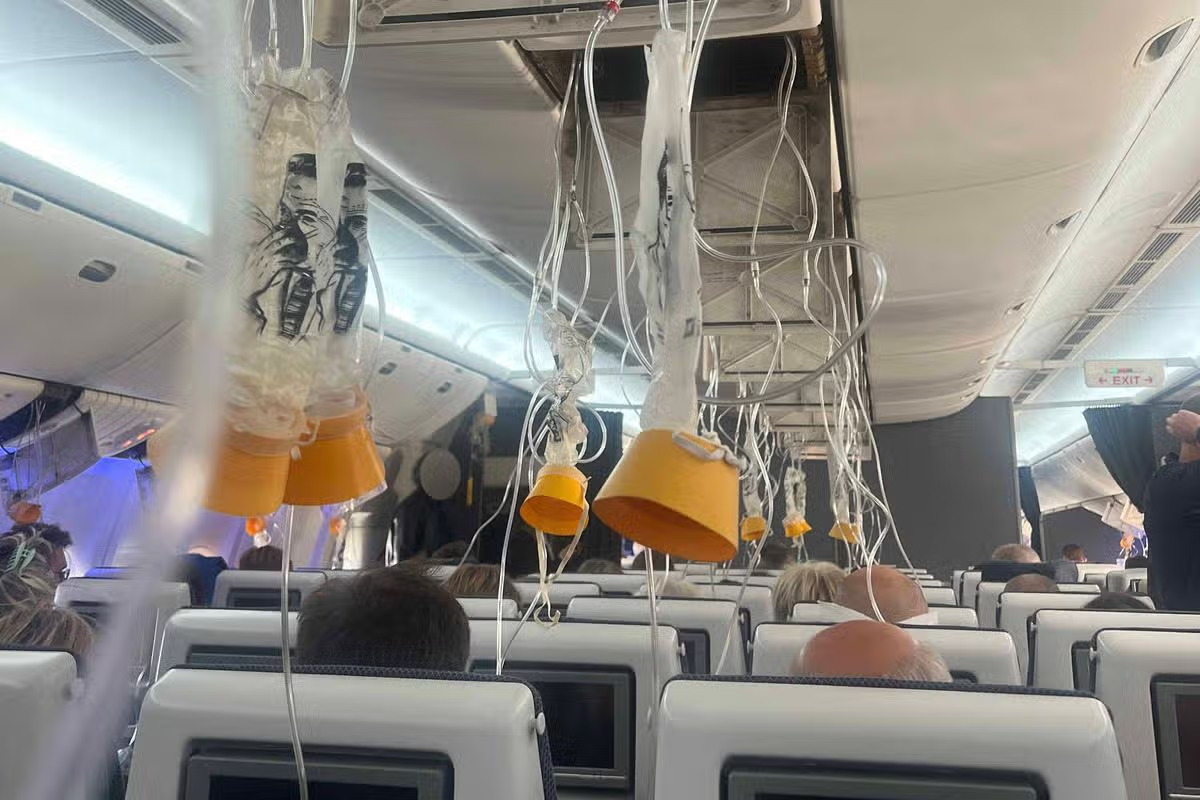
Flight BA295 had reached a cruising altitude of 37,000ft on its way from London to Chicago before the mid-air emergency
The oxygen masks deployed on the British Airways flight from London Heathrow to Chicago on October 5, 2026(Image: SWNS)
A passenger aboard a London to Chicago British Airways flight says the cabin was “silent” as they dropped 27,000ft in minutes. A “technical issue” caused the aircraft to drop and declare an emergency, and return to London on October 5.
Scott Tanner, 39, was a passenger on the plane when it began descending “noticeably” and they were told to put on oxygen masks. Flight BA295 had reached a cruising altitude of 37,000ft after taking off from Heathrow before the mid-air emergency.
Flight tracking data showed the aircraft dropped sharply down to 9,000ft. Scott said their was “silence” for 10 minutes before they were told they could remove their masks, and retuned to London after five hours in the air.
Scott, from Torbay, Devon, told Talk to the Press: “About an hour into the flight I was listening to an audiobook when, completely without warning, the oxygen masks suddenly dropped throughout the cabin.
“An automated announcement instructed everyone to put on their masks immediately. For around 10 minutes afterwards there was no further information from the flight deck.
“There was simply silence apart from the automated announcement repeating on a loop, which was probably the most disconcerting part. Despite this, everyone remained remarkably calm. I did not hear a single scream.
“We could feel the aircraft descending quite noticeably, although it felt controlled rather than like a plunge. The captain then told us that we were below 10,000 feet and could remove our masks.
“He later explained that we would be returning to Heathrow, but because the aircraft was carrying fuel for the transatlantic journey we would need to circle for several hours to burn it off. We eventually landed safely after about five hours in the air.”
Scott says British Airways provided passengers with hotel accommodation, but further arrangements were “frustrating”. He said: “I was initially rebooked via Charlotte despite direct flights being available, and I had to negotiate to have this changed.
“When I asked whether BA might offer some gesture in recognition of what had happened, I was repeatedly sent between different desks and eventually told that any compensation would have to be dealt with online.”
The plane left London Heathrow’s Terminal 5 at 11:50am, with an expected flight time of eight hours and 40 minutes before landing at Chicago O’Hare International Airport. The flight crew issued a squawk 7700 code – the international aviation signal for a general emergency – shortly after beginning the steep descent.
Passenger Tom Nicholls told the Mirror there was a “sudden bit of turbulence” during the emergency. Mr Nicholls explained: “The plane adjusted but it didn’t feel like it was descending rapidly. I’d say the pilots did a very good job.
“The oxygen masks popped out soon after and there was a bit of uncertainty onboard. The couple in front couldn’t get to theirs but by the time they’d found a spare seat with a mask, the captain announced we were below 10,000ft so they were not needed.”
A spokesperson from British Airways said: “The safety of our customers and crew is always our top priority, and the aircraft landed safely after our highly-trained pilots returned to Heathrow following a technical issue.
“Customers disembarked the aircraft normally and our teams are working to get their travel plans back on track as quickly as possible.”
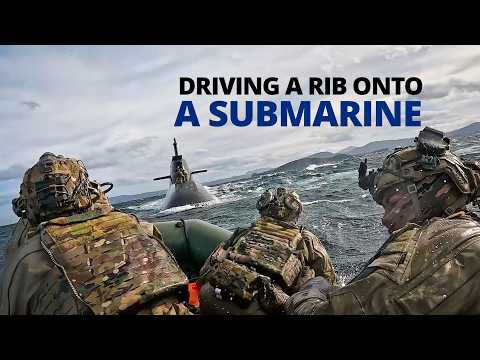
As part of the largest U.K. Commando Force exercise in 15 years, British special operators conducted a submarine insertion off Scotland, making use of a German Navy Type 212A — a boat you can read about in detail here. The maneuvers are the first time since the war in Afghanistan that all of the Commando Force’s specialist elements have operated together. The submarine insertion, conducted at Cape Wrath on September 29, is part of Exercise Strike Warrior, a major NATO drill intended to rehearse allied crisis-response and warfighting operations across the North Atlantic and High North.
The U.K. Royal Navy-led Commando Force specializes in amphibious, littoral, and expeditionary operations. It brings together Royal Marines commandos with specialist elements including reconnaissance, intelligence, targeting, artillery, logistics, and medical capabilities. The force is increasingly focused on smaller, dispersed teams operating across contested littoral environments.
Commandos attempt to drive RIB onto German submarine casing in heavy swell
Including elements of the Commando Force, more than 2,000 personnel from the United Kingdom, United States, Germany, Netherlands, Canada, and Norway are currently participating in Strike Warrior, with eight warships and 19 aircraft involved in activity spanning Scotland, the Western Isles, the North-West Approaches, Galloway, the Borders and the North Sea.
The submarine insertion underscores the type of maritime special operations the British Commando Force is now increasingly training to conduct. Personnel from 148 (Meiktila) Commando Forward Observation Battery, Royal Artillery, boarded the unnamed German attack submarine off Scotland before being infiltrated toward the coast. The sub provided intelligence, surveillance, and reconnaissance (ISR) support as the force approached the target area, after which the commandos conducted a discreet small-boat insertion using inflatable raiding craft.
British Commandos board the German U-boat off the north coast of Scotland during Strike Warrior 26. Crown Copyright
Once ashore, the commandos moved onto the cliffs and established an extemporized observation post. From there, they confirmed the simulated target and coordinated live naval surface fires against a simulated enemy position. Here, firepower was provided by the Portuguese Karel Doorman class frigate Dom Francisco de Almeida, presumably using its Oto Melara 76mm deck gun. Following the engagement, the team was extracted. The complete sequence incorporated submarine infiltration, small-boat insertion, covert reconnaissance and targeting, live naval gunfire, and withdrawal into a single mission profile.
Crown Copyright
The German submarine involved is particularly well suited to this kind of mission. Conventional diesel-electric attack submarines (SSK) lack the nuclear-powered endurance and sustained high speed of an SSN, but those characteristics are not necessarily what a short-range clandestine insertion mission requires. Modern SSKs such as Germany’s Type 212A are designed around extremely low acoustic signatures and can remain submerged for extended periods using air-independent propulsion, making them difficult to detect while operating in relatively shallow and constrained waters.
That combination is hugely valuable for special operations. An SSK can approach a coastline covertly, conduct ISR, release a small team and its boats, and withdraw without exposing a large surface vessel or maintaining the high-speed transit capability associated with a nuclear submarine. Its comparatively small size can also be advantageous when operating closer to shore, where depth, seabed conditions and the presence of coastal sensors can constrain larger submarines. Conventionally powered boats are also far cheaper to procure and operate and have smaller crews.
Crown CopyrightCrown Copyright
An SSN offers major advantages for longer-range deployments: far greater endurance, sustained speed, and the ability to carry and support larger payloads over intercontinental distances. These payloads can include dry deck shelters and swimmer delivery vehicles, allowing divers easy exit and entrance while the boat is submerged and at a standoff distance from the coast.
But for a mission whose essential requirement is to quietly loiter near a coast, put a small team ashore and leave, an SSK remains a highly relevant platform. Conventional submarines are particularly valuable to the kind of distributed littoral operations NATO is rehearsing in northern European waters.
The Upholders were also particularly suited to inshore operations, reconnaissance, and other missions demanding extreme quietness and maneuverability.
The Royal Canadian Navy long-range patrol submarine HMCS Victoria arrives at Naval Base Kitsap-Bangor for a port call and routine maintenance. This boat was formerly HMS Unseen with the U.K. Royal Navy. U.S. Navy photo by Lt. Ed Early/Released
With this in mind, TWZ has, in the past, examined whether the U.S. Navy should complement its all-nuclear submarine fleet with advanced conventional boats. Sweden’s Gotlanddemonstrated the value of these kinds of boats when it was leased to the U.S. Navy for adversary training and proved exceptionally difficult for American ASW forces to detect.
Swedish submarine HMS Gotland, left, HNLMS Tromp, center, and HMS Portland steam in formation with other NATO and partner nation ships during maneuvering drills as a part of exercise Dynamic Mongoose in 2015. U.S. Navy photo by Mass Communication Specialist 2nd Class Amanda S. Kitchner/Released
Returning to the Cape Wrath drill, the 148 Battery operations officer involved explained that “This level of complexity and coordination of live assets has not been achieved by 148 for nearly 30 years.”
“We wanted to demonstrate to our partners across the United Kingdom Commando Force, wider U.K. Defense and NATO SOF community the type of missions we are prepared to execute against future threats,” the officer added.
148 Battery secures a remote beach in Cape Wrath during Exercise Strike Warrior 26. Crown CopyrightCrown Copyright
Multinational integration is central to the exercise. Strike Warrior is testing the ability of the British Commando Force to plug into a much larger allied force in which submarines, surface combatants, aircraft, drones, and small specialist teams can contribute to different parts of the same operation.
Earlier in Strike Warrior, 148 Battery also directed fires from the Dutch Karel Doorman class frigate HNLMS Van Amstel and Royal Canadian Navy Halifax class frigate HMCS St. John’s after establishing observation posts. Those ships were operating as part of Standing NATO Maritime Group One.
HNLMS Van Amstel from the Royal Netherlands Navy during Exercise Strike Warrior. Crown Copyright
The exercise also provides a snapshot of how Britain’s commandos have evolved since their intensive employment in Afghanistan. The Royal Marines’ Future Commando Force concept emphasizes smaller, more dispersed formations capable of operating in contested littoral environments, with greater reliance on maritime mobility, uncrewed systems, long-range fires, and allied capabilities.
Strike Warrior combines those elements, with the exercise including amphibious landings, boarding operations, intelligence and surveillance missions, maritime security, and anti-submarine warfare, alongside drone missions involving strikes and combat resupply. Other elements have practiced establishing protected medical facilities.
The geography of Strike Warrior is equally significant. The exercise extends across Scotland and its surrounding waters, including the Western Isles and out into the North Sea, placing the Commando Force in the maritime environment connecting the highly strategic North Atlantic, Norwegian Sea, and northern European approaches.
That region has become increasingly important to NATO planning because of the difficulty of monitoring and controlling such a large maritime battlespace. Submarines, maritime patrol aircraft, surface combatants, drones, and long-range weapons all have roles to play, while the geography provides numerous opportunities for small forces to operate from the coast and islands.
Crown CopyrightCrown Copyright
The United Kingdom has been repeatedly using the region and the wider High North as a training ground for this type of activity. Earlier this year, British commandos conducted a submarine insertion during Exercise Cold Response in Norway using the German Navy’s Type 212A submarine U-35. That also involved submarine infiltration, small-boat deployment, establishment of an observation post, and the direction of allied naval fires.
Royal Marines on Exercise Cold Response in North Norway training in extreme cold conditions while exercising boat drills within the fjords of Norway. Crown Copyright
Strike Warrior expands that concept considerably and across a much larger battlespace, providing an opportunity to test not simply individual capabilities but the ability to combine them during a sustained NATO exercise.
The exercise began September 28 and concludes October 9.
For the British Commando Force, the significance extends beyond the dramatic imagery of troops emerging from a German submarine at Cape Wrath. After years in which British commandos were heavily committed to land-based counterinsurgency operations, the exercise is intended to put them firmly back in a maritime and high-end warfighting context.
This is the kind of operation that the U.K. Commando Force is now preparing to conduct alongside NATO partners in the increasingly contested waters of the North Atlantic and High North.
MINI bars at your seat, fancy amenity kits and the ‘world’s biggest business class’ – British Airways’ latest announcement is transforming the way Brits will fly with the flag carrier.
The airline’s huge new upgrades are part of the A380 retrofit programme.
First look at British Airways’ huge new A380 retrofitCredit: British Airways
Set to cost millions, it will see new seats in every single cabin, including in World Traveller – economy – and its premium economy, World Traveller Plus.
It will also have what they are calling the world’s biggest business class as well, with 106 Club Suite seats which will be on the upper deck.
Sign up for the Travel newsletter
Thank you!
This is alongside 12 seats in First, 84 in World Traveller Plus and 215 in World Traveller.
The new amenity kits have been rolled out as well – First Class passengers will get bags designed by Swaine with Wildsmith toiletries, and Business Class will get unique patterned bags with anatome products.
First passengers will be getting a few other upgrades as well.
This includes new pyjamas with a bespoke tartan pattern design, along with slippers and blankets.
A built in mini bar will also mean First passengers can get their own snacks without having to go to the galley, with chocolates, mints and even electrolytes.
A new dining experience will include onboard Bollinger, and a wide cocktail menu. Even racks of lamb and grilled salmon will be on the menu.
A new food and snack menu is being rolled outCredit: British AirwaysIt will have the world’s biggest business class with the most seats onboardCredit: British AirwaysNew seats are being rolled out across all classesCredit: British AirwaysThere’s new amenity kits tooCredit: British Airways
British Airways boss Sean Doyle said: “This is a major milestone for British Airways and the future of our A380 fleet, marking one of the most significant transformations we’ve ever undertaken on any aircraft.
‘We’ve completely reimagined the customer experience, introducing new and updated seats in every cabin, all carefully considered to deliver greater comfort and an elevated customer experience.
“From redesigned interiors and upgraded dining to new amenities and service delivery, every detail has been thoughtfully designed with our customers front and centre, helping them to have a more seamless and memorable experience when they fly with us.”
Off the plane, new airport lounges are also being introduced.
First class passengers get an in-seat mini barThe airline has teamed up with Swaine and Wildsmith for First Class amenity kits
A new lounge at Heathrow Terminal 5 C will open by the end of 2028, while the Heathrow Arrivals lounge is being redesigned.
Lounges across the US including Boston, Newark and San Francisco are being updated, along with Geneva.
The British Museum has announced changes to how visitors see the Bayeux Tapestry exhibition after concerns over long queues and overcrowding.
The measures include plans for longer opening hours, as well as an audio guide, additional seating and clearer signage.
A museum spokesperson said the public response to the 11th Century embroidery had been “extraordinary”, but acknowledged that some visitors had waited longer than they would have wanted.
Some people reported waits of up to two hours, while hundreds of ticket holders were reportedly turned away due to backlogs when the museum closed early last week due to a private event.
Some ticket holders took to social media to complain about the disruption.
One disappointed visitor said the trip had been a “big event” they had looked forward to, while another wrote she had been waiting since she was seven to see the Bayeux Tapestry, and bought tickets only to be turned away after queuing.
The museum later apologised to those who had been unable to enter and said they would be issued refunds and priority booking slots for a rearranged time.
From Monday, visitors will be offered an audio guide with more information about the embroidery, while additional signage and seating will be provided for those queuing to reach the main exhibition.
The museum said it planned to introduce longer opening hours to prevent queues building during the day and allow people with later bookings more time to view the exhibition.
Details of the extended hours have not yet been disclosed.
Counter-terrorism police also questioned a UK national, days after five others were arrested and released on bail.
Published On 1 Oct 20261 Oct 2026
A man with dual UK-Iranian citizenship has been arrested in connection with an alleged security incident at an airbase in southwest England over the weekend.
British counter-terrorism police said on Thursday that a “27-year-old man, a dual UK/Iranian national, was arrested” in central London.
He was detained “on suspicion of preparation of terrorist acts” as part of an investigation into the events Sunday near RAF Fairford.
A second man, 26 – a UK national – was also “questioned under caution”, the police statement added.
The RAF base 160km west of London has been used by US bombers during decades of conflicts in the Middle East, including the US and Israel’s war on Iran, which began in February.
On Sunday, five men, all in their 20s and from London, were arrested on suspicion of explosives offences and “terrorism” over the incident at RAF Fairford. They have since been released on bail.
“The investigation into circumstances surrounding events in Gloucestershire is hugely complex, and our specialist teams are interrogating multiple lines of enquiry,” Vicki Evans, the senior national coordinator for counter-terrorism policing for the Metropolitan Police, said in a statement.
“As we’ve made clear, we’re looking at all possible angles – including possible foreign state involvement.”
Earlier, UK Prime Minister Andy Burnham said there were “strong indications” that Iran played a role in an alleged security incident.
Iran, however, strongly denied any involvement in the incident and the country’s foreign minister, Abbas Araghchi, hit back at Burnham’s allegations.
Locals in Rome’s Trastevere district complain that tourists have been making noise in the early hours, leading one frustrated 74-year-old to resort to extreme measures
Trastevere neighbourhood in Rome
A frustrated Italian local has admitted to dousing rowdy, “drunk” British tourists with buckets of water after they disturbed her in the night. Locals in Rome’s Trastevere district complain that UK and US tourists have been making noise beneath apartments in the early hours, leading one 74-year-old to resort to extreme measures.
Rome has long been a popular holiday destination, drawing in millions of visitors each year. Tourists flock to the Italian capital to soak up the city’s Roman history and art, and enjoy its nightlife and world-famous cuisine.
With the swathes of tourists comes a downside, though: some allegedly get “extremely drunk” and cause a nuisance in the middle of the night. Local Simonetta Marcellini told The i Paper that she keeps buckets of water by her window.
She said: “At first I’m polite, and I point out to them that it is the early hours of the morning and that people will be sleeping. The moment they start arguing back and insulting me, I pour water on them.”
Simonetta, a former radiographer born in the area, has grown frustrated with the changes she’s witnessed. She claims there has been a marked decline in the quality of restaurants, and businesses have been replaced by bars and sandwich shops.
Meanwhile, Rome was inundated with 22.9 million visitors last year, a figure said to be more than seven times the local population. Simonetta decided she’d had enough when she spotted tourists urinating against her building.
She claims that life has “gotten much worse” in relation to tourism since the Covid pandemic. “Regulations are fewer and our complaints from years ago were underestimated.
“So a phenomenon that could have been controlled was practically left unchecked and we’ve arrived today with all the reckless partying.”
It comes after British holidaymakers were warned they could face a 500 euro fine in “some Italian towns”. The Foreign, Commonwealth and Development Office (FCDO) plays a crucial role in keeping Brits informed when travelling.
In its travel advice section for Italy, the FCDO warns that “some Italian towns and cities have specific laws, and you could be fined for breaking them”.
Some of the acts include eating and drinking near certain churches, historic monuments and public buildings. It’s also important to remember that entering or bathing in many public fountains is prohibited – including in Rome.
On the sun-kissed island of Capri (situated off Italy’s Amalfi Coast), a rule is in place regardingdisposable plastic. Visitors are banned from bringing items such as plastic bags, cutlery, cups, trays, or straws onto the island.
Further FCDO guidance reads: “Illegal traders operate on the streets of all major Italian cities. It is illegal to buy items from unlicensed street traders. If you do, you could be stopped by the local police and fined.
“It’s illegal to remove sand, shells or pebbles from coastal areas in Italy. You could face a large fine for doing so. It’s also illegal to collect various species of flowers, plants and herbs from mountain and wooded areas.
“For more information, check with the regional authorities of the area you’re visiting.”