


Brexit

Andy Burnham’s in-tray: The challenges facing the new UK PM | Politics News

Andy Burnham, who becomes the United Kingdom’s next prime minister on Monday, faces a roster of challenges as the country’s seventh leader in a decade.

Burnham was overwhelmingly backed as Labour leader on Friday after current Prime Minister Keir Starmer resigned last month.

It has been a whirlwind month for the former Greater Manchester mayor, with his vision for the country and his cabinet still unclear.

“This has gone faster than he thought. It’s only been four weeks since he won the by-election. I don’t think he knows all of the answers yet; he hasn’t had the thinking time,” Sunder Katwala, director of the British Future think tank, told Al Jazeera.

Experts say the incoming prime minister will inherit an economy that has barely grown in two decades and a challenging geopolitical environment. He also has to deal with a marked decrease in Labour’s popularity, with the party trailing the right-wing Reform UK in the polls for 18 months.

“Burnham has relatively little fiscal room for manoeuvre,” said Anand Menon, director of UK in a Changing Europe.

New spending will have to be raised via taxation rather than borrowing, though there may be scope for “hypothecated spending” tied to a clear purpose, such as defence bonds, Menon said.

“If you make it absolutely clear what these things are for, the markets will be more permissive. But the fiscal situation is tight,” he noted.

Soccer Football - Premier League - Everton v Sunderland - Hill Dickinson Stadium, Liverpool, Britain - May 17, 2026 Andy Burnham, mayor of Greater Manchester in the stands during the match REUTERS/David Klein EDITORIAL USE ONLY. NO USE WITH UNAUTHORIZED AUDIO, VIDEO, DATA, FIXTURE LISTS, CLUB/LEAGUE LOGOS OR 'LIVE' SERVICES. ONLINE IN-MATCH USE LIMITED TO 120 IMAGES, NO VIDEO EMULATION. NO USE IN BETTING, GAMES OR SINGLE CLUB/LEAGUE/PLAYER PUBLICATIONS. PLEASE CONTACT YOUR ACCOUNT REPRESENTATIVE FOR FURTHER DETAILS..
Andy Burnham, mayor of Greater Manchester, in the stands during a football match [David Klein/Reuters]

Manchester model

The government spent around 110 billion British pounds ($148bn) on debt interest in 2025-26 alone, about eight percent of all public spending. Borrowing has run higher than planned this year, and taxes are forecast to reach their highest share of the economy since World War II by the end of the decade.

Gareth Dale, associate head of Social and Political Sciences at Brunel University, points to Burnham’s record in Manchester, including the city’s fare-capped bus network, as proof that “meaningful reforms needn’t always come with a big price tag”.

Whether that scales up nationally will hinge on his willingness to confront the bond markets.

“What Burnham did in Manchester might be harder to do at a national level,” warned Menon. “He’s got to get the balance right between showing he’s aware of the fact that there’s a country outside of London and that isn’t just Manchester.”

Menon doubts fiscal manoeuvring alone will shift the public mood. He says that living standards have stagnated and services have eroded since 2008 so “people don’t just want to listen to what you’re saying, they want to see changes for the better in their lives”.

Burnham’s in-tray is complicated further by a diplomatic dispute that flared days before he is slated to take office. The government fully nationalised British Steel’s Scunthorpe works, a year after taking control of the loss-making plant when Chinese owner Jingye Group said it planned to close it.

Jingye has vowed to pursue “full compensation through legal means,” while China’s Ministry of Commerce accused London of undermining Chinese investor confidence.

It leaves Burnham managing a strained relationship with China from day one, after Starmer went to great efforts to reset relations between the two countries.

SCUNTHORPE, ENGLAND - JULY 16: A sign outside British Steel's Scunthorpe works declares 'British Steel For The Nation' on July 16, 2026 in Scunthorpe, England. The UK government announced this morning that it was taking British Steel into public ownership in a bid to "protect UK steelmaking." The government had previously taken control of operations at the Scunthorpe steelworks, which employs around 2,700 people and had been owned by the Chinese firm Jingye Group. (Photo by Christopher Furlong/Getty Images)
The United Kingdom’s government announced this morning that it was taking British Steel into public ownership in a bid to ‘protect UK steelmaking’ [Christopher Furlong/Getty Images]

Beyond borders

Menon argues that much of what shapes a prime minister’s fortunes lies outside their control and outside Britain’s borders.

“Sometimes the drivers of political success and failure are utterly out of your hands,” he said. He cited the war in Ukraine, Brexit and the COVID-19 pandemic as reminders that a “medium-sized open economy” is exposed to forces it cannot direct.

That extends to Washington, where personal chemistry with US President Donald Trump will matter “at least for a while, until he goes off people”, Menon said.

Dependence on the US for defence and technology rules out any dramatic reconfiguring of British-US ties.

Menon expects European Union relations to get less attention than under Starmer, predicting Burnham to be “more avowedly domestic” focused.

This could still be tested by Gaza, where Burnham has apologised for the previous government’s stance. Menon cautions that turning words into policy “depends heavily on events”.

“He’s given some hints he’ll be less knee-jerkly supportive of Israel than Starmer was, but whether that carries over into power, we’ll have to wait and see,” explained Menon.

He also doubts whether Burnham would risk a rupture with Washington regarding US bases in Britain, which could be used, indirectly, in US-Israel war on Iran.

epa13117115 Andy Burnham (R) shakes hands with Neil Kinnock (L), former Labour Party leader in the 1980's and 1990's, as he arrives before being confirmed as the Labour Party's new leader and the country's next prime minister during 'Labour’s Special Conference' in central London, Britain, 17 July 2026. Burnham is expected to offcially become Britain's prime minister on 20 July 2026. EPA/HENRY NICHOLLS / POOL
Andy Burnham, right, shakes hands with Neil Kinnock, former Labour Party leader in the 1980s and 1990s, as he arrives before being confirmed as the Labour Party’s new leader and the country’s next prime minister during ‘Labour’s Special Conference’ in London, England, the United Kingdom, July 17, 2026 [Henry NIicholls/Pool/EPA]

Defence first

Reports suggest that Burnham is likely to put defence above welfare spending, which will again rankle some in his party.

“He’ll probably prioritise arms spending over welfare… while dialling down the ‘net zero’ programme,” warns Dale, with Burnham expected to allow for new North Sea oil and gas drilling.

“And he voted to make the asylum system more brutal. If he does set policy in these directions, it’ll put wind in the sails of the far right, and probably accelerate the shift of voters from Labour to Green,” Dale said.

Burnham has moved from Labour’s Blairite wing to its soft left, but “commands widespread support among Labour MPs” and “gets on with various factions”, he noted.

But that unity masks deeper erosion: Labour’s vote fell from 12.9 million in 2017 to 9.7 million under Starmer.

The centre-left party’s support base is also “narrowing towards wealthier, less diverse parts of the electorate, with the Greens now drawing disillusioned voters on the left”, said Dale.

Political divides

That erosion is bound up with a wider polarisation in the country that Katwala says no government can avoid.

“I don’t think it’s enough to say we’d like to talk about jobs and devolving power and therefore we won’t talk about identity, immigration, race,” says Katwala.

A woman holds a placard outside Downing Street during a "National March for Palestine" calling on Britain's next Prime Minister, Andy Burnham, to stand up for the Palestinian people, in London, Britain, July 18, 2026. REUTERS/Jack Taylor
A woman holds a placard outside Downing Street during a ‘National March for Palestine’ calling on Britain’s next prime minister, Andy Burnham, to stand up for the Palestinian people, in London, Britain, July 18, 2026 [Jack Taylor/Reuters]

He argues that fairness should be framed as universal rather than a concession to certain groups of society.

“Whether it’s tackling anti-Semitism, Islamophobia or racism generally, these are issues for everybody in society. It’s not for the minority group itself to work out how to challenge the prejudice it faces,” Katwala said.

“The people who are hostile to Muslims are the people who know the least Muslims and live furthest away. It’s the government’s job to get to that really tough end of attitudes and perceptions that are making people feel less safe.”

Menon sees a narrow opening on the right-wing narratives popularised by the Reform UK party.

Labour entered government in 2024 with 33 percent of the vote against Reform’s 14 percent, a gap that has since collapsed following the right-wing party’s links to George Cottrell, a convicted fraudster.

Recent polls put Reform around 24-26 percent and Labour close behind it, a marked turnaround from polling earlier this year.

By-election results also suggest a broad anti-Reform coalition and tactical voting exist, which should strengthen Labour.

“Even if 30 percent of people are willing to vote Reform, almost 70 percent are willing to do whatever it takes to stop them being elected,” Menon noted.

Whether that holds, he said, depends on how Burnham performs once the difficulties of government set in.

“It becomes a very different game when things are going badly, and if he ends up being a lucky general, then Reform self-destructs,” Menon said.

Source link

Gibraltar border controls lifted: Is it part of Schengen, the UK – or both? | Border Disputes News

Thousands of people who travel every day between the southern tip of Spain and the British territory of Gibraltar will no longer have to cross a physical border from Wednesday.

This came after the European Union and United Kingdom on Tuesday signed a treaty that delivers “economic and trade certainty for the people and businesses of Gibraltar, safeguards British sovereignty and protects the autonomous operation of UK military facilities”.

Recommended Stories

list of 4 itemsend of list

The treaty was signed in Brussels by the European Trade Commissioner Maros Sefcovic, British Minister of State for Europe Stephen Doughty, Spanish Foreign Minister Jose Manuel Albares and Gibraltar Chief Minister Fabian Picardo.

“Gibraltar was left out of the UK-EU Trade and Cooperation Agreement following Brexit, creating the prospect of a devastating ‘hard border’ for the 15,000 people – more than half of Gibraltar’s workforce – who cross the land border between Spain and Gibraltar every day,” the treaty said.

Here’s what we know about the treaty:

What does the treaty include?

Britain secured Gibraltar, a strategically important enclave at the southern tip of Spain, in the 1713 Treaty of Utrecht, which ended the War of Spanish Succession.

The contested British overseas territory of 38,000 people is perched at a strategic location, only 8 nautical miles (15km) from Morocco where the Atlantic Ocean meets the Mediterranean Sea.

The new agreement allows residents of Gibraltar to cross into Spain using residence cards without needing to have their passports stamped. In return, Spanish citizens will be allowed to enter Gibraltar using a government ID card.

The treaty in effect brings Gibraltar into the EU’s Schengen free-travel area, which allows people from 29 countries to move among them freely without needing visas.

At Gibraltar’s airport and port, entry and exit checks will be conducted by both British and Spanish border officials. The arrangement is similar to what’s in place at Eurostar train stations in London and Paris, where both British and French officials check passports.

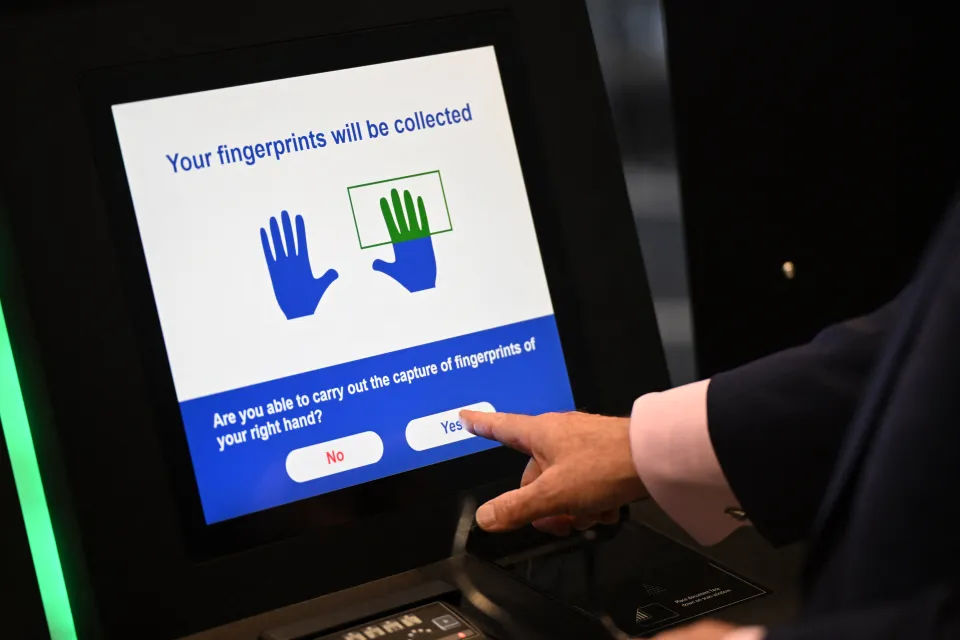
Travellers to Gibraltar from countries outside the Schengen area, including the UK, will have to contend with the EU Entry/Exit System, which was rolled out in Europe in April and replaced passport stamps with biometric data collected through photographs and digital fingerprints.

Under the older system, every person had to face two border checks, one by Gibraltarian border agents and the other by Spanish officials when entering or exiting the Schengen area. The checks caused long queues, heavily impacting the workers who made the crossing daily.

The British government said the agreement brings “fluidity for people and goods crossing the Gibraltar-Spain border to support economic growth and jobs in the region”.

What was the motivation behind the treaty, and how does Brexit feature in it?

In a 2016 referendum in which UK voters approved leaving the EU, 96 percent of voters on “the Rock”, as Gibraltar is popularly known in English, supported remaining in the bloc.

When Britain eventually left the EU in 2020, the relationship between Gibraltar and the bloc was left unresolved. Previous talks on a deal to ensure people and goods could keep flowing across the border had made halting progress.

While the Trade and Cooperation Agreement, which came into force in 2021, broadly covered relations between the bloc and Britain, it was decided that Gibraltar would be addressed in separate negotiations because of its unique situation because it’s not in the EU customs union or the Schengen area.

In 2025, the EU and UK announced an agreement on those issues after more than three and a half years of negotiations.

Does the treaty place Gibraltar in a special position, and do any other British overseas territories have the same privileges?

Yes, Gibraltar is in a unique position because it has now gained EU privileges without being an actual EU member.

Still, it is under British sovereignty, and the treaty solely seeks to resolve post-Brexit cooperation with the EU and border management due to its open land border with the EU.

None of Britain’s other overseas territories, which include 14 territories scattered across the Caribbean and the Antarctic, has a deal similar to Gibraltar’s due to the shared land border.

Some of the territories have international arrangements, including Bermuda, which has its own immigration and tax systems, and the Falkland Islands, which govern themselves.

Source link

easyJet ‘important update’ alert for UK holidaymakers

easyJet is making passengers aware of new rules

Holidaymakers bound for a popular destination have been cautioned about extended airport queues and advised to factor in additional time when travelling.

easyJet issued a fresh alert to British passengers on Tuesday, June 16, warning them about substantial changes at the border that could throw travel plans into disarray. The airline updated its official guidance following the gradual introduction of stringent new security measures and evolving border rules.

Brits are also being reminded about the length of time they’re permitted to remain in the Schengen Area, following rule changes that have been introduced post-Brexit. easyJet’s ‘important updates’ message is aimed specifically at those flying to and from Gibraltar.

The alert explains: “EES border checks may be carried out for both arrivals and departures at Gibraltar Airport, which could result in longer waiting times when entering or leaving the country. Please allow extra time when planning both legs of your journey.”

The travel operator goes on to clarify that UK nationals can still visit Gibraltar visa-free for brief stays. The update continues: “For non-EU nationals, including UK nationals travelling visa-free, time spent in Gibraltar now counts towards the 90-day Schengen allowance.”

Additional guidance on Gov.uk clarifies that British passport holders are permitted to stay for no more than 90 days in any 180-day period across the following countries – Austria, Belgium, Bulgaria, Croatia, Czechia, Denmark, Estonia, Finland, France, Germany, Greece, Hungary, Iceland, Italy, Latvia, Liechtenstein, Lithuania, Luxembourg, Malta, Netherlands, Norway, Poland, Portugal, Romania, Slovakia, Slovenia, Spain, Sweden, and Switzerland.

easyJet’s alert adds: “Non-EU / Third-Country nationals may require a Schengen visa to enter Gibraltar and should check visa/entry requirements before travelling.”

Source link

5 European tourist spots where Brits are being charged more since Brexit

It’s the time of year where Brits flock to the continent to explore its cultural delights, but many will find that in addition to longer queues at passport control, they could paying more to visit top attractions

Exploring Europe has become a lot trickier, and more expensive, since Brexit. From 90-day restrictions to the new Entry/Exit System (EES) that non-EU residents need to go through, the days of carefree hopping across the continent are over.

In the latest blow to Brits, some of Europe’s top tourist attractions have also started two-tier pricing schemes for EU and non-EU residents, meaning not only are we relegated to the longer queues at airports, on arrival we’ll also pay more to experience the country when we arrive.

Here are some tourist spots where you’ll need to pay more if you don’t have an EU passport.

1. The Louvre

According to a report by Which?, visitors to the Louvre, one of the most popular tourist attractions in Paris, face a two-tier pricing system. The museum increased its prices last year, from €22 to €32 (around £19 to £27), for anyone from outside the European Economic Area (EEA). So, visitors from any of the 27 EU countries, or Iceland, Liechtenstein or Norway, will pay €10 (about £8.64) less than British tourists.

Other Paris attractions such as the Palace of Versailles and Sainte-Chapelle have also introduced dual pricing depending on nationality. British visitors to the historic château in Versailles will pay €3 more for their tickets (about £2.50).

2. Teide National Park

Tourists visiting Teide National Park, the largest of its kind in the Canary Islands, will need to pay for a permit to walk its most popular trails. This recently introduced fee runs from €10 to €25 (approx. £8.64 to £21.50) depending on where you go and whether you take a guide. Tenerife residents don’t pay this charge, and people who live on other Canary Islands get heavy discount.

It’s not the only Canary Islands attraction to offer deep discounts for those who live on the archipelago. For example, a visit to Siam Park, a sprawling waterpark in Tenerife is around €44 for a standard adult ticket, about £38, but half the price if you live on one of the local islands.

3. Acropolis of Athens

Hoping to take the kids to see the iconic Acropolis of Athens? if they’re British passport holders you’ll need to fork out more. While EU residents up to the age of 25 can visit the Acropolis for free, non-EU kids from the age of six to 25 will need to pay €10. Older adults also get fewer discounts if they’re from outside the EU. While seniors over 65 from the EU can pay a reduced €10 entry fee, Brits of the same age pay the full price of €20 (about £17.25).

4. The Royal Palace of Madrid

The Royal Palace of Madrid offers free hours between Monday to Thursday, from 4 pm to 6 pm from October to March, and from 5pm to 7pm from April to September, but these are only available to citizens of the European Union and Latin American citizens holding proof of nationality. Brits who want to visit the official residence of the Spanish royal family will need to pay nearly €25, although there are half-price tickets for younger people.

5. Pompeii and the Colosseum

Young people hoping to explore Italy’s state museums such as Pompeii and the Colosseum will pay more if they’re from non-EU countries. Many Italian attractions offer heavy discounts for young people up to the age of 25, bringing the cost of tickets down to under £2 in some cases. But these aren’t available to British passport holders.

Elsewhere in Italy, visitors to Rome will now need to pay for access the lower basin and steps of the iconic Trevi Fountain. As of February, visitors need to pay €2 to get close to the popular sightseeing spot, although locals can still enjoy it for free.

Have a story you want to share? Email us at webtravel@reachplc.com

Source link

‘I left UK for English-speaking paradise isle – there’s one aspect I love above all else’

Geraldine Noel was a lawyer in the UK when she accidentally found herself relocating to Malta, a sun-drenched Mediterranean island where English is an official language

It was a complete twist of fate that led high-flying lawyer Geraldine Noel to swap her life for a Mediterranean paradise where English is spoken as a first language.

She said: “I never would have thought adopting a rescue dog and being banned from bringing it into the UK would have led me to settling in Malta, but I love my life here in the sun and wouldn’t change a thing.”

Born in south-west London, Geraldine was offered a position at a Maltese bank. This was before Brexit, she explains, when it was considerably easier for British citizens to live and work across EU nations.

She told the I newspaper how property prices on the sun-soaked island have shifted dramatically since she first arrived 16 years ago: “I’m very fortunate. I was able to purchase a property in the north of the island in St Paul’s Bay 13 years ago. So I’ve been able to avoid the year-on-year increase of property prices that we are currently dealing with.”

Soaring property prices are being driven by a significant surge in demand. Malta’s population is currently estimated to sit at around 580,000 – with much of the growth attributed to American retirees, drawn in by the Mediterranean haven’s warm climate and straightforward access to Italy, Greece, and North Africa. The single largest expat community in Malta, however, remains British – with roughly 15,000 Brits calling the island home.

Geraldine continued: “When I moved, a two-bedroom in St Paul’s Bay would have cost between £150,000 and £250,000 and now that same property would be worth between £200,000 and £350,000.”

This surge in property demand has sparked a construction boom, with new homes and extensions springing up across the island. The downside, Geraldine notes, is increased traffic and noise.

Yet it’s Malta’s tax system that proves most enticing to British expats, she explains: “Tax efficiency is one of the most appealing things about living here. Malta still has the British non-dom regime and a variety of tax breaks that include a 15% rate on income remitted to the country, and no capital gains or inheritance tax.”

Sadly, moving to Malta from the UK has become more complicated in recent years: “The curse of Brexit, though, means it’s so much harder for young people to move over – you have to have a work permit or be on a residency programme,” Geraldine said.

That said, she points out, skilled tradespeople – plumbers, carpenters or electricians – will find abundant opportunities thanks to Malta’s construction surge.

Ultimately, Malta offers an exceptional quality of life, Geraldine insists. She cultivates tropical fruit in her garden and lives just a five-minute stroll from the beach, while still enjoying familiar home comforts for nostalgic Brits: “There are so many things that make Malta appealing to British nationals,” Geraldine says.

“English is an official language, there are British pubs galore that do roasts with all the trimmings, red post boxes, Marks & Spencer. You can get Waitrose and Iceland-branded products in certain supermarkets. I actually have Greggs sausage rolls in the freezer right now.”

Malta remained under British rule until it achieved independence in 1964. As a result, English is one of the island’s two official languages, alongside Maltese.

Source link

Spain rules – everything you may need to show at passport control

Major rule changes have come into force

Millions of holidaymakers head to Spain each year, with the nation being a firm favourite with those from the UK. Prior to Brexit, British travellers could enter Spain fairly easily.

However, since the UK left the European Union, new rules have come into force. For instance, your passport must display a ‘date of issue’ that falls within 10 years of your arrival date, and if you renewed your passport prior to October 1, 2018, it could carry a date of issue exceeding 10 years, rendering it invalid for entering the Schengen zone (which includes Spain).

As well as this, those travelling on a British passport can only visit the Schengen area for 90 days in any 180-day period. And if you’re entering Spain you’ll need to scan your passport, have a photo taken of your face, and scan four of your fingerprints, under the new Entry/Exit System (EES).

Once you have registered for travel under the EES, your digital EES record is valid for three years or until your passport expires if this is within the three year window. According to the Foreign, Commonwealth and Development Office (FCDO), alongside a valid passport, UK visitors may also be required to produce a return or onward ticket and/or proof of valid travel insurance at border control.

You may also need to prove you have enough money for your stay, and show proof of accommodation. This could be a hotel booking, or the address of a property you own. Alternatively, this could be an invitation if staying with friends, family, or a third party, such as a ‘carta de invitation’ completed by your hosts.

Source link

Former UK Health Secretary Wes Streeting announces bid to replace Starmer | Politics News

NewsFeed

Former UK Health Secretary Wes Streeting has announced he will run against Prime Minister Keir Starmer as Labour leader if an election is to take place. Streeting voiced strong support for rebuilding ties with Europe, saying the UK should pursue “a new special relationship” with the EU and potentially rejoin the bloc in the future.

Source link

Latest Spain rules as UK holidaymakers may need extra documents

Without these you may be refused entry to Spain, the Foreign Office has warned

Millions of Brits flock to Spain each year, with the European country remaining a firm favourite among UK holidaymakers.

Spain’s appeal is undeniable – from its warmer weather, breathtaking coastlines and mouth-watering cuisine to its charming cities and verdant landscapes. With another hectic summer of international travel expected for 2026, we’ve looked at the entry requirements for Spain for anyone holding a UK passport. And travellers may not know they could be asked to present certain extra documents upon arrival – or face being refused entry.

According to the Foreign, Commonwealth and Development Office (FCDO), alongside a valid passport, UK visitors may also be required to produce a return or onward ticket and/or proof of valid travel insurance. You may additionally need to demonstrate that you have sufficient funds for your stay, with the required amount varying depending on your accommodation arrangements.

Border officials may also request proof of accommodation, which could take the form of a hotel reservation or proof of address if you’re staying at a property you own. Alternatively, this might be an invitation or proof of address if staying with friends, family or a third party, such as a ‘carta de invitation’ completed by your hosts, the FCDO adds.

As well as this, new rules introduced post-Brexit mean that Brits travelling to the Schengen Area – which includes Spain – on a UK passport may need to check their travel documents now. This is because your passport must display a ‘date of issue’ that falls within 10 years of your arrival date, and if you renewed your passport prior to October 1, 2018, it could carry a date of issue exceeding 10 years, rendering it invalid for entering the Schengen zone.

Additionally, your passport must show an ‘expiry date’ of at least 3 months beyond the day you intend to depart the Schengen Area (the expiry date need not fall within 10 years of the issue date).

Source link

Ten years of Brexit: How have UK equities and the pound performed?

Almost a decade after British voters chose to leave the European Union on 23 June 2016, the FTSE 100 has been hitting record highs.


ADVERTISEMENT


ADVERTISEMENT

Yet beneath the headline, the financial scars of that vote remain unmistakable.

A new Morningstar analysis titled “The Brexit Decade” laid out the damage in numbers that are hard to dismiss.

Since the referendum, UK equity funds have bled roughly $160 billion in cumulative net outflows, six consecutive years of redemptions that have hardened into a structural loss of confidence rather than a passing cyclical drawdown.

How wide a performance gap has opened between UK stocks and comparable equity markets since the vote? And how has the pound fared?

UK FTSE 100 has trailed Wall Street and continental Europe

The numbers speak for themselves.

The FTSE 100, the benchmark tracking the 100 largest companies listed on the London Stock Exchange, has gained 62% since Brexit.

Over a 10-year window, that works out to a compounded annual growth rate of just under 5%.

Wall Street has run a different race. The S&P 500 has rallied 253% over the same stretch, a 13.4% annualised return — almost three times the pace of UK large-caps.

The gap is not just a transatlantic story.

Within Europe, the German DAX has returned 151% and the Euro STOXX 50 has gained 109%, suggesting Brexit has weighed more heavily on London than on the continental rivals it left behind.

Why UK markets lagged: A pre-existing weakness Brexit made worse

According to Morningstar, Brexit was a catalyst rather than the root cause of the UK market’s underperformance.

The UK equity market entered the 2016 referendum with pre-existing structural headwinds — declining domestic pension demand, capital rotating toward US growth markets, and an unfavourable sector mix tilted toward energy, banks and miners rather than the technology platforms that dominated the 2010s.

Brexit amplified and accelerated these trends, increasing the UK’s perceived risk premium and damaging confidence at a critical moment.

Investor behaviour has been unambiguous. UK allocations were systematically redeployed to the US, while passive strategies gained share as active UK equity economics deteriorated.

The UK’s footprint in global benchmarks has roughly halved over the past two decades, falling from nearly 10% of the MSCI ACWI to around 4% today.

In the most aggressive sterling-allocation fund category tracked by Morningstar, average UK equity weights have collapsed from 40% to 18%, with the freed-up capital systematically redeployed to US equities.

The asset management industry has felt the chill directly.

Around 380 UK equity strategies have closed since 2016 against just over 200 launches, and the share of total assets sitting in passive UK equity vehicles has climbed from 22% to 46% over the same period.

Active large-cap managers, including Columbia Threadneedle, Jupiter, Liontrust, Aviva and Schroders, have absorbed the heaviest outflows. Vanguard, iShares and Phoenix Group have absorbed the inflows.

The damage was then compounded by Covid-19, the global inflation shock, geopolitical conflict, falling foreign direct investment, weaker goods exports and domestic policy missteps — most notably the gilt market crisis of autumn 2022.

Isolating Brexit’s impact is difficult, Morningstar acknowledges, but there is no serious argument that it did not materially worsen outcomes.

Sterling: Weaker where it matters most

The currency market tells a parallel story. The pound is down about 10% versus the US dollar and 12% versus the euro since the Brexit vote.

Against the world’s two reserve currencies, sterling has lost ground.

On the eve of the Brexit referendum, one pound bought €1.31. Almost a decade later, it buys just €1.15 — a roughly 12% loss of purchasing power against the single currency that the United Kingdom voted to step away from.

The picture sharpens against central and eastern European peers.

Sterling has tumbled over 20% against the Czech koruna and 13% against the Polish zloty, both economies that have absorbed manufacturing capacity and foreign direct investment that might otherwise have flowed to the UK.

Notably, the pound has barely held its ground against the Hungarian forint, eking out a 1.8% gain against one of Europe’s most volatile currencies.

Is there a turning point for UK markets?

The narrative is no longer one-way.

Since 2022, UK equities have outperformed US and global markets, driven by a strong value rotation and resilient dividends — without meaningful multiple expansion, according to Morningstar.

Valuations still reflect pessimism, however.

The UK trades at a 30% to 35% price-to-earnings discount to the US, with small and mid-caps the most depressed relative to history and developed peers.

Elevated mergers and acquisitions activity and record share buybacks suggest corporate insiders and overseas acquirers see value where public investors remain sceptical.

Some fund managers see this as the entry point.

Natalie Bell, fund manager on the Liontrust Economic Advantage team, said in a recent note that “valuations remain significantly depressed versus long run averages and other comparable markets,” adding that her team sees a broad-based valuation reversion opportunity for UK equities, particularly in small and micro-caps, even if the timing and magnitude is difficult to predict.

Others remain more cautious. Mislav Matejka, head of global and European equity strategy at JP Morgan, has argued that British equities often do well when investors turn bearish on everything else, given the FTSE 100’s defensive, liquid profile.

He sees the UK index rising 5% to 10% in 2026 but does not hold an overweight, on the view that the UK lacks a clear growth catalyst comparable to those emerging in Germany or China.

Ten years on from the vote, the question for international investors is no longer whether Brexit hurt UK markets — it is whether the resulting discount has now become the opportunity.

Source link

Red UK passport holders told to check theirs now

This is especially important if you’re planning to go abroad

UK holidaymakers still carrying an old red passport have been issued a summer travel warning.

If you’re planning a getaway this year, it’s essential to examine your passport before jetting off due to strict entry requirements in place across various countries. Many nations enforce rules demanding that your passport remains valid for an extra six months prior to your departure for international travel. Known as the ‘six-month validity rule’, many travellers using pre-Brexit red passports may find their documents lack the necessary time left on them.

Countless other destinations, including all those within the Schengen zone, operate a three-month passport validity requirement. UK travellers can therefore only enter these nations if their passport has at least three months’ validity remaining.

If you’re still in possession of a red passport, checking its expiry date is absolutely vital. Following Brexit, your passport must be less than 10 years old on the day you arrive in the EU, and its expiry date needs to be at least three months beyond your planned departure date from the EU.

Most individuals, quite reasonably, assume that an adult passport is valid for 10 years, but if yours was issued before October 1, 2018, additional months may have been tacked onto its expiry date if the previous passport was renewed before it had completely expired.

To find out whether your passport will remain valid for your trip, head to GOV.UK, look up your destination country and select ‘entry requirements’. Bear in mind that you are only permitted to stay for a maximum of 90 days within any six-month period, reports Wales Online.

Among the countries that enforce a six-month passport validity rule are the USA, Australia, Thailand, China, the United Arab Emirates, and Indonesia. If your passport doesn’t have sufficient time remaining, you will be unable to travel as planned.

Source link