Boycott

Iran to boycott FIFA 2026 World Cup draw in US over visa dispute | Football News

The 2026 FIFA World Cup is being staged in United States, Canada and Mexico, with Washington, DC hosting December’s draw.

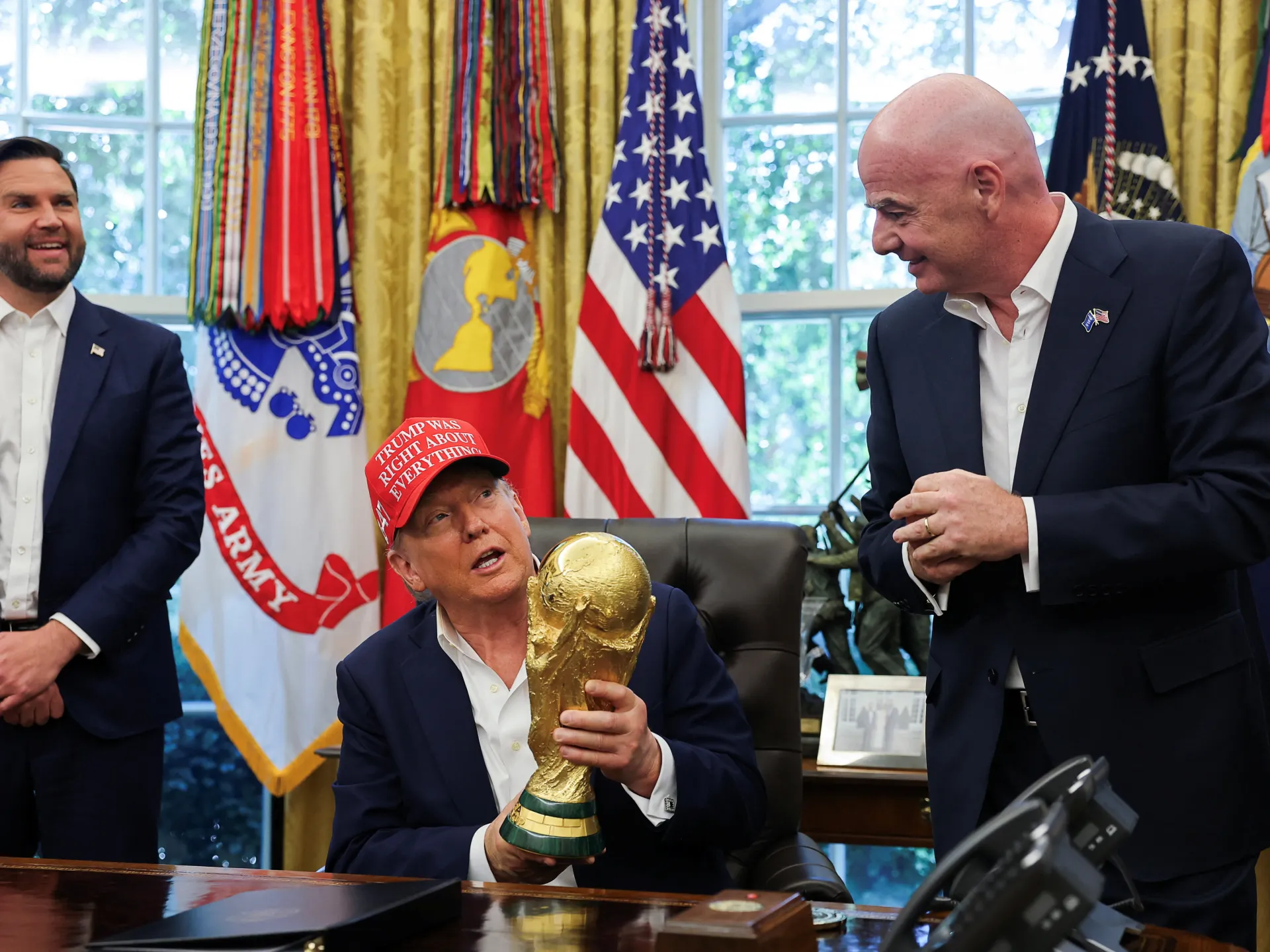
Iran is to boycott next week’s World Cup finals draw in Washington because the United States refused to grant visas to several members of the delegation, the Iranian football federation announced on Friday.

“We have informed FIFA that the decisions taken have nothing to do with sports, and the members of the Iranian delegation will not participate in the World Cup draw,” the federation’s spokesperson told state television.

Recommended Stories

list of 4 itemsend of list

Iranian sports website Varzesh 3 had claimed on Tuesday that the US had declined to issue visas to several members of the delegation, including the president of the federation, Mehdi Taj.

On Thursday, Taj had denounced the decision as being a political one.

“We have told the head of FIFA, Mr [Gianni] Infantino, that it is purely a political position and that FIFA must tell them [US] to desist from this behaviour,” added Taj.

According to Varzesh 3, four members of the delegation, including Amir Ghalenoei, the coach, had been granted visas for the draw on December 5.

Iran qualified for the sport’s quadrennial showpiece in March, guaranteeing them a fourth successive appearance and seventh in all.

They have yet to progress to the knockout stages, but there was unconfined joy when in the 1998 finals in France, Iran beat the USA 2-1 in their group match.

The US avenged that by beating Iran 1-0 in the 2022 edition.

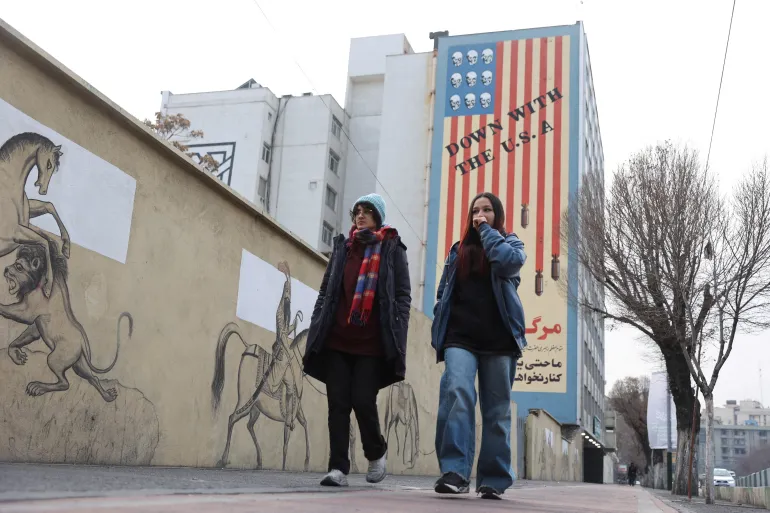
The US – which is co-hosting the World Cup with Canada and Mexico – and Iran have been at loggerheads for more than four decades.

They had, though, been holding high-level nuclear talks between Tehran and Washington that had begun in April, during which the two sides were at odds over Iran’s right to enrich uranium – which Tehran defends as “inalienable”.

However, they ended when, in mid-June, Israel launched an unprecedented bombing campaign against Iran, triggering a 12-day war that the US briefly joined, with strikes on key Iranian nuclear facilities.

Source link

Russia’s ‘shadow vessels’ using false flags to skirt sanctions, report says | Russia-Ukraine war News

Russian “shadow vessels” are using false flags to skirt sanctions imposed on Moscow over its war in Ukraine, according to a new report.

A total of 113 Russian vessels have flown a false flag in the first nine months of this year, transporting some 11 million tonnes of oil valued at 4.7 billion euros ($5.4bn), according to the report published on Thursday by the Centre for Research on Energy and Clean Air (CREA), a Helsinki-based think tank.

Recommended Stories

list of 4 itemsend of list

“The number of Russian ʻshadowʼ tankers sailing under false flags is now increasing at an alarming rate,” said report co-author Luke Wickenden.

“False-flagged vessels carried 1.4 billion euros ($1.6bn) worth of Russian crude oil and oil products through the Danish Straits in September alone.”

Russia’s clandestine shadow fleet transports sanctioned commodities, especially oil, under non-Russian flags to evade scrutiny.

Every vessel sailing on the open seas is required to fly a flag that provides it with legal jurisdiction for its operations in international waters.

The United Nations Convention on the Law of the Sea allows countries to grant their nationality to ships and fly their flag.

Some countries provide open registries that allow foreign-owned or controlled vessels to use their flag, a practice favoured by some shippers due to lower regulatory burdens and registration costs.

In its report, CREA said that 96 sanctioned vessels had flown a false flag at least once this year as of the end of September.

A total of 85 vessels registered at least two flag changes six months after being sanctioned by the European Union, the United States Department of the Treasury’s Office of Foreign Assets Control (OFAC) or the United Kingdom, according to the think tank.

Six flag registries that had not flagged a Russian ship before Moscow’s full-scale invasion of Ukraine in February 2022 had at least 10 such vessels each in their fleet in September 2025, according to CREA, for a total of 162 shadow vessels.

“In addition to the risks of false flagging, we also see that ʻshadowʼ vessel operators are taking advantage of capacity limitations of economically weak nations to exploit their flags and existing regulations to gain passage rights to deliver blood oil,” said co-author Vaibhav Raghunandan, calling on the EU and the UK to reform their flagging regulations and practices.

CREA said it based its report on vessel ownership and flag registry records obtained from maritime safety platform Equasis.

It said it cross-referenced the data with the IMO Global Integrated Shipping Information System (GSIS), a global shipping industry database.

‘More evasive techniques’

Rachel Ziemba, adjunct senior fellow at the Washington-based Center for a New American Security, said the CREA’s findings aligned with previous reports on Russia’s shadow fleet.

Ziemba said Moscow had resorted to “more evasive techniques” on the back of increased pressure from the EU, as well as moves by China to block so-called “zombie vessels”, which use the registration numbers of retired vessels.

While the US and the EU have continued to roll out new sanctions on Russian oil, “there is an open question about enforcement”, Ziemba said.

With sanctions enforcement becoming more difficult due to the growing illicit trade, countries would need to target vessels, intermediaries and buyers to significantly reduce Russia’s oil sales, she said.

“But that comes with costs,” Ziemba said, suggesting that China, a major buyer of Russian oil, could retaliate against countries that tightened sanctions.

“Plus, actual enforcement might mean more quasi-military stoppages of vessels to check papers, something that these countries might be wary of doing,” she added.

Source link

Was South Africa’s G20 summit a success, despite a US boycott? | Business and Economy

The hosts hailed the gathering, but others warned about the G20’s future.

Africa’s first-ever Group of 20 (G20) summit – and the first boycotted by a prominent member – has wrapped up.

Host South Africa hailed it as a success, as a declaration was agreed covering a wide range of issues.

But what’s next for the G20?

Presenter: Imran Khan

Guests:

Thembisa Fakude – Director of Africa Asia Dialogues (Afrasid) in Johannesburg

Richard Weitz – Senior non-resident associate fellow at the NATO Defense College in Washington, DC

Omar Ashour – Professor of strategic studies and international security at the Doha Institute for Graduate Studies

Source link

G-20 mulls Ukraine-Russia peace plan amid U.S. boycott

1 of 3 | South Africa’s President Cyril Ramaphosa, right, talks with European Council President Antonio Costa during a G20 Leaders’ Summit plenary session at the Nasrec Expo Centre in Johannesburg, South Africa, of Saturday. Photo by EU Press Service/UPI | License Photo

Nov. 22 (UPI) — The South Africa-hosted G20 summit began Saturday with some member states weighing a proposed peace plan to end the Russian-Ukraine war.

The two-day event is being held in Johannesburg amid a U.S. boycott due to South Africa’s policies toward Afrikaners.

The 28-point plan would require Ukrainian leaders to concede territorial gains by Russia, which they previously rejected, and limit the size of their military, The New York Times reported.

The proposed plan would give Russia some parts of the eastern Donbas region and force Ukraine to forego any possibility of joining NATO, according to The Guardian.

President Donald Trump presented the peace plan to Ukrainian President Volodymyr Zelensky earlier this week and advised him to decide whether to accept or reject it by next week.

European leaders attending the G-20 conference held a side meeting to review the plan and generally agreed that it needs to be revised to gain their support.

The plan “includes important elements that will be essential for a just and lasting peace,” they said afterward in a joint statement.

“But it is a basis that will require additional work,” they said, adding: “Borders must not be changed by force.”

Representatives from Britain, Finland, France, Germany, Ireland, Italy, the Netherlands, Norway, Spain and the European Union signed the joint statement.

The peace plan is not a final offer, though, Trump said on Saturday.

While several participating nations weighed the peace proposal, South African President Cyril Ramaphosa delivered the opening speech for the gathering of the world’s 20-largest economies, minus the United States.

Indian Prime Minister Narendra Modi lauded the summit being held in South Africa and said it’s time for the world’s leading economies support sustainable development.

“With Africa hosting the G-20 summit for the first time, now is the right moment for us to revisit our development parameters and focus on growth that is inclusive and sustainable,” Modi said in a post on X.

“India’s civilizational values, especially the principle of integral humanism, offers a way forward,” he added.

President Donald Trump meets with New York City mayor-elect Zohran Mamdani in the Oval Office at the White House in Washington, on Friday. Photo by Yuri Gripas/UPI | License Photo

Source link

How Trump’s support for a white minority group in South Africa led to U.S. boycott of G-20 summit

President Trump says that his government will boycott the Group of 20 summit this month in South Africa over his claims that a white minority group there is being violently persecuted. Those claims have been widely rejected.

Trump announced Friday on social media that no U.S. government official will attend the Nov. 22-23 summit in Johannesburg “as long as these Human Rights abuses continue.” South Africa’s Black-led government has been a regular target for Trump since he returned to office.

In February, Trump issued an executive order stopping U.S. financial assistance to South Africa, citing its treatment of the Afrikaner white minority. His administration has also prioritized Afrikaners for refugee status in the U.S. and says they will be given most of the 7,500 places available this fiscal year.

The South African government — and some Afrikaners themselves — say Trump’s claims of persecution are baseless.

Descendants of European settlers

Afrikaners are South Africans who are descended mainly from Dutch but also French and German colonial settlers who first came to the country in the 17th century.

Afrikaners were at the heart of the apartheid system of white minority rule from 1948-94, leading to decades of hostility between them and South Africa’s Black majority. But Afrikaners are not a homogenous group, and some fought against apartheid. There are an estimated 2.7 million Afrikaners in South Africa’s population of 62 million.

Afrikaners are divided over Trump’s claims. Some say they face discrimination, but a group of leading Afrikaner business figures and academics said in an open letter last month that “the narrative that casts Afrikaners as victims of racial persecution in post-apartheid South Africa” is misleading.

Afrikaners’ Dutch-derived language is widely spoken in South Africa and is one of the country’s 12 official languages. Afrikaners are represented in every aspect of society. Afrikaners are some of South Africa’s richest entrepreneurs and some of its most successful sports stars, and also serve in government. Most are largely committed to South Africa’s multiracial democracy.

Trump claims they’re being ‘killed and slaughtered’

Trump asserted that Afrikaners “are being killed and slaughtered, and their land and farms are being illegally confiscated.” The president’s comments are in reference to a relatively small number of attacks on Afrikaner farmers that he and others claim are racially motivated.

Trump has also pointed to a highly contentious law introduced by the South African government that allows land to be appropriated from private owners without compensation. Some Afrikaners fear that law is aimed at removing them from their land in favor of South Africa’s poor Black majority. Many South Africans, including opposition parties, have criticized the law, but it hasn’t led to land confiscations.

Trump first made baseless claims of widespread killing of white South African farmers and land seizures during his first term in response to allegations aired on conservative media personality Tucker Carlson’s former show on Fox News. Trump ordered then-U.S. Secretary of State Mike Pompeo to look into the allegations, but nothing came of any investigation.

South Africa rejects the claims

The South African government said in response to Trump’s social media post that his claims were “not substantiated by fact.” It has said that Trump’s criticism of South Africa over Afrikaners is a result of misinformation because it misses the context that Black farmers and farmworkers are also killed in rural attacks, which make up a tiny percentage of the country’s high violent crime rate.

There were more than 26,000 homicides in South Africa in 2024. Of those, 37 were farm murders, according to an Afrikaner lobby group that tracks them. Experts on rural attacks in South Africa have said the overriding motive for the violent farm invasions is robbery, not race.

Other pressure on South Africa

Trump said it is a “total disgrace” that the G-20 summit — a meeting of the leaders of the 19 top rich and developing economies, the European Union and the African Union — is being held in South Africa. He had already said he wouldn’t attend, and Vice President JD Vance was due to go in his place. The U.S. will take on the rotating presidency of the G-20 after South Africa.

Trump also said in a speech last week that South Africa should be thrown out of the G-20.

Trump’s criticism of Africa’s most developed economy has gone beyond the issue of Afrikaners. His executive order in February said South Africa had taken “aggressive positions towards the United States and its allies,” specifically with its decision to accuse Israel of genocide against Palestinians in Gaza at the United Nations’ top court.

U.S. Secretary of State Marco Rubio boycotted a G-20 foreign ministers meeting in South Africa in February after deriding the host country’s G-20 slogan of “solidarity, equality and sustainability” as “DEI and climate change.”

Imray writes for the Associated Press.

Source link

Trump announces U.S. boycott of G20 in South Africa

Nov. 8 (UPI) — President Donald Trump said the United States will not participate in the upcoming G20 conference in South Africa due to that nation’s alleged racial policies and killings of Afrikaners.

The G20 is scheduled Nov. 22 and 23 at the NASREC Expo Centre in Johannesburg, but the president cited the treatment of Dutch, French and German settlers and migrants as a cause for boycotting the event.

“It is a total disgrace that the G20 will be held in South Africa,” Trump said in a Truth Social post on Friday.

“Afrikaners … are being killed and slaughtered, and their land and farms are being illegally confiscated,” the president said. “No U.S. government official will attend as long as these human rights abuses continue.”

Afrikaners have experienced rising hostility from some politicians and others in South Africa, including those who encourage violence and land confiscation.

The nation’s Expropriation Act of 2024 enables the South African government to confiscate land for public use, and without paying in some instances, in order to address matters involving equity, according to Fox News.

Many view the act as a mechanism to target white South African farmers and take their land without compensation, and Trump has accused South Africa of engaging in genocide.

The South African foreign ministry denied any racial oppression had occurred in a prepared statement shared with the BBC.

“The South African government wishes to state, for the record, that the characterization of Afrikaners as an exclusively white group is ahistorical,” the foreign ministry said.

“Furthermore, the claim that this community faces persecution is not substantiated by fact.”

When South African President Cyril Ramaphosa visited Trump at the White House in May, the president raised the matter of genocide against Caucasians in South Africa.

Ramaphosa denied any genocide has occurred and cited prior oppression of South Africans.

“We cannot equate what is alleged to be genocide to what we went through in the struggle because people were killed because of the oppression that was taking place in our country,” Ramaphosa told the president.

Trump then played a video that allegedly showed white crosses placed along a South African highway to mark where the bodies of white farmers are buried, Fox News reported.

Ramaphosa asked where the white crosses were located and said he never had seen the alleged video evidence.

Trump has granted refugee status to Afrikaners despite the South African government earlier saying claims of genocide are “widely discredited and unsupported by reliable evidence,” the BBC reported.

The G20 is a collection of 19 nations, plus the European Union, and was formed in 1999 to promote global economic stability in the wake of Asian financial troubles.

The G20 collectively represents 85% of the world’s economic output and two-thirds of its population and meets annually to discuss matters affecting member states and the world.

The United States is scheduled to host the annual event next year in Miami.

Source link

Trump says US to boycott South Africa G20 summit over white ‘genocide’ | Donald Trump News

Trump calls it a ‘disgrace’ that South Africa is hosting the G20, reiterates debunked claims of a ‘genocide’ against white farmers.

President Donald Trump has said no United States officials will attend this year’s Group of 20 (G20) summit in South Africa, citing the country’s treatment of white farmers.

Writing on his Truth Social platform on Friday, Trump said it was a “total disgrace that the G20 will be held in South Africa”.

Recommended Stories

list of 3 itemsend of list

“Afrikaners (People who are descended from Dutch settlers, and also French and German immigrants) are being killed and slaughtered, and their land and farms are being illegally confiscated,” Trump wrote, reiterating claims that have been rejected by authorities in South Africa.

“No US Government Official will attend as long as these Human Rights abuses continue. I look forward to hosting the 2026 G20 in Miami, Florida!” he added.

Since returning to the White House in January, Trump has repeatedly claimed that white South Africans are being persecuted in the Black-majority country, a claim rejected by South Africa’s government and top Afrikaner officials.

Trump had already said on Wednesday that he would not attend the summit – which will see the heads of states from the world’s leading and emerging economies gather in Johannesburg on November 22 and 23 – as he also called for South Africa to be thrown out of the G20.

US Vice President JD Vance had been expected to attend the meeting in place of the president. But a person familiar with Vance’s plans told The Associated Press news agency that he will no longer travel to South Africa.

Tensions first arose between the US and South Africa after President Cyril Ramaphosa introduced a new law in January seeking to address land ownership disparities, which have left three-quarters of privately owned land in the hands of the white minority more than three decades after the end of apartheid.

The new legislation makes it easier for the state to expropriate land, which Ramaphosa insists does not amount to confiscation, but creates a framework for fair redistribution by allowing authorities to take land without compensation in exceptional circumstances, such as when a site has been abandoned.

Shortly after the introduction of the Expropriation Act, Trump accused South Africa of “confiscating land, and treating certain classes of people VERY BADLY”.

“The United States won’t stand for it, we will act,” he said.

In May, Trump granted asylum to 59 white South Africans as part of a resettlement programme that Washington described as giving sanctuary after racial discrimination.

The same month, when Trump met with President Ramaphosa in the White House, he ambushed him with the claim that a “genocide” is taking place against white Afrikaners in his country.

Ramaphosa denied the allegations, telling Trump “if there was Afrikaner farmer genocide, I can bet you, these three gentlemen would not be here”, pointing to three white South African men present – professional golfers Ernie Els and Retief Goosen, and South Africa’s richest man, Johann Rupert.

South African historian Saul Dubow, professor of Commonwealth history at the University of Cambridge, previously told Al Jazeera that there is no merit to “Trump’s fantasy claims of white genocide”.

Dubow suggested that Trump may be more angry about South Africa’s genocide case filed against Israel in the International Court of Justice over its war on Gaza.

Nonetheless, the Trump administration has maintained its claim of widespread persecution. On October 30, the White House indicated that most new refugees admitted to the US will be white South Africans, as it slashed the number of people it will admit annually to just 7,500.

“The admissions numbers shall primarily be allocated among Afrikaners from South Africa pursuant to Executive Order 14204 and other victims of illegal or unjust discrimination in their respective homelands,” the White House said.

Source link