It might seem harmless at first glance, but it could lead to unnecessary delays

Reduce the risk of being stopped by airport security(Image: Getty Images)
Packing for a holiday can feel like navigating a minefield, with a long list of rules on what can and can’t go in your luggage. While some banned items are obvious, others seem completely innocent at first glance – yet bringing them to the airport could still result in officials delaying your journey.
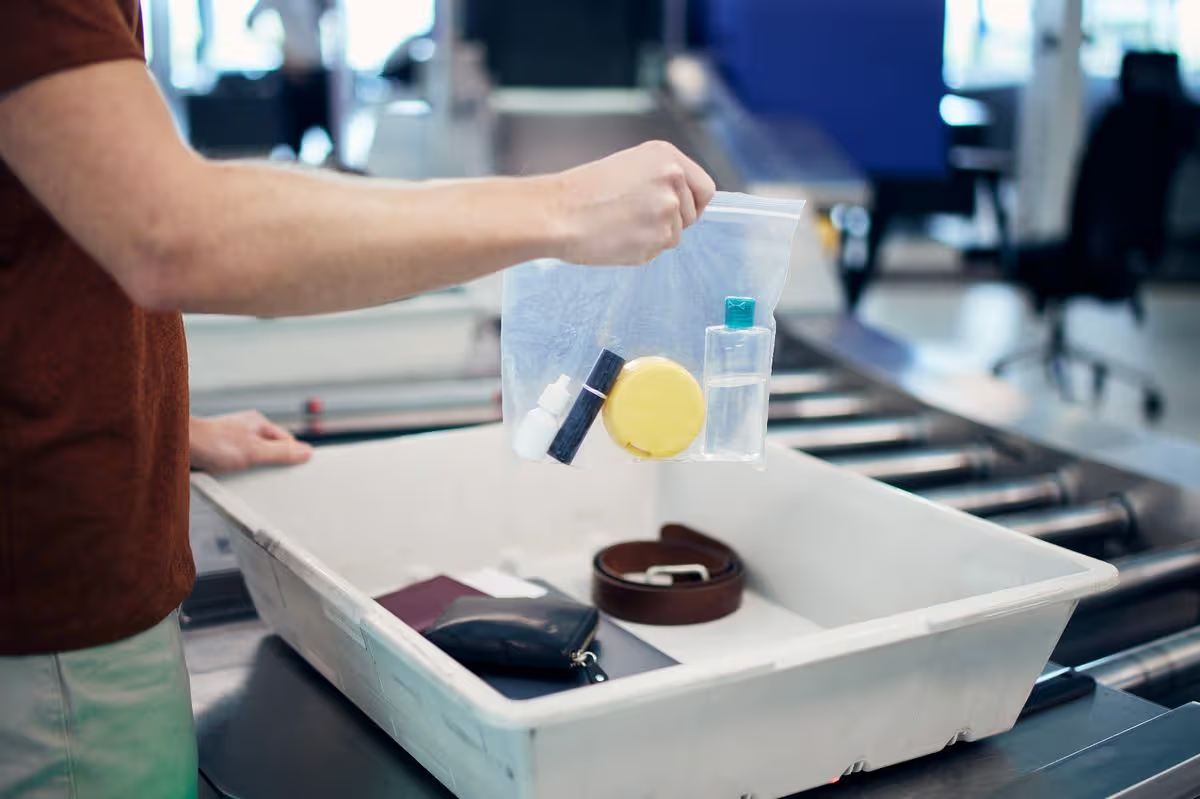
There is one everyday item that is allowed by all major airlines, including Ryanair, Jet2, TUI, easyJet and British Airways, but could still attract attention during security screening if officers are unable to identify it clearly on the scanner. To avoid unnecessary delays or having to unpack your luggage at the checkpoint, travellers are advised to pack toiletries in a way that makes them easy to inspect.
A simple bar of soap – buyable at Sainsbury’s for 35p, for example – might seem like one of the most harmless items you could take on holiday. However, it is not the soap itself that can cause concern – it is the way a solid item may appear when passing through security scanners.
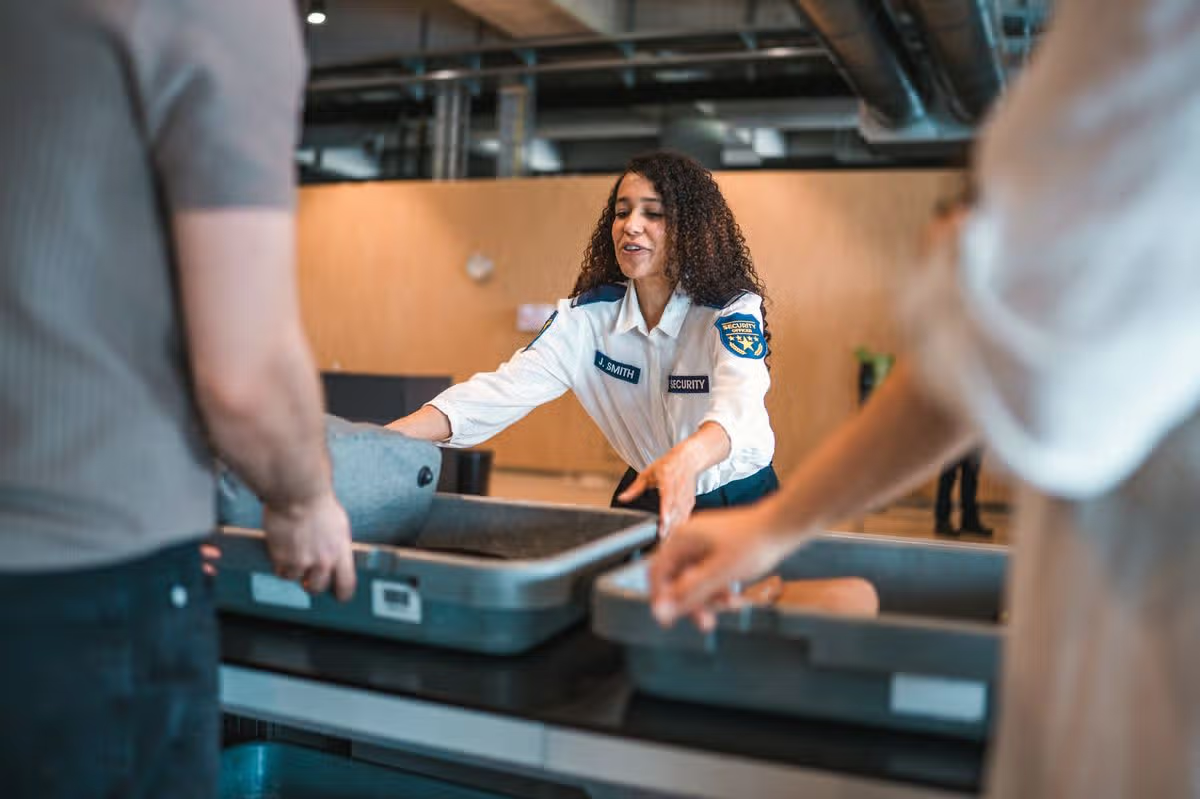
Airport security staff do not routinely search luggage simply because it contains a bar of soap. However, dense items can sometimes make X-ray images harder to interpret, particularly when they are packed alongside electronics, cables or other bulky belongings. If officers cannot clearly identify an item, they may carry out additional checks before allowing passengers through.
The government information website GOV.UK says: “Airport security staff will not let anything through that they consider dangerous – even if it’s normally allowed in hand luggage.” While soap clearly is not dangerous, if a bar of soap raises an alert on the scanner, they are legally required to stop the passenger and inspect it.
The US Transport Security Agency (TSA), for instance, says passengers are often asked to separate dense items because they can “clutter bags and obstruct clear images on the X-ray machine.” When a solid block of soap, cheese, or other dense organic material blocks the scanner’s view or mimics a threat signature, protocol requires a physical bag search or chemical swab testing to clear the item.
According to GOV.UK, solid bars of soap are permitted in both hand luggage and checked baggage. Security officers can still manually inspect any item they are unable to identify clearly during the screening process, regardless of whether it is allowed.
To reduce the chances of your bag being opened, experts recommend keeping dense items easy to access and, if requested, placing them in a separate tray during screening. Avoid storing them inside thick metal tins or rigid plastic cases alongside items such as power banks, charging cables and other electronics, as this can make X-ray images harder to interpret.
It’s also important not to confuse solid soap with liquid toiletries. While bars of soap are exempt from liquid restrictions, liquid soaps, shower gels and similar products carried in hand luggage must normally be in containers holding no more than 100ml, unless you’re travelling through an airport that has introduced next-generation security scanners permitting larger liquids.
The rules apply regardless of which airline you’re flying with, as baggage screening is carried out by the airport rather than carriers such as Ryanair, Jet2, TUI, easyJet or British Airways. A manual inspection is simply a precaution and does not mean you’ve broken any rules or packed a prohibited item.
Taking a few moments to think about how you pack everyday toiletries could help make your journey through security a little smoother. Although a 35p bar of soap is perfectly legal to travel with, storing it sensibly could help avoid unnecessary delays before your holiday even begins.