Bournemouth Airport

Packing innocent 35p item in bags or suitcases could see you stopped at airport

It might seem harmless at first glance, but it could lead to unnecessary delays

Packing for a holiday can feel like navigating a minefield, with a long list of rules on what can and can’t go in your luggage. While some banned items are obvious, others seem completely innocent at first glance – yet bringing them to the airport could still result in officials delaying your journey.

There is one everyday item that is allowed by all major airlines, including Ryanair, Jet2, TUI, easyJet and British Airways, but could still attract attention during security screening if officers are unable to identify it clearly on the scanner. To avoid unnecessary delays or having to unpack your luggage at the checkpoint, travellers are advised to pack toiletries in a way that makes them easy to inspect.

A simple bar of soap – buyable at Sainsbury’s for 35p, for example – might seem like one of the most harmless items you could take on holiday. However, it is not the soap itself that can cause concern – it is the way a solid item may appear when passing through security scanners.

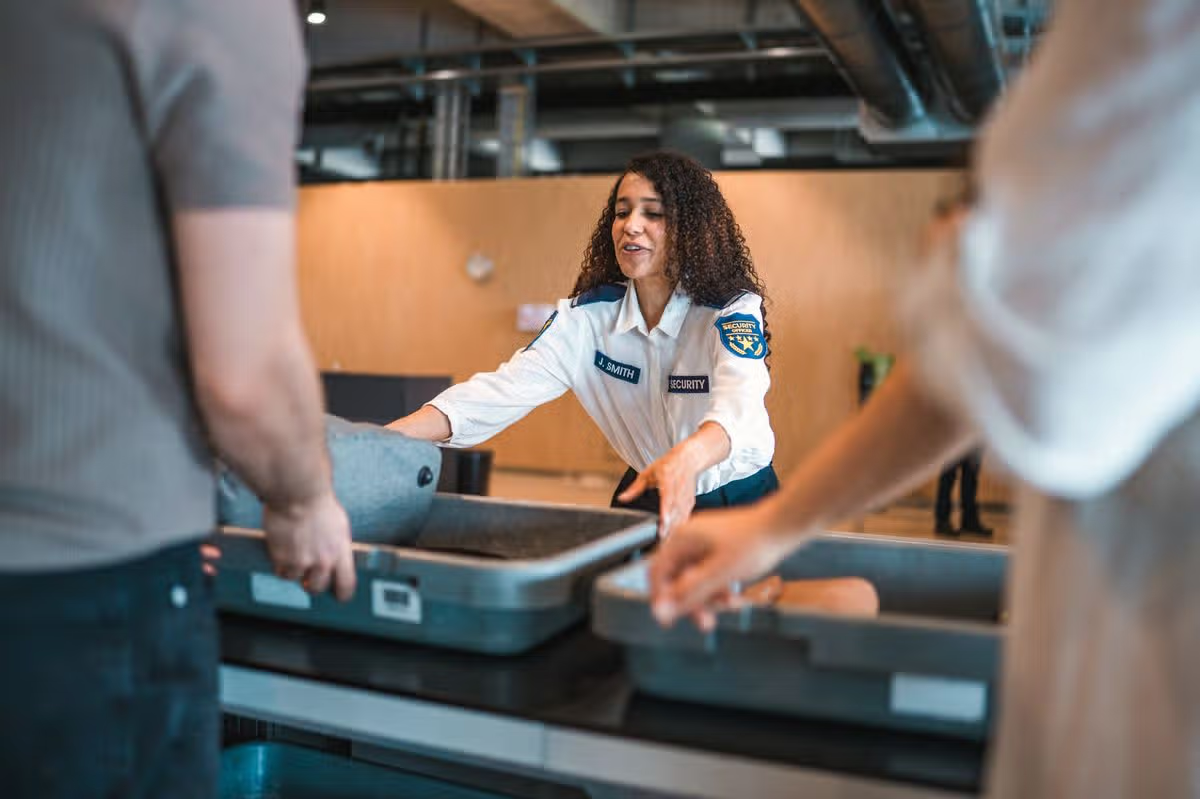
Airport security staff do not routinely search luggage simply because it contains a bar of soap. However, dense items can sometimes make X-ray images harder to interpret, particularly when they are packed alongside electronics, cables or other bulky belongings. If officers cannot clearly identify an item, they may carry out additional checks before allowing passengers through.

The government information website GOV.UK says: “Airport security staff will not let anything through that they consider dangerous – even if it’s normally allowed in hand luggage.” While soap clearly is not dangerous, if a bar of soap raises an alert on the scanner, they are legally required to stop the passenger and inspect it.

The US Transport Security Agency (TSA), for instance, says passengers are often asked to separate dense items because they can “clutter bags and obstruct clear images on the X-ray machine.” When a solid block of soap, cheese, or other dense organic material blocks the scanner’s view or mimics a threat signature, protocol requires a physical bag search or chemical swab testing to clear the item.

According to GOV.UK, solid bars of soap are permitted in both hand luggage and checked baggage. Security officers can still manually inspect any item they are unable to identify clearly during the screening process, regardless of whether it is allowed.

To reduce the chances of your bag being opened, experts recommend keeping dense items easy to access and, if requested, placing them in a separate tray during screening. Avoid storing them inside thick metal tins or rigid plastic cases alongside items such as power banks, charging cables and other electronics, as this can make X-ray images harder to interpret.

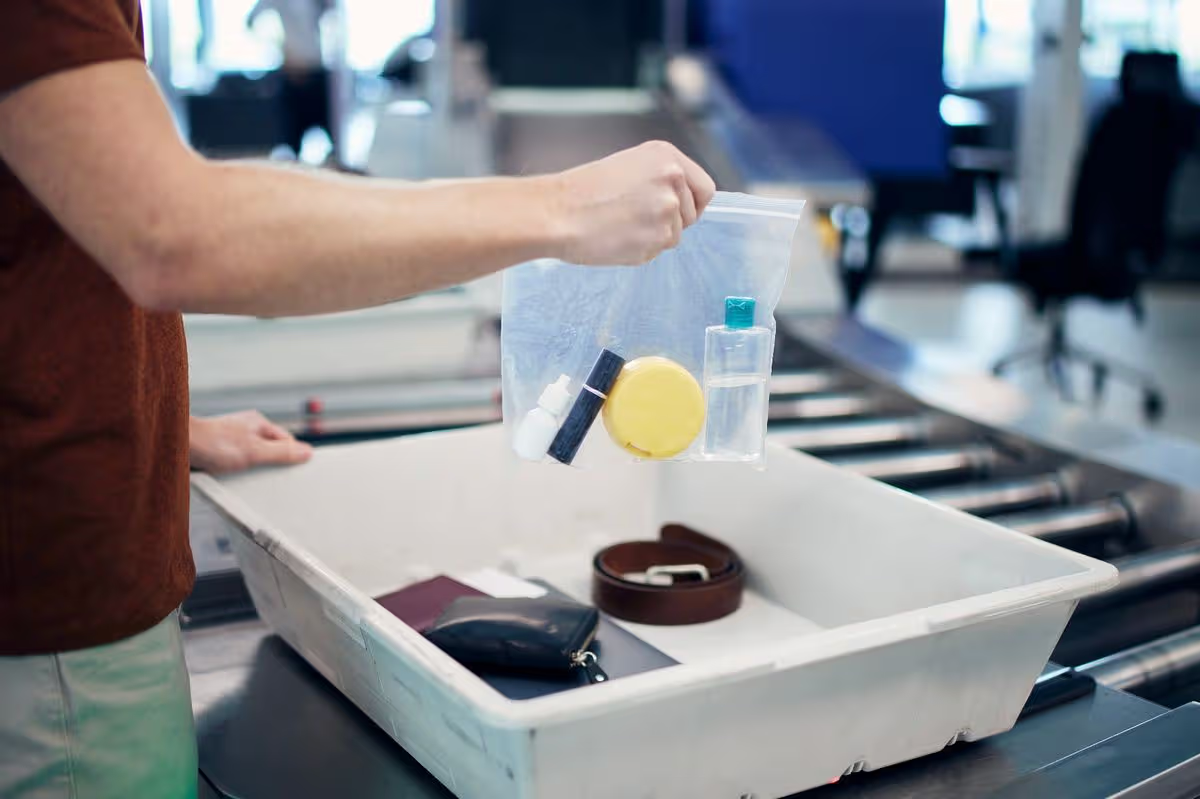
It’s also important not to confuse solid soap with liquid toiletries. While bars of soap are exempt from liquid restrictions, liquid soaps, shower gels and similar products carried in hand luggage must normally be in containers holding no more than 100ml, unless you’re travelling through an airport that has introduced next-generation security scanners permitting larger liquids.

The rules apply regardless of which airline you’re flying with, as baggage screening is carried out by the airport rather than carriers such as Ryanair, Jet2, TUI, easyJet or British Airways. A manual inspection is simply a precaution and does not mean you’ve broken any rules or packed a prohibited item.

Taking a few moments to think about how you pack everyday toiletries could help make your journey through security a little smoother. Although a 35p bar of soap is perfectly legal to travel with, storing it sensibly could help avoid unnecessary delays before your holiday even begins.
Source link

Which UK airports still have the 100ml restrictions in place – full list

We’ve all got used to packing tiny shampoos and shower gels into our hand luggage when we fly, but new technology means some major airports are scrapping the 100ml rule making going through security so much easier

It’s hard to believe that the airline liquid rules have been in place for nearly two decades. Since a terror plot was foiled in 2006, air passengers in the UK have been limited to taking containers of under 100ml on planes, and made to keep them in a clear, resealable 20cm x 20cm plastic bag.

Over the years, technology has improved, meaning restrictions have slowly been eased. In many airports, you no longer need to use a clear plastic bag for your liquids and can simply leave them in your hand luggage. However, in the majority of airports, the 100ml rule still stands all these years later.

A small number of airports have now scrapped the 100ml rule – allowing Brits to fly out with liquids in containers of up to two litres in volume. This means most standard-sized bottles of water, creams, gels, sprays, and aerosols can be taken through as hand luggage.

Whatever the allowed liquid size at your departure airport, holidaymakers should make sure they avoid using metal or double-walled bottles, such as a Thermos flask, when they carry liquids on board, as the scanners cannot penetrate the insulated layers.

Another thing travellers should keep in mind is that the rules at their return airport might be different. The vast majority of European airports still enforce the 100ml rule. So while you may be able to take a big bottle of suncream in your hand luggage going out, you may need to put it in your checked luggage coming back.

The GOV.UK website has a list of items considered liquids. Many travellers still get caught out by the 100ml rule as they don’t realise items such as semi-liquid foods such as soup, jam, honey, or syrups need to be within the restricted size.

Nut butters and soft cheeses also come under the category of liquids. In the USA, the Transportation Security Administration (TSA) use a rule that: if you can spill it, spread it, spray it, pump it, or pour it, it counts as a liquid. While this isn’t an official rule in the UK, it’s a good way to determine whether an item you’re taking onboard is going to need to follow liquid size rules.

Liquid rules at airports can be updated with little notice, so always check your departure airport’s official website before you fly.

Full list of airports still enforcing the 100ml rule

  • Manchester Airport (MAN)
  • London Stansted (STN)
  • London Luton (LTN)
  • Glasgow Airport (GLA)
  • Glasgow Prestwick Airport (PIK)
  • Liverpool John Lennon Airport (LPL)
  • Newcastle International Airport (NCL)
  • Leeds Bradford Airport (LBA)
  • East Midlands Airport (EMA)
  • London City Airport (LCY)
  • Aberdeen International Airport (ABZ)
  • Jersey Airport (JER)
  • Cardiff International Airport (CWL)
  • Southampton Airport (SOU)
  • Inverness Airport (INV)
  • Cornwall Airport Newquay (NQY)

Full list of airports that have scrapped 100ml rule

  • London Heathrow (LHR)
  • London Gatwick (LGW)
  • Edinburgh Airport (EDI)
  • Birmingham Airport (BHX)
  • Bristol Airport (BRS)
  • Belfast International Airport (BFS)
  • George Best Belfast City Airport (BHD)
  • Bournemouth Airport (BOH)

Have a story you want to share? Email us at webtravel@reachplc.com

Source link

EasyJet urges passengers to ‘switch off’ item on board or risk lifetime ban

easyJet passengers are being warned they could face serious consequences if they don’t completely switch off certain electronic devices

Holidaymakers travelling with easyJet this summer are being warned that they could unknowingly fall foul of strict cabin rules unless they fully switch off a commonly used electronic device before stepping on board. The trouble is that many passengers only discover the rule once they’ve already reached the airport or are on the verge of boarding, where last-minute slip-ups could spell serious problems.

According to EasyJet, the warning relates to e-cigarettes and vaping devices, which must be carried in hand luggage only and are strictly forbidden from being stowed in hold baggage under any circumstances. The airline’s official policy states: “All electronic cigarettes and vaping devices must be carried in the cabin, re-charging is strictly prohibited and the device must be completely switched off.”

It also advises passengers to keep their devices on their person where they can be kept an eye on throughout the flight, reducing the risk of accidental activation. These rules are in place due to concerns over lithium-ion batteries, which are used to power vaping devices and are well known for posing a fire risk if they become damaged or overheat.

The UK Civil Aviation Authority categorises lithium batteries as a significant safety risk in aviation due to their potential for ‘thermal runaway’, producing intense heat and flames that are notoriously difficult to extinguish in confined spaces. The International Air Transport Association has highlighted a worldwide rise in lithium battery-related incidents, which has gone hand in hand with the increasing prevalence of portable electronic devices, prompting airlines across the globe to tighten their rules considerably.

EasyJet also warns that passengers must take precautions to prevent their vaping devices from being switched on accidentally during flights, including ensuring they are fully powered down before boarding. The airline stipulates that travellers may carry no more than two spare batteries in their hand luggage, and that these must be properly protected to prevent them from coming into contact with metal objects.

Under UK aviation rules, vaping devices must be kept in hand luggage at all times. Official government guidance states that e-cigarettes are strictly prohibited from hold baggage.

Industry experts point out that confusion often arises because rules can vary between airlines and destinations, which can leave passengers unknowingly packing the wrong items before they even reach airport security. Aviation safety specialists also warn that using or charging vaping devices while on board flights is strictly prohibited by all major airlines, with penalties ranging from confiscation to fines or even travel bans in severe cases.

As summer travel demand picks up, holidaymakers are being urged to check airline regulations before they set off to avoid delays, confiscations, or being refused entry at the boarding gate.

Source link