FORGET the crowds of Spain and Italy – there’s a country in Europe which has actually seen a DROP in tourists this year.
It was even dubbed the ‘new Croatia‘ thanks to its one seaside town along the Adriatic Coastline.
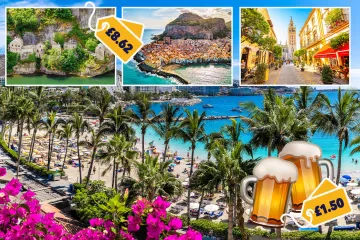
The capital of Bosnia and Herzegovnia, Sarajevo, is one of Europe’s cheapestCredit: AlamyThe country has 12-miles of coastline surrounding the town of NeumCredit: Alamy
Official stats have revealed that the number of foreign tourists who visited Bosnia and Herzegovina in the first half of 2026 decreased by 3.2 per cent on the year to 582,541.
The country had previously been revealed as a top holiday spot for 2025 and even called the ‘new Croatia‘.
Sign up for the Travel newsletter
Thank you!
Thanks to it being lesser-visited then its neighbour, Bosnia and Herzegovina was described as a “less crowded alternative to Dubrovnik” by a team of travel experts at Wild Frontiers.
In comparison, Croatia welcomed more than 7.6 million visitors during the first six months of 2026.
But in a world where destinations are suffering from overtourism, the fact Bosnia and Herzegovina has fewer tourists means it’s an ideal time to visit if you want to avoid crowds.
It’s cheap too – in fact the country’s capital, Sarajevo was named as the best-value destination in Europe by the Post Office Travel Money earlier this year.
It calculated that a two night’s stay across a weekend for two people would cost an average of £248.29.
This includes three-star accommodation, food, drink, a three-course evening meal, travel cards and attractions including a visit to a museum, art gallery and sight-seeing tour.
As for what to do there, the city is named one of the best for its food scene.
One traditional dish is called Bosanski Lonac which is essentially a stew packed with chunks of meat and vegetables.
Neum on the Adriatic coast splits Croatia into two partsCredit: Alamy
Another is cevapi – these are flatbreads filled with grilled meat, and burek, flaky pastries filled with cheese, spinach or even sour cherry for dessert.
The best part is that eating out is very cheap for a capital city.
According to Wise, a meal at a restaurant can cost as little as £4.41 and visitors can enjoy a local beer from £1.76.
Flights are cheap too if you book in advance – with Wizz Airnext April, Brits can fly to Sarajevo from £25 which takes just 2hr40.
Something to do in Sarajevo is head to its enormous thermal spa.
Ilidža Thermal Riviera is one of the largest thermal complexes in the Balkans and has been built on the hot spring of Ilidža.
Guests can take a dip in its indoor and outdoor swimming pools as well as children’s pool which has a slide.
There’s even a small go-karting area, trampolines and a Tropical Garden Restaurant – tickets into the complex cost as little as 8 KM (£3.51).
There’s also a nearby amusement park in the city centre called Sunnyland which has an Alpine Coaster zip lines and giant swings.
It’s found on Olympic Mountain Trebević which is a 10-minute drive from the city centre.
Entry to the park is free with visitors just having to pay for the rides and activities.
While most of Bosnia and Herzegovina is landlocked, it does have a short 12-mile coastline with beautiful beaches along the Adriatic Sea.
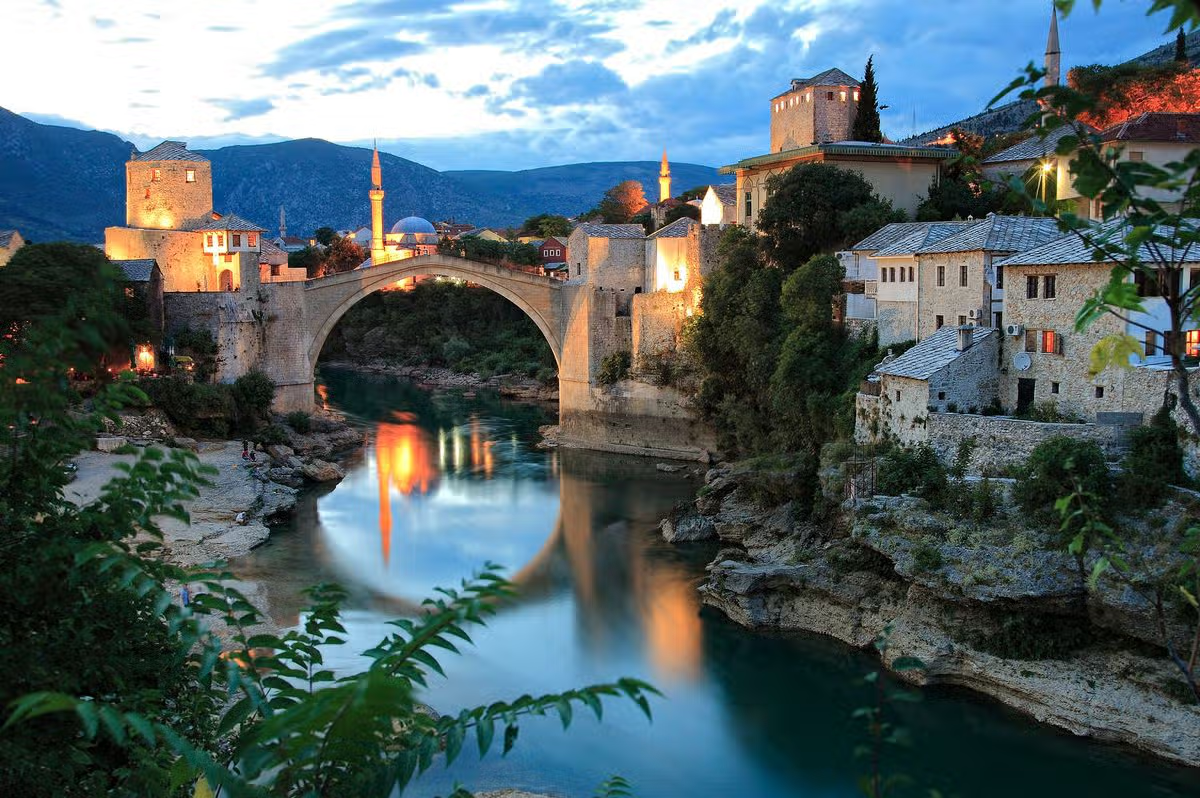
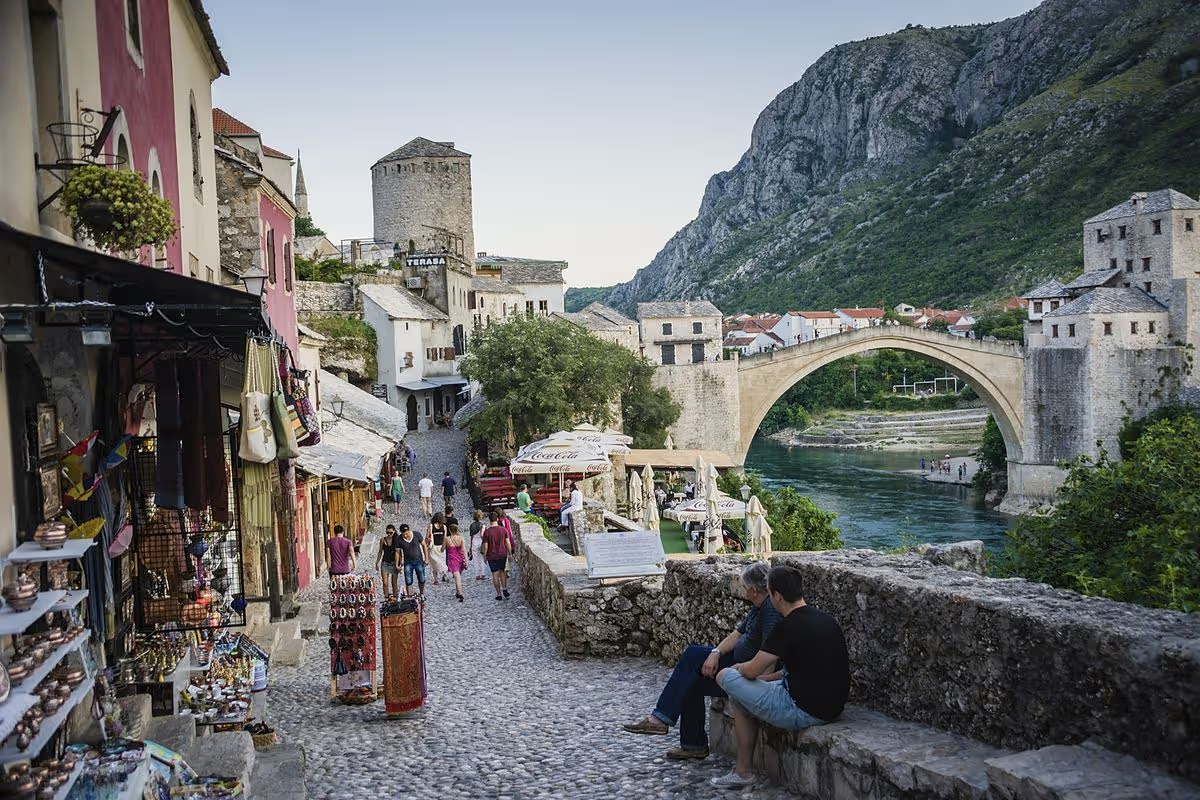
The Ottoman bridge in Mostar is one of the most famous spots in the countryCredit: Getty ImagesAnother attraction is the Kravica WaterfallCredit: Alamy
All of the coastline surrounds the pretty town of Neumwhich has bars and cafes along the promenade.
The town is considered an ‘anomaly’ as on a map, it sits along the Croatian coastline, but it’s actually in Bosnia and Herzegovina.
Historically, the Republic of Ragusa (Dubrovnik) ceded the land to the Ottoman Empire in 1699 via the Treaty of Karlowitz.
Other must-visit spots include the Ottoman bridge in Mostar which is around an hour’s drive away from Neum.
The bridge sits over River Neretva and is considered masterpiece architecture from the 16th century.
For anyone feeling brave, you can actually jump off the 7-story high bride which is a 450-year-old tradition.
Historically, it was a way for young men to prove their courage – but nowadays anyone can do it as it’s managed by officials at the Mostari Diving Club.
When you think of beautiful bridges, it’s probably the world-famous ones that spring to mind. Marvels of engineering like San Francisco’s Golden Gate, or the rich history of London Bridge. However, according to Time Out magazine, the ‘most beautiful’ bridge in the world is a small stone arch tucked away in Bosnia and Herzegovina.
Stari Most, which translates to ‘Old Bridge’, is located in Mostar, a city that lies on the banks of the Neretva River.
Commissioned by Sultan Suleiman the Magnificent in 1557 and completed in 1566, the bridge is made of local limestone and spans the river without using any central pillars.
In 1993, the original bridge was destroyed by shelling in the Bosnian War.
However, UNESCO aided its reconstruction, with divers recovering the original stones from the river and masons using the same 16th-century tools to re-create the structure as closely as possible.
It’s now a UNESCO World Heritage site, and has recently been named as the ‘most beautiful’ bridge in the world by Time Out.
UNESCO describes Stari Most as “a symbol of reconciliation, international co-operation and of the coexistence of diverse cultural, ethnic and religious communities.”
The bridge is visually stunning, standing 27 metres above the emerald green river below.
There is also a long history of daredevils and athletes jumping from the bridge into the water.
The first recorded leap dates back to 1664, according to Bosnian Voyager.
By the 19th century, it was a tourist attraction, with people from all over the continent flocking to the bridge to watch adrenaline seekers hurl themselves into the river.
Since 2016, the Red Bull Cliff Diving World Series has transformed Mostar’s bridge into an elite global sporting stage that keeps the tradition alive.
The competition takes place in late July, and spectators line the river to watch world-class divers jump from the bridge.
The items studied were two nights’ three-star weekend accommodation, a three-course meal for two with a bottle of house wine, a cup of coffee, a bottle of beer and Coca Cola, a glass of wine, return airport transfers, a 48-hour travel card, a sightseeing bus tour and tickets to top heritage attraction, top museum and top art gallery
Sarajevo has been crowned Europe’s cheapest city(Image: Getty Images)
An often-overlooked city with a rich history and breathtaking natural scenery is Europe’s best-value city for a short break.
Despite having a population smaller than Reading and sitting hundreds of miles inland from the coast, Sarajevo is a destination that packs a serious cultural punch, while being perfect for a summer holiday.
If for no other reason than for how cheap it is.
The capital of Bosnia and Herzegovina has topped Post Office Money’s City Cost Barometer 2026, ranking it the cheapest of the 50 European destinations included.
The items studied were two nights’ three-star weekend accommodation, a three-course meal for two with a bottle of house wine, a cup of coffee, a bottle of beer and Coca Cola, a glass of wine, return airport transfers, a 48-hour travel card, a sightseeing bus tour and tickets to top heritage attraction, top museum and top art gallery. Sarajevo’s total basket price was £248 – less than a third that of last place, Oslo.
According to local tour guide Nermin Numic, life in Sarajevo is cheap and easy. Filling up on the city’s most famous local dishes, such as grilled minced meat cevapi, or the slow-cooked stew Bosanski Lonac, is easily achievable for £5. A fancier dinner and drink will set you back £15 a person.
In the high season, a simple room for two can be found for under £50, while higher-end hotels and Airbnbs charge around £150.
Nermin spent time out of the country during the Kosovo War and Covid, experiences which helped him see his home through different eyes.
“Sometimes it takes time being separated to appreciate things. It is amazing for me what this city and country has. So much diversity and these amazing mountains that I took for granted.”
Known as the Jerusalem of Europe, Sarajevo is a place where cultures, regions, and religions intersect. The Ottoman influence can be felt in the narrow winding alleys, bustling copper-smithing bazaars and traditional timber-framed houses. It butts up against the Austro-Hungarian influence, felt in the wide European avenues, grand neoclassical facades, and opulent public buildings, reflecting the city’s rapid modernization in the late 19th and early 20th centuries.
“It’s diverse in so many ways. It is called Little Jerusalem, it has churches, mosques, and synagogues next to each other, and it has for centuries. There are Ottoman, Austro-Hungarian, and communist social blocks part of the town,” Nermin explained.
The city sits between four mountains that hosted the 1984 Winter Olympics, meaning skiing opportunities in the colder months – and hiking trails in the summer – are within easy reach.
While Nermin insists that two days and nights in the city is the absolute minimum required, any flying visit should take in the disused bobsleigh track. “It is now a canvas for local artists. You can walk down the track from the hills into the city,” he said.
The Old Town is another must. “It looks very exotic, but feels familiar. It’s a meeting of cultures. Look east, and you’re in Turkey. Look west, and it feels Hungarian.”
Suitably for a destination known for closing divides and bringing cultures together, Sarajevo is a place of bridges. Thirteen of them to be precise. The best-known is Latin Bridge, where Archduke Franz Ferdinand was assassinated in an event that triggered the WWI. The Mostar Bridge is on the cover of almost every Bosnian travel guide, arching dramatically as it does over the emerald green Neretva River.
Unlike Bosnia and Herzegovina’s second city, Mostar, Sarajevo is rarely crowded. The one exception is in August, when the diaspora returns and the Capital’s film festival injects a real buzz into the place.
Ryanair flies from London Stansted to Sarajevo, while Wizz Air takes off from Luton. Return fares this summer are available for around £60.
All of the five cheapest cities in the Post Office Money rankings are in Eastern Europe. Bucharest (£258, Romania), Tirana (£263, Albania), Belgrade (£265, Serbia) and Trenĉin (£272, Slovakia) complete the top five. All five now offer direct flights from the UK.