bookseller

Tiny shop in beautiful coastal town where you can live out your bookseller dreams

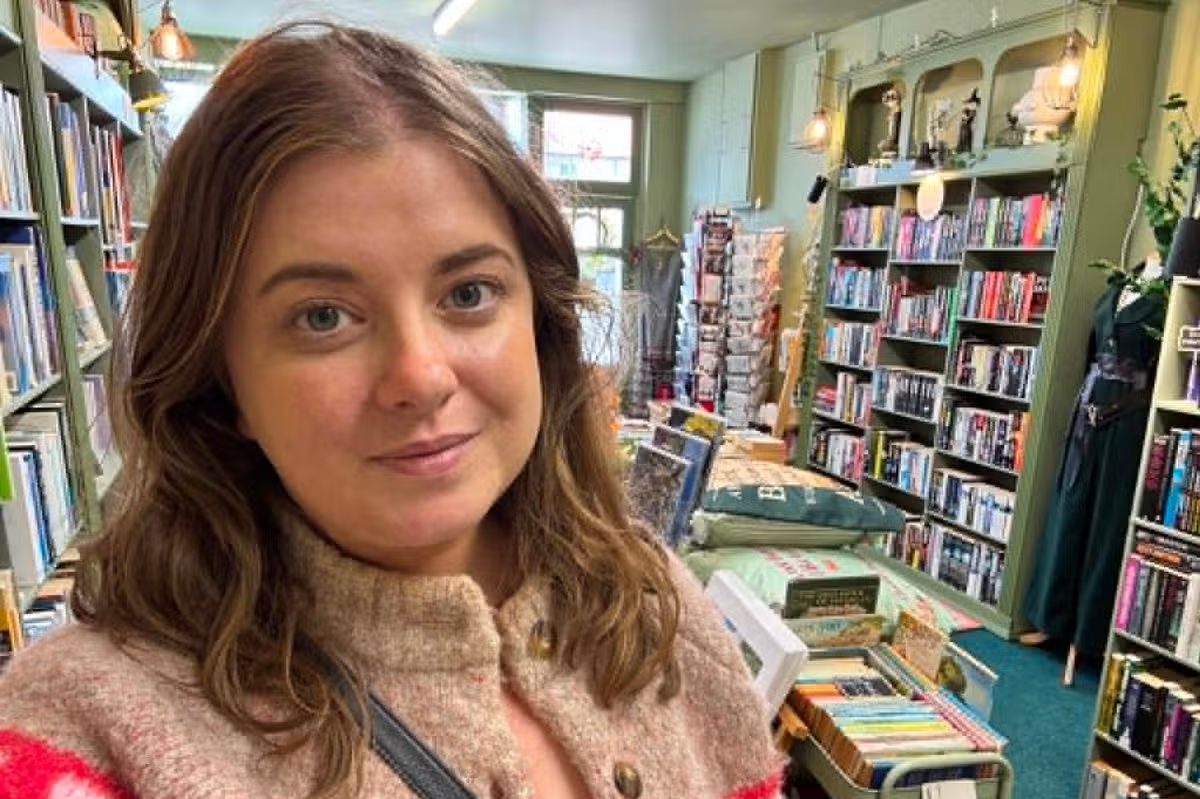
Having always loved the idea of running her own bookshop, Mirror writer Julia Banim spent the night at Read and Rabbit in Loftus, which offers guests the opportunity to try their hand at bookselling

It’s always been a bit of a daydream of mine to run a quirky bookshop, ideally in a suitably pretty location.

So imagine my delight when I learned about Read and Rabbit, a sweet pink bookshop nestled in the quaint village of Loftus, on the very edge of the breathtakingly poetic North York Moors National Park.

It’s here where literary-minded holidaymakers can stay above the shop in the cosiest of surroundings. Best of all, in between curling up with a book and exploring the many charms of the local area, guests can try their hand at running the shop themselves, tallying up change, and greeting customers looking for a good read, and indeed, a good rabbit.

If you’ve been waiting around for your romcom moment, then let this be your sign. I simply couldn’t resist.

Read and Rabbit is the baby of Marta Eleniak, a friendly and likeable host with an encyclopedic knowledge of local haunts. She tells the Mirror: “I love creating experiences for people. Of all the things that I’ve done in my life, it’s when I’ve organised holidays for other people and done things that made them smile, that’s kind, where I feel I’m in my element. It’s like my calling, really, creating experiences for others.”

Before clocking on for my bookshop shift, Marta and I stop by the nearby Cattersty Sands beach, a hidden gem offering enough tranquillity to dislodge even the most stubborn writer’s block. Those with pets will also be pleased to know that it’s dog-friendly.

A relative newbie to Loftus, Marta fell for the area while looking for somewhere new to live, ideally in a friendly, affordable community with woods to walk in and plenty of rolling hills.

While chatting about her search on a Facebook group, a fellow member suggested their hometown of Loftus, with its waterfalls and proximity to the sea. Marta was immediately sold.

Having familiarised myself with lovely Loftus, it was onto my shift. The bookshop itself is a real treasure, with creative displays and even a fun ‘Harry Potter experience’ that young bookworms, and perhaps those not so young, will no doubt enjoy.

Marta learned that the centuries-old shop, previously an artist’s pottery studio, was up for sale through the local walking group, and while she initially had no intention of buying, when she saw it in person, it was love at first sight. It was then that things started to come together.

With this new ‘run a bookshop’ experience, guests staying in the self-catering accommodation have free rein to run Read and Rabbit, should they choose to. If they decide to do so, the only rules are that they open on at least one of the core days between 10 am and 2 pm on Saturday and on one midweek day.

That aside, guests are free to do as they wish and can spend time organising the books, changing up the window displays, and even offering workshops. For those looking for a bit more of a transformative stay, Marta offers buddy-up sessions to help people overcome writers’ block.

For Marta, Read and Rabbit is about more than selling books. From spending time online, she’s come across people who don’t necessarily have many friends in the offline world, and feels a brick-and-mortar bookshop offers that all-important sense of physical connection that’s so often missing in today’s society.

Marta says: “When I was researching bookshops, lots of people who had bookshops said the positive is that bookshops are just happy places for so many people. If you’re neurodivergent, it’s often a place where you feel quite happy and at ease.

“I just thought, I want to make it a happy place for people. And I want to have fun, quirky stuff there that makes people laugh. So even if they come in and something just makes them laugh, and they don’t buy anything, that’s good enough for me.”

There’s a comforting feel to the place, and indeed, Marta herself, that seems to prompt people to open up. While peaceful, Read and Rabbit also gets its fair share of eccentric and interesting customers, including those from North Yorkshire’s thriving artistic community. Often, they’ll stop and chat, sharing their stories, a laugh, and any problems that might be troubling them, big or small.

Profits from book sales go towards creating affordable events for people, with Marta noting: “Meditation is great, but not everybody can afford £10 or whatever it is for a meditation session.” I’m soon getting a feel for the place and the wider village, selling everything from adorable children’s books to humorous cards.

Now, I’ve worked in the trenches of retail before and can assure future guests that this is a far more relaxed experience. As Marta herself put it: “It’s a bit like when you’re a kid, and you play shop, but you actually get a whole shop to play with, but it’s real.”

For lunch, I enjoy a delicious takeaway pie and brownie from the award-winning Willow Cake Shop, a much-loved local establishment that looks like a bakery straight out of a fairytale. It’s a sizeable portion, but I don’t leave so much as a crumb.

After we close for the day, Marta and I take a walk in the local woods, of which there are plenty. Outdoorsy readers will be spoiled for choice with ancient woodland to explore, with plenty of Tolkien-esque trees and dramatic waterfalls to fire up the imagination.

Afterwards, we head into nearby Staithes, a wonderfully atmospheric fishing village with labyrinthine cobbled streets, a rugged coastline, and the saltiest sea air.

Those writing novels populated with old-timey smugglers, crashing waves, and secrets shared in lantern-lit taverns will adore Staithes. Do make sure to check out the Cod and Lobster, which offers excellent fresh seafood and unparalleled views over the harbour.

Lungs filled with sea air, I settle into my accommodation at Read and Rabbit, a charmingly unique set of rooms with plenty of literary touches, from typewriters to, of course, plenty of books. With two rooms to choose from, I went for the larger one with the window seat overlooking the street.

The kitchen is well stocked, with Marta kindly leaving out fresh local eggs and oranges to pop in the press for juice. I particularly love the colourful roof garden, the perfect spot for a morning cuppa. I sleep well and spend the first hour or so reading happily by the window, rain tinkling on the pane outside.

When things brighten up a bit, I say a reluctant goodbye to Read and Rabbit, and head over to nearby Saltburn, a Victorian seaside town famed for its historic pier and surfing. Saltburn has a relaxed, youthful feel, while still maintaining its timeless British seaside feel.

Fish and chips are, of course, a must, and so I stop by The Seaview Restaurant, a popular local haunt where there are queues on an ordinary Monday afternoon. The delicious and generous servings are made all the more special by the sparkling ocean views.

With Wuthering Heights fever having gripped the nation earlier this year, it’s clear that Yorkshire’s wild literary culture is having a moment. Should you want to explore beyond the crowds at Whitby and Howarth, then overlooked yet well-positioned Loftus, and in particular Read and Rabbit, offers the perfect opportunity to do so.

You can find out more about staying at Read and Rabbit here.

Do you have a story to share? Email me at julia.banim@reachplc.com
Source link

Is our Instagram era literally shrinking books? An L.A. bookseller weighs in

In the age of Ozempic, the buzziest hardcovers are getting smaller — and slip right into your Baggu. At Book Soup in West Hollywood, the bestselling hardcover fiction display is marked with laminated cards that denote the book’s place in the top 10, with each one cut snugly into the popular hardcover frame of 6-by-9 inches. But lately, more of the books rising to the top wear the placard noticeably looser.

I should know, I work at Book Soup so I spend a lot of time staring at this display and can tell you, the answer to this problem is definitely to print out smaller cards cut to the little sister “trim size” of 5-by-8 inches — or 5½-by-8¼ to be specific.

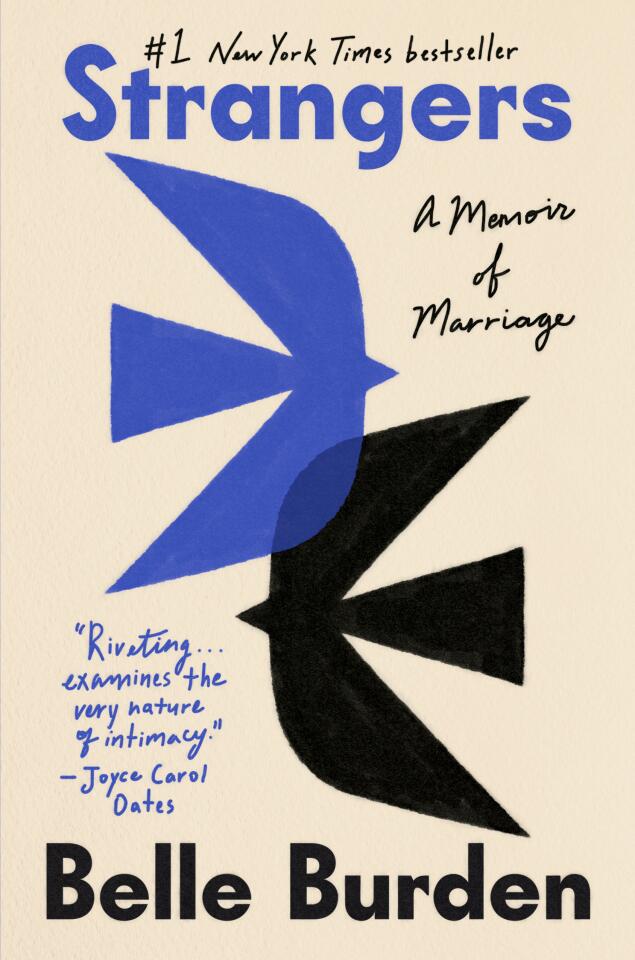
While the New York Times bestsellers from 2025 skew in favor of the 6-by-9 trim, the popularity of 5-by-8 books appears to be on the rise. Current utilizers of the smaller cut include the buzzy Vanderbilt heir Belle Burden’s “Strangers,” George Saunders’ darkly humorous “Vigil” Lena Dunham’s millennial-tinged tell-all “Famesick” and the infamously tablet-sized “Transcription” from Ben Lerner.

Gretchen Achilles is the director of interior design at Farrar, Straus and Giroux. Achilles recently implemented the 5-by-8 cut for one of this year’s breakout hits, “Lost Lambs” by Madeline Cash. “It’s a tone,” she says. “Smaller trim sizes have an intimacy. … You want to echo what’s going on in the text as an experience for the reader.”

According to Achilles, FSG frequently implements the 5-by-8 trim size. She said that length is the No. 1 factor when deciding to employ it, followed by genre. She listed literary fiction, memoir, biography, and essay collections as the defining genres of the smaller size books.

Caroline Mason is a writer in New York whose debut novel “An Endless Cycle of Evenings” from Hyperion Avenue is slated for 2027; she runs the Instagram account @literarycrushes. Mason described a 5-by-8 hardcover as shorthand for a specific book she seeks out when she is in a bookstore because it often signals a character-driven novel. “It’s my favorite kind of book,” Mason says. She adds that it’s also Instagram-friendly.

“Holding the book up to take a photo of it is easier,” she says with a laugh. “Although I do sometimes still drop it.”

Dahlia de la Vega is an L.A.-based Bookstagrammer who runs the page @ofpagesandprint. According to De la Vega, she finds the shrunken books more approachable. “When I sit down to read a small hardcover, it almost feels like I’m reading a journal,” she says. “Whereas when I read a large hardcover, it almost feels like I need a journal to jot down notes about what’s happening.”

Ethan Mann, my colleague and a supervisor at Book Soup, told me he remembers the place he was both mentally and physically when he purchased a 5-by-8 hardcover copy of “The Parade” by Dave Eggers. (Right before the pandemic struck at CSUN campus store at Cal-State Northridge). “It’s easier to attach relevance to the specific feel of [the book] because it seems one of a kind,” he says.

Mann adds that hardcovers are sometimes a tough sell on the floor. They are often derided for their cost, and customers declare they will wait till the paperback comes out. But the smaller hardcover has the benefit of fitting into nearly any bag.

Esther Margolis is a publishing veteran and the founder of Newmarket Press. She says that the 5-by-8 hardcover is nothing new. According to Margolis, the smaller trim size was previously the industry standard for U.S.-based publishing houses, and any fluctuation is due to the evolution of printing technology.

“Unlike for mass-market paperbacks, hardcover books were shelved, so it didn’t matter that the books were different sizes,” Margolis says. “They didn’t have to fit into a pocket.”

The popularity of the 5-by-8 hardcover is, at the very least, indicative of a shift in what I witness consumers at Book Soup seeking out. With social media making it easier than ever to connect over the act of reading, or looking like you are reading, cover design and presentation — and how it cuts through the noise of the attention economy— is perhaps a factor too.

“A small hardback is like a Labubu,” my co-worker Mann says. “ The feeling in your hands isn’t just about books — it’s about all cute things. … We like small things we can control.”

The success of the publishing industry could never rest on the tiny shoulders of the small hardcover. It may not even represent any changes in production. But on the bestsellers display at your favorite local indie, it represents the small pleasure of palming a near-pocket-size book in your hands.

And, yes, maybe Instagrammability too.

Messinger is a writer in L.A. who runs the Substack adumbmessinger.


Source link

Barnes & Noble clarifies stance on AI-written books after blowback

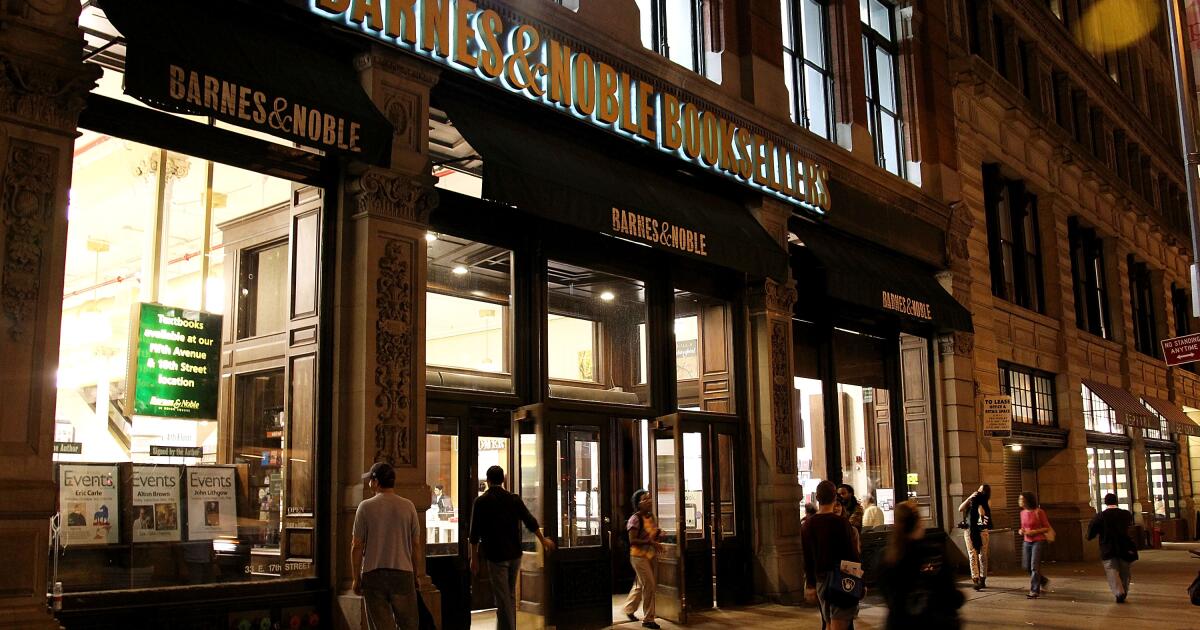
Barnes & Noble was turning a page on the chain’s history of declining sales, but recent comments have stirred bad blood for the bookseller.

James Daunt, the chief executive credited with breathing new life into the retailer, is clarifying the store’s stance on stocking its shelves with AI-written books.

The controversy stems from Daunt’s Monday appearance on “Today” with Jenna Bush Hager. In a viral clip from the interview, Daunt said, “I have actually no problem selling any book, as long as it doesn’t masquerade or pretend to be something that it isn’t. So, as long as an AI-written book says it’s an AI-written book, then we will stock them.”

By Wednesday, thousands of calls to boycott the bookseller had flooded social media.

Kathlin Finn, a writer and former employee of the chain, posted on social media, writing, “Hey Barnes & Not Noble, I worked for you and have supported you, but your latest AI decision is extremely disappointing. I will not be shopping or promoting B&N unless you change your AI policy.”

Author Cristin Bishara wrote, “As an author this [is] the most depressing news. I’ve been saying for a long time that this was coming. People told me I was overreacting. And I had a feeling it would start with a cute round table at the front of a B&N.”

Another social media user added, “The Barnes & Noble CEO saying they’ll stock AI generated books as long as they’re labeled and aren’t ‘ripping off somebody else’ is wild considering all generative AI is ripping off someone else.”

Daunt told The Times that the wave of backlash is based on misinterpretations of what he said, and that only a “highly edited version” of what the bookseller “actually said” had been aired.

In an emailed statement, he said the bookseller does not sell AI books, “as far as we are aware.” Barnes & Noble “demand[s] that publishers label any books that are AI generated,” and the chain takes “active measures to exclude all AI generated books.”

Daunt further stated that Barnes & Noble “will sell AI generated books if there is clear demand” and not “ban reputable books published by reputable publishers, even if AI generated, should these be published, labeled and there be clear evidence of customer demand.”

He also said that the retailer thinks it’s “very unlikely” that there will be customer demand for AI-generated books or that reputable publishers will publish them.

“The argument is nuanced, and perhaps over nuanced, but there are important principles that have to be balanced and I believe we do so as sensibly and thoughtfully as is possible,” he said. “Book banning is a clear and present danger, so we are very careful with demands to ban any books” while also remaining vigilant “not to sell AI generated books that masquerade to be by real authors.”

Last year, Daunt spoke with BBC on the issue of AI in publishing and bookselling and said that there’s a huge proliferation of AI-generated content, and “most of it is not books that we should be selling.” He told the broadcaster that, as a bookseller, the company sells what publishers publish and that he’d be surprised by efforts to put forth an “AI-generated piece of nonsense” but that, ultimately, the decision on reading material would lie with the reader.

“We don’t dictate, and we don’t dictate around politics or any other particular issues around books,” he said. “We leave it up to the reader to decide.”

In June 2025, more than 70 authors issued a call to action to big-five publishers Penguin Random House, HarperCollins, Simon & Schuster, Hachette Book Group, and Macmillan, asking the companies to pledge that they will never release books that were created by machines. Authors Lauren Groff, R.F. Kuang, Emma Straub and Emily Henry were among the petitioners.

“At its simplest level, our job as artists is to respond to the human experience. But the art we make is a commodity, and our world wants things quickly, cheaply, and on demand,” the letter read.

“We are rushing toward a future where our novels, our biographies, our poems and our memoirs — our records of the human experience — are ‘written’ by artificial intelligence models that, by definition, cannot know what it is to be human. To bleed, or starve, or love. …

“Every time a prompt is entered into AI, the language that bot uses to respond was created in part through the synthesis of art that we, the undersigned, have spent our careers crafting. Taken without our consent, without payment, without even the courtesy of acknowledgment.”

In March, Hachette pulled “Shy Girl” from publication after widespread allegations that the horror novel appeared to be AI-generated and was swiftly scrubbed from Amazon and the Hachette website. The book’s author, Mia Ballard, denied that she had relied on AI to pen the book but said an acquaintance she had hired to edit the novel used AI.

“Hachette remains committed to protecting original creative expression and storytelling,” a Hachette spokeswoman said, per the New York Times.

Source link