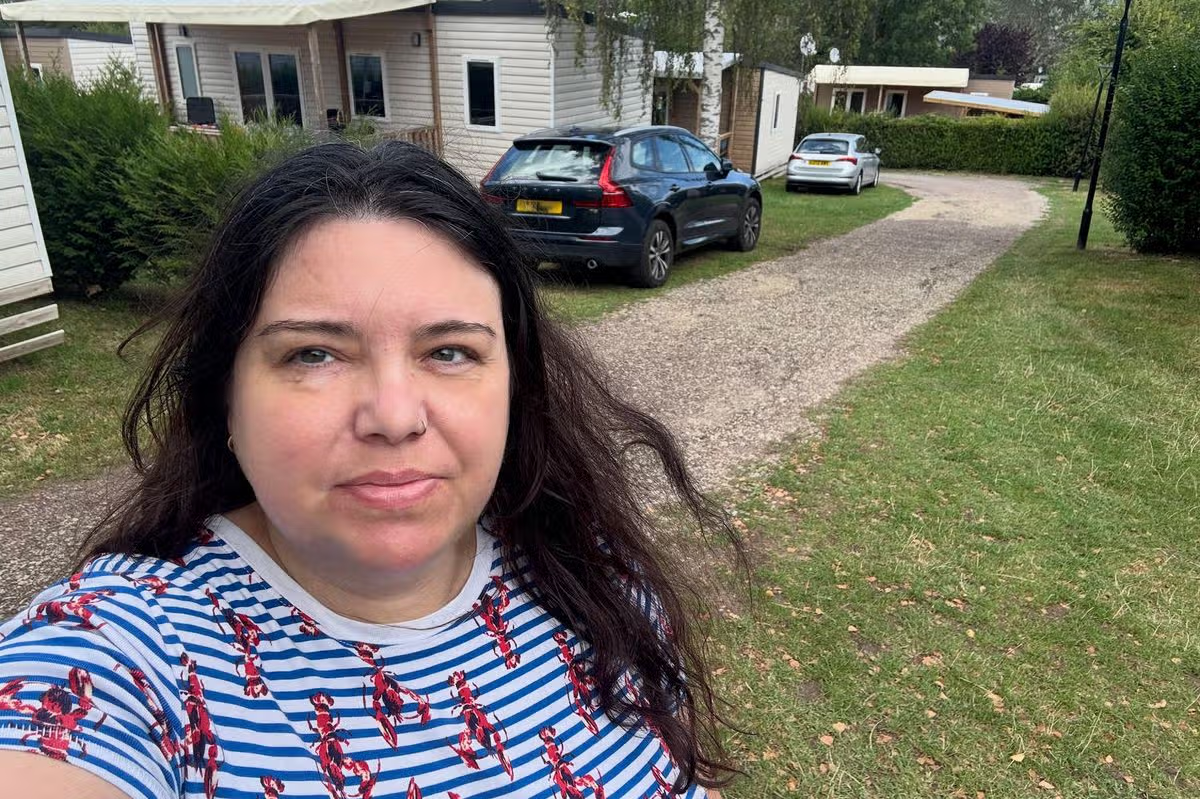
Philip White, a software engineer from Cornwall, has invented a way of bringing those costs down when it comes to booking a family holiday at one of Center Parcs six sites

Philip White’s widget could help you save costs(Image: Supplied)
A dad has invented a tool that helps Center Parcs customers claim back £100s, even after they’re already booked and paid.
Center Parcs is one of the UK’s most beloved holiday parks. It runs six holiday villages throughout the country. It is especially popular for short getaways in its car-free woodland settings, which are perfect for kids to explore while parents relax in the hot tubs and saunas.
While few would question how good Center Parcs’ offering is, it regularly comes in for criticism on price. The holiday park chain ranked close to the bottom in Which?’s latest holiday park survey, almost entirely because of price.
“It’s extraordinarily expensive, at more than twice the price of budget rival Haven. Activities cost even more on top, and you need to secure your preferred slots weeks in advance. The two-star rating for value for money is the joint lowest in our survey. You could save a fortune by choosing a better-rated rival,” the Which? survey noted.
Do you have a travel story to share? Email webtravel@reachplc.com
Philip White, a software engineer from Cornwall, has invented a way of bringing those costs down.
“It started because we were on a family Center Parcs holiday. It was a great time. One of my relations booked straight away for a year later,” Philip told The Mirror. Center Parcs offers guests £50 off if they book again within 30 days of a stay.
As prices may rise or fall throughout the year, booking early can leave you out of pocket, despite the cash back. Which is why Center Parcs offers a ‘price promise’. “Our price promise means that if you see the same break offered for sale at a lower price at any time before you arrive for your break, you will be eligible for a refund of the price difference or a reduction in cost to meet the new price,” its website explains.
Rather than spending his time checking the Center Parcs website in the months before his family’s next stay, Philip created a widget that does the work for you. All you need to do is enter your name and booking details, and it will tell you if there’s been a price drop. Then you can claim the difference back from Center Parcs.
“If you notice the cost drops, they refund the difference against your stay. But they don’t do that for you automatically; you have to manually check it all the time. I tried to automate it on my own. We caught the specific lodge we were trying to get dropped by £150, which was a good saving, especially with the cost of living,” Philip said.
Another feature of Philip’s widget helps guests bag slots on popular activities. “When we were there, a lot of the popular activities for our toddlers were booked out. With Parc Watch, can also check when new bookings open up.”
In the majority of categories in the Which? survey, Center Parcs scored impressively. The company received four stars for activities, entertainment and facilities, alongside quality of accommodation and cleanliness. It secured three stars for customer service and food and drink.
However, its low position in the table, fifth from bottom, came from its value for money rating of merely two stars. It ranked as the third most costly among all the holiday parks in the survey. Even positive assessments of the parks frequently reference the cost. One recent review of Center Parcs Woburn Forest noted: “Amazing place to holiday. Personally, I felt the prices of things on-site were a little high, and that was even going outside of term-time; however, you cannot fault the fun and wonder of being at these parks.”
The UK’s best and worst holiday parks
(Name of resort, overall customer score)
- Potters Resorts – 83%
- Hoburne Holidays – 81%
- Darwin Escapes – 80%
- Landal Parks – 80%
- Waterside Holiday Group – 80%
- Shorefield Holidays – 76%
- Away Resorts – 75%
- Bluestone Wales – 75%
- Park Leisure UK – 75%
- Highland Holidays – 74%
- Lyons Holiday Parks – 74%
- Largo Leisure – 73%
- Park Holidays UK – 73%
- Warner Coastal Villages – 73%
- Forest Holidays – 72%
- John Fowler Holidays – 72%
- Center Parcs – 69%
- Haven Holidays – 68%
- Parkdean Resorts – 68%
- Butlin’s – 63%
- Pontins – 61%
Based on a survey of 2,221 Which? Connect panel members and general public conducted in February and March 2026.