Kyle MacLachlan is living up to his reputation as the Internet’s Dad.
It’s an especially warm day in August, and the bespectacled actor, best known for his many projects with the late auteur David Lynch, is approaching with a coffee (black, naturally) in one hand and a massive cookie in the other. The snack, it turns out, is meant for us to share.
On the Shelf
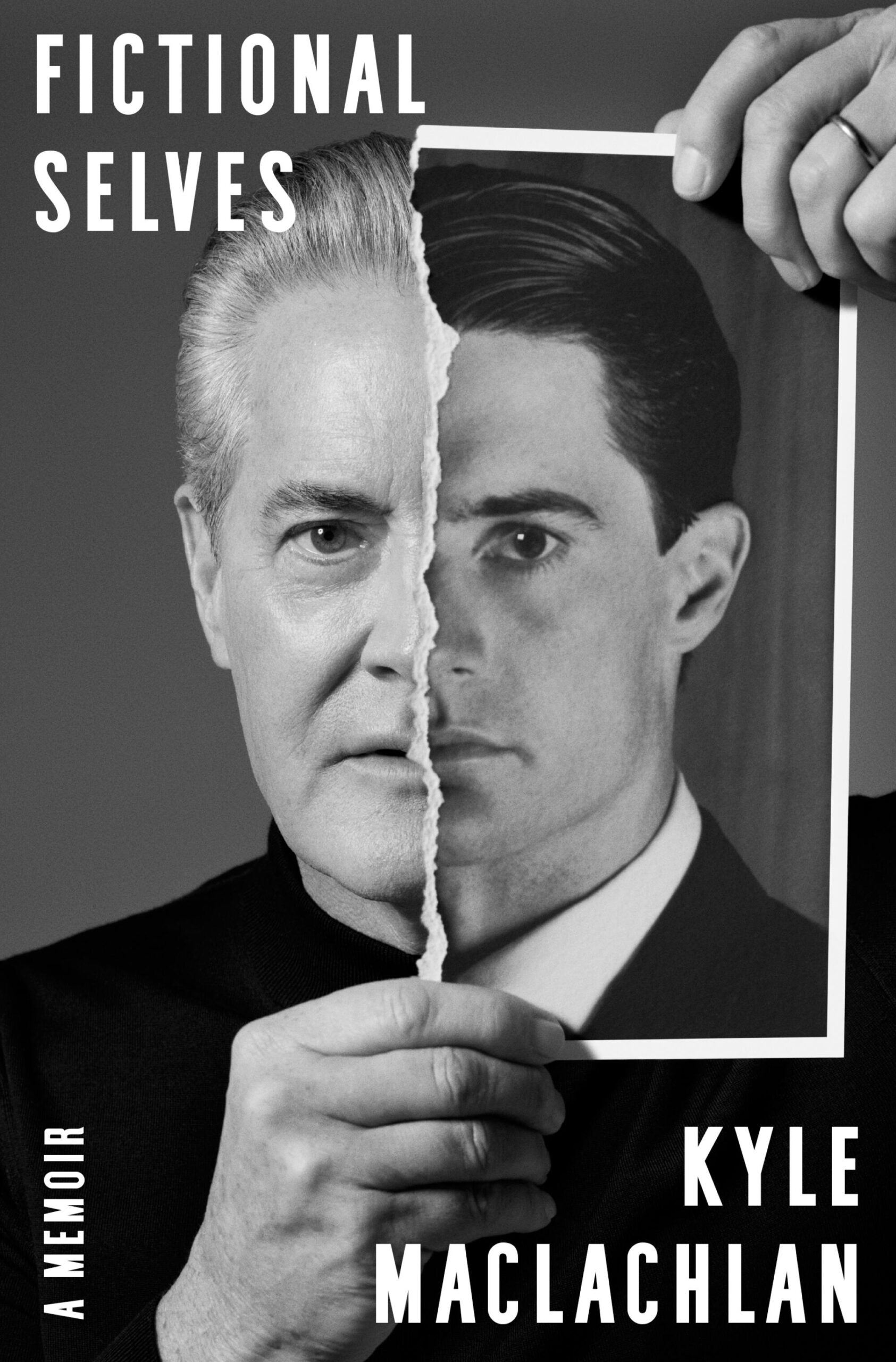
Fictional Selves: A Memoir
By Kyle Maclachlan Crown: 320 pages, $34
If you buy books linked on our site, The Times may earn a commission from Bookshop.org, whose fees support independent bookstores.
“Whatever it is, it’s very healthy,” he says when I ask what sort of confection he chose. “It’s cranberry, oatmeal and gluten-free. Who knows if there’s any sugar in there?”
At 67, MacLachlan isn’t necessarily a health nut. But he is highly amenable and willing to roll with my vegan cafe selection, which is conveniently located near our photo shoot location. “I come from Eastern Washington state — it’s a desert,” he says assuringly when I offer to move us to an indoor seat with air conditioning. Later, as we prepare to leave for the shoot, he clocks my car, a rare station wagon, and dubs it “spec-TAC-u-lar.”
That’s MacLachlan for you — all it takes is one word (he also drops an “Aces!” during our meeting) or enthusiastic gesture (very likely a swooping thumbs up) to channel the type of eccentric and upbeat characters he’s spent the last 40 years playing. Now, with the release of his thoughtful new memoir, “Fictional Selves,” MacLachlan gives us a much closer look at the man behind the chin-jutting grin, and, in doing so, introduces us to his doppelganger, “Other Kyle,” an image-conscious shadow figure constantly trailing behind, questioning his choices.
“There’s definitely another entity, an observer, the ego, the harder self,” MacLachlan says of how he would describe Other Kyle, whom ghostwriter Jon Sternfeld first identified after noticing the way MacLachlan tended to fall into conversation with himself while recounting his life. “[He’s] the kind of person that I’m not comfortable leading within the world. But he’s definitely in there commenting on the things that I do.”
Other Kyle first began to taunt MacLachlan after he saw himself on a gargantuan billboard for “Dune” in Times Square. (In his early 20s, MacLachlan was famously plucked from obscurity to lead David Lynch’s 1984 adaptation of Frank Herbert’s sci-fi epic.)
Well before his alter ego materialized, and well before Hollywood found him, MacLachlan was prone to anxiety and fears of never fitting in. Born in Yakima, Wash., MacLachlan grew up the oldest of three boys; his parents were solidly middle-class, with his father working as a lawyer, and then stockbroker. His mother was a homemaker known in the community for her civic involvement, particularly in local arts programs. In fact, it was MacLachlan’s mother who first encouraged him to try a “Teen Theater” program, drawing him in with the promise that there might also be girls in attendance.
But it took a minute for MacLachlan to genuinely embrace his calling. As a young adult, his father pushed him to study business, while his mother urged him to try PR or communications. His studies at the University of Washington weren’t going well, so he dropped out and worked at a manufacturing plant back in Yakima. It wasn’t until a girlfriend recommended a summer theater program in North Carolina that MacLachlan leaned back into his first real passion, eventually returned to school with a newfound focus, and was accepted into the University of Washington’s professional acting program.
Kyle MacLachlan at the glass and mirror shop LA Mirror Man on La Cienega Boulevard.
(Christopher Patey / For The Times)
Fast-forward 40 years, it’s impossible to imagine that MacLachlan would have anything else for Other Kyle to latch onto. For one, his acting resume is the stuff of thespian fantasy. Sure, “Dune” infamously flopped hard upon arrival, and all planned sequels were immediately canceled. But it wasn’t long before MacLachlan had teamed back up with his mentor, with whom he had developed an almost telepathic bond on “Dune,” to lead Lynch’s much more kindly received 1986 neo-noir arthouse entry, “Blue Velvet.” A few years later, the overwhelming success of the TV mystery series “Twin Peaks” propelled the actor to the upper stratosphere of celebrity.
“When we were working together creating Jeffrey in ‘Blue Velvet’ or [Coop in] ‘Twin Peaks,’ we would sit and talk or not talk, we melded together in some weird way, we were like one person,” MacLachlan says of his bond with Lynch, who died in early 2025 of cardiac arrest due to chronic obstructive pulmonary disease. “It was this very symbiotic kind of thing in front of the camera,” MacLachlan continues. “It was like this weird circular energy. … He’s the only director I share that with.”
And yet, breaking out of what MacLachlan refers to as “The Black Suit,” worn by his unceasingly chipper “Twin Peaks” character, Special Agent Dale Cooper, proved challenging. By the time “Twin Peaks” left the air in 1991, MacLachlan had grown ambivalent about the job that changed his life, partially because he felt Lynch didn’t fight hard enough to keep artistic control of the show’s second season, which saw the network upping its creative involvement and Lynch distancing himself until the final few episodes.
MacLachlan longed to diversify his output — to show that he was capable of being a mainstream Hollywood leading man, one who could interface with a variety of directors. In the book, he writes about jobs he comes so close to booking — roles in Robert Redford’s “A River Runs Through It” and Francis Ford Coppola’s “Dracula” — but losing out at the last minute.
Kyle MacLachlan explores his alter ego “Other Kyle” in his new memoir.
(Christopher Patey / For The Times)
He took these rejections hard at the time. Many decades later, however, he can see how he was the one holding himself back. “I felt like people were only seeing the black suit,” MacLachlan says. “Now, the truth is, they would probably have been more than happy to see me as somebody else, but I was not able to deliver. … I think there was a lot of insecurity,” he continues. “I was like, ‘Maybe it’s not the suit. Maybe it’s me.’”
As the 1990s played out, MacLachlan fought an on-again, off-again existential crisis regarding the type of actor he was really meant to be. His friend and former “Doors” co-star Val Kilmer urged him to accept a lead role in a BBC adaptation of Kafka’s “The Trial,” which didn’t move the cultural needle in the States, but did put him in the same room as enormously pedigreed actors like Anthony Hopkins and Alfred Molina. He snagged a role in a Paul Verhoeven film about topless dancers — a career risk he hoped would pay off but ultimately felt like “walking into a buzz saw,” as he writes in the book.
Despite the cult reappraisal of “Showgirls,” and the lasting popularity of “Sex and the City,” Other Kyle had a few things to say about both of these roles, but the Kyle sitting across from me has a much more measured approach, particularly to “Showgirls.”
“I think it’s fun that it’s still around,” MacLachlan says. “I’ll still argue with anyone that [says] it’s a good movie. It’s not a good movie, but it’s definitely an appreciated movie, and that is kind of where I leave it.”
In the early 2000s, his wife, Full Picture founder and chief executive Desiree Gruber, pushed him to accept a role in HBO’s “Sex and the City,” playing an Upper East Side doctor with erectile issues.
Portraying Trey MacDougal was a mixed bag for MacLachlan. On one hand, he was thrilled to be part of such a cultural juggernaut, and he delighted in the emphasis the show placed on female friendship and sexual agency.
“I want to keep being challenged,” says Kyle MacLachlan, looking ahead to the next chapter of his 40-year career.
(Christopher Patey / For The Times)
At the same time, he had mixed feelings about playing an old-money mama’s boy with a Freudian Madonna-whore complex. Not to mention the sheer ridiculousness of the things the writers would have him do: One scene had him bent over a bathroom sink, masturbating to a pornographic magazine. A passage of “Fictional Selves” also recalls the cringe-inducing moment when Trey gives his wife, Charlotte (Kristin Davis), a cardboard cutout of a baby in an effort to make light of their struggle to conceive.
In the book, MacLachlan recalls being utterly dumbfounded at having been asked to do something so oblivious at best and cruel at worst. Eventually, however, he writes that he realized the writers just needed a way to foist him off the show. (His and Davis’ characters get divorced soon after the cardboard baby incident.)
“Every time I got a script, I’d be like, ‘Oh boy, OK, what’s going to happen here?’” MacLachlan says. “And then it would be, like, whatever they’ve come up with, ‘how can I shape it? What is it that [Trey’s] wrestling with? What are the issues here? Then, you know, realizing that in some cases it was just going to be a sight gag. Like, the Juggs magazine is going to be a sight gag. And as I said in the book, in my mind, I would sort of float away. I would be like, ‘That’s not really me. I don’t know who that is down there doing that.’”
As MacLachlan moved into middle age, he gradually grew more comfortable with the clean-cut oddball characters he’d so often be asked to play: a refined but possibly murderous dentist on “Desperate Housewives,” an idiosyncratic boat obsessive on “How I Met Your Mother,” an over-the-top civic leader on “Portlandia,” and, once again, Special Agent Dale Cooper (plus his doppelgängers) on “Twin Peaks: The Return.”
The 2017 “Twin Peaks” reboot would be the last big project MacLachlan would work on with Lynch, but MacLachlan would frequently visit the director in their shared Hollywood Hills neighborhood. “It’s many things,” MacLachlan says when I ask what he misses most about his friend and mentor. “The voice on the phone — ‘HEY, KALE! Come on up for coffee!’” he continues in a pitch-perfect Lynch imitation. (“Kale” became Lynch’s nickname for MacLachlan, referencing “Dune” producer Dino De Laurentiis’ Italian pronunciation.)
“Towards the end, I would go to visit him, and I would sometimes take my phone and record things. I still have these stories loaded in my iPhone — about ‘Dune,’ or a story about a moment in ‘Blue Velvet,’ or a story about when he met John Huston, or when he got a kiss from Elizabeth Taylor. … I have these little gems, and I savor those.”
Lately, Other Kyle has been replaced by Online Kyle, a goofy, lighthearted version of MacLachlan who primarily lives on TikTok and Instagram — thus the wholesome, Gen Z title of “Internet’s Dad.” And when he’s not playing a father to Ella Purnell on Prime Video’s hit “Fallout,” or interviewing a younger generation of entertainers on his podcast, “What Are We Even Doing,” MacLachlan is also someone’s real dad. One of the most endearing moments in our afternoon happens when his teenage son, Callum, calls looking for something around the house. “Oh, it’s in the fridge in the gym. In a foil. And there’s chicken in the fridge. Love you too,” MacLachlan tells his son.
There’s certainly no doubt that this Kyle doesn’t get in his head — or in his own way — the way earlier versions did. He’s still eager to test his limits as an actor, but he’s comfortable with the thought that there is no plan. “I want to keep working with interesting people,” he says with his trademark buoyancy. “I want to keep doing fun things. I want to keep being challenged. … I don’t really know where I’m going, but something will excite me, and I’d be like, ‘OK, what the hell?’ And I jump in.”
Brodsky is an L.A. culture and music writer. Her biography of Stevie Nicks “Lessons & Lace” is out now.
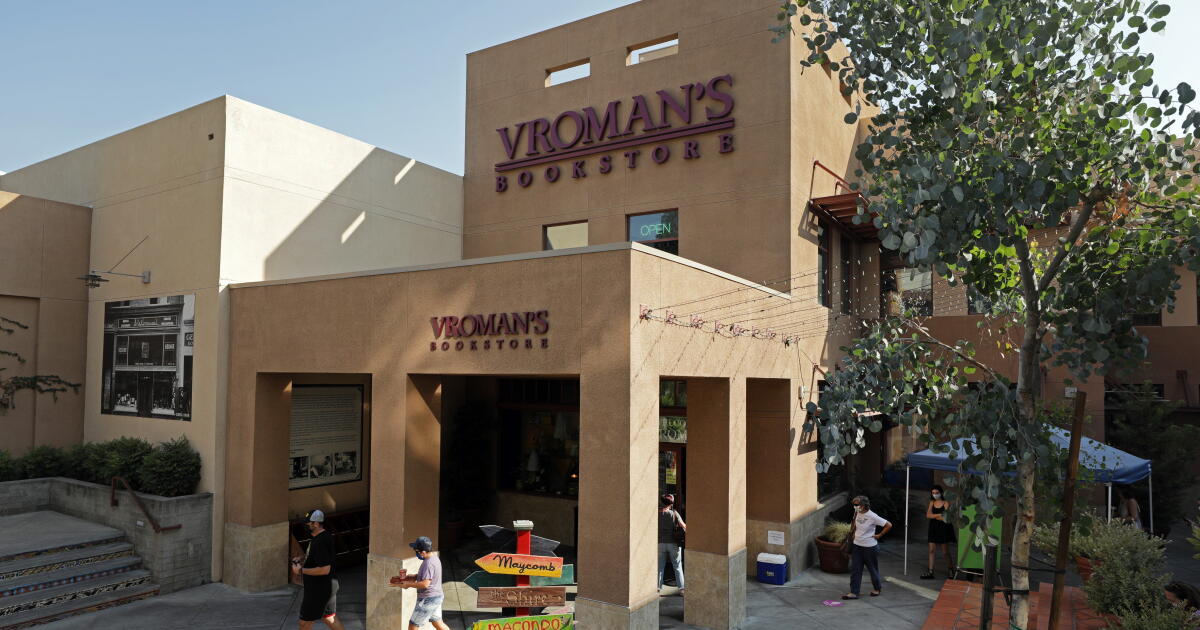
Stalwart bookstores Vroman’s in Pasadena and Book Soup in West Hollywood announced new ownership on Thursday, after a two-year search for a buyer.
Longtime owner Joel Sheldon, whose family has helmed Vroman’s for more than a century, announced his retirement in 2024. At the time, Sheldon said he was looking for “someone who shares our core values and who is committed to preserving Vroman’s as a community treasure.”
Sheldon said he found that in the new owner, Robert Hoffman, who has worked on tech regulation and other public policy in Washington, D.C., for several decades, but who grew up in Southern California with his family living in the area for generations.
“After talking with Robert and his family, I knew we had found the right stewards. They understand what makes this store special, and they’re committed to preserving that legacy while moving Vroman’s forward for our customers and the Pasadena community,” Sheldon said in a statement posted Thursday to the bookstore’s website.
Hoffman was born in Pasadena and has been visiting Vroman’s since his mother brought him in when he was 5 years old, according to the Thursday announcement.
His mother, in turn, had been introduced to the store by her grandmother, Georgia Bullock, a decades-long Pasadena resident and the first woman to serve as a municipal and superior court judge in California.
Hoffman was born in Pasadena and attended UCLA. He currently heads government relations and regulatory affairs at semiconductor company Advanced Micro Devices, according to his LinkedIn page.
Book Soup, a Sunset Boulevard landmark, was founded in 1975 by Glenn Goldman, a UCLA graduate student who raised investments with his friends to establish the store. Goldman died in 2009 at age 58, and Sheldon acquired the store from Goldman’s estate that year.
A post to Book Soup’s Instagram page said Hoffman and his family are “genuinely invested in this community.”
“Same shelves, same staff, same WeHo icon. Same gratitude for you,” the bookstore said in the social media post.
Vroman’s was founded in 1894 by Adam Clark Vroman, an ex-railroad worker from Illinois who moved to California hoping the sunny weather would improve his wife’s health. His wife eventually died of tuberculosis, and a brokenhearted Vroman, a bibliophile, sold off a chunk of his vast book collection to collect capital to open the store. The Sheldon family stewarded the store after Vroman’s death in 1916.
Vroman’s catered to various clientele and communities, from traveling dignitaries to academics and leisure readers on vacation. When the federal government incarcerated Japanese Americans from the San Gabriel Valley and elsewhere in the 1940s, an activist lugged books from Vroman’s to the Manzanar camp in the Owens Valley. Science fiction author Octavia Butler, who grew up in the area, frequented the bookstore.
Vroman’s second location in Hastings Ranch was forced to close in 2024 after the company was unable to reach a new lease agreement with the property owner. The store was otherwise sustainable, but was forced to close “due to increasing occupancy expenses,” the company wrote in a social media post at the time.
Vroman’s flagship location on Colorado Boulevard remains open. However, the property itself changed hands, with Sheldon selling it to GD Realty Group for $15.5 million amid uncertainty about its future.
The bookstore has a long-term lease with the real estate group, whose chief executive, Arash Danialifar, said in a statement last year to news outlet Pasadena Now that the bookstore was a “staple of the community” and that he hoped it would remain there “for the foreseeable future.”
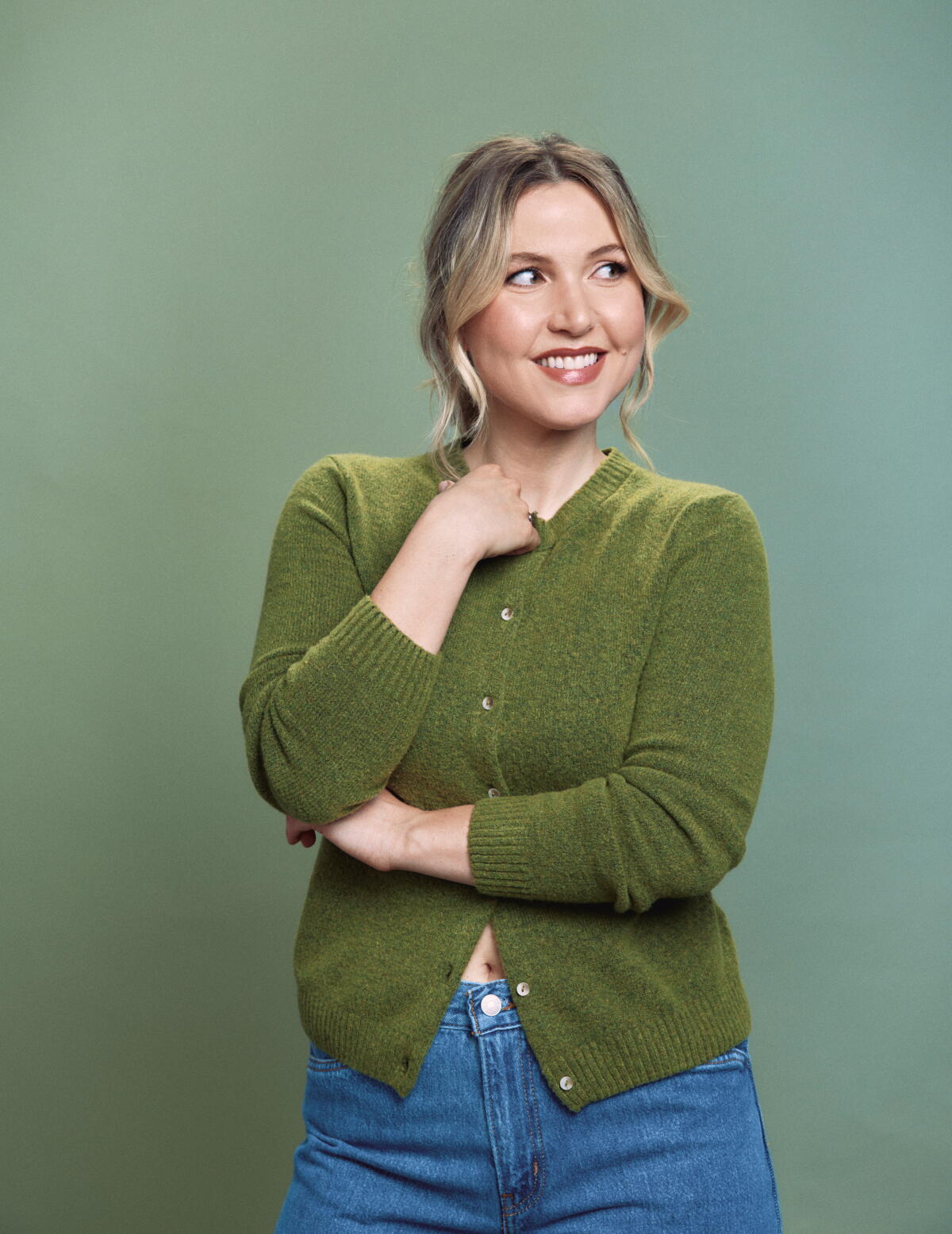
There’s an alternate universe where Taylor Tomlinson is a young adult fantasy author holed up in a cabin miles from civilization.
“ I don’t know if you have some sort of backup career or backup life that you go to in your head when you’re overwhelmed or fed up with your career or whatever process you’re in,” she asks in the lobby of the Four Seasons Hotel Denver ahead of a two-show night. “That was in the back of my head, [I was] like, ‘Well, I could just move to the woods and write books.’”
In this world, she’s a 32-year-old comedian with four Netflix stand-up specials and a two-season stint as the host of late-night game show “After Midnight.”
Her manager told her that people would probably be more interested in her memoir before a series centering on magic and dragons, so she started writing her own story two years ago.
A self-diagnosed workaholic, Tomlinson spent 10 years constantly moving. From a combination of mold exposure and severe burnout from filming “After Midnight” on weekdays and performing in different cities on weekends, she fell ill for months and was forced to take a break.
In that time, she wrote “Actually, Nevermind.” Coming out Tuesday, the autobiographical essay collection delves into the aspects of life that she changed her mind about since her mother died when she was 8 years old.
“Actually, Nevermind” opens with an eclectic mix of three quotes from “Anne of Green Gables” by Lucy Maud Montgomery, celebrated writer Joan Didion, and the 2001 Anne Hathaway-led comedy film “The Princess Diaries.” Tomlinson wanted a combination of funny and serious excerpts capturing grief, but also a quote about evolving as a person.
In the classic coming of age novel “Anne of Green Gables,” a young Anne Shirley states, “I’m not a bit changed — not really. I’m only just pruned down and branched out. The real me — back here — is just the same.”
That’s the essence of Tomlinson’s realizations in her book — she’s growing into herself but that girl who started performing stand-up shows on the church circuit at 16 is still in there.
Tomlinson has a bit from her first Netflix special “Quarter-Life Crisis” about your 20s being a period to “fish trash out of the lake before it freezes over.” She asks how I’m enjoying my 20s, to which I bluntly reply, “It’s a nightmare.”
“ My 20s were a nightmare, too, and I was waiting to be 30, and I was like, ‘When I turn 30, I’m going to be solidified and great.’ And then I turned 30, and it was like the last two years I have probably changed just as much, if not more, than I did in my 20s,” she says. “It’s been much rockier than I anticipated.”
In speaking with her friends, she realized they also felt a disconnect between the lives they envisioned for themselves and their realities. Tomlinson channeled that uncertainty into a jumping-off point for her book.
She reflected on when she began questioning the trajectory of her life and traced it back to her mother’s death.
“ I didn’t know if I was even going to write about my mom at all when I first got the book [deal] because I was like, ‘Well, I talked about it in ‘Look At You,’ and I’ve talked about it in interviews,’ but that’s the thing about losing a parent or any big traumatic grief event is you’re always getting hit by waves of it, and then you’re always untangling it,” she says.
In creating “Actually, Nevermind,” Tomlinson pored through her mother’s diary, deciding to include a few excerpts in the finished book. For most of Tomlinson’s life, she regarded her mother as a flawless, devout Christian whom she desperately yearned to impress.
Drawing on her mother’s diary, estrangement from her father and complex sibling bonds, Tomlinson confronts impossible standards, relinquishes parentified guilt and reframes what family means after loss.
(Sela Shiloni)
Her mother married young, so she tried to hit that milestone, too.
“I didn’t manage it and self-sabotaged a lot,” she says. “Now, I’m grateful that I didn’t get married young, but at the time it was all I wanted because I wanted to fit in and I wanted to be someone she would’ve liked, someone she had things in common with.”
Through reading her mother’s diary entries, Tomlinson began to heal from the impossible standards she set for herself to follow in her mother’s footsteps.
“ She was sort of this perfect, infallible character in my brain for so much of my childhood, so it was helpful to read about her being like, ‘I’m nervous about getting married. We got pregnant on accident,’” Tomlinson says. “There’s stuff I didn’t include about arguments she had with my dad in college. It was just very human, and it was very encouraging to go, ‘Oh, it wasn’t like this perfect frictionless decision for her.’ It’s not like she just nailed it and did everything perfectly.”
One of Tomlinson’s largest shifts in perspective was no longer feeling parental responsibility toward her three younger siblings.
“ I went from their sister to a weird half parent figure when I was still a kid,” she says. “And I made all these missteps because I was also a kid. And then young adulthood was confusing because I had been waiting for everyone to get old enough to be friends with me.”
Now, Tomlinson’s siblings all take care of each other in their own ways. She refers to them as her “soul mates” and feels guilty wishing for a romantic partner when she already has three lifelong best friends.
While Tomlinson remains close with some of her mother’s relatives, she has been estranged from her father for five years. She writes about the sadness of not speaking to someone you feel so alike, but she doesn’t go into extreme detail about cutting ties.
“ There’s some things you just want to keep for yourself, you know?” she says. “You don’t want every painful private detail about who you are and what’s happened to you available to Google because it just makes you feel like you’re a raw nerve walking around, and you can’t get it back once you’ve shared it.”
“And you want something to say on a fifth date,” she jokes.
After processing the heartache of losing another parent in a different way, Tomlinson allowed herself to miss the good memories with her father and assuage any longing for revenge.
In her essay “I’m Gay Now,” Tomlinson explores her bisexuality and the transition from chasing male validation to feeling comfortable in herself. She came out at around 28 years old. Part of what took her until then was feeling the need to prove that she deserved to identify as queer.
In essays on sexuality, faith and ambition, she trades the pursuit of perfection for hard-won self-acceptance, exposing a more vulnerable offstage self still learning to do her best.
(Sela Shiloni)
“ I think that’s just a theme throughout my entire life,” she says. “I felt like I needed to earn the label of comedian. I felt like I needed to earn the label of queer. I needed to earn love.”
Her brother helped her understand that she didn’t have to achieve the title — she’s always been gay.
With all of her adulthood realizations, Tomlinson also reflects on what she wishes she could tell her younger self. Talking to a 16-year-old Taylor, she writes, “The most valuable thing about us cannot be all the things we haven’t done.”
“ So much of my childhood was like, ‘Don’t drink, don’t do drugs, don’t have sex. Don’t step out of line,’” she says. “I wanted to experience things more than I wanted to be this pure version of myself that was performing for the Lord.”
“Actually, Nevermind” is a reflection of Tomlinson when she puts down the microphone, and she is nervous for readers to see that side of her.
“ I feel pretty good about me on stage. Me in the room, I feel really insecure about,” she says. “I’ve gotten to a place where I feel pretty confident about taking up like 45 minutes to an hour and a half of your time. Eight hours, I think, is what the audiobook is. I’m like, ‘Eight hours is a lot more than that.’ So it’s been a real test of confidence.”
After years of chasing perfection, Tomlinson says she finds comfort in knowing that she may never be the world’s greatest anything.
“ In my 20s, I think I was always trying to be the best,” she says. “And now I’m like, ‘I’m going to do my best.’”
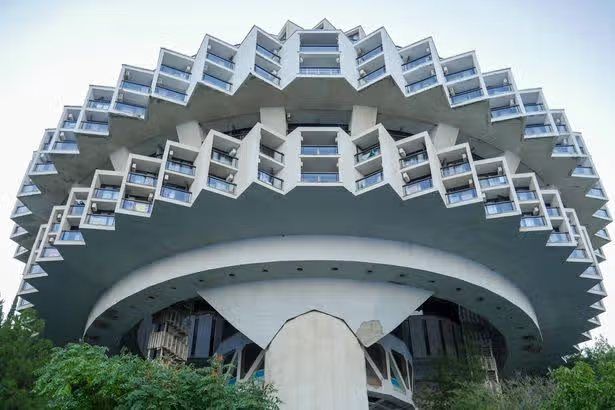
Publisher Fuel has spotlighted 150 of the best Soviet hotels in its latest book, Socialist Hotels, a photographic project by Elena Amabili that traces the state-sponsored holiday industry in the former Eastern Bloc
To attract patrons, the Los Angeles County Library turned to some of the most familiar faces on earth: Hello Kitty and her friends.
The bet seemed to be paying off Friday, as thousands of adults flocked to local branches to snag library cards featuring the adorable anthropomorphic gang on launch day.
The county’s library director, Skye Patrick, told The Times Thursday evening that they were bracing for “complete mayhem.”
A library spokesperson said they were still tallying the number of card sign-ups, but at least 4,400 had been issued as of Friday afternoon.
One of them went to Mar Vista resident Sisa Salazar.
“I thought it was super cute,” the 22-year-old said as she waited in line at the Marina del Rey branch Friday afternoon.
The florist used to frequent the library in high school, checking out books and watching shows. But she lost her card in recent years.
So when she came across the special Hello Kitty-themed card on Instagram, she took the opportunity to get a replacement.
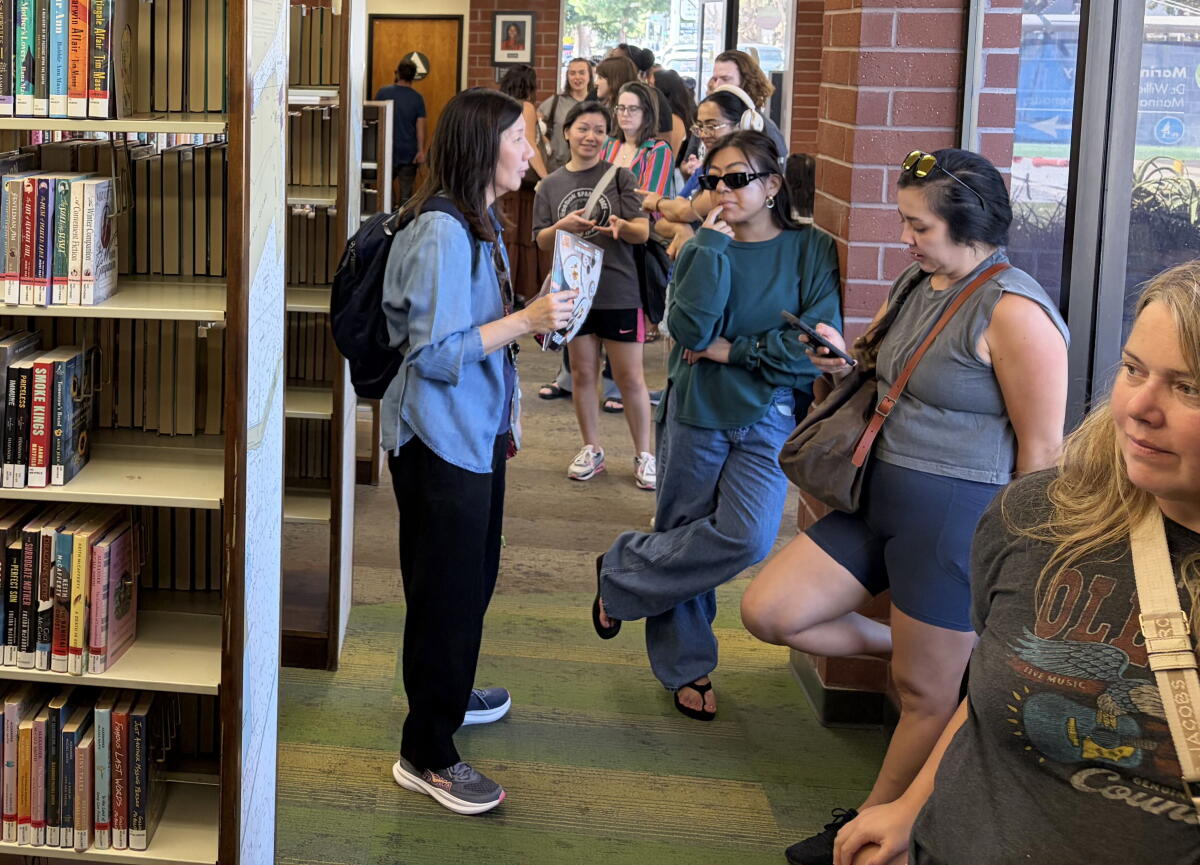
Shortly after 2 p.m. Friday, the line for Hello Kitty library cards at the Marina del Rey branch stretched out the door.
(Iris Kwok / Los Angeles Times)
The Marina del Rey library remained busy throughout the afternoon, with a steady line of more than 50 people stretching out the door. Across town, dozens of people lined up outside the South Whittier Library before its 10 a.m. opening, hoping to be among the first to snag the card.
The West Hollywood, Carson, West Covina, La Mirada, Marina del Rey and Alondra branches ran out of cards on the first day, library spokesperson Jessica Lee wrote in an email. She noted the cards can still be found at other locations and roving bookmobiles.
In addition to Hello Kitty, the card depicts several other recognizable characters produced by the Japanese company Sanrio: My Melody, Kuromi, Pompompurin, Keroppi, Cinnamoroll, Chococat and Pochacco.
Many people in line in Marina del Rey chatted about their favorite Sanrio characters and exchanged childhood memories.
Playa del Rey resident Rebecca Leach, 43, already has an L.A. County Library card, which she often uses to read e-books on the Libby app.
Playa del Rey resident Rebecca Leach said she wanted to get the Hello Kitty library card because she grew up with the character and finds it nostalgic.
(Iris Kwok / Los Angeles Times)
But for the registered nurse, who dons a Hello Kitty badge reel at work, nostalgia was part of the card’s appeal. She has fond childhood memories of playing with a color-changing Hello Kitty plush toy. Leach visited several branches Friday before finding a manageable line in Marina del Rey.
“I think it’s great that they’re promoting the library more and doing outreach,” said Jolyne Jimenez, 51, a library assistant at the Santa Monica Public Library and fan of My Melody.
She spent her day off at the Marina del Rey library waiting for the card. (The Santa Monica Public Library is independent of the L.A. County Library system.)
Limited-edition library cards aren’t new in L.A. County. Previous popular designs have included cards commemorating the centennial of the 19th Amendment and the FIFA World Cup, Patrick said.
“What is uncommon is this amount of buzz,” Patrick said, adding that she hoped the heavy interest in the card would translate to increased awareness of the library’s offerings — not just books and e-books, but streaming content, household tools, musical instruments and podcast equipment.
The Hello Kitty card is available through Oct. 18, Patrick said. The library has permission to use Sanrio’s characters for one month for free and plans to restock the cards before the collaboration period ends.
October half-term has had a nasty habit in recent years of making holiday prices go even more silly than usual.
With summer getting more and more expensive, you end up competing with thousands of other families for the same handful of dates, the same flights and the same hotels that properly cater for families and children.
Holiday Expert Rob Brooks has rounded up his top holiday resorts for October half termCredit: Rob Brooks
So I went digging through our booking data to see where families were still getting decent value for the October school holidays.
And, as a dad of two young kids myself, I asked myself one more question: would I actually book it?
For me, a cheap family holiday isn’t much of a bargain if the flight times are horrendous, the hotel has nothing for the kids or you’ve got to spend half the holiday buying meals and snacks on top.
Every deal I found falls inside the school holidays, is all-inclusive for a family of four, still has availability for October half-term and comes with direct flights.
9. Melia Durres Albania, Albania – from £510pp
Melia Durres Albania is a sprawling, contemporary hotel that offers affordable all inclusive breaksCredit: On The Beach
I’ll start with the most expensive hotel on the list, but probably one of the best examples of why I wouldn’t judge these deals purely on the number at the bottom.
Melia Durres is a proper five-star resort, and it feels much more expensive than the price I’ve found.
You’re getting that big, contemporary resort feel, a huge pool running through the heart of the hotel and a beachfront location rather than a basic base for exploring.
Albania is also one of the destinations I’d be watching closely for family holidays.
It doesn’t yet have the familiarity of Spain, Greece or Turkey for British families, and that can create some really interesting value when the obvious half-term destinations become expensive.
At £510pp all-inclusive during the school holidays, I think this is the one for parents who were already expecting to spend a little more but want something that genuinely feels like an upgrade.
The direct Stansted flights also work nicely: out on Sunday 25 October and back on Friday 30 October, so you’re getting the break firmly inside half-term without eating into school days.
Book a five-night all-inclusive stay at Melia Durres Albania from 25 October, with direct return flights from London Stansted, for £510pp.
8. Duja Didim, Turkey – from £420pp
Duja Didim in Turkey is a five-star ultra-all-inclusive resort – but expert Rob found a stay for £420ppCredit: On The Beach
Turkey has become one of my go-to recommendations when families ask me how to make their budget work harder – and this is exactly why.
Duja Didim is a five-star ultra-all-inclusive resort with eight swimming pools, separate areas for children, a kids’ club for four to 12-year-olds and its own 250-metre private beach.
And even in October half-term, you can bag all of that for just £420pp.
This is the sort of hotel where, once you’ve checked in, you don’t really need a plan: pool, food, kids’ club, beach, another pool, repeat.
And that matters to me with young kids, because there’s a huge difference between a hotel that accepts families and one that’s been designed around keeping them occupied.
Didim also gives you another advantage at this time of year: you’re heading considerably further south than many of the other options on this list, which is worth bearing in mind when you’re chasing the last bit of proper heat before winter.
Book a five-night all-inclusive stay at Duja Didim from 25 October, with direct return flights from London Stansted, for £420pp.
7. Marrakech Ryads Parc & Spa, Morocco – from £410pp
Bag a five-night, all-inclusive stay at the Marrakech Ryads Parc & Spa from £410ppCredit: On The Beach
I love a wildcard holiday, and for this list, this is it.
When people think October half-term, I suspect plenty immediately start searching the Canaries, Spain, Portugal… but I wouldn’t ignore Marrakech.
For one thing, you’re buying yourself a much better chance of proper warmth without going long-haul.
And this hotel, Marrakech Ryads Parc, works particularly well if you like the idea of Morocco but aren’t quite ready to drag the kids around the medina from breakfast until bedtime.
It’s a resort-style property away from the busiest part of the city, with a big outdoor pool, kids’ club, daily activities, sports and all-inclusive food and drink.
So you can have the easy family resort holiday and still have Marrakech sitting there when you fancy actually going out and seeing something.
The other thing I like is the flight: direct from Manchester, with an 18:40 return flight, meaning you get a full extra day exploring Marrakech – a perfect pick for families with older kids.
At £410pp, I think this is a very strong half-term alternative to falling into the same trap of booking Spain again.
Book a five-night all-inclusive stay at Marrakech Ryads Parc & Spa from 27 October, with direct return flights from Manchester, for £410pp.
6. Tivoli Alvor Algarve Resort, Portugal – from £410pp
Stay at Portugal’s Tivoli Alvor Algarve Resort this October from £410ppCredit: On The Beach
This one’s the same price as Morocco, but for a very different holiday.
Tivoli Alvor is the hotel I’d show someone who says: “Yes, we need somewhere brilliant for the children, but I’d quite like it to feel like a holiday for me as well.”
This is a five-star all-inclusive resort with six swimming pools, four restaurants, two bars, a junior club, wellness centre and a shuttle into Alvor.
Some brilliant family hotels are essentially enormous children’s entertainment centres with bedrooms attached, but Tivoli feels far more suited to adults too, without sacrificing the things that make a family holiday easy.
Alvor itself is another reason I’d choose it, because you’re not trapped in an isolated resort: you’ve got a lovely Algarve town nearby if you fancy getting out for a wander.
And at £410pp for a family of four for a five-star all-inclusive school-holiday break, I think the hotel quality you’re getting for the money is excellent.
Book a five-night all-inclusive stay at Tivoli Alvor Algarve Resort from 24 October, with direct return flights from London Stansted, for £410pp.
5. Canvas by Mitsis Messonghi, Corfu – from £368pp
This package deal includes flights plus an all-inclusive stay at Canvas by Mitsis Messonghi for £368ppCredit: On The Beach
This is probably my personal favourite pick on the list.
Beach, pools, slides, an all-inclusive wristband… very little thinking required.
Canvas by Mitsis Messonghi has four outdoor pools, three children’s pools, a mini aquapark with waterslides and a kids’ club for four to 12-year-olds, alongside its beachfront setting.
That’s exactly the kind of combination I look for when I’m comparing family hotels because it gives you options.
If the children are bored of the main pool, there’s the aquapark.
And if they’re bored of you, there’s the kids’ club.
Or if everybody’s had enough of chlorine, you’ve got the beach.
And £368pp is where this list starts getting particularly tempting.
In the deal I found, you’re flying direct from Gatwick on Tuesday 27 October and returning Sunday 1 November, staying at a four-star Greek all-inclusive hotel – all for under £400pp.
Book a five-night all-inclusive stay at Canvas by Mitsis Messonghi from 27 October, with direct return flights from London Gatwick, for £368pp.
4. Puente Real, Torremolinos – from £330pp
This Torremolinos beachfront hotel has plenty of entertainment for kidsCredit: On The Beach
This is one I’d call the safe pair of hands.
Torremolinos isn’t going to win any prizes for being an undiscovered holiday destination.
But sometimes, particularly when you’re travelling with kids, being a known quantity is a selling point.
Puente Real sits right by the beach and has the stuff families actually use: pools, children’s entertainment and a kids’ club for ages four to 12.
Its all-inclusive package also includes meals, local drinks and snacks between restaurant sittings.
And because you’re in Torremolinos rather than a purpose-built resort in the middle of nowhere, you’ve got plenty around you when you fancy getting out.
The price is the headline for me, though: £330pp in October half-term, all inclusive, with direct Bristol flights.
Once you start looking at what families can easily spend on a UK break during the same week – before you’ve bought three meals a day – this deal starts to look very, very sensible.
Book a five-night all-inclusive stay at Puente Real from 27 October, with direct return flights from Bristol, for £330pp.
3. O7 Be Klub, Alcudia, Majorca – from £283pp
Enjoy an action-packed waterpark hotel in Majorca with a stay at O7 Be KlubCredit: On The Beach
This is our first hotel to come under the £300pp mark, so it’s officially time to start taking notes.
You might recognise this hotel by its old name, Bellevue Club, but it’s now O7 Be Klub – and the sheer scale of this place is a big part of the appeal for families.
The resort covers around 250,000 square metres and has 11 swimming pools, including pools specifically designed for babies, plus two children’s waterpark areas with slides, fountains and playgrounds.
That’s worth knowing because a three-star rating can sometimes make people scroll straight past a hotel, but I wouldn’t here.
If your priority is having loads for the kids to do rather than marble reception desks and fancy toiletries, this is exactly the sort of place where the star rating tells you less than the facilities list.
You’re also based in Alcudia at this hotel, which remains one of my favourite easy recommendations for families in Majorca because of the huge sandy beach and very family-orientated resort.
For £283pp all-inclusive in the school holidays, this is seriously cheap.
Book a five-night all-inclusive stay at O7 Be Klub from 27 October, with direct return flights from Birmingham, for £283pp.
2. Magic Sports, Oropesa del Mar – from £268pp
Rob describes Magic Sports in Costa Del Azahar as ‘the hotel I’d expect kids to pick themselves’Credit: On The Beach
This is the hotel I’d expect kids to pick themselves.
Magic Sports is Spain’s first sports-themed hotel, with rooms themed around sports including football, basketball, tennis and motorsport, plus a sports-themed waterpark with some properly substantial slides.
It doesn’t have the same instant name recognition as Benidorm, Salou or Alcudia, which is probably part of why bargains can still appear here.
But for families, there’s a huge resort and a long beachfront – without you paying purely for the destination name.
I’ve previously flagged Magic Sports as one of those under-the-radar Spanish family hotels worth knowing about, and this price only reinforces it.
Because I found a deal for a family of four, all inclusive during October half term, for just £268pp.
That’s flights and hotel for less than plenty of families could spend on accommodation alone for a UK staycation during a school holiday week.
Book a five-night all-inclusive stay at Magic Sports from 27 October, with direct return flights from London Gatwick, for £268pp.
1. Ohtels La Hacienda, La Pineda – from £263pp
PortAventura World is less than three miles from this Spanish hotel pickCredit: Supplied
I’ve been banging the La Pineda drum for a while now, and this hotel shows exactly why.
Ohtels La Hacienda is a four-star hotel in La Pineda, just 250 metres from the beach, with its own children’s waterpark, outdoor pools, spa, football and padel facilities.
And there’s another reason I really like the location for families: PortAventura World is less than three miles away.
So if you’ve got older children who need more than five straight days around the pool, you’ve got one of Europe’s biggest theme park resorts practically on your doorstep.
You don’t need to do it, obviously – the hotel has enough going on that this still works perfectly well as a straightforward all-inclusive break – but having the option is a massive plus.
A family of four can get away for £1,050 in total (£263pp), with direct Gatwick flights, during the school holidays.
That is the sort of half-term price I’d personally stop scrolling for.
Book a five-night all-inclusive stay at Ohtels La Hacienda from 27 October, with direct return flights from London Gatwick, for £263pp.
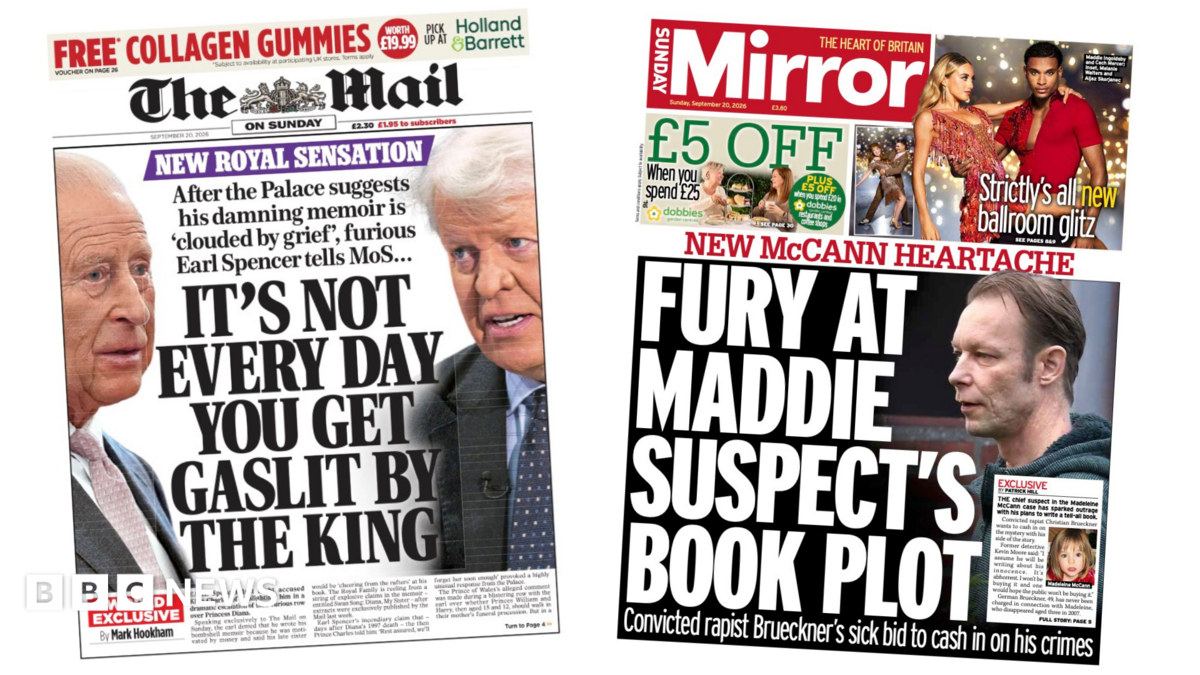
Conservative leader Kemi Badenoch has told the Sunday Telegraph that the prime minister is “fiddling while Europe is at risk of burning”, external in the face of Russian President Vladimir Putin’s hybrid warfare. She said the government must stop pretending we live in a “carefree world” and increase defence spending. She accuses Andy Burnham of being a “people pleaser” and adds “difficult choices cannot be avoided through dither and delay”.
The Sunday Times says the head of Britain’s elections watchdog has said that he is considering slashing spending limits, external. Vijay Rangarajan, the chief executive of the Electoral Commission, believes it is essential that the rules are “fit for purpose” and maintain public trust in election financing. The move, if implemented, could affect Reform UK’s ability to spend £72m recently given by two crypto-billionaires.
In an interview with the Mail on Sunday, Princess Diana’s brother, Earl Spencer, accuses the King of “gaslighting”, external him. The earl’s book, serialised in the Daily Mail, has produced a series of allegations about the Royal Family’s response to his sister’s death. He described the King’s response to his claims as “below the belt” and says his late sister would be “cheering from theh rafters” at his book.
The Independent carries polling which, it says, shows that rejoining the EU, external is supported in all but four constituencies in Great Britain. The paper quotes a YouGov poll which suggests it was by far the most popular option, when voters were presented with different options regarding the government’s future relationship with Brussels.
The Sunday Express says the seizure of illegal knives, external by UK Border Force in the first six months of this year almost exceeded the total number of blades taken by the organisation in the whole of 2025. The figure amounts to almost 3000, around 15 a day on average. The Ben Kinsella Trust, an anti-knife crime charity, tells the paper that the numbers illustrate the scale of demand for the banned weapons.
Among novelist Mona Awad’s prized possessions is a handmade rabbit brooch with delicate hanging daggers. It’s a gift from a reader. The present was inspired by Awad’s goth-tinged comic novel “Bunny,” which has garnered a cult following on social platforms like BookTok over the last several years with readers who call themselves “bunnies.” Driven largely by these devoted fans, the book’s sequel “We Love You, Bunny” hits shelves this month in paperback, while Awad hops across the U.S. on her latest book tour.
The bunnies are so enamored with Awad’s horror-adjacent satires centered on academia and female friendships (and often compared to “Heathers” and “Mean Girls”), they have created their own online — and offline — aesthetic universe.
Their videos and artwork, spanning Pinterest, YouTube, Instagram and TikTok, bring the novels’ surreal, “creepy-cute” aesthetic to life. The fan art features moody Ivy League backdrops with bunny ears, heavy tomes, blood-red candles and saccharine doll-like fashion. It’s a style ripped straight from the book’s antagonists — one of whom wears a pink dress patterned with beheaded girls. Some bunnies cosplay lace-adorned, ax-wielding characters and post the images on social media, or illustrate them.
Sara Ah Sing, a 30-year-old multidisciplinary artist in San Diego who considers herself a bunny, is one such illustrator. She discovered Awad’s fiction when she went down a BookTube dark academia genre-themed rabbit hole. “I was taken aback by how intense and vivid the descriptions were, and not only detailed, but very viscerally described … Mona Awad is not a generic prose writer,” Ah Sing says.
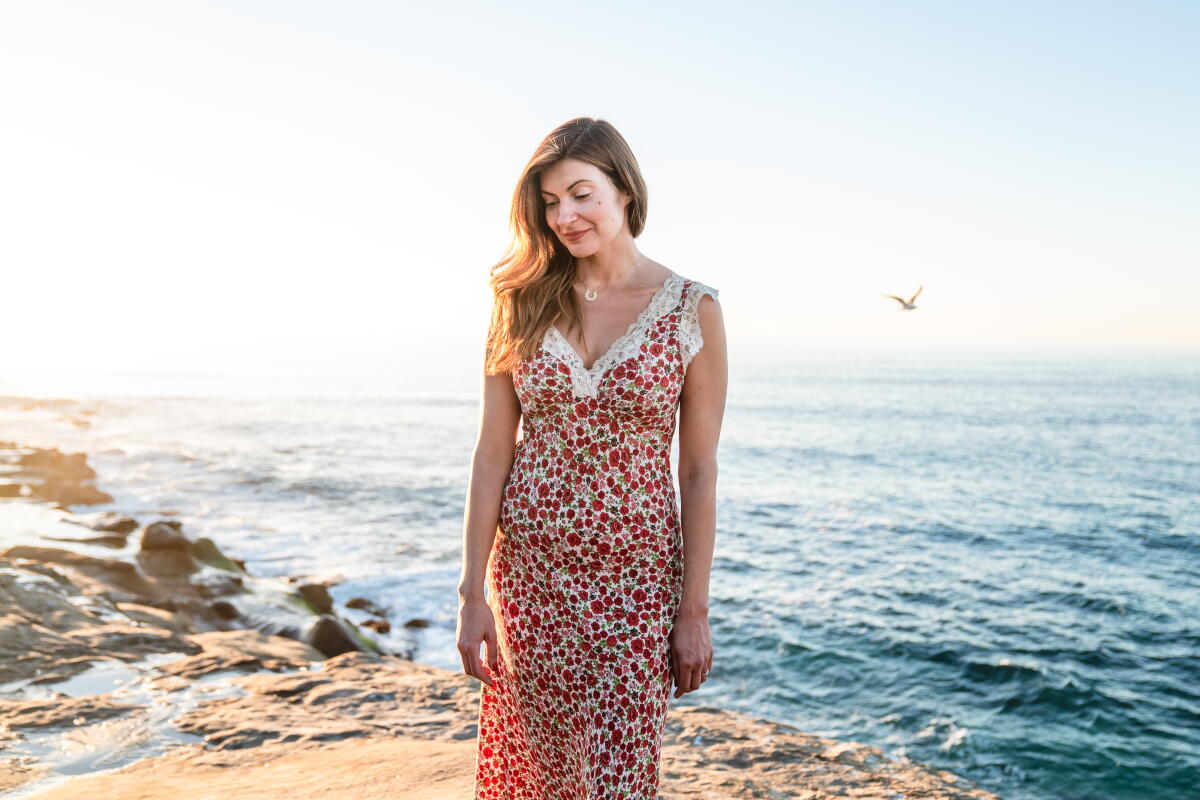
Author Mona Awad writes and dreams up her fiction in La Jolla, where she has a second home.
(Ariana Drehsler / For The Times)
She recalls a protagonist called Cupcake. “She’s described as a person who looks like a cupcake … something like ‘The Children of the Corn’ going to prom. And, it’s like, OK, what does that mean? For an artist it begs for interpretation — and I just have to illustrate it.”
Her imagination has been reignited with the sequel, “We Love You, Bunny.” Ah Sing illustrated its tortured central character, Aerius, as a muscled romance book cover star — with a twist. “Instantly when we meet him in the new book, he’s described with all these delicious descriptions. He’s got all these very specific tattoos that are in very specific places on his body,” Ah Sing says. “He’s wearing pearls and has auburn hair that covers one eye — it’s like a playground for your brain reading that kind of stuff.”
Awad’s vivid descriptions have led to all kinds of fan-led creations. Los Angeles-area Bookstagrammer Michelle Grondine, 40, is inked with five “Bunny”-inspired tattoos. “I have one on my inner ankle, one on my forearm, one on my collarbone, one on my lower back of a cat reading ‘Bunny’ and one on my thigh,” Grondine says. Each of the tattoos varies in style, not unlike the distinct personalities in the book’s fictional MFA cohort.
Grondine plans to attend Awad’s upcoming event at Skylight Books in Los Angeles on Sept. 21 with her best friend, Valentina Feldstedt, who lives in Northridge. The two met online after Grondine spotted Feldstedt’s “Bunny” social posts, and they quickly bonded over their shared obsession. They have collected various editions of the series (including the Barnes & Noble-released “We Love You, Bunny,” which features a bonus chapter), gone to see Awad live several times and crafted Taylor Swift Eras tour-style friendship bracelets for fellow fans and Awad (whom they call “our alpha bunny.”)
“Bunny” author Mona Awad’s spread of her fan art and gifts in her home in La Jolla.(Ariana Drehsler / For The Times)
Feldstedt, 30, has her own “Bunny” tattoo, which she says doubles as an excuse to pitch the novel to strangers. “It’s weird, but if you get it, you get it,” Feldstedt says. “And if you don’t, you’re not a bunny — and that’s fine.”
Awad says her sequel, in part, owes to bunnies like Ah Sing, Grondine and Feldstedt. “When readers started finding it online and creating and expanding the universe of it, it gave me permission to go back to it,” Awad reflects.
She walks around her Boston home and plucks up a fan-made crocheted rabbit toting an ax. Another fan, a nail artist, crafted spooky bespoke black and purple press-ons decorated with intricate white hares. Awad says there’s a song written about the book by an indie band from western Massachusetts called the Greys, and you can buy fan-crafted “Bunny” merch on Etsy.
A poster signed by fans at Mona Awad’s book signing for “We Love You, Bunny” at the Center for Yoga in Los Angeles.
(Ariana Drehsler / For The Times)
But “Bunny” didn’t always have such a rabid fan group. In fact, when the first book was published in 2019, it received critical acclaim, but Awad was disappointed it wasn’t selling as well as her previous novel, “13 Ways of Looking at a Fat Girl.”
“I was like, well, maybe it’s just a weird book,” she recalls on a Zoom call in her literature-lined home. A few years later, during the height of the COVID-19 pandemic, Awad got a call from her publisher. The book was selling, and they couldn’t figure out why. “It was beginning to sell more than 1,000 copies a week, which is crazy two years after publication,” she says. Around that time, BookTok and BookTube had discovered her novel. Next came the bunny ears.
“More and more readers were tagging me on Instagram, and they were dressed in bunny ears, or they had a bunny tattoo, or they were sharing visual art that they had made, envisioning the characters — paintings, ink drawings, cartoons, comics, so many different iterations of this — and then all of these reels and collages that were just so incredible to see,” she says, pausing to emphasize her amazement. “I was really startled by it. It just kind of came in this wave, and then it just grew from there.”
Jane Friedman, a books industry veteran who tracks publishing news, trends and the intersection with technology in her newsletter “The Bottom Line,” says that intense literary fandoms aren’t entirely new. “Apart from BookTok, there have always been these really obsessive fan communities,” Friedman says. “The internet and social media just made it easier for them to come together, making them far more powerful.”
Friedman emphasizes that some critics are concerned that a so-called BookTok phenomenon pushes literature toward consumerism and waters down literary quality. “You can sometimes see authors chasing a trend rather than writing what they would ordinarily write, hoping their book will go viral,” Friedman says. “But I don’t think that’s the case here. It’s probably a mix of timing, serendipity, literary quality and, you know, the stars aligning.”
Awad was born in Montreal to a French Canadian mother and an Egyptian father. She grew up in a French-speaking family, and when her mother enrolled her in an English-speaking school, she recalls feeling like a complete outsider. It was an experience that would happen again and again — like later when her family moved to a Toronto suburb (where, of course, she had a few goth years), and again in her 30s during grad school when she earned her MFA at Brown University.
1
2
3
4
5
1.Superfan Valentina Bunny lives in Northridge.(Valentina Feldstedt)2.Madelyn Bunny hails from Kentucky.(Madelyn Chimento)3.L.A.’s Michelle Bunny has five rabbit tattoos with plans for more.(Michelle Grondine)4.Valentina Bunny, left, and Michelle Bunny with author Mona Awad.(Michelle Grondine)5.Chloe Bunny lives in Australia.(Chloe Bunnie)
“It was kind of my first taste of New England, which was very, very mythical to anybody who doesn’t come from there … It was disorienting in ways that I suppose were productive in retrospect, but it was hard. It was my first taste of being critiqued. It was my first experience of sharing work with others and having them talk about it with me, and it wasn’t easy,” she says. “I mean, the whole world of the MFA felt like fodder for horror.”
Being an outsider looking in remains a central theme across her novels, including her other critically acclaimed works, and it resonates deeply with readers. The wildly imaginative “Bunny,” often described on TikTok as a “fever dream,” has been translated into 17 different languages. Awad notes that she has an especially huge readership in war-plagued Ukraine, where the book is a breakout bestseller. “It’s so moving to me,” she says. “What they say is that it’s a very anti-fascist book, and it’s a very anti-establishment kind of book. It is about resisting the pull of the clique, finding your own ground, standing on your own ground, and being authentically yourself and embracing that.”
It’s a theme she will continue in the third Bunny book. “The minute I turned in ‘We Love You, Bunny,’ I missed the characters and the world,” Awad reflects. She knew there would be another one. Although Awad has deep roots on the East Coast where she’s taught university-level creative writing courses — her students perhaps not so unlike some of the MFA characters in her “Bunny”-verse — nearly all of her books were written in Southern California, where she has a second home and plans to write her next novel. She notes that a short story she wrote in 2025 for the New Yorker was set in the San Diego area, as was her novel “Rogue.” “It’s been such a generative place for me,” she says. “I’ve become sort of superstitious about it.”
Her next book is taking shape as she works and dreams near the ocean. Meanwhile, her existing work is set to make waves in Hollywood. “Bunny” is slated to be adapted into a film by J.J. Abrams’ production company, Bad Robot, and was recently acquired by a major streaming service — although Awad can’t disclose which one yet. She says she’s been deeply involved. “I feel like my vision of the book is being honored, which is really meaningful. Part of the reason that’s so important to me is because I want to honor my readers’ connection to it.”
That deep bond is something Awad witnesses firsthand nearly every night on the road, where her digital fandom materializes into physical rooms filled with devoted readers (often donning rabbit ears). “The thing that moved me the most about going on tour for the hardback — and it’s happening as I’m on tour for the paperback too — is seeing just how many people bond over the book,” Awad reflects. “Not only the art that has been generated by ‘Bunny,’ but so much community and friendship has been formed. You see this kindred spirit through reading, and it’s the most beautiful thing.”
Mona Awad presents “We Love You, Bunny” at Skylight Books on Sept. 21. 1818 N. Vermont Ave., L.A.
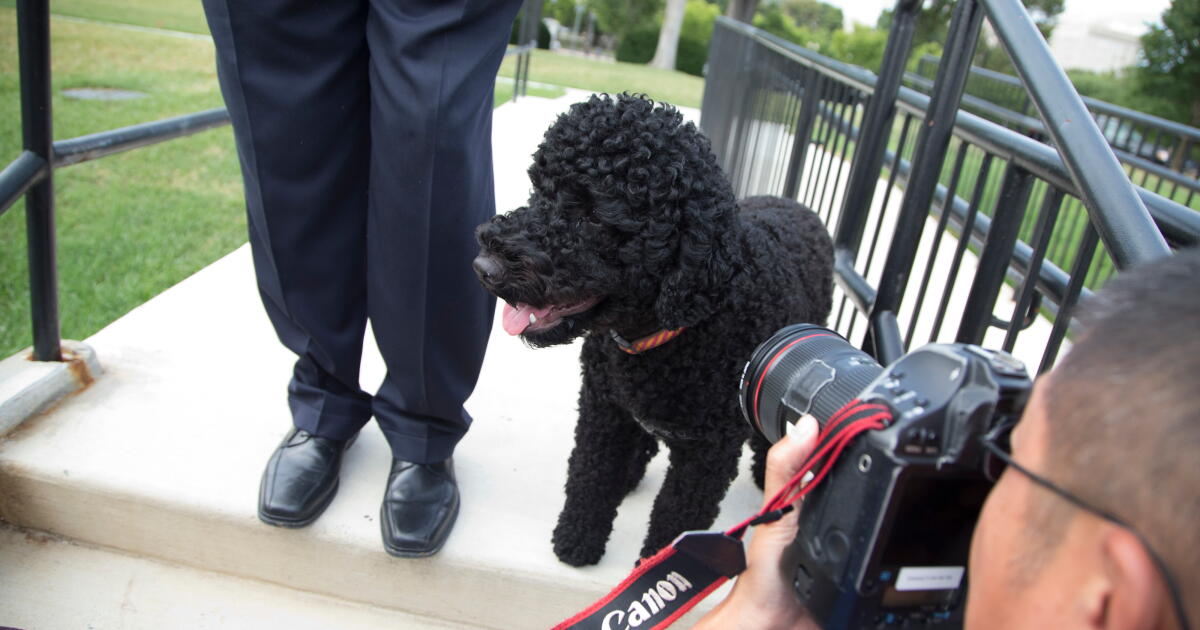
WASHINGTON — The Obamas’ pet dog Sunny has died, former President Obama said Wednesday.
Sunny, a 13-year-old Portuguese water dog the Obamas got in 2013 while living in the White House, died Tuesday.
“We got Sunny at the start of our second term in the White House, and all of us — including our first dog, Bo — immediately fell in love,” he said on social media.
He remembered Sunny as athletic, full of energy and protective of Bo. Despite Sunny’s breed, she hated getting wet.
“We will miss her terribly, and imagine she’s with her big brother now, making sure he’s okay,” Obama said.
Bo died in 2021.
While many presidents have kept dogs as companions, President Trump does not have any pets at the White House.
George H.W. Bush’s English springer spaniel, Millie, “wrote” the bestseller “Millie’s Book.” President Clinton’s chocolate Labrador retriever, Buddy, was in the family as Clinton weathered the scandal over his affair with White House intern Monica Lewinsky.
George W. Bush’s Scottish terrier, Barney, had an official web page and starred in “Barneycam” videos that were filmed by a camera around his neck. Lyndon B. Johnson angered animal lovers by lifting his beagle, Him, by the ears in front of news photographers.
Harry S. Truman famously advised: “If you want a friend in Washington, get a dog.”
NEW YORK: Big-serving Ben Shelton overpowered US compatriot Frances Tiafoe in four sets on Friday to reach the first Grand Slam final of his career, booking a US Open title showdown with Alexander Zverev.
Eighth-seeded Shelton blasted 20 aces on his way to a thrilling 4-6, 6-3, 6-3, 7-5 victory on the Arthur Ashe Stadium court.
Top seed Zverev held off 50th-ranked Russian Karen Khachanov 6-3, 7-6 (9/7), 7-6 (8/6) to reach his third straight Grand Slam final – a run that delivered his maiden major at the French Open and saw him finish runner-up at Wimbledon.
Shelton – who took down defending champion Carlos Alcaraz in the quarter-finals – will now have the chance to become the first American man to win a Grand Slam title since 2003, when Andy Roddick triumphed at the US Open.
“It’s a lot of emotion,” Shelton said in an on-court interview. “My dad, my mom have sacrificed a lot for me to be in this position today. My dad lost his mom earlier this year, and she’s the reason that he was able to play tennis.
“Without her, there’s no Ben Shelton standing here today. So this one is for her. And I’m gonna need you guys on Sunday to bring the energy. I’m going for it. I’m gonna leave it all on the court.”
Zverev is eager for the chance to play spoiler.
“Hopefully I can not make the American dream come true on Sunday,” the German said.
The pulsating all-American semi-final played out in front of a star-studded crowd, with tennis legends including Serena Williams, Stan Smith and Lindsey Davenport on hand along with actors Ben Stiller and Rami Malek and New York Knicks star Jalen Brunson.
Tiafoe claimed the first set after Shelton uncharacteristically double-faulted to trail at 5-4.
They traded breaks early in the second, but Shelton took advantage of Tiafoe’s increasingly erratic serve to break for a 5-3 lead and level the match.
The momentum was all with Shelton, who broke for a 3-2 lead then seized the set with a break in a marathon ninth game that went to deuce seven times.
The tension was mounting in the fourth set, but Shelton kept his composure as Tiafoe raised his level and gained the crucial break in the final game.
On Sunday he’ll be up against an experienced opponent in Zverev, who after laboring through two five-setters to open the tournament has steadily upped his game.
‘Anything but straightforward’
Zverev doused Khachanov’s hopes of reaching a first Grand Slam final, although the Russian – who fell to Zverev in the Olympic gold medal match in Tokyo in 2021 – put up a spirited challenge in the second and third sets.
“Straight-set win, but anything but straightforward,” Zverev said. “He played incredibly well, fought incredibly well.”
Khachanov denied Zverev on two set points in the second set tiebreaker with a thumping forehand and a brilliant backhand down the line before Zverev closed out the set.
Neither player mustered a break point in a tense third set. But when Khachanov took a 6-4 lead in the tiebreaker he surrendered both set points with forehand errors. Zverev came up with his 15th ace and sealed the win when Khachanov sent a forehand long.
“Second and third set I think it’s more than obvious that they could have gone both ways,” Zverev said. “I just played a few points better here and there.”
A somber note was struck during the national anthem ceremonies of both the day and night sessions on the 25th anniversary of the September 11 attacks that brought down the twin towers of the World Trade Center in New York.
“It’s a difficult day to be out here playing,” Shelton said in his remarks to the crowd. “My thought and payers go out to all the families affected by 9/11.”
The women’s final is on Saturday, when Kazakhstan’s Elena Rybakina will try to deny Aryna Sabalenka a third straight title just days after ending the Belarusian’s near two-year reign atop the world rankings by reaching the semi-finals.
Imagine Paris in the 1920s, only it’s Los Feliz today — the Figaro Bistro patio humming with literary gossip from mercurial poets through clouds of cigarette smoke. It’s a proposition that Sammy Ginsberg is willing to explore.
A longtime writer and former high school English teacher, Ginsberg found writer gatherings to be inaccessible — either too large in scope or too exclusive. Luckily, Vermont and Hillhurst avenues are just right. The Los Feliz Writer Festival was born.
“Los Feliz is super artsy and filled with writers. It’s fun to organize one in the neighborhood,” says Ginsberg.
Ginsberg is weary of the well-trodden conversations about the New York literary scene, steeped in endless mythology. We may not have the New Yorker or the Paris Review, but we have each other: “There are 40 million people who live in L.A. County. I’m like, ‘We don’t need New York. We have people.’ ”
Willa Lane writes in a notebook at the closing Los Feliz Writers Festival event that featured journaling and meditation in Barnsdall Art Park.
(Samahra Litte )
That scrappy DIY quality can make Los Angeles’ literary community feel mysterious, even to the people living in it. A San Fernando Valley native, Ginsberg knows there’s plenty happening around the city — you just have to know where to look.
“There’s a lot of things going on, but you have to be in the know,” she says. “It’s happening in someone’s living room because it costs so much money to book a venue.”
In late August, Ginsberg organized the second annual Los Feliz Writer Festival, a sprawling collection of readings, workshops, parties and other literary miscellany. “Last year we did it, and it went really well,” she says. “This year, it’s even bigger and crazier and magical.”
The festival is, in some ways, an extension of the community Ginsberg has been quietly building all year. Since October, she’s hosted a weekly “Shut Up & Write” at Los Feliz watering hole the Big Bar at Alcove. “We have dinner and then write next to each other quietly,” says Ginsberg. “You can see each other every week, and it’s a natural, slow way to get to know people.”
The Los Feliz Writer Festival kicked off with Poets Are the New Popstars, a reading-meets-house-party at a private home in Los Feliz. Over the course of the festival’s 13 events, writers could attend personal essay workshops, receive tarot readings, and celebrate the 100th birthdays of Frank O’Hara, Allen Ginsberg and Harper Lee at East Hollywood bar Tabula Rasa. “I made these limited-edition official after-party zines with a poem and quote from the authors,” says Ginsberg.
Alex Moreno reads from her poetry collection “Sticky Time” at Poets Are the New Popstars.
(Toby Shapiro)
Ginsberg imagines the literary scene as a collaborative project. “For me, this is kind of like hipster ‘Dungeons & Dragons.’ I’m playing with my friends,” she says of the festival, which she plans to organize annually. In the future, the festival hopes to include more diverse voices. “In the second year, we’re trying to open up the conversation,” she says. “We, too, believe that L.A. is for everyone and want it to be a writers festival for everyone.”
Christina Catherine Martinez, a critic, writer and comedian, has a more pointed take on the Los Angeles literary world.
“A lot of parties and readings, but not a lot of bylines,” she muses. “Substack IRL but still gunning for the traditional publishing deal — kind of an old world is dying, a new world is not yet born.”
Yet, Martinez welcomes the proliferation of readings that have emerged throughout the city. “I love that there are so many readings,” she says. “Fifteen years ago the only time I mingled with other writers was at the yearly Artforum dinner, when the lit scene was barnacled to the art scene.”
This fall, Los Angeles will host an eclectic mix of literary events, from readings by acclaimed novelists to intimate gatherings for emerging writers and readers. For those looking to immerse themselves in the city’s burgeoning literary scene, here are 16 readings and literary events taking place across Los Angeles.
As a young sportswriter studying journalism at the University of Missouri, Seth Wickersham looked to Los Angeles for inspiration. At the campus bookstore, Wickersham bought his first sportswriting anthology, “The Last of the Best,” a collection of columns from the Los Angeles Times’ Jim Murray, one of four sportswriters ever to win a Pulitzer Prize.
Collections of work from Murray, Rick Reilly, Frank Deford and others offered Wickersham a road map for the career he wanted to build — and he has, with 26 years’ worth of work at ESPN meriting an anthology of his own. “Be on That Hill: Stories From the Summits of Sport,” which will hit bookshelves Sept. 22, is Wickersham’s third book. He said assembling an anthology is both “the coolest thing you could ever imagine happening” and “this weird mind warp.”
“When you’re just on a treadmill like I’ve been, the years just go,” says Wickersham, who’s been covering sports since he was hired by ESPN The Magazine straight out of college. “You don’t realize it, but then you take stock of it, and you’re like, ‘Holy cow, I’ve been doing this 26 years …’ It’s surreal to go back and look at it.”
Football has always been Wickersham’s first love — he weaved his journey as a high school quarterback into “American Kings” — but his latest book features stories about a college basketball coach on the job hunt and an NHL enforcer’s attempts to avoid head injuries.
“I’m trying to write about people who have a certain level of inner turmoil,” Wickersham says, “whether it’s Sean McVay after he wins the Super Bowl, or Jerry Jones when he’s threatening to sue the NFL to stop Roger Goodell from signing a contract extension.”
The sports media industry has changed dramatically since Wickersham’s career began. ESPN The Magazine no longer exists. Access to coaches and players is increasingly hard to secure. But Wickersham’s journalistic goals are the same today as they were when he bought Murray’s anthology.
“I want to be a link on a chain,” he says. “It’s hopefully an installment of a body of work that one day might help me be a link on a chain of the best who did this.”
This Q&A was edited for length and clarity.
You’re reading Book Club
An exclusive look at what we’re reading, book club events and our latest author interviews.
By continuing, you agree to our Terms of Service, which include arbitration and a class action waiver. You agree that we and our third-party vendors may collect and use your information, including through cookies, pixels and similar technologies, for the purposes set forth in our Privacy Policy such as personalizing your experience and ads.
✍️ Author Recommendations
In addition to Jim Murray’s anthology, here are some other sports books that have inspired Wickersham.
“The Breaks of the Game” by David Halberstam: This is the Pulitzer-winning Halberstam’s first sports book, following the 1979-1980 Portland Trail Blazers. “When it comes to trying to decode a team, that’s the standard,” Wickersham says.
“Joe Namath and the Other Guys” by Rick Telander: Namath, the Hall of Fame New York Jets quarterback, serves as an example of quarterbacks’ rising celebrity profile in “American Kings,” and Telander is one of Wickersham’s favorite sportswriters. “The portrait he gave of Joe Namath in his twilight was just so rare,” Wickersham says. “I don’t think a book like that has ever been done.”
“When Nothing Else Matters” by Michael Leahy: Another book about an athlete in his twilight. This one documents Michael Jordan’s time with the Washington Wizards. “He worked his tail off as a reporter and really gave a brutally honest glimpse into what it was like to live and play with Michael Jordan the last few years of his career,” Wickersham says.
“The Franchise” by Michael MacCambridge: Wickersham read this history of Sports Illustrated in college. “It really not only gave a glimpse into how so many of these great stories by my heroes … were done,” he says, “but also how those guys got hired at Sports Illustrated. It was like a job road map.”
📰 The Week(s) in Books
Our fall book recommendations answer your call for learning and discovery this season.
(Kissi Ussuki / For The Times)
Our Fall Preview includes 29 books to keep on your radar this fall, as well as television and movies we’re excited about.
This week, we caught up with Raine De Leon, owner of Sons and Daughters Books, a formerly online bookstore that opened a brick-and-mortar location earlier this year. Here’s what they had to say about their IRL location, the local bookshops that inspired them and more.
This interview was edited for brevity and clarity.
Your bookstore began as an online store in 2024. What motivated you to open an online store? How did it grow from there?
A brick-and-mortar was always the end goal, since I wanted a physical space for writers, readers and other artists to come together for events and community building. Originally, the online store was actually an online poetry journal, where I published poets from around the world, wrote reviews, and held virtual readings. I wanted to translate that into an in-person experience.
What other bookstores, in Los Angeles or elsewhere, served as inspiration for the type of bookstore you wanted to open?
Skylight Books in Los Feliz and Village Well Books and Coffee in Culver City really inspired how I wanted the store to feel: warm, inviting and dynamic enough to serve both a neighborhood and a larger L.A. audience. I took inspiration from the Painted Porch in Texas in regard to curating the selection of books in the store. City Lights in San Francisco was also a huge inspiration for not only my store, but my life in general. The place it holds in the history of its community, the history of publishing and the history of poetry are profound, and I am trying to emulate that legacy as best I can.
What inspired the name Sons and Daughters Books?
The poet Charles Olson wrote a landmark essay, “Projective Verse,” in 1950. In it, he talks about poetic lineage and influence, and he says something to the effect of “We are the sons of the poets who came before us,” and that really spoke to me. I expanded it out to “Sons and Daughters,” with that same sentiment, to be a little more inclusive.
What type of selection can people expect at Sons and Daughters Books?
Our selection is almost all new books with focus on fiction, poetry, social sciences and more. We also have a cart of used books out on the floor every day, and on Sundays I bring out two more carts of used books.
For the new books, I selected each book in the store myself. I may not have read every book on these shelves, but I went line by line in our inventory sheets to select books that I wanted people to be aware of. Even though I am the only staff member, our “Staff Rec” table features reviews and picks from those closest to me. I wanted our selection to be extremely specific to me, my loved ones and the community the store is now in.
In the time you’ve been open, what events have been the most popular? Any particular upcoming events you’re excited about?
Our two most popular events are definitely our weekly stand-up comedy open mic night and our thriller book club.
September is our fullest month yet in regard to events, and I’m very excited for a few. We have two book launch events. The one on Sept. 26 is for “Valley Girl Manifesto” by Noelle Cope, a collection of both poetry and prose. The other, on Sept. 19, is for “Anger Is a Gift,” a new poetry anthology from FlowerSong Press. Both celebrate poetry, locality and connection.
Our full events calendar, which continues to grow, also features community workshops, silent reading clubs and more.
Sons & Daughters is located at 7817 Melrose Ave., Los Angeles.
After oohing and aahing over “The Odyssey,” it’s time for the hot summer splash to make way for an intriguing fall lineup.
At the movies, Alexander Skarsgård plays a sexy wicker husband. Tom Cruise, a bizarro oil man. Jenna Ortega, a robot friend, and Kendall Roy, ahem, Jeremy Strong, is Mark Zuckerberg. Then we revisit classics of various stripes on the small screen, from a further-future “Blade Runner” to “A Different World” relaunch to “East of Eden” to “Pride and Prejudice.”
For new books, it’s an Emily fest. Emily St. John Mandel’s “Exit Party,” based in Los Angeles, is being called her best work since “Station Eleven.” And Emily Wilson, “The Odyssey” translator who launched 1,000 hot takes, lets us inside her process. As for arts, directors steal the spotlight: the Lucas Museum of Narrative Art opens with 20 inaugural exhibitions and a collection of David Lynch’s L.A. photography fills a local gallery.
Bookmark this page and come back daily this week as we share even more of the best of fall. — Brittany Levine Beckman
Based on the best-selling novel of the same name by Liane Moriarty, the mystery drama has a star-studded cast list with big Hollywood names such as Nicole Kidman and Melissa McCarth.
Luke Evans, Christine Baranski, Bobby Cannavale, Michael Shannon, Annie Murphy and Mark Strong also star.
A synopsis reads: “Nine Perfect Strangers is set at a boutique resort which promises healing and transformation to nine stressed city dwellers.
“Watching over them during the ten-day retreat is resort director Masha (Nicole Kidman), a woman on a mission to reinvigorate their tired minds and bodies. However, these nine perfect strangers have no idea what is about to hit them.”
Nine Perfect Strangers was directed by David E. Kelley, known for Big Little Lies, and has been described as a “suspense-filled drama” with lighter comedic moments. The series explores how far people will go to face their personal demons and get well, shining a light on the world of health and wellness and our constant quest for self-improvement.
And while the drama is new to ITV, those who watched it on Hulu back in 2021 have a lot to say about it.
One viewer wrote on IMDb: “This show is amazing I honestly could NOT stop watching, Great casting very thrilling and suspenseful it definitely had me hooked. Going into this show I honestly did not expect much but boy was I wrong, I’m not gonna spoil anything but trust me you should definitely give this show a watch it will not let you down. 100000 out of 10 perfection, thanks Hulu.”
While another added: “Modern masterpiece.Perfectly relevant. Wonderfully acted across the board. This is top tier production of story.
“Filled with character and drama and poignant climax each episode. There is direction and building and thorough relation with everything. No disappointment episode to episode and an overall positive outcome that closes with satisfaction and optimism. Fiction steeped with reality.The music, cinematography, acting, animation, and overall direction really sends this into the upper echelon. Brilliant.”
Overall, Nine Perfect Strangers has mixed reviews, with some calling the plot “confusing”. Reflecting on this, one fan of the book wrote: “The TV adaptation follows the novel very closely. If you read the book you’ll enjoy it on the screen. If you haven’t read the book, sit back, shut up, and get ready for a bumpy ride. THEN leave your review.”
Nine Perfect Strangers will land on ITVX on September 27.
The Godfather, widely considered the greatest gangster film ever made, is being shown on BBC2 tonight at 10pm – starring Marlon Brando and Al Pacino
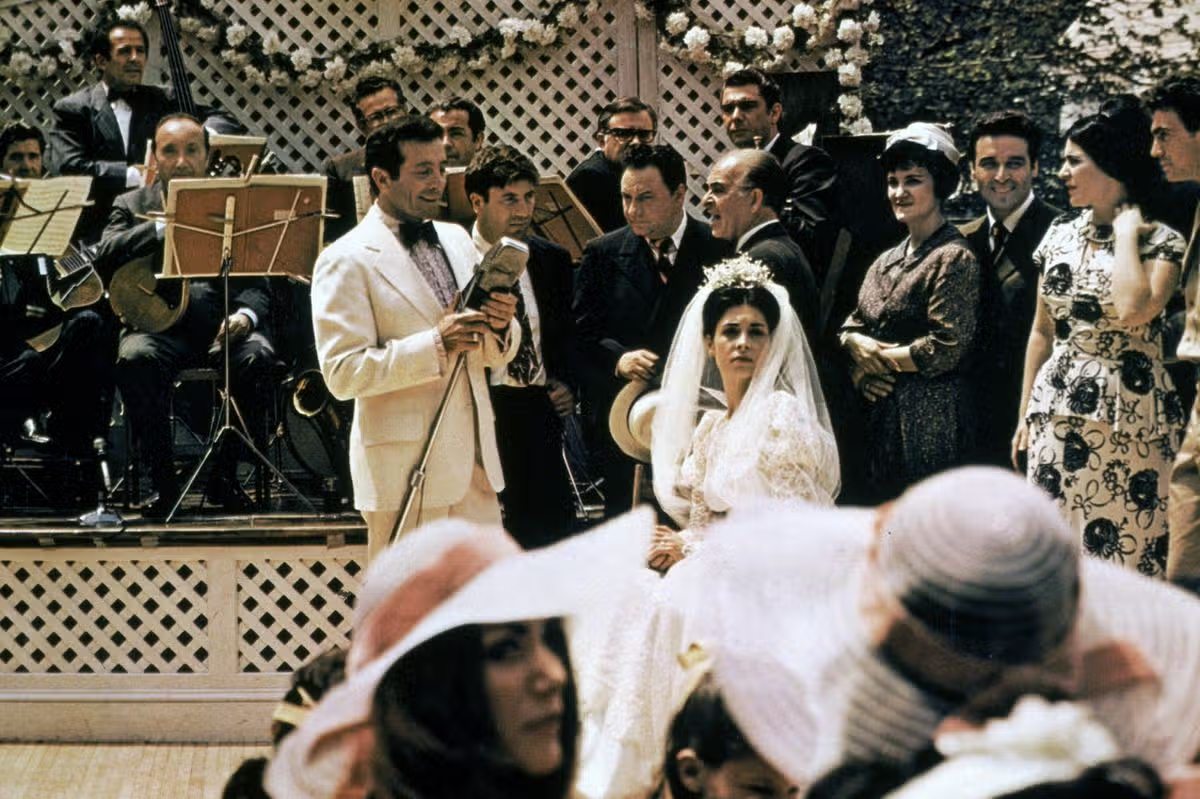
American singer Al Martino as Johnny Fontane sings to American actress Talia Shire playing the bride Constanzia (Image: Getty Images)
The Godfather, based on the much-loved gangland crime book of the same name, is widely accepted as “the best of all time” is on BBC tonight.
The 1969 novel by Mario Puzo was adapted for screen and directed by Francis Ford Coppola. The film was a smash hit and swept up during awards season with the performances revered as the best in cinema history.
With a stacked cast including Marlon Brando and Al Pacino to the film remains the gold standard for the crime genre today. One IMDb user said it is “One of the best of all time”, giving the film a solid 10/10 score.
Another wrote: “A flawless movie. This movie translates from the book perfectly!This movie made me want to be a director and create film. Everyone’s acting was perfect. To think that Puza wrote this specifically to make a hit is at first crazy.”
More than five decades since its release, The Godfather continues to command a devoted following, and tonight you can watch it on BBC Two, completely free of charge.
The story follows the shady underground world of the Corleone crime family. It scooped up three Oscars for Best Picture and Best Adapted Screenplay, with Brando also claiming Best Actor.
An IMDb review said: “A masterclass in film making, is The Godfather a contender for the best film of all time? I’d argue the case that it is, this is the ultimate gangster movie.
“Before you panic at the thought of a film being almost three hours long, you needn’t, you won’t even notice the time, it flies by. Production values are incredible, it looks sublime the whole way through, it’s so well produced, at roughly fifty years old it puts many new films to shame.
“Brandon, Pacino and Castellano, just a few of the Incredible performances, I could add a whole lot more. If you’re considering buying a hard copy, I would recommend it on blu ray, it is sharper than the dvd, there is a difference. This film has had a huge influence down the years, it is still, and will forever be, one of the greatest, 10/10. “
Another wrote: “This movie is strong, good script, great casting, excellent acting, and over the top directing. It is hard to fine a movie done this well, it is 29 years old and has aged well.
“Even if the viewer does not like mafia type of movies, he or she will watch the entire film, the audiences is glued to what will happen next as the film progresses. Its about, family, loyalty, greed, relationships, and real life. This is a great mix, and the artistic style make the film memorable.”