Iranian woman’s video of US-Israel attack ends as bomb hits | Conflict
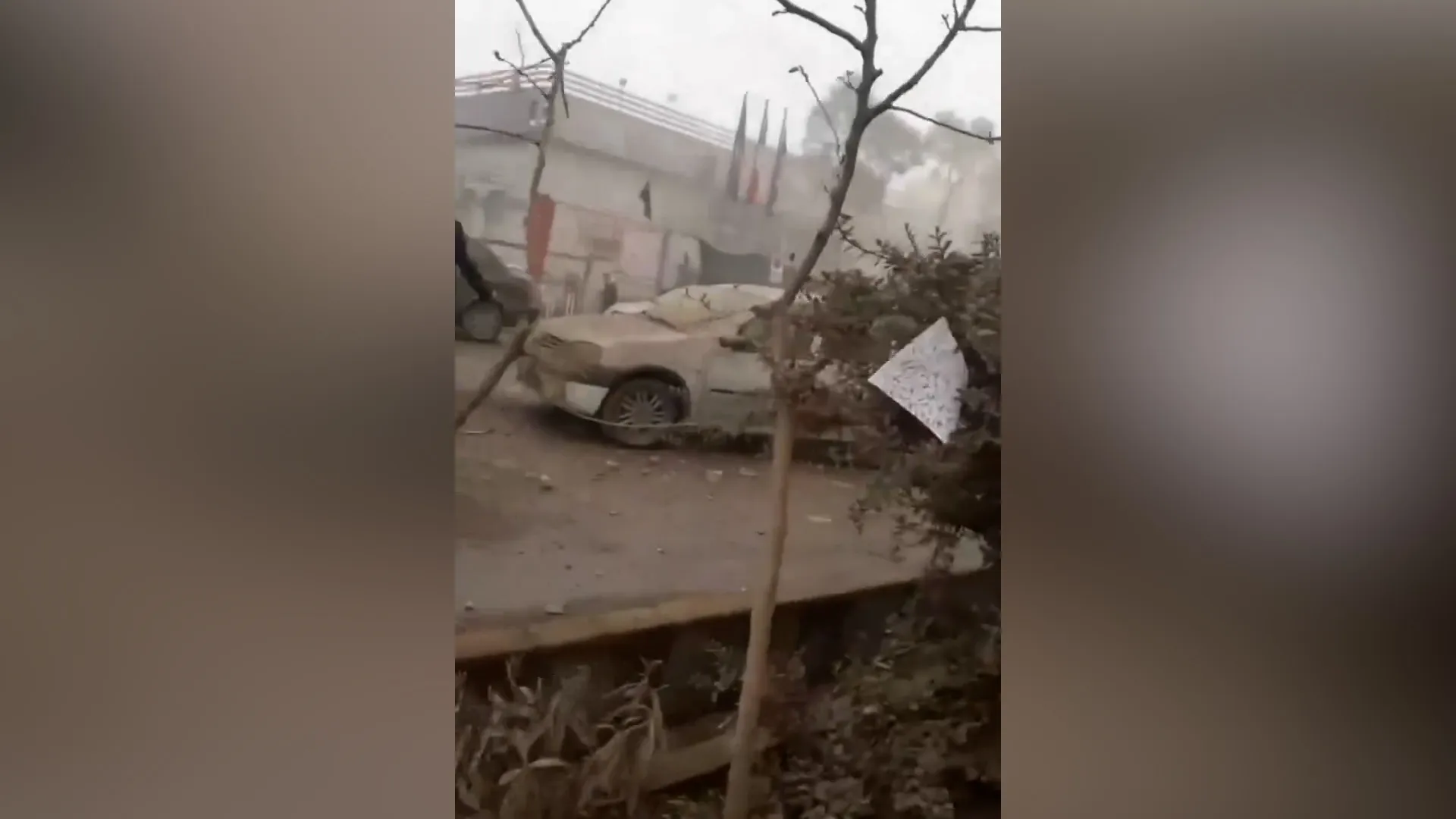
The fate of an Iranian woman caught in a US-Israeli bomb attack is unknown, after video emerged of the moments she filmed the bombardment on her phone.
Published On 21 Mar 2026
The fate of an Iranian woman caught in a US-Israeli bomb attack is unknown, after video emerged of the moments she filmed the bombardment on her phone.
Published On 21 Mar 202621 Mar 2026
Share
Umar Muhammad Mustapha had just stepped out of the mosque when he heard someone say an explosion had gone off in the Maiduguri Monday Market area on the evening of March 16. He panicked and asked when. “Just a moment ago,” someone replied, “while we were praying.”
Immediately, Umar began dialling his nephew’s number as he rushed toward the scene without first returning home. “The phone kept ringing, but he did not answer. A few moments later, it prompted ‘switched off’,” he recalled.
That was when the panic deepened.
“I began dialling those whose shops were close to ours.”
Umar sells gabgab at the market. His nephew, Muhammad Ibrahim, makes the local incense while he sells it. The 27-year-old has been with Umar since he was nine.
As he moved through the city that Monday evening, his thoughts raced ahead of him. “I began to imagine the condition in which I would meet him,” Umar said. “Is he alright? Is he alive? Is he dead? Is he injured? And how bad his injuries might be.”
They both work at the market, but that day, Umar stayed at home.
That night, at around 7 p.m., three explosions simultaneously rocked parts of Maiduguri, the Borno State capital in northeastern Nigeria, including the Monday Market, the Post Office area along Ahmadu Bello Way, and the entrance of the University of Maiduguri Teaching Hospital (UMTH).
As he hailed a tricycle to rush to the market, Umar was restless. “I felt as though the keke was not going fast enough and kept urging the driver to go faster,” he said.
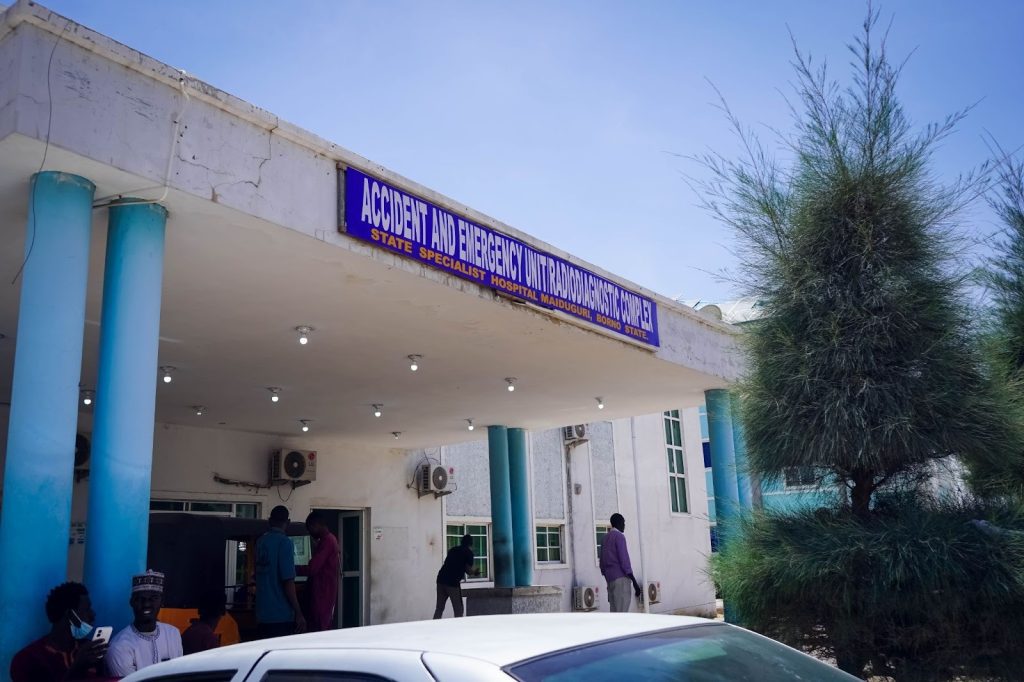
Before he reached the market, Umar’s phone rang, and Muhammad’s name was displayed. But when he answered, a different voice spoke. “Come to the emergency ward of General [State Specialist Hospital],” the person said.
In that moment, uncertainty gave way to reality. “An explosion occurred; he was affected,” the person continued. “He was brought to the hospital. You are the last person he talked to, so we are reaching out.”

The blasts at the market and the Post Office were especially devastating. The two locations sit minutes apart. Traders had closed for the day and were heading home when the first explosion tore through the Elkanemi junction, near the market.

In the immediate aftermath of the first blast, many people scattered and ran towards the Post Office area. Muhammad was among them. At the time Umar was trying to reach him, he had already escaped the market blast. In the confusion, he could not hear his phone. As he ran towards the Post Office area, another explosion went off.
It caught him, and he sustained injuries to his chest and legs.
When HumAngle visited the hospital on Tuesday, March 17, Muhammad could not speak, only nodding when spoken to. Umar said he was scheduled for surgery later in the evening.

Other survivors also carry similar stories.
Mohammed Babagana Bukar had just bought a pair of shoes for Eid al-Fitr, which is in a few days, with money he earned as a porter at the market. When the blast happened, the 15-year-old said, “We panicked and began running towards the Post Office when another one went off, close to where the flyover is being constructed.”
He was brought to the hospital by a stranger. “He carried me as I could not walk.”
Fantami Modu didn’t escape the first blast that rocked the market; he was injured.
“It affected my leg,” the 40-year-old said. “We were brought to the hospital by the police.” Fantami sells clothing materials and earns about ₦7,000 daily. It is what he uses to feed his family.
Get our in-depth, creative coverage of conflict and development delivered to you every weekend.
Subscribe now to our newsletter!
Now, he cannot work. Beside him, his brother, Babagana, said they are contributing to support the household until he recovers.
According to the Borno State Police Command, 23 people were killed, and 108 were injured in the multiple bomb blasts. No terror group has claimed responsibility for the attacks, but the Nigerian Army said they were “carried out by suspected Boko Haram terrorist suicide bombers”.
“Preliminary information further indicates that the terrorists may have deployed multiple suicide bombers into Maiduguri with the intention of carrying out coordinated suicide bombings at crowded locations,” Lieutenant Colonel Sani Uba, Media Information Officer of the Joint Task Force North East Operation Hadin Kai, said in a statement.
At the State Specialist Hospital, where victims were first rushed to, HumAngle counted 13 survivors on admission. The hospital is less than two kilometres from the scenes. Of these 13, 11 were males and two females, with varying degrees of injuries to the arm, leg, and chest.
Nurses at the hospital said at least 40 people were brought to the emergency ward that night, with many later referred to the UMTH. Only 14 survivors were eventually admitted, but one died on arrival.

UMTH was also targeted that night. An explosion that went off at the hospital’s entrance. Although no civilian casualties were recorded, sources said that a suspected suicide bomber, who tried to enter the hospital on a bicycle before he was stopped by security operatives, died in the incident.
For some residents, the events revived familiar anxieties.
“We had just broken our fast and were waiting for a tricycle to return home when we heard the explosion close to the Monday Market,” Sulaiman Muhammad, a resident, recounted. “Less than 20 minutes after, we heard another one from the Post Office area. In panic, we scattered.”
He did not go to the scene. “It is dangerous,” he said. “I remember in one explosion like this inside the market at the peak of the [Boko Haram] insurgency, another explosion went off immediately people gathered to help victims.”

Now, those memories are resurfacing. “People are in panic,” he said. “We had begun to experience relative calm until the past few days.”
Sulaiman has sold shoes at the market for more than 20 years. He believes the attacks will affect business. “As you can see, no one is out [to sell],” he said.
These incidents are part of a broader pattern of escalating violence.
The explosions came barely 24 hours after terrorists attacked a military base in Kofa, a community close to Ajilari on the outskirts of Maiduguri, on March 16. Joint security operatives repelled the attack, leaving many terrorists dead.
However, before then, there had been attacks by terror groups across Borno State, including assaults on rural military bases and resettled communities like Ngoshe and Dalwa. Also, on Dec. 25, 2025, a suicide bomber detonated at a mosque in the Gamboru Market area of Maiduguri. Five people were killed, and 35 others were injured.
Taken together, these incidents point to what observers describe as a violent resurgence. HumAngle has reported that the terror groups operating in the region have undergone several technological shifts that have aided their expanded attacks and operations, including the use of artificial intelligence and drones.
For Umar, the incident has narrowed into something smaller, more personal.
Muhammad, he said, loves to read.
“He would read verses from the Qur’an after his morning prayer. And after breakfast, he would head to the market. And by evening, he would return home. He would read in the evening too, before going to bed.”
When asked what he hopes for, Umar paused.
“I would have hoped for more security or for more vigilance,” he said. “But what would an empty hope solve? Authorities know what to do. They would act properly if they intend to.”
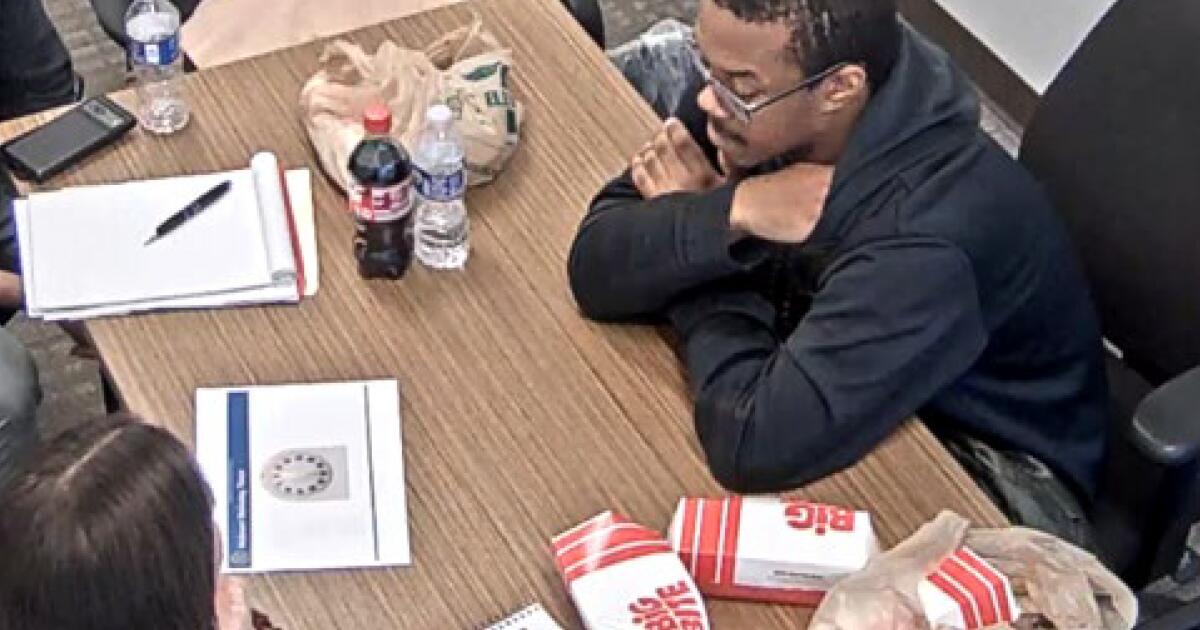
WASHINGTON — President Trump’s sweeping act of clemency for rioters who stormed the U.S. Capitol also should apply to a man charged with planting pipe bombs near the national headquarters of the Democratic and Republican parties on the eve of the Jan. 6, 2021, riot, the suspect’s attorneys argue in a bid to get his case dismissed.
In a court filing Monday, defense attorneys assert that Trump’s blanket pardons extend to the charges against Brian J. Cole Jr. because his alleged conduct on Jan. 5, 2021, is “inextricably tethered” to what happened at the Capitol the next day. They’re asking U.S. District Judge Amir Ali to throw out the case before trial.
Justice Department prosecutors didn’t immediately respond in writing to the defense’s request. In a previous court filing, prosecutors said Cole, under questioning by FBI agents, denied that his actions were related to the Jan. 6 proceedings at the Capitol.
On his first day back in the White House last year, Trump pardoned, commuted prison sentences and ordered the dismissal of all 1,500-plus people charged in the attack by a mob of his supporters.
Nearly a year later, Cole was arrested on charges that he placed two pipe bombs outside both the Republican and the Democratic national committees’ headquarters in Washington the night before the riot. The devices didn’t detonate before law enforcement officers discovered them Jan. 6.
Cole’s attorneys said the Justice Department’s framing of the case has explicitly linked Cole’s alleged conduct on Jan. 5 to the events of Jan. 6, when rioters disrupted the joint session of Congress for certifying Joe Biden’s electoral victory over Trump.
“That is not happenstance sequencing in time. It is the government’s theory of Mr. Cole’s alleged motive and context,” defense lawyers wrote. “According to the government, the timing was chosen because of what was scheduled to occur at the Capitol on January 6.”
They also argued that prosecutors’ theory of a possible motive places Cole’s alleged conduct “in the same political controversy that animated the January 6 crowd.”
In court filings, prosecutors have said that Cole confessed to investigators after his Dec. 4 arrest. He told FBI agents that he felt “bewildered” by conspiracy theories related to the 2020 presidential election and “something just snapped” after “watching everything, just everything getting worse,” prosecutors said.
Cole has remained jailed since his arrest. His attorneys have appealed Ali’s refusal to order Cole’s pretrial release from custody. The judge hasn’t set a trial date yet.
Cole, 30, of Woodbridge, Virginia, has been diagnosed with autism and obsessive-compulsive disorder. His attorneys say he has no criminal record.
Authorities said they used phone records and other evidence to identify him as a suspect in a crime that confounded the FBI for more than four years.
Kunzelman writes for the Associated Press.
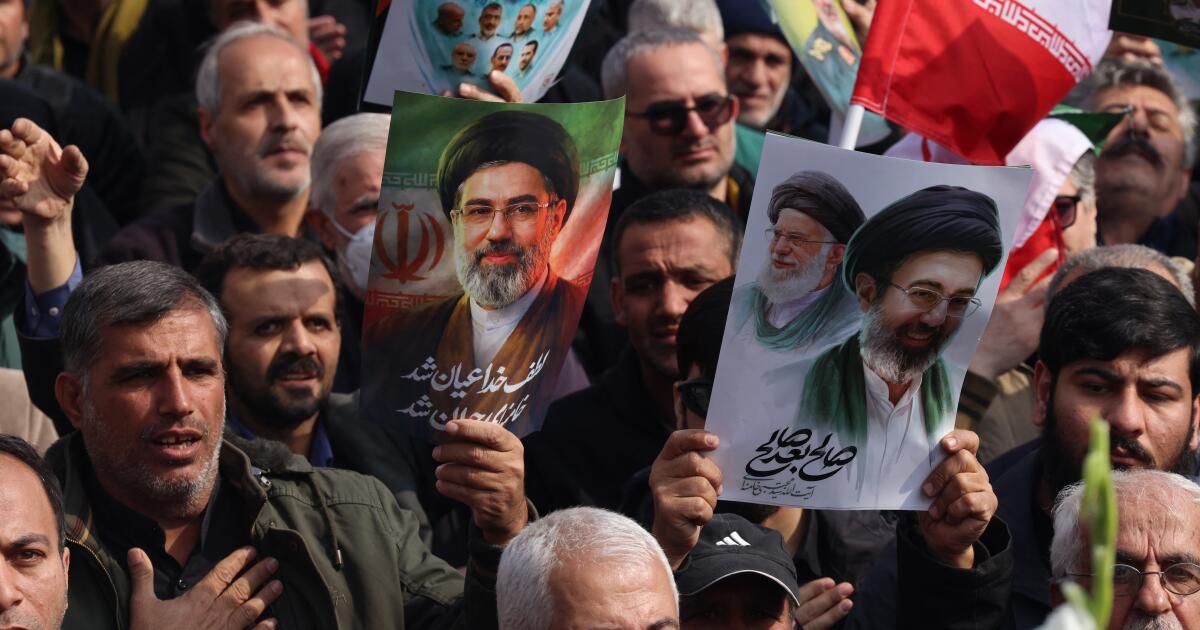
WASHINGTON — Days after he was named Iran’s next supreme leader, and over a week since U.S. and Israeli bombing wiped out much of his family, Mojtaba Khamenei issued his first statement on Thursday demanding vengeance against the alliance over the war it unleashed.
He called on Iranian forces to continue thwarting vital shipping traffic through the Strait of Hormuz. He vowed to open new fronts against the United States and Israel. And he warned that Gulf states hosting U.S. bases would remain targets of Iranian attack.
Yet, what concerned the White House most was what the new supreme leader didn’t say.
Khamenei made no mention of a strategic endeavor that had brought the Islamic Republic to war: Its nuclear program, suspected for decades of harboring military dimensions.
The omission was not lost on officials in the Trump administration, who told The Times they are largely in the dark over the new supreme leader’s stance on whether Iran should break out to build a nuclear weapon.
Khamenei’s deep alliance with the Islamic Revolutionary Guard Corps, which has advocated for weaponization in the past, has raised concern that the new leader will depart from his father’s long-standing position against building a bomb.
U.S. intelligence assessments long held that the late ayatollah, Ali Khamenei, had adopted a strategy of remaining at the threshold of developing a nuclear weapon while avoiding the costs and risks of actually building one. In 2003, as the United States invaded Iraq over false claims that Saddam Hussein possessed weapons of mass destruction, Khamenei issued a religious edict — a fatwa — declaring nuclear weapons to be forbidden under Islam.
That doctrine is now in doubt, with the new supreme leader wounded and stewing underground over the U.S. assault that has devastated Iran’s military and killed his father, his mother and his sister, among other family members.
Concern among U.S. officials comes as Trump has expressed interest in ending the war “very soon,” even though a stockpile of uranium — a key ingredient in the construction of nuclear weapons — remains buried but accessible to Iranian authorities.
Defense officials are skeptical that the nuclear program can be fully dismantled without sending in a substantial U.S. ground force, an escalation that Trump has sought to avoid. But ending the war with Iran’s nuclear infrastructure partially intact could have devastating repercussions. The U.S.-Israeli campaign could force the new Iranian leader to conclude that regime survival requires a nuclear deterrent, one official said.
“Even if President Trump declares victory tomorrow, and points to the damage done to Iran’s conventional military, the fact of the matter is you have a more hardline regime in place with the key ingredients for a nuclear weapon,” said Eric Brewer, deputy vice president of the nuclear materials security program at the Nuclear Threat Initiative, who noted that Tehran still has a stockpile of 60% enriched uranium — close to weapons grade — and advanced centrifuges to take it over the finish line.
“What’s the plan for day after,” Brewer added, “as Iran starts to build back, and potentially seeks nuclear weapons?”
Patrick Clawson, director of the Iran program at the Washington Institute for Near East Policy, said that Mojtaba Khamenei’s position on the nuclear program has been a stubborn mystery. Reports spreading on social media that he opposed the Joint Comprehensive Plan of Action, a nuclear deal brokered among world powers and Iran during the Obama administration, are unsubstantiated, he said.
“While Mojtaba often advised his father on domestic issues, there is much less information about his position on foreign affairs, other than opposition to Israel,” Clawson said. “I have never seen any indications he took a position about the JCPOA.”
President Trump has outlined the destruction of Iran’s nuclear capabilities as a major goal. But in closed door briefings to Congress, defense officials have been less emphatic, according to Democratic lawmakers.
On Tuesday, shortly after Khamenei was named to succeed his father, Defense Secretary Pete Hegseth warned him to disavow continued nuclear work in an exchange with reporters.
“He would be wise to heed the words of our president, which is to not pursue nuclear weapons,” Hegseth said, “and come out and state as such.”