A rare weather phenomenon known as calima is set to sweep across parts of Europe, hitting major holiday hotspots with ‘blood rain’ possible, leaving dramatic orange-coated scenes
12:16, 27 Feb 2026Updated 12:17, 27 Feb 2026
Dust from the Sahara could cause ‘blood rain’ at popular Spanish hotspots(Image: Getty Images)
Brits could be battered by ‘blood rain’ during a rare weather phenomenon set to engulf parts of Europe.
A Saharan dust cloud is set to sweep across parts of Spain and the Balearic Islands, hitting major holiday hotspots such as Tenerife, Lanzarote, Gran Canaria, Majorca, Menorca and Ibiza. The phenomenon, known as Calima, is being driven by a high-altitude, isolated depression (DANA) that is transporting large amounts of sand from Morocco and Mauritania into southern Europe.
Instead of basking in the Spanish heat, tourists face the prospect of orange-tinted dust, hazy skies and reduced visibility. The Spanish weather agency, AEMET, also warned that calima “worsens air quality due to microscopic particles, which can reach the respiratory tract”.
Holidaymakers and locals should also brace themselves for “blood rain,” which occurs when the orange dust is mixed with rain. Heavy rain has been predicted for parts of Spain, which could result in thick layers of dust engulfing the Spanish hotspots, dramatically changing the scene, leaving cars scattered with dust and murky swimming pools.
The weather is forecast to be worse in the southeast parts of Spain, along the Mediterranean coast and the Balearic Islands. The AEMET issued a weather warning on X, formerly Twitter, and said: “Very adverse weather in the Canary Islands: showers that could be very heavy, today accompanied by storms in the eastern islands; very strong wind gusts; rough seas.”
The agency noted on Sunday that the “weather is expected to improve.” The phenomenon has also brought an unusually warm air mass, with soaring temperatures up to 25C in southeastern regions and the Canary Islands, and Bilbao hitting a blistering 27C in February.
This isn’t the first time the Canary Islands have experienced a calima, including Lanzarote, which typically occurs during the winter months. The calima is a hot, oppressive wind that arises when high pressure builds over the Sahara, subsequently driving winds that carry Saharan temperatures and sand.
Explaining further, Lanzarote Information said: “During a calima, the air turns a white or even a yellow colour and you can literally smell the sand in the air from the Desert.
“Visibility is reduced, and there’s a kind of otherworldly quality to the light. Often strange insects accompany the winds – in recent years we have had locusts, ladybirds and dragonflies that arrive on the island.
“They rarely last for very long here, as there is so little for them to eat due to the desert nature of Lanzarote. Sometimes unusual birds are blown over on the wind as well, so look out for them.”
Ensure our latest lifestyle and travel stories always appear at the top of your Google Search by making us a Preferred Source. Click here to activate or add us as your Preferred Source in your Google search settings.
Do you have a travel story to share? Email webtravel@reachplc.com
Alzheimer’s disease researchers say they have developed a way to predict when a unimpaired person may develop dementia symptoms within three to four years through a single blood test. File Photo by EPA
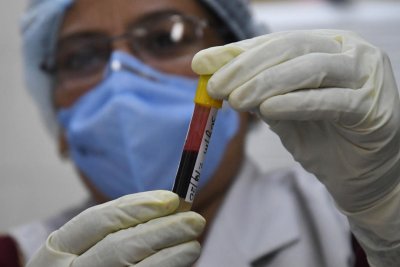
ST. PAUL, Minin., Feb. 27 (UPI) — A team of U.S.-based scientists say they have developed a model using a “biological clock” to predict — with just a simple blood test — when someone is likely to develop symptoms of Alzheimer’s disease.
The results of a study published this month in the journal Nature Medicine demonstrate how, by measuring blood plasma levels of a protein in people who are not yet impaired by Alzheimer’s symptoms, researchers can predict when cognitive decline will begin within a margin of three to four years.
While there is no single, stand-alone test to diagnose Alzheimer’s today, the new method works by leveraging how levels of the protein “p-tau217” in the blood closely reflect how much amyloid plaque has built up in the brain over time. This provides doctors with a “clock” that points to when a patient may begin to experience symptoms.
Amyloid buildup in the brain may begin up to 20 years before a person starts to experience symptoms of memory and thinking issues. The plaques are a key pathological hallmark and contributing factor in Alzheimer’s disease, and, much like looking at the rings of a tree, p-tau217 levels can reveal the age of the buildup.
The authors, based at the Washington University School of Medicine in St. Louis, say their new blood test method will have immediate applications in ongoing clinical trials seeking answers to the vexing questions about what causes and what can prevent Alzheimer’s and dementia, which affect more than 7 million Americans at an estimated cost of nearly $400 billion in 2025.
Eventually, with further refinement, researchers hope the blood test could one day be used in clinical settings to easily and quickly provide predictions about the timeline of symptom onset for individual patients. The only feasible ways of doing so now are through costly brain imaging scans and invasive spinal fluid tests.
The study was part of a project headed by the Foundation for the National Institutes of Health Biomarkers Consortium, a public-private charitable partnership established by Congress in 1990 whose roster includes schools such as Washington University, life science companies including Johnson & Johnson and the Alzheimer’s Association.
Dr. Suzanne Schindler, senior author of the study and associate professor in the WashU Medicine Department of Neurology, said that while current blood tests for p-tau217 are already capable of identifying cognitively unimpaired people who might develop Alzheimer’s symptoms, they have no ability to estimate when.
Thus, they are used only for research studies and clinical trials due to legal and ethical considerations, such as the risk of causing undue stress from uncertain results.
“Our study, however, suggests it’s possible to predict when symptoms might develop using blood p-tau217,” she told UPI. “The prediction is very rough and so is still only useful in research or trials.
“We believe these predictions can be refined, but it’s unclear if they’ll become reliable enough for individual guidance without more invasive tests like spinal fluid analysis,” she cautioned.
Still, the potential of uses of the blood test are immediate when it comes to Alzheimer’s research. For instance, they could allow clinical trials of potentially preventive treatments to be performed within a shorter time period.
“Clinical trials are currently underway that are treating cognitively unimpaired individuals who test positive for blood p-tau217,” Schindler noted. “We must wait to see if these treatments delay or prevent symptom onset, but I’m hopeful based on our understanding of the disease’s biology.”
Beyond clinical trials, the blood test will aid broader Alzheimer’s research “by linking p-tau217 levels to specific brain changes, helping us disentangle whether those changes are driving cognitive impairment amid its overall complexity,” she added.
The new study “provides evidence that plasma p‑tau217 may be a reliable tool for estimating the future onset of Alzheimer’s disease symptoms,” agreed Rebecca Edelmayer, vice president of scientific engagement for the Alzheimer’s Association.
“This could transform how researchers design clinical trials and, eventually, how clinicians identify people at highest risk for cognitive decline associated with Alzheimer’s years before decline begins,” she told UPI.
While the blood test method represents a “very intriguing discovery,” it’s important to note it is not yet ready for everyday use by doctors or patients, Edelmayer cautioned, noting that its three- to four-year margin of error effectively rules out its utility for individual decision-making.
Broadly speaking, blood tests are not yet recommended for cognitively unimpaired individuals outside research settings, but even so, “this finding is an important research step because a blood test is generally much less expensive and easier to administer than a brain scan or spinal‑fluid test,” she said.
“In the future, it could help doctors and researchers identify people who may benefit from early treatments, and make clinical trials for new Alzheimer’s therapies run faster and more efficiently.”
The possibility of making a difference in the long-running battle against one of the most feared and intractable diseases in the world holds a special meaning for Schindler.
“As a memory specialist, I’ve diagnosed over 1,000 people with Alzheimer’s and witnessed firsthand its devastating effects on patients and families,” she said. “These results make me hopeful, and it’s rewarding to think this research could improve diagnosis and treatment of Alzheimer’s.”
The United Kingdom’s government is investing in spyware developed and tested on Palestinians in Gaza and the occupied West Bank despite its public criticism of Israeli action there.
In addition to the Corsight facial recognition technology used to track, trace and detain thousands of Palestinian civilians passing through checkpoints in Gaza and the West Bank, the UK government has disregarded its own public concerns over Israel’s war on Gaza and de facto annexation of the West Bank and has purchased spyware from at least two other Israeli-linked manufacturers: Cellebrite and BriefCam.
Recommended Stories
list of 4 itemsend of list
Cellebrite
Cellebrite is an Israeli company closely linked to that country’s military. It has developed software that can bypass passwords and security protocols on smartphones and computers and access data from them.
That software has been used extensively by the Israeli military on Palestinians across Gaza and the West Bank, including to harvest data from the phones of thousands of detained Palestinians, many of whom have been subjected to systematic torture, a report by the American Friends Service Committee said.
Cellebrite is also reported to have received support from the United States Department of Defense to work on technology designed to map underground tunnels in the Gaza Strip.
Despite its stated public concerns over Israeli action in Gaza and the West Bank, records show the UK has entered into several agreements to take advantage of the technology used by Israel in Palestinian territory.
According to public records, a number of UK police forces have purchased access to Cellebrite software, including the City of London Police, which renewed its one-year contract with the Israeli company for more than 95,000 pounds ($128,600) in June. Leicestershire Police also renewed its contract with the Israeli spyware company in March for 328,688 pounds ($445,300). The British Transport Police, the UK’s Serious Fraud Office, Kent and Essex police, and Northumbria Police have also entered into contracts with Cellebrite.
Inquiries from Al Jazeera to the UK Home Office, Home Secretary Shabana Mahmood and the UK Police’s commercial agent, Blue Light Services, have all gone unanswered.
However, while declining to comment on “specific customer relationships or contracts”, Victor Cooper, Cellebrite’s senior director of corporate communication, rejected the characterisation of the company’s activities as “hacking”, instead saying, “Cellebrite’s solutions are forensic tools used in legally sanctioned investigations and require physical possession of the device. They do not enable remote access.”
Rights groups have raised concerns over Cellebrite exporting its technology to hardline states worldwide, including Myanmar, Serbia and Belarus, where it has been used to extract information from the phones of opposition figures, journalists and activists.
BriefCam
The Israeli-founded company BriefCam, which was acquired by Canon in 2018 and then by the Danish company Milestone Systems last year, has been providing the UK’s Cumbria Police with surveillance software since at least 2022.
A further disclosure by Police Scotland in June confirms that Scotland’s police service is also considering using the service.
BriefCam was founded in 2007 by Shmuel Peleg, Gideon Ben-Zvi and Yaron Caspi based on technology developed at Israel’s Hebrew University.
The company provides video synopsis programmes to law enforcement agencies, governments and companies. Police forces and private firms can use BriefCam’s Protect & Insights platform to sift through and condense hours of CCTV and home-surveillance footage, making it easily searchable.
The system includes facial-recognition and licence-plate search tools and allows police to build “watch lists” of specific faces or vehicle plates.
The technology has been used in East Jerusalem, Palestinian territory illegally occupied by Israel.
According to undated files accessed by the research centre Who Profits, a tender document published by the Israeli Ministry of Housing and Construction inviting companies to bid for maintenance contracts for 98 security systems within East Jerusalem specified that the successful bidder must be able to maintain BriefCam’s software. Israeli public records also show that in 2021, Israeli police committed to a contract valued at $1m for BriefCam’s video analysis systems.
A May 2023 report by the rights group Amnesty International documented how surveillance technology, such as that provided by BriefCam, was instrumental in maintaining Israel’s subjugation of Palestinians.
According to the report, the use of surveillance software is critical in maintaining the “continued domination and oppression of Palestinians … [w]ith a record of discriminatory and inhuman acts that maintain a system of apartheid”.
While not mentioning BriefCam by name, the report continued: “The Israeli authorities are able to use facial recognition software – in particular at checkpoints – to consolidate existing practices of discriminatory policing, segregation, and curbing freedom of movement, violating Palestinians’ basic rights.”
According to the company, the software can also filter footage by a wide range of characteristics, including gender, age group, clothing, movement patterns and time spent in a given location.
And that, despite the technology’s links to the oppression of Palestinians, is what makes it attractive to UK police forces.
Cumbria Police has said it does not currently use the facial recognition capabilities of BriefCam’s technology.
A spokesperson for Cumbria Police also clarified that the force has been using BriefCam for “several years” and, before introducing the technology, it had “consulted Cumbria’s independent Ethics and Integrity Panel and Strategic Independent Advisory Group”.
A request for a copy of those findings went unanswered.
Police officers are deployed in occupied East Jerusalem, where, records show, technology supplied to the UK has been used extensively [File: Atef Safadi/EPA]
Corsight
As previously reported by Al Jazeera, the Israeli company Corsight, through a subcontract with UK company Digital Barriers, has also been selected by the UK Home Office to play a key role in its expansion of facial recognition vans.
In March 2024, long before the UK government chose to include Corsight within its rollout of facial recognition technology, The New York Times revealed that misgivings over Corsight’s facial-recognition technology in Gaza had led to various members of the Israeli military voicing objections to its use by Unit 8200, Israel’s cyberintelligence branch.
The expansion of systems such as those marketed by Corsight, Cellebrite and BriefCam is part of a global trade in Israeli spyware, developed and refined through prolonged surveillance of Palestinians, that is now being exported worldwide.
Rights groups warned that techniques pioneered in Israel are being used by governments to target activists, journalists and political opponents as concerns deepen over the spread of unregulated cyberwarfare tools.
“The government and police should not be awarding contracts to Israeli spyware firms under any circumstances,” Palestine Solidarity Campaign Deputy Director Ryvka Barnard told Al Jazeera. “These companies develop and test their products through Israel’s regime of military occupation and apartheid against Palestinians. It is unacceptable for public money to be given to these companies, allowing them to profit from and develop new products used to surveil and harm Palestinians.”
Bed rest can go pound sand: Ray J gave his all on stage on Friday night, it seems, with fan videos showing his eyes appearing to bleed as he worked the crowd.
The singer also doffed the top of his orange jumpsuit to reveal some sort of medical port or device inserted on the upper left side of his chest.
The “Love & Hip-Hop: Hollywood” star, who is singer-actor Brandy’s brother, was performing in Shreveport, La.
In the first clip, red liquid — which many assumed was blood — ran down one of the R&B singer’s cheeks like tears as he handed out long-stemmed red roses to people in the audience. Another clip showed him singing into a mic while climbing down from the stage after shedding the top part of his jumpsuit.
“Hey, y’all, we perfectly fine. Ain’t nobody sick. Look at me, I’m fine,” he says in a later clip, which takes place off stage. The 45-year-old appears to be annoyed, saying that people have been laughing at him because he’s sick.
“He loves the camera. He loves the attention,” Tommy Nard II of Nard Multimedia Group, who was behind the scenes that night, told Shreveport news station KTAL separately. “It’s all theatrical … I seen him literally put on the fake blood and go out there.”
A concertgoer told KTAL that it was “very concerning to see blood, what appeared to be blood, coming from his eyes.”
Ray J told TMZ in late January that he was under doctor’s orders to stay on bed rest and avoid drugs and alcohol. He said he was on eight medications related to his heart, which he said had been damaged because of his excessive drug and alcohol use.
“I thought I could handle all the alcohol, I could handle all the Adderall,” he said in a video livestream in late January.
Doctors told Ray J — real name William Ray Norwood Jr. — that he should prepare for the chance that he might need a pacemaker or defibrillator soon, the singer told the celebrity site. He expected to get an update when he went back in two weeks for a checkup.
Two weeks was up over the weekend.
Ray J told followers in a video posted Jan. 25 that he wanted to “thank everyone for praying for me.”
“I was in the hospital,” he said. “My heart is only beating like 25%, but as long as I stay focused and stay on the right path, then everything will be all right.” In a video, he said the right side of his heart was “like, black. It’s like done.”
Ray J said elsewhere that his heart was beating at 60%. The number likely refers to his heart’s ejection fraction, which measures the volume of blood coming out of the heart’s left ventricle or being drawn into the right ventricle when the heart beats. Right-sided heart failure is far less common, according to WebMD.
A representative for Ray J did not respond immediately Tuesday to The Times’ request for comment.
However, in an Instagram story posted Monday, Ray J put up this quote: “‘If you want to know who your real friends & family are, lose your job, get sick, or go through hard times. You’ll see clearly.”