The plot has thickened. After having him removed from the Industry and National Production Ministry, sacking his trophy wife from government and keeping him in unpublicized captivity for three months, the Rodriguez administration completed a spectacular U-turn on Alex Saab. Madurismo’s shady financier and fixer is once again in US custody, two years after Maduro and the Rodríguez siblings celebrated his return through a prisoner swap brokered with the Biden administration.
Alex Saab became the centerpiece of a years-long propaganda campaign: billboards across the country hailed Venezuela’s heroic diplomat, leftwing influencers denounced the arrest of the man supposedly helping the nation overcome the siege of US sanctions, and embassies circulated the #FreeAlexSaab dossier among allied activists and journalists.
The long-awaited extradition of Saab is evidently not the result of the Rodríguez siblings suddenly discovering he is a Colombian criminal, as the official Saime statement describes him, but rather part of Delcy’s cooperation with Washington DC whose agents were reportedly involved in his arrest in Caracas. New York prosecutors have recovered a key witness in the US vs Maduro et al case, whose next hearing is in six weeks, and will now use a close associate of both the DEA and the presidential couple against Nicolás and Cilia.
We’ll see what happens with Alex Saab’s new stint in the US. Developments might come sooner from the other Saab: Tarek William.
A new scapegoat?
Carmen Navas passed away on Sunday, a day after the conversation about Alex Saab and Delcy’s quagmire resurfaced. We’ve covered Navas and Victor Hugo Quero Navas, her 15-month search for information about an arrested son who dissolved into the cauldron of violence and injustice that emerged from the horrid events of 2024. Navas perished ten days after the State finally admitted her son had been dead for long. The pro-democracy movement is in shock. International media and foreign politicians are also reacting to the tragedy as well. There’s ample willingness to keep highlighting the responsibility of Venezuelan officials, so don’t expect pressure over the Quero case and other desaparecidos to wane anytime soon.
Enter Delcy Rodríguez, whose role in the Quero story is far less inconspicuous than official statements suggest. The Prisons Ministry admitted Quero was dead only because Delcy gave the green light. The Ombudsman’s Office agreed to take Carmen Navas’ testimony because Delcy deemed it acceptable. Now that the 82-year-old mother has finally succumbed to this blatant episode of administrative evil, the ball is in Delcy’s court. Not just to manage another wave of widespread indignation, but to go further in the narrative that the Rodríguez siblings can make chavismo move on from the so-called excesos e ineficiencias of their predecessors.
Jorge Rodriguez has introduced the regime’s idea of a clean break with the past, the mantra of the most ambitious transitional justice projects of the late 20th century. With that damning “get over it, forgive us, and come home” line, Jorge hoped the public could forget the last 26 years without nothing in return, not human rights trials, not a power-alternation agreement with political rivals.
Prosecutor Tarek reportedly vowed to make prisoner Tareck suffer during the scandal investigations: “You’re dead. The country hates you today, but I will make sure the whole universe hates you too.”
Unable or unwilling to go anywhere near that, the regime’s best bet would be to go against the most disposable elements of the coalition: those who combine public contempt with overt involvement in repression, and who now appear to be losing influence while their human rights dossiers grow thicker by the day.
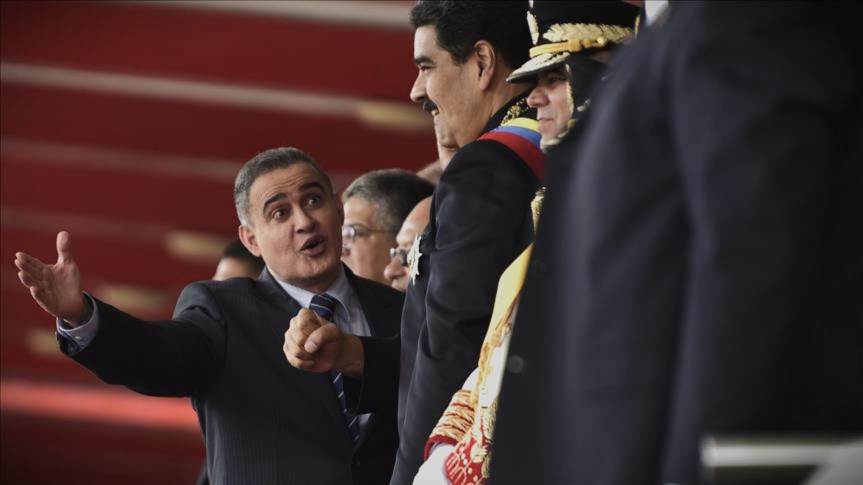
Under the current circumstances, former Prosecutor General Tarek William Saab looks like an ideal scapegoat. Parallel developments are not helping him.
El Aissami’s strange return
April marked the beginning of the trial of 63 individuals targeted in the 2023–2024 crackdown against Tareck El Aissami’s political clan.
Without the January 3 events, the PDVSA-crypto case would be business as usual, perhaps a hefty sentence after a few remote hearings, perhaps no trial at all. But in 2026 Venezuela, hearings involving El Aissami, his US-sanctioned frontman Samark López, and PSUV figures like Hugbel Roa have become opportunities to expose the torture they endured and explain why they believe chavismo turned against them three years ago.
Last week, TalCual obtained a court statement from former lawmaker Hugbel Roa. He claimed Tarek William Saab had him arrested in retaliation for a parliamentary inquiry into the dealings of Saab’s brother in Anzoátegui, reportedly a major PDVSA contractor in the region. Roa also accused Saab of judicial meddling to shield his brother, and said police assaulted both him and his wife at the behest of Tarek William Saab and prosecutor Farik Mora, who allegedly tried to force him into recording a confession about a fabricated coup conspiracy involving Leopoldo López.
In a separate hearing on May 8, former vice president and oil czar Tarek El Aissami tried to implicate an entire chain of command responsible for the torture and cruel treatment he suffered, including spending eight months in a windowless room with a powerful floodlight turned on 24/7. El Aissami accused former DGCIM chiefs Iván Hernández Dala and Alejandro Marcano Tabata, along with prosecutors including Tarek William Saab and Farik Mora. He also claimed Saab buried corruption cases involving members of his inner circle, and personally threatened to link El Aissami to the killing of Venezuelan rapper Canserbero—a cold case Saab miraculously solved when Maduro needed an electoral boost ahead of the 2024 election.
Saab saw this coming and will use every card he holds. It’s hard to think of anyone with more sensitive information on the regime and their leaders than Tarek William Saab.
Prosecutor Tarek reportedly vowed to make prisoner Tareck suffer during the scandal investigations: “You’re dead. The country hates you today, but I will make sure the whole universe hates you too.”
Saab’s behavior has also been a recurrent theme in the anti-chavista camp recently. Joel Garcia, a prominent lawyer for political prisoners, claimed he had direct knowledge of Saab filming dissidents being tortured and sending the footage to Nicolás Maduro. Former presidential candidate Freddy Superlano claimed the only reading material available in the infamous El Rodeo I prison consisted of Saab’s poetry books. La Gran Aldea also recounted a night in which Superlano and fellow political prisoners Biagio Pillieri and Perkins Rocha—the latter still under house arrest—were simultaneously taken to the Chief Prosecutor’s Office, where a deranged Saab personally pressured them to reveal the whereabouts of María Corina Machado and the vote tallies from the July 2024 election.
Our last Political Risk Report was clear on this matter. If Delcy Rodríguez moves to charge Tarek William Saab, “it will signal something far deeper than a single prosecution: a purge serious enough to make everyone wonder whether this is a first step toward removing a far more dangerous piece from the Jenga tower. But it will not be easy.”
Saab saw this coming and will use every card he holds. It’s hard to think of anyone with more sensitive information on the regime and their leaders than Tarek William Saab.
Roa’s court statement said Saab retains influence through his old influence among clerks and prosecutors. He even expressed having faith in Larry Devoe, Saab’s successor and an old ally of Delcy Rodriguez. Maybe the first move will come from him, as a first big demonstration that the Ministerio Público is his to govern, and to imprint Delcy’s own brand of justice.Saab’s case is shaping up to be a defining test of Delcy’s willingness—and ability—to push forward the transformation of the regime, confront the old guard, make a few sexy headlines abroad, and neutralize the potential spoilers of her rule. If she decides to go ahead, few cases better illustrate the Prosecutor’s Office’s connivance and negligence under Saab’s eight-year tenure than the Quero case. The legal record, and the trail left by Carmen Navas’ search, could hardly be more convenient.