Blackbeard

Blackbeard Low-Cost Hypersonic Missile Testing On The F/A-18 Super Hornet Has Begun

The air-launched version of Castelion’s Blackbeard hypersonic strike missile for the U.S. Navy has now at least been test-loaded onto an F/A-18E/F Super Hornet. Castelion and the Navy are pushing to have the lower-cost Blackbeard ready for a limited early entry into operational service no later than August 2028.

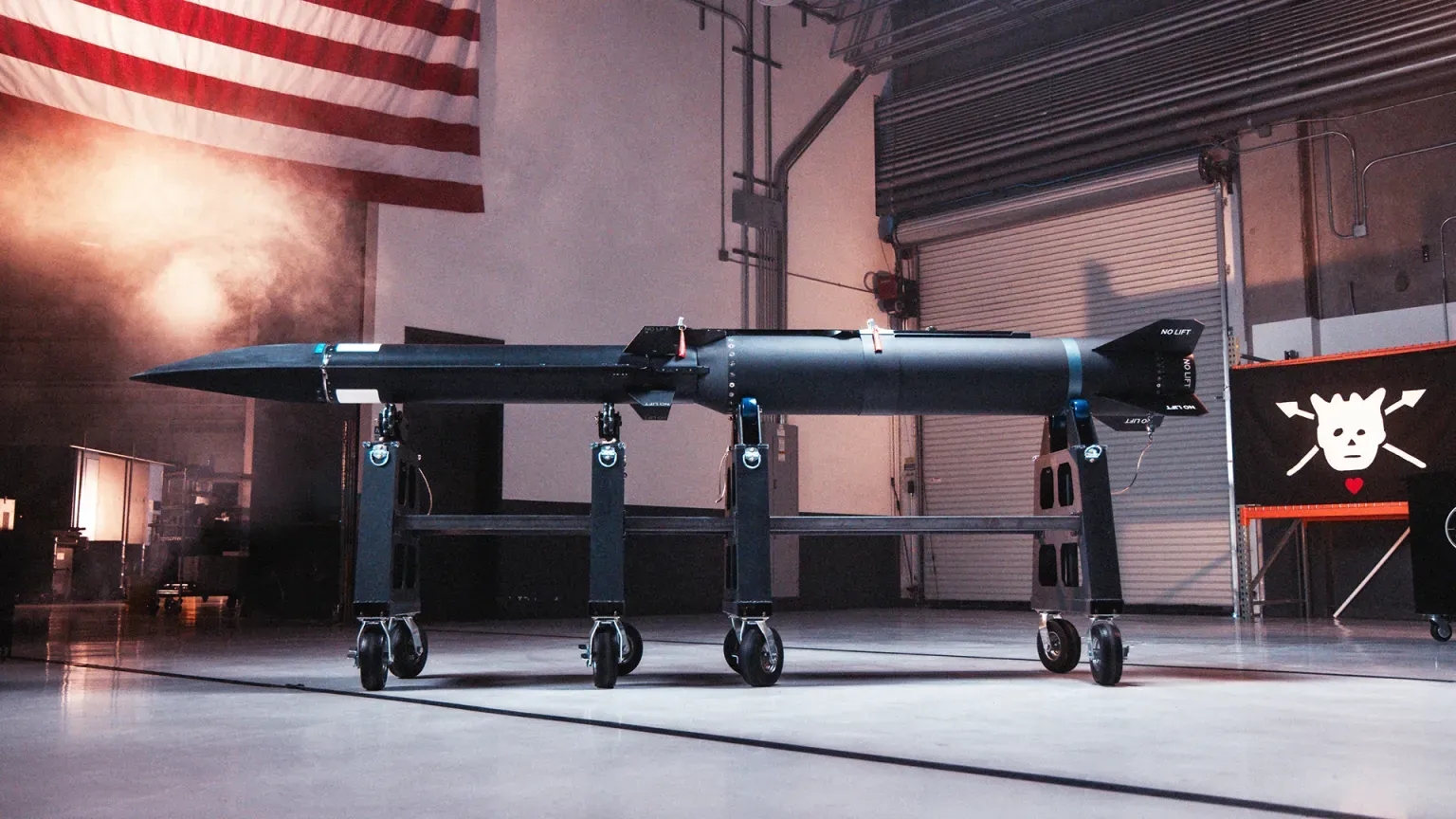
Attendees at the Tailhook Association’s annual convention this past weekend were shown a picture of a pair of Blackbeard test articles under the right wing of a Super Hornet. The image was shown alongside another one offering a general side profile view of the missile, seen at the top of this story, which was first released publicly last week.

Blackbeard, which the Navy is acquiring under its Multi-mission Affordable Capacity Effector (MACE) program, was included in the same briefing at Tailhook where the new AIM-424 Malice Long-Range Air-to-Air Missile (LRAAM) was revealed. The slide on MACE was shown very briefly in passing in a video of the recording of a new episode of The Mover and Gonky Show podcast, which was posted online on Tuesday.

TWZ has reached out to the Navy about obtaining the full image and for more information.

Where or when the picture of the Blackbeards loaded on the Super Hornet was taken is unknown. In March, Axios reported that the missile would “fly aboard an F/A-18 in the near future,” without directly naming a source. In a press release the following month regarding a $105 million contract award from the Navy, Castelion said that funding would go in part to “completing the hardware and software integration of Blackbeard onto the F/A-18E/F airframe.”

A Super Hornet test jet carrying AIM-424 missiles. The Navy also revealed the existence of this weapon at the Tailhook Association’s annual convention this year. USN

Whether or not any actual flight tests have been conducted is also unclear. Another slide in the Navy briefing at Tailhook included a bullet point reading “Project Alpha – Hypersonic missile shot in 2026,” but does not explicitly say whether or not that milestone has already been reached. The MACE slide makes clear that the program is directly intertwined with Project Alpha, if they are not just different names for the same effort.

Beyond the confirmation of this important new step in testing, the picture of the Blackbeards on the Super Hornet’s wing offers a new look at the front of the missile, showing what look to be apertures on one side of the design’s wedge-shaped nose. The apparent apertures are also seen pointed up, but many air-launched munitions do flip down after release.

How exactly Blackbeard is guided remains unknown, but a downward-angled aperture at the nose end for a seeker system would make sense for this weapon, which the Navy is pursuing primarily as a new way to target enemy ships. In particular, a wide array of existing anti-ship and land attack missiles, as well as certain anti-air types, have variously shaped apertures in their noses for imaging infrared seekers. Imaging infrared has the benefit of being immune to radio frequency electronic warfare jamming. In addition, it is a passive capability that does not send out signals that can give an opponent advance notice of an incoming attack. Blackbeard’s full guidance package very likely also includes some means of navigating to a target area first, and it could have multiple modes of operation.

The imaging infrared seeker apertures on the AGM-158 Joint Air-to-Surface Standoff Missile (JASSM) family of air-launched cruise missiles are clearly visible in this picture of a US Air Force F-15E Strike Eagle loaded with five of them. USAF

The apertures could also be present in this case for testing or other purposes, though this seems far less likely.

We previously discussed the other visible aspect of the design after last week’s release of the side profile picture, writing:

“A profile photo at the company’s headquarters reveals a weapon with a ballistic missile-like booster, on top of which is mounted what could be an unpowered hypersonic glide vehicle (HGV). A booster brings an HGV to the desired velocity and altitude before releasing it toward its target. The concept is in contrast to air-breathing cruise missiles capable of traveling at hypersonic speeds. Hypersonic speed is generally defined as anything above Mach 5, which larger ballistic missiles also reach in the course of their flights. More precise performance figures for Blackbeard are lacking, but Castelion has previously hinted it could hit targets out to just under 500 miles. Alternatively, the second stage may also have its own motor, allowing it to continue accelerating or sustain high-speed flight. A similar arrangement has been suggested as the propulsion system for the Russian Zircon missile.”

“Both stages of the weapon have cruciform fins, while the upper one features a prominent ‘chine’ line along the length of its body, and a slightly beaklike nose. The trolley on which the weapon is mounted provides some idea of its overall size. The blue stripes seen on each stage normally signify that a munition is an inert, non-explosive round utilized for training or tracking purposes. This would indicate a real (unarmed) missile rather than a dummy or mockup.”

As noted, Castelion and the Navy are hoping to see the air-launched Blackbeard reach an early operational capability (EOC) within the next two years. Castelion’s press release in April said EOC was being targeted for 2027, a timeline that had been previously reported. Just yesterday, the company put out a press release announcing a new nearly $90 million contract from the Navy specifically to help push the weapon closer to that milestone, as well as perform other activities. The release did not explicitly mention a new EOC schedule, but did say the contract covered work through August 2028, by which point the hope is that at least 50 missiles will have been delivered.   

Castelion previously released the video below to highlight continued work on Blackbeard, including in an air-launched form for integration on the Navy’s F/A-18E/F Super Hornets.

Blackbeard is coming 🏴‍☠️ thumbnail

Blackbeard is coming 🏴‍☠️


The U.S. Army is also separately funding development of a surface-launched version of Blackbeard. In May, the Pentagon outlined plans for the acquisition of 12,000 Blackbeard missiles over the next three years, but it is unclear whether this covers surface- or air-launched versions, or a mix of both. At that time, the Pentagon also announced a framework for purchases of 10,000 lower-cost surface-launched cruise missiles in that same timeframe.

As underscored by those planned orders, Blackbeard is being developed with an eye toward lower cost and relative ease of production, as well as exportability to U.S. allies and partners. Historically, hypersonic missiles have been viewed as expensive, low-density assets offering a more limited ‘silver bullet’ capability against high-value targets. Depending on the price point that Castelion can achieve with Blackbeard, it could help change this calculus. Expanding sales beyond America’s armed forces could help further spread cost burdens and drive down unit prices through economies of scale.

Reduced production costs and timetables are areas of great interest today to the U.S. military when it comes to munitions, in general. Global conflicts in recent years, including recent fighting with Iran, other crises in the Middle East, and the war in Ukraine, have underscored the importance of having adequate stockpiles of key munitions and being able to rapidly replenish them. They have also exposed the United States’ increasingly worrisome lack of capacity in both areas at present.

For the Navy, from an operational perspective, Blackbeard is seen as a particularly important addition to the arsenal available to the service’s carrier air wings. The missile will offer Navy Super Hornets, and potential other aircraft, a boost in the range at which they can hold targets at risk, as well as the ability to cover those longer distances faster. Castelion’s design will also give the service a new stand-off strike weapon that is far more survivable and more capable, especially against time-sensitive targets. The missile’s speed will lessen the need for persistent kill chains, as well.

Greater standoff reach is already becoming more and more valuable, if not vital, as carriers and their air wings are being pushed further and further away from target areas by expanding and evolving adversary anti-access/area denial (A2/AD) bubbles. Similar considerations are pushing the Army and other services toward greater standoff strike capabilities.

If the development schedule for Blackbeard holds, the Navy will see the arrival of its first operational air-launched hypersonic weapon in the next two years. We now know that work on this weapon has already reached another important milestone, with testing on the Super Hornet now underway.

Contact the author: joe@twz.com

Joseph is TWZ’s Deputy Editor, helping to oversee the site’s highly experienced and dedicated team, while also writing informative and impactful defense and national security content. He lives right in the thick of it in the Washington, D.C. area.


Source link

This Is The New Blackbeard ‘Cheap’ Hypersonic Weapon

Castelion, a startup begun by former SpaceX employees, has provided the first view of its Blackbeard hypersonic weapon. The first look at what has been billed as a lower-cost missile comes as the company announces that it has secured $1 billion in new financing, which it says will help get its first hypersonic weapon into production as part of its ambitious manufacturing strategy. While hypersonic weapons have very attractive qualities, they are extremely expensive and that cost will likely keep them from being bought in large quantities or used against wider target sets. Castelion is focused on trying to shift that, building hypersonic capabilies that can be bought in large quantities and used more freely, even if they have reduced performance.

A profile photo at the company’s headquarters reveals a weapon with a ballistic missile-like booster, on top of which is mounted an unpowered hypersonic glide vehicle (HGV). The booster brings the HGV to the desired velocity and altitude before releasing it toward its target. The concept is in contrast to air-breathing cruise missiles capable of traveling at hypersonic speeds. Hypersonic speed is generally defined as anything above Mach 5, which larger ballistic missiles also reach in the course of their flights. More precise performance figures for Blackbeard are lacking, but Castelion has previously hinted it could hit targets out to just under 500 miles.

A graphic showing, in very basic terms, the differences in flight trajectory between a hypersonic glide vehicle (HGV) and a traditional ballistic missile, as well as air-breathing hypersonic cruise missiles. GAO

Both stages of the weapon have cruciform fins, while the HGV features a prominent ‘chine’ line along the length of its body, and a slightly beaklike nose. The trolley on which the weapon is mounted provides some idea of its overall size. The blue stripes seen on each stage normally signify that a munition is an inert, non-explosive round utilized for training or tracking purposes. This would indicate a real (unarmed) missile rather than a dummy or mockup.

The company has previously said that it was aiming to have a more finalized Blackbeard design by 2027, so there is still potential for more design changes to come. We have reached out to Castelion for more information.

Castelion has previously released images of various missiles with very different, far more simple designs, which it has said “are representative of the low-cost internally developed test vehicles we use to enable rapid subsystem design iteration and to ground our performance models in real-world test data.”

Various Blackbeard test articles, emphasizing their difference compared to the latest design. Castelion Corporation

Some of these earlier experimental configurations also look to feature tail sections that are at least heavily inspired by, if not lifted directly from Standard-series surface-to-air missiles as used by the U.S. Navy and other navies globally.

Castelion yesterday also announced it had received Series C financing, comprising $800 million in equity financing and $250 million in committed financing. The equity round values Castelion at approximately $13 billion.

The company says it will use the funds as it transitions from development and flight testing toward producing Blackbeard in significant quantities.

Castelion claims the weapon is the first hypersonic strike system to be designed from the outset to be substantially less expensive and easier to manufacture at scale than traditional high-end missile systems.

“Deterrence depends on unapologetic American strength; highly capable weapon systems that adversaries fear produced in quantities they can’t imagine at a price taxpayers can afford,” Castelion CEO and co-founder Bryon Hargis said.

The company says Blackbeard has gone from a clean-sheet design to a program of record in less than four years, with fielding targeted for 2027. Castelion has also secured more than $500 million in U.S. military contracts over the past 18 months.

A major part of the company’s strategy is its Project Ranger campus in Sandoval County, New Mexico. Castelion describes the roughly 1,000-acre facility as the largest dedicated hypersonic missile manufacturing site in the United States. The company previously committed more than $250 million of its own capital to infrastructure at the site and says it will now invest hundreds of millions of dollars more to expand production capacity.

That emphasis on manufacturing is central to how Castelion distinguishes Blackbeard from many existing hypersonic programs. The company has designed the weapon and its production processes around the expectation that large numbers will eventually be required.

“There’s a manufacturing renaissance underway and this round turbocharges American production of Blackbeard,” Hargis said. “Designed in California, built in New Mexico, supplied from small and large businesses across the United States; Blackbeard is an example of what America can do when private capital and Government work together.”

In May of this year, the Pentagon outlined plans to acquire at least 10,000 Blackbeard missiles, as well as a similar number of lower-cost cruise missiles, over the next three years.

These framework agreements are part of a larger effort to rapidly expand U.S. reserves of long-range, standoff weapons and, at the same time, strengthen the defense-industrial base so manufacturers can keep producing those weapons at a high rate over the long term.

The U.S. Army has made clear it is interested in employing Blackbeard in a ground-launched mode, as you can read more about here. Army budget documents confirm it is pursuing Blackbeard aggressively, but through a phased approach that offers multiple off-ramps. The service has previously talked of firing Blackbeard from new uncrewed launcher vehicles, as well as from existing M142 High Mobility Artillery Rocket System (HIMARS) launchers. How many Blackbeard missiles are compatible with each of these launch systems is unclear.

Another test article that Castelion has used in previous testing related to Blackbeard in front of a palletized launcher loaded on a truck. Castelion Corporation

“The mission of Blackbeard Ground Launch (GL) is to attack/neutralize/suppress/destroy using hypersonic missile delivered precision fires (seeker based) against time sensitive moving targets and hardened targets at a much-reduced cost per missile than currently exists in the Army inventory,” the Army stated in its proposed budget for the 2026 Fiscal Year. “Blackbeard Ground Launch (GL) is an affordable, mass-produced hypersonic weapon designed for mid-range precision. The Army will leverage advancements in technology, materials, and cost-effective production methods to provide superior capabilities through fast, iterative design cycles, flexible hardware development, and modern manufacturing practices.”

Meanwhile, earlier this year, Castelion announced receipt of a contract from the Navy to integrate Blackbeard onto the F/A-18E/F Super Hornet carrier strike fighter and transition the system to an early operational capability in 2027. This will involve extensive system safety and certification testing, flight testing, and other integration activities related to carrier-based operations. This development may well be connected with halting plans for an air-launched, air-breathing hypersonic anti-ship cruise missile. A version of Blackbeard could also find its way onto Navy ships and submarines, as well as ground-based launchers, as we have discussed in the past.

A U.S. Navy F/A-18F with a heavy air-to-air load-out, including four of the very long-range AIM-174B air-to-air missiles. point_mugu_skies

In fact, the Army has also said that the ground-launched version of the weapon that it expects to receive will leverage an “existing air-launched, extended-range Blackbeard design,” without providing more information.

The U.S. Air Force has also awarded Castelion contracts in the past in relation to long-range strike weapon concepts, and TWZ has previously reached out to that service for more information.

Regardless, Castelion’s ambitions extend beyond Blackbeard. The company says it has been developing a much longer-range precision strike weapon for several years and will now accelerate its development and testing. That system is intended to reuse technologies, components, and manufacturing techniques developed for Blackbeard.

Another Blackbeard-related test launch. Castelion Corporation

With a huge demand signal from the Pentagon, Castelion is also working on defensive systems based on the same development and manufacturing philosophy. The company says those efforts are focused on lowering costs, increasing production rates, and providing greater magazine depth for air and missile defense.

The strategy responds to the fact that the U.S. military’s growing interest in hypersonic weapons has been accompanied by persistent questions about production capacity and cost. Hypersonic systems are technically demanding, but the ability to manufacture them in meaningful numbers is ultimately just as important as demonstrating that an individual weapon can fly.

Castelion is betting that a different approach to development and manufacturing can change that equation.

“Castelion is at the forefront of defense manufacturing in the nation,” said Tom Ochinero, chairman and founding partner of Interlagos Capital, which provided some of the equity financing. “They’re building the capabilities to produce thousands of hypersonic weapons a year, something the U.S. has never seen before.”

One of the designs that Castelion has shown in the past. Castelion Corporation

This reflects a steadily growing U.S. military-wide push toward lower-cost precision munitions that are relatively simple to manufacture, while also drawing on non-traditional defense contractors to develop and produce them. Such efforts are widely viewed as essential to building up stockpiles in an economically sustainable manner ahead of a major contingency, such as a large-scale conflict in the Pacific with China, and ensuring a steady supply of weapons throughout a prolonged war.

The next test of this model will be whether Castelion can translate its relatively rapid development timeline into sustained production at the scale it is promising. With Blackbeard targeted for fielding in 2027 and a new generation of longer-range and defensive systems already in development, the company is positioning itself as much as a defense manufacturer as a missile developer, but this remains very much an unproven concept in this notoriously tricky area.

The new view of Blackbeard at Castelion’s headquarters offers a glimpse of the hardware at the center of that effort.

Contact the author: thomas@thewarzone.com
Thomas Newdick is a staff writer at TWZ, where he covers military aviation, defense technology, weapons systems, and international security. Based in Berlin, Germany, he reports on conflicts, military modernization efforts, and emerging aerospace technologies around the world, with a particular interest in airpower and its role in contemporary warfare. His reporting is informed by deep expertise in modern and historical airpower, particularly in Europe, with a focus on military aviation, air campaigns, and aerospace developments across the continent and beyond.


Source link