bipartisan concern

Texas’ Big Bend park gets border barriers that some Trump allies dislike

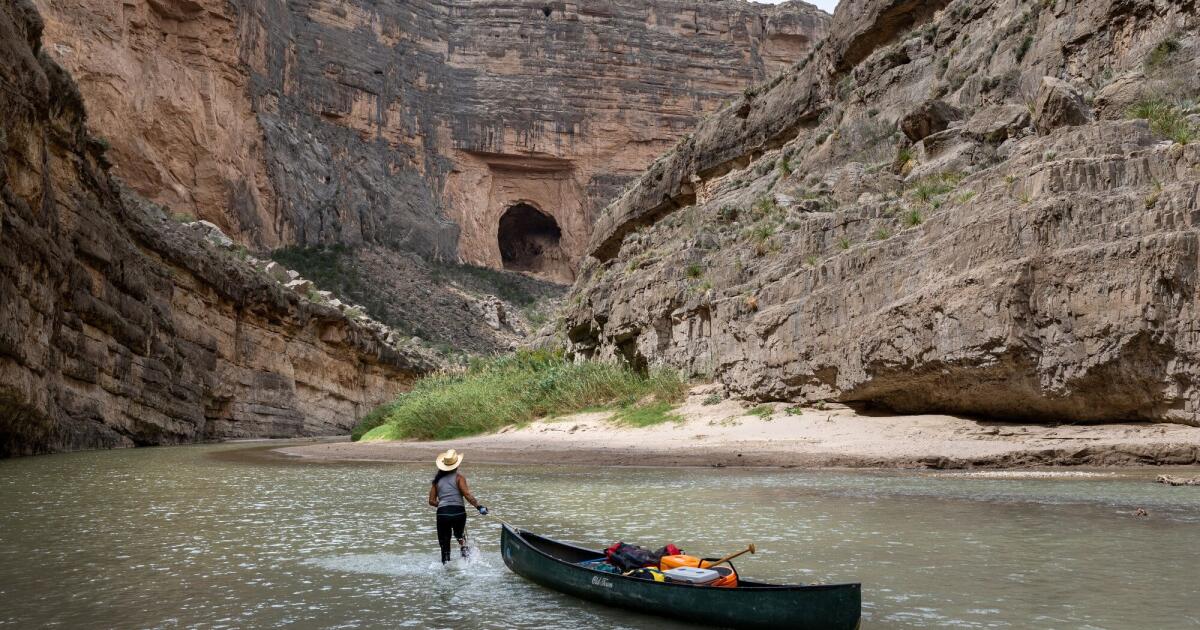
The Trump administration has moved heavy-duty construction equipment into Big Bend National Park and started work on a border security project despite bipartisan concern about damage to the environmentally sensitive area of west Texas.

Bulldozers and other machinery appeared last week in the remote park, which sits about 300 miles southeast of El Paso and includes one of the least crossed stretches of the U.S.-Mexico border, according to Laiken Jordahl, a national public lands advocate for the Center for Biological Diversity, which has sued the Biden and Trump administrations seeking to halt border-wall construction.

Jordahl said he and other activists watching the work have seen bulldozers plowing through vegetation “clearing a path for the barriers, the wall or whatever is going in.”

U.S. Customs and Border Protection “is building an access road, improving existing roads, installing detection technology and placing vehicle barriers in limited, strategic locations,” Commissioner Rodney Scott, the agency’s top official, said in an email Thursday. “We are securing this park to protect its legacy — keeping it safe, secure, and pristine so American families can enjoy the beauty of our country, free from fear of cartel activity.”

The Trump administration is moving ahead with the project over the objections of not just environmental activists and others opposed to the crackdown on immigration, but also local residents, many of them Republicans who otherwise support President Trump, as well as retiring GOP Sen. John Cornyn. They note that the rugged terrain — mostly desert with steep ravines and scrubland covered in creosote bushes and prickly pear cactus — serves as a natural barrier from anyone trying to cross from Mexico, making the infrastructure unnecessary.

They say the construction and equipment will mar the landscape and imperil the animals who live in the park, including javelinas, ringtails, mountain lions and desert bighorn sheep.

In June, Homeland Security Secretary Markwayne Mullin formally waived all environmental laws and reviews that could otherwise slow any work in the park.

Texas Gov. Greg Abbott’s office has said he supports using every tool available to help deter illegal immigration, including deploying technology in rugged and isolated areas such as Big Bend.

Trump has long pledged to build a wall along all of the roughly 2,000-mile U.S. border with Mexico, though Customs and Border Protection has repeatedly said it wouldn’t build his preferred 30-foot barrier in the environmentally sensitive park.

Earlier this year, the administration issued a $1.7-billion contract for the project in Big Bend. The vehicle barriers set to be installed are typically 5-foot steel posts set a few feet apart and intended to block cars or trucks from crossing.

The park is part of the Border Patrol’s Big Bend Sector, which has for decades been one of the least crossed areas along the whole of the border. In June, agents there made 148 arrests. Since Oct. 1, the start of the government’s fiscal year, agents have made 1,509 arrests, about 1.5% of all apprehensions along the Mexican border, according to Customs and Border Patrol arrest data.

Brandon Herrera, the GOP candidate for a House district that includes the park, met with White House and Department of Homeland Security officials in March to pitch a less-invasive “alternative solution.”

In a letter this month, Cornyn asked Mullin to meet with local officials who have voiced concerns over the project, citing complaints about its effect on the region’s natural beauty, wildlife, cultural sites and economy. Cornyn wrote that his “constituents believe that the 1,000-foot riverbank cliffs and remote Big Bend terrain offers its own source of deterrence for any illegal migrants crossing into the United States.”

James Talarico, a Democratic state representative running to succeed Cornyn in the U.S. Senate, echoed the Republican’s concerns and called the project irresponsible spending.

“This monument to corruption represents wasteful, irresponsible government spending that no Texan asked for, enriching wealthy contractors without making Texans one bit safer,” he said.

Texas’ Big Bend region relies on tourism as an economic driver, with more than 568,000 visitors to the national park in 2025. Local businesses in Terlingua, a small gateway town west of the park, have revolted against the proposed wall, with workers at one restaurant wearing shirts that read “No Al Muro” — No to the Wall.

Caldwell and Lovinger write for Bloomberg.
Source link

Republican senators warn surveillance program may lapse after Trump intel pick backlash

Republicans are warning the White House that a critical surveillance authority is likely to lapse this week amid bipartisan backlash over President Trump’s pick to lead the nation’s intelligence community.

Sen. Tom Cotton, the chairman of the Senate Intelligence Committee, and Sen. Chuck Grassley, chairman of the Senate Judiciary Committee, sounded the alarm over the weekend after a failed procedural vote to extend the program.

The senators in a letter urged Secretary of State Marco Rubio to prepare “for a potential significant gap in foreign intelligence collection” if the authority expires. Section 702 of the Foreign Intelligence Surveillance Act, set to lapse June 12, allows agencies including the CIA, National Security Agency and FBI to collect communications from foreign targets overseas without a warrant.

Efforts to secure a long-term extension of the program already faced hurdles because of bipartisan concerns that the program can incidentally collect Americans’ communications. Privacy advocates and some lawmakers have been pushing to create a new warrant requirement before those communications can be searched.

Senate leaders from both parties appeared to be nearing agreement on a long-term extension. But the effort collapsed after Trump selected federal housing finance regulator Bill Pulte to serve as acting director of national intelligence.

“I know how important this tool is. Why the president would throw this live hand grenade of Bill Pulte in 10 days before this is due to expire, I’m not sure,” Sen. Mark Warner, the top Democrat on the Senate Intelligence Committee, said on ABC’s “This Week.”

Pulte pick upends bipartisan deal

Early Friday morning, after senators spent the night debating separate immigration legislation, seven Republicans joined nearly all Democrats in blocking a long-term extension of the surveillance authority.

Democrats and several Republicans registered their opposition to Trump’s selection of Pulte, arguing the federal housing finance regulator lacks the experience needed to oversee the nation’s 18 intelligence agencies.

“The naming of Pulte to that position, although the timing arguably wasn’t the best, I still don’t think it ought to derail something that’s this important,” Senate Majority Leader John Thune said.

Thune has expressed concern over Pulte’s pick, saying the nation’s top intelligence post should not be “weaponized” and that the job should be filled by “professionals.” Cotton, who rarely strays from supporting Trump and a leading advocate for the surveillance authority, declined to endorse Pulte, saying only that he had “no observations on the matter.”

“He’s not qualified for the long-term position,” Republican Sen. James Lankford, another member of the Intelligence Committee, told “Fox News Sunday.” “That’s been clear on this. He has no national security background.

Both Republican and Democratic senators skeptical of Pulte pointed to his record at the Federal Housing Finance Agency. In the role, he’s been linked with criminal referrals over allegations of mortgage fraud by public officials Trump sought to punish, including New York Attorney General Letitia James, a Democrat; Sen. Adam Schiff, D-Calif.; and Lisa Cook, a board member of the Federal Reserve.

Republicans will need to garner some Democratic support to pass any extension of the surveillance authority in the Senate. But a breakthrough appears difficult so long as Pulte remains in the position, which Trump said last week would only be temporary.

“I don’t see any path to convincing enough Democrats,” Warner said on CNN’s “State of the Union” when asked if renewal was possible with Pulte in the position.

The current reauthorization debate is hardly the first time that lawmakers have grappled with the fate of the surveillance program, particularly after a flurry of revelations about government misuse of the vast trove of intelligence it collects.

The topic in recent years has scrambled predictable partisan alliances, with Democratic critics of the Trump administration uniting with skeptics of government power on the right in voicing concerns about Section 702’s renewal.

In 2024, for instance, those divisions nearly caused the program to lapse. The Senate barely missed its midnight deadline that year before approving by a 60-34 margin legislation to reauthorize Section 702 that was subsequently signed by then-President Joe Biden.

A spokesperson at the Justice Department did not immediately return messages seeking comment Monday about the national security concerns that would be created if the program lapses. The Office of the Director of National Intelligence referred inquiries to the White House, which did not immediately respond to a request for comment.

“America faces real threats from foreign adversaries, terrorists, cyber actors, and hostile intelligence services,” Defense Secretary Pete Hegseth said on social media Sunday. “Section 702 remains one of our nation’s most effective tools for identifying and disrupting those threats before they reach our shores.”

Cotton and Grassley said they believed Democratic leaders would not support another short-term extension of the surveillance authority and urged Rubio to prepare contingency plans. They said Trump should consider an executive order to prevent a disruption in intelligence collection.

Cotton and Warner had said they were close on a bipartisan deal on a long-term extension and could still move quickly should a change occur before Friday. Still, the bill would likely need to go through the House — and the two chambers so far have disagreed on a separate issue regarding central banking digital currency.

“If we go dark next week, right before the World Cup FIFA games, and the 250th anniversary, that would be the most grossly irresponsible thing I’ve seen Congress do in my 22 years in office,” Texas Republican Rep. Michael McCaul said on ABC’s “This Week.”

Cappelletti, Jalonick and Tucker write for the Associated Press.

Source link