billy evans

Did Elizabeth Holmes and Billy Evans get paid for their documentary?

Elizabeth Holmes was once celebrated as the world’s youngest self-made female billionaire, with an estimated fortune of $4.5 billion. Today, the disgraced Theranos founder is serving a federal prison sentence for defrauding investors and owes hundreds of millions of dollars in restitution.

Suffice it to say, she has a complicated relationship with money.

That tension runs through “You Can See Everything,” Nathan Fielder and Lance Oppenheim’s hit documentary about Holmes and her longtime partner, Billy Evans, an heir to a wealthy San Diego hotel family.

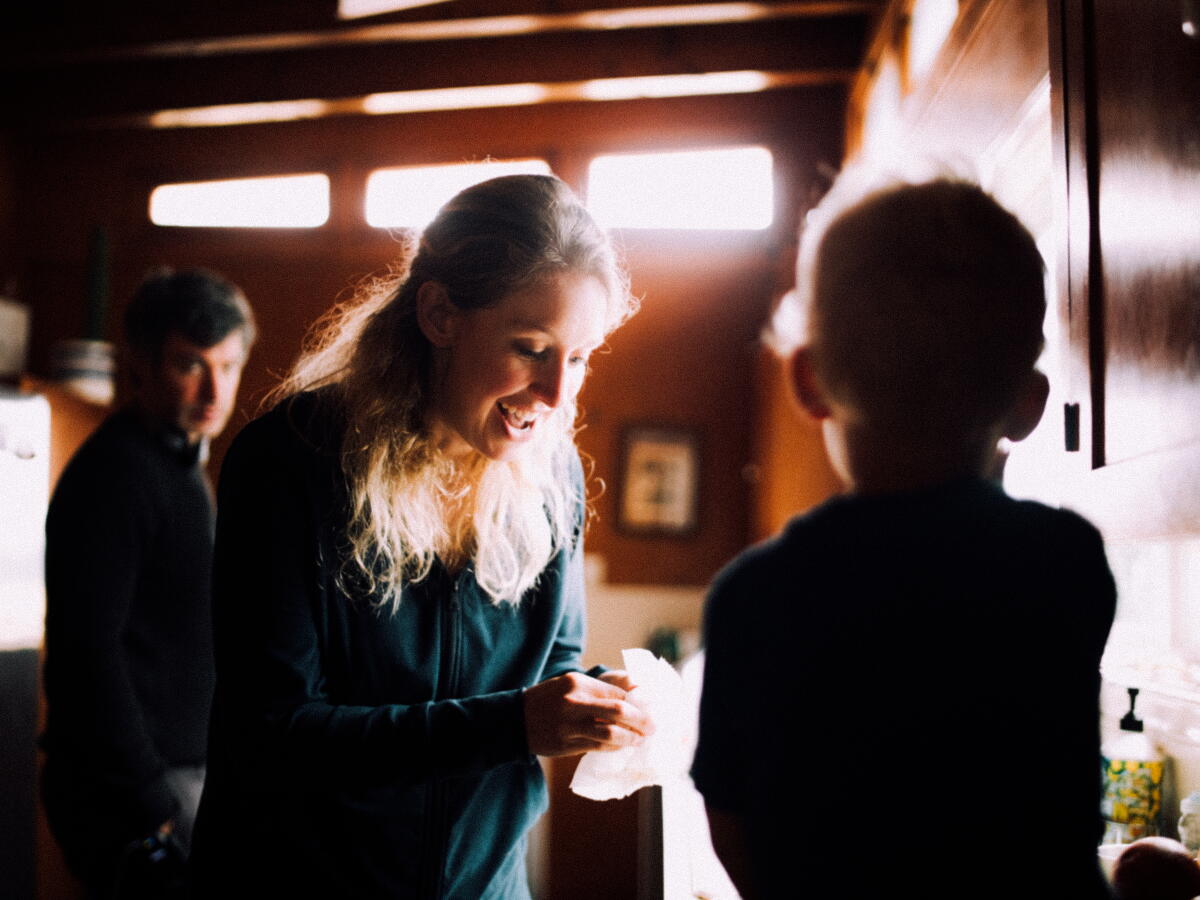
In the nearly three-hour, wildly unpredictable film, a reenactment staged by Fielder depicts Evans pushing for a share of the documentary’s profits, sparking a dispute with the filmmakers over whether paying their subjects would compromise the project’s integrity. Holmes, meanwhile, maintains that money has never been her primary motivation. As Fielder probes the couple’s finances, he struggles to determine how much Holmes knows about Evans’ dealings — and where their financial interests begin and end.

Here’s what “You Can See Everything” reveals about Holmes and Evans’ finances, and what it leaves unanswered. Warning: Major spoilers ahead.

Did Holmes and Evans get paid to participate in the documentary?

No. But for a time, compensation was on the table.

The film was financed by A24, which gave Fielder and Oppenheim unusual freedom to pursue the project without any deadline or obligation to turn what they captured into a finished film. As Fielder recalled during a Q&A following the film’s secret premiere at the Telluride Film Festival in September, the studio told them that if nothing came of it, “you can just throw everything away.”

In one of the film’s pivotal sequences, Fielder stages a reenactment, based on his recollections, of a meeting with Evans, Holmes, Oppenheim and two A24 executives. Amanda Seyfried, who won an Emmy for portraying Holmes in Hulu’s “The Dropout,” plays her again, while Christopher Abbott takes on the role of Evans. After Holmes leaves to check on the couple’s children, Evans raises the question of compensation.

“I do know that there is potential for this movie to also make a lot of money,” Evans says. “And I feel strongly that if this movie were to make money, that we should be entitled to some of it.”

Fielder objects, arguing that payment could cast doubt on the couple’s motives and suggest they had influence over the finished film. Evans insists that compensation is nonnegotiable.

According to Fielder, A24 ultimately agreed to a profit-sharing arrangement, though the documentary doesn’t disclose its terms.

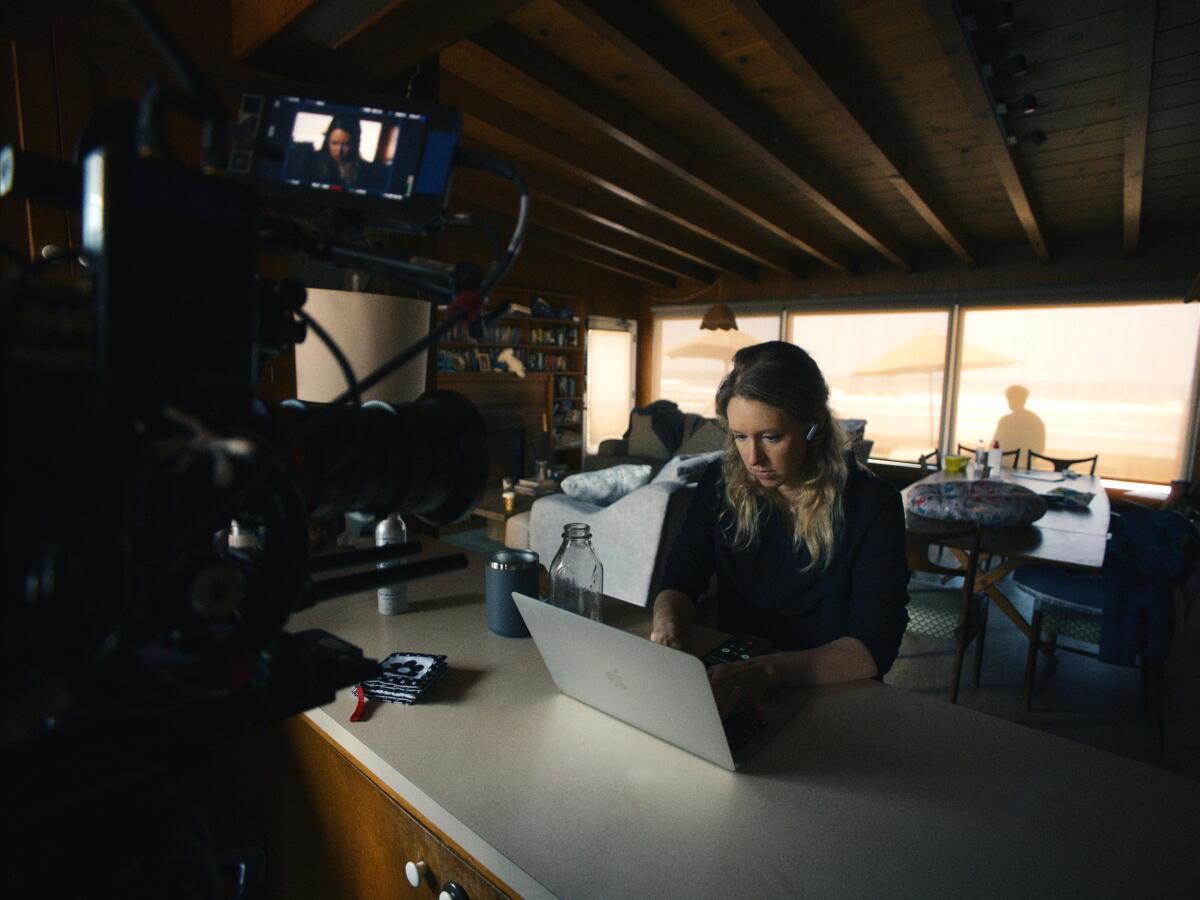
A woman works on a laptop.

Holmes works on a laptop at the rented beachfront home in Del Mar, Calif., where she lived with her partner, Billy Evans, and their two children before entering prison, in a scene from “You Can See Everything.”

(A24)

But shortly before entering prison, Holmes tells Fielder on camera, “Obviously I’m not making any money or having any economic interest in this whatsoever.” Fielder is left wondering whether she’s genuinely unaware of the deal Evans negotiated or merely pretending not to know.

The real Evans later acknowledges withholding some details from Holmes, explaining that she had enough on her mind.

In the end, a title card reveals that Evans decided to forgo compensation.

Is it unusual for documentary subjects to get paid?

Generally, yes — at least in documentaries that follow traditional journalistic standards.

Paying subjects can create conflicts of interest, raising questions about their motives and credibility. Those concerns are particularly acute with someone like Holmes, who was convicted of defrauding investors through an elaborate web of deception.

“The optics are terrible,” Fielder warns Evans.

Evans counters that documentary subjects have been paid before, citing reports of a lucrative Netflix deal involving Prince Harry and Meghan Markle. Oppenheim dismisses the comparison, saying their series isn’t a conventional documentary.

The distinction isn’t always clear-cut. In 2019, competing documentaries about the disastrous Fyre Festival took different approaches to paying its disgraced organizer, Billy McFarland. The filmmakers behind Hulu’s “Fyre Fraud” acknowledged paying him for footage and other rights. But Chris Smith, director of Netflix’s “Fyre,” refused McFarland’s demand for payment, arguing that it would be unethical for him to profit after defrauding so many people.

Fielder says he considered abandoning the project rather than accepting Evans’ demands. Instead, he decided the negotiations might reveal something about how Holmes and Evans operate.

As Fielder later confides to Seyfried, “Either this is fully sincere and she actually has no clue about the deal Billy made, or she honestly might be the most manipulative person that’s ever lived.”

How much money does Holmes owe?

A lot.

In 2023, a federal judge ordered Holmes and former Theranos President Ramesh “Sunny” Balwani to pay more than $452 million in restitution to investors and companies defrauded by Theranos. The two are jointly responsible for the judgment, meaning the same losses cannot be collected twice. A federal appeals court upheld the order in 2025.

A woman in black speaks at a business conference.

Holmes speaks at the Fortune Global Forum in 2015, when her blood-testing startup Theranos was valued at billions of dollars and she was celebrated as one of Silicon Valley’s most successful entrepreneurs.

(Jeff Chiu / Associated Press)

Holmes has maintained that she has little money left. In a court appearance shown in the documentary, she insists, “I don’t have any money,” explaining she is deeply in debt from legal fees associated with her criminal case.

During Fielder’s prison visit, as reenacted in the film, she tells him, “I don’t have the option to care about money. I owe hundreds of millions of dollars of restitution. Every dollar I make, they take from me.”

Would any profits from the documentary have gone toward Holmes’ restitution?

Not necessarily.

Although Holmes and Evans have two children together and refer to each other as husband and wife, Holmes told People in 2025 that they were not legally married. Evans isn’t personally responsible for her restitution debt simply because they’re a couple.

The government can seek payment from assets belonging to Holmes, but the documentary doesn’t disclose who would have received money under the proposed profit-sharing deal or whether Holmes would have had any financial interest in it. So it’s unclear whether any proceeds could have gone toward her restitution.

The proposed profit-sharing arrangement could have been lucrative. “You Can See Everything” grossed $15.6 million in its opening weekend and more than $20 million in its first five days. Those figures represent ticket sales, not profits, but illustrate the potential value of such an arrangement. And with the film still expanding into more theaters and generating strong buzz, its box-office haul is poised to grow further.

How are Holmes and Evans supporting themselves?

The documentary doesn’t fully answer that question either.

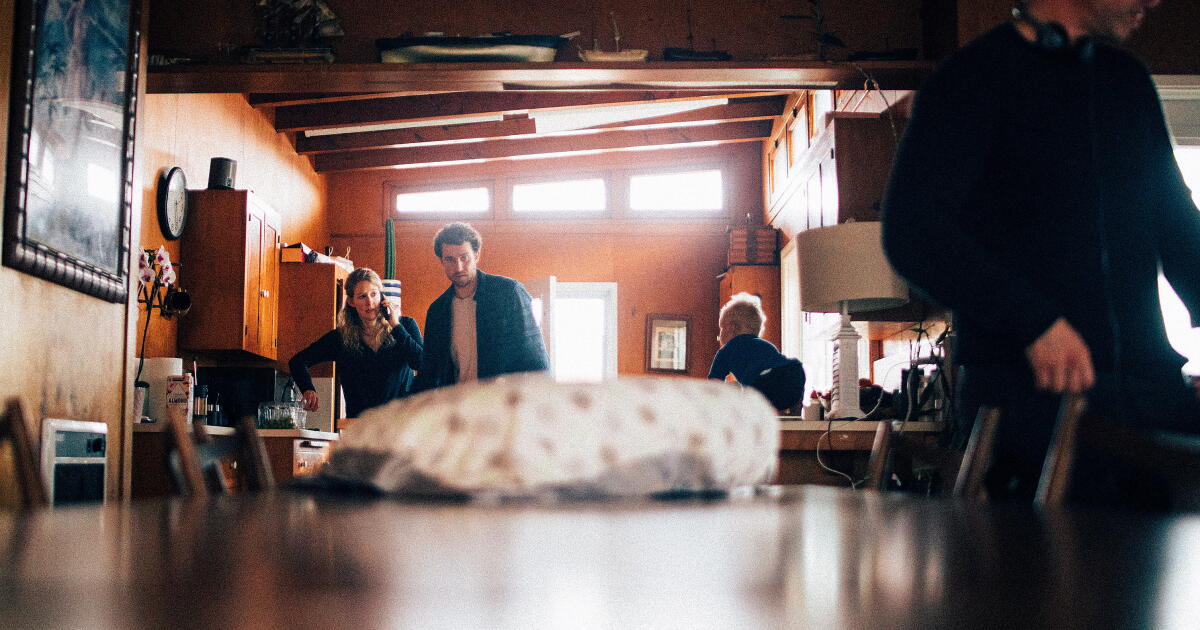
Before Holmes entered prison, the couple lived with their two children — son William, now 5, and daughter Invicta, 3 — in a luxurious rented home near the beach in Del Mar, north of San Diego. Evans comes from a wealthy family whose hotel business includes the Bahia Resort Hotel, the Catamaran Resort Hotel and Spa and the Lodge at Torrey Pines. But in an Oct. 1 statement, Evans Hotels said he is neither an employee nor a shareholder in the company.

In the film, Fielder asks Evans whether Holmes might have been attracted to his family’s money. Evans grows visibly uncomfortable and shuts down the conversation when Fielder presses him about the extent of the family’s wealth.

Evans also has a biotech start-up, Haemanthus, which is developing laser-based technology to analyze biological samples, an undertaking with echoes of Holmes’ failed blood-testing company. According to Wired, the company has reported raising as much as $20 million in funding but has yet to release a product.

How much Evans personally earns from the venture — or whether his family helps support the couple — remains unclear.

In a later scene, Seyfried asks Evans who’s bringing in money while Holmes is in prison. He says she earns 30 cents an hour at the federal prison in Texas where she’s serving her sentence.

And what about his own income?

“I’ve got my own business,” he replies.
Source link

Billy Evans discusses full frontal nudity in ‘You Can See Everything’

Audiences who saw Nathan Fielder and Lance Oppenheim’s hit documentary “You Can See Everything” may have left the theater with a few questions about Elizabeth Holmes and her longtime partner Billy Evans. While the former Theranos CEO is serving time in a Texas federal prison, Evans is active on X and fielding burning questions inspired by the documentary.

If you’ve haven’t yet seen the film, spoilers ahead.

Evans, 34, comes from a wealthy family who owns a luxury resort in San Diego. He and Holmes have two children, a 5-year-old son and 3-year-old daughter, and while Holmes serves an 11-year prison sentence, Evans is raising their kids, pursuing a new biotech venture and running the couple’s X accounts.

In “You Can See Everything,” Evans bares it all for the cameras, revealing everything from his nude body in the shower to his intense personality, among other questionable traits that have been widely discussed since the film hit theaters last month.

On Monday afternoon, he participated in an “AMA” (Ask Me Anything), and fans of the film flooded the comments.

Holmes’ parents, Christian Rasmus Holmes IV (a former vice president at Enron’s Clean Energy Solutions Group) and Noel Anne Holmes (née Daoust), both appear in the film, but as Fielder attempts to interview Holmes’ father, Evans becomes increasingly agitated.

On X, @kalmiavtuber asks, “My biggest question is, Billy, why did you stop Nathan from speaking to Liz’s father? Both Nathan and the audience saw it as integral to the documentary to truly ‘see everything.’ It felt like a missed opportunity that could have continued to give Liz more light.”

Evans replied, “She was going to prison. We had 3 days [together] at the time. I wanted to spend that time together. He interviewed her parents after she went in. They chose not to include that in the film. I didn’t control the edit. If there was something the directors wanted from them they had multiple opportunities to get it.”

One question popped up again and again, in various iterations: “Why did you keep sniffing throughout the documentary?”

And according to Evans, it wasn’t drug-induced sinus issues but, rather, germ- and Texas-induced. He said being a single dad to two toddlers makes him sick “approx 75% of days.” And, “Allergies in Austin TX are no joke. I take Claritin daily. Much less sniffling.”

And as for the blood testing device that Holmes spread out onto the kitchen table — the one that Theranos whistleblower Tyler Shultz said was not the same device that sent Holmes to prison but, rather, a future version of the Theranos product that was never used and never completed — @insistent_dw asked, “If the Theranos machine really worked as Liz said it did, why did it have to be dug out of storage containers in multiple pieces? I’d expect something like that to be locked in a safe and protected if it’s the prized machine behind a once billion dollar company.”

Evans replied, “Fair question. Theranos had been shut down for years, so naturally the hardware was in storage. We deliberately showed a disassembled device to show its internal components, not because that was all that remained. To my knowledge, 16 complete, functioning devices still exist. And Liz wasn’t reading a script. She was reading directly from the trial transcript. The litigation was still ongoing when we filmed.”

Farther down into the thread, one X user asks, “Have you ever told a lie?” To which Evans replies, “Yes.”

And @alexandraandnyc asked Evans to dispel one misconception from the film: “That I somehow control Liz,” Evans replied. “Anyone who actually knows her would find that idea hilarious.”

“She’s fiercely independent, strongwilled, and my best friend. We are partners in every sense. We challenge each other, disagree, and face the world together. Her closest friends are also some of my closest friends. If I ever mistreated her, they’d have my head.”

While it may have surprised audiences, “You Can See Everything,” landed an R-rating for its graphic nudity. One scene in particular features a full-frontal of Evans, and the dad of two has since said that he wasn’t thrilled with the shower scene making it into the film. When X users pressed him on allowing the cameras into the room, he pointed to a People article that featured anonymous sources saying Evans felt exploited and thought the scene would be kept PG.

“Trust the sources,” he said, alongside a link to the story.

Oppenheim, however, told Vulture last month that Evans seemed to initiate the scene: “It seems like he really had something he wanted to show to us and to the world.”

Source link

Who is Billy Evans? Meet Elizabeth Holmes’ partner and biotech CEO

Elizabeth Holmes is the convicted fraudster at the center of Nathan Fielder and Lance Oppenheim’s hit documentary “You Can See Everything,” but for many viewers, it’s her longtime partner, Billy Evans, who has emerged as the film’s marquee villain.

Evans, 34, comes from a wealthy San Diego hotel family and stood by Holmes as her blood-testing startup Theranos collapsed and she was convicted in 2022 of defrauding investors. The couple has two children, 5-year-old son William and 3-year-old daughter Invicta. With Holmes serving an 11-year federal prison sentence in Texas, Evans is raising their children while pursuing a new biotech venture of his own.

In the film — warning: spoilers ahead — Evans comes across as controlling and increasingly volatile, taking over from Holmes as she whisks eggs, interrupting an interview to demand that the cameras be turned off and at one point casually brushing his teeth while standing stark naked in the shower, with Fielder awkwardly looking on. He speaks of Holmes dedicating her life to building “monuments of love” to him, and in one heated confrontation threatens to ruin the lives of people he believes have wronged her. “I’ve got vengeance in my heart,” he declares.

So who is Evans, how did he end up with one of Silicon Valley’s most infamous figures and what is he up to now?

What do we know about Evans’ upbringing?

Evans grew up in a wealthy, prominent San Diego family. His grandparents, William and Anne Evans, founded Evans Hotels in 1953, opening what became the Bahia Resort Hotel on Mission Bay. The family business later expanded to include the Catamaran Resort Hotel and Spa and the Lodge at Torrey Pines in La Jolla.

Evans attended Francis Parker School, an exclusive private school in San Diego, before graduating from MIT with a degree in economics in 2015. Despite his family’s wealth, Evans is neither an employee nor a shareholder of Evans Hotels, according to a statement the company issued Oct. 1.

His family reportedly had reservations about his relationship with Holmes at first. But his father, also named William, became a supporter — and even went undercover of sorts at her 2021 fraud trial. According to NPR, the elder Evans showed up for jury selection under the name “Hanson,” introducing himself to reporters as a concerned citizen who fixed up old cars for a living. His expensive loafers and a Starbucks cup bearing a different name eventually raised suspicions.

How did Evans meet Holmes?

The two met Oct. 7, 2017, at a Fleet Week party hosted by a venture capitalist in San Francisco, according to Evans. Theranos was already engulfed in scandal, though Holmes had yet to be criminally charged.

In the documentary, Evans recalls that he initially didn’t recognize Holmes because she was wearing a floppy hat, dark sunglasses and a Band-Aid on her face from a scratch by her husky. He says he fell in love with her almost immediately. When Fielder points out that he could barely see her face, Evans replies, “I guess that wasn’t what mattered to me.”

Elizabeth Holmes and Nathan Fielder in a scene from "You Can See Everything."

Nathan Fielder observes Elizabeth Holmes with her family in “You Can See Everything.”

(A24)

Holmes says the attraction was mutual. The two became friends and started dating about six months later, just weeks before she was indicted on federal fraud charges.

Fielder asks Evans whether he worried early on that Holmes might be conning him. “100%,” Evans replies, before asking what she would have had to gain from him. “Well, isn’t your family rich?” Fielder asks.

Pressed about the family’s money, Evans grows visibly uncomfortable and cuts the conversation short, saying he needs to get to a cousin’s event.

How is Evans managing life with Holmes in prison?

Since Holmes entered federal prison in May 2023, Evans has been raising their two children in Austin, Texas, bringing them to visit her at the federal prison camp in Bryan. Holmes is expected to transfer to a halfway house outside Austin in August.

In an appearance last week on the tech podcast “All-In,” Evans described the difficulty of the experience. “It’s hard because I’m building a business and I’m trying to free my wife from federal prison and I’m raising two kids,” he said.

Though Evans routinely refers to Holmes as his wife, Holmes said in a 2025 interview from prison with People that they had not legally married: “Maybe we’ll get married someday, but our bond is more than a piece of paper.” The two got engaged in 2018, reportedly at a Taylor Swift concert.

Is Evans trying to revive Theranos?

After graduating from MIT, Evans reportedly attempted to launch a medical concierge service before working at companies including LinkedIn and Luminar Technologies, which developed lidar systems for autonomous vehicles.

In 2022, he founded Haemanthus, a biotech startup developing technology to analyze biological samples using lasers. The company hopes to make diagnostic testing cheaper and more accessible — a mission that may sound awfully familiar to anyone who followed the rise and fall of Theranos.

Haemanthus has reportedly raised millions of dollars but has yet to release a commercial product. Eric Potma, a UC Irvine chemistry professor who consults for the company, told Wired this week that its technology is worth exploring despite significant technical challenges. “The engineers at Haemanthus are legit,” he said.

Holmes’ name does not appear in Haemanthus’ incorporation documents, according to Wired. But in the documentary, the couple is shown discussing plans for a new diagnostic venture, with Evans speaking openly about his desire to revive her original ambitions.

“The idea is to put the band back together and do it all again,” Evans tells Fielder.

How has Evans responded to ‘You Can See Everything’?

Evans and Holmes agreed to participate in the documentary in hopes of changing the public perception of her. Early in the film, Evans explains that they wanted to give the filmmakers extraordinary access to their daily lives, embracing what he calls “radical transparency.”

But Evans’ commitment to transparency had its limits. In the film, he repeatedly tries to shut down uncomfortable conversations and, in a meeting reenacted for the cameras, demands a share of the documentary’s profits — an arrangement Fielder fears could compromise the project’s integrity. Evans ultimately agreed to forgo payment.

At the documentary’s surprise premiere at the Telluride Film Festival in September, Fielder acknowledged that his relationship with Evans had deteriorated as the project unfolded.

“We felt Billy was trying to exert a lot of control over the process, and it sort of caused our communication to break down a little bit,” Fielder said during a Q&A after the screening. “The challenging thing is he’s sort of a conduit to her.”

Speaking on the “All-In” podcast before seeing the finished movie, Evans acknowledged that participating might turn out to be a mistake. “I haven’t seen it yet,” he said. “I might think this is like the dumbest thing I’ve ever done.”

Evans attended a private screening of the documentary on Oct. 16, followed by an off-the-record conversation with Bryan Johnson, the tech entrepreneur known for his elaborate efforts to reverse aging.

In a post on X the following day, Johnson called the film “a masterpiece” and described Evans as “magnanimous in conversation.” Though Johnson said he gave Evans every opportunity to defend himself and “strike back because Fielder roughed him up,” Evans declined.

Evans replied publicly, thanking Johnson for treating their conversation with care. “When the world is against you and the pain is so real,” Evans wrote, “it means so much to have people like you show such kindness.”

Source link