Summer Robert, 28, claims to have the biggest boobs in the UK. Even though she loves her body, she said her breasts prevent her from being able to fit on planes
Summer Robert can no longer fit on planes(Image: scotchdolly97/Instagram)
While some may wish they had a bigger bust, one woman said her breasts can be problematic as they can draw unwanted attention. Summer Robert, 28, has previously admitted she’s proud to have what she claims are the “biggest boobs in the UK” but, even though she loves her body, her boobs can post significant challenges.
Recently, she admitted she struggles to fit on planes to travel as her breasts have grown so large. While there’s little she can do about it, it’s proved to be a costly problem for her, as she’s had to cough up thousands of pounds for business class seats simply because they offer her more room.
The content creator, who boasts over 200,000 followers on Instagram, measures a size 30R and her breasts weigh over 25kg. Over the past two years, Summer estimates she has spent more than £20,000 on business class upgrades simply to accommodate her physical needs.
She explained: “The lack of space in economy means I cannot do it. Even something so simple like putting the tray table down to eat my dinner is so difficult. It doesn’t go down all the way.
“I always end up with the person next to me touching my boobs, and it makes both of us uncomfortable. I need to get business or I won’t be able to eat my dinners on a plane or I’ll be touched by another passenger.”
The former restaurant manager has always had big boobs and they are only going to get bigger. She has a condition called Macromastia, which is the medical term for having abnormally large breasts, and it can lead to various complications like chronic back, neck and shoulder pain, headaches, bra strap grooving and difficulty carrying out daily activities.
According to Summer, when it comes to travel, the cost of basic accessibility is “staggering”. And, as she can’t stop her boobs from growing, it’s a problem that’s not going to go away.
Her boobs impact her life daily, as finding clothes that fit is tough and even cleaning the house is a “hard task” due to the weight of her chest. Summer said she also has to endure catcalls wherever she goes.
“Flying has become a huge struggle for me, even little things like getting into the bathroom,” Summer continued. “The door is so tiny, my boobs always push up against it, the tray table won’t fold down because my boobs are too big.
“Trying to get my bag up into the baggage compartment is a struggle because, if someone is sitting on the chair below, I will 100% touch them with my boobs on accident. I can’t fly economy because of all of these reasons and more.
“I think it’s just hurtful having to fork out so much money that could go to better just because airlines refuse to accommodate for people with different bodies.”
It took years for Summer to learn to love her body and, even though she celebrates herself more now, she admits there are many cons to her situation. She has to experience unwanted comments from people often, she finds it difficult to get her hands on bras that fit and she also has to grapple with many hidden expenses, but there are some pros too.
Summer said: “I love my body and I love my boobs – everything about them. They have given me a beautiful and blessed life with my career, and gave me a platform to show girls that all body types are beautiful. I love my body and the cons will never stop that.”
SEMANA Santa – also known as Holy Week – is the biggest religious festival celebration across Spain.
During a recent trip to the country, I experienced this nationwide event after staying in a local town and was left stunned how different it was to our Easter.
Sign up for the Travel newsletter
Thank you!
Semana Santa is the biggest religious celebration across SpainCredit: Martha GriffithsIt starts on Palm Sunday and carries on in the days leading up to Easter and I was lucky enough to be thereCredit: Martha Griffiths
Starting on Palm Sunday (March 29 this year) the days leading up to Easter see towns and cities hosting long, dramatic processions.
While cities like Seville and Malaga are famous for their huge crowds of tourists and locals, I discovered the tradition feels much more authentic in a small town.
Oliva, in the Valencian region, is usually calm and laid back, especially compared to Spain’s tourist hotspots.
But during this Holy Week, the town is transformed as the streets I had walked down earlier that day were transformed at night.
Huge ornately decorated floats (pasos) were carried by ‘cofradías’, or brotherhoods made up or local religious groups, including neighbours, families and friends.
The procession started in baited silence, even from the kids.
It was then that the drums began, with haunting brass create a sombre tone.
Hooded figures, or ‘nazarenos’ emerged from the darkness as they moved in unison, with costumes typically only revealing the eyes (designed to make it about the faith rather than the person underneath).
While it certainly sounded eerie, I had never seen anything like it and was swept into the atmosphere along with everyone around me.
I felt like I was part of the local community, as the smaller towns are less focused on making them tourist-friendly.
There are so many other events also on during the week. For example, at 4am on Good Friday, locals climb the nearby mountain barefoot while carrying the floats.
Seeing the small-town community coming together at this hour, sacrificing sleep and comfort showed just how deeply Semana Santa runs here.
But as the week unfolds, the mood slowly shifts from mourning to celebration.
Sweets are thrown in the streets on Easter Sunday, celebrating the resurrection – a definite highlight for the local kids.
Food plays a massive role during Easter traditions, with their pastries stealing the spotlight.
At 4am on Good Friday, locals began their ascent up the nearby mountain, barefoot and carrying religious floatsCredit: Martha GriffithsAs part of the festival, towns have a long processions with live musicCredit: Martha GriffithsThe celebrations also involve traditional pastries, such as Mona De Pacuas – soft, brioche-like breads covered in chocolates and creamCredit: Martha Griffiths
Mona De Pascua – soft, brioche-like breads covered in chocolates and cream – are everywhere.
Traditionally gifted by godparents to children on Easter Sunday, they remain a staple throughout Semana Santa.
Bakeries are filled with them all week and sharing one feels like another way the town comes together to celebrate.
Experiencing it in such a small town away from the tourists and city spectacles is incomparable to just reading about it.
The elaborate floats, music and outfits make it an unforgettable experience – and certainly more of a celebration than the Brits eating hoards of chocolate instead.
I went in curious and came out completely blown away. It was unlike any Easter I have experienced in the UK.
ROYAL Caribbean’s massive new cruise ship is launching next year – and new images have revealed what you can expect onboard.
Hero of the Seas is the fourth Icon Class Ship, and set to cost a huge $2billion (£1.5billion) to build, it will break a number of records.
Sign up for the Travel newsletter
Thank you!
Royal Caribbean has revealed it’s new cruise ship Hero of the SeasCredit: UnknownIt will have nine pools onboardCredit: SuppliedYou can book the three storey treehouse roomCredit: Supplied
The ship will have nine swimming pools – the most ever at sea – including a Caribbean themed one and the biggest swim up bar at sea.
Coconut Cove will be the newest pool, while The Hideaway will be home to the two adult-only pools.
Category Six is be the biggest waterpark at sea, with two new family raft slides as well as the first funnel raft slide at sea.
The kid-friendly waterpark Splashaway Bay will have new features too.
Skywalk-zip line attraction Crown’s Edge will return, as well as the Flowrider surf simulator, golf courses and rock climbing walls.
When it comes to eating and drinking, there are 28 to choose from including the new jazz-themed Orleans Parish Supper Club.
Otherwise there will also be the food hall stalls at the AquaDome market, as well as Italian, steakhouses, seafood and Mexican options as well.
Don’t forget the Royal Promenade neighborhood’s restaurants, bars as well, along with the 30,500 plant Central Park.
Otherwise when it comes to live shows there is the Royal Theatre and the biggest ice arena at sea, Absolute Zero.
One of the most exciting new additions to the ship is the Ultimate Family Treehouse room option.
The three-deck treehouse includes a rooftop terrace over the side of the ship as well as a private hot tub.
Two of the floors will be for teens, with two main bedrooms, ensuites, and abalnies.
The suite even has direct access to Surfside, a family-friendly neighbourhood with cooking classes.
The sailings will include seven night sailings from Miami from August 2027, including stays at the private Perfect Day at CocoCay island.
Room prices are yet to be revealedCredit: SuppliedSwim up bars will also be onboardCredit: Supplied
Royal Caribbean boss Michael Bayley said: ““Icon Class truly set a new standard for family vacations, and Hero of the Seas takes that vision even further.
“With more water, more thrills and more choices for all ages, we’re continuing to build on what our guests love about Royal Caribbean and delivering the experiences families are looking for when vacationing together.”
Holidays are not yet on sale but you can sign up for the waitlist to be contacted as soon as they are on April 2.
As the fourth ship of the Icon Class series, it will be a similar size to their others too.
She said: “Imagine taking Paris’ Eiffel Tower or The Shard skyscraper in London and tipping them on their side. Icon is even longer than they are high.
“While The Shard soars 1,016ft into the sky, Icon of the Seas eclipses that at 1,198ft long – the poor Eiffel Tower pales in comparison at just 984ft.
“The ship is cleverly divided into eight distinct neighbourhoods, with more than 40 places to eat and drink on board.
Our favourite travel essentials
*If you click on a link in this box, we will earn affiliate revenue.
Sleep headphones These soft sleep headphones make listening to music much more comfortable, particularly when you are trying to sleep. Built in are two mini speakers that connect to Bluetooth, saving you that horrible discomfort that comes with traditional headphones.
Underseat cabin bag This perfect underseat cabin bag will become your best friend on flights. Plain black, collapsible and barrel-shaped, this bag is designed to slide perfectly into those pesky luggage-sizers at the airport gates. Save yourself the extra baggage fee and come prepared.
Waterproof mobile phone pouch Keep your phone bone-dry and your hands free with this handy waterproof pouch. If you’re splashing in the sea or jumping on a paddle board, your tech will stay safe from splashes. The touch-sensitive screen means you can still snap selfies, too.
Eye mask Trying to sleep on a brightly-lit plane is next to impossible, but napping becomes much easier with one of these. Eye masks can be useful when travelling with kids who need to sleep, as they block out all the light and distractions.
“Of course the ship’s Adventure Ocean kids’ clubs will keep the little ones happy while you enjoy the sun, and families will also have a ball together visiting the arcades, laser tag, minigolf and the largest ice rink at sea.”
IT’S no secret that Brits are obsessed with McDonald’s with over 3.8 million customers visiting every single day.
So when I heard the largest one in the world was opening just outside the UK, I had to see it for myself.
Sign up for the Travel newsletter
Thank you!
Travel Reporter Alice Penwill visited the world’s biggest McDonald’sCredit: Alice PenwillThe restaurant is in Disneyland Paris and has its own McCafé counterCredit: Alice Penwill
The biggest McDonald’s in the world was in Orlando – until the one at Disney Village in Paris opened just last month.
On the outskirts of the theme park, the new McDonald’s is 2,000sqm and set across three floors.
This makes it the biggest in the world overtaking the Orlando, Florida restaurant which measures 1,800sqm.
The new McDonald’s in France can seat up to 600 customers and has two outdoor terraces, each of which has space for 250 guests.
This is where you get the best views, including of Lake Disney and the PanoraMagique hot air balloon.
Inside is a wall mural of Disneyland Paris and even an indoor soft play area for kids.
During my visit to preview the World of Frozen, which officially opened on March 29, I decided to pop in and see it for myself.
Like other new McDonald’s, this one has opted for a sleek look with dark wooden panelling, glass balconies and neutral tones.
But for those who remember the original next door, I reckon the exterior is a bit of a let-down.
The old restaurant which closed last year after 25 years, was very 90s with the classic golden arches outside, lots of red and white stripes and a real retro feel.
What’s quite sad is that you can still see the remains of it – including the golden arches which now lay on the ground – outside from the pretty sun terraces.
Pushing aside my views on the exterior, I carried on and entered the restaurant where I was greeted by a member of staff who gave me a table number and directed me to one of the twenty-three self-service machines.
The one we went to wasn’t actually working, like quite a few of the touchscreen stations, which was surprising, seeing as the restaurant had been open for less than a month.
Other than that, the downstairs was clean, with a few tables (as most of the seating is on the upper floors) and the entrance to the soft play.
There was also a separate McCafé counter where you could get a coffee as well as a doughnut, McPop or macaron.
The outside of the new McDonald’s is much darker and neutral than the lastCredit: Alice PenwillThe old restaurant next door had a retro feel with huge holden archesCredit: Alamy
There are lots of unique McDonald’s treats that vary depending on which country you’re in, so I had to go for some French-only goodies.
First up, the Croque McDo, which is essentially a cheese and ham toasted sandwich – which set me back €3.70 (£3.21).
For anyone who enjoys a croque monsieur, I’d definitely recommend a Croque McDo, it was a tasty ham and cheese sandwich with crunchy toasted white bread.
I then opted for the Fries Cheddar Fondu-Bacon, which are the classic French fries with melted cheese and bacon bits.
I can’t say the same for the chips, when they finally got to us, they weren’t overly warm and I wasn’t a fan of the cheese topping or bacon bits.
And as a Brit, I’m a sucker for a dry chip dipped in some ketchup.
A medium portion set me back €5.30 (£4.60).
And for dessert, a small pistachio sundae for €2.80 (£2.43) – my favourite of the three.
The soft-serve ice cream came in a little reusable pot and was drizzled in sweet and nutty pistachio sauce – it was delicious, and probably would be even tastier on a hot summer’s day rather than a chilly March morning.
One surprising drink that you can get here – and at McDonald’s restaurants across France – is beer, which is usually a Kronenbourg 1664.
Scrolling through the menu, I sadly didn’t spot any beer – but that was most likely because it was 11am in the morning.
Wanting to enjoy the view of Lake Disney, I headed onto the first-floor sun terrace which I had to say had beautiful views.
The Croque McDo is a toasted sandwich you can only get in French MCDonald’sCredit: Alice PenwillI wasn’t too keen on the ‘Fries Cheddar Fondu-Bacon’Credit: Alice PenwillThe pistachio sundae was a tasty delightCredit: Alice Penwill
Other aspects of the McDonald’s that has people talking is its soft play.
I briefly had a look, and it is spread across all three floors with a huge winding slide going from top to bottom.
While I didn’t step inside, the excited wails of children implied that they were having a fun time.
However, not all experiences at the new McDonald’s have been positive, with some on my social media saying their food was cold, and service was slow.
After exploring Disneyland Paris for myself, I’d say McDonald’s is a quick and easy solution when hunger strikes.
But with so many other restaurants and snack stalls to explore within the theme park, I’d probably take a chance on them before returning to the fast-food chain.
The city has seen a huge influx of new restaurants open in the first few months of 2026. From street food to Michelin-starred dining, there’s something for every foodie
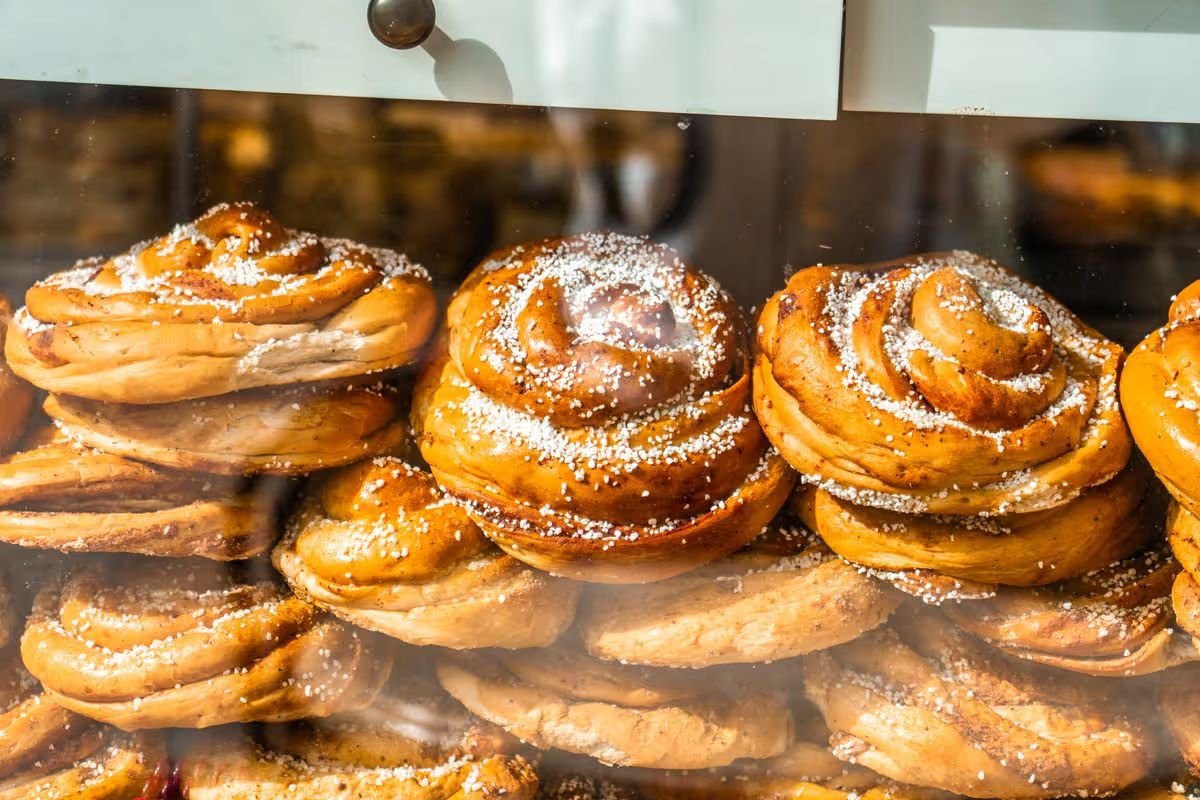
Freshly baked kanelbullar (traditional Swedish cinnamon buns) in a Gothenburg bakery window(Image: Getty)
Some people travel for culture, some for sandy beaches and sunshine, and others for culinary experiences. If you’re passionate about discovering exceptional dining spots, there’s one overlooked destination that deserves a place on your bucket list.
In the first months of the year, this Swedish destination has welcomed 20 new eateries to complement its already celebrated Michelin-starred establishments. Beyond its thriving food scene, this city also boasts a theme park, a warm café culture and genuinely beautiful streets perfect for exploring.
This remarkable city is Gothenburg, Sweden’s second-largest urban centre. Frequently overshadowed by its better-known counterparts Stockholm or Malmö, it absolutely shouldn’t be.
The city boasts five restaurants with a single Michelin star and one holding two stars. These establishments serve everything from Japanese cuisine to spectacular seafood dishes.
If you’re prepared to splash out on a truly memorable dining experience, the two-starred establishment Signum must feature on your itinerary.
The menu concentrates on seafood and fish complemented with produce grown in the on-site gardens.
All the ingredients are from Scandinavia, and a meal here will comprise 18 exquisitely crafted courses, all featuring seasonal produce.
If you’re the type who prefers to meander through the city, sampling local delicacies along the way, then you should schedule your visit for May.
Gothenburg is set to transform its iconic 19th-century fish market into a brand new seafood festival. The entire building, including its floating outdoor terrace, will be converted into a seafood extravaganza, with top-notch vendors showcasing their offerings, reports the Express.
Also launching in May is Vassen Market, a sprawling 6,500 square metre waterfront haven featuring street food, cocktails, live music, art pop-ups and even skateboarding.
Constructed entirely from recycled containers and encircled by verdant pocket parks, it’s the ultimate spot for a leisurely weekend stroll.
Later in the year, the Slakthuset district will play host to a three-day neighbourhood festival brimming with music, food and local beverages. Scheduled for July, this event perfectly encapsulates the relaxed community spirit of the city.
For those who prefer thrill rides over wine tasting, Gothenburg’s Liseberg is a must-visit. Opened in 1923, this theme park is the largest in Scandinavia and draws visitors from far and wide.
Boasting 42 attractions, there’s something to suit everyone’s tastes, promising an exhilarating day out. Just remember to don your most comfortable walking shoes, as the park spans a whopping 42 acres.
SPLIT between heading to a seaside town or the Cotswolds over Easter? Well, what if you could head to the Cotswolds but still get time on the beach…
A beach isn’t the first thing that comes to mind when thinking of the Cotswolds, but near the village of Somerford Keynes you’ll find one, and you can head there from this week.
Sign up for the Travel newsletter
Thank you!
Cotswolds Country Park and Beach features the UK’s largest inland beachCredit: Facebook/Cotswold country Park and BeachFamilies can chill on the beach or have a dip in the waterCredit: Facebook/Cotswold country Park and Beach
Cotswolds Country Park and Beach features the largest inland beach in the UK, as well as swimming lagoons.
This is despite the Cotswolds beach being more than 70 miles from the sea.
And the attraction reopens on March 27, including the Main Beach Swimming spot where visitors can have a paddle or sunbathe on the sand.
The beach also looks out across the lake, which means you can keep an eye on kids splashing in the water or watch people pedal on pedalo swans.
Each session lasts around an hour and costs from £15 per person.
There are a number of other activities you can do at the park, like an inflatable course on the waterCredit: Facebook/Cotswold country Park and Beach
If you think the water is a little nippy or would rather stay firmly dry, there is a minigolf course as well, which costs £5 per play.
And children needing to burn some energy can have a go on the climbing wall for the same price, or head to the two playgrounds.
You will also need to pay to get into the park in the first place, which varies depending on the time of the year.
In May, you could enjoy the sun while mid-season prices are available, which costs £4.09 per person or £13.64 per car of up to five people, so about £2.73 each.
However, during the high season, it usually costs £5 per person, or £18.18 for a car of up to five people (so about £3.64 each)
Our favourite UK holiday parks
*If you click on a link in this box, we will earn affiliate revenue.
Park Holidays UK Sand le Mere, Yorkshire
This holiday park in Yorkshire is a thriving family resort, just steps from Tunstall Beach. Entertainment is what this resort does best, with costume character performances, Link-up Bingo, and cabaret shows. Accommodation ranges from fully-equipped Gold Caravans to Platinum Lodges with sun decks and luxury bedding.
This beachfront resort in St Ives, Cornwall, is a true beach bum’s paradise – whether you want to laze out on the sand or take to the waves for some surfing. Activities include disc golf, a Nerf challenge, and an outdoor cinema, as well as indoor activities for the colder months like karaoke, bingo, and DJ sets.
This holiday park has loads of unique activities on offer, including TikTok dance classes, alpaca feeding, a pump track for BMX riding, and taking a ride on the resort’s very own miniature railway. Throw in bug hotel and den building, pond dipping, survival skills workshops, and a lake for paddleboard and pedalo hire, and you’ve got yourself an action-packed park.
This beachfront resort is a classic family favourite. If you’re not up to swimming in the sea, there’s four fantastic pools here, as well as water flumes, underwater jets, inflatable jet skis and kayak races. Plus if you’ve got any little fans of Paw Patrol or Milkshake!, you’ll be glad to know there’s Milkshake! Mornings and Paw Patrol Mighty Missions to keep your tots entertained.
In the surrounding area, there are a few places you can choose to stay at as well.
For example, you could head to Cotswold Lakes Camping at Field Farm, which is surrounded by lakes, wildlife and rolling hills.
The site boasts hardstanding pitches with electrical hook-ups, grass pitches, and open field grass pitches, as well as hot showers, indoor and outdoor kitchens, and is dog-friendly.
A standard grass pitch sleeping up to six people costs from £40 a night.
And if you want to explore the wider area, Cirencester is down the road.
The pretty market town sits on the River Churn, and it is the largest town in the Cotswolds.
If you are looking for more places to explore in the Cotswolds, head to the ‘Golden Triangle’, where you will find some of the UK’s prettiest towns.
Plus, the ‘Gateway to the Cotswolds’ that had the first English king, has been named one of the best places to live in the UK.
Admission costs as littler as £2.73 per personCredit: Facebook/Cotswold country Park and Beach
Blackpool’s Sandcastle Waterpark has nearly completed it’s renovationCredit: AlamyThe changing rooms have been fully upgradedThe slides are also being repaintedCredit: Sandcastle Waterpark
The main upgrades will include some basic improvements, such as a new changing room village.
Images show a much more modern look for the cubicles, with the waterpark now 40 years old.
The slides are also being repainted, while new sound systems are being installed.
The waterpark, which opened in 1986, will be ready to show off the new look by the Easter holidays.
General manager Kyle Woodcock said: “This is a landmark year for us, and we wanted to mark our 40th birthday with improvements that our guests will really feel.”
In the mean time, there are 18 slides to choose from, as well as wave pools and river rapids.
One of the most popular slides is the Master Blaster which is also the longest indoor watercoaster in the UK.
Another record-breaker is Sidewinder, which is the first indoor half-pipe waterslide in the world.
Kids will love splashing their mates with the country’s biggest water cannon too.
It’s the perfect time to visit the waterpark too – the tropical climate means it is 30C all year round.
Splash out on a private Tiki Cabana, and you get unlimited alcohol and lunch for around £60 each.
The waterpark also has an adult only spa with saunas and steam rooms, which costs an extra £7 on top of a standard ticket.
There are two cafes for food and drink, as well as a shop for anything you’ve forgotten.
The Major League Baseball Players Assn. is arguably the strongest union in the United States whose members include some of the most conservative athletes in professional sports. The owners of Major League Baseball’s 30 teams, who made their wealth through the workings of free enterprise capitalism, want to limit what players can be paid. This apparent political and philosophical irony will most likely lead to a shutdown of baseball at the end of this season.
Wednesday is opening day for the 162-game major league season. The 2025 season ended Nov. 1 with an 11-inning Dodgers victory over the Toronto Blue Jays in what was one of the most mesmerizing World Series ever. Last season, the Dodgers attracted more than 4 million fans for the first time. The Dodgers weren’t alone. More than 71 million fans attended major league games — the third straight season of growth. Over the last decade, league revenue has increased 33%.
And yet, despite all this good news about the health of baseball’s finances, team owners have threatened to lock the players out — essentially an ownership strike — at the end of this season over terms of a new collective bargaining agreement soon to be negotiated with the players union.
Major League Baseball, unlike the NFL, the NBA and the NHL, does not have a hard salary cap that limits what teams can spend on players. This is the key issue for the 30 team owners and Commissioner Rob Manfred, who argues that the system is “broken.” Small-market teams can’t effectively compete, Manfred insists, with economic behemoths like the Dodgers and Yankees. But over the past 10 seasons, 14 teams have made it to the World Series, so the league is not dominated by only a few big spenders.
Major leaguers and fans have weathered five player strikes and four owner lockouts since 1972. The 1994-95 strike lasted 232 days, canceling more than 900 games, including the World Series. Unlike in the NFL, where top players like San Francisco 49ers quarterback Joe Montana crossed a picket line during the 1987 NFL Players Assn. strike, unionized baseball players have remained united. So far, no star players have been strikebreakers in baseball. Both Paul Skenes of the Pittsburgh Pirates and Tarik Skubal of the Detroit Tigers — the 2025 Cy Young Award winners for their respective leagues — also serve in players union leadership roles.
A recent report analyzing major league ballplayers’ political affiliation found that among those who live in states that allow public access to voter registration records, nearly 54% of the players were Republicans compared with 8% Democrats. Why does a rightward-leaning membership retain such strong union loyalties?
For Miami Marlins pitcher Pete Fairbanks, who is also a member of the players union leadership, it comes down to recognizing that they stand on the shoulders of players who challenged the baseball establishment.
“If you look at the history of the union, we’ve had a foundation set for us,” Fairbanks said. “They fought for players’ rights and for the general betterment of the whole and it’s the job of the veteran players to pass that history on to the younger players.”
Marvin Miller, a former Steelworkers Union leader, revolutionized the players’ union and baseball when he led the association from 1966 to 1982. He told the New York Times in 1999 that he was “irked” that many players did not know that it was the union that made their enormous salaries and benefits, arbitration and free agency possible. “When you don’t know your history, you tend to relive it,” Miller said.
Miller, who died in 2012, was a labor history buff who realized that highly skilled workers often developed elaborate ethical codes that promoted solidarity with other employees.
Bruce Meyer, the current executive director of the players association, puts the union’s fractious history with the owners at the center of his communications with players. He spent weeks talking with union members during spring training in Florida and Arizona, emphasizing the importance of unity in the ranks. “The bottom line is that our players have always been of the view that they are fighting not just for themselves but for their teammates and for the players that come after them,” Meyer said.
Manfred’s strategy as commissioner of Major League Baseball has been to talk directly with the players himself, especially the lower-earning younger players who he claims are being shortchanged. He argues that “10% of our players make 72% of the money,” numbers that Meyer disputes.
The commissioner is essentially telling players that their union has engaged in malpractice, losing touch with its own members while the economics of baseball changed around them. Meyer regards Manfred’s attempt to divide players as “standard management-labor tactics.”
Top agent Scott Boras said that, unlike in the NFL, baseball’s open salary system works for players because “your talent allows you to earn what you can earn without taking money from anybody else’s pocket.”
Paradoxically, the union has embraced the principles of Adam Smith: Let the free market work. No one forced the Dodgers to pay Shohei Ohtani $700 million. Good for Ohtani, great for Dodger fans. And this year, the Japanese clothing retailer Uniqlo will be a field sponsor at Dodger Stadium. The owners, who embrace team revenue sharing and luxury taxes and demand restrictions on salary competition, sound like socialists.
When labor-management disputes interrupt baseball, many fans undoubtedly feel like they are victims of a squabble between “millionaires and billionaires.” Ryan Long, a 26-year-old minor league pitcher in the Baltimore Orioles system and a union leader, thinks the players association should try to understand how regular working people feel about a potential lockout. “Whether it’s people selling hot dogs at stadiums or cleaning rooms at local hotels, the union should help in whatever way it can for other workers who may be hurt if baseball shuts down,” he said.
In late February at the Yankees spring training field in Tampa, I spoke with season ticket holder Richard Barnitt, who wore a shirt designed like a baseball, looking like he could be scuffed up and pitched. “There has to be some kind of cap because the Dodgers and the New York Mets had unlimited money,” he said. Another fan, Carlos Rodriquez, an airplane mechanic living in Tampa, disagreed. “I don’t think a salary cap would be fair to the players,” he said. “The players association does magical work for those guys.”
If locked out, the players are going to want support from fans, to whom a salary cap might sound reasonable. Owners will do what owners do: maximize profits and franchise values. The players union should find ways to show the fans they are not forgotten.
During a previous owners lockout, the association created a million-dollar fund to help pay the bills of stadium concession workers who were thrown out of work. They can do the same again, letting fans know that they understand that most Americans struggle paycheck to paycheck. And maybe Ohtani can chip in a couple hundred bucks — like former Dodger Mike Piazza did decades ago — for each home run.
Kelly Candaele produced the documentary “A League of Their Own,” about his mother’s years playing in the All-American Girls Professional Baseball League.
If you’re looking for something to watch that not only will make you laugh, but will also leave you on the edge of your seat with plot twists, TV fans recommend one particular four-series show
Alan Johnson Social News Reporter
10:33, 22 Mar 2026
TV fans recommend watching a four-series comedy that’s full of plot twists (stock)(Image: Getty)
Television viewers have been busy debating which programme has the “biggest plot twist” and it appears there’s one show that stands out from the rest. The question was posed in Reddit’s ‘Watchever’ community after a user looked for inspiration as to what shows they should check out next.
“What TV show had the biggest plot twist you never saw coming?” they asked. “What’s a TV show that completely shocked you with a plot twist you didn’t expect at all?” The Reddit user elaborated: “The kind that makes you pause and think, ‘Wait… what just happened?’ For many people, shows like Mr. Robot or Westworld had moments like that. Which one got you the most?”
It prompted several people to point out a four-series sitcom that first aired in 2016 and is currently available to stream on Netflix.
“This is as good of a place as any for my regular reminder for people who haven’t seen The Good Place to give it a try,” one person declared.
“The concept seems a little cheesy at first, until you realise that it’s actually about way more than what it seems like in the first season. And aside from the deeper philosophical stuff, it’s really f***ing funny.”
A second agreed, joking:“The Good Place… then The Good Place… then The Good Place again.”
A third fan suggested: “You need to go on the journey the characters go on. That’s the great thing about The Good Place; the show doesn’t give the characters the answers, they figure them out.
“And as a result it isn’t preachy about the philosophical stuff, even though the show definitely has a point that they wanted to get across about mortality.”
Whilst a fourth Reddit user praised: “It’s a sitcom structured like a mystery box drama, ending each episode with a cliffhanger. It’s easy to binge because of this. And unlike dramatic mystery box shows, the ending is amazing.”
However, a fifth who was sceptical at first confessed: “I didn’t watch The Good Place until it was on Netflix and from the first episode I thought something was off and kept looking for little hints here and there but never really anything that really stuck out on the first watch.
“Now on the second watching… I have noticed a lot more.”
The comedy stars Kristen Bell as Eleanor Shellstrop, Ted Danson as Michael and William Jackson Harper as Chidi Anagonye.
Netflix’s synopsis states: “Due to an error, self-absorbed Eleanor Shellstrop arrives at the Good Place after her death. Determined to stay, she tries to become a better person.”
On IMDb, meanwhile, the show boasts a very impressive score of 8.2 out of 10 following 219,000 reviews.
Russian oil is emerging as a key beneficiary of the US-Israeli war on Iran, as countries scramble to charter tankers following United States President Donald Trump’s decision to temporarily ease sanctions, analysts say.
Following a phone call with Russian President Vladimir Putin on March 10, Trump said the US would waive Russian oil-related sanctions on “some countries” to ease the shortage caused by Iran’s closure of the Strait of Hormuz, which in peacetime carries 20 percent of the world’s oil and gas from producers in the Gulf.
This week, it was reported that a number of tankers carrying Russian oil bound for China had changed course and were heading for India instead.
According to figures from the Centre for Research on Energy and Clean Air (CREA), Russia earned an additional 672 million euros ($777m) in oil sales in the first two weeks of the war on Iran, which began on February 28 when Israel and the US launched strikes on Tehran, killing Ayatollah Ali Khamenei and other senior Iranian officials.
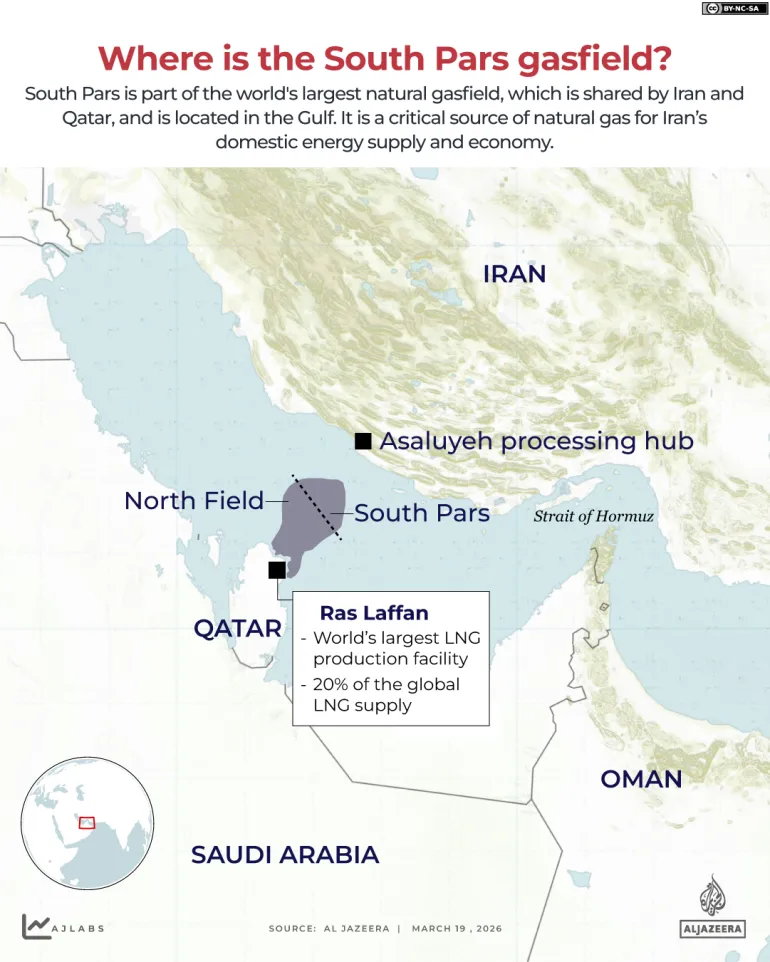
Iran has since struck back, launching thousands of missiles and drones towards Israel as well as US military assets and infrastructure in neighbouring Gulf countries. The war stepped up a level this week, when Israel bombed Iran’s critical South Pars gasfield, and Iran hit back with strikes on Gulf energy assets, including Qatar’s Ras Laffan Liquefied Natural Gas (LNG) facility – the world’s largest.
(Al Jazeera)
This week, the average price of Urals oil – the Russian benchmark – was significantly higher than the pre-war price of less than $60, at around $90 per barrel.
Here’s more about who is buying Russian oil and which other nations might benefit from the oil crisis.
Why is Russian oil benefitting from the Iran war?
Iran’s effective closure of the Hormuz Strait, which is the only sea route from the Gulf to the open ocean, has “walled in” 20 million barrels of Gulf oil per day, George Voloshin, an independent energy analyst based in Paris, told Al Jazeera.
This has prompted the US to, at least temporarily, ease sanctions on shipped Russian oil to slow the ensuing energy crisis and potential global price collapse. The price of Brent crude, the international benchmark, has risen to above $100 a barrel since the closure of the strait, compared with about $65 before the war began.
“Russia has emerged as a primary beneficiary of the Middle East conflict due to the massive supply vacuum created by the closure of the Strait of Hormuz,” Voloshin said. “Global refiners are desperate for alternative medium-sour crudes, a need that Russia’s Urals grade specifically meets.”
He added that the US decision to grant a temporary reprieve for shipped Russian oil “has provided Moscow with a critical window to maximise export volumes and oil revenues, essentially allowing Russian crude to act as the world’s primary swing supply during the Iranian blockade”.
(Al Jazeera)
How has the price of Russian oil been affected so far?
The price of Russian Urals has surged significantly, experts say. As a result of US sanctions, the oil had been trading at below $60 a barrel for some time. However, while “Urals historically traded at a significant discount to Brent due to Western sanctions”, Voloshin said, “that gap has narrowed as demand outstrips supply”.
“Since the beginning of the year, the price of Russian oil is estimated to have risen by nearly 80 percent – most recently close to $90 per barrel – and consistently trading well above the G7 price cap of $60 as buyers prioritise energy security over regulatory compliance in a high-volatility environment,” he added.
Are ships changing course to deliver Russian oil to new buyers?
Earlier this week, Bloomberg reported that at least seven tankers carrying Russian oil had changed course mid-voyage from China to India, citing data from Vortexa, the data analytics group.
Then, Indian media quoted Rakesh Kumar Sinha, special secretary in the Ministry of Ports, Shipping and Waterways, confirming that the Aqua Titan, a Russian oil-laden tanker originally destined for China, is now expected to arrive at New Mangalore port on March 21 having been chartered by Mangalore Refinery and Petrochemicals Limited (MPCL).
India was the first country to receive a time-limited exemption from the US Treasury to import Russian oil that is already at sea, Voloshin said.
“There is clear evidence of a massive logistical redirection of Russian oil cargoes mid-voyage. Several tankers originally bound for Chinese ports have, indeed, switched trajectory to India. This shift is driven by India’s aggressive pursuit of discounted distressed cargoes to fill its strategic reserves and meet domestic demand, as well as the increased risk and insurance costs associated with long-haul shipments to East Asia via contested waters.”
Until recently, Trump had been strongly pressuring India to stop buying Russian oil, even slapping additional 25 percent trade tariffs on India last year in punishment for doing so. This was lifted earlier this year when Trump claimed he had received assurances from India’s Prime Minister Narendra Modi that India would start buying US oil, or even Venezuelan oil seized by the US, instead.
Which countries are buying Russian oil now?
Indian media has reported that India’s purchases of Russian crude have surged in the past three weeks, since the war on Iran began and the Strait of Hormuz was closed.
“The primary buyers of Russian oil continue to be India and China, who together now account for the vast majority of Russia’s seaborne exports,” Voloshin said.
Turkiye is also a significant buyer, he added, now using Russian crude to stabilise its domestic market amid the gas shortages caused by the Israeli strikes on Iran’s South Pars field.
“Additionally, a shadow fleet of ageing tankers continues to move Russian oil to smaller, less-regulated refineries across Southeast Asia and the Middle East, often through complex ship-to-ship transfers designed to obscure the origin of the crude,” he added.
He said this shadow fleet is becoming the primary delivery mechanism for oil in several contested regions, meaning more buyers could appear. “Additionally, the degree of cooperation between the US and its European allies remains a wild card. If the EU continues to refuse participation in military operations near Iran, the diplomatic and economic pressure on the US to maintain the Russian oil reprieve will likely increase.”
A French Navy helicopter hovers over the Deyna vessel, which is believed to be a member of the Russian shadow fleet, during an operation in the Western Mediterranean Sea, in this handout image obtained by Reuters on March 20, 2026 [Prefecture maritime de la Mediterranee/Etat Major des Armees/Handout via Reuters]
Will Russian oil remain in demand if the US re-imposes sanctions?
If there is nowhere else to readily source oil, countries may continue to seek Russian crude even if the US reimposes sanctions, Voloshin said. The International Energy Agency (IEA) says the closure of the Hormuz Strait has caused a shortage of 8 million barrels of oil per day.
If that persists, “major importers like India may feel they have no choice but to continue buying Russian oil to prevent domestic economic collapse”, Voloshin said.
If secondary sanctions on Russian oil are reintroduced, he added, buyers may demand much lower prices to compensate for the increased legal and financial risks of dealing with Moscow. “At the same time, in the presence of a continued severe market disruption, the US is very likely to roll over [extend] current exemptions,” Voloshin said.
Which other energy-producing nations could benefit?
Two other major non-OPEC energy producers that could benefit are Norway and Canada, experts say. However, this will largely depend on their capacity to increase production.
“Norway has already signalled its intent to maintain maximum gas and oil production to support European energy security, primarily selling to EU nations seeking to replace lost Iranian and Russian volumes,” Voloshin said. “Canada is exploring ways to increase its export capacity to the US Gulf Coast. However, like Russia, its ability to significantly ramp up production in the short term is constrained by pipeline throughput and infrastructure bottlenecks.”
THE UK’s busiest and largest airport is launching a number of new routes over the coming months.
Last year, London Heathrow Airport saw around 84.5million passengers and is expecting to break the 85million mark this year.
Sign up for the Travel newsletter
Thank you!
London Heathrow Airport has a number of new routes launching over the next couple monthsCredit: AlamyThese include Tivat in Montenegro (pictured) and St Louis in AmericaCredit: Alamy
And this spring and summer, the world’s most connected airport is launching several new routes.
Dubbed America’s ‘gateway to the west’, the route will be launching as the famous Route 66 celebrates its 100th anniversary.
The stretch of Route 66 in St Louis, called ‘The Mother Road’ goes past landmarks including the Gateway Arch, the Old Chain of Rocks Bridge and Ted Drewes Frozen Custard.
Winding through the city, drivers on the route can stop off at neon-lit diners and a number of roadside attractions including the Route 66 Rocker – a massive 12.8metre-tall rocking chair.
The Guernsey route will then operate daily, also from Terminal 5, and cost from £101 return per person.
The new connection means that Guernsey residents will now more easily be able to travel across the globe by flying from Heathrow.
Guernsey is the largest of the Channel Islands and is known for having a mix of French and British culture.
One top spot to see is St Peter Port, a pretty harbour with charming houses.
As for the route to Tivat in Montenegro – this will launch on May 14, from Terminal 3 and cost from £172 return per person.
British Airways will be launching a route to Guernsey, creating a better connection for the island to international destinationsCredit: AlamyRecently named the most under-the-radar country, there will be new British Airways flights to MontenegroCredit: Alamy
Montenegro was recently named one of the most under-the-radar countries in the world, according to US News.
Tivat is found on the coast in the UNESCO-listed Bay of Kotor and features a large marina full of luxury yachts and pretty beaches such as Plaza Ponta.
Heathrow is also dubbing Tivat “one of Europe’s trendiest summer hotspots” thanks to its Adriatic scenery and offering travellers the perfect blend of sun, adventure and culture.
Low-cost Spanish airline Vueling will be launching a new daily service to Seville on March 29.
The route will operate from Terminal 4 and cost from £36 one-way, per person.
Spain is always popular with Brits and Seville is no exception.
The historic Andalusian city is great for both families and weekend city breaks with historic sites including the Cathedral – which is the largest Gothic temple in Europe – with La Giralda tower which has amazing views of the city.
Low-cost Spanish airline, Vueling, will be launching a route to SevilleCredit: AlamyThe city is home to the largest Gothic temple in EuropeCredit: Alamy
For a pretty souvenir, head to the Triana Neighborhood which is the historic district of the city and is known for its ceramics.
Another European route launching on the same day will be to Rome Fiumicino in Italy, with ITA Airways.
There will be two flights each day, operating from Terminal 2 costing from £138.24 return per person and the airport is about a half-an-hour drive from the city.
Rome, the capital of Italy, boasts several famous historical sites including the Trevi Fountain, the Colosseum, and the Pantheon.
And whilst you are in the city, you can even head to another country – Vatican City – where you can see St. Peter’s Basilica, the Vatican Museums and Michelangelo’s masterpiece in the Sistine Chapel.
ITA Airways will be launching a route to Rome Fiumicino – just 30 minutes from the capitalCredit: Alamy
A second US route launching soon will be to Seattle with Alaska Airlines.
Starting on May 22, the route will operate daily from Terminal 3 and cost from £523.04 return per person.
Seattle is one of America’s fastest-growing tech hubs and notable landmarks include the Space Needle observation tower and the Olympic Sculpture Park.
Foodies can also visit Chinatown, which is also home to the only pan-Asian art and history museum in America.
Pakistan International Airlines will also be launching two new routes by the end of March, marking the airline’s return to Heathrow after six years.
The first will be to Islamabad, the capital of Pakistan, on March 29, operating three times a week from Terminal 4, with return fares costing from £764.
The second route will be to Lahore, which is the second largest city in Pakistan.
The route will launch a weekly service on March 30, from Terminal 4.
And Alaska Airlines is launching a route to Seattle in AmericaCredit: Alamy
There are several travel warnings in place for Pakistan, so it is worth checking the Foreign, Commonwealth and Development Office travel advice before travelling.
Ross Baker, Heathrow’s Chief Customer Officer, said: “Every route launched from Heathrow gives passengers and businesses a new way to explore the world.
“Whether travelling for work or leisure, we are proud to collaborate with our airline partners to open up opportunities for passengers, exporters and importers.
“Greater connectivity is something passengers and businesses consistently say they want, which is why Heathrow expansion is so critical.
“It will add new routes and introduce more choice.
“Our plans will ensure the country gets the infrastructure it needs to stay competitive, connecting the whole of the UK to global growth.”
I was one of the first to visit the UK’s biggest beach saunaSea Scrub Sauna is on Folkestone’s main beachThere are two saunas to choose from, including the 10-person shepherds hut
According to the British Sauna Society, the number of public saunas in the UK has increased 1,200 per cent in the last three years – from 48 in 2023 to more than 600 today.
And as one of the newest, Sea Scrub Sauna is set to be a huge attraction for tourists visiting the seaside town.
Its co-founder, Robin Bartlett, said: “We’re seeing an exciting shift in the UK from exclusive, high-end spa, to more accessible, communal, and ‘wild’ sauna experiences and it’s brilliant to be part of this.
“We can’t wait to welcome new faces and grow a community of sauna enthusiasts in Folkestone, from regular locals to intrepid day trippers and holidaymakers.”
The fourth of its kind by the company – with others in Margate, Whitsable and Faversham – the complex is certainly the fanciest as well.
As I entered the reception, the smell of new wood hit me as I was handed a glass of prosecco.
There’s a full menu of wines and beers (although perhaps save them for after the session to avoid any woozy heads).
Floor to ceiling glass windows meant I had full views of the sea, which on a clear day can sometimes even include seeing France.
What sets this sauna apart is the extra facilities. There’s men’s and women’s changing rooms, a HOT shower, and onsite bathrooms.
But onto the sauna experience.
The site has two saunas to choose from – the 16-person Scandinavian sauna, and the smaller Shepherds Hut Sauna, for up to 10 people.
I recommend the one on the right if visiting in the evenings, for some of the best orange sunsets over the beach.
I settle in on my towel, embracing feeling the warmth after months of the freezing winter.
Ten minutes in, and I’m drenched in sweat. We’re all playing a silent game of chicken to see who can last the longest in here.
I bail out first, sliding off the wooden bench and fleeing for the chilly air.
It’s over to plunge pools in the middle, with the steamy hot tub calling me.
But first, a cold plunge. My breath is taken from me as I slowly lower myself into the 7C tub, focusing on my breathing as I was told.
This is where the health benefits kick in, with everything from improved circulation and reduced muscle aches to better sleep and mood levels.
The Scandinavian sauna can fit up to 16 peopleBoth of the saunas were perfect for warming up in
My overheated skin prickles as it goes from too hot to too cold.
Yet I last barely a minute, much to the enjoyment of my friend who is already submerged.
My relief is loud as I sink into the much warmer pool right next to her, letting my body temperature heat back up again.
And its not just saunas and pools that you can enjoy there too, with experiences such as silent sessions and even Aufguss rituals, a German sauna ceremony with fragranced oil infused water.
I try the latter, and the heat is waved over me with a fan as smells of lemongrass and eucalyptus clear my chest.
After all that, I’m on a high, but ravenous.
And the sauna has you covered there too, with warming bowls of ramen to take the edge off. As well as a second glass of fizz…
Even better, the Harbour Arms is right next door so you can pop over for drinks and dinner there afterwards as well.
It costs £20 for an hour-long session, and can be booked from 8:30am to 8:30pm.
I imagine the early sessions will be popular with sea swimmers, although you can also rent it out for private sessions – perfect for birthdays or hen dos.
My bowl of ramen and prosecco was needed after my hour-sessionSafe to say I chose the warmer pool over the cold plunge…
All the predictions, drama and pageantry of Hollywood’s biggest night will play out at the Dolby Theatre this afternoon as the 98th Academy Awards get underway.
How many awards will “Sinners,” directed by Ryan Coogler, win from its record-setting 16 nominations? And will Coogler win best director? Our critic says, “no.”
Tonight is also a big evening for our entertainment team, which has been producing features, previews, explainers, predictions and so much more.
The 2026 Oscars will air on ABC, and those with cable subscriptions can also watch by logging into the ABC app or abc.com.
The telecast will also stream live on Hulu, YouTubeTV, AT&T TV and FuboTV. Internationally, the ceremony will be broadcast in more than 200 territories. You can check your local listings here.
When the red carpet viewing gets underway
“Chicken Shop Date” host Amelia Dimoldenberg will return, for a third-straight year, as social media ambassador and correspondent for the official red carpet, which will kick off at 3:30 p.m. on ABC and Hulu.
For extended coverage, E! will begin its red carpet broadcast at 1 p.m. ABC’s coverage begins at 12:30 p.m., followed by “The Oscars Red Carpet Show,” hosted by Tamron Hall and Jesse Palmer.
“Sinners” is picking up steam heading into the show
My colleague Greg Braxton wrote about how award prognosticators believe Sinners gained positive press after its stars — Delroy Lindo and Michael B. Jordan — were called a racial slur at the BAFTAs.
Jordan’s and Lindo’s handling of the BAFTA incident, along with warmly received victories for the “Sinners” cast at the Actor Awards on March 1, has given the Warner Bros. release unexpected momentum leading up to Sunday’s Oscars ceremony.
Although it received a record-breaking 16 nominations, the film has been largely overshadowed through much of awards season by Paul Thomas Anderson’s political thriller “One Battle After Another.”
And Timothée Chalamet of “Marty Supreme” had been considered for months as an almost-certain lock for lead actor. But the events in past weeks have seemingly positioned “Sinners” for upset wins in the picture race and lead actor for Jordan.
Every character — from Miles Caton’s rebellious guitarist and Jack O’Connell’s lilting vampire to Wunmi Mosaku’s soulful witch and Michael B. Jordan’s bootlegging twins Smoke and Stack — has been scarred by life in 1930s Mississippi.
She also said the film “Eddington” should’ve been a contender (perhaps a nod to “On the Waterfront”). Ari Aster’s merciless black comedy drags us back to May 2020 when tempers, temperatures and misinformation were heating up across America.
Dueling civic leaders Sheriff Joe (Joaquin Phoenix) and Mayor Ted (Pedro Pascal) agree that COVID has yet to arrive in their New Mexican hamlet.
But with the Oscars, quality is often secondary to an awards narrative. Both movies have cultural relevance.
Both won critical acclaim and, to a degree, commercial success. (Though “One Battle” wasn’t the blockbuster “Sinners” was, it still grossed more than any other movie in Anderson’s career.) “Sinners” scored 16 Oscar nominations, the most in history; “One Battle” was close behind with 13.
There’s much more to read in the above links. Enjoy them and the Oscars.
You’re reading the Essential California newsletter
The week’s biggest stories
(Chris Putnam/FiledIMAGE – stock.adobe.com)
Election news
Oil and the Iran War
Crime, courts and policing
What else is going on
Must reads
Other meaty reads
For your downtime
(Illustrations by Lindsey Made This; photograph by Richard Shotwell / Invision / AP)
Going out
Staying in
L.A. Affairs
Get wrapped up in tantalizing stories about dating, relationships and marriage.
Have a great day, from the Essential California team
Jim Rainey, staff reporter Hugo Martín, assistant editor, fast break desk Kevinisha Walker, multiplatform editor Andrew J. Campa, weekend writer Karim Doumar, head of newsletters
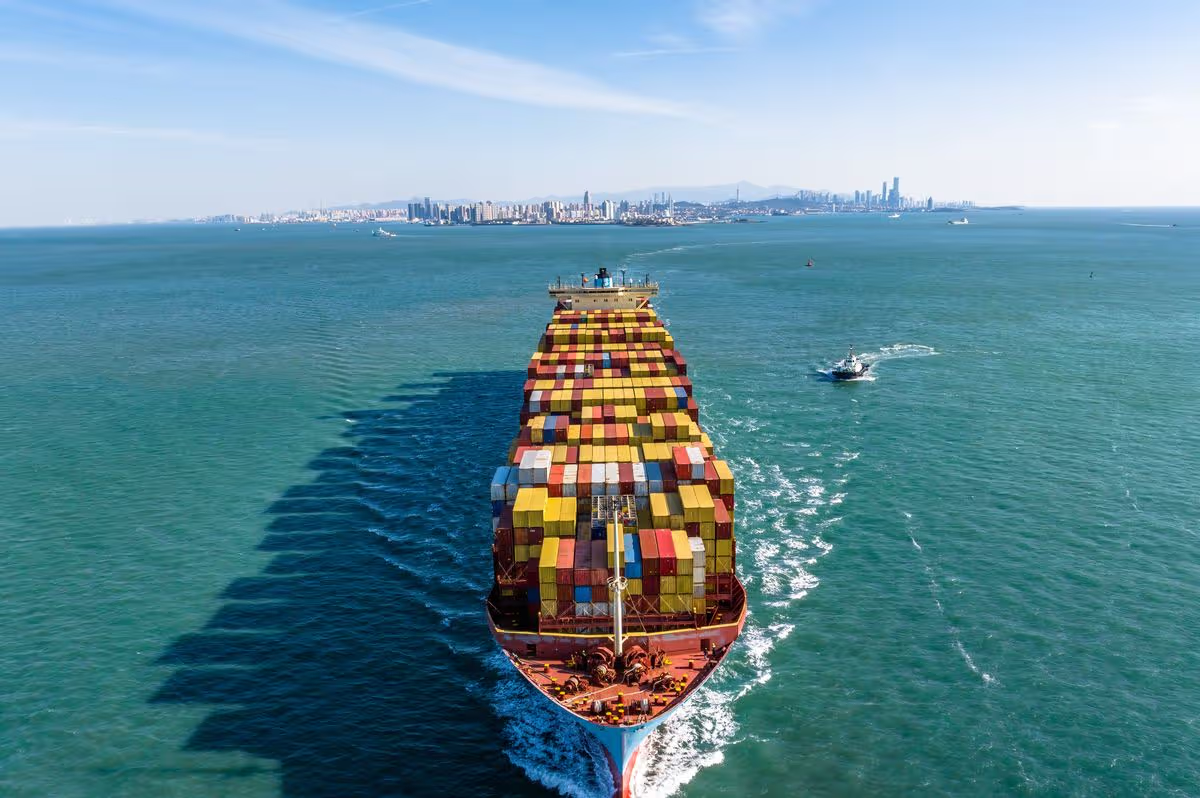
It was so big it couldn’t use the English Channel, Suez Canal or Panama Canal.
The biggest ship in the world was taller than iconic buildings(Image: Cheunghyo/Getty)
The biggest ship in the world was longer than both the Eiffel Tower and the Empire State Building. It was known as the Seawise Giant and became one of the longest self-propelled ships in history.
The boat, later called Happy Giant, Knock Nevis and Mont, was built in Japan between 1974 and 1979. It had the greatest deadweight tonnage of a ship ever recorded.
Fully laden, it was 657,019 tonnes and was the heaviest in the world. Seawise Giant had a draft of 24.6 meters (81ft) and a length of 458.45 meters (1,504.1 ft).
Due to its size, it was incapable of navigating the English Channel, the Suez Canal or the Panama Canal.
The ship has a long history, and was created by Sumitomo Heavy Industries, Ltd in Yokosuka, Kanagawa, Japan, as an Ultra Large Crude Carrier.
It remained unnamed for a long time and was identified as its hull number, 1016. The ship suffered severe vibration problems during sea trials, and an unknown Greek owner refused to take delivery of it.
Eventually, the Japanese shipyard sold the ship thanks to a deal with Hong Kong Orient Overseas Container Line. Yet, they wanted to lengthen the ship by several meters and add 146,152 tonnes of cargo capacity.
Two years later, the ship relaunched as the Seawise Giant. In 1988, it was damaged during the Iran-Iraq war after fires erupted aboard the ship, and oil spread into the water.
The ship was still intact but was so damaged it was not deemed economical to repair.
However, a Norwegian investment firm bought the damaged ship. Over the next few years, it was repaired and renamed Happy Giant.
Up until 2004, the ship was owned by various Norwegian investment firms. It was then purchased by First Olsen Tankers and renamed Knock Nevis.
The ship was converted into a primarily moored storage tanker in the Persian Gulf.
However, it was then taken on by new owners Amber Development and named Mont. It had one final voyage to India where the ship was scrapped.
The ship was beached in December 2009 and due to its size, it took until the end of 2010 for it to be scrapped. The Seawise Giant’s anchor was saved and is on public display in Hong Kong.
It goes down in history as the longest ship ever constructed at 458.45 meters and is taller than many of the world’s tallest buildings. The Eiffel Tower stands at 330 meters and the Empire State Building at 443 meters.
Meanwhile, Lizzie (Sarah Dugdale) and Denny (Kai Bradbury) welcomed their baby daughter, but Lizzie began to struggle with post-natal anxiety.
Elsewhere, Brie Sheridan (Zibby Allen) and Brady (Ben Hollingsworth) were trying their best to get along as friends, but they were both in denial about their feelings for one another.
Also, Brie was on a mission to track down Charmaine Roberts (Lauren Hammersley), who had gone missing following a disturbing death. Here are just some of the major plot points from the finale.
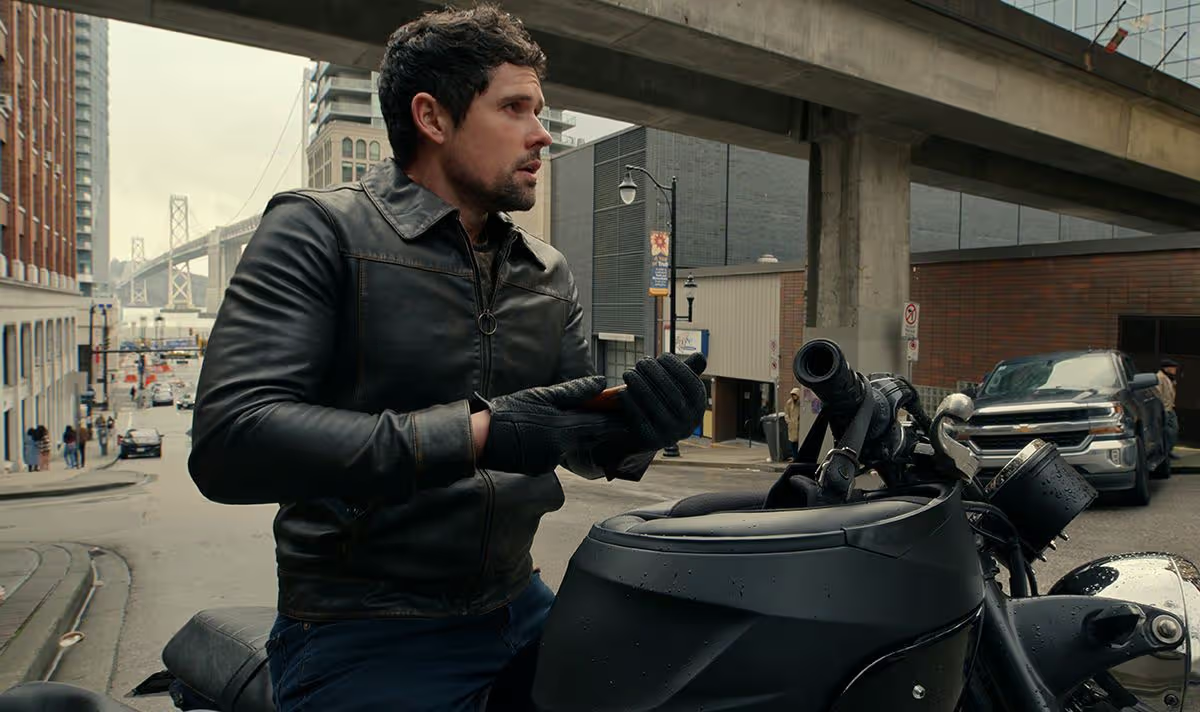
Brady was in a motorcycle accident
The final moments of the season saw Brady on his way to meet Brie for breakfast after the pair rekindled their relationship.
While they had tried their best to remain just friends, Brie realised Brady was the only one who had made her feel alive and free.
They made their relationship official at a huge community event, and Brady was excited to spend the morning with his girlfriend.
However, whilst on his motorbike, he was distracted by thoughts of Brie and did not see a lorry approaching.
Viewers saw Brady come off his bike after it collided with the huge vehicle, but his ultimate fate remained a mystery.
Preacher wanted to leave Jack’s bar
Jack’s best friend and business partner, Preacher (Colin Lawrence), was keen to explore new opportunities at the bar and took on a whole new menu.
He was excited to share his vision of expanding the bar, but when he put the idea to Jack, he was not keen on taking such a big risk.
Feeling that Jack was unappreciative of his work, Preacher asked Jack to buy him out of the business so He could explore his own opportunities.
After some deliberation, Jack decided to grant Preacher his wish and draw up the paperwork, but it appeared Preacher was starting to have second thoughts.
Fans are still waiting to find out whether Preacher signed the paperwork, ultimately cutting ties with Jack and the business.
Roland confessed his love for Hope
Hope McCrea (Annette O’Toole) and Doc Mullins (Tim Matheson) ended up falling out after Doc began having second thoughts about partnering with the doctors at Grace Valley.
Feeling he had gone behind her back in making such an important decision, Hope stormed out on Doc and ended up spending time with her ex-husband, Roland (John Ralston).
During an emotional conversation, Roland revealed the truth about Hope’s father, who was the reason she had come to hate Roland so much, and it transpired that neither was to blame after all.
Roland eventually admitted he still loved Hope and helped her scatter her father’s ashes, so fans may be left wondering whether they will start to rekindle their romance.
Charmaine was kidnapped by Grant and he killed Calvin
A huge storyline in season seven was the disappearance of Charmaine after it was revealed her ex Calvin (Josh Blacker) had been shot and killed.
It transpired that Charmaine’s boss, Grant, had developed an obsession with Charmaine, and they had clearly spent a lot of time together.
Recalling the events of the night of Calvin’s death, Grant, who was holding a gun, revealed Calvin had not wanted him around the babies, and he had come to Charmaine’s house to threaten her.
As Calvin and Charmaine got into an altercation, Grant shot and killed Calvin in order to protect Charmaine. Grant was ultimately arrested for killing Calvin and kidnapping Charmaine and the twins.
Marley’s baby was born with a rare heart defect
Mel’s patient Marley (Rachel Drance) had spent the entire season debating whether or not she wanted Mel and Jack to be the parents of her unborn child.
After the baby’s father came back into her life, the pair decided they were not ready to have a child and agreed Mel and Jack could keep the baby once it had been born.
In a tragic twist, it was discovered that the baby had a rare heart defect that he would need to have a series of operations.
Marley was whisked off to the hospital the next day, and Mel helped deliver the baby, who was then taken off in an ambulance with Mel and Jack present.
Fans were left wondering whether the baby would recover.
Virgin River season 7 is on Netflix
For the latest showbiz, TV, movie and streaming news, go to the new **Everything Gossip** website
A POPULAR water attraction that’s the largest of its kind in the UK is getting upgrades in time for the Easter holidays.
Sandcastle Waterpark in Blackpool is the largest indoor waterpark in the country and it is getting a £500,000 refresh.
Sign up for the Travel newsletter
Thank you!
The waterpark on Blackpool’s promenade is undergoing some upgradesCredit: AlamyInside are tropical waterpark are 18 slides and even a wave poolCredit: Sandcastle
The water attraction that sits on Blackpool’s promenade has a tropical climate and 18 slides inside.
It’s set to undergo a the huge refurbishment to coincide with it’s 40th birthday, having first opened back in 1986.
The improvements will be to the waterpark’s changing village rooms.
The slides will be refreshed too with a lick of paint, and a new audio system being installed.
The upgrades are due to be finished before Easter and will be completed in time for the school holidays.
General manager Kyle Woodcock said: “This is a landmark year for us, and we wanted to mark our 40th birthday with improvements that our guests will really feel.”
One of the most popular slides is the Master Blaster which is the UK’s longest indoor water rollercoaster.
Another is Sidewinder – the world’s first indoor half-pipe water slide which has been called a “white knuckle” experience.
Another thrilling slide is the very fast Montazooma which has tight hairpin bends.
There’s also the Treetops Water Chutes racing slides, the slower moving Ushi Gushi River Creek lazy river and Typhoon Lagoon is the waterpark’s huge wave pool.
Even if the weather isn’t playing ball outside, the attraction is always warm as it sits around 30C.
The upgrades are set to all be complete in time for the Easter holidaysCredit: PR Handout image
On the outskirts of the pool, visitors can enjoy the warmth in their own private Tiki Cabanas which can be hired out for the day.
Here, visitors can enjoy beer, wine, lunch, and even watch TV while lounging in a hot tub for £60 per person.
It’s not all thrilling slides and splashing about in swimming pools either – there’s also a quieter spa area for adults only.
The Sea Breeze Spa is for those 18 and over to ‘renew, re-energise and feel refreshed’.
It has a sauna, steam room, heated loungers, foot spas, aromatherapy and even a salt inhalation room.
Access to the spa is an additional £7 alongside an admission ticket.
There’s food available on-site too at the Waterfalls Cafe and Waters Edge kitchen where you can pick up drinks, sandwiches and even hot food.
There’s an option for dessert too at the Cool Waves stand, which serves ice cream and sweet treats.
On Tripadvisor, the attraction has a rating of 4.0 out of 5 with over five thousand reviews.
One visitor wrote: “Great family day out at one of Blackpool’s best attractions.”
And another said: “The kids absolutely loved it here with lots to keep them entertained.”
The waterpark is currently open during the weekends – and will reopen on weekdays in the Easter holidays.
General admission tickets into Sandcastle Waterpark start from £24.95 for those age eight and over.
Those between three and seven can get in for £15.95 and under twos go free.