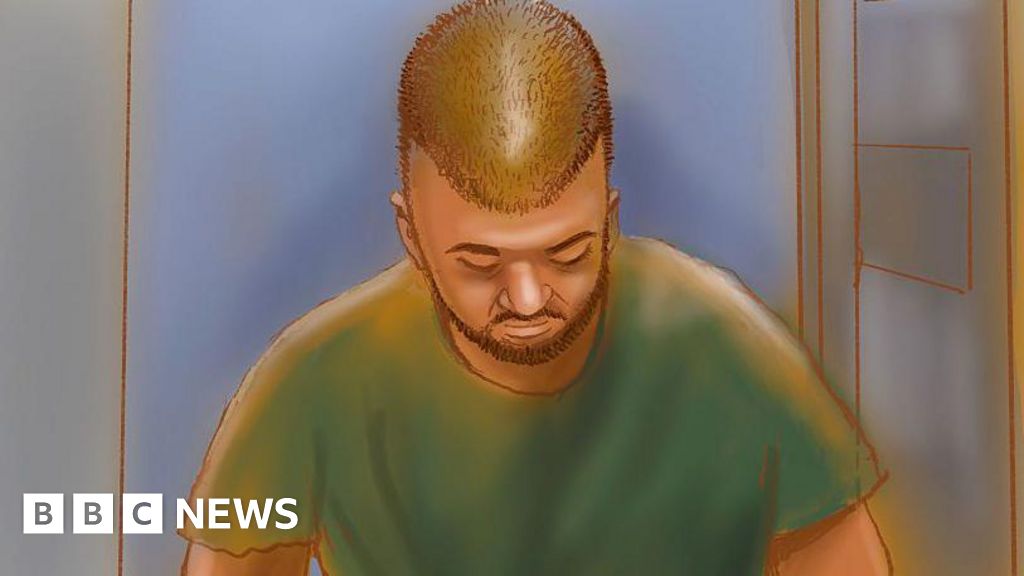
Alleged Bondi gunman loses court bid to suppress names of his family
Lawyers for Naveed Akram had argued his mother, brother and sister live in ‘constant fear’.
Source link
Lawyers for Naveed Akram had argued his mother, brother and sister live in ‘constant fear’.
Source link


A store run by Mega MGC Coffee, which reportedly bid for Home Plus Express. Photo by MGC Global
SEOUL, April 1 (UPI) — South Korean discount chain Home Plus said Tuesday that a court has begun to review the sale of its neighborhood grocery store chain, Home Plus Express.
Home Plus, which is under receivership, said the court started the procedure of selecting a preferred bidder after receiving reports from its sales adviser, Samil PricewaterhouseCoopers.
“Prior to the March 31 deadline, multiple companies were confirmed to have participated in the bidding process to acquire Home Plus Express,” the firm said in a statement.
Home Plus did not disclose further details, including the number of bidders and their identities.
However, Mega MGC Coffee has reportedly presented a bid for Home Plus Express. The budget coffee chain, which is owned by MGC Global, operates nearly 4,000 stores across South Korea.
Both MGC Global and Home Plus declined to confirm the reports.
Following unsuccessful attempts to sell Home Plus as a single entity, the divestment of Home Plus Express has emerged as a key pillar of its rehabilitation plan. The unit generated $730 million in revenue in 2024.
The Express division has a network of almost 300 stores and most of them are located in high-density urban areas. Home Plus also runs more than 100 large-format outlets.
In 2015, South Korea’s leading private equity fund, MBK Partners, purchased Home Plus from Tesco in a landmark $5 billion deal. In recent years, the retailer has struggled amid pandemic-related disruptions and the rise of e-commerce giants.
Since early last year, MBK Partners has tried to dispose of Home Plus to little avail. As a result, the company has shifted its focus to the sale of Home Plus Express.
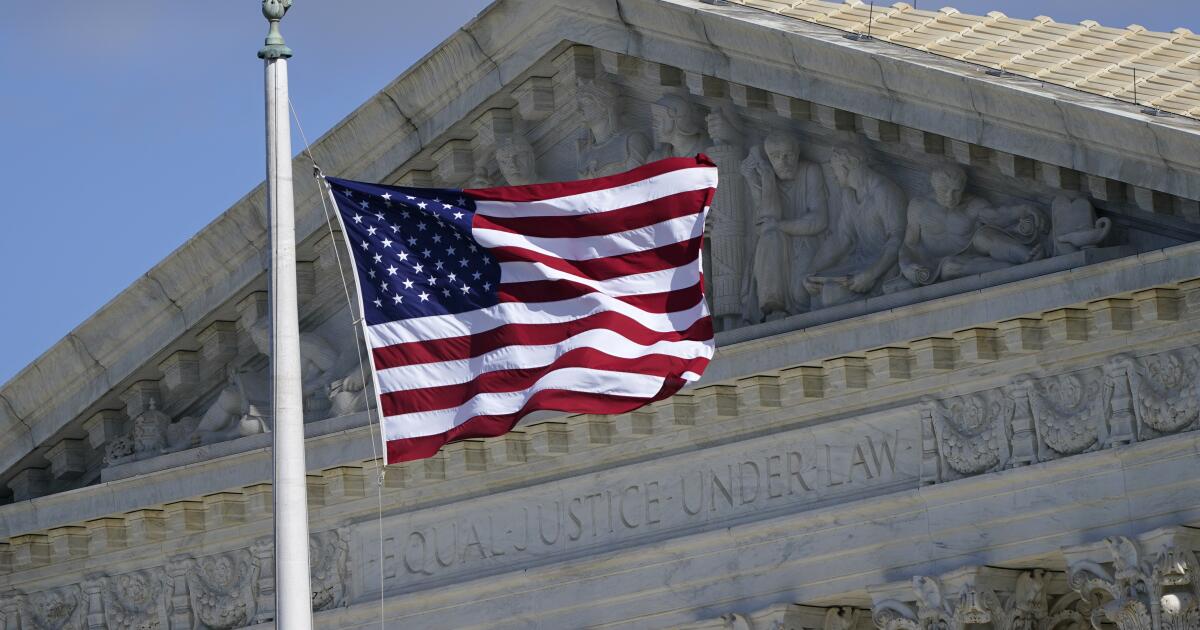
WASHINGTON — The Supreme Court on Wednesday will hear President Trump’s claim that he has the power to revise the Constitution and to end birthright citizenship for babies born in this country to parents who were here unlawfully or temporarily.
Trump proposed this potentially far-reaching change in an executive order. It has been blocked by judges across the country and has never been in effect.
His lawyers contend they seek to correct a 160-year misunderstanding about the Constitution’s promise that “all persons born” in this country are deemed to be citizens.
The president’s executive order “restores the original meaning of the citizenship clause” and would deny “on a prospective basis only” citizenship to the “children of temporarily present aliens and illegal aliens,” Solicitor Gen. D. John Sauer wrote in his appeal.
But the first hurdle for Trump and his lawyers may concern the powers of the president.
In February, the court blocked Trump’s sweeping worldwide tariffs on the grounds the Constitution gave Congress, not the president, the power to impose import taxes.
By comparison, the president has even less power to set the rules for U.S. citizenship. The Constitution gives Congress the power to “establish a uniform rule of naturalization.”
After the Civil War, Congress adopted a civil rights act in 1866 that said “all persons born in the United States and not subject to any foreign power, including Indians not taxed, are hereby declared to be citizens of the United States … of every race and color.”
To make sure that rule stood over time, it was added to the Constitution in the 14th Amendment. Its opening line says: “All persons born or naturalized in the United States and subject to the jurisdiction thereof are citizens of the United States and of the State wherein they reside.”
In 1898, a conservative Supreme Court upheld that rule and affirmed the citizenship of Wong Kim Ark. He was born in San Francisco to Chinese parents who later returned to China.
“The 14th Amendment affirms the ancient and fundamental rule of citizenship by birth within the territory,” the court said. “In clear words and in manifest intent, [it] includes the children born, within the territory of the United States, of all other persons, of whatever race or color.”
In 1952, when Congress revised the immigration laws, it added the same provision without controversy. Lawmakers set multiple rules for deciding disputes over American parents who live abroad, but the first rule was simple and undisputed.
“The following shall be nationals and citizens of the United States at birth: a person born in the United States and subject to the jurisdiction thereof,” the law said.
Critics say Trump’s plan could replace a clear and simple rule with a confusing and complicated one. States would have to look into the history and legal status of a newborn’s parents to decide whether they met the new qualifications.
Until now, a valid birth certificate had been sufficient to establish a person’s U.S. citizenship.
Last week, Trump was urging Senate Republicans to pass a new election law that would require millions of Americans to present a birth certificate as proof of their citizenship if they register to vote or move to a new state.
“Proving citizenship to vote is a no brainer,” the White House said.
This week, however, Trump’s lawyers are urging the court to rule that their birth in this country is not proof of their citizenship.
There is a “logical inconsistency” here,” said Eliza Sweren-Becker, a voting rights expert at the Brennan Center.
In the legal battle now before the court, the key disputed phrase is “subject to the jurisdiction.” That has been understood to mean that people within the United States are subject to the laws here, except for foreign diplomats and, for a time, Native Americans who lived on tribal reservations.
But Sauer contends it excludes newborns who are “not completely subject to the United States’ political jurisdiction” because their parents are in this country unlawfully.
Lawyers for the American Civil Liberties Union called this a “radical rewriting” of the 14th Amendment, which says nothing about the parents of a newborn child.
If upheld, this order could apply to “tens of thousands of children born every month, “ they said, “devastating families around the country.” But worse yet, they said, the outcome “would cast a shadow over the citizenship of millions upon millions of Americans, going back generations.”
Some legal experts predict the court may rule narrowly and reject Trump’s executive order because it conflicts with federal immigration laws. Such a ruling would be a defeat for Trump, but it could allow Congress in the future to adopt new provisions, including a limit for expectant mothers who enter this country to give birth.
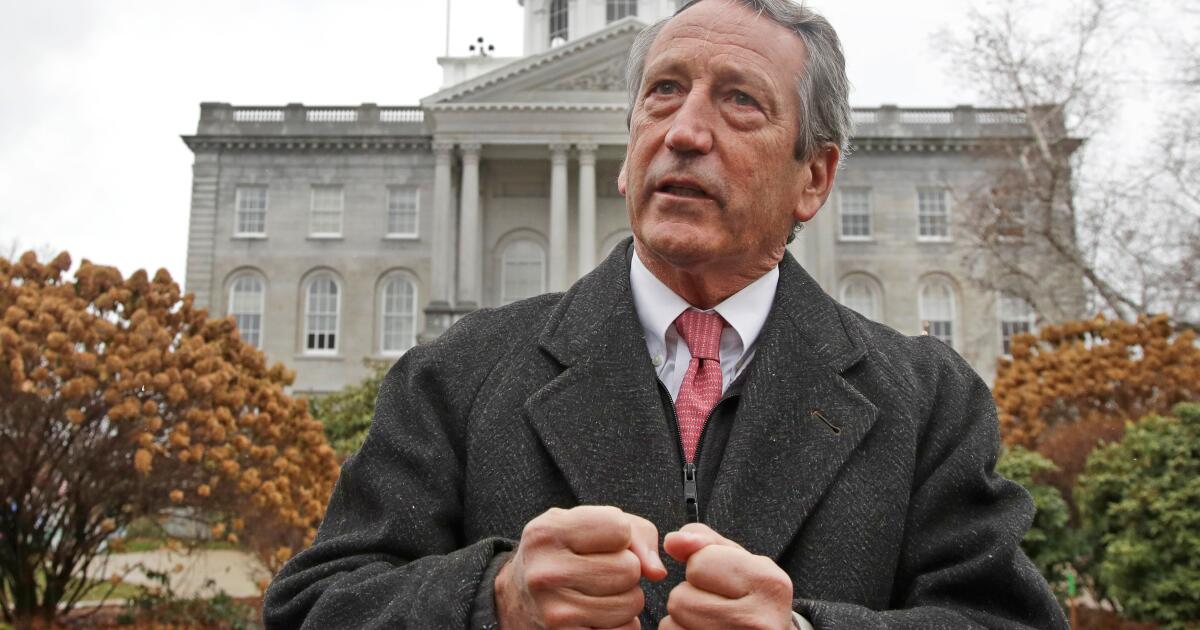
COLUMBIA, S.C. — Mark Sanford, the former South Carolina congressman and governor whose political ascendancy was stalled by a 2009 affair, wants to return to Congress — again.
Just hours ahead of the deadline to do so, Sanford filed candidacy paperwork with state officials to run in the June 9 GOP primary for South Carolina’s 1st District seat, which he has held twice before.
Sanford’s first political office was in the 1st District. An outsider with almost no name recognition, he navigated a primary for the open seat, finishing second before winning the runoff. He served for six years before his outside run at governor, again pushing his way through a crowded primary, then knocking off the last Democrat to hold the office.
But his eight years were overshadowed by the Appalachian Trail, which became shorthand for Sanford’s disappearance to go to Argentina to see his lover. Sanford’s wife, family and his staff didn’t know where he was.
Beating back both an ethics inquiry and calls to resign, Sanford held fast, leaving office on his own terms.
In 2013, Sanford won back his old seat, beating 15 other candidates in a primary and runoff. He won two more full terms before falling to a GOP challenger in 2018 who had President Trump’s backing.
The seat would go on to flip to Democratic hands that fall for the first time in decades, won back by GOP Rep. Nancy Mace in 2020. Mace is running for governor this year.
Sanford, 65, also briefly ran for president in 2020, challenging Trump for the nomination in what he characterized as a “long shot” effort around warnings about the national debt. Some, including Sanford’s former gubernatorial staffers, initially questioned whether the effort was a serious one, positing that it might be an effort to stay relevant after the 2018 defeat.
Sanford dropped out of the contest just ahead of the New Hampshire primary. Sanford’s home state would ultimately opt not to hold a 2020 GOP presidential primary, clearing the way for Trump’s nomination in South Carolina.
Sanford did not immediately return a message seeking comment on Monday. True to the themes that have dominated his political thinking, an email release on Sanford’s candidacy focused on the national debt, with the candidate saying he felt 1st District voters wanted a representative “who is an advocate for financial sanity that has been lost in Washington for all too long.“
Since leaving the U.S. House, Sanford has hung onto more than $1.3 million in a federal campaign account, funds that he can now use in a primary already crowded with multiple Republican and Democratic candidates.
Kinnard and Collins write for the Associated Press.

In a sharp repudiation of Gov. Arnold Schwarzenegger, voters rejected his most sweeping ballot proposals on Tuesday in an election that shattered his image as an agent of the popular will.
Voters turned down his proposals to curb state spending, redraw California’s political map and lengthen the time it takes teachers to get tenure.
With most of the votes counted, Californians were leaning against Proposition 75, his plan to require unions for public workers to get written consent from members before spending their dues money on politics.
The Republican governor had cast the four initiatives as central to his larger vision for restoring fiscal discipline to California and reforming its notoriously dysfunctional politics. The failure of Proposition 76, his spending restraints, and Proposition 77, his election district overhaul, represented a particularly sharp snub of the governor by California voters. It also threw into question his strategy of threatening lawmakers with statewide votes to get around them when they block his favored proposals.
On a Beverly Hills stage Tuesday night next to his wife, Maria Shriver, Schwarzenegger pledged “to find common ground” with his Democratic adversaries in Sacramento.
“The people of California are sick and tired of all the fighting, and they are sick and tired of all the negative TV ads,” he told supporters at the Beverly Hilton. He did not concede, saying instead that “in a couple of days the victories or the losses will be behind us.”
Dogging the governor, as it has for months, was the California Nurses Assn., which organized a luau at the Trader Vic’s in the same hotel. As Schwarzenegger’s defeats mounted, giddy nurses formed a conga line and danced around the room, singing, “We’re the mighty, mighty nurses.”
At labor’s election night party in Sacramento, union leaders were not in a forgiving mood, vowing revenge against the governor next year when he seeks reelection. They were particularly incensed that he had not given union members their due for what they believed to be a clean sweep of his agenda.
“He never apologized once for trashing every one of us,” said Mike Jimenez, president of the California Correctional Peace Officers Assn. “And I can tell you, tomorrow we’re not going to apologize for the way this election turned out. Tomorrow starts Round 2.”
California Teachers Assn. President Barbara Kerr told several hundred activists in the ballroom: “This governor wasted $50 million, and he does not have the courage to apologize to all of you for the trash he talked about you. He doesn’t have the courage to say he was wrong, that we’re the real heroes of California.”
For months, labor and its Democratic allies called Schwarzenegger’s agenda an assault on nurses, firefighters, teachers and other public employees. Labor’s $100-million campaign against the governor this year has battered his public image as he prepares to seek reelection in 2006.
Also on the ballot were four other initiatives. Voters were narrowly defeating Proposition 73, which would bar abortions for minors without parental notification. The state Republican Party promoted Schwarzenegger’s endorsement of the measure among evangelicals and other religious conservatives in a bid to boost turnout of voters who would back the rest of his agenda.
By a wide margin, voters also rejected rival measures on prescription-drug discounts. The pharmaceutical industry spent $80 million on a campaign to defeat Proposition 79, a labor and consumer-group proposal, and pass its own alternative, Proposition 78.
Voters also turned down Proposition 80, a complex measure to revamp rules governing the electricity industry. The initiative, sponsored by consumer advocates, tried to draw on public anger from the state’s 2000 energy crisis, but polls suggested that it confused voters.
Overall, the special election called by Schwarzenegger to win public validation of his agenda sparked a campaign that became the costliest in California’s history. All told, the yes and no campaigns on the eight initiatives spent more than $250 million.
Schwarzenegger put in $7.2 million of his own money. That brings his total personal spending on political endeavors to $25 million since he ran for governor in the 2003 recall race.
Former Gov. Pete Wilson, a political mentor to Schwarzenegger, watched returns with the governor at the Hilton. “It took courage to do it,” Wilson said of the special election. “Why run for office if you’re not going to do anything with it?”
But state Senate leader Don Perata, a Democrat from Oakland, said Tuesday night that Schwarzenegger had “sowed the seeds of his own demise” by taking on the full gamut of public workers, who make up more than half of the union members in California.
“He got a lot of really bad advice,” Perata said.
By the time voters started lining up at neighborhood polling places Tuesday morning, 2.2 million Californians had already cast their ballots by mail. The vote came after months of heavy television advertising, often with back-to-back spots prodding voters in opposite directions on the bewildering set of initiatives.
At a Rancho Palos Verdes polling station, David Berman, a 46-year-old doctor, captured the feeling of many fellow Democrats when he threw up his hands and declared the election pointless.
“It’s a waste of money,” he said.
In Baldwin Park, Renee Martinez, 50, spoke for the governor’s Republican loyalists, saying her goal Tuesday was “to back Arnold.”
“I’m his,” she said. “He tells you like it is, and I believe him.”
The election followed a steep political slide for Schwarzenegger. He sustained stratospheric popularity ratings in his first year as governor by maximizing his appeal as an outsider with a fresh take on the state capital. Facing a severe fiscal mess, he favored bipartisan compromise over pitched battles with Democrats and their union allies.
But late last year, he set in motion a cascade of political misfortunes by aligning himself more closely with the Republican Party, a costly move in a state that strongly favors Democrats.
He championed the reelection of President Bush, widely disliked in California, in a prime-time speech at the Republican National Convention in New York. Days before the divisive national election, he campaigned for Bush in Ohio, a crucial swing state.
In California, meanwhile, Schwarzenegger led the GOP push to wrest seats from Democrats in the Legislature, hoping to bolster his position there. Republicans failed to win any new seats, but the governor succeeded in antagonizing the Democrats who control both the Assembly and Senate.
In January, he deepened his troubles by taking on public-employee unions in his State of the State speech, further annoying the Democratic lawmakers who rely heavily on labor support. He demanded state spending limits and new districts for legislators, along with an overhaul of the state pension system. He threatened to call a special election if Democrats blocked his plans, saying voters would heed his call to “rise up” and reform Sacramento.
Further isolating himself, he went on to break his deal with educators to restore $2 billion taken from public schools to balance the previous year’s budget. At the same time, he kept his pledge not to raise income taxes, a popular stand with Republicans.
By winter’s end, unions had launched a punishing television ad campaign, pounding Schwarzenegger for breaking his promise on schools. The ads also exploited a bungle by the authors of the governor’s pension proposal: It would have denied survivor benefits to the families of firefighters and police officers killed in the line of duty. The governor abandoned it.
Personal missteps added to Schwarzenegger’s woes. He called Democratic lawmakers “girlie men” for bridling at spending cuts. When nurses heckled him, his response provided fodder for a scathing union television ad: “The special interests don’t like me in Sacramento, because I am always kicking their butts.”
To gain publicity as a champion bodybuilder and film star, Schwarzenegger had often made fun of people, but in politics the tactic backfired, said Laurence Leamer, author of “Fantastic: The Life of Arnold Schwarzenegger.”
“It began to turn against him, because his opponents were very, very shrewd and calculating in the way they exploited it,” Leamer said.
Unions made nurses, teachers and firefighters the face of their anti-Schwarzenegger campaign, which only intensified after lawmakers rejected his demands, leading him to call Tuesday’s special election. By last week, his job approval rating had dropped to 40% of likely voters in a Los Angeles Times poll, down from 69% a year earlier.
Schwarzenegger framed the election as a “sequel” to the recall, a package of proposals that would reform state politics and government.
But the centerpiece of his agenda, Proposition 76, offered political grist for the unions: It would have given more budget authority to the governor — a power grab by labor’s account — and make complex changes in the minimum school-spending rules that California voters approved in 1988.
His redistricting plan, Proposition 77, also faced an uphill fight, given California voters’ long history of rejecting plans to reshape the way political maps are drawn.
Schwarzenegger argued that state lawmakers should not be allowed to “pick their voters” by drawing district lines to protect incumbents.
Opponents countered that the governor’s plan to give the job to retired judges would put, for the most part, white elderly men in charge of drawing maps for an increasingly diverse state.
Schwarzenegger’s tenure proposal, Proposition 74, sparked fierce opposition from the California Teachers Assn., which put nearly $60 million into the fight. The governor said it was nearly impossible to get rid of bad teachers, such as one who showed an R-rated movie in the classroom. The union accused him of attacking the profession and jeopardizing the effort to relieve the state’s teacher shortage.
But his labor adversaries were most concerned about Proposition 75, the restraint on union campaign spending.
National union leaders flew to California in recent days to campaign against the measure, underscoring their fear that similar proposals in other states could further weaken organized labor, already torn by a schism in the national AFL-CIO.
“It’s a basic attack on workers in so many ways,” AFL-CIO President John Sweeney told reporters Tuesday in Los Angeles.
Unions have spent about $100 million on the campaign against Schwarzenegger’s ballot measures at a time of vigorous debate over how much money labor should devote to politics.
“We’re still doing what we need to do with collective bargaining and organizing new members, but it is definitely a drain on our treasury,” said J.J. Johnston, California area director of the Service Employees International Union.
Regardless of Tuesday’s results, Schwarzenegger sets out today on his yearlong quest for political recovery, both as governor and reelection candidate.
Other unpopular governors, such as Pete Wilson and Gray Davis, have overcome abysmal poll ratings to win second terms. Few strategists doubt Schwarzenegger’s capacity to do the same, and on Tuesday in Beverly Hills he seemed intent on pursuing the centrist path that worked for him in his early days as governor.
“I recognize we also need more bipartisan cooperation to make it all happen, and I promise I will deliver that,” he said.
Times staff writers Noam N. Levey, Dan Morain, Jordan Rau, Hemmy So and Kelly-Anne Suarez contributed to this report.
*
(BEGIN TEXT OF INFOBOX)
Past turnout
Fewer voters usually turn out for special elections than for regular elections. An exception occurred in 2003, when Gray Davis was recalled and Arnold Schwarzenegger was elected governor.
Turnout in previous statewide elections:
*–* *1962 78.73% *1966 79.20% *1970 76.19% **1973 47.62% *1974 64.11% *1978 70.41% **1979 37.38% *1982 69.78% *1986 59.35% *1990 58.61% **1993 36.37% *1994 60.45% *1998 57.59% *2002 50.57% **2003 61.20%
*–*
*Non-presidential general elections
**Special elections
Source: California secretary of state
Islamabad, Pakistan – The US-Israel war on Iran has not paused. The strikes have not stopped from either side. However, diplomacy is now moving at a pace not seen since the conflict that affected Iran’s neighbours and rattled the world economy for a month.
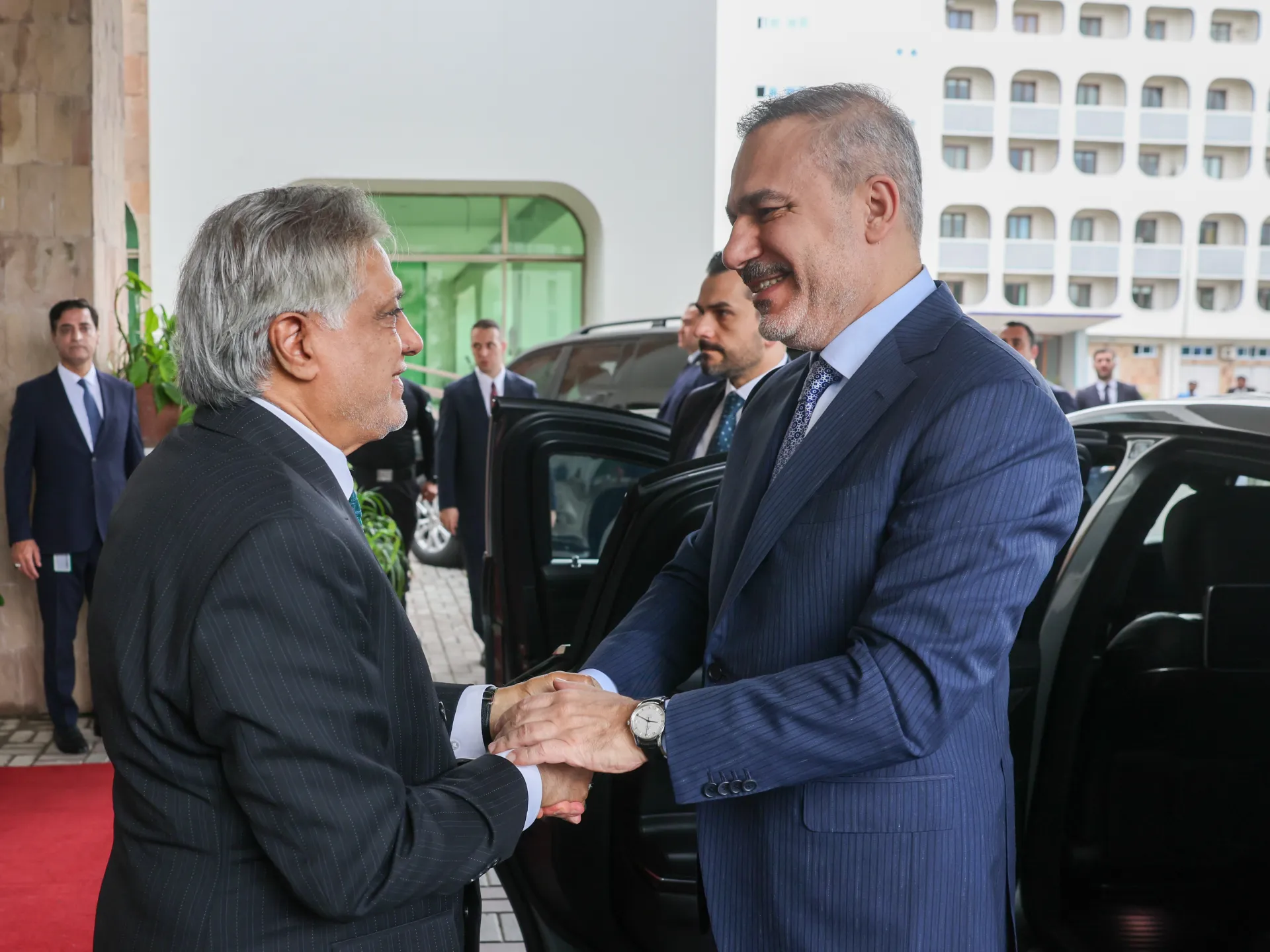
Two-day consultations of foreign ministers of Turkiye, Saudi Arabia, Egypt and Pakistan started in Islamabad on Sunday as the capital turned into the centre of a rapidly forming diplomatic track in what officials describe as the most coordinated regional effort yet to push the United States and Iran towards direct talks.
list of 3 itemsend of list
Hours before the meeting, Pakistan’s Prime Minister Shehbaz Sharif held a 90-minute phone call with Iranian President Masoud Pezeshkian – his second conversation with the Iranian leader in five days.
According to officials, the call focused on de-escalation and what Tehran calls the missing ingredient in all previous negotiations: trust.
Pezeshkian told Sharif that Iran had twice been attacked during earlier nuclear talks with the US and said the contradiction – talks on one hand, strikes on the other – had deepened Iranian scepticism about Washington’s intentions.
He stressed that confidence-building measures would be required before Tehran could consider direct dialogue.
The Islamabad meeting is not improvised. It is the evolution of a mechanism first discussed during a broader gathering of Muslim and Arab states in Riyadh earlier this month.
That mechanism has now hardened into a four-country diplomatic track, with Pakistan acting as the central interlocutor between Iran and the US.
Originally planned to take place in the Turkish capital, Ankara, the meeting was moved to Islamabad because of Pakistan’s deepening involvement in relaying messages between Washington and Tehran.
At the same time, China has conveyed support to Tehran for Pakistan’s mediation efforts and encouraged Iran to engage with the diplomatic process – a sign that global powers are beginning to line up behind the regional initiative.
Diplomats say the four-nation meeting is not designed to produce a ceasefire itself. Its purpose is to align regional positions and prepare the ground for a possible direct US-Iran engagement.
Diplomacy over the war on Iran is no longer theoretical. A document exists. And now, the world is waiting.
Officials suggest that if current contacts hold, talks between US Secretary of State Marco Rubio and Iran’s Foreign Minister Abbas Araghchi could take place within days, potentially in Pakistan.
US Vice President JD Vance has also been named as someone who could talk to the Iranians. However, timelines remain conditional.
One diplomat told Al Jazeera that any such meeting would likely require Washington to announce at least a temporary pause in strikes to meet Tehran’s demand for confidence-building measures.
A senior Pakistani source confirmed to Al Jazeera that Washington and Iran’s demands have been presented by Islamabad, and that is where Pakistan’s role ends.
“We can take the horse to the water; whether the horse drinks or not is entirely up to them.”
The four-country meeting is expected to review Iran’s response and coordinate messaging back to Washington. Iran has already transmitted its reply to the US proposal via Islamabad, according to officials familiar with the process.
Tehran’s demands include an end to hostilities, reparations for damages, guarantees against future attacks and recognition of its strategic leverage in the Strait of Hormuz.
During his call with Sharif, President Pezeshkian warned that Israel was attempting to expand the conflict to other countries in the region and expressed concern over the use of foreign territory for attacks on Iran.
Islamabad’s view is that any dialogue must take place in an atmosphere of mutual respect and an end to the killing of Iranian officials and civilians.
Pakistan has condemned Israeli attacks and stood in solidarity with the Gulf countries regarding Iranian attacks on their infrastructure.
These statements underline a growing divide between regional powers and Washington’s military approach – even as those same powers work to prevent the conflict from spiralling further.
The talks in Islamabad do not include US or Iranian officials. It is not a negotiation. It is preparation.
Its goals are to consolidate regional backing for de-escalation. That requires harmonising positions on ceasefire sequencing and reducing the risk that competing mediation efforts undercut each other.
If successful, it could provide the political cover both Washington and Tehran need to enter talks without appearing to concede.
Officials say the next 48 to 72 hours will determine whether this diplomatic push produces a meeting. Pakistan has now spoken to Iran, hosted regional powers and transmitted proposals in both directions.
What happens next will depend on decisions taken not in Islamabad, but in Washington and Tehran.
For now, though, one fact is clear: the centre of gravity in the diplomatic effort to end this war has shifted to Pakistan’s capital. If this collapses under the weight of mistrust and continued fighting, a regional war risks becoming something far larger.

Published on
Lille will host the European Custom Authority, a new decentralised agency tasked with supporting and coordinating national customs administrations across the bloc.

The decision was made on Wednesday in Brussels, after EU lawmakers from the European Parliament and the Council of the EU voted on the matter in three rounds.
“France is one of Europe’s leading customs nations, [considering] one in three parcels entering the EU passes through French territory,” Dutch MEP Dirk Gotink, rapporteur on the customs reform, said in a press statement.
“Lille’s strategic location at the crossroads of Europe makes it the natural hub for this authority,” the EU lawmaker continued.
Italy, with Rome as its candidate, was the runner-up in the voting rounds.
Other contenders included Belgium with Liège, Croatia with Zagreb, the Netherlands with The Hague, Poland with Warsaw, Portugal with Porto, Romania with Bucharest, and Spain with Málaga.
Customs management and trade have taken on renewed urgency after former US President Donald Trump imposed sweeping tariffs shortly after taking office.
Amid growing global trade uncertainty, the EU has stepped up engagement with international partners. This week, it signed a new agreement with Australia, while the EU–Mercosur deal is set to apply provisionally from 1 April.
The establishment of the new authority is part of the overall reform of the EU customs framework, with key negotiations expected to take place on Thursday.
The reform also aims to tackle the rising pressure from increased trade flows, fragmented national systems and the rapid rise of e-commerce.
The agency is expected to be set up in 2026 and could become operational in 2028 according to a draft schedule which is still be subject to significant changes.

The captain of the Iranian women’s football team has withdrawn her bid for asylum in Australia, Iran’s state media says, making her the fifth member of the delegation to change her mind after her team’s participation in the Asian Cup.
Zahra Ghanbari will fly from Malaysia and travel to Iran within the next few hours, the IRNA news agency said on Sunday.
Three players and one backroom staff member had already withdrawn their bids for asylum and travelled to Malaysia from Australia, where the team participated in the AFC Women’s Asian Cup.
Australia’s Home Affairs Minister Tony Burke said his country had offered asylum to all players and support staff members prior to their departure over fears they might be punished upon their return home after the team refused to sing Iran’s national anthem at the tournament.
Iranian state broadcaster IRIB reported on Saturday that the three had “given up on their asylum application in Australia and are currently heading to Malaysia”, posting a picture of the women allegedly boarding a plane.
The news was confirmed by Burke a few hours later.
“Overnight, three members of the Iranian women’s football team made the decision to join the rest of the team on their journey back to Iran,” Burke said.
“After telling Australian officials they had made this decision, the players were given repeated chances to talk about their options.”
Five players took up the offer and signed immigration papers last week, with one more player and a member of staff joining them a day later. It leaves two Iranian players in Australia, where they have been promised asylum and an opportunity to settle.
Iran played their three group games of the Asian Cup at the Gold Coast Stadium in Queensland on March 2, 5 and 8, after the United States and Israel launched their war on Iran on February 28.
The initial attacks killed Iran’s Supreme Leader Ayatollah Ali Khamenei and other leaders.
Overall, an estimated 1,444 Iranians have been killed since the war began, including more than 170 people, mostly schoolgirls, who were inside a primary school in the city of Minab.
After refusing to sing the Iranian national anthem at their first match, players on the Iranian women’s football team were branded “traitors” by an IRIB presenter.
When Iran played their second game of the tournament against Australia three days later, not only did the players sing the national anthem, but they also saluted it, prompting fears that they may have been forced to change their stance after receiving backlash in Iranian media.
While neither the players nor the team management explained why they refrained from singing before the first match, fans and rights activists speculated that it may have been an act of defiance against the Iranian government.
On the day of the team’s departure from Australia, Burke announced his government had offered all players and staff members the chance to stay back in the country.
On Tuesday, Burke told reporters that five Iranian players had decided to seek asylum in Australia and would be assisted by the government.
“They are welcome to stay in Australia, they are safe here, and they should feel at home here,” he said.
A day later, Burke confirmed that an additional player and a member of the team’s support staff had received humanitarian visas in the hours before their departure.
However, one player, who previously chose to stay behind, changed her mind and decided to return to Iran.
The player, who was later identified as Mohadese Zolfigol, changed her decision on the advice of her teammates, Burke told the Parliament of Australia.
“She had been advised by her teammates and encouraged to contact the Iranian embassy,” he said.
The players who managed to escape with the help of Iranian rights activists were taken away by Australian police officials to a safe house, where they met immigration officials and signed the paperwork.
“Our understanding is that every single member of the squad was interviewed independently by the Australian Federal Police,” Beau Busch, the Asia/Oceania president of players’ welfare body FIFPRO told Al Jazeera last week.
“[The players] were made aware of their rights and the support available to them. They certainly weren’t rushed through that process.”
Irish rapper Liam O’Hanna welcomes ruling in case he says was ‘never about any threat to the public, never about terrorism’.

Published On 11 Mar 202611 Mar 2026
Share
British prosecutors have lost an appeal seeking to reinstate a “terrorism” charge against a member of Irish rap group Kneecap accused of waving a Hezbollah flag during a gig in London.
London’s High Court on Wednesday rejected prosecutors’ attempts to challenge a lower court’s decision to throw out the case against Liam O’Hanna in September due to a technical error.
list of 3 itemsend of list
The decision means the case will not proceed. In a statement, the Crown Prosecution Service said the High Court had “clarified how the law applies” to such cases and that it accepted “the judgement and will update our processes accordingly”.
O’Hanna – also known as Liam Og O hAnnaid (his name in Gaeilge, the Irish language) and by the stage name Mo Chara (“My Friend”) – was charged in May of last year with displaying a Hezbollah flag during a November 2024 concert in London, in violation of the United Kingdom’s 2000 Terrorism Act.
Kneecap’s members – who rap in Gaeilge and English and have been outspoken in their condemnation of Israel’s genocide against Palestinians in the Gaza Strip – have called the attempted prosecution a “British state witch-hunt”.

O’Hanna welcomed the ruling on Wednesday, saying during a news conference in Belfast that the case was “never about me, never about any threat to the public and never about terrorism”.
“It was always about Palestine, about what happens if you dare to speak up, about what happens if you can reach large groups of people and expose their hypocrisy, about the lengths Britain will go to cover up Israeli and US war crimes,” he said.
Cheered by supporters at the event, O’Hanna was joined by Kneecap bandmates JJ O Dochartaigh and Naoise O Caireallain – better known by their respective stage names, DJ Provai and Moglai Bap.
“Your own High Court ruled against you,” O’Hanna added, addressing the UK government.
“The pathetic thing about this whole process is that you falsely tried to label me a terrorist when it is the British government ministers that are arming and assisting a genocide in Gaza, the destruction of Lebanon, and the senseless slaughter of schoolkids in Iran.”
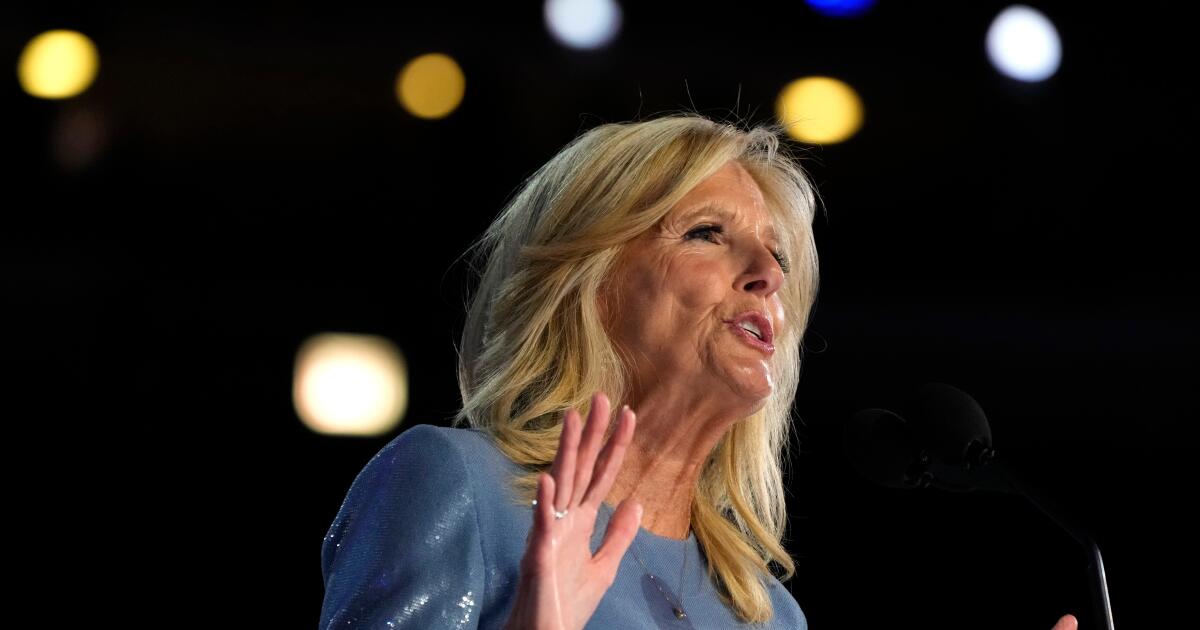
WASHINGTON — Jill Biden is breaking her silence about Joe Biden’s decision to abruptly end his 2024 presidential reelection bid under pressure from Democrats concerned about his age, health and viability against Republican Donald Trump in a rematch of their 2020 campaign.
A political spouse for nearly 50 years, Jill Biden said she has never publicly discussed her feelings about the three-week stretch when her husband ended his political career, instead saving her thoughts for the pages of her soon-to-be-released memoir.
Gallery Books, an imprint of Simon & Schuster, on Wednesday announced that her book, “View from the East Wing: A Memoir,” is scheduled to be published June 2.
Jill Biden told the Associated Press in a brief telephone interview that the book is a “reflection of my four years as first lady” and that writing it was somewhat healing.
“It was kind of cathartic for me to write it, and I wrote about all the, you know, sometimes painful — but other times, most of it really beautiful moments that Joe and I shared during his presidency,” she said.
Jill Biden declined on Tuesday to discuss any of those moments, good or bad — including watching her husband work his way to the decision to end his five-decade-long political career by dropping out of the 2024 presidential race.
In an announcement video shared on Instagram, she said she wants to “set the record straight.”
In April 2023, then-President Joe Biden was 80 and the oldest president in U.S. history when he announced he was running for a second term. His age and fitness to serve another four years — which would take him to age 86 — became a source of concern for the public. Some fellow Democrats began to pressure him to step aside after he turned in a disastrous debate performance against Trump in June 2024 in which he struggled, in a raspy voice, to land his debating points and often appeared to lose his train of thought. Aides blamed the poor performance on a cold.
Joe Biden at first insisted that he would stay in the race, but after a few weeks he withdrew from the campaign and endorsed Democrat Kamala Harris, his vice president. Harris became the party’s presidential nominee but lost to Trump in the November 2024 election.
Jill Biden said that, with the book, “I have put things in perspective,” presenting what she describes as a “more balanced view” of her husband’s time as president.
The memoir is also a tribute of the sorts to women who, like herself, juggle multiple roles.
“It’s also a story about my being able to balance life, you know, as a working woman and as a mother, a grandmother, a first lady,” she said.
During her four years in the role, Jill Biden, 74, made history as the first first lady to continue the career she had before entering the White House. She had taught English and writing for decades at the community college level, and she continued teaching twice a week at a Northern Virginia school while serving as first lady.
The former president’s office announced in May 2025 that he was diagnosed with an aggressive form of prostate cancer and that it had spread to his bones. He’s receiving treatment.
Jill Biden said it was “quite a shock getting the diagnosis” for her husband, who’s now 83.
“The fact that it is in his bones means that he will have cancer, you know, all his lifetime,” Jill Biden said. She said the doctors say he will “live out his natural life.”
“Like most retired couples, he’ll probably drive me crazy till the end of it,” she joked.
She said he visits Washington at least once a week for meetings or to give speeches.
The former first lady also writes in the book about serving during a unique period in U.S. history, including the COVID-19 pandemic and the aftermath of the insurrection at the Capitol on Jan. 6, 2021, according to the publisher.
Her husband was sworn into office on the steps of the Capitol on Jan. 20, 2021, just two weeks after a mob of Trump supporters, spurred by his false claims that the Republican lost because of election fraud, stormed the building in a violent attempt to keep lawmakers from certifying Joe Biden’s victory.
Joe Biden’s first year in office was dominated by the federal response to the pandemic and, while he mostly stayed at the White House, Jill Biden wore face mask and traveled around the country to encourage people to get their vaccinations. She also continued her advocacy on behalf of military families, education and community colleges, cancer prevention and women’s health initiatives.
Before she became first lady, Jill Biden was second lady of the United States from 2009 to 2017, when her husband was Barack Obama’s vice president. She currently chairs the Milken Institute’s Women’s Health Network.
Jill Biden is also the author of “Where the Light Enters,” published in 2019, in which she writes about meeting Joe Biden, then a U.S. senator from Delaware, and marrying and building a life with him. She also has written three children’s books.
Superville writes for the Associated Press.