bias

How Netanyahu gov’t media reforms risk deepening Israeli press bias | Media News

Media freedom organisations and opposition lawmakers have criticised sweeping media reforms pushed through by Israel’s right-wing coalition as part of a legislative blitz before the parliament’s dissolution in advance of elections later this year.

The parliament, or Knesset, last week approved the bill that could give the government a far greater say in Israel’s news and broadcast sectors. The controversial measure strips away traditional oversight safeguards, eliminates requirements for minimum journalism standards and lifts longstanding limits on cross-ownership, among others.

Recommended Stories

list of 4 itemsend of list

Following the July 17 vote, watchdog groups, including the Union of Journalists in Israel, along with opposition parties, successfully petitioned the High Court of Justice to freeze parts of the legislation. They warned that some provisions that were set to take effect immediately, including the removal of limits on ownership of multiple media outlets and the stripping away of newsroom standards, could permanently distort the media landscape before the October 27 election, potentially influencing its outcome.

The government has until Sunday to respond, after which the court will decide whether to keep the freeze, widen it, or allow the provisions to take effect. Other, less contentious and immediate sections of the law were left to stand.

Israel’s Prime Minister Benjamin Netanyahu did not vote on the measure. He is currently bound by a 2020 conflict-of-interest agreement that bars him from participating in government decisions that could affect his ongoing corruption trial, where, among other charges, he stands accused of using his position to unduly influence media coverage of his administration.

Nevertheless, Communications Minister Shlomo Karhi thanked Netanyahu directly, saying: “Mr prime minister, I want to thank you and tell you that the mission you gave me four years ago – to deliver right-wing reform of the media – was today successfully completed.”

Israeli media reported that such a directive by Netanyahu could be a violation of his agreement. Neither the Prime Minister’s Office nor the Communications Ministry responded to Al Jazeera’s queries over whether Netanyahu’s role in the legislation’s passage represented a conflict of interest. However, Karhi subsequently claimed that he had secured a legal opinion determining that the prime minister was not in breach of the conflict-of-interest agreement.

“Prime Minister Benjamin Netanyahu and Communications Minister Shlomo Karhi have proven repeatedly that they are enemies of independent journalism in Israel,” Martin Roux, of the Reporters Without Borders media monitor, told Al Jazeera.

“This means they’re attacking every Israeli citizen’s right to reliable information from diverse sources. This has been true for years, and it is becoming more obvious every day as the legislative elections, set for the end of October, approach. It’s all about controlling the narrative,” he said.

In a social media post, Karhi claimed the new legislation would bring “more right-wing coverage and less regulation”.

“After a determined struggle against every possible element from the deep state, tycoons, attorneys, officials and fearmongering networks – we managed to pass the right-wing media reform.”

‘Boosting propaganda channels’

However, for many observers, there was little new in overhauling media that had grown used to toeing the government line, with critical coverage of the multiple wars that Israel has engaged in and the international outrage that many have caused typically relegated to the sidelines of the national conversation.

“The reforms are part of Netanyahu’s ongoing media overhaul – undermining the remains of critical reporting and journalistic independence in the country, while boosting Netanyahu’s propaganda channels,” London-based Israeli academic and media analyst Ayala Panievsky told Al Jazeera.

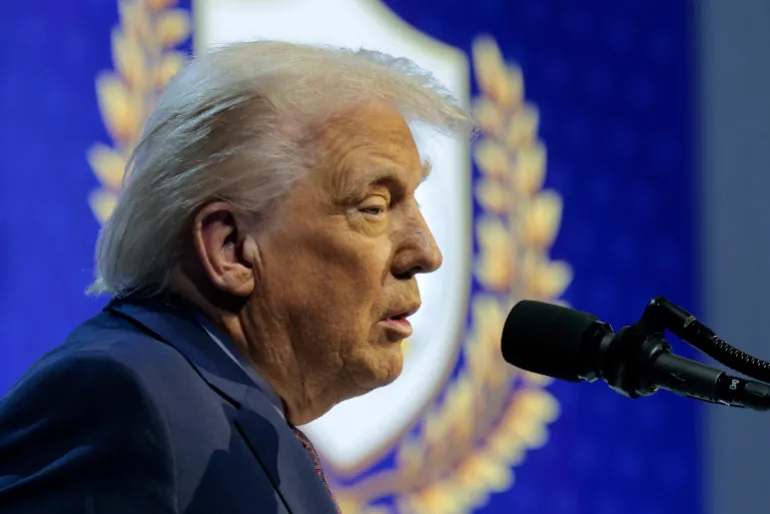
DAVOS, SWITZERLAND - JANUARY 22: U.S. President Donald Trump speaks after presenting the “Board of Peace” at the World Economic Forum (WEF) on January 22, 2026 in Davos, Switzerland. The annual meeting of political and business leaders comes amid rising tensions between the United States and Europe over a range of issues, including Trump's vow to acquire Greenland, a semi-autonomous Danish territory. (Photo by Chip Somodevilla/Getty Images)
Israel’s Channel 14 has consistently pushed the ‘big lie’, that Trump won the 2020 US elections, leading some to wonder if the channel would be prepared to do the same again in Israel later this year [Chip Somodevilla/Getty Images]

She cited the far-right Channel 14, which she said emboldened Israel’s war crimes and offered unflagging support to what she described as the most right-wing government in Israel’s history.

“In 2020, they amplified ‘the Big Lie’ in the US elections, claiming Trump won the election – they might therefore act similarly following the Israeli general elections in October, if Netanyahu’s coalition indeed loses,” said Panievsky, echoing similar concerns among academics and legal analysts sparked by accusations from lawmakers within Netanyahu’s Likud party that the acting head of the Central Elections Committee, Dean Livne, was “clearly politically biased”.

Analysts and observers from across Israel have long pointed to the strongly nationalist undertone of much of Israel’s current affairs coverage and the absence of space given to Palestinians and Palestinian suffering.

When the United Nations’ Independent International Commission of Inquiry concluded in September 2025 that Israel had committed genocide in Gaza, Israel’s Foreign Ministry dismissed the findings as “distorted and false“, a framing echoed across domestic outlets rather than scrutinised.

A subsequent Molad report found only 3 percent of Channel 12’s early war coverage referenced Gaza’s humanitarian crisis, with just two of 206 visuals showing Palestinian civilian casualties. Elsewhere, allegations of Israeli war crimes, including sexual abuse, are either omitted or given pro-government framing, observers told Al Jazeera.

Thick smoke rises following an Israeli airstrike on a residential area in the Al-Jalaa neighborhood despite the ceasefire in Gaza City, Gaza, Palestine, on July 23, 2026. Photojournalist:Saeed M. M. T. Jaras
Thick smoke rises following an Israeli air strike on a residential area in the Al-Jalaa neighbourhood despite the ‘ceasefire’ [Saeed MMT Jaras/Anadolu]

“The Israeli media just doesn’t feature Gaza. It’s not there,” political analyst Ori Goldberg said from outside Tel Aviv. “There’s no sense of solidarity with the journalists killed there, or those they don’t let in. They’re just not mentioned.”

Similarly, discussion panels on the various wars that the Netanyahu administration had embarked upon were typically staffed by ex-generals, who had no question with the need for war, only differences over its prosecution, said Goldberg.

However, even this relative compliance was not enough for a prime minister fighting an election that had come to rely on the appearance of forward momentum and paper enemies to sustain his political project.

“Netanyahu always needs to be seen to be pushing the envelope,” Goldberg added. “He needs a media that will give barely critical coverage of his every word, but one that he can still present as the enemy within.”
Source link

Thousands of complaints, few punished: LAPD faces racial bias claims

Over the past decade, the LAPD has received thousands of complaints accusing officers of targeting people solely because of their race, ethnicity or other form of outward appearance.

Only one has been fired for it.

The now-former officer, Edgar Garcia Cancino, was part of a San Fernando Valley anti-gang unit whose members were alleged to have improperly pulled over and searched hundreds of motorists. Cancino has appealed his termination, arguing that other officers in his unit carried out more of the problematic stops. He claimed the department sought to make an example of him because he refused to implicate his superiors in wrongdoing.

Accusations of racial profiling have long plagued the department, alienating generations of Black and brown Angelenos. Known within the LAPD as “biased policing,” such complaints have persisted despite repeated attempts to enact reform. But the question of how commonly profiling occurs in the LAPD remains a topic of pointed debate.

Years of studies by researchers and reporting by The Times and other news outlets have found Blacks and Latinos in L.A. are subjected to stops, frisks, searches and arrests at significantly higher rates than whites, regardless of whether they live in high-crime neighborhoods. Past LAPD chiefs have acknowledged isolated cases of profiling may occur. At the same time, they have denied that there is a widespread, systemic problem.

An internal LAPD investigation of Cancino’s Mission Division gang squad uncovered an “overwhelming pattern of intentional policy violations,” according to a summary of the case file reviewed by The Times.

Police investigators said in the case file that they identified hundreds of stops that were not properly documented, along with failures by the officers to active their body and dashboard cameras.

The allegations against Cancino largely hinged on two stops, according to his attorney. In May 2023, Cancino and his partner pulled over a man for allegedly speeding and having tinted windows, said his attorney, Nicole Castronovo. The vehicle’s registration turned out to be expired, Castronovo said, but the driver was allowed to leave without a citation after the officers searched his vehicle and found nothing incriminating.

When interviewed about the incident later, according to Castronovo, the motorist told police investigators that Cancino had stopped him because ”I looked like a G,” or gangster.

A few months later, the attorney said, Cancino was involved in another questionable stop, this time of a pedestrian who also later lodged a complaint alleging he was profiled.

Castronovo denied that Cancino had unfairly targeted anyone while on the job, saying he is a proud Latino who joined the force out of a desire to give back to the city where he grew up. She argued that the department’s investigators cherry-picked cases involving Cancino while ignoring similar behavior by other Mission cops.

“They have set up a system where it’s virtually impossible to sustain a biased policing complaint against an officer,” she said. “And then they turn around and weaponized” it against Cancino.

The probe’s findings were presented to LAPD leadership, who recommended that Cancino be fired and sent to a disciplinary hearing.

Castronovo argued in an appeal that her client and another fired Mission officer, Kim Lobos, had been denied a fair disciplinary hearing because both were initially represented by a lawyer appointed by the police union who had a conflict of interest. According to Castronovo, the union attorney also represented other Mission officers who agreed to testify against Cancino and Lobos. A Los Angeles County judge ultimately rejected their appeal.

Only one other LAPD officer prior to Cancino was fired for alleged racial profiling, a case that occurred in 2011.

According to the California Department of Justice, 4,878 allegations of bias were brought against LAPD officers from 2016 to 2025. Of those, only three were sustained.

The department’s rates mirror those of most other law enforcement agencies across the state. The Los Angeles Sheriff’s Department, which received roughly 10% fewer complaints over than span, has sustained six racial bias allegations against deputies.

Defenders of the Police Department note that any member of the public is allowed to submit a complaint regardless of whether there is supporting evidence, which leads to a high number of allegations that cannot be proven. Others note that the presence of body-worn cameras has helped disprove frivolous claims filed by criminal suspects or others who have an ax to grind with the department.

A report released last year by the advocacy group Catalyst California found that in 2025, Black motorists accounted for nearly a third of all stops for minor traffic violations, even though they make up roughly 8% of the city’s population. The same report found that Latinos, who are about 47% of L.A.’s population, were pulled over in 58% of all traffic stops.

Latino people are up to four times more likely to be subjected to “consent” searches, and Black people up to three times as likely, according to the Catalyst study. Fewer than 1 in 10 of those stops resulted in seizures of guns or drugs, the report said.

LAPD officials have pushed back on the findings, saying there is no established methodology for analyzing racial profiling data. Many factors affect the racial and ethnic patterns of traffic stops — from the predominant race of the neighborhood in which the stop was made or whether the stop resulted in an arrest and conviction — all of which must be considered when interpreting raw data, officials say.

In May, the Los Angeles City Council voted in favor of limiting the use of “pretextual” stops, in which police use a broken taillight or another minor equipment violation as justification to pull someone over in order to investigate whether a more serious crime has occurred. Activists and some council members said they wanted to ban a controversial tactic that enabled racial discrimination. The measure urges the Police Commission, which is responsible for LAPD policy changes, to take up the issue this year.

The LAPD’s unwillingness to acknowledge officer biases and hand down punishment when warranted serves only to drive a wedge between the community and the department, said Peter Bibring, a civil rights and police practices attorney.

“The department, year after year after year, is saying, ‘Nope this never happens, this never happens,’” Bibring said. “Then the community doesn’t feel like the department is recognizing these legitimate problems and responding to their concerns.”

During a deposition for a racial profiling lawsuit filed over a 2019 traffic stop, an LAPD official was asked what evidence it would take to get someone fired.

The attorney for the plaintiff, a Black man who sued claiming he was pulled over by three gang officers who handcuffed him and allegedly searched his vehicle without probable cause, asked: “If you found out that a given officer had pulled over 2,000 people in the last year, and all 2,000 of them were Black, would you have enough information, sitting here today, to determine whether or not that data alone indicated that the officer was engaged in biased policing?”

The LAPD official’s response, according to the deposition transcript: “No.”

Jim Willis, a former LAPD detective who later worked for the L.A. Police Commission’s inspector general’s office, pointed to past audits that found serious shortcomings in the department’s investigations of racial bias complaints. Furthermore, he said, many people who are affected never file claims because they don’t understand laws around consent searches — or they are just relieved when officers let them go.

Even when someone bothers to file a complaint, Willis said, it’s difficult to gather enough evidence from a brief interaction to prove an officer made a traffic stop solely because of race. If there was a minor traffic infraction or other probable cause to make a stop, proving their motive requires them to confess to acting with intent to discriminate, Willis said.

That’s why most claims are dismissed by LAPD investigators, he said, “unless, you caught somebody on their body-worn video saying, ‘Hey tonight we’re going out and we’re (pulling over) brothers.’”

Source link

Alabama asks Supreme Court to allow use of congressional map helping GOP, despite racial bias ruling

Alabama on Wednesday asked the Supreme Court to allow it to use a congressional map favoring Republicans in this year’s elections, despite a lower court’s ruling that the redistricting plan intentionally discriminates against Black people.

The state’s Republican leadership filed an emergency appeal with the justices a day after a three-judge court refused to let the state use a map it adopted three years ago that has a majority Black population in just one of its seven congressional districts.

The judges instead required Alabama to continue using a court-ordered map that was put in place for the 2024 elections that includes two districts where Black residents comprise a majority or close to it.

Atty. Gen. Steve Marshall told the court that the state did not intentionally discriminate against Black residents and should be allowed to hold elections this year under a map chosen by lawmakers, not judges.

The appeal is the latest development in the fallout from last month’s Supreme Court ruling that struck down a Black-majority district in Louisiana and weakened the federal Voting Rights Act. That ruling has led Republicans in several Southern states, including Alabama, to take steps to reshape voting districts with large minority populations that have elected Democrats.

The redistricting frenzy is part of a broader push by President Trump to try to hold on to Republicans’ slim House majority in the November elections.

The Alabama cases stretches back several years. The three-judge panel in 2023 ruled that a map drawn by Republican state lawmakers intentionally diluted the voting power of Black citizens. The court said the state, which is about 27% Black, should have two districts where Black voters are the majority or close to it. The court-selected map was used in 2024.

After the Supreme Court’s recent ruling in the Louisiana case, Alabama officials moved to implement the 2023 state-drawn map. The Supreme Court’s conservative majority agreed to lift the injunction that had blocked the map’s use and sent the case back to the three-judge panel for reconsideration in light of the Louisiana ruling.

In the meantime, voters cast ballots in Alabama’s May 19 primaries, and Republican Gov. Kay Ivey set new special primaries for Aug. 11 in four congressional districts affected by the map switch.

Upon further review, the judicial panel said it was standing behind its initial finding that there was “undisputed evidence” of intentional racial discrimination, a holding that was independent of and unaffected by the Supreme Court ruling on the Voting Rights Act.

It said the special congressional primaries should instead proceed under the previous court-approved districts.

The use of the court-ordered map led to the 2024 election of U.S. Rep. Shomari Figures, a Black Democrat. State Republicans are seeking to use a map that would give the GOP an opportunity to reclaim the south Alabama seat.

The state is asking for Supreme Court action by Monday as it makes preparations for the special vote in August.

Sherman writes for the Associated Press.

Source link