The United States stock market has hit an all-time high as excitement around artificial intelligence continues to fuel a buying frenzy on Wall Street.
The S&P 500, the benchmark stock index, closed 0.58 percent higher on Tuesday, topping the previous peak reached in mid-August.
Recommended Stories
list of 4 itemsend of list
The Nasdaq Composite, which is more heavily weighted towards tech stocks, also hit a record high, finishing up 0.45 percent.
Tech stocks were among the top performers, with each of the “Magnificent Seven” apart from Meta closing higher.
Amazon led the pack with a 1.95 percent gain, followed by Microsoft and Tesla, which rose 0.78 percent and 0.51 percent, respectively.
Apple and Alphabet both rose 0.22 percent, while Nvidia gained 0.14 percent.
Meta, which has risen more than 20 percent since the launch last month of its new AI assistant, Muse, fell 0.41 percent.
Other big movers in tech included Marvell Technology, which rose 5.81 percent, and Cisco, which gained 4.54 percent.
Technology, AI
Keith Lerner, chief investment officer and chief market strategist at Truist Advisory Services in Atlanta, Georgia, said the market rally should be seen as a “technology and AI surge”.
“Every bull market has a dominant theme, and technology and AI remain this market’s dominant theme,” Lerner told Al Jazeera.
“Technology and communication services were the only two S&P 500 sectors to rise last month, while the other nine declined.”
Wall Street has shrugged off a host of challenges facing the US economy amid hyperscalers’ multibillion-dollar investments in AI.
Despite the energy crunch caused by the US-Israeli war on Iran and a sell-off of US government bonds partly driven by ballooning government debt, the market is well on track to record its fourth consecutive year of double-digit returns.
The S&P 500 has risen 14 percent so far in 2026, while the Nasdaq Composite is up 18.78 percent.
Lerner at Truist Advisory said the market rally had the potential to continue through the end of 2026 given historical trends and expectations for strong corporate earnings.
“We do not expect a straight line higher for markets,” Lerner said.
“Still, the fourth quarter of midterm-election years has produced an average gain of 7 percent and has been positive 84 percent of the time since 1950.”
Lerner said that rising interest rates posed the biggest risk to the upward trend.
“Still, on balance, the weight of the evidence suggests this bull market still has more upside potential,” he said.
Asian stock markets fell on Wednesday, with key indexes in Japan, South Korea and Hong Kong slumping in morning trading.
The Nikkei 225 in Tokyo, Kospi in Seoul and Hang Seng Index in Hong Kong were down 0.79 percent, 1.36 percent and 0.71 percent, respectively, as of 02:30 GMT.
Oil prices, which have been elevated since the start of the war on Iran, rose on Wednesday as traders weighed the fallout of fighting between forces aligned with Yemen’s internationally recognised government and the Iran-aligned Houthis.
Brent crude futures for December delivery stood at $101.45 a barrel as of 02:30 GMT, up 0.87 percent.
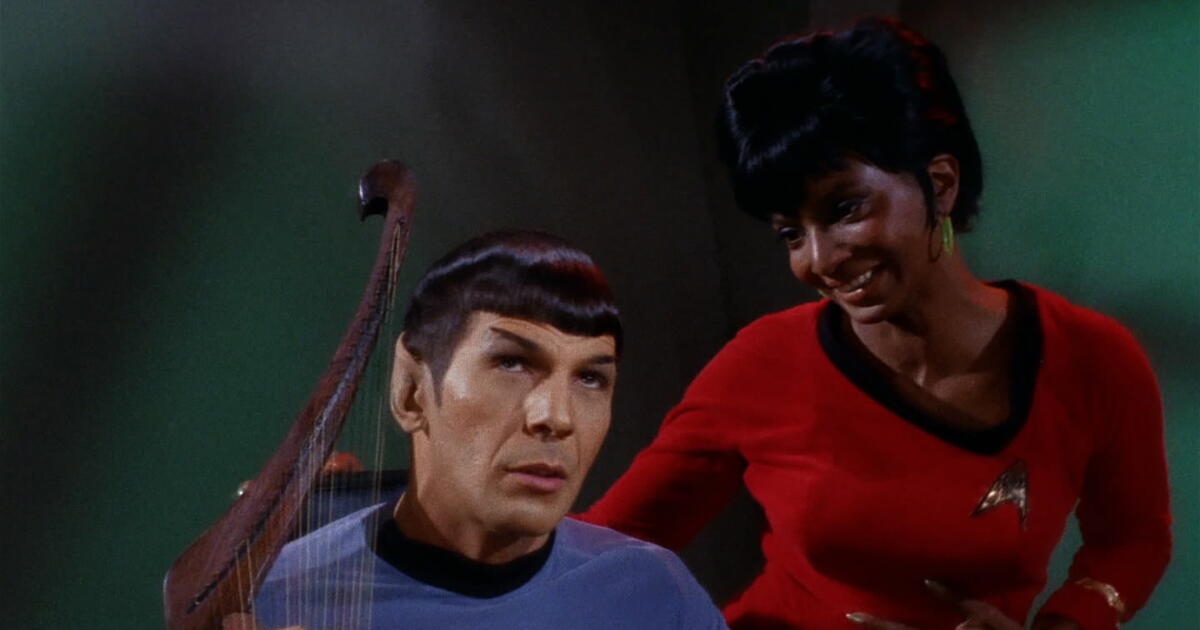
A few years ago, I received a call I’ll never forget. Jeanette Epps, an astronaut aboard the International Space Station, Zoomed into my living room from 250 miles above Earth. During our conversation, she told me that one of the reasons she chose her career was a television show my father created in 1966.
She wasn’t alone. I’ve heard versions of that same story from countless people over the years. Engineers. Scientists. Astronauts. People who saw possibility on a television screen before they ever saw it in the real world.
They credit “Star Trek” for showing them a future they wanted to help build. That’s an extraordinary thing for a television series to accomplish. It didn’t just entertain millions of people. It gave many of them a direction.
And I don’t think that was because of the ships, the gadgets or the aliens. It was because, underneath all of it, was a profoundly human belief that we are capable of becoming something better.
There was a time when science fiction made a bet on humanity. A bet that humanity was worth rooting for. We need storytellers willing to make that bet again.
I don’t think we have an innovation problem. We have an inspiration problem.
We talk a lot about what we’re leaving the next generation. The debt. The climate. The geopolitical mess. But there’s another inheritance we don’t talk about enough: what we show them is possible.
Today, many visions of the future are dominated by collapse, dystopia and fear. Those stories can have value. But conflict doesn’t always have to come from destruction. It can come from discovery. Two minds encountering an idea neither had considered. A crew facing the unknown with curiosity instead of fear. That kind of conflict doesn’t leave you feeling like the world is ending. It leaves you feeling like it’s just beginning.
Most storytelling holds a mirror up to who we are. Our flaws, our failures, our contradictions. But there is another kind. Stories built around characters a step or two ahead of where humanity is. Not perfect. But people who have learned how to cooperate, how to lead, how to stay curious and how to put something larger than themselves first. Characters you don’t just recognize. Characters you want to become one day.
That distinction changes what a story asks of you. And what you walk away believing is possible.
This year, “Star Trek” celebrates its 60th anniversary.
That’s not a milestone you reach by accident. Franchises built on spectacle fade. Ones built on something people actually needed tend to stick around.
The engineers who built Silicon Valley, the astronauts who went to space, the scientists pushing the edges of medicine and artificial intelligence — many of them trace a line back to this show. That wasn’t the plan. Nobody set out to build an innovation pipeline out of a television series. But that’s exactly what happened. When you give people a future worth believing in, they go build it — or sometimes they get inspired to imagine other hopeful destinations and lead us toward them. That’s not nostalgia. That’s a model.
One thing my dad understood that I think gets overlooked: “Star Trek” wasn’t going out into the galaxy to find aliens that looked different. It was going out to find aliens that thought different.
Diversity of perspective is how a species grows. My father gave that idea a name: IDIC. Infinite Diversity from Infinite Combinations. It didn’t mean you had to abandon your own point of view. It meant staying open to someone else’s. Because that’s how you grow. That idea has never been more relevant. And it has never been more achievable.
For the first time in history, a creator anywhere in the world can tell a story that reaches everyone, and now it can come from anywhere. The future belongs to everyone. The stories that shape it should too.
That astronaut who called me from space didn’t just watch a television show. She saw a future worth dedicating her life to.
Every generation needed something to build toward before they ever picked up a tool. A vision. A direction. A story that made the future feel worth the work. And right now, we’re not building enough of that.
We need stories that don’t just entertain us, but also become our compass. We need the kind of storytelling that doesn’t ask what could go wrong, but asks what could go right.
Rod Roddenberry, founder of the Roddenberry Foundation and son of “Star Trek” creator Gene Roddenberry and actor Majel Barrett Roddenberry, is an executive producer on current “Star Trek” television shows.
Insights
L.A. Times Insights delivers AI-generated analysis on Voices content to offer all points of view. Insights does not appear on any news articles.
Perspectives
The following AI-generated content is powered by Perplexity. The Los Angeles Times editorial staff does not create or edit the content.
Ideas expressed in the piece
The article argues that optimistic science fiction can do more than entertain: it can give audiences a constructive vision of the future and inspire people to pursue careers in science, engineering and space exploration. “Star Trek” is presented as an example of storytelling that made human progress feel attainable.
It contends that contemporary culture is overly saturated with collapse, dystopia and fear. Although such stories can be useful, the article suggests that narratives centered on discovery, cooperation and curiosity can encourage audiences to imagine what might go right rather than merely anticipate disaster.
The piece maintains that aspirational characters—people who have learned to cooperate, remain curious and serve purposes larger than themselves—can function as moral examples. In this view, fiction should not only reflect present flaws but also depict people and societies worth becoming.
It further argues that “Star Trek’s” emphasis on cultural and intellectual diversity remains especially relevant. The franchise’s principle of “Infinite Diversity in Infinite Combinations” is presented as a model for learning through different perspectives, while the series’ enduring influence is cited as evidence that hopeful stories can shape real-world ambitions.[1][2]
Different views on the topic
A contrasting perspective holds that dystopian and cautionary science fiction serves an essential purpose by exposing the consequences of reckless behavior, political failure and technological overreach. Recent commentary argues that many influential works were intended as warnings or satire, not as blueprints for an attractive future.[3]
Feminist dystopian fiction offers another counterpoint: bleak speculative narratives can make systemic problems—including misogyny, violence against women, gender inequality and threats to reproductive rights—more visible. From this perspective, darkness is not simply pessimism; it can be a way to represent harms that already exist and demand attention.[4]
Critics also caution that “Star Trek’s” hopeful vision can obscure tensions within its own world. The franchise combines ideals of cooperation and equality with armed exploration, alien conflict and interventionist politics, making it both an image of peaceful progress and a vehicle for examining militarism and political failure.[2]
Consequently, the strongest science fiction may not choose between hope and warning. Utopian stories can provide direction, while dystopian stories can identify dangers and test whether an envisioned future genuinely addresses exclusion, power and conflict. Treating either mode as sufficient on its own risks producing either inspiration without scrutiny or criticism without a constructive destination.[3][4]
After Brian Koppelman and David Levien wrapped their hit Showtime series “Billions,” the co-creators were undecided about where they would go next. A more than hourlong visit from a Netflix executive settled it.
Netflix had been developing a Las Vegas drama with Martin Scorsese, who is executive producing through his Sikelia Productions. The streamer brought in Koppelman and Levien, and the pair pitched a present-day casino story. Jinny Howe, Netflix’s head of U.S. and Canada scripted series, went to their office to make the case.
“When she left our office, we looked at each other and said, ‘Well, whatever we do, we want to do it with her,’” said Koppelman, recalling their meeting from two years ago. Their new Las Vegas series, “The Roman” starring Oscar Issac as a casino president, is expected to be released year. Netflix ordered it in December.
Howe has one of the hardest jobs in Hollywood — finding must-see scripted programs that keep Netflix’s subscribers watching. The company said it had over 325 million paid subscribers worldwide at the end of 2025. Her instincts for creators, combined with years as an entertainment executive and a lifelong viewer have given her a track record of championing hits, including thriller “The Night Agent,” drama “The Diplomat” and Regency-era romance “Bridgerton.”
That led to her promotion last year as head of U.S. and Canada scripted series — her fourth advancement in four years. She succeeded Peter Friedlander, who left after nearly 14 years, and reports to Chief Content Officer Bela Bajaria.
“In my role, I feel I am really ear to the ground, really listening to what audiences are asking for, and really trying to understand where the culture is, where the conversation is, to really make sure we’re giving these audiences what it is that they want and they crave,” said Howe, 48.
The pressure is on. Key franchises are in their final seasons. “Stranger Things” ended in December, “Outer Banks” concluded with its fifth season last month and “Emily in Paris” finishes with its sixth season in December. Netflix has confirmed that the fifth season of legal drama “The Lincoln Lawyer” will be its last.
Wall Street has soured. Netflix shares, which closed Thursday $76.01, are down 39% over the past 12 months, a slide that began with its $83-billion bid for Warner Bros. Discovery in December — a deal it later walked away from — and continued through 2026 when the company lowered its growth projections.
Analysts have also flagged sluggish engagement growth. View hours rose about 2% in the first half of 2026 compared with a year earlier, even as content spending climbed.
After graduating from UCLA, Jinny Howe worked at Brillstein Entertainment Partners and John Wells Productions before joining Netflix in 2018.
(Jason Armond/Los Angeles Times)
Nonetheless, Howe is confident that Netflix continues to outshine its competitors, noting that the streamer is still in a “growth mindset” that bets on original ideas. The streamer also has franchises that continue to pull in large audiences, such as the fourth season of “Bridgerton,” she said.
“We’re not slowing down at all,” Howe said.
This year her department has a slate of 44 new and returning scripted series from the U.S. and Canada, excluding stand-up, comedy formats and adult animation. They span genres and mix seasoned showrunners and bets on emerging talent. Six are run by first-time female showrunners, a notable number at a time when the industry has cut back and women have historically had fewer chances to lead series. Those programs include “East of Eden,” a series based on the popular John Steinbeck novel; YA drama “The Body” and “A Different World,” a sequel series based on the NBC sitcom about Black students at a fictional college.
Howe leads a team of people spanning the U.S. and Canada, with hubs in Los Angeles and Toronto. While she is accountable for the U.S. and Canada scripted slate, the decisions are made in partnership with her team.
Scripted series out of the U.S. and Canada remain central to the business. Many of Netflix’s most-watched shows of all time come from the region, which accounts for about 40% of global revenue — the streamer’s largest market. Netflix reported 89.6 million memberships in the U.S. and Canada at the end of 2024, the last time it broke out regional numbers.
“There’s so many amazing creators and stories to be told from the U.S. and Canada and historically, English language scripted television for many, many years has traveled to lots of different countries around the world,” Bajaria said.
The region also drives Netflix’s awards profile. The streamer collected 111 Emmy nominations in July, second to HBO Max’s 122. Netflix says 83 of them came from scripted series and variety specials under Howe’s slate. “Beef” season 2 led Netflix’s titles receiving Emmy recognition with 16 nominations.
Competition for attention is fierce. Rival streamers are investing in live sports, and YouTube continues to take a significant share of TV viewing time in the U.S. Netflix has responded by adding video podcasts, sports and games to its lineup. It also lacks the deep historic library some competitors hold — the gap its failed Warner Bros. bid would have closed.
Then the Duffers agreed to produce a show created by Haley Z. Boston, the horror series “Something Very Bad Is Going to Happen,” about a woman who is cursed and could die if she doesn’t marry her soulmate. Other studios didn’t see Boston as the showrunner, but Howe and Netflix did.
“We need people to take chances on us,” 31-year-old Boston said. “There is still a glass ceiling … I’m excited about new future where you don’t have to have done the job already to do it. All you need is the right support.”
The series debuted at No. 2 on the streamer’s global top 10 English language shows and reached 20.3 million views on Netflix in the first half of this year, according to the streamer.
“Netflix had the confidence that we can find the right audience for this,” she said.
Connecting with a range of storytellers early is part of the strategy. Howe’s relationship with creator Molly Smith Metzler goes back about a decade, to when Metzler submitted her play “Elemeno Pea” while Howe was working at John Wells Productions. Howe was impressed and recommended her for the “Shameless” writers room. Metzler went on to lead the critically acclaimed 2021 limited series “Maid” for Netflix, her first job as a showrunner, and signed an overall deal with the streamer in early 2022.
One of Howe’s ideas was to build a series out of “Elemeno Pea.” That became the drama “Sirens,” starring Meghann Fahy, Milly Alcock and Julianne Moore. Released in 2025, it debuted at No. 1 on Netflix’s global top 10 and earned four Emmy nominations, including a surprise lead actress nod for Fahy.
“We spent so many cups of coffee and walks talking about what that could be and what it could look like, and we really built it from the ground up,” Metzler said. “She is very hardworking, and she’s extremely committed to the projects she does. That commitment and that rigor is contagious.”
Jinny Howe, who grew up in the San Gabriel Valley, is one of the few prominent Asian American content leaders in Hollywood.
(Jason Armond/Los Angeles Times)
In her soul, Howe said, she’s a producer first. Koppelman and Levien said she was instrumental in the casting “The Roman,” including speaking with some of the leading actors. Alongside Isaac, the series stars Betty Gilpin, Alec Baldwin, Jimmy O. Yang and Jason Schwartzman.
“This would not have come together had Ginny not rolled up her sleeves,” Koppelman said. “When we look at this cast, sometimes we can’t really believe what got put together.”
Howe and Netflix also supported showrunner Rebecca Sonnenshine’s push to make a version of “Little House on the Prairie” that includes more of the Osage perspective.
“She was very open to a vision that explored all the things that we wanted to explore in this show,” Sonnenshine said.
Howe grew up in Walnut, in the San Gabriel Valley, a self-described latchkey kid and the daughter of a residential real estate agent and a women’s clothing store owner. She was born in Seoul and immigrated to California when she was 15 months old.
“So I really am a California girl, I grew up just adjacent to the glittering lights of Hollywood, but close enough to know that there was a real business there,” Howe said.
While her parents worked, she and her brother watched a lot of TV, sitcoms like “Diff’rent Strokes” and “Small Wonder” and soaps like “Dynasty” and “Dallas.” That turned into a career. She graduated from UCLA with a bachelor of arts degree in theater, film and television, worked in the talent division at Brillstein Entertainment Partners and rose to executive vice president of television at John Wells Productions before joining Netflix in 2018.
She is one of the few prominent Asian American content leaders in Hollywood, in a position that helps shape what the world watches.
“I definitely do feel it’s not something I take for granted to be in these rooms and to know that my voice matters,” Howe said. “I get to be a decision-maker in a lot of these conversations. It’s really gratifying, and it’s something that I think is not lost on me at all.”
The Conservatives’ former director of campaigning and his wife have pleaded guilty to cheating at gambling by placing bets on the date of the 2024 general election.
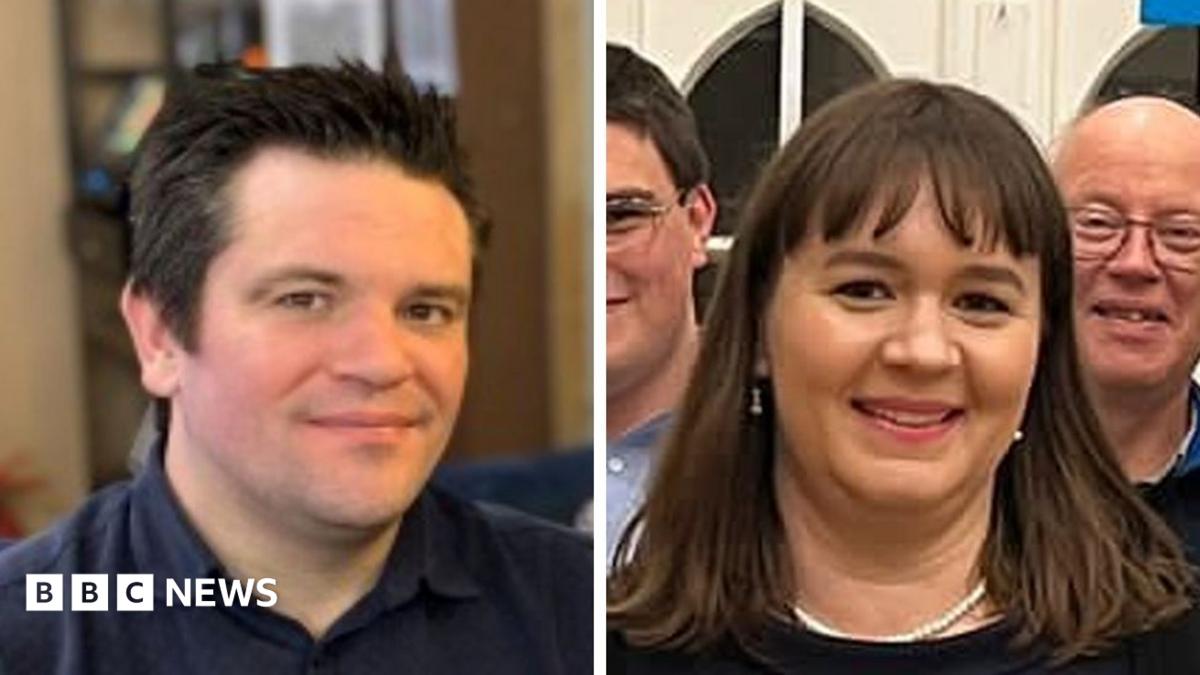
Anthony Lee stood to win approximately £15,000 after placing more than 60 successful bets totalling £1,549, the Gambling Commission said.
He passed confidential information to his wife about when former Prime Minister Rishi Sunak was planning to call the general election.
Laura Lee, who was a parliamentary candidate at the time, placed eight successful bets on the election date totalling £535 and would have profited by around £5,000.
On Thursday at Southwark Crown Court, Anthony Lee pleaded guilty to two offences and Laura Lee pleaded guilty to one offence.
They will be sentenced in October.
The trials of 10 other defendants will take place in September 2027 and January 2028.
Former MP Craig Williams, who was Sunak’s closest parliamentary aide at the time, pleaded guilty in June and will be sentenced at a later date.
In Williams’ case, the prosecution said he bet £250, £100, and £22.50 on the date of the 2024 election, telling the court he “used highly sensitive and confidential information”.
When details of the scandal first emerged in June 2024, Williams admitted making a “huge error of judgment”.
Sunak’s decision to call the poll was a surprise to many, including many Conservative MPs, who were expecting an autumn date.
The Conservative Party has been approached for comment.