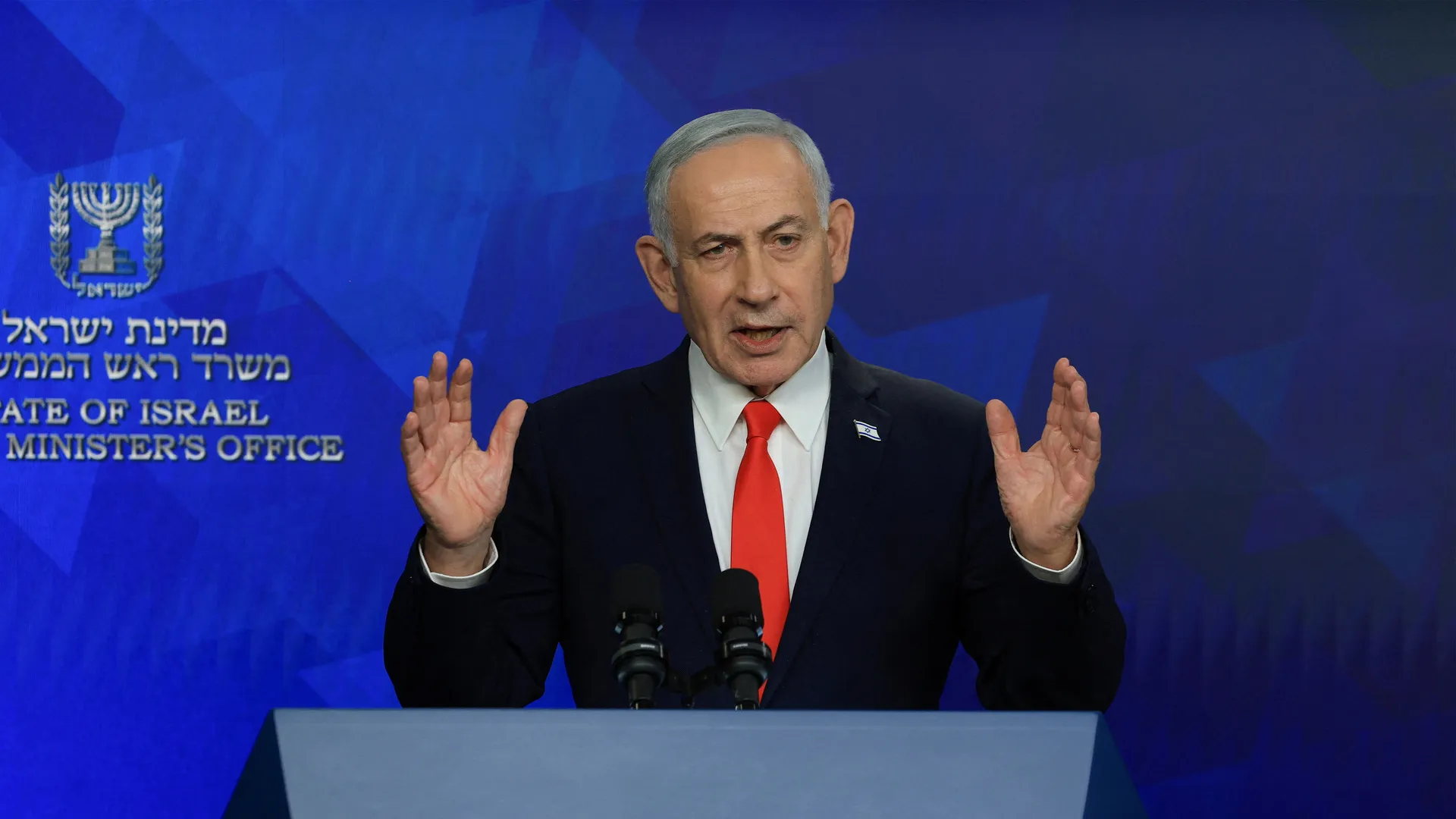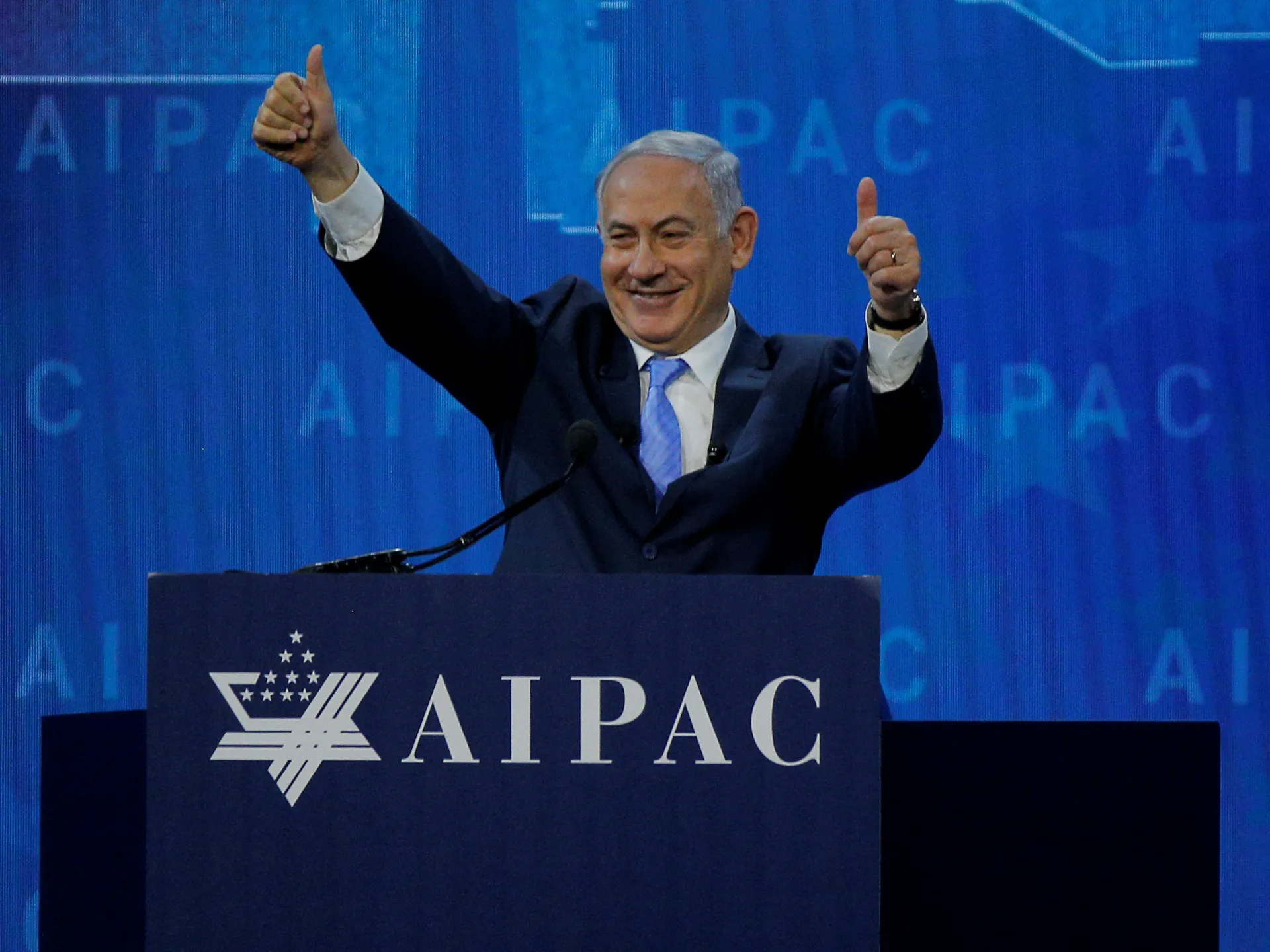
Benjamin Netanyahu

IDF confirms airstrikes against targets in western and central Iran

1 of 2 | A woman holds a photo depicting late Supreme Leader Ayatollah Ali Khamenei as people gather during a rally following Iran’s attack on Israel in Tehran on Sunday. The Israeli military confirmed it struck “military targets” in western and central Iran early Monday local time. Photo by Abedin Taherkenareh/EPA

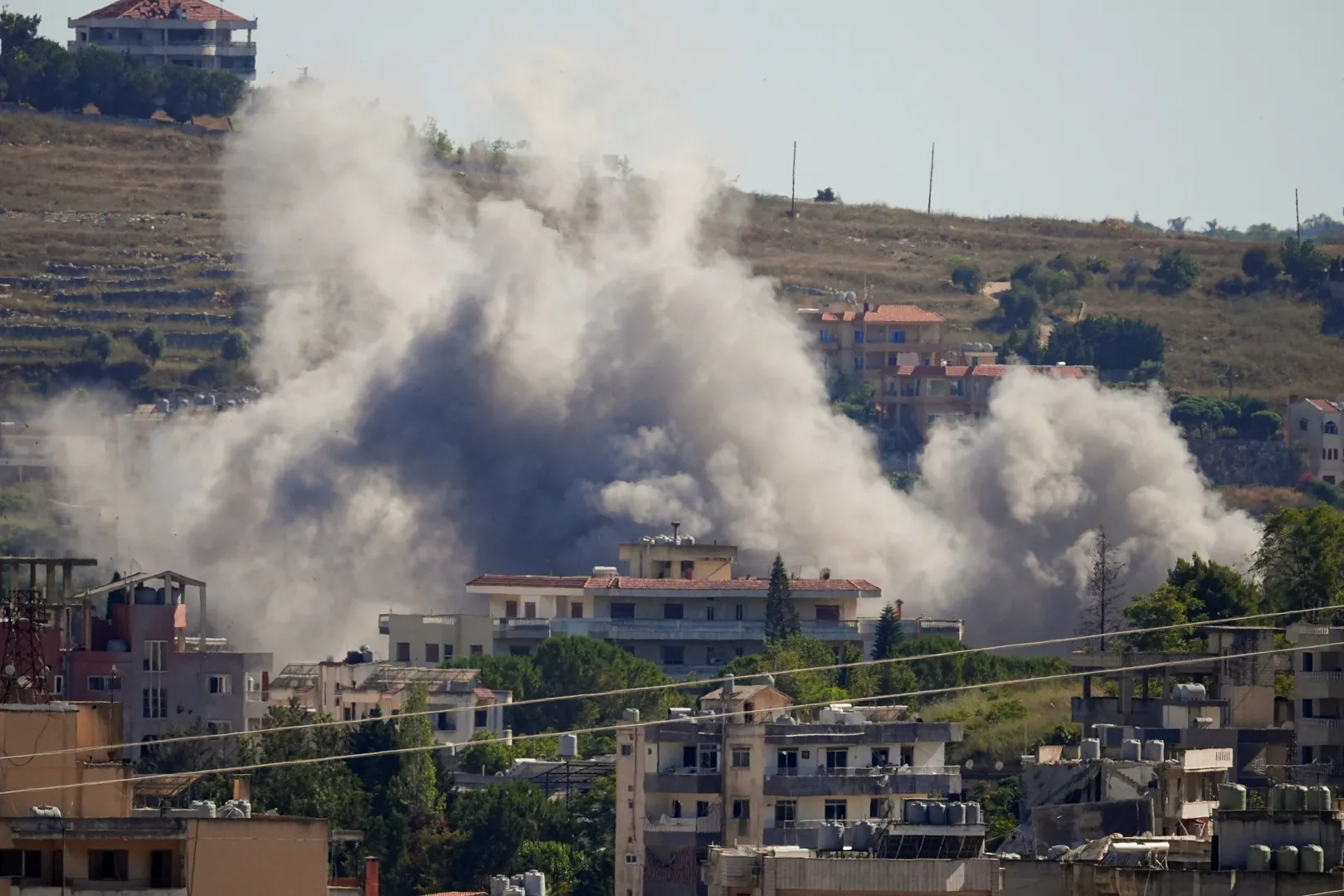
June 7 (UPI) — The Israel Defense Forces confirmed it struck military targets in western and central Iran on Monday in retaliation for a wave of airstrikes launched against the Jewish state by Tehran hours earlier.

“A short while ago, the Israeli Air Force struck military targets belonging to the Iranian terror regime in western and central Iran. Details to follow,” the IDF said in a post on Telegram as a fragile cease-fire in the Iran War continued to unravel.

Iran’s Islamic Revolutionary Guard Corps, meanwhile, confirmed the attack, according to the semi-official Mehr News Agency.

“The Zionist enemy has attacked targets on our country’s soil using air-launched ballistic missiles,” the IRGC said.

Official Iranian media also said residents in neighboring Iraq heard explosions in parts in the capital Baghdad while unidentified objects were seen over the Iraqi city and in Beirut.

The strikes against Iran came just hours after the Islamic regime lobbed missiles into northern Israel for the first time since the beginning of the cease-fire, which came into effect on April 8.

Tehran said those strikes were in response to Israeli bombings targeting Hezbollah in Lebanon.

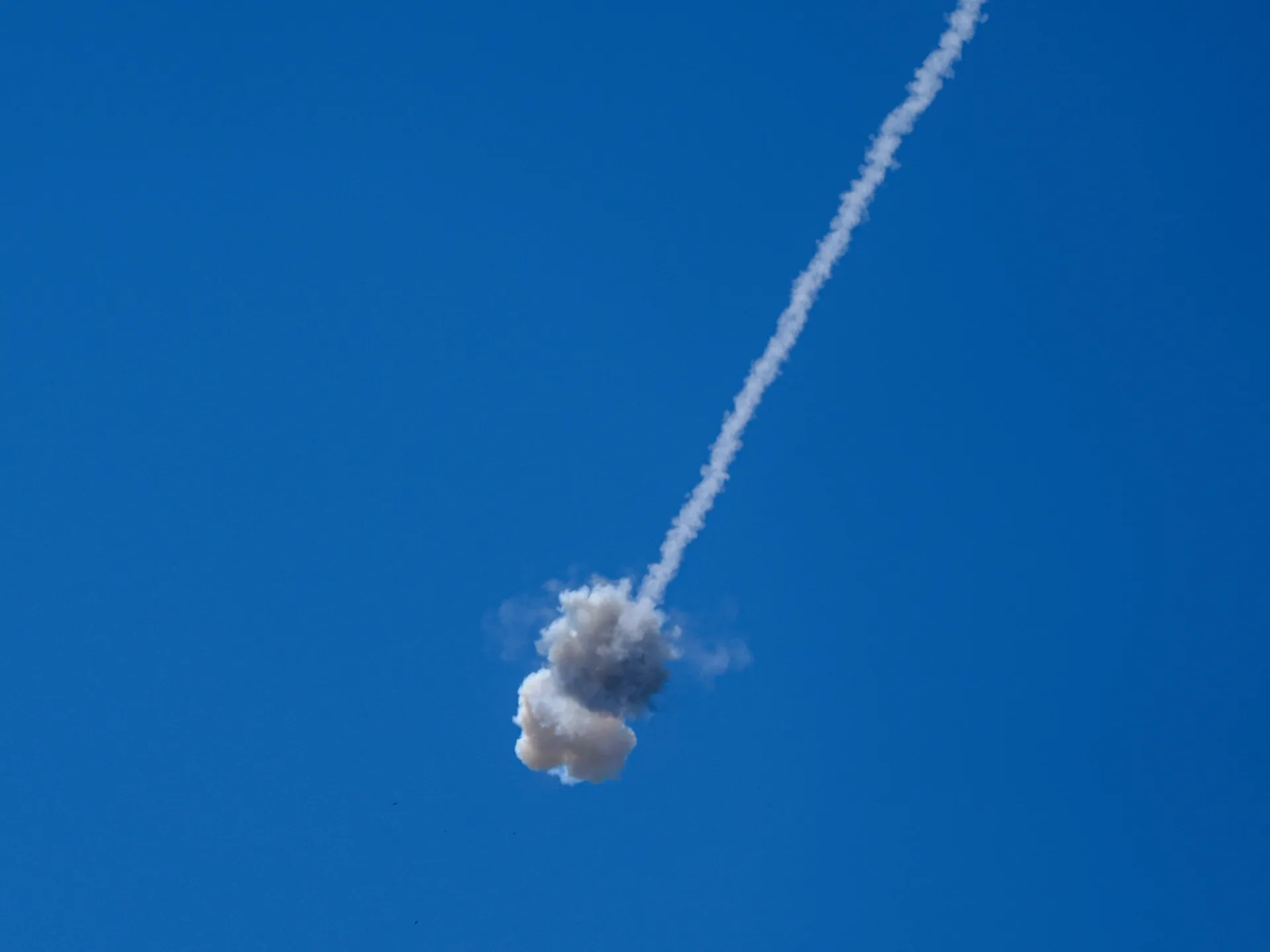
The Iranian missiles, which the IDF said had been intercepted, were the first direct attack on Israel since the cease-fire.

The attacks follow an announcement on Sunday that Israel had launched strikes at alleged Hezbollah targets in Beirut — attacks which it has continued throughout the cease-fire — and some of which have been in suburban neighborhoods.

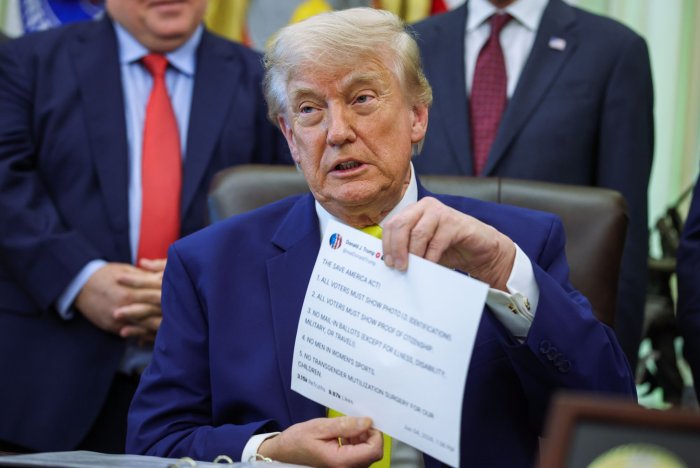
U.S. President Donald Trump, who reportedly has been briefed on Iran’s actions, told Iran “that’s enough, get back to the table” for peace negotiations, Fox News reported.

“The Israeli army must stop its attacks on southern Lebanon and the suburbs, and if it expands its attacks to that region or responds to Iran’s action, it will face more devastating and regrettable blows,” General Ali Abdollahi, head of Iran’s Khatam al-Anbiya command, said in a statement.

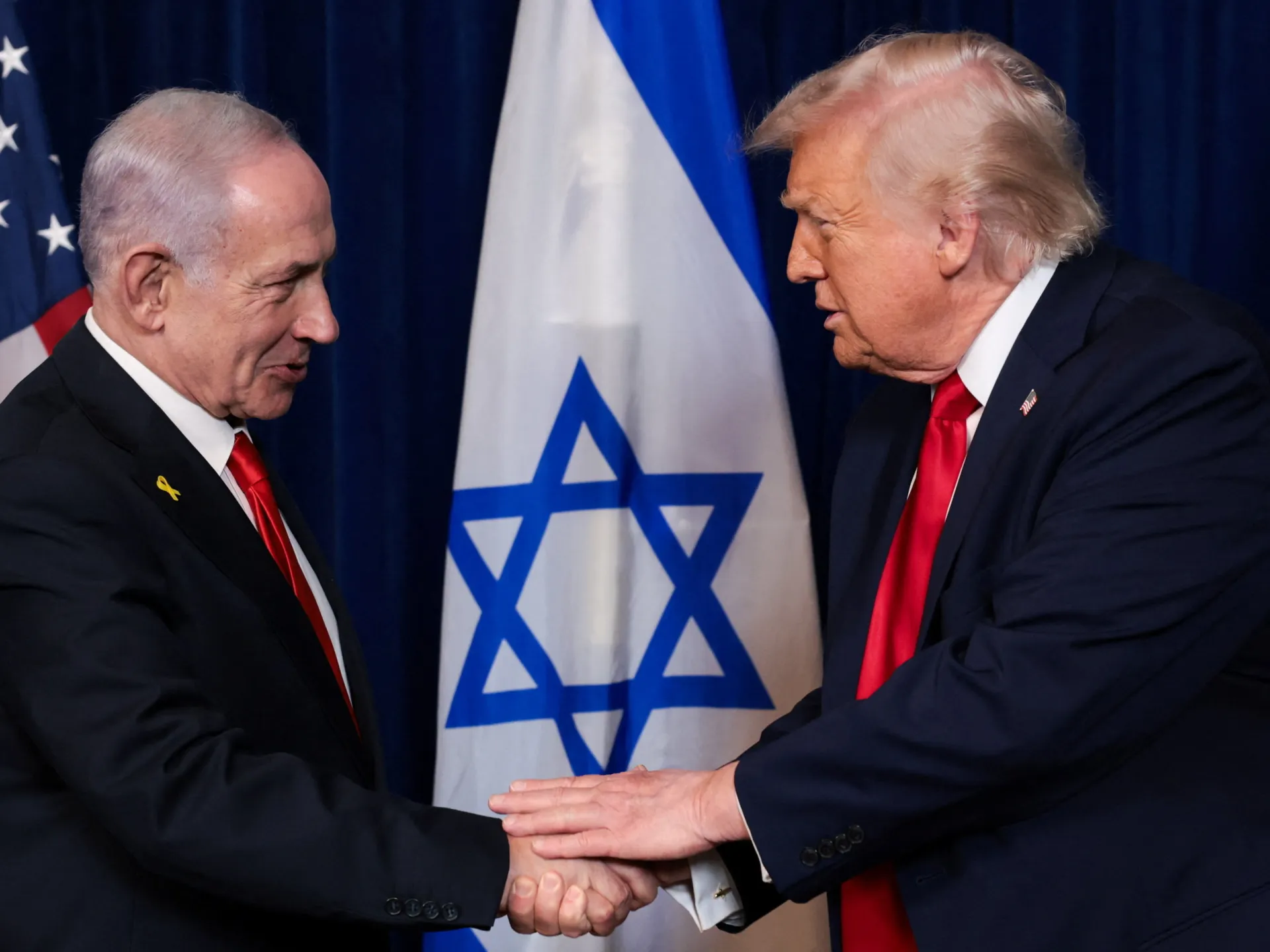
Trump has reportedly also told Israeli Prime Minister Benjamin Netanyahu to hold back after the Iranian strikes, which Netanyahu agreed to on the condition that Hezbollah — which is funded by the Iranian regime — not launch strikes into northern Israel from Lebanon.

The United States and Iran have been negotiating an end the war for more than a month, as a cease-fire has mostly held but the Strait of Hormuz remains blocked, preventing the shipment of oil and other products from the Middle East.

President Donald Trump discusses renovations to the Lincoln Reflecting Pool and makes an announcement on coal in the Oval Office at the White House on Thursday. Photo by Samuel Corum/UPI | License Photo

Source link

Trump berated Netanyahu? Analysts question US-Israel feud rumours | US-Israel war on Iran News

In January 2024, the publication Axios reported that the United States president at the time, Joe Biden, was “running out of patience” with Israeli Prime Minister Benjamin Netanyahu.

Israel’s genocidal war on Gaza had been raging for months by that point, and Biden was facing public backlash over US support for the conflict.

Recommended Stories

list of 3 itemsend of list

The assault would continue for the rest of Biden’s term and bleed into the first 10 months of Donald Trump‘s second presidency.

Since then, media outlets have continued to publish anonymous accounts of rifts and “frustrating” calls between Trump and the Israeli prime minister. But US support for its Middle East ally has never wavered.

Another anonymously sourced report about a furious, expletive-laden call between US and Israeli leaders came out this week, and it spread rapidly across international media.

Axios reported on Monday that Trump called Netanyahu “f***ing crazy” and berated him over Israel’s escalation in Lebanon.

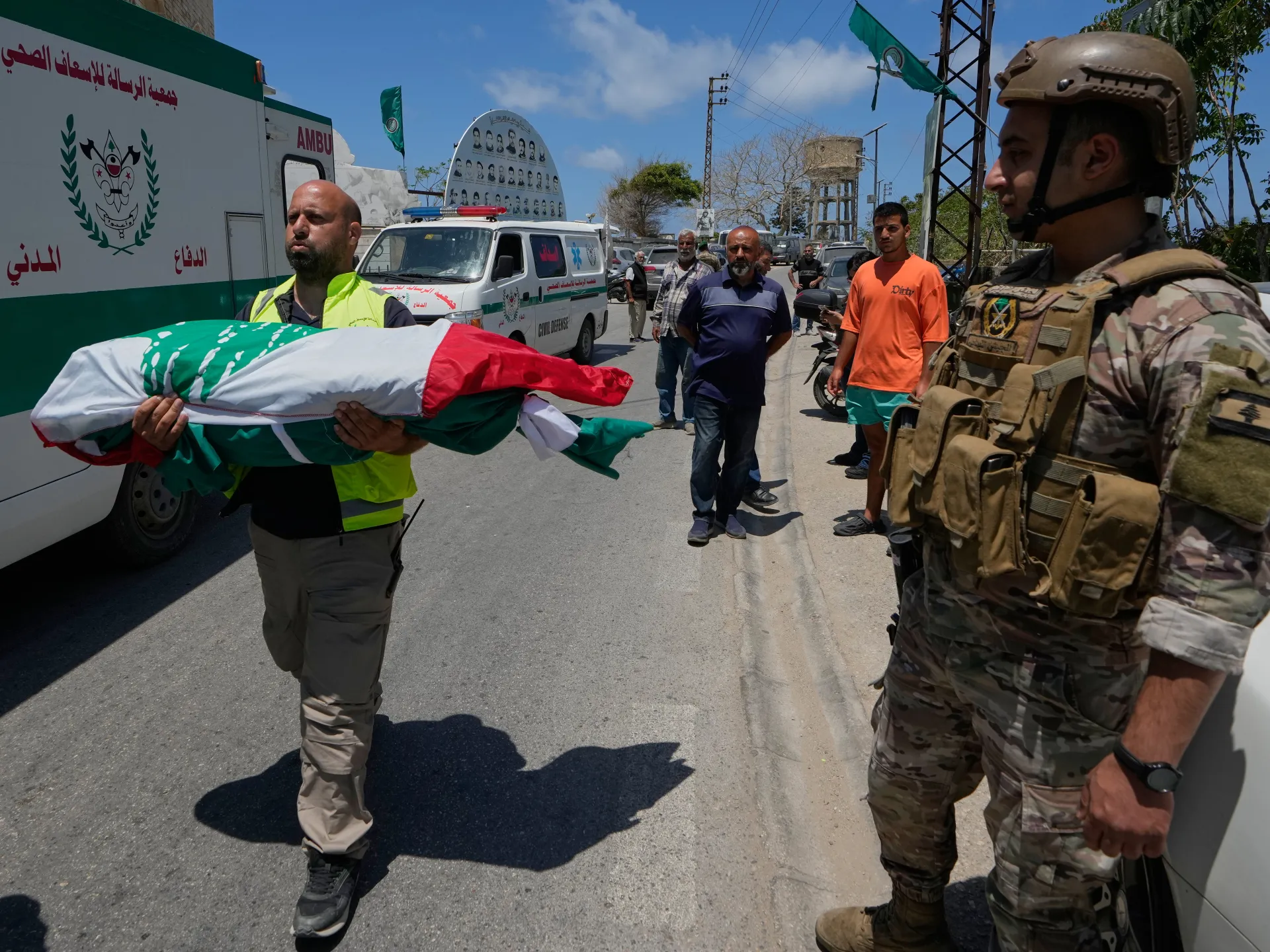
Around the same time, an Israeli attack killed six people, including two children, in the southern Lebanese town of al-Marwaniyah.

Experts say that despite leaks of feuds and harsh words between US leaders and Netanyahu, policies are ultimately what matters, and they have changed very little.

Ryan Costello, the policy director at the National Iranian American Council Action (NIAC), said political observers have grown to “mock” reports of closed-door anger from US presidents against Netanyahu.

“What’s really important is what actually happens in practice,” Costello told Al Jazeera.

Two administrations, same reports

Though there are reports of Trump giving Netanyahu a dressing-down, Isabelle Hayslip, an advocacy manager at the US-based rights group DAWN, said that US policy remains aligned with Israeli interests.

“Single-source reporting of Trump as a strongman who picks up the phone and yells at Netanyahu for undermining US policy is contradicted by the actual policy outcomes where Netanyahu gets exactly what he wants,” Hayslip told Al Jazeera.

“Trump has no final say over Israeli actions. Like his predecessors, the president has proved completely unable to prioritise American interests, instead catering to Israel’s expansionist whims.”

The latest report comes as Trump faces increasing pressure from his Democratic rivals and segments of his base over his handling of the war on Iran, which he launched jointly with Netanyahu on February 28.

The conflict, which saw Iran close the Strait of Hormuz, has sent gasoline prices soaring in the US and fuelled inflation.

Critics have accused Trump of allowing Israel to drag the US into a war that does not advance Washington’s priorities.

With negotiations to end the war stagnating, Israel’s escalation in Lebanon and its threat to bomb Beirut risks derailing the fragile truce that came into effect in April.

Iranian officials have suggested that they cut off contact with the US over the Israeli attacks in Lebanon.

Before the Axios report, Trump announced he had spoken to Netanyahu and an unidentified Hezbollah representative, and both sides agreed that “all shooting will stop”.

But Netanyahu was quick to assert that the Israeli military “will continue to operate as planned in southern Lebanon”, where it is deepening its invasion and turning entire towns into rubble.

Advocates say Israeli atrocities in Lebanon and across the region could not have happened without US backing.

Since the start of Israel’s genocidal war on Gaza in October 2023, the US has provided Israel with nearly $25bn in military aid, helped fend off retaliatory Iranian attacks against the country and vetoed several ceasefire resolutions at the United Nations Security Council.

Nonetheless, anonymous accounts that the US president is angry at Netanyahu have become a regular feature in the media.

Such reports are attributed to US officials, but it is unclear how leaks with a similar message on the same topic have continued across two administrations from different political parties.

‘Moderating the anger’

Publicly, aides of both Biden and Trump have largely refrained from criticising Israel.

Trump has regularly praised the Israeli prime minister, arguing on more than one occasion that Israel would have ceased to exist without Netanyahu’s leadership.

In December, the US president also called the Israeli prime minister a “hero” during a meeting in Florida.

“We’re with you, and we’ll continue to be with you,” Trump told Netanyahu.

Two weeks earlier, Axios reported that the White House had “scolded” Netanyahu over Israel’s ceasefire violations in Gaza.

“The White House message to Netanyahu was: ‘If you want to ruin your reputation and show that you don’t abide by agreements, be our guest, but we won’t allow you to ruin President Trump’s reputation after he brokered the deal in Gaza,” the publication quoted a US official as saying.

Few people know the exact content of high-level calls at the White House. Sometimes, top officials, including members of the National Security Council, sit in on conversations between the president and world leaders after briefings.

Negar Mortazavi, a senior fellow at the Center for International Policy, a research nonprofit, said the leak about the tense call between Trump and Netanyahu may be aimed at making Trump look tough on Israel to quell outrage over the war.

“It could be sort of a way of moderating the anger or the blame at the US for continuing this unpopular, illegal, unnecessary war,” Mortazavi told Al Jazeera.

She added that the message it sends is, “Look, we’re very angry at Israel. We yell at them. We call them names.”

But Mortazavi stressed that policy is more important than rhetoric: “Does that change the facts on the ground?”

Information war

For his part, Costello argued that the leak was likely directed at Iran.

“I see this one primarily as a signal to the Iranians that Trump is serious, and he wants to insulate what’s happening in Lebanon and Israel’s attacks from the Iran negotiations,” Costello said.

“It remains to be seen the extent to which that excoriation has actually led to a change in Israel’s policies, and I think there is a strong incentive for continued defiance from Netanyahu.”

Axios, meanwhile, has defended its coverage.

“We stand by our reporting, which by the way noted ‘Trump and Netanyahu have had several tense calls in the past but have still coordinated closely on Iran and other issues,’” Jake Wilkins, a spokesperson for the publication, told Al Jazeera in an email.

Mortazavi warned that all sides of the war on Iran are trying to influence public perceptions of the conflict.

She pointed to recent reports that Iranian President Masoud Pezeshkian had resigned, a rumour that was promptly denied by his office.

“This is a very hybrid war. It’s a war on the battlefield. It’s an intelligence war. It’s a war of narratives,” Mortazavi told Al Jazeera. “And then there’s also an information war, which includes disinformation, half-truths and strategic leaks.”

Source link

US Congress advances American-Israeli military integration plan | Government News

A provision in a bill before the United States Congress could tie the American and Israeli militaries far more closely together, deepening their cooperation on weapons research, production and technology.

The proposal, titled the “United States-Israel Defense Technology Cooperation Initiative,” appears as Section 224 of the House Armed Services Committee’s version of the fiscal year 2027 National Defense Authorization Act (NDAA), the annual US defence policy bill.

Recommended Stories

list of 2 itemsend of list

The measure is still at an early stage. The NDAA is passed by Congress each year to set US military policy and authorise defence programmes and spending levels.

If enacted, the provision could mark a major change in one of the world’s closest military relationships, shifting the two countries from a partnership centred largely on American military aid towards one in which their defence industries are more deeply intertwined.

Section 224 would require the US defence secretary to appoint an “executive agent”: a single official to coordinate military cooperation between the US and Israel.

That work would cover joint research and development, the shared production of weapons, and the linking of military systems and data.

“What Congress is trying to do now is find different ways of entrenching the relationship so deep in America’s own defence industrial base that it’s impossible to root it out,” Josh Paul, a former US State Department official and founder of the advocacy group A New Policy, said about the controversial provision.

“A new section of law in the National Defense Authorization Act (NDAA) would give Israel unprecedented access to American technology and would force the United States military to integrate Israeli defence technologies into our own critical military supply chain, giving Israel incredible leverage over America’s own defence priorities,” he added in a video posted on social media on Friday.

The two countries already build missile defence systems together, such as the Iron Dome.

The bill would extend their joint work into many more areas of modern warfare, from artificial intelligence (AI) to drones and cyber operations.

The provision comes amid turmoil in the Middle East following the joint US-Israeli attack on Iran earlier this year.

In February, US and Israeli forces attacked Iran together, triggering five weeks of war; Iran struck back at Israel and at US bases in the Gulf before a ceasefire took hold in April.

Israel is also facing genocide allegations in a case brought by South Africa at the International Court of Justice, the UN’s top court, over its war on Gaza.

Decades of support

The bill must first clear the House Armed Services Committee, which is due to take it up in early June, and then pass the full House and the Senate.

It was proposed by the committee’s Republican chairman, Mike Rogers, and its most senior Democrat, Adam Smith, giving it support from both main parties, even as opinion polls suggest growing opposition among American Democrats and some Republicans to further military support for Israel.

The US has supported Israel’s military for decades.

Since 2008, US law has required Washington to protect Israel’s “qualitative military edge”, keeping its forces stronger and more advanced than those of any rival in the region, on the grounds that a small country must rely on better weapons rather than greater numbers.

Under the current aid deal signed during the administration of former President Barack Obama, Washington provides Israel with about $3.8bn a year in military assistance. The 10-year agreement runs through 2028.

Israel is the largest recipient of US foreign aid since 1948, almost all of it now military and worth well over $300bn when adjusted for inflation. 

The nature of that support may now be changing. Israeli Prime Minister Benjamin Netanyahu said recently that he wants to end Israel’s reliance on US military aid within 10 years, saying his country had “come of age”.

Closer cooperation between the two defence industries, rather than cash, would likely fit that goal.

Source link

Egypt warns Israel that dangerous Gaza escalations threaten ceasefire | Gaza News

Egypt races to salvage Gaza ceasefire as Israeli attacks and displacement threats push deal to the brink of collapse.

Egypt has launched an urgent diplomatic intervention to rescue a fragile Gaza ceasefire agreement that is on the brink of collapse.

The government warned Israel against expanding its occupation in Gaza, which would undermine efforts to end the war amid of wave of deadly air strikes.

Recommended Stories

list of 3 itemsend of list

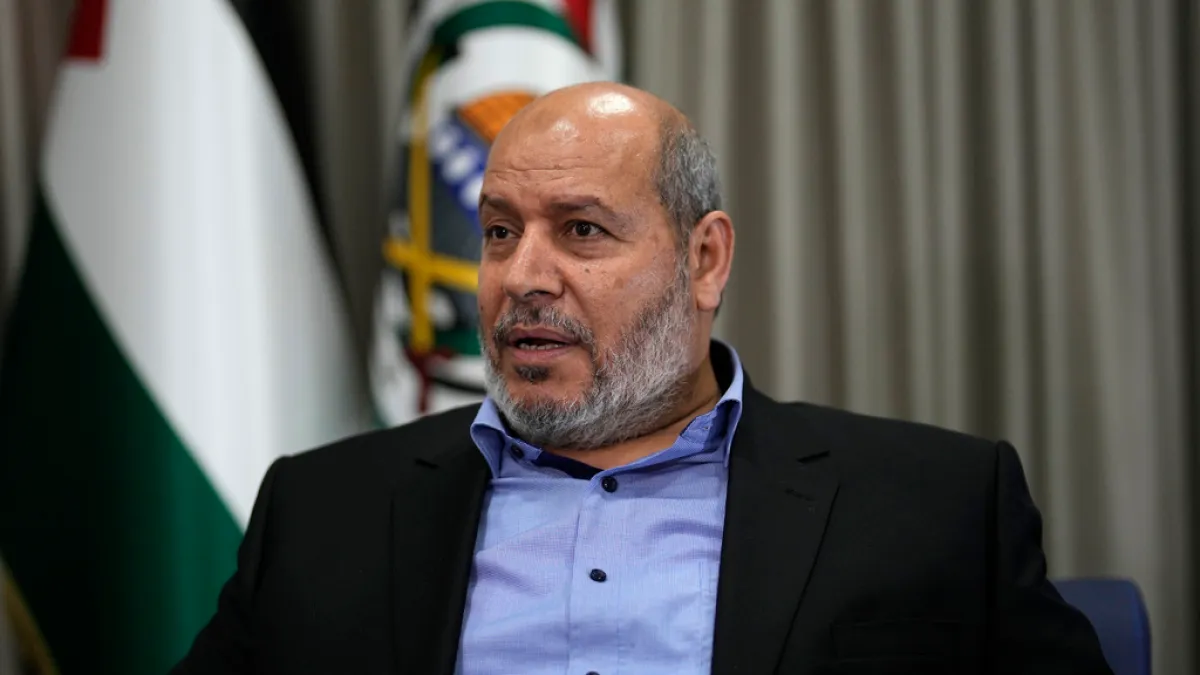
According to an Egyptian intelligence official who spoke to Al Jazeera, Egypt has also invited a senior Hamas delegation, led by chief negotiator Khalil al-Hayya, for urgent talks to salvage the peace process.

The source described contacts between the parties as intense, saying Cairo was racing to arrange negotiations before the end of the week in order to prevent all-out war in Gaza.

The diplomatic moves come in the wake of renewed Israeli military attacks on Gaza and statements from top Israeli officials that threaten to unravel months of diplomacy.

At least 141 Palestinians have been killed in the last two weeks in an intensification of Israeli attacks.

Israeli Prime Minister Benjamin Netanyahu on Thursday issued a directive ordering the military to expand the area under its control from 53% to 70%.

This fundamentally violates the US-brokered comprehensive peace plan signed in October 2025 under the Trump administration, mediators say.

Compounding the crisis, Israeli Defence Minister Israel Katz also triggered regional outrage by publicly reviving a blueprint for the “voluntary migration” of Palestinians out of the enclave.

Speaking during an announcement confirming the assassination of Hamas’s newly appointed military chief, Mohammed Odeh, Katz asserted that the forced displacement scheme would be implemented “at the right time and in the right manner”.

Cairo sent a warning to the Israeli government, rejecting any measures designed to push Gaza’s residents towards voluntary emigration or direct Palestinians towards the Rafah crossing with Egypt.

Egypt has been coordinating with mediators in Qatar and Turkiye, as well as US officials, to return the process to a negotiating track, including revisions to the addendum of the original Gaza peace plan, designed to reduce violence.

The source said Egypt and its fellow mediators were aware that Netanyahu’s recent statements on expanding Israel’s occupation of Gaza, as well as attacks that killed Hamas military figures Izz al-Din al-Haddad and Mohammed Odeh, were driven by electoral calculations and compounded by difficulties Netanyahu faces in Lebanon.

Egypt has contacted United States officials to ask President Donald Trump to urgently restrain Netanyahu, given the recent Israeli escalations in Gaza, the source said.

A senior Hamas official abroad told Al Jazeera that Hamas had received Egyptian communications aimed at containing the escalation and preventing talks from collapsing, suggesting a meeting in Cairo was expected within days.

Hamas said the ceasefire was on the brink of collapse due to repeated Israeli violations, and called on the US and guarantor countries to take “serious and urgent” steps to compel Israel to honour its commitments.

Israel and Hamas agreed to a ceasefire in October to end two years of fighting, which had seen more than 72,000 Palestinians killed and the vast majority of Gaza’s population made homeless.

Despite a ceasefire still being in place, at least 929 Palestinians have been killed in Israeli attacks since October.

Source link

Netanyahu says Israeli forces have crossed Lebanon’s Litani River | Israel attacks Lebanon

NewsFeed

Israeli Prime Minister Benjamin Netanyahu said Israeli forces had crossed the Litani River in southern Lebanon and were operating in Beirut and the Bekaa Valley, in what he described as a “tactical victory”. This comes after Netanyahu said he ordered the Israeli military to take control of 70% of the Gaza Strip.

Source link

Trump heads into Situation Room to potentially finalise Iran deal | Donald Trump

NewsFeed

US President Donald Trump posted online that he’s heading into the Situation Room at the White House to make a “final determination” on potentially finalising a peace deal with Iran. Al Jazeera’s Patty Culhane reports from the White House.

Source link

Just what are Israel’s long-term plans for Gaza? | Gaza News

After two years of relentless bombardment and ground invasions, Israel’s future in Gaza had appeared to be settled with the signing of United States President Donald Trump’s 20-point peace plan on October 9, 2025.

Under the terms of that agreement, Israeli forces were meant to withdraw behind what planners called the “Yellow Line”, maintaining control of 58 percent of the territory, with their full withdrawal to be set at a date to be determined.

Recommended Stories

list of 4 itemsend of list

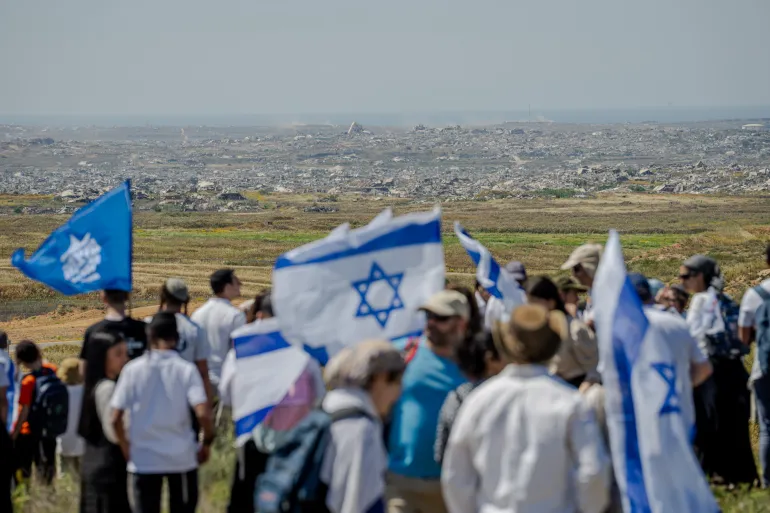
That withdrawal hasn’t happened. In fact, in the months since, as well as killing at least 922 people in near-daily strikes on the enclave during the “ceasefire”, Israel has expanded its territory by about 11 percent.

According to satellite data gathered in March, it has also established at least 32 military outposts, a ground barrier and infrastructure along what was supposed to be a temporary line.

Since October last year, numerous humanitarian agencies, including Oxfam, have accused Israel of compounding the humanitarian crisis in Gaza by restricting deliveries of aid and other essential goods.

Then, on Thursday, Israeli Prime Minister Benjamin Netanyahu announced that Israel will take over yet more territory in Gaza, telling a conference: “We are currently squeezing Hamas; we now control 60 percent of the territory of the Strip – you know this. We were at 50. My directive is to move to …,” he said, pausing briefly as someone in the crowd yelled, “100!”

“Let’s go step by step,” he responded, “First of all, 70. Let’s start with that. We’re pressing them from all sides, we’ll deal with the remnants.”

Al Jazeera contacted the Israeli prime minister’s office for clarification of this, but received no response by the time of publishing.

Can Israel just grab more land in Gaza?

“If Israel’s ultimate plan is to exercise permanent effective control over the entirety of the Gaza Strip, we are talking about unlawful annexation,” Michael Becker, a professor of international human rights law at Trinity College in Dublin, told Al Jazeera.

“As the International Court of Justice reaffirmed in a 2024 advisory opinion, annexation constitutes a violation of the bedrock prohibition of the acquisition of territory by force.”

Nevertheless, to date, since the onset of its war on Gaza in October 2023, Israeli forces have killed at least 72,819 men, women and children in Gaza, with many thousands more missing and presumed dead under the rubble.

By 2025, Israel had caused a confirmed famine in the enclave and has now decimated nearly all infrastructure needed to support life. It has done all this without experiencing any meaningful international sanctions and still takes part in numerous international sporting and entertainment competitions – despite protests.

Hopes that the US might enforce its own conditions on Israel also appear ill-founded. Since announcing a ceasefire in the enclave in October last year, the US has failed to react as Israel has expanded and entrenched its presence in Gaza, choking off access to about two-thirds of the enclave for its inhabitants by April 2026.

Al Jazeera also contacted the US State Department for comment about this, but received no response by the time of publishing.

Can Gaza’s population survive in such a reduced territory?

It’s very hard to tell. Several agencies, including the UN’s Office for the Coordination of Humanitarian Affairs (OCHA), have expressed deep concern about how Gaza’s remaining population can continue to subsist in an ever-shrinking space.

Israel’s answer to this is simple. “The plan for voluntary emigration from Gaza will also be implemented, all at the proper time and in the proper manner,” Defence Minister Israel Katz wrote in a statement marking the killing of Hamas leader Mohammed Odeh on Wednesday this week.

“Voluntary emigration” is a term used by a number of Israel’s government ministers, including National Security Minister Itamar Ben-Gvir and Finance Minister Bezalel Smotrich. Observers typically acknowledge that this means the ethnic cleansing of the enclave.

Israel’s Ministry of Defence did not respond to questions about this from Al Jazeera.

Israel's Defence Minister Israel Katz
Israel’s Defence Minister Israel Katz has referred to the ‘voluntary emigration’ of Gaza’s population, a term generally regarded as referring to its ethnic cleansing [File: Menahem Kahana/ AFP]

No.

“The idea of permanently removing Palestinians from Gaza smacks of forced displacement and would also violate the fundamental right to self-determination of the Palestinian people,” Becker said. The principle of self-determination serves as a “cornerstone” of the UN Charter, he said.

However, Becker said, the spotlight of international attention has now shifted from the crisis in Gaza to the US and Israel’s war on Iran, as well as Israel’s actions in Lebanon, where it has occupied large swaths of the south of the country.

“While the Trump administration may be willing to diverge from Israel’s interests in seeking a resolution to the disastrous and illegal war that the United States started against Iran, the United States seems to have lost interest in Gaza or pushing for restraint on the part of Netanyahu’s government. It is unclear what role the so-called Board of Peace is willing to play in terms of maintaining a future for the Palestinians of Gaza,” he said.

Source link

Israeli forces strike Lebanon as Netanyahu vows to intensify attacks

May 25 (UPI) — Israeli forces launched a renewed wave of strikes targeting Hezbollah on Monday as Prime Minister Benjamin Netanyahu vowed to intensify attacks against the Iran-backed militia.

The strikes came as Israel and Lebanon have been engaged in U.S.-mediated talks, the first in decades between the two nations, aimed at ending hostilities between Israel and Hezbollah. The attacks were expected to further strain the already frayed negotiations.

Israeli warplanes launched more than 85 munitions, striking more than 70 sites across Lebanon, including about 10 Hezbollah headquarters and weapons storage facilities in Tyre, located in southwestern Lebanon on the Mediterranean.

Infrastructure used by Hezbollah to attack Israel was among the targets struck, the IAF said in a statement, adding the Israeli military “eliminated” alleged motorcycle-riding Hezbollah operatives in southern Lebanon where IDF forces were operating.

The IDF said earlier that it had hit sites in the northeastern Beqaa Valley and several other areas in Lebanon, though it was not clear if that was part of a separate operation.

Netanyahu vowed in a video statement on Instagram to intensify strikes targeting the Iran-backed militia, stating that they were in response to Hezbollah firing fiber-optic drones over the last few weeks at northern Israel.

“We are at war. We are not taking our foot off the gas — on the contrary. I said to press the gas in Lebanon. We will strike them,” he said.

In a sign of concern over potential Hezbollah retaliatory strikes, the IDF issued new, tightened restrictions for northern Israel residents on Tuesday, capping outdoor gathering limits from 200 to 50 people and indoors from 600 to 200.

Hezbollah initially attacked Israel a day after the Israel-Hamas war began on Oct. 7, 2023. The conflict halted 13 months later with a fragile cease-fire that was never fully observed.

In early March, Israel launched renewed attacks on Lebanon, involving ground troops. In April, a cease-fire was announced in the larger Iran war, with Israel claiming it did not apply to Lebanon, while Lebanon and Iran said it did.

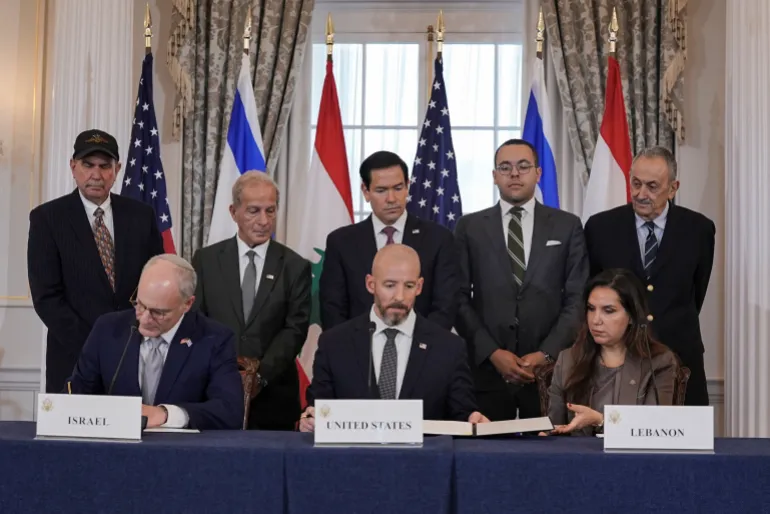
In mid-April, amid the confusion, Israel and Lebanon held their first diplomatic talks since 1993.


Source link

Column: Obama’s strong terms curbed Iran. Trump struggles to secure even a weak deal

President Trump, it’s well known, is into gold. Every day brings new evidence that he’s thoroughly enjoying the “golden age” he pronounced in his inaugural address — as few other Americans are — with stock trades, crypto profiteering and much more, even a new taxpayer-financed slush fund to reward his allies.

As for me, I’ve gone into silver. That is, I constantly look for the silver linings in Trump’s heinous acts.

One silver lining, of course, is his cratering job-approval numbers in the polls, especially among the young and Latino voters who made his reelection possible. But here’s another: By his humiliating failure to bring Iran to heel, nearly three months after starting a war that he said would last weeks at most, Trump has brought new, more positive attention to what he again this week derided as “Barack Hussein Obama’s Iran nuclear deal.” (The emphasis on “Hussein” is Trump’s, always.)

The president, along with his Republican cheerleaders, counts his first-term abrogation of the 2015 Iran nuclear agreement, the Joint Comprehensive Plan of Action, as a signature achievement. This week, yet again, he falsely claimed that had he not done so, Iran would have a nuclear weapon. In fact, his action in 2018 taking the United States out of the multinational deal subsequently led to Iran’s rebuilding of its nuclear program, the emboldening of the Iranian hard-liners now in power and the Middle East morass in which the United States is now mired.

That quagmire has left Trump seeming desperate for a deal — almost certainly a worse deal than the one Obama struck. Call it JCPOA Lite.

If he were able to get Iran’s sign-off on the sort of detailed, restrictive agreement that Obama and other world leaders won 11 years ago, he’d be trumpeting himself as the world’s greatest dealmaker. (He does that anyway, but his record proves otherwise.) Instead, by his own failure to date, Trump has invited reconsideration of the very agreement he decried as the “worst deal ever” on his march to election and reelection.

No sooner was the 2015 deal signed than Trump and Republicans succeeded in defining it as a giveaway to Iran that assured, not hindered, its development of a nuclear weapon to threaten Israel and the world. Opponents condemned the agreement for not addressing Iran’s other threats, notably its support for militant proxies throughout the Mideast. Some Democrats, notably Senate Minority Leader Chuck Schumer of New York, were among the foes. Other Democrats, cowed by opposition to the agreement by Benjamin Netanyahu’s Israeli government and pro-Israel lobbyists, were all but mute in the pact’s defense.

Now some Democrats are belatedly finding their voice (and, post-Gaza, some willingness to defy Israel). Along with nonpartisan experts, those Democrats are drawing comparisons between the 2015 agreement, flawed yet successful, and Trump’s promised yet ever-elusive alternative. What’s ironic for Israel and Netanyahu, still implacably against negotiating with Tehran, is that they could end up, under Trump, with a nuclear deal that gives Iran more leeway than the hated JCPOA did.

As Americans are being reminded, the 2015 deal wasn’t just between Iran and Obama, as Trump has long suggested; other signatories were China, Russia, Britain, France, Germany and the 27-nation European Union. Reconstituting that group would be all but impossible today.

The pact’s 159 highly technical pages and five appendices — a far cry from the short-lived one-pager that Trump officials teased earlier this month — required Iran for 15 years to limit its nuclear program to civilian purposes, forfeit more than 97% of its enriched uranium and submit to intrusive monitoring by the International Atomic Energy Agency to ensure compliance. In return, Iran gradually got relief from some, but not all, international economic sanctions and access to Iranian funds that were frozen after the 1979 Islamic revolution. Presumably, after 15 years, the agreement would have been extended somehow.

By all accounts, including those of Trump’s first-term intelligence and national security officials, Iran was complying when he abandoned the deal. Its “breakout time” for building a nuclear weapon was about a year — time enough for the world to intervene — instead of two to three months. Now, though the president boasts he barred Iran from having that weapon by breaking the Iran nuclear deal, he incessantly tells Americans that he went to war against Iran on Feb. 28 because it was on the brink of a bomb — never mind that he also said he had “obliterated” Iran’s nuclear program last summer, a program that was in a well-monitored box until he first took office.

If you’re confused, you’re paying attention.

A month ago, Trump posted online that he was close to a deal “FAR BETTER” than the 2015 accord. “I am under no pressure whatsoever, ⁠although, it will all happen, relatively quickly!” To several reporters, he suggested he in fact had a deal and that Iran had agreed both to suspend its nuclear activities and to forfeit all of its enriched, near-weapons-grade uranium.

Preposterous claims, given Iran’s current government, and Tehran promptly denied them. It was a sign of Trump’s squandered credibility that few, if anyone, believed him in the first place. Nor have folks believed his more recent talk of imminent success; oil markets, too, have learned not to trust the president, as prices at the pumps attest.

On Tuesday at the White House, amid a noisy tour of the billion-dollar-ballroom construction site, Trump told reporters he’d been “an hour away” from striking Iran again that very day but Mideast leaders asked for more time for negotiations.

Don’t hold your breath.

But for the tragic consequences, Obama might be enjoying some justifiable schadenfreude about Trump’s travails.

“We pulled it off without firing a missile. We got 97% of the enriched uranium out,” he told Stephen Colbert in an interview last week. Both U.S. and Israeli intelligence agreed that Iran was abiding by the nuclear limits, Obama added, “and we didn’t have to kill a whole bunch of people or shut down the Strait of Hormuz.”

That sure doesn’t sound like the “worst deal ever.” It wasn’t.

Bluesky: @jackiecalmes
Threads: @jkcalmes
X: @jackiekcalmes

Source link

Israel pushes for war amid US ceasefire, but its options may be limited | US-Israel war on Iran News

While the United States backs away from threats to resume bombing Iran if it does not agree to a peace deal, Israel’s political establishment is reportedly itching for war.

Shimon Riklin, an anchor for the right-wing Israeli Channel 14, blurted out apparently confidential plans about a renewed attack on Tehran, which included the location of what he claimed was a uranium storage facility that could be targeted.

Recommended Stories

list of 4 itemsend of list

Members of the Israeli parliament roundly criticised Riklin’s supposed revelations, leading the anchor to say his comments were purely hypothetical.

Still, despite broad agreement that Israel is eager to restart hostilities, it is unlikely to be able to do so without US permission. That does not look like it will be quick in coming. Reports of a call overnight between Israeli Prime Minister Benjamin Netanyahu and US President Donald Trump over Washington’s push for a truce irrespective of Israeli concerns left the Israeli leader reportedly with his “hair on fire”.

This week, Israeli media reported that Netanyahu chaired the second meeting of his security cabinet to discuss renewing the conflict with Iran. Despite billions of dollars in Israeli and US ordnance thrown at Iran, the government in Tehran remains in place.

Iran’s deterrence strategy of striking regional states and the subsequent closure of the Strait of Hormuz has dented the US’s appetite for renewing a costly and perhaps unremitting war against Tehran.

Iranophobia

For Netanyahu, the April 8 ceasefire – agreed with little Israeli involvement – has proven politically costly and, analysts say, unnerved a public conditioned to view Iran as an existential threat.

Opposition leader Yair Lapid and former Prime Minister Naftali Bennett have used the ceasefire as political currency in their attacks on Netanyahu. Lapid described the truce as one of the greatest “political disasters in all of our history”, a view that appears to be in line with that of the Israeli public.

A poll conducted by the Israel Democracy Institute in early May showed that a majority of Israelis believed a premature end to the war ran counter to their country’s security interests, while a similar percentage thought that a resumption of the conflict is likely.

To a public and political class accustomed to viewing Iran as their number one nemesis, it is unclear what solution they want in dealing with Tehran, Haggai Ram of Ben-Gurion University told Al Jazeera.

“Both politicians and public have been inculcated into seeing Iran as their ultimate foe,” said Ram, whose book Iranophobia chronicles Israel’s longstanding fixation on Iran.

Israeli people have been effectively trained for most of their lives to see war as inevitable, Ram said, a situation evident in their approach to bomb shelters when Iranian missiles fell, with Israelis whom Ram met at the time seemingly unfazed by the experience.

“It was perfectly normal to them that they should effectively stop their lives if it prevented Iran from completing its nuclear programme, or, from their perspective, if it helped ‘free the people’,” he said.

The only question for many Israelis, Ram said, is how Netanyahu – regarded in some quarters as a “magician” – would bring Iran to its knees.

STRAIT OF HORMUZ, IRAN - MAY 16: A ship remains anchored on May 16, 2026 in the Strait of Hormuz near Larak Island, Iran. Negotiations between the U.S. and Iran over opening this critical waterway have largely stalled as the countries have rejected each other's proposals to end the war that began when the U.S. and Israel attacked Iran on February 28. (Photo by Majid Saeedi/Getty Images)
A ship anchored near Larak Island, in the Strait of Hormuz, which was effectively closed as a result of the US-Israel war on Iran [File: Majid Saeedi/Getty Images]

Political necromancy

Many in Israel have grown accustomed to seeing Netanyahu defy the laws of political gravity. In 2022, he won an election despite being hounded by multiple corruption charges. He has managed to distance himself from the security failures of the Hamas-led attack on southern Israel on October 7, 2023, and achieved credit – even if he officially denies it – for allegedly manipulating Trump into joining the war on Iran.

The October 2023 attacks and the US-brokered truce with Iran, which Israel had no role in, will be the foremost political concerns on Netanyahu’s mind, Alon Pinkas, a former Israeli ambassador and consul general in New York, told Al Jazeera. He noted that these could serve as an incentive for resuming military operations.

“My guess is there are three interlocking reasons why Netanyahu is looking to restart the war,” Pinkas said. “Firstly, there’s the distance he wants to put between him and October 7 – he needs a big strategic victory and he’s not going to get that in Gaza or Lebanon, so this is it.

“Secondly, the war wasn’t finished. Every taxi driver or second-rate political commentator will tell you: Israel achieved nothing with its war on Iran.

“Thirdly, and you only need to look at the polls to see it, he needs a victory with Iran to take with him into the [election] later this year.”

Iran’s seizure of the Strait of Hormuz, which has thrown global markets into turmoil, as well as Tehran’s strikes on its neighbours, appear to be consequences that Netanyahu never considered when starting the conflict. Israel’s failures in the war on Iran are expected to be key debates in the general election, slated for August.

JERUSALEM - OCTOBER 13: U.S. President Donald Trump and Israeli Prime Minister Benjamin Netanyahu at the Knesset, Israel's parliament, on October 13, 2025 in Jerusalem. President Trump is visiting the country hours after Hamas released the remaining Israeli hostages captured on Oct. 7, 2023, part of a US-brokered ceasefire deal to end the war in Gaza. (Photo by Evelyn Hockstein - Pool/Getty Images)
Netanyahu, right, and Trump have denied that the Israeli leader manipulated the US into attacking Iran, leading to the closure of the Strait of Hormuz and the strikes upon the US allies in the Gulf region [Evelyn Hockstein/Pool via Getty Images]

Geopolitical shizzle

A few weeks after the April 8 ceasefire, Israeli Defence Minister Israel Katz boasted that once the US gave the green light, Israel was ready to bomb them “back to the Stone Ages”, highlighting the government’s eagerness to restart the conflict.

“There are those in Israel who would like to cut their losses and walk away,” former Israeli government adviser Daniel Levy told Al Jazeera.

“And then there are those, like Netanyahu, and much of the Israeli political mainstream, who want to double down and use all that US hardware [assembled off the coast of Iran] in an attempt to seriously degrade Iran.”

Ultimately, despite the broad political support for a renewed war with Israel, there are still limits to what Netanyahu can do. “This stops when the US says it stops,” Levy said.

Or, as Trump said of Netanyahu after their overnight call on Tuesday, he’ll “do whatever I want him to do”.

Source link

Flight to Argentina: How significant is it for Israel’s LatAm outreach? | Politics News

Israel and Argentina have launched a direct flight starting in November as the two countries boost their ties under Argentina’s far-right President Javier Milei and Israeli Prime Minister Benjamin Netanyahu.

The twice-a-week flight comes as Israel is aggressively pushing to cement its geopolitical footprint in Latin America amid its growing international isolation and its entrenched image as an occupying power.

Recommended Stories

list of 3 itemsend of list

On May 7, Israel’s national carrier, El Al, opened bookings for a direct flight between Tel Aviv and Buenos Aires covering a distance of 12,000 kilometres (7,460 miles) – the longest route in the airline’s history.

However, the 16.5-hour journey is driven by political ambitions rather than mere commercial viability.

During a celebratory event in occupied East Jerusalem last month, Israeli Prime Minister Netanyahu welcomed Argentina’s Milei to hail the “first direct flight” between the two nations.

The event showcased a striking political alignment, further highlighted by the presence of US Ambassador Mike Huckabee, who jokingly promised to buy the first ticket and described the two leaders as US “President Donald Trump’s biggest friends”.

The route aims to translate the “Isaac Accords” – a Latin American framework inspired by the “Abraham Accords” – into tangible reality. Morocco and Sudan established diplomatic ties with Israel as part of the Abraham Accords signed under President Trump’s first term.

Championed behind the scenes by Rabbi Axel Wahnish, Argentina’s ambassador to Israel, the framework aims to establish strategic cooperation in security, counterterrorism, and artificial intelligence with Latin American nations, including Ecuador, Costa Rica and Paraguay.

Trading tech for legitimacy

Israel is acutely aware that its status as an occupying power, exacerbated by the genocidal war on Gaza, has severely damaged its international standing. To secure recognition and bypass boycotts, particularly from an increasingly critical Europe, Israel is leveraging its advanced military and surveillance technologies.

Ihab Jabarin, an analyst specialising in Israeli affairs, told Al Jazeera that Israel’s strategy has shifted.

“Israel’s moral image has completely eroded,” Jabarin said. “The logic now is: ‘you may not like us, but you need us.’ Israel is offering its expertise in cybersecurity, AI systems like Lavender, border management, and drones – technologies tested on Palestinian bodies and land – to countries grappling with internal conflicts and organised crime,” he told Al Jazeera.

Jabarin noted that Israel uses infrastructure – whether ports, underwater cables, or civilian aviation – as tools for national security and influence. “This flight is not just about transporting passengers; it is a permanent corridor for security and tech businessmen,” he explained.

This strategy of using technology and security to buy diplomatic loyalty mirrors Israel’s approach in Africa. It has forged close ties with Ethiopia, Kenya and Chad. Last December, Israel became the first country in the world to recognise Somaliland, a breakaway region of Somalia.

It has used smaller island states like Micronesia in the Asia Pacific to secure favourable votes at the United Nations and break its international isolation.

“Israel is trying to create a global network of interests that forces countries to weigh their relationship with Israel against their stance on the Palestinian cause,” Jabarin added. “It wants to make the world unable to live without it.”

The Milei-Netanyahu chemistry

The driving force behind this Latin American link is the ideological bond between Netanyahu and Milei. While left-wing leaders in the region, such as Brazil’s Luiz Inacio Lula da Silva, have severed ties or strongly condemned Israel’s actions in Gaza, Milei has embraced the Israeli narrative unconditionally.

For Milei, who declared himself the most Zionist president in the world in March, the alliance offers rapid positioning in the Middle East, closer ties to Washington lobbies, and a stance against Latin America’s traditional left. For Netanyahu, Milei offers unconditional emotional and symbolic support that Israel has largely lost in Europe.

“Netanyahu understands the value of a symbolic ally,” Jabarin said. “He needs leaders who can be marketed as proof that Israel can still forge ideological alliances, not just pragmatic ones. Argentina, under Milei, has become Israel’s most important ‘island of influence’.”

A ‘safe haven’ from war crime probes

The direct flight also serves a highly practical security purpose for Israel. With mounting legal challenges and arrest warrants targeting Israeli soldiers and officials in Europe over alleged war crimes in Gaza, the Tel Aviv-Buenos Aires route offers a crucial bypass.

On Tuesday, Israel’s far-right Finance Minister ⁠Bezalel Smotrich said he was informed that the ⁠International Criminal ⁠Court (ICC) ⁠had ⁠requested a warrant for his arrest. Prime Minister Netanyahu is also sought by the ICC for war crimes committed in Gaza.

Currently, travellers between the two countries rely on 21 to 33-hour transit flights through European hubs like Madrid or Paris.

Diego Ruzzarin, a Brazilian writer and analyst, argued that the project aims to secure hassle-free travel for Israelis, particularly military personnel, sparing them from international security interrogations or the risk of arrest in Europe.

Jabarin echoed this assessment, noting that the fear of legal pursuit in Europe is a significant concern within the Israeli establishment.

“The direct flight bypasses any potential legal harassment in Europe,” he said. “Latin America is now appearing in Israeli calculations as a more politically flexible space compared to rights-focused Europe.”

Economic risks and domestic pushback

Despite its strategic value, the flight faces significant logistical and economic hurdles. Because Israeli planes are banned from the airspace of several African nations, including Libya, the flights must take a costly detour over the Mediterranean and the Atlantic.

To mitigate the economic risks of the long-haul route, the Israeli government has taken the unusual step of granting El Al a 20-million-shekel ($5.4m) subsidy, spread over three years.

The success of the route will heavily depend on Argentina’s Jewish community – the largest in Latin America, estimated at up to 300,000. According to Sabre data, roughly 55,300 people travelled between the two countries in 2025, a 37 percent increase from 2024, but still below the 71,200 recorded in 2019.

The project has sparked domestic criticism in both countries. In Israel, the transport ministry reportedly warned that pulling Boeing 787 Dreamliners from highly profitable US routes to service Buenos Aires could drive up ticket prices for Israelis travelling to North America.

In Argentina, left-wing congresswoman Myriam Bregman accused Milei’s government of dragging the country into an “imperialist war” without congressional approval, warning of a constitutional overreach.

Furthermore, the influx of Israeli tourists, many of whom are recently discharged soldiers, has caused friction in southern Argentina. Local residents and activists have blamed Israeli tourists for devastating fires in the Patagonia nature reserves due to negligence, the most recent being a massive blaze in January 2026 that destroyed 77,000 hectares (190,000 acres) and led to the arrest of an Israeli tourist.

For Israelis, however, an El Al flight to Buenos Aires carries profound historical symbolism. In May 1960, the Mossad used an official El Al flight to smuggle captured former Nazi official Adolf Eichmann out of Argentina to face trial and execution in Israel.

Source link

Israeli settler blindfolds and detains Palestinian in occupied West Bank | Israel-Palestine conflict News

An armed Israeli settler blindfolded and detained a Palestinian man near the village of Beit Iksa in the occupied West Bank, dragging him onto a road as Israeli forces stood nearby. The Palestinian farmer was reportedly trying to reach his land before he was captured.

Source link

“Nowhere left to go”: Gaza residents return to rubble after Israeli strike | Genocide News

Al Jazeera’s Tareq Abu Azzoum reports from Al-Shati Refugee Camp, where families search through the rubble after overnight Israeli airstrikes despite a ceasefire. Residents described the attacks as a breach of the truce, saying they lost shelter, belongings and the only places they had left to stay.

Source link