Benjamin Netanyahu

Netanyahu pardon on ice as Israeli president seeks plea deal

April 26 (UPI) — Israeli President Isaac Herzog decided to hold off on a pardon for the country’s prime minister, Benjamin Netanyahu, on charges of corruption, opting instead to attempt to negotiate a plea deal.

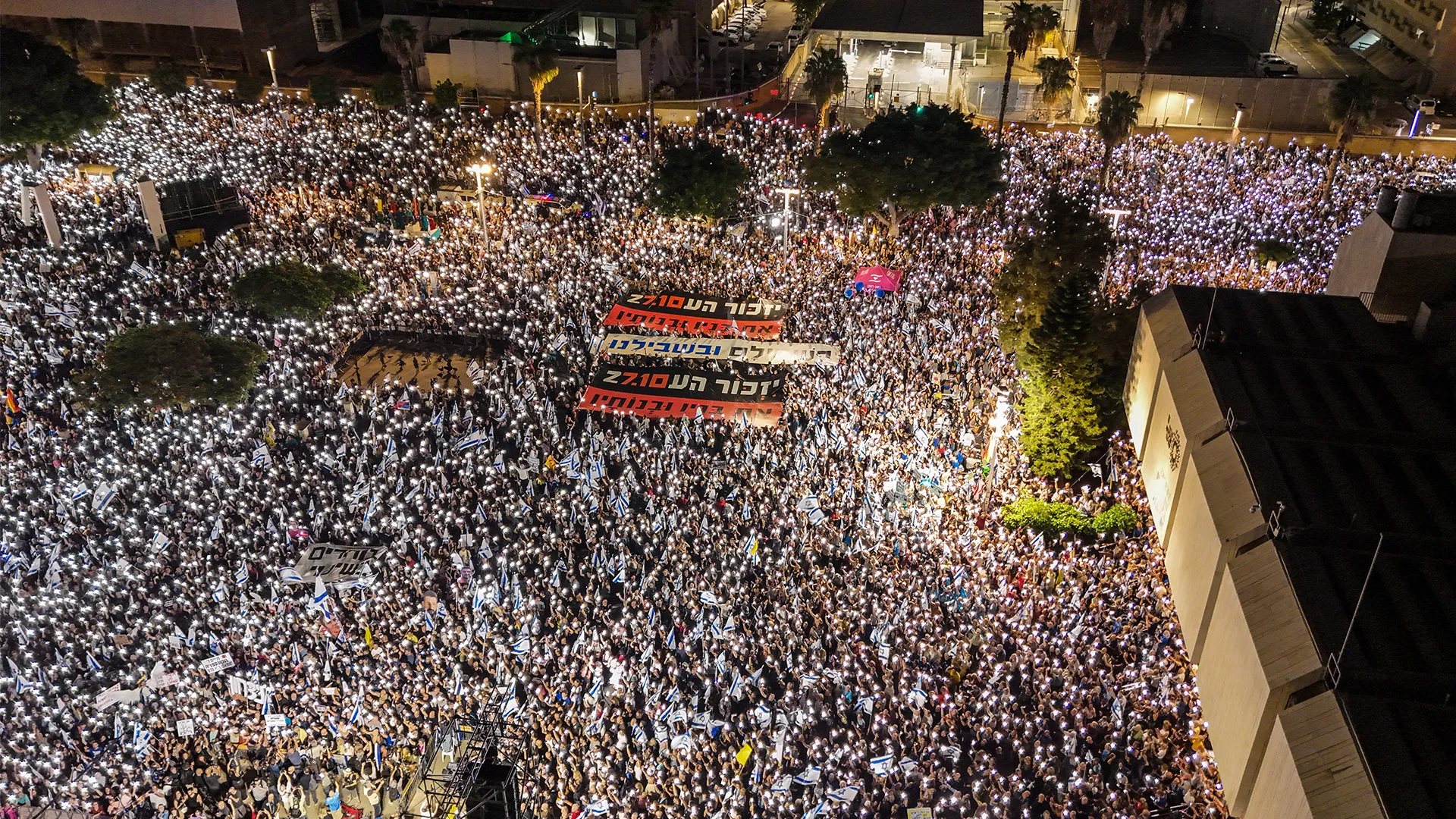
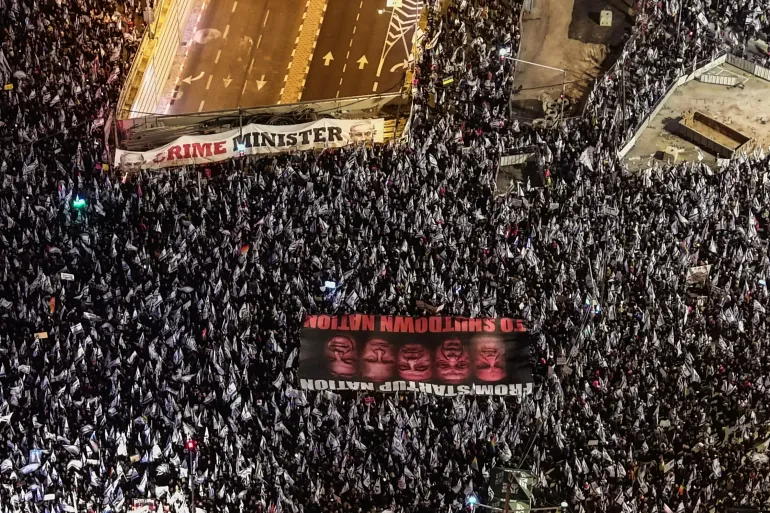
Netanyahu has been on trial for six years on charges of bribery, fraud and breach of trust across three separate cases but denies he has violated any laws, calling the charges a “witch hunt.”

Herzog has been under pressure from Netanyahu, his allies and U.S. President Donald Trump to issue the prime minister a pardon, though he has held off as opinions in Israel are relatively split on the trials, The New York Times and The Times of Israel reported.

“President Isaac Herzog sees reaching an agreement between the parties in Prime Minister Netanyahu’s cases as a proper and correct solution,” Herzog’s office said in a statement.

“The president believes that it is right to first, before discussing the pardon request itself, exhaust a process that could lead to the formation of an agreement between the parties, outside the walls of the court,” his office said.

Netanyahu became the first active Israeli prime minister to be put on trial in 2020, when he was charged with allegedly accepting cigars and champagne in exchange for political favors.

In the second case, he allegedly boosted circulation of an Israeli newspaper that offered him positive coverage and, in the third case, he allegedly promoted regulatory changes to benefit an telecommunications company in exchange for positive coverage by an online news organization.

Netanyahu in November requested the pardon from Herzog, whose office said at the time that it would consider the request and review it with justice officials because of the “significant implications” a pardon for such charges could have.

A plea agreement would require an admission of guilt, in addition to likely requiring Netanyahu to resign from office, which he has said is unacceptable and part of why he calls the trials an effort to drive him from office.

The trial “stirs divisions and deepens rifts,” he said in the request for a pardon, and said that “to repeal the threats [to Israel] and realize the opportunities, national unity is required.

Iranians rally after a ceasefire announcement at Enqhelab Square, in Tehran on April 8, 2026. Photo by Behnam Tofighi/UPI | License Photo

Source link

Trump: Israel, Lebanon to extend cease-fire for 3 weeks

April 23 (UPI) — President Donald Trump on Thursday announced that Israeli and Lebanese diplomats agreed to extend their cease-fire by three weeks in talks held at the White House.

The announcement came after the president hosted the countries’ ambassadors for negotiations along with Vice President JD Vance, Secretary of State Marco Rubio, U.S. Ambassador to Israel Mike Huckabee and U.S. Ambassador to Lebanon Michael Issa.

“The Meeting went very well!” Trump posted on Truth Social.

“The United States is going to work with Lebanon in order to help it protect itself from Hezbollah. The Ceasefire between Israel and Lebanon will be extended by THREE WEEKS.

“I look forward in the near future to hosting the Prime Minister of Israel, Bibi Netanyahu, and the President of Lebanon, Joseph Aoun. It was a Great Honor to be a participant at this very Historic Meeting!”

During an Oval Office press conference on Thursday evening, Trump announced that Lebanese President Joseph Aoun and Israeli Prime Minister Benjamin Netanyahu would both be visit Washington in the next few weeks, though it was unclear if the trips were to occur at the same time.

“They actually like each other, Lebanon and Israel,” Trump said.

U.S. Ambassador to Lebanon Michel Issa thanked Trump and Rubio for arranging the rare meeting between Lebanon and Israel.

“This is 60, 70 years in the making and today is really a historical day,” he said.

“I’m going to keep going, working for a peace that we hope we’ll get it as soon as possible.”

Earlier Thursday, a senior White House official told The New York Times the ambassador-level negotiations originally expected to take place at the State Department. Israeli officials confirmed the meeting with The Times of Israel.

The two countries agreed to a 10-day cease-fire agreement after a first round of talks in Washington, D.C., on April 17, which was the first meeting between Israel and Lebanon in decades. The truce is shaky, though, as Israeli airstrikes have occurred since then, with Hezbollah responding with its own rocket fire.

Secretary of Health and Human Services Robert F. Kennedy, Jr. speaks during a Senate Committee on Health, Education, Labor, and Pensions hearing on the Department of Health and Human Services proposed fiscal year budget for 2027 in the Dirksen Senate Office Building near the U.S. Capitol on Wednesday. Photo by Bonnie Cash/UPI | License Photo

Source link

Outcry grows over Israeli soldier smashing Jesus statue in Lebanon | Israel attacks Lebanon News

A photo of an Israeli soldier smashing a statue of Jesus Christ in Lebanon has sparked outrage in the United States, adding to the anger Israel is facing, including from parts of US President Donald Trump’s base.

Although the incident is only one among a broad range of atrocities that Israel is accused of committing in the region in recent years, it garnered condemnations across the world and prompted a response from Israel’s Prime Minister Benjamin Netanyahu.

In the US, where support for Israel was once unchallenged – especially in right-wing circles that purport to espouse Christian values – the desecration of the Christian religious symbol added fuel to the criticism that the Israeli government is facing from some Republicans.

“You would never know it by consuming American corporate media, but this kind of incident is not rare,” said right-wing commentator Tucker Carlson, a former Trump ally.

“The Israeli government has permitted its soldiers to behave like barbarians for decades, all while sucking up generous funding from the United States. The only difference between now and the past is that social media has exposed Israel’s behavior for the world to see,” Carlson wrote in his newsletter on Monday.

‘Horrific’

Former Republican Congresswoman Marjorie Taylor Greene – who fell out with Trump over his hawkish foreign policy – highlighted that Israel receives billions of dollars in US military aid annually.

“‘Our greatest ally’ that takes billions of our tax dollars and weapons every year,” she wrote in a comment on X in response to the photo showing an Israeli soldier taking a sledgehammer to the head of the statue of Jesus.

Matt Gaetz, another former Republican congressman and Trump ally, said, “Horrific”.

For his part, independent journalist Glenn Greenwald mocked how Christian Zionists may defend Israel over smashing the statue.

“Christian Zionists: This Israeli soldier was absolutely justified in smashing the head of the Jesus Christ statue because Hezbollah and Hamas were hiding inside. We owe him our gratitude,” Greenwald wrote on X.

The anger echoed growing scepticism of the close alliance with Israel in Trump’s “Make America Great Again” (MAGA) constituency.

Trump is already facing pressure over joining Israel in starting a war against Iran, which sent oil prices soaring. Earlier on Monday, the US president addressed and denied claims that Netanyahu dragged the US into the conflict.

Support for Israel in the US is at a historic low, recent public opinion polls show.

While Israel still enjoys near-unanimous Republican support in Congress, that consensus is starting to fray, with dissent being expressed by the likes of Carlson, in part due to prolonged wars in the Middle East and attacks on Christians.

Israel says it will investigate

The desecration of the statue, which took place near the town of Debl in south Lebanon, according to local reports, prompted an unusually swift response from the highest level of the Israeli government.

“I condemn the act in the strongest terms. Military authorities are conducting a criminal probe of the matter and will take appropriately harsh disciplinary action against the offender,” Netanyahu said in a statement on Sunday.

Israel rarely holds its soldiers accountable for well-documented abuses in Gaza, the occupied West Bank and Lebanon, including sexual violence.

Netanyahu, who has been evading an arrest warrant by the International Criminal Court (ICC) over war crimes charges in Gaza since 2024, went on to argue that Israel treats Christians better than any other country in the region.

“While Christians are being slaughtered in Syria and Lebanon by Muslims, the Christian population in Israel thrives unlike elsewhere in the Middle East,” the Israeli prime minister claimed.

“Israel is the only country in the region that the Christian population and standard of living is growing.”

Lebanon has the largest per capita Christian population in the Middle East, and its president is a Maronite Catholic.

Israeli Foreign Minister Gideon Saar joined Netanyahu in denouncing the desecration of the statue, saying that it is “entirely contrary” to Israeli values.

But while Israel’s supporters tried to portray smashing the statue as an isolated mistake by one soldier, the incident reflects a pattern of Israeli attacks against houses of worship, including churches.

In 2024, Israeli troops filmed a mock wedding between two soldiers at a church in Deir Mimas in Lebanon and vandalised the building.

An Israeli tank demolished a statue of Saint George in the southern Lebanese village of Yaroun last year, as well.

Israel has bombed Palestinian churches several times in Gaza since the start of its genocidal war in the enclave, including an attack that killed at least 18 people in 2023.

Israel destroyed more than 1,000 mosques and three churches in Gaza during the war, according to local officials.

Catholic leaders respond

The Assembly of Catholic Ordinaries of the Holy Land denounced the attack on the statue on Monday.

“This act constitutes a grave affront to the Christian faith and adds to other reported incidents of desecration of Christian symbols by [Israeli] soldiers in southern Lebanon,” it said in a statement.

“It further reveals a disturbing failure in moral and human formation, wherein even the most elementary reverence for the sacred and for the dignity of others has been gravely compromised.”

The incident came as Israeli soldiers pushed to completely destroy homes and civilian infrastructure in dozens of Lebanese villages in order to prevent residents from returning to them.

“The outrage shouldn’t be about a destroyed statue of Jesus – abhorrent as that is,” Palestinian pastor Munther Isaac wrote in a social media post on Monday.

“The real outrage is the targeting of civilians, the assault on human dignity, the devastation in Gaza and Lebanon. War is evil. We need Accountability.”

The Council on American-Islamic Relations (CAIR) called on Trump and Congress to intervene and end Israeli violations after the destruction of the statue.

“For years, our government has ignored and enabled persistent Israeli attacks on churches and Christians in Lebanon, Gaza, and elsewhere,” CAIR said.

“Our message to American public officials is simple: If you continue sending more weapons and provide political cover for Israel’s rogue actions, you own what you see in this picture.”

Source link

‘Israel never talked me into the war with Iran,’ Trump says | US-Israel war on Iran News

Donald Trump has denied being dragged into war with Iran by Israel, as the United States president faces increasing criticism over the conflict, including from segments of his own base.

“Israel never talked me into the war with Iran, the results of Oct. 7th, added to my lifelong opinion that IRAN CAN NEVER HAVE A NUCLEAR WEAPON, did,” Trump wrote in a social media post on Monday.

Recommended Stories

list of 3 itemsend of list

There is no public evidence linking Iran directly to Hamas’s October 7, 2023 attack against Israel. Trump’s own intelligence chief Tulsi Gabbard also testified to Congress in March that Iran is not building a nuclear weapon.

For eight months prior to the war, Trump had been saying repeatedly that the June 2025 US strikes on Iranian facilities “obliterated” the country’s nuclear programme.

Many of Trump’s critics have argued that Iran did not pose an imminent threat to the US, and that the war only advances the interests of Israel at the expense of the safety and prosperity of Americans.

Iran responded to the joint US-Israeli strikes – which killed the country’s Supreme Leader Ali Khamenei, other top officials and hundreds of civilians on February 28 – by blocking the Strait of Hormuz, sending oil prices soaring.

In the US, energy costs have skyrocketed, fuelling inflation. The price of one gallon (3.8 liters) of petrol has remained over $4 – up from less than $3 before the war, more than a week after the truce between Washington and Tehran came into effect.

A recent poll by NBC News suggested that two-thirds of Americans disapprove of Trump’s handling of the war.

With dissatisfaction growing, many of the president’s critics have pointed to Israel as the real power behind the war – portraying Trump as a weak leader following Israeli Prime Minister Benjamin Netanyahu.

“He entered a war – got pulled into it by Bibi Netanyahu, let’s be clear about that – entered a war that the American people do not want,” Kamala Harris, Trump’s 2024 Democratic opponent, said last week.

Harris served as vice president in the Joe Biden administration, which provided diplomatic and military support for Israel’s genocidal war on Gaza for more than two years.

During the 2024 campaign, Trump presented himself as the “peace” candidate, promising to end wars that were started under the Biden administration.

Trump’s National Security Strategy, released last year, also said that Washington would pivot its foreign policy and military resources from the Middle East to the Western Hemisphere.

But Netanyahu, who has visited Trump in the US six times in one year, has continued to push for a hardline against Iran. The most vocal supporters of the war in Washington have also been Israel’s closest allies.

On Monday, Trump renewed his attacks on the mainstream media for its coverage of the war with Iran.

“I watch and read the FAKE NEWS Pundits and Polls in total disbelief. 90% of what they say are lies and made-up stories, and the polls are rigged, much as the 2020 Presidential Election was rigged,” the US president wrote.

He also touted his policies in Venezuela, where the country has remained stable and become more friendly to Washington after US forces abducted President Nicolas Maduro in January.

In Iran, however, the US-Israeli strikes led to the closure of Hormuz and sustained Iranian attacks across the region for nearly six weeks.

The conflict is now paused, and further talks between US and Iranian officials could take place in Pakistan this week. But both sides have threatened to renew the fighting if a deal is not reached.

“Just like the results in Venezuela, which the media doesn’t like talking about, the results in Iran will be amazing – And if Iran’s new leaders (Regime Change!) are smart, Iran can have a great and prosperous future!” Trump wrote.

Source link

‘Trump forced Israel into a ceasefire’ with Lebanon | Israel attacks Lebanon

NewsFeed

Abed Abou Shhadeh, a political commentator based in Israel, says the ceasefire between Israel and Lebanon is ‘extremely problematic, not only for Netanyahu, but for the Israeli public who were promised for two and a half years now, absolute victory’.

Source link

Israel, Lebanon agree to 10-day cease-fire

April 16 (UPI) — President Donald Trump announced that Israel and Lebanon agreed to a 10-day cease-fire starting at 5:00 p.m., pausing Israel’s six-week war on Hezbollah in that country.

Trump spoke with Lebanese President Joseph Aoun and Israeli Prime Minister Benjamin Netanyahu on Thursday, both leaders confirmed, and agreed to the cease-fire and to work toward a more permanent peace between their countries.

Aoun and Netanyahu spoke to each other separately because Aoun declined to participate in a call with the Israeli leader because Israel was still bombing Lebanon, CNN reported.

“These two Leaders have agreed that in order to achieve PEACE between their Countries, they will formally begin a 10 Day CEASEFIRE,” he said in a post on Truth Social.

Vice President J.D. Vance, Secretary of State Marco Rubio and Joint Chiefs of Staff Chairman Dan Caine have been directed to work with officials of both countries to achieve a more lasting peace.

Lebanese Prime Minister Nawaf Salam in a statement thanked the United States, France, the European Union, Saudi Arabia, Egypt, Qatar and Jordan for helping to accomplish the cease-fire he had pursued “since the first day of the way,” NBC News reported.

After the United States and Israel launched the Iran war, Israel also launched offensives against the Iran-backed militia Hezbollah in Lebanon, from which it often launches attacks at Israel.

This week, delegates from the neighboring countries conducted diplomatic talks for the first time since 1993, meeting in Washington, D.C., to discuss a cease-fire and the larger issue of Hezbollah’s hijacking of Lebanese lands in order to target Israel.

Netanayhu said Thursday in a video statement that Israeli forces would “remain in a 10-kilometer security zone, which will allow us to prevent infiltration into communities and anti-tank missile fire.”

Calling the negotiations potentially historic, Netanyahu said that Israel’s chief goal is to disarm Hezbollah and its ability to invade or launch weapons across the Lebanese border into Israel.

“That is where we will remain,” he said. “We are not leaving.”

After the diplomatic talks on Wednesday, Rubio reinforced that a key part of the meeting and now peace talks between the two nations is to end Hezbollah’s destabilizing influence in Lebanon and the wider Middle East.

“We have to remember the Lebanese people are victims of Hezbollah,” Rubio said, also noting that accomplishing a lasting peace “will take time.”

First lady Melania Trump speaks during a House Ways and Means Committee roundtable discussion on protecting children in America’s foster care system in the Longworth House Office Building near the U.S. Capitol on Wednesday. The bipartisan group of lawmakers are looking to address challenges children in foster care face, including barriers to education and educational advocacy, housing, employment opportunities, financial independence, and technology. Photo by Bonnie Cash/UPI | License Photo

Source link

Anti-war protesters arrested in New York urging end to Israel weapon sales | US-Israel war on Iran News

Police in New York have arrested around 100 anti-war protesters who were staging a sit-in outside the offices of Senators Chuck Schumer and Kirsten Gillibrand, demanding an end to US weapons sales to Israel. The demonstration comes as Senator Bernie Sanders pushes to block more than $600m worth of bombs bound for Israel’s military.

Source link

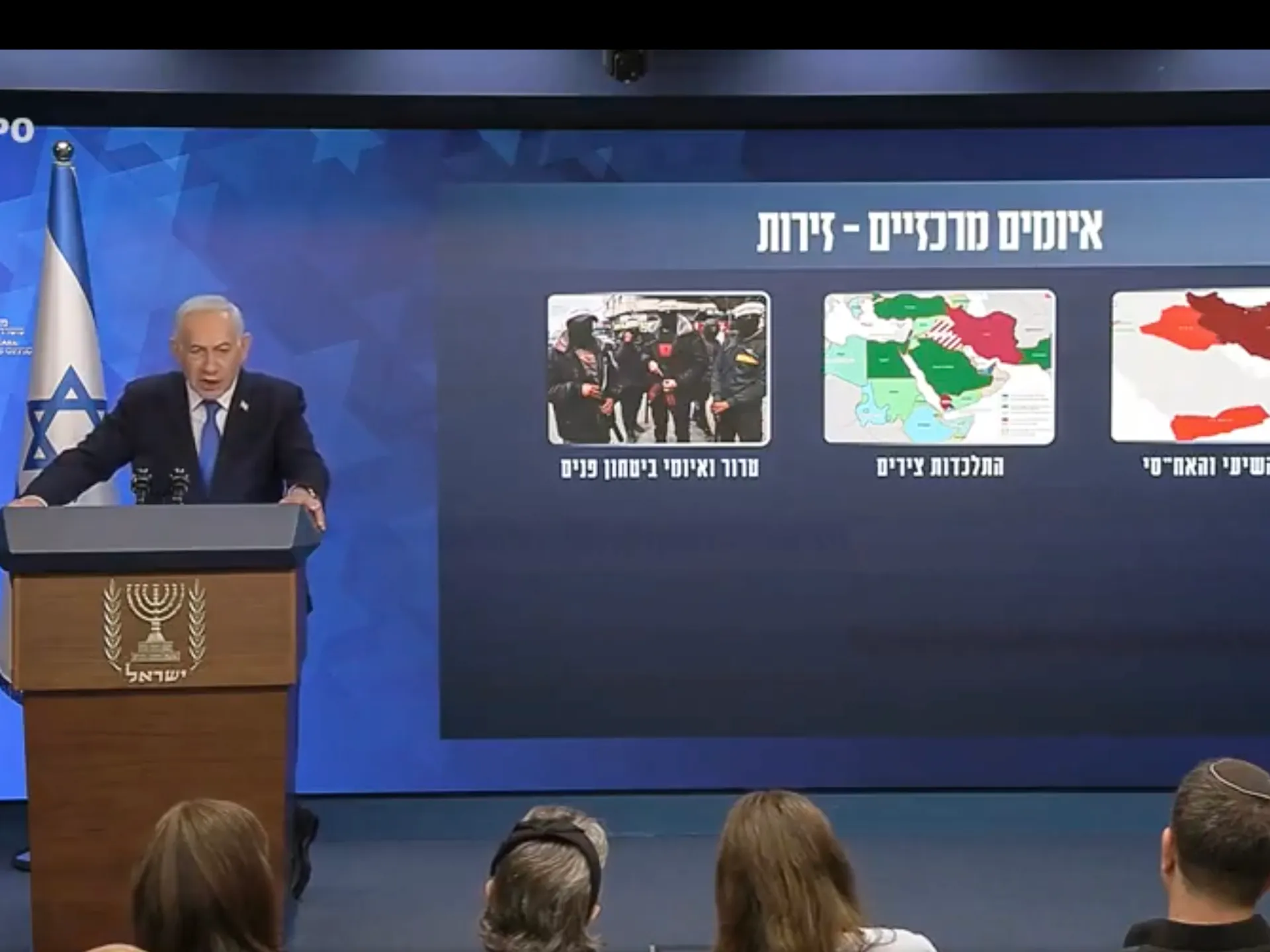
Netanyahu next to Middle East map: ‘We strangled them and have more to do’ | Benjamin Netanyahu

NewsFeed

Standing in front of a map of the Middle East, Israeli Prime Minister Benjamin Netanyahu describes how six countries ‘wanted to strangle us’ but instead ‘we strangled them… and we have more to do’. Ambassadors from Israel and Lebanon are set to hold talks in Washington DC on Tuesday, but they’ve issued conflicting statements on what will be discussed.

Source link

Israel reprimands Spanish diplomat over detonation of Netanyahu effigy | Benjamin Netanyahu

NewsFeed

Israel says it has reprimanded Spain’s top diplomat in Tel Aviv over the blowing up of an effigy of Prime Minister Benjamin Netanyahu during Easter celebrations in the Spanish town of El Burgo. Israel’s foreign ministry blamed ‘incitement’ by Spanish PM Pedro Sanchez. The municipality has previously used effigies of US President Donald Trump and Russian President Vladimir Putin during the annual event which draws hundreds of onlookers.

Source link

Lebanon excluded from ceasefire as Israeli strikes continue | Israel attacks Lebanon News

Israel has backed a ceasefire between the US and Iran but made clear it does not extend to Lebanon. Al Jazeera’s Heidi Pett reports that as Israeli strikes continue, residents remain wary after repeated violations of past ceasefires and ongoing displacement.

Source link

Colombia’s Petro asks Brazil to extend Pix payment system

Colombian President Gustavo Petro called for regional integration of the Pix system, and he criticized international financial control mechanisms, particularly the U.S. Office of Foreign Assets Control, for enforcing economic sanctions. Photo by Mauricio Duenas Castaneda/EPA

April 6 (UPI) — Colombian President Gustavo Petro asked Brazil to extend its instant payment system Pix to Colombia and questioned U.S. financial sanctions in a message posted on X, amid Washington investigations into the Brazilian system.

In his post, Petro called for regional integration of the Pix system and criticized international financial control mechanisms, particularly the Office of Foreign Assets Control, the U.S. Treasury agency responsible for enforcing economic sanctions.

“I ask Brazil to extend the Pix system to Colombia and hopefully stop considering the OFAC list, which no longer works,” Petro wrote Saturday.

The message comes after the U.S. government last week published the 2026 National Trade Estimate Report on Foreign Trade Barriers, which mentions the Pix system.

The report includes concerns from U.S. companies that the system, operated by Brazil’s central bank, may have regulatory advantages over foreign private competitors such as Visa and Mastercard.

Pix has gained popularity for allowing fast and free transfers, which has generated tensions over its impact on the traditional financial system.

In the same message, Petro criticized the international sanctions system. “OFAC only serves to persecute political opposition and domesticate them around the world. It is an aberrant system of political control,” he said.

He also contended that drug trafficking has managed to evade these mechanisms.

“Drug trafficking mocks it, and they stay in Dubai, where they buy residency for about $4,000 and live in luxury,” he added.

The message also included references to international politics and armed conflicts. Petro said that “no war is good” and said he had asked U.S. President Donald Trump to stop ongoing conflicts.

“His circle wants blood and leads him to make mistakes all the time,” he wrote.

Petro also criticized Israeli Prime Minister Benjamin Netanyahu, whom he accused of committing crimes against humanity in Gaza and Iran, and called for him to be tried.

Petro added that the homicide rate in Colombia has decreased, adding he hopes the trend is not temporary.

So far, the Brazilian government has not publicly responded to the request.


Source link

Mearsheimer: No signs of quick end to US-Israel war on Iran | US-Israel war on Iran

US political scientist John Mearsheimer argues that Israel – not Iran – is the Middle East country that is ‘highly aggressive’.

The greatest threat to stability in the Middle East is not Iran, but “the US working closely together with Israel”, argues United States political scientist John Mearsheimer.

Mearsheimer tells host Steve Clemons that the notion that the US and Israel are making a safer, more stable Middle East is “ludicrous”. And the idea that Iran is “the great destabiliser” in the region is “a myth that the US and Israel purvey”.

After US President Donald Trump insisted that “We have all the cards; they have none”, Mearsheimer says the exact opposite is true – “and that’s why we are in desperate straits”.

Source link

Netanyahu orders deeper Israeli invasion into Lebanon | US-Israel war on Iran

NewsFeed

Israeli Prime Minister Benjamin Netanyahu has ordered the military to expand its invasion in southern Lebanon, pushing deeper to extend what he calls a ‘buffer zone’. As Israeli forces advance towards the Litani River, an explosion at a UN position in southern Lebanon killed a peacekeeper.

Source link

Israel blocks Christian leaders from entering Holy Sepulchre for Palm Sunday mass

1 of 5 | Catholic Palestinians gather on Palm Sunday for the blessing of the olive branches in the courtyard of St. Saviour Monastry in the Old City of Jerusalem on Sunday. The traditional Palm Sunday procession from the Mount of Olives to the Church of the Holy Sepulchre was canceled due to the war with Iran, and Israeli police prevented Catholic leaders from entering the holy site. Photo by Debbie Hill/UPI | License Photo

March 29 (UPI) — Israeli police blocked Jerusalem’s top Catholic leaders from entering the Church of the Holy Sepulchre, a centuries-old tradition to mark Palm Sunday.

The Latin Patriarchate in Jerusalem said Cardinal Pierbattista Pizzaballa, the Latin patriarch, and Father Francesco Ielpo, custom of the Holy Land, were stopped as they attempted to enter the church.

The two leaders traditionally lead a procession from the Mount of Olives to the Church of the Holy Sepulchre, where they celebrate Palm Sunday mass.

Pizzabella announced earlier in the week that the traditional procession and mass had been canceled due to the war in Iran, which has resulted in attacks in Israel. He announced the procession would be replaced by a moment of prayer.

“Preventing the entry of the cardinal and the custos, who bear the highest ecclesiastical responsibility for the Catholic Church and the holy places, constitutes a manifestly unreasonable and grossly disproportionate measure,” a statement from the Latin Patriarchate of Jerusalem and Custody of the Holy Land said.

The office of Israeli Prime Minister Benjamin Netanyahu said the leaders were prevented from entering the church because of the danger of Iran strikes targeting holy sites.

“Israel has temporarily asked worshippers from all faiths not to worship at the holy sites in Jerusalem’s Old City to protect them,” the office said in a statement on X.

The statement said “there was no malicious intent whatsoever, only concern for [Pizzabella’s] safety and that of his party.”

“However, given the holiness of the week leading up to Easter for the world’s Christians, Israel’s security arms are putting together a plan to enable church leaders to worship at the holy site in the coming days.”

Source link

Kuwait airport hit by Iranian drone strikes | Conflict

NewsFeed

Thick, black smoke rose from Kuwait International Airport Saturday after suspected Iranian drone strikes damaged radar systems and fuel storage facilities, state media said. No fatalities were reported. The airport has been repeatedly targeted since the US-Israeli war on Iran erupted.

Source link

‘Raising 10 red flags’: Is Israel’s army exhausted? | US-Israel war on Iran News

Israel’s Chief of Staff Lieutenant General Eyal Zamir issued a stark warning to the country’s cabinet this week: unless urgent measures are taken, the Israeli army is on the brink of collapse.

According to a report by Israel’s Channel 13 on Thursday, Zamir told ministers that he was “raising 10 red flags”, urging the government to move quickly on long-delayed legislation to alleviate the strain on its “exhausted” military.

The army has been overseeing what rights groups and the United Nations have determined is a genocide in Gaza, the de facto annexation of the occupied West Bank and numerous incursions into Lebanon and Syria.

Addressing ministers, Zamir stressed the need for a “conscription law, a reserve duty law, and a law to extend mandatory service”, adding that without these measures, “before long, the [Israeli military] will not be ready for its routine missions and the reserve system will not last”.

Israeli Prime Minister Benjamin Netanyahu has since said that plans will be made to extend mandatory military service. However, this is not the first time the alarm has been raised that the military is straining under the pressure of repeated operations, which have seen it involved in the killings of tens of thousands of civilians across the Middle East.

The first came as early as June 2024, just eight months into the genocidal war on Gaza, when France24 reported on shortfalls in troop numbers, exhaustion and a lack of supplies.

That situation has only worsened since.

So, how large was the army before October 2023, how active has it been and how has the current era of unprecedented regional aggression sapped the military’s reserves? Here is what we know.

Israeli soldiers
Israeli Prime Minister Benjamin Netanyahu visits Israeli soldiers in Rafah, in the southern Gaza Strip, in this handout picture from July 18, 2024 [File: Avi Ohayon/GPO/Handout via Reuters]

How suited is the Israeli army to its country’s forever wars?

Not very.

Launched in 1948, the idea of an Israeli military made up of a relatively small standing army backed by a large reserve corps of mobilised citizenry was the plan from the outset in order to instil a narrative of social cohesion, national identity and shared responsibility within the new country’s populace. Reservists would move between civilian life and military service to achieve this.

Before the war on Gaza began on October 7, 2023, Israel’s standing army numbered just 100,000. This was immediately bolstered by calling up 300,000 reservists, pulling Israel’s “citizen soldiers” from their jobs and families to take part in the bombardment and ground invasion of Gaza in response to the Hamas-led assault on southern Israel.

Ultimately, this means that the majority of troops serving are reservists rather than career soldiers.

Where are Israeli troops now?

On March 1, the day after US-Israeli strikes on Iran began, Israel announced the mobilisation of another 100,000 reserve soldiers.

That was in addition to 50,000 reservists currently on duty as a result of the Gaza war.

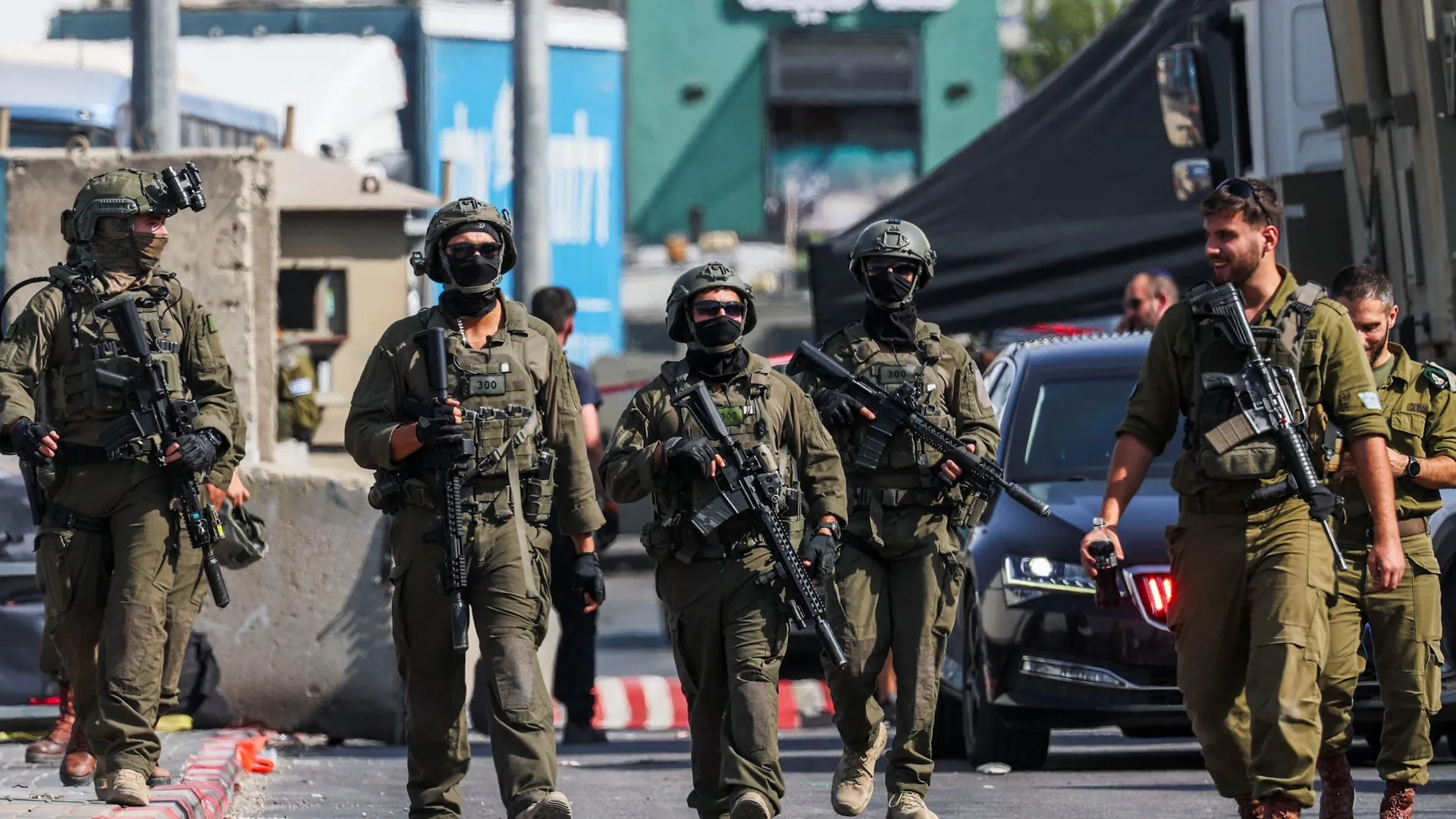
At the time, military sources said the additional troops would bolster existing positions along the border with Lebanon, its frontier and occupied positions within Syria, as well as in the Gaza Strip and the occupied West Bank.

Additionally, Israel’s Home Front Command called up 20,000 reservists, primarily for search and rescue operations, with reinforcements also deployed to the Israeli Air Force, Navy and Intelligence Directorate.

Israel has since deployed “thousands” of those troops to take part in its invasion of southern Lebanon, which it resumed in response to rocket fire from Iranian ally Hezbollah on March 3.

Addressing the same security cabinet meeting as Zamir, Central Command chief Major General Avi Bluth told ministers that government policies in the occupied West Bank were also placing increasing pressure on the military’s already stretched manpower.

According to the report, Bluth told ministers that over the past year, the government has approved the construction of multiple illegal settlements in the Jordan Valley and elsewhere in the West Bank as part of a wider operation characterised by rights groups and more than 20 countries as Israel’s “effective annexation” of the occupied Palestinian territory.

Bluth added: “This is your policy, but it requires security and a full protection package, because the reality on the ground has completely changed – and that requires manpower.”

Are Israeli troops exhausted?

According to many of the army’s own members, particularly reservists, they are.

Speaking to the Ynet News outlet, which is typically supportive of Netanyahu and his ruling Likud party, one reservist told the newspaper in December of his decision not to report for duty.

“We have battles to fight at home,” he said, explaining his decision. “There are guys on the team who were fired from their jobs, others whose families are barely staying afloat, or who have been dragging out their studies for a very long time. This is a problem, a complexity that is hard to describe.”

Resentment of the apparent exemption offered to members of Israel’s ultra-religious Haredim community, whose refusal to enlist for service is often overlooked by politicians, is also growing, Israeli media reports.

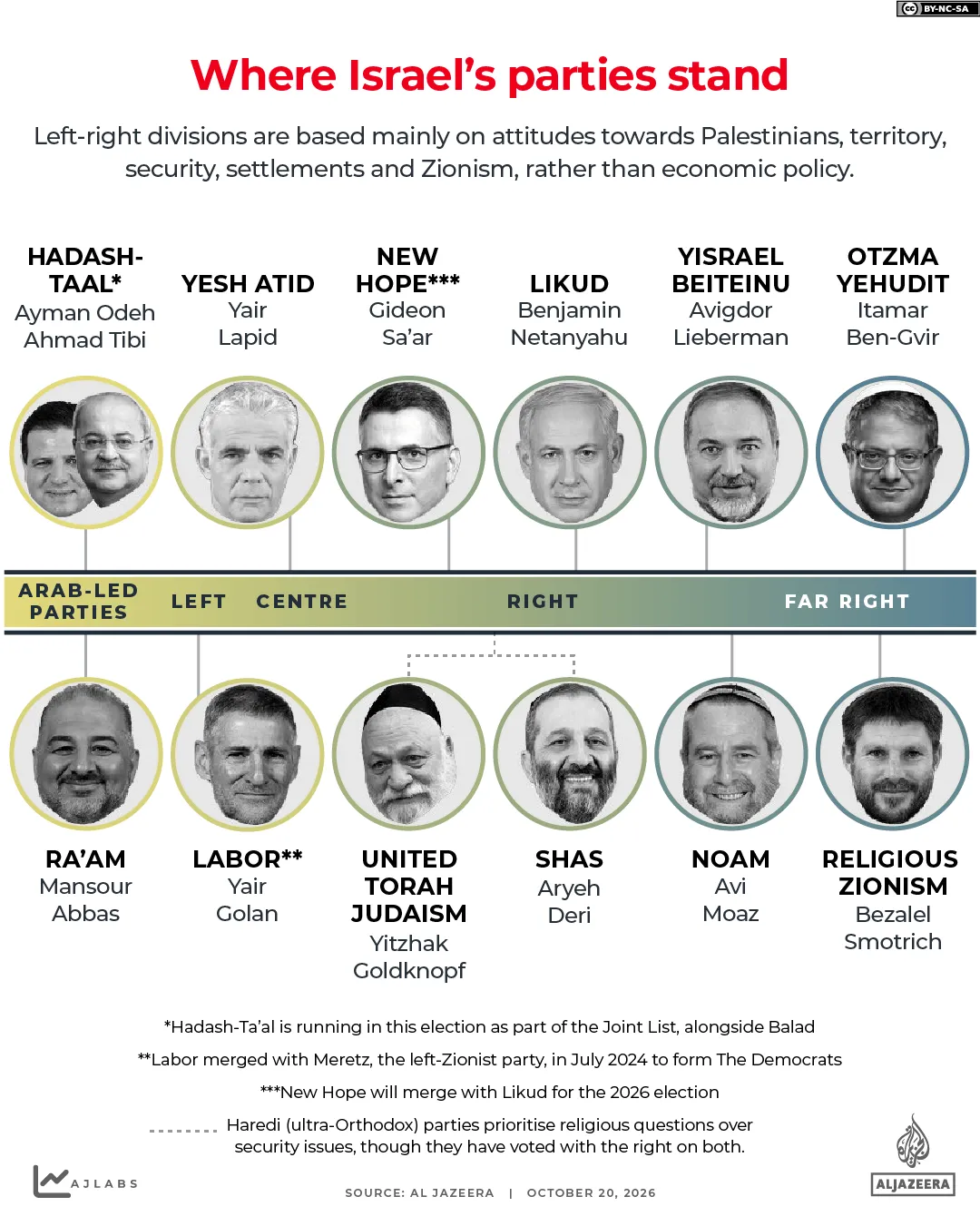
Responding to Zamir’s comments to the security cabinet, Israel’s opposition leader, Yair Lapid, took to Twitter to address the government directly.

“The government must stop the cowardice, immediately halt all budgets to the Haredi draft dodgers,” he said of the extensive social benefits many in Israel’s ultra religious community rely upon. “Send the military police after the deserters, draft the Haredim without hesitation,” he said.

“The warning has been given. It’s on your heads. It’s in your hands. You cannot continue to abandon Israel’s security, in wartime, for petty politics.”

Source link