Benidorm

‘Our famous UK seaside town once buzzed like Benidorm but now it’s rotting away’

Great Yarmouth was among the lowest-scoring seaside towns in Which? Travel’s 2025 rankings – but some believe there could be light at the end of the tunnel for the Norfolk resort

If you’re considering investing in UK property, you might think your best bet is a swanky London pad or a home in a leafy commuter belt suburb. However, Great Yarmouth could unexpectedly be the next big thing for property seekers – despite locals lamenting that its high street is “dead” and crying out for investment.

The renowned East Anglian seaside resort ranked low in Which? Travel’s 2025 seaside town ratings. And locals have expressed their disappointment at how the town has “gone downhill” after shops closed and once-thriving attractions dwindled.

“No one wants to come to Yarmouth,” 39-year-old Nicky Harwood, who runs The Market Cobbler, admits. “What does Yarmouth offer now?”. However, some are optimistic about a potential revival – and one business leader believes there’s a “huge opportunity” for prospective homeowners to snap up affordable properties now, the Express reports.

READ MORE: Beautiful seaside town now ‘dying a death’ and ‘depressing’ as 1 in 4 shops lie empty

Critiques of Yarmouth begin even before sun-seeking tourists reach its sandy shores. The main access route is the dreaded A47 Acle Straight – a lengthy single-carriageway road notorious for its horrendous traffic jams, particularly during the peak summer season. Asa Morrison, chief executive of Visit Great Yarmouth, said: “Historically, it used to be quite hard to get into Yarmouth in the summer months, and even worse, it would take them a long time to get out.”

The £121million Herring Bridge, which opened its gates in February 2024, has provided some relief from the maddening traffic jams. However, Martin Bayfield, 43, who was visiting Yarmouth with his mother Bonnie, 70, from Lowestoft, remarked: “The bridge is fantastic but 20 years too late. A lot of industry could’ve been saved if it had been done 20 years ago.”

The town’s downturn in recent decades is deeply felt by residents, with Yarmouth weathering several economic storms. Ian Handley, publican of The Coachmakers Arms on the corner of Market Place, explained: “The market used to come down to this corner. It used to be packed with stalls. People used to go up here at 1-2am, waiting for an empty pitch. It was a proper market town. It’s just like every market town, died a death.”

And Susan Colville, landlady at the Coachmakers, lamented: “There’s not a lot of trade here any more. We’ve lost all our shops.” The finger of blame is often pointed at out-of-town shopping developments, particularly the Gapton Hall Shopping Centre on Yarmouth’s fringes.

Rene Iliff, 70, a Great Yarmouth local, observed: “This town has gone downhill, certainly in the last 10 years. One of the main issues is that all of the main shops are out of the town centre. It has killed the town centre.”

Paul Hodgson, who runs Tombstone Brewery and Saloon Bar, insisted the high street “needs a major investment”. He continued: “It needs to bring businesses back into town. The town centre is dead. You can walk up to the town centre at night, there won’t be anyone about apart from groups of young men.

“They’ve moved everything out of town. So people just follow the big shops and places out of town. They’ve got to reinvigorate the high streets. I don’t think they’ll do that unless they get big businesses coming back to the high streets, so people will go there to visit those stores.”

And Yarmouth resident Patricia Beutler added: “Although they’ve improved it quite a bit, when we go to other seaside towns, which have also been rundown in the past, we notice that they’ve come on leaps and bounds. I say to them every time, Yarmouth could learn a lesson or two.”

Her husband Konrad Beutler, vice-chairman of East Norfolk Campaign for Real Ale, reckons the town is “crying out for a Primark”. He added: “Yarmouth hasn’t got the footfall for retail. The retail is not here any more.” Yet whilst Yarmouth needs investment, he insists it “deserves more” and that locals should champion the town.

“I think anywhere that’s got deprivation does need lifting up,” he argued. “Whether this current Government will find the funds to do it is another matter. There is an element of deprivation, but that’s no different to where I was brought up in Surbiton or even affluent parts of London. There are elements of deprivation there as well. It’s possibly a bit more visible here, because it’s a small area.” Discussing plans to improve Yarmouth, he said: “The community, the people themselves, have to share in it. They have to buy into that.”

Hopes are high that the £16.3million transformation of Great Yarmouth’s historic Winter Gardens – the UK’s last surviving Victorian seaside glasshouse, shuttered for 18 years – will breathe new life into the area near the famous Pleasure Beach. Crucially, it will provide visitors with shelter when the weather turns, making Yarmouth an attractive destination even in poor conditions.

“It’s the regeneration of what will be a beautiful building, restored back to its former glory on the seafront,” said Mr Morrison. “It’s a pretty Victorian building in its own right. It gives us a significant additional wet weather coverage, which is always good for the seafront. On the East Coast, when it’s cold, wet and windy, it’s really cold, wet and windy.”

However, the greatest economic boost for struggling Yarmouth may not come from new retail outlets or a revitalised town centre, but from miles offshore, deep in the North Sea. The East Coast is emerging as a major hub for offshore renewable energy, with numerous wind turbines now visible from the beach.

This is generating thousands of highly skilled, technical, well-paid positions – and Jack Weaver, chief operating officer for Norfolk Chambers of Commerce, believes it makes Yarmouth an excellent place to purchase property. “The amount of investment in offshore renewables and the energy transition in the North Sea coastline, whether it’s the Humber down to Essex, is colossal,” he explained.

“And I think what’s really exciting about communities like Great Yarmouth is how that starts to kind of wash out into the community – and we haven’t quite seen it yet. If I had the money to invest in property, I’d probably be buying stuff on the coast in those communities right now, somewhere like Great Yarmouth or Lowestoft or Gorleston. I would be buying property in those places, because I think that’s a huge opportunity. The challenge is, the starting point is more deprived than everywhere else.”

It would certainly need a significant transformation in Yarmouth’s economic landscape. Much of its trade is seasonal, with workers grafting around the clock to serve holidaymakers in summer but left jobless come winter. Alex Capon, a lifelong Great Yarmouth resident, reckons that coastal living surrounded by nature beats city life hands down. “It’s just quite a nice pace of life, not too hectic,” he said. However, he believes Yarmouth “needs investment in infrastructure”, adding: “That’s been the main problem for years. It’s hard because the economy is not great here.”

Yet the town’s resilience despite economic struggles proves that Yarmouth perhaps possesses the most crucial thing of all – a spirit and stubborn determination that few can rival. Ricky Jeffs, 47, a property landlord living in Yarmouth, describes the atmosphere: “In the afternoons, it’s a bit like Benidorm. It’s nice. There are a lot of retired people here, and many of them enjoy a drink in the afternoon. They also play bingo and sing karaoke. It is retired people generally or people who are roofers who’ve worked since 6am and enjoy coming out.”

Mr Morrison promotes Yarmouth as a “wonderful mix” of attractions and accommodation. “Yarmouth doesn’t pretend to be anything, but it is a seaside resort, with lots and lots to do, particularly in the summer months,” he explained. He highlighted the “significant loyalty” amongst visitors, with multiple generations from the same families making the annual pilgrimage to Yarmouth’s seafront.

Should the green energy revolution truly gather momentum, the town could transform into more than just a holiday destination for thousands – breathing new life into its prospects once again.

Source link

‘I live in Spain – these are the tourist traps you need to avoid’

If you want an authentic holiday you need to be aware that Spain has a lot of misleading attractions.

Spain remains an incredibly popular destination for tourists, attracting visitors not just from Britain but from around the globe. Yet, like many countries, there’s a stark contrast between the spots cherished by locals and those swamped by tourists.

Tourist traps exist everywhere, but avoiding them requires insider expertise. From Barcelona to Madrid, countless traps can leave holidaymakers feeling frazzled, out of pocket, and as if they’ve missed the authentic essence of the country.

Fortunately, James Smith, founder of Learn Spanish with James, has revealed his insights on the worst tourist traps – and the alternatives worth visiting, reports the Express.

Top of his list is Barcelona’s most renowned thoroughfare: La Rambla. Drawing millions annually, this formerly lively street has become saturated with extortionate restaurants, tourist tat shops and pickpockets.

James said: “La Rambla has become a victim of its own fame.”

“It’s so focused on tourists that it’s lost any authentic Barcelona character.”

Instead, he suggests visitors explore El Born or Gràcia.

He said: “These neighbourhoods pulse with genuine Barcelona energy. You’ll find independent cafés where locals actually drink their morning cortados, artisan shops selling handmade goods, and restaurants where the menu is in Catalan first.

“The architecture is just as stunning, but you’ll actually have space to appreciate it.”

In Madrid, hordes of tourists descend upon Puerta del Sol to snap selfies with the iconic bear statue, but they must also navigate through throngs of people, pushy street sellers and generic high street shops.

James explained there’s nothing in this corner of Madrid that you couldn’t find in any other major European capital.

For a truly genuine experience, head to La Latina instead, where winding cobblestone lanes lead past local taverns and authentic markets where you can purchase genuine Spanish artwork and jewellery.

Rising early also gives you more opportunities to discover the city. James said: “For a genuine Madrid atmosphere, visit Plaza Mayor early in the morning before the tour groups arrive, when market vendors are setting up and locals are having breakfast.”

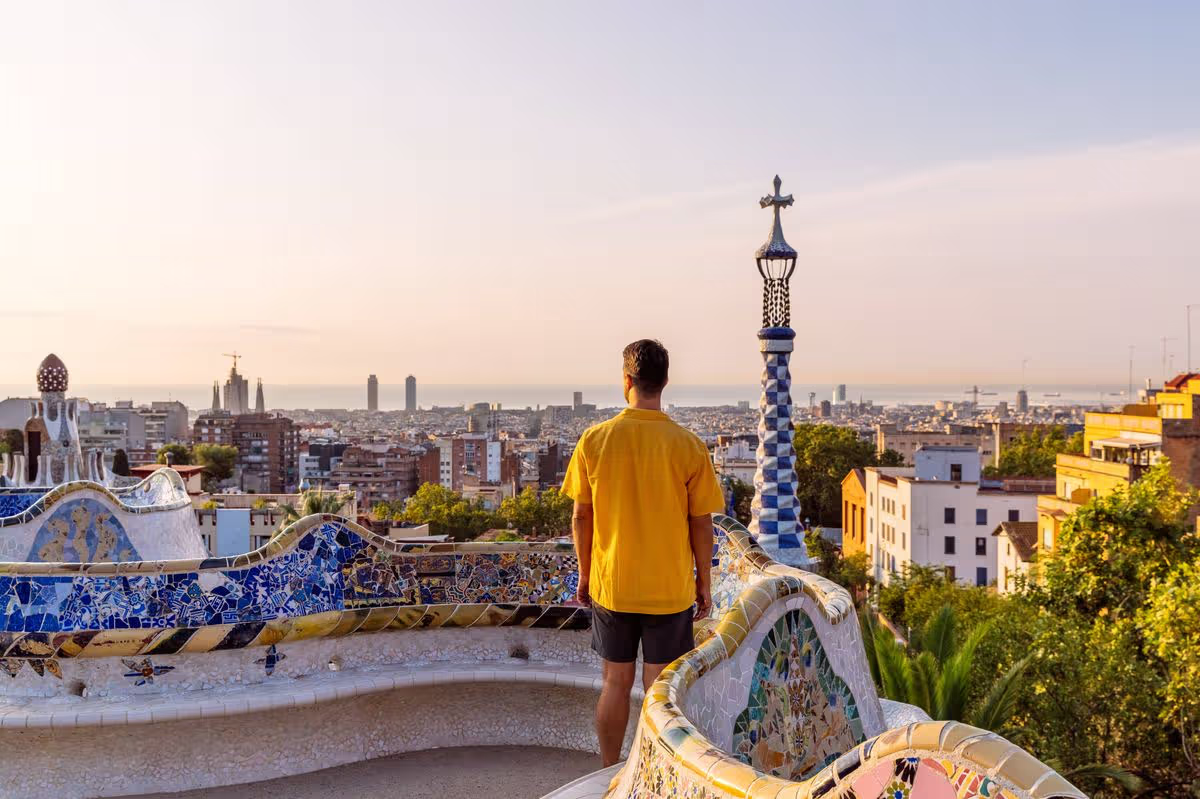
His third tourist trap warning is also for Barcelona – the renowned Park Güell. While undeniably beautiful and fantastical, it now operates on restricted entry.

Visitors must purchase timed tickets, and that allocated slot will likely be spent navigating around other sightseers just to catch a glimpse of the celebrated mosaic benches.

He said: “Park Güell has become so controlled and commercialised that it’s lost the spontaneous joy that Gaudí probably intended.”

As an alternative, try making your way up to Bunkers del Carmel for breathtaking panoramas across the city.

This former anti-aircraft installation provides 360-degree vistas of the entire metropolis, from the coastline to the mountain ranges.

Entry is completely free, available around the clock, and it’s a favourite spot among locals who congregate here at sunset with wine and pleasant conversation.

Benidorm and Ibiza remain firm favourites with British holidaymakers. Yet both destinations can feel overwhelmed by overpriced tourist traps.

Travel expert James revealed that when it comes to Ibiza, there’s far more on offer than simply clubbing. He explained: “The party scene has its place, but it’s not representative of what makes Ibiza special.”

His advice?

Take a ferry across to Formentera, or venture to the northern reaches of Ibiza around San Juan and Portinatx. Here you’ll discover secluded coves, charming whitewashed villages and a flourishing bohemian scene.

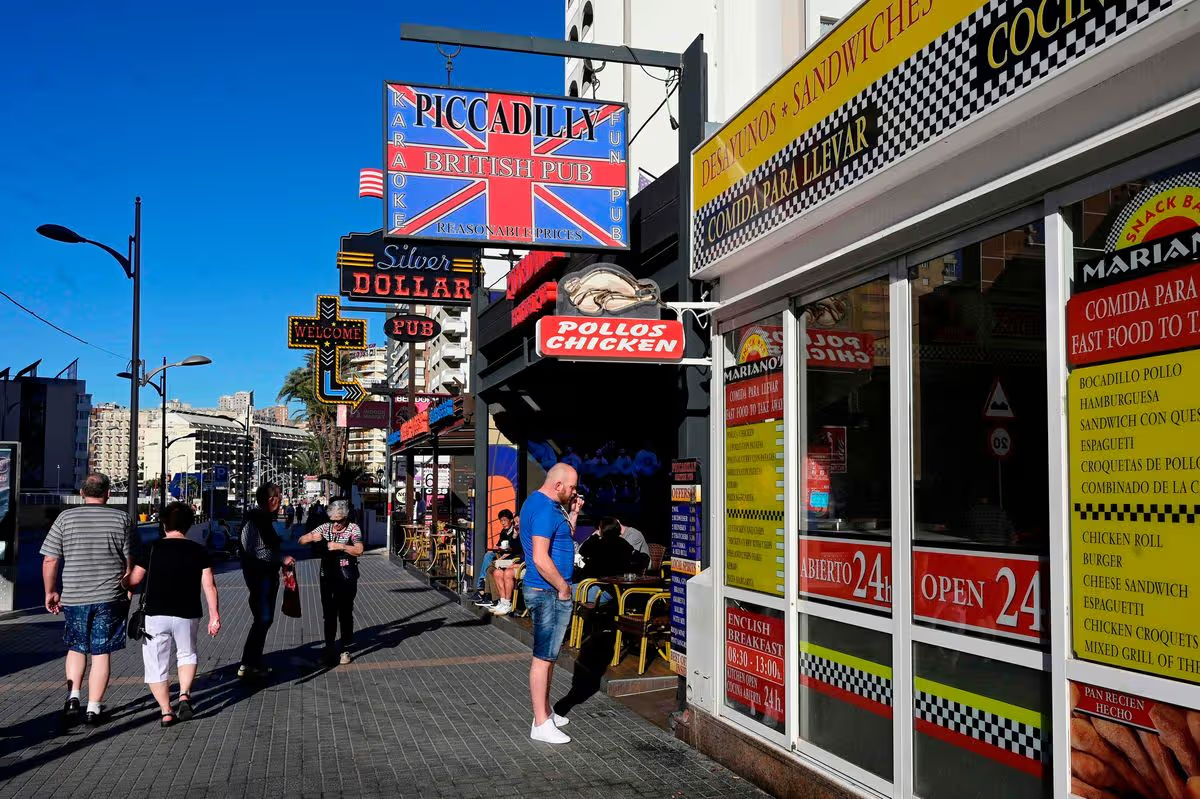
Regarding Benidorm, if you’re after something genuine, it’s best to give it a miss. James said: “Benidorm serves a purpose for certain travellers, but if you’re looking for Spanish culture or authentic coastal life, you won’t find it here.”

His recommendation is to head for villages such as Altea or Guadalest nestled in the mountains, where Spanish families take their holidays and restaurants dish up authentic paella instead of a full English breakfast.

Source link

I ditch life in freezing UK for sunny Benidorm as a ‘snowbird’ every winter

SUNSHINE fan Scott Dixon has spent every winter in Benidorm for the past seven years and the canny traveller insists the annual pilgrimage SAVES him money.

The 55-year-old takes his work with him on his annual lengthy getaways, saying he sleeps better and returns to the UK refreshed and energised. Sound too good to be true? Here, he explains how he gets such “staggering value’ on his winter sunshine breaks.

Scott Dixon has spent every winter in Benidorm for the past seven yearsCredit: Scott Dixon
Scott will have no food bills, no heating bills, no petrol bills and will be spending his days in 20C sunshineCredit: Scott Dixon

“It’s a no brainer,” says Scott, as he preps to jet away from his “freezing” home for the Spanish holiday resort. 

“Many people think extended winter sun breaks are a luxury but I say it’s smart budgeting.

“Covid has opened up a whole new world of possibilities to work and live anywhere affordably

“I’ll have no food bills, no heating bills, no petrol bills and I’ll be spending my days in 20C sunshine instead of enduring it in freezing Edinburgh.”

For the past few years, Scott has tried out several different kinds of accommodation in Benidorm’s Old Town for the season, including self-catering long term lets, but this year he has booked two, three week half-board holidays with Jet2

The digital nomad’s Benidorm package deals will include breakfast, evening meals with half a bottle of wine each night, flights, transfers and WiFi. 

The ‘snowbird’, a name for people who move to sunnier climes for the winter, says the three weeks in December costs him £1,443 and the three weeks in February £1,205, totalling £2,648.

This, he has worked out, breaks down to a spend of £63 a day. 

“To put it into perspective, my one bedroom flat in Edinburgh costs me up to £45 a week for electricity,” says Scott, who is mortgage free.

“Food is another £30 a week plus a load of other household costs.  

“At home, I’m paying hundreds of pounds just to sit around in the cold, cooking for myself and keeping the heating on.

“The value for money I’m getting abroad is staggering – I’m getting sunny weather, daily cleaning with no housework and cooked meals.”

Thousands of Brits head to Benidorm every winter, with the resort’s long-stay visitors attracted by its weather and British-style pubs and shops. 

“I’ve got to know a few familiar faces over the years,” says Scott, who is single and travels solo.

“Regular winter visitors, locals, bar staff and people who have become friends. 

Scott says the value for money he’s getting abroad is staggering – “sunny weather, daily cleaning with no housework and cooked meals”Credit: Alamy
While the lively, budget-conscious destination in Southern Spain has been unkindly dubbed ‘Blackpool with sunshine’ by some, Scott insists Benidorm’s Old Town is a true hidden gemCredit: Scott Dixon

“You see a lot of the same people each year and there’s a real community feel.

“It’s become quite common for people to escape the UK winters, especially pensioners, remote workers and anyone who realises they can live well for less in the sun for a few weeks.”

While the lively, budget-conscious destination in Southern Spain has been unkindly dubbed ‘Blackpool with sunshine’ by some, the writer insists Benidorm’s Old Town is a true hidden gem.

Filled with whitewashed buildings, narrow streets and traditional architecture, this area is known for its tapas bars and vibrant nightlife. 

“The Old Town is traditionally Spanish and a polar contrast to the New Town, which is where everyone forms their ‘Brits abroad’ and ‘Blackpool with sunshine’ negative opinions,” says Scott.

“People who have seen my photos can’t believe how nice and clean it is, with pristine beaches and everything you can wish for.

“It’s reliable, warm, affordable, has everything I need and only a two-and-a-half-hour flight each way.

“Benidorm is a completely different place compared to the summer peak season in general – it’s calm, clean and more chilled out.”

The weather in the winter is mild and pleasant, with an average of six hours of sunshine each day compared to less than two hours back in the UK.

“The weather is the biggest draw,” says Scott.  

“It’s perfect. Not too hot, not too busy and the weather is warm enough to sit outside with a beer on the beach front, go for long walks or just have a snooze on the beach without getting burned.

“Once you’re into January and February, it can sometimes be a bit too hot to sit out in.” 

Moderate exposure to sunlight is a primary source of vitamin D for most people and this vitamin produces the ‘happiness hormone’ serotonin that positively affects people’s mood, appetite and sleep.   

It could be why wintering in the holiday resort always has a positive effect on Scott’s mental wellbeing.  

“I started going during the winter in 2018 because I realised I didn’t need to spend it in the UK, freezing, paying high bills and feeling miserable,” he explains. 

“And the first time I tried it, I honestly couldn’t believe the difference in how I felt – more energy, better sleep, a better mood and a different mindset. 

“That made it a yearly habit.

“I eat better and walk more, and return home refreshed and energised – not run-down and drained.”

The ‘snowbird’, a name for people who move to sunnier climes for the winter, says the three weeks in December will cost him £1,443Credit: Scott Dixon
Scott says endless days of blue skies and warm sunshine really lifts his spirits and benefit his mental healthCredit: Alamy

Scott, a consumer rights expert known as The Complaints Resolver, takes his work with him on his extended holidays – and says he usually isn’t the only digital nomad around. 

“Since I freelance, I’ve built flexibility into my schedule,” he explains.

“WiFi is good, and hotel staff are used to digital nomads now.

“I have stacked my work in advance so I can relax, and do some light work in the sunshine if necessary.”

So as Scott packs his suitcase for Spain, he has a simple message for anyone thinking of becoming a ‘snowbird’: do it. 

“You don’t need to be wealthy,” he says.

“Package deals in winter are cheaper than many people think and if you compare it to the cost of staying at home you may find it’s not that expensive.

“The endless days of blue skies and warm sunshine really lift your spirits and benefit your mental health, you can’t put a price on that.

“It’s a place where you can relax without thinking about life admin, bills and the day-to-day drudgery of winter in the UK.

“I couldn’t imagine spending winters anywhere else.”

Scott says package deals in winter are cheaper than many people think and if you compare it to the cost of staying at home you may find it’s not that expensiveCredit: Alamy

Source link

World’s first package holiday was alcohol alcohol-free trip to unlikely UK town

Package holidays have become the go-to option for many Brits, but the first package holiday in 1841 was worlds away from a sizzling trip to Spain – and passengers only travelled 11 miles from home

As the festive decorations are packed away and Brits brace themselves for a dreary, rain-soaked January, many will be planning their summer getaways. When it comes to chasing the sun, Brits have long loved the ease of a package holiday.

ABTA data reveals that 62% of people who ventured abroad last year opted for a package holiday, bundling together flights and accommodation with extras from coach travel to car hire and dining packages.

The surge in package holidays has gone hand in hand with the rising popularity of overseas destinations. So, you might assume that first package breaks involved jetting off to sunny Costa Blanca or the chic south of France.

However, the origins of the package holiday are far more modest, and there’s one man to thank next time you’re basking in an all-inclusive in Alicante or lounging in Lanzarote, reports the Express.

Thomas Cook and the birth of the package holiday

The first package holiday in 1841 was a rather tame event. A Baptist preacher named Thomas Cook chartered a train and organised a trip for his fellow temperance movement members, advocates of abstaining from alcohol.

For a mere shilling, passengers could journey the 11-miles from Leicester to a temperance rally in Loughborough, complete with a cup of tea and a ham sandwich to enjoy on the train.

It may have been a modest start, but spurred on by the sale of 485 tickets, Thomas established Thomas Cook & Son, which became a household name in package holidays for many years. The entrepreneur recognised that railway companies offered discounts for bulk bookings or charters, and the public appreciated the ease of booking a package with everything organised for them.

Following his whirlwind journey to Leicester, Thomas Cook expanded his offerings with further trips across the Midlands, before branching out to London for the Great Exhibition. In 1855, he ventured overseas, leading tour groups to Belgium, Germany, and France, and in 1863, he introduced the first tour of Switzerland.

Opening up the world

Given the popularity of his European excursions, Thomas Cook presented his most ambitious itinerary yet in 1872. For 200 guineas, roughly equivalent to £25,000 today, travellers could embark on a 222-day tour encompassing the USA, Japan, China, India, and Egypt.

Around this time, Thomas also pioneered the use of circular notes, later known as traveller’s cheques, making it easier for holidaymakers to spend money abroad.

By 1888, Thomas Cook & Sons had established a global presence with offices worldwide, including three in Australia and one in New Zealand. By 1890, they were selling tickets to over three million travellers annually.

Previously, travel was a luxury only the wealthy could afford, but many of Cook’s new clientele were from the burgeoning middle classes. France, Germany, and Switzerland were popular destinations, and packages often included cultural excursions to museums, theatre and opera visits, in addition to outdoor pursuits like mountain climbing.

Fast forward to 1949, when the first modern package holiday, as we know it today, was introduced. Vladimir Raitz, a Moscow-born businessman who had relocated to London, was holidaying in Corsica when a business associate challenged him to attract more Brits to the island.

Vladimir calculated that for £35 per person (equivalent to around £1,100 in today’s money), he could charter a plane and offer British holidaymakers two weeks of sun-soaked bliss on the French island.

Despite facing some hurdles, Vladimir’s offer of a flight, tent accommodation, and twice-daily meals with meat proved irresistible to those still grappling with post-war austerity. The first charter flights took off in May 1949.

Vladimir went on to found Horizon Holidays, the first in a long line of package holiday companies promising sun-drenched getaways.

By 1950, the post-war holiday surge saw a million Brits venturing abroad, and in 1957, the now-obsolete British European Airways capitalised on this trend by offering flights to Valencia, situated approximately two hours north of Alicante. To market this fresh destination, the nickname Costa Blanca was created, encompassing the towns and cities along the 120-mile coastline.

During this period, a quaint fishing village named Benidorm was witnessing a decline in its fishing industry and needed a new income source. The local council, seizing an opportunity, began approving new developments.

In 1956, the General Plan was initiated, which moulded the destination that Brits adore today. While the area had been a tourist hotspot for some time, this plan incorporated more high-rise buildings and large public spaces, completely changing the skyline of the Spanish city.

1950 also marked the debut of the first resort to offer a version of the modern all-inclusive. Club Med launched a resort in Alcúdia, Majorca, where holidaymakers could have all their meals included in the price.

Tourists, primarily from Belgium and France, stayed in tents or beach huts and meals were a communal event, yet it laid the groundwork for a popular style of holiday that persists to this day.

Golden age

In the 1960s, a mix of factors like improved flight accessibility, increased wages and more paid holidays led to Brits swapping their local getaways for foreign adventures. Many embarked on their first overseas journeys, basking in the sun-soaked climes of Spain, Greece, and Italy, immersing themselves in diverse cultures and sampling exotic cuisines.

READ MORE: Three cities where boozy stag dos are ‘more popular than ever’READ MORE: Ryanair passenger ‘flung out of our seats’ during horror turbulence at 35,000ft

Fast forward to today, and not much has changed with package holidays. A week or two under the sun remains the summer highlight for many Brits.

While new destinations have emerged, early favourites like Costa Blanca and Majorca continue to draw crowds. And even though the internet has opened up a world of travel opportunities, the continuing popularity of package holidays shows that sometimes all you need for a great holiday is a bit of sunshine and a comfy sunlounger.

Have a story you want to share? Email us at webtravel@reachplc.com

Source link

Benidorm a ghost town as bars left empty on ‘dead’ strip with tourists nowhere to be seen

A British expat has shared an insight into what Benidorm is like in the winter season and she offered a worrying reason why some tourists may be avoiding the streets

An expert on all things Benidorm has shared insight into what the popular Spanish resort is like in the winter months – declaring that it is “completely dead”.

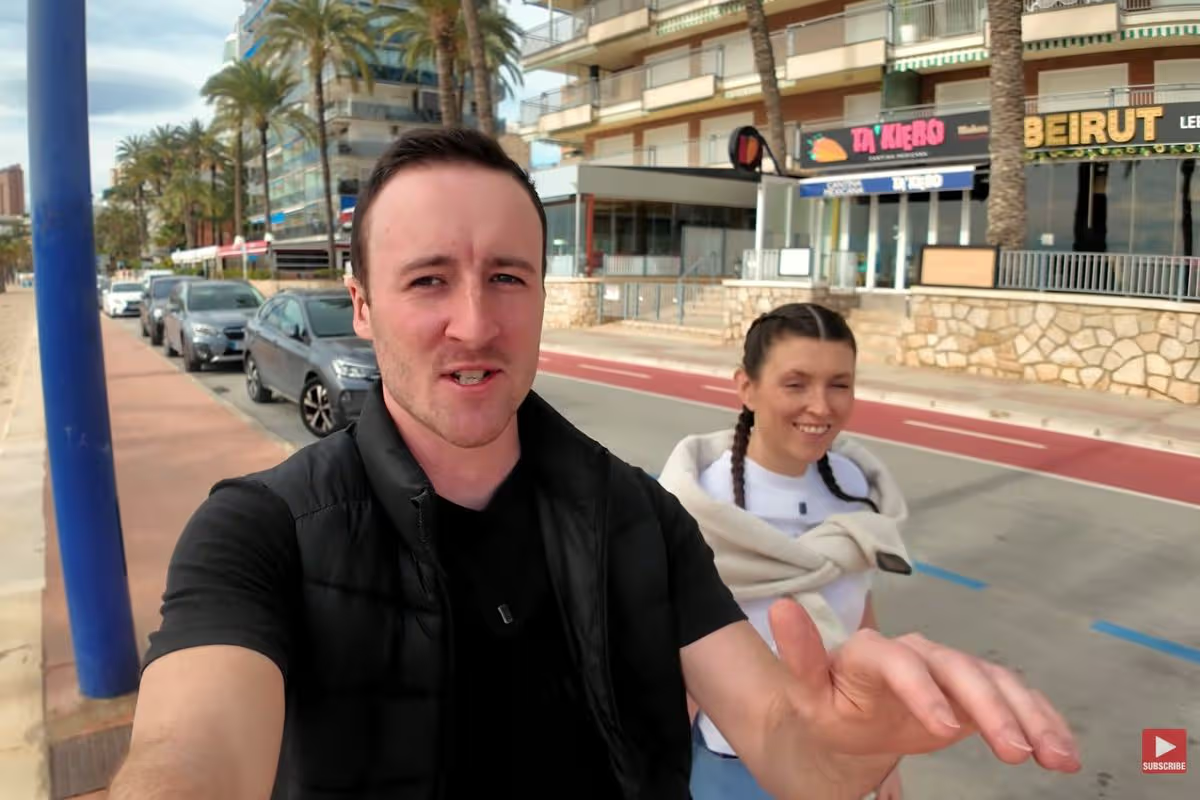
Expat Lucy Young runs the Benidorm Stuff YouTube channel and she recently toured the usually bustling strip that looked more like a ghost town.

Starting her vlog, she said: “It’s very quiet… in fact it’s dead! Pretty much as dead as it gets. There are plenty of places open but there are just not many people around. So let’s go for a wander and see if we can find any life in December. The whole of Benidorm is just completely dead at this time of year.”

Lucy, who has lived there for over 20 years and is known as the Benidorm Enthusiast, began her stroll on a Tuesday night just after 10pm and she told her 75,900 subscribers it was as deserted as they would ever see.

However, being low season, she acknowledged that the empty bars and quiet streets were as expected, but she still sometimes forgets just how silent it gets.

She added that she highlights just how “absolutely wild” the resort is during high season, and therefore it was important to show it at its quietest period too.

During her walk past bars that are usually heaving with partygoers, Lucy shed some insight into the different reasons why the streets were almost empty.

She explained how Levante Beach remained a hive of activity during the day time in winter and that the Old Town has got a buzz about it in the afternoon – but where does everyone go when the sun drops?

She said: “Many tourists that come in December just stay in their hotels. It can get pretty nippy and I don’t think people realise just how nippy it can get.”

The content creator said temperatures drop rapidly by 10 degrees or so once night falls and there is no escaping the chill.

She added that hotel rooms were warm, cosy and provided entertainment, and therefore many tourists preferred to simply stay put.

Citing a more worrying reason, she hinted that the strip was not as safe as it could be, and some folk were unwilling to venture out too late.

She explained: “I think it is down to the age group as well. We do get a slightly more mature age group at this time of year and I think sadly some just don’t feel particularly safe around here late at night anymore.

“It is a real shame because this area used to be welcoming for all ages at all times of the year really. But I think in recent years most people will agree that this area has changed and not for the better.

“If you are not a hardcore partygoer you may well be put off by this area these days. Even I can feel a little bit intimidated walking around here and I know these streets like the back of my hand.”

She added that the liveliest parts of Bendiron were around the Hotel California bar and The Crown pub where a few people were gathered for drinks.

Lucy later joked that she expected to see tumble weeds rolling down the road by the time she reached the end of the strip because of how quiet it was.

The YouTuber acknowledged that some people will prefer Benidorm this way, usually because they can get a seat for entertainment shows that are performed all year without having people talk over them.

But as for anyone coming in winter, she advised them not to expect the strip to be “absolutely bouncing” before emphasising one final time: “The strip at night? It is pretty dead and deserted.”

After posting the video, which you can watch here in full, one person commented: “Omg don’t think I have ever saw it so empty Lucy.”

Another wrote: “Coming out for the new year, really looking forward to it and hope it’s worth it.”

A third said: “Still love Benidorm at New Year it will be so different then.”

One person added: “Why is it like this? I live 45 minutes away, never seen it like that since lockdown.”

Source link

‘I had Christmas dinner in Benidorm and we were shocked when the bill arrived’

YouTuber Steve Marsh and partner Alicja had their Christmas dinner at Sherry’s Bar in Benidorm and were stunned when the bill for their three-course meal with wine arrived at their table

A YouTuber who enjoyed a three-course Christmas feast in Benidorm with his other half has confessed they were taken aback by the final bill.

Steve Marsh jetted off to the Spanish resort with his partner Alicja, where the couple tucked into their festive meal at Sherry’s Bar.

As they left the restaurant, Steve and Alicja chatted about the cost – €70 for the pair, working out at just over £61 for two – with Alicja admitting her shock that it wasn’t €70 each, hailing the establishment for its excellent value.

Following the meal, Steve declared himself “broken” after demolishing the generous roast dinner complete with all the trimmings and wine, which came as part of the package.

Before heading off for a dip in the sea, he remarked: “But to be able to get a Christmas dinner in Spain on the 24th of December, that was pretty good wasn’t it? Oh boy. Nobody said it was easy.”

While Steve and Alicja opted for a Benidorm Christmas, questions have been raised about what the future holds for this beloved British holiday hotspot.

In recent times, Europe has witnessed repeated waves of anti-tourism demonstrations, with residents voicing their frustrations.

Consequently, there are worries that visitors might look elsewhere, potentially damaging local European economies.

Benidorm isn’t shielded from these economic shifts, with one visitor branding it a “ghost town” and “empty” during a late summer visit. The TikToker, posting as @yorkshirebargainhunter, shared clips online revealing just how deserted Benidorm has become, according to the Express.

They remarked: “If you’re in Benidorm right now, what do you think? Why do you think it’s so quiet? Why is nobody around? Even this bar here is fully shut down.

“We’re in the height of summer. Everywhere should be absolutely rammed, but it’s not. It’s absolutely dead. This is one of the main strips in Benidorm and it should be absolutely rammed.”

Amid reports of declining visitor numbers, tourism bosses have indicated that holidaymakers might be staying away because they no longer feel welcomed.

Speaking to the Majorca Daily Bulletin, Miguel Pérez-Marsá, head of the nightlife association, said: “The tourists we’re interested in are being driven away; they don’t feel welcome and are going to other destinations.”


Source link

Spanish town has Europe’s cheapest package holiday for 2026 summer getaways

If you’re looking to book your summer getaway for next year then look no further, as the cheapest holiday destination has been revealed and it’s a stunning Spanish region

A popular Spanish region with white sand beaches and pristine blue water has been named as the cheapest summer holiday destination for 2026.

As we look to book our summer getaways for next year, Which? has compared the prices of 5,393 package holidays from Jet2holidays and easyJet Holidays to reveal the most affordable options. This was based on a seven-night stay, including flights, departing around August 2, with two people sharing a room with various board types.

Following their extensive research, the experts found that Costa Blanca, along Spain’s Mediterranean coastline, was the most budget-friendly option for a holiday deal next year. For a stay in Costa Blanca during the height of summer, Which? discovered that it would cost, on average, £864 per person for a seven-night package.

This is partly due to its popular and affordable seaside resort of Benidorm, which has often been dubbed the ‘New York of the Mediterranean’ or the ‘Spanish Las Vegas’. Benidorm is undeniably appealing with its sprawling golden sand beaches and turquoise waters, while its cheap drinks, lively nightlife, family entertainment and towering buildings only add to its unique allure.

In its research, Which? found that Benidorm offered some of the cheapest holidays from £535 per person for a week’s self-catering at the two-star Playamar apartments. Meanwhile, an all-inclusive option at the four-star Flamingo Beach Resort, featuring three outdoor pools, would cost £886pp with EasyJet Holidays.

But there’s much more to Costa Blanca than Benidorm, with quieter Spanish areas away from the tourist crowds. One option is the charming and picturesque hilltop town of Altea, offering sensational views over the Mediterranean, with room-only options available for £ 1,033 per person at the luxurious five-star SH Villa Gadea.

Costa Blanca was the only destination Which? found to be less than £900 for a week’s stay in August. Elsewhere in the research, the second most affordable package holiday was revealed as Tuscany, nestled in the heart of Italy.

Tuscany is renowned for its rolling hills, Renaissance masterpieces, and iconic cities such as Florence, Siena, and Pisa. A week-long stay in this captivating Italian region would set you back £929 per person, inclusive of flights and accommodation.

Coming in third on the list of budget-friendly summer escapes is the breathtaking Agadir coast in Morocco, famed for its expansive sandy beaches and status as a prime resort destination. With an abundance of accommodation choices along the coastline, centred around beach days, a stay here would amount to £946pp.

According to Which?, six of the top ten cheapest holiday destinations for 2026 are located in Spain, with Tenerife, Fuerteventura, and Gran Canaria among them. Additionally, Zante in Greece, celebrated for its crystal-clear waters, lush landscapes and vibrant nightlife, also secured a spot in the top 10.

Here are the cheapest package holiday destinations for 2026, as outlined by Which? The results show the average price, per person, for a seven-night package stay.

  1. Costa Blanca, Spain – £864
  2. Tuscany, Italy – £929
  3. Agadir coast, Morocco – £946
  4. Dalaman area, Turkey – £1,048
  5. Tenerife, Canary Islands – £1,073
  6. Fuerteventura, Canary Islands – £1,119
  7. Gran Canaria, Canary Islands – £1,121
  8. Costa Brava, Spain – £1,125
  9. Costa Dorada, Spain – £1,133
  10. Zante, Greece – £1,142

Do you have a travel story to share? Email webtravel@reachplc.com

Source link