Belgium

Belgium see red in goalless World Cup draw with Iran in Los Angeles | World Cup 2026

Nathan Ngoy sent off for hauling down Mehdi Taremi, whose first-half strike was called offside, in a close Group G match.

Belgium were held to a scoreless draw by Iran in a frustrating encounter that saw the Red Devils reduced to 10 men and facing the possibility of group-stage elimination for a second consecutive World Cup.

A star-studded, though ageing, lineup, including Kevin De Bruyne and Romelu Lukaku, was fortunate to leave Los Angeles with a point on Sunday.

Recommended Stories

list of 4 itemsend of list

Belgium controlled possession yet ceded the game’s best chances to a resolute Iranian defence.

Iran’s Mehdi Taremi had the ball in the net from a well-worked first-half free kick that was overturned for offside by VAR, while Nathan Ngoy was sent off after the break for hauling down the striker following a badly mishit back-pass.

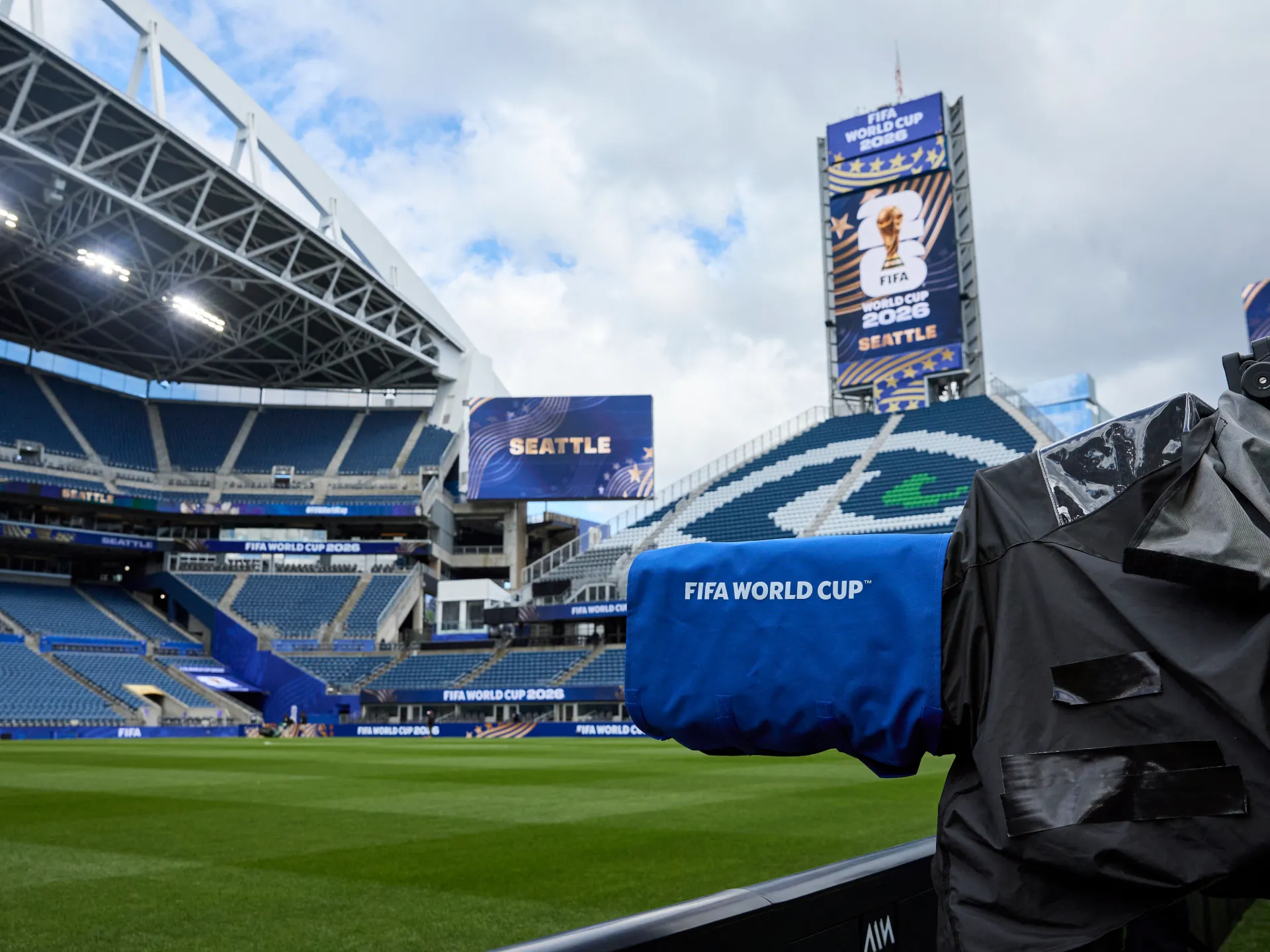
The result means all three games in Group G so far have ended in draws. Stuck on two points, Belgium at least have the comfort of playing the tournament’s lowest-ranked team, New Zealand, in their final group game.

Iran will also need at least a point against Egypt next Friday. Having been frustrated by visa issues while travelling from their base camp in Mexico to play games in the United States, Team Melli will hope to focus on the football as travel restrictions are reportedly easing for their crucial trip to Seattle.

For the second Iran game running, protesters from Los Angeles’s large Iranian-American community gathered at the stadium to chant against the country’s current regime.

Inside the stadium, Iran’s anthem again drew a chorus of boos and whistles, a reception at odds with the response to the players themselves, who were loudly cheered throughout the game.

Having switched to a back five, Iran sat deep in the first half, allowing Belgium to dominate possession and play hundreds of passes around their penalty area without creating any clear-cut opportunities.

Target man Lukaku, back in the starting lineup after making an impact from the bench in Belgium’s 1-1 draw with Egypt, managed a solitary headed effort in the 36th minute, which sailed over the bar.

Iran had the first half’s two best chances, entirely against the run of play. Hossein Kanani’s low shot after a long throw was well saved by an outstretched Thibaut Courtois.

And Iran’s star striker Taremi had the ball in the net midway through the half after a cleverly worked free kick, but it was ruled offside.

The former Inter Milan man spun away from Belgium’s wall, swivelled and buried the ball, before VAR overruled the effort, to the dismay of a vocally pro-Iran crowd.

After the break, Belgium continued to huff and puff, while Taremi again nearly scored at the other end. Courtois did well to save after Kanani had flicked on a long throw to the Iran forward.

Belgium coach Rudi Garcia made a triple substitution around the hour mark, and his side immediately came close – Maxim De Cuyper’s point-blank effort from De Bruyne’s cut-back was well saved.

Substitute Hans Vanaken blasted a shot from a rebound well over the bar moments later, as the Red Devils finally began to knock on Iran’s door in earnest.

But disaster struck for Belgium as Ngoy was sent off. The centre-back had badly under-hit a pass back to Courtois and raised his arm into Taremi as the striker raced through on goal.

The game settled into a nervous, scrappy stalemate, though De Cuyper again came close with a low effort from just outside the box.

Source link

US refuses to ease Iran World Cup travel restrictions for Belgium match | World Cup 2026 News

The United States will not ease the travel restrictions on the Iranian team for their World Cup matches in Los Angeles and Seattle despite the ⁠team saying they would lodge a complaint with FIFA, the cohost nation’s top tournament official has confirmed.

The US will continue to assess the Iran squad’s travel arrangements, but for now the original plan remains in place, Andrew Giuliani, executive director of the White House Task Force for the tournament, told the Reuters news agency on Saturday.

Iran are unhappy at restrictions that mean they can only travel to venues within 24 hours of their ⁠fixtures and must depart back to their training base in Tijuana, Mexico, directly after each game, with coach Amir Ghalenoei suggesting his side were “the most oppressed team in the whole World Cup”.

The Iranian delegation left the US hours after the full-time whistle at their first World Cup match against New Zealand last week.

The Group G match ended at about 8pm local time (03:00 GMT), and Iran returned to their base camp in Mexico within a few hours, prompting criticism of the US handling of their visas as the team did not get a day to recover at their hotel.

Ghalenoei said the team had expected to spend the night in California to maximise the normal recovery process after their opening game.

The US faced further pushback as Iran winger Mehdi Torabi’s entry visa expired after the first game. Team officials confirmed Tuesday afternoon that they had secured him a new, multiple-entry visa allowing him to travel into the US for future matches.

“This issue has been resolved,” the US Department of State said.

The same travel protocol will be in place for Iran’s fixture against Belgium on Sunday.

The Iranian team was due to arrive in Los Angeles on Saturday evening, about 24 hours before kickoff time for their match.

Iran national soccer team member Alireza Jahanbakhsh touches his forehead to the Quran as he departs from the Tijuana Marriott in Tijuana, Mexico on Saturday June 20, 2026. (AP Photo/Gabriela Aoun Angueira)
Iran’s player Alireza Jahanbakhsh touches his forehead to the Quran as he departs from Tijuana, Mexico, on Saturday [Gabriela Aoun Angueira/AP Photo]

‘Situation is dynamic’

Giuliani, however, says the situation is fluid and they will discuss what measures will be in place for Iran’s third game against Egypt in Seattle on Friday.

“The ‌situation is dynamic,” Giuliani said in Houston. “We have a plan right now. Tomorrow afternoon [after the match against Belgium], they will take the 27-minute flight back to Tijuana.

“We will see how it goes for match two, and then there will be discussions the day after in terms of what it looks like for match three in Seattle.”

Giuliani defended the measures in place and said the pre-tournament change in training bases for the side from Tucson to Tijuana had shortened Iran’s travel time.

“The shift from Tucson to Tijuana, I think, was good for everybody involved. Certainly it reduces their travel time to Los ⁠Angeles too,” he said.

“Their flight is an hour shorter than it would be from Tucson. And we’re ⁠happy with the way that things went for match one in Los Angeles.

“I would just point to the fact that all players have received visas. All the coaches have received visas. There are some team officials that have not received visas, and that’s because we’ve seen some derogatory information on them, and this ⁠is the balance that we talk about.”

Giuliani said the goal has always been to protect the interests of the US and the international visitors at the World Cup.

“We want ⁠to make sure we have this incredible soccer tournament, where people are welcome ⁠and enjoy the World Cup, while also making sure that we are not just protecting American citizens, but we’re also protecting all those international visitors that are coming here,” he said.

He revealed that no threats to the tournament had been identified, but that officials remain vigilant.

“What I can tell you is our intelligence community has ‌tripled down on this since the beginning of this year,” he said. “We’re in discussions every hour on it. But there have been no credible threats at this moment.”

Giuliani has been pleased with the opening 10 days of the World Cup.

“Things are going as planned,” ‌he ‌said. “It’s been fantastic to see the great play on the pitch, that seems to be the majority of the conversation, which has been fantastic.”

Source link

European city launches strict new ban on its streets after 666 accidents

This method of transport is a cheap and easy way to get around the city, but it has caused hundreds of accidents in the past year. Now there are calls for a ban across the European Union

A European city has banned a mode of transport that’s popular with tourists on day trips, after a huge number of accidents were reported in the past year alone.

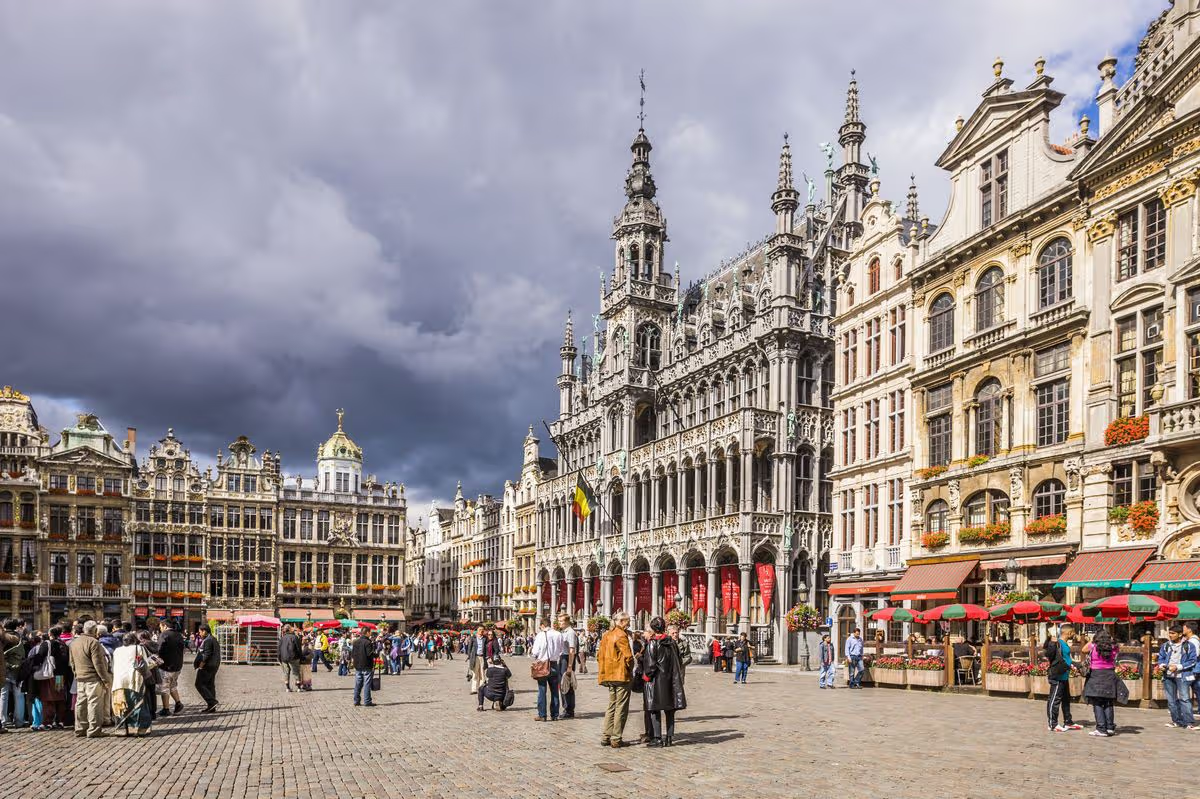
Brussels will rid its streets of shared e-scooters as of January 2027, with authorities in the Brussels-Capital Region announcing the move last week. Currently, the Belgian capital has two remaining scooter operators offering shared e-scooters, Bolt and Dott, and once their licences expire at the end of 2026, they will not be renewed, according to the Brussels Times.

Authorities voiced their safety concerns around the use of e-scooters and the nuisance they can cause to local residents. The move means Brussels follows other European cities who’ve removed shared e-scooters, including Paris, Madrid, and Prague.

Brussels mobility minister Elke Van den Brandt and minister-president Boris Dilliès made a shared statement about the ban, calling shared e-scooters a “growing nuisance to other road users”, and pointing out that 666 accidents involved e-scooters in 2025, a year on year increase of 26%.

They also highlighted that rental scooters were often used for criminal purposes, and were involved in the cases of 25 shootings in Brussels last year.

Boris Dilliès said: “The decision to exclude self-service scooters from the Brussels urban landscape is part of a clear and consistent policy. Often synonymous with disorder, self-service scooters are a source of nuisance, cause serious injuries, clutter the streets and are, unfortunately, increasingly being used by organised criminals. Self-service bicycles, on the other hand, remain for us an essential part of a mobility policy.”

However, in a statement, e-scooter rental firm Bolt argued: “When scooters are the subject of public debate, whether regarding road safety or parking, private and shared scooters are almost always lumped together, even though they are fundamentally different.

“Banning [shared scooters] will not stop people from getting around. It will drive users towards private, unregulated, untraceable and genuinely dangerous scooters, or towards more polluting modes of transport. Neither of these scenarios serves Brussels’ objectives regarding safety, congestion or the climate.”

Since the ban was announced in Brussels, the Benelux Union, a partnership between Belgium, the Netherlands, and Luxembourg, has called for the European Commission to create a single framework for all EU countries, which could make it easier for other countries to make their own regulations.

Benelux pointed out there are inconsistent safety standards among member states, and not all vehicles on the market were safe and suitable to be used on public roads. The lack of guidelines also make it difficult to prevent unsafe vehicles from being put out for hire.

The UK has banned privately owned e-scooters from public roads and pavements, meaning the only legal place to ride your own e-scooter is on private land. There are a handful of legal rental schemes in some areas of London, Birmingham, and other cities, with strict criteria such as limiting the e-scooters to 12.5mph, banning riders under 18, and requiring a provisional licence to hire one.

Have a story you want to share? Email us at webtravel@reachplc.com

Source link

‘Like mice in a cage’: Inside Europe’s prison overcrowding crisis | Prison News

Brussels, Belgium – Bilal knows life behind bars.

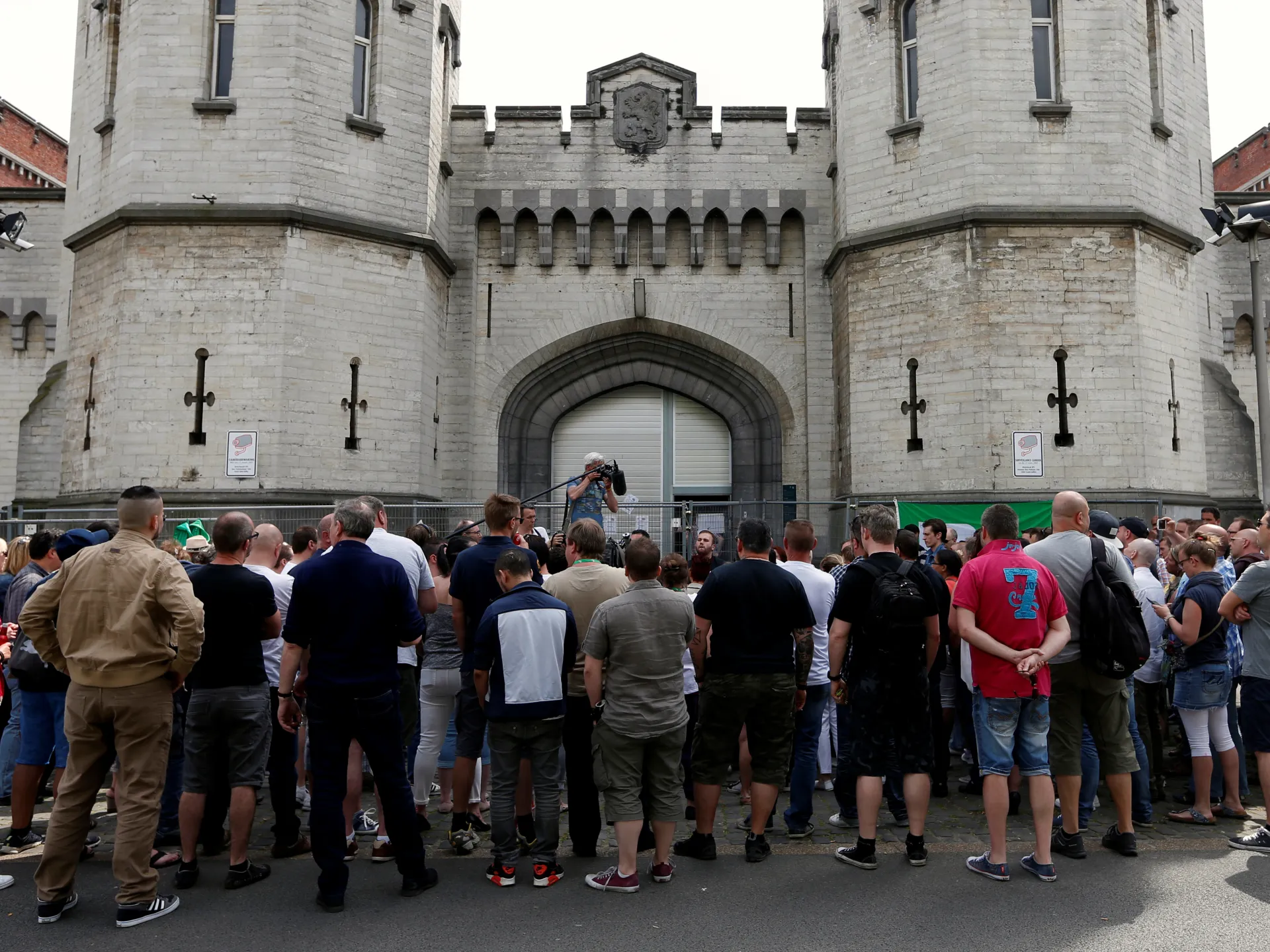
Over the past 10 years, the 34-year-old has served a sentence in five prisons across Belgium. He most vividly recalls conditions in Mons, a 19th-century prison near the French border, where he said 9-square-metre (97-square-foot) cells housed three to four detainees. He remembers bouts of scabies, bed bugs and monkeypox spreading widely and guards who faced severe exhaustion.

“During my 10 years in prison, things only got worse,” Bilal told Al Jazeera on condition that we use only his first name. “They took away some of our time outside of our cells, various activities.”

Belgium, one of Europe’s richest countries, is grappling with a deepening prison overcrowding crisis.

In mid-May, its 39 prisons counted 13,733 inmates – significantly exceeding a capacity of 11,064, according to data provided by the directorate-general of prisons.

“The combination of ever-increasing overcrowding and staff shortages makes the situation very, very, very difficult,” warned Pieter Houbey, vice-chairman of the Central Prison Monitoring Council (CCSP), an independent watchdog.

“It’s become almost impossible to maintain a detention system … aimed at reintegrating people,” he said.

In mid-May, 754 detainees were sleeping on mattresses on the floor, up from 672 in December.

Across Europe, prison populations have increased dramatically since the COVID-19 pandemic, with overcrowding affecting one-third of prison administrations.

Occupancy rates are highest in Cyprus, followed by Slovenia, France, Croatia, Italy, Romania, Austria and Belgium.

As a result, governments find themselves under pressure, with experts and workers criticising common responses – from building more detention facilities to transferring prisoners abroad – as ineffective.

‘Mice in a cage’

“To ensure decent conditions, we must first respect their rights – that is, stop treating them like mice in a cage,” said Yasin Sarikaya, vice-president of Brussels’ prisons.

Prisoners, especially those on remand, are often left in their cells for 22 to 23 hours a day, exacerbating the lack of privacy, as well as potentially pre-existing health and substance abuse issues. Receiving medical support can take months.

Loic*, who is serving his third of seven years at Saint-Gilles Prison in Brussels – meant to shut down by 2028 – said that work or other activities are hardly offered at the facility. Most detainees do not have a residency permit, he said.

“It’ll be tough to get back into the workforce,” the 23-year-old told Al Jazeera, looking at the floor while he spoke.

Bilal, convicted of two bank robberies and attempted murder, said he experienced suicidal ideation during imprisonment.

In recent years, videos circulating online have shown drones smuggling goods into prisons. In 2024, a video went viral showing a prisoner being tortured by five fellow inmates in his cell while the guards, on a 48-hour strike, failed to notice for days.

Guard burnout

Those conditions reinforce existing staff shortages.

At Haren, the country’s largest jail complex, “some guards are injured and can’t come to work”, said Sarikaya, who works at the complex.

According to the directorate-general of prisons, critical incidents in prisons doubled within a year.

With general crime rates having fluctuated in past years, experts connect the situation to Belgium’s carceral policy and its attempts to crack down on drug-related crime. While the country has struggled with overpopulation for decades, its most recent increase is mainly linked to a decision in 2023 to enforce all sentences of up to three years, previously served primarily under electronic monitoring.

Belgium also detains people for ever longer periods. Currently, the average detention lasts 9.9 months – a 39.4 percent increase over five years. Belgium’s pretrial detention rate of 32 percent is well above the European average (24.7 percent in 2024).

Emergency measures

Last July, Belgium’s parliament passed an emergency bill. The law, drafted by Justice Minister Annelies Verlinden, encourages the use of alternative punishments for sentences under three years and allows directors to release inmates, sentenced to a maximum of 10 years, six months before the end of their sentences.

In the longer term, the government seeks to install modular units and to renovate existing prisons pending the construction of new facilities.

That, however, is unlikely to reduce overcrowding, warned An-Sofie Vanhouche, a professor in the criminology department of Vrije Universiteit Brussel.

“Research shows that the more [prison] space we have, the more people we usually send to prison,” she said.

Cells to rent

As part of a stricter migration policy, Belgium is also seeking ways to deport detainees without legal residency, who comprise about a third of the prison population.

Earlier this year, Verlinden visited Estonia to discuss renting cells there. The government has already eyed similar deals with Kosovo and Albania.

Belgium is not the only European country considering such agreements.

Sweden has struck a deal with Estonia to rent 400 prison cells. According to the Estonian Ministry of Justice, prisoners could start arriving by the end of the summer. In 2019, Denmark reached an agreement to rent 300 prison cells from Kosovo.

Vanhouche described the moves as “very populist and symbolic”.

While only having a “small impact”, they raise numerous ethical questions around the protection of prisoners’ rights and their wellbeing, she argued.

The Belgian Ministry of Justice, as well as the Swedish and Danish ministries, did not respond to requests for comment. The Estonian ministry said that “prisoners remain protected under European human rights standards and applicable international law”.

Ways forward

Critics are calling on Belgium to move towards a greater emphasis on societal reintegration rather than just security – also through alternative punishment.

“Prison leads to recidivism,” warned Tahar Elhamdaoui, the founder of NGO Collectif Desistance, which helps young former prisoners reintegrate into society.

According to Houbey, Belgium’s reoffending rate is 60-70 percent.

Thanks to Elhamdaoui’s NGO, Bilal is interning as a football coach. Meanwhile, Loic* is trying out different jobs on day release.

But that’s not the norm, Elhamdaoui warned.

“As long as there are no prisons that prepare people to succeed outside,” he said, “we will not only be producing more crime upon release, but also a sense of despair so deep that people will not be able to reintegrate into society.”

Source link