Australia play their first Test in South Africa since the 2018 ball-tampering scandal when they start a three-match series in Durban on Friday, with the visitors unlikely to face more than a few heckles over the incident that rocked the sport eight years ago.
The tourists’ efforts to roughen up the ball using sandpaper to aid reverse swing in Cape Town in March 2018 were caught on camera and led to a major reckoning for the game in Australia, with captain Steve Smith among those banned for their role in the subterfuge.
Recommended Stories
list of 4 itemsend of list
Al Jazeera Sport takes a closer look at the first Test battle in South Africa since the infamous series.
What is the context for the first return of series since ‘Sandpapergate’
South Africa have played Tests in Australia since ‘Sandpapergate’, and Australia have toured South Africa in the interim for limited-overs internationals.
The scandal has attracted little media focus in South Africa over recent weeks in comparison to the attention devoted to the incident in the Australian press.
After dethroning Australia last year in a thrilling World Test Championship (WTC) final at Lord’s to win a first major title, South Africa are focused on improving their chances of a return to the final at the end of the 2025–27 WTC cycle.
What shape are South Africa in for the visit of Australia?
The pitch at Kingsmead often proves a fickle track but should offer the spinners a chance to play a leading role in a change from South Africa’s usually seamer-friendly surfaces.
It is unusual for South Africa’s chances to be largely entrusted to their spin attack, but Simon Harmer and Keshav Maharaj wreaked havoc in India last November when they triumphed in their last two Test outings.
Spin was also a key factor for the home side as they beat Australia in the recent One-Day International series.
South Africa may therefore opt to rest frontline attack bowler Kagiso Rabada from the Test as he continues his comeback from a hamstring injury.
South Africa also have a choice to make over their number three batsman, with coach Shukri Conrad having several options including a potential first cap for 30-year-old Marques Ackerman.
How are Australia poised for their South Africa return?
Australia are also in need of a boost after a surprise home Test defeat by Bangladesh in August in their drawn series, and with an Ashes tour to England starting next June.
Injury to Australia all-rounder Cameron Green opens up a chance at number five for Cooper Connolly, or a fairytale return for 34-year-old Nic Maddinson after recovering from cancer.
Head hits back at former Australia players in defence of Test team
Australia opener Travis Head has taken to task former Test players turned critics whom he accused on Wednesday of “putting a bullet” through the current team.
Head did not single out any pundit directly, but his strong remarks at a news conference came the day after Matthew Hayden, one-time holder of the record for the most runs in a Test innings, accused selectors of “promoting the greatest pile of mediocrity that we’ve seen in a generation of cricket”.
The reference, made in a podcast, was about the recall of Maddinson, who has been out of Test cricket for nearly 10 years, but who joined the squad in South Africa after Josh Inglis fractured his finger and Cameron Green suffered a stomach injury.
“I think it’s unfairly judged a fair bit from a group of past players, pretty much that put the bullet through a lot of players, which I think is unfair,” Head said.
“But that’s what they’re paid to do. Some of them need a job, so they go after us, and that’s totally fine.
“This group is strong enough to deal with those sorts of things. That’s how it is. It’s unfortunate sometimes to have some of that feedback from a generation of players that we have huge respect for, but that’s the caper.”
Why have Australia selectors been accused of disrespecting cricket?
Hayden accused the selectors of “disrespecting first-class cricket”, asserting that batsmen should have an average of 45 runs or more before being considered for Test selection.
Head, however, praised Maddinson’s abilities and the benefits of choosing experienced players for Test cricket despite the 34-year-old replacement having a first-class average of 37.11.
“We need mature guys that know what they need to be doing,” Head said. “That revolves back to why we’ve been so good over a period of time, and why Australian cricket was so good back then in that era, because you’d bring in the Mike Husseys of the world, who are 30, who are tried and tested and know what they need to do.”
Former Australia captain Allan Border suggested that the 32-year-old Head would face his toughest test as an opener against the South African bowling attack and would perhaps be better batting at number five.
“I have laughed at a fair bit of it because if a traditional opening batter had pushed out the same sort of numbers in his first 20 innings, I think he’d be pretty safe and not talked about in the way that it has been talked about,” Head said. “It’s a lot of headline stuff.”
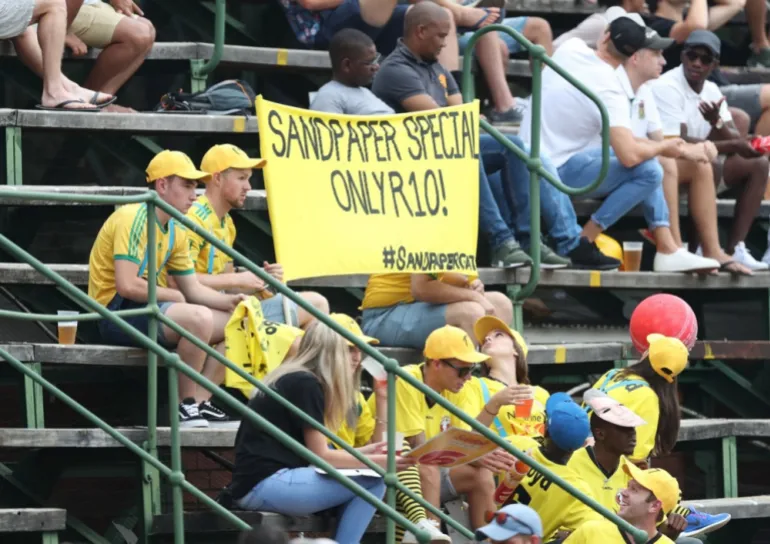
South African fans hold up a banner with reference to the sandpaper scandal during the fourth Test against Australia in 2018 [File: Gavin Barker/EPA]
Smith still traumatised by Sandpapergate
In the build-up to the series, Smith has admitted he is still traumatised by “Sandpapergate” – the series he oversaw as captain.
The prolific batter was sent home in disgrace, banned for a year and sacked as captain for his role in the ball-tampering scandal during the third Test in Cape Town eight years ago.
David Warner, considered the ringleader, was suspended for 12 months and stripped of all leadership roles, while Cameron Bancroft was slapped with a nine-month ban.
Smith said he still suffers flashbacks to a traumatic period of his life, haunted by memories of leaving Johannesburg airport, with cameras clicking furiously around him, and a harrowing Sydney news conference on his return when he broke down in tears.
“I’m not a big fan of cameras … I get anxious around cameras to be honest,” he told News Corp.
“That was a traumatic experience in my life, and when I hear the flash of a camera it makes me revisit that in a way.
“The 24-48 hours of being told by James Sutherland [then Cricket Australia chief executive] that I was getting banned for a year. That and going through the airport in Johannesburg getting absolutely mobbed, and then flying back and doing that press conference.
“I still have little flashbacks here and there of it.”
Smith bore the brunt of the scandal that is considered one of Australian sport’s darkest moments, but bounced back emphatically.
He smashed a superb century against England on his return and has gone from strength to strength, with 10,920 Test runs so far at an average of 56.
“It was certainly a difficult period, particularly the initial period a few days after,” he said.
“The mental state I was in was not great. That’s somewhere I’d like not to get to again, but I certainly learned from that and have been able to move forward with my life.
“I’ve tried to kind of erase a lot of 2018 and what happened,” he added.
“I can’t remember a lot about the series. I’ve tried to block most of it out of my memory bank.”
Smith has been back to South Africa for a white-ball series since 2018, but not for a Test, and he is bracing for hostile crowds.
But the 37-year-old is unperturbed, having negotiated multiple Ashes tours to England since 2018, where the Barmy Army abused him relentlessly.
“It’s something I’m kind of used to. I’ve copped a lot at times away from home at different venues across my career and it’s something that I take in my own stride,” he said.
“I use it as motivation to try and go out and do well and try and take a positive from it.”
CALUM Best shared a sweet tribute to his ‘fighter’ mum Angie as she returned to the UK after treatment amid her colon cancer battle.
Angie, 74, announced that she was diagnosed with the disease in January and in July was told that she was cancer free.
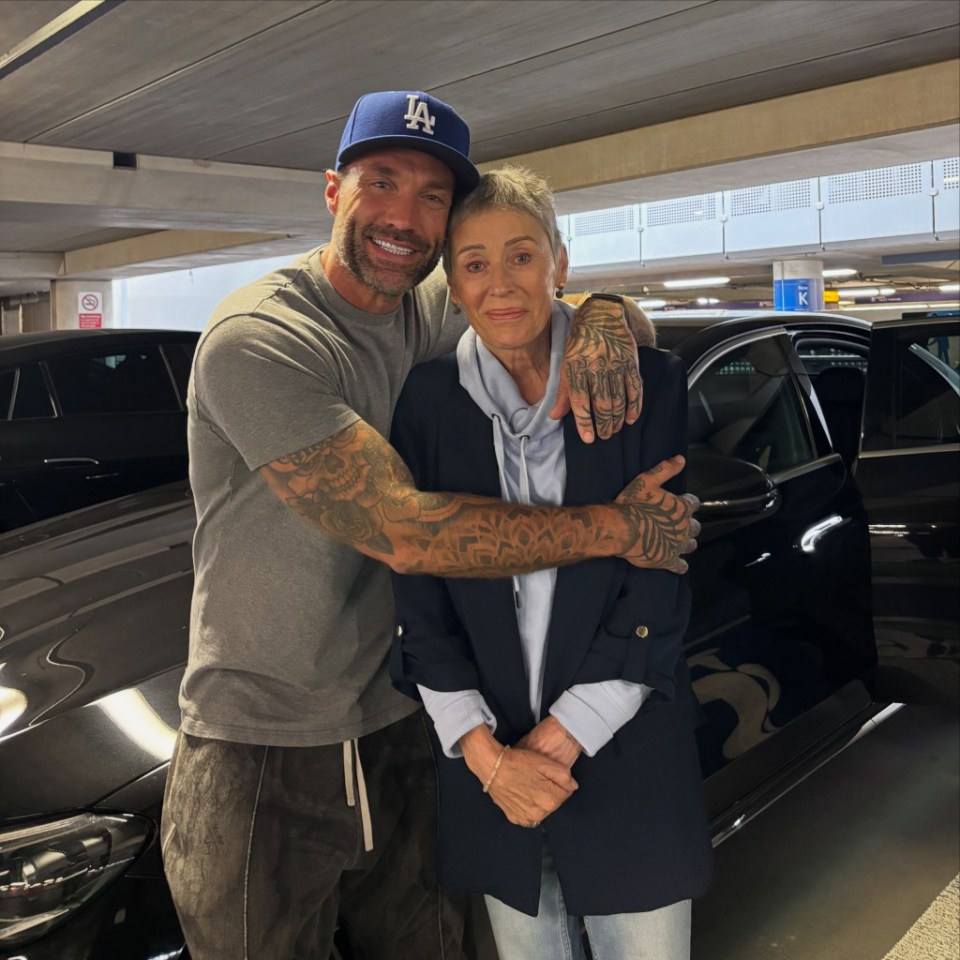
Proud son Calum shared a tribute to his ‘fighter’ mum Angie as she returned to the UKCredit: UnknownAngie has been seeking alternative mistletoe therapy in SwitzerlandCredit: Instagram
Over the past year she has kept fans up to date while undergoing traditional medicine, chemotherapy and immunotherapy, as well as an alternative mistletoe therapy in Switzerland.
Now Angie is back in the UK with her son.
Sign up for the Showbiz newsletter
Thank you!
Calum shared a snap of their pair cuddled up together in the airport car park, as well as one of her approaching him in arrivals.
He captioned the post: “Right then, she’s back on UK soil, let’s get you healed, fed healthy and fighting fit!
“From me to you mother, I’m so proud of what a strong fighter you are, this last year has been hell and u have managed it with such grace, a year or treatments.
“Surgerys and all the rest are not easy and you have powered through it so well and we will continue to.
“What I also want to say is a huge thank you to everyone so far on this journey, so many people asking and involved both in person and through social media, thank you for caring about Angie.”
Many rushed the comments section to share the love.
One said: “Oh wow.. so pleased to see this, right where you belong.. no place like home!”
Another wrote: “Such a beautiful Mother and Son relationship. Rest up now Angie, you’re incredible.”
A third chimed in: “Sending you both love and hugs.”
A fourth commented: “How incredible to go through such a journey and looks so beautiful and be an inspiration to us all!!!!!”
“Wonderful news ,you mum is definitely a true fighter 💪❤️wishing her well,” a fifth added.
Last month Angie revealed that she’s back in hospital after suffering a ‘setback’ following battle with cancer.
Taking to her page earlier today, Angie said: “Update my homies. I find myself back in the hospital.
“I have an infection. They think it’s bacterial. Bt I have to stay here a few days for results and to make it better.
“See you on the other side.”
After major surgery to remove a tumour from her colon in July, Angie revealed that she was cancer free.
Angie and footballer ex George Best are Calum’s parents.
Calum is a reality star who has been on Celebrity Love Island, Celebrity Big Brother and Celebrity SAS.
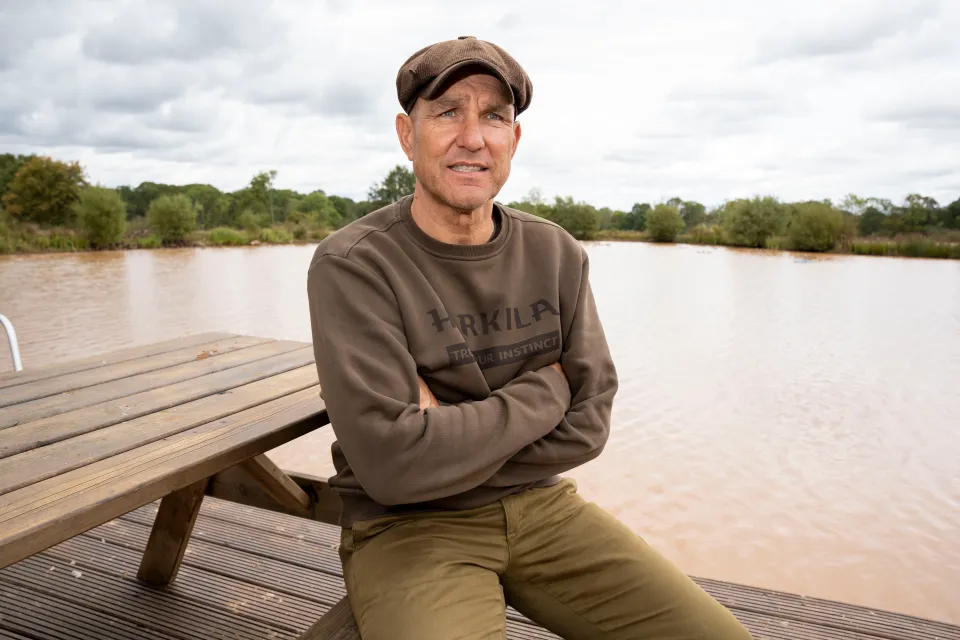
Vinnie Jones has won a planning battle at his telly farm despite almost 5,000 objectionsCredit: Louis WoodThe former footballer has been starring as a gamekeeper in Guy Ritchie’s Netflix hit The GentlemenCredit: Discovery+
Campaigners argued he wanted to host shooting parties and raised fears over gunfire, traffic and protected wildlife.
Blackwool Farm in the South Downs National Park, West Sussex, features in the Discovery+ reality show Vinnie Jones in the Country.
Sign up for the Showbiz newsletter
Thank you!
Protect the Wild said: “National parks are . . . not for commercialised bloodsports or luxury shooting retreats.”
But Jones’s planning team hit back, accusing opponents of making “false assumptions and inaccuracies”.
Planners sided with Jones, 61, saying: “The application is not for a shooting use, simply visitor accommodation that may or may not include shooting.”
Jones has made no secret of his love of country sports. He plays Geoff Seacombe, the loyal gamekeeper on the sprawling Halstead estate at the centre of the show.
Fighting in Sudan’s Kordofan region has intensified since late 2025, turning it into one of the main battlegrounds in the war between the Sudanese Armed Forces (SAF) and the paramilitary Rapid Support Forces (RSF), now in its fourth year.
The vast region, which comprises North, West and South Kordofan states, lies where the two sides’ areas of control meet, between the army-held central region and the RSF-controlled Darfur in the West. In recent months, the SAF has pushed the RSF out of much of North Kordofan.
The battle is increasingly being fought from the air. Drone strikes on towns in North Kordofan are growing more frequent and deadly, and civilian infrastructure has been hit across the region.
Since the war began in April 2023, one in five recorded attacks in Sudan has taken place in Kordofan.
Al Jazeera maps where the fighting is concentrated in Kordofan and across Sudan, and the displacement that has followed.
Who controls what on the ground?
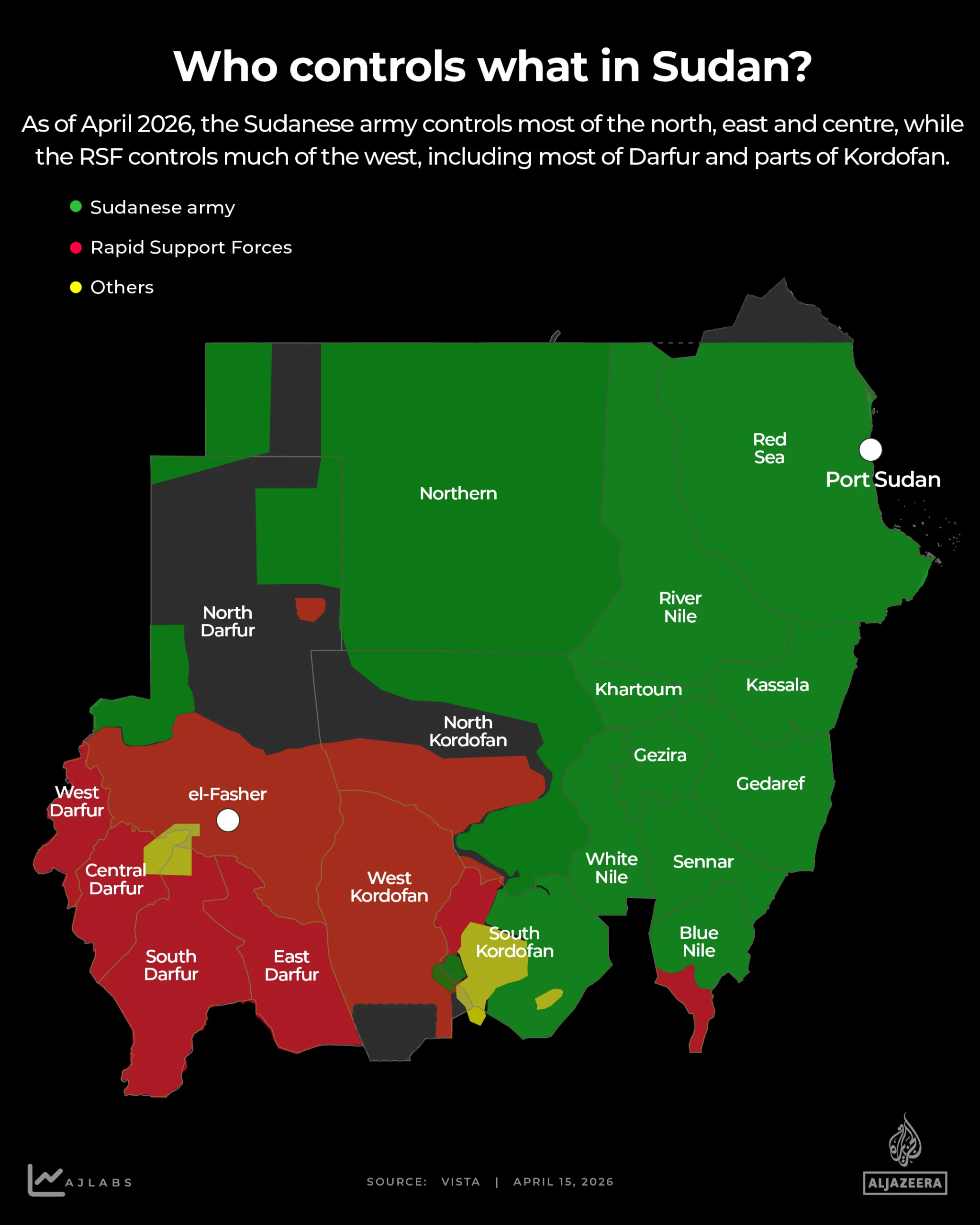
Sudan is broadly divided between the two sides. The SAF controls the capital, Khartoum, and most of the north, east and centre, while the RSF controls the west, including almost all of Darfur and parts of Kordofan. Smaller armed groups, including the RSF-allied Sudan People’s Liberation Movement-North (SPLM-N), hold pockets of territory in the south.
The army has the upper hand in the north, the RSF in the west, and South Kordofan remains contested.
Where have most attacks occurred?
According to an Al Jazeera analysis of data from the Armed Conflict Location and Event Data (ACLED), an independent conflict monitor, there were 14,648 recorded attacks between the start of the war on April 15, 2023, and September 19, 2026.
The four most affected states include:
Khartoum: The capital region has seen the most, with 5,719 attacks, or 39 percent of the total, almost three times as many as North Darfur, the second-highest
North Darfur has witnessed 1,999 attacks (13.7 percent)
Gezira state has seen 1,435 attacks (9.8 percent)
Kordofan emerged as a major centre for fighting. North, South and West Kordofan together recorded 2,876 attacks, or about 19.7 percent of all recorded attacks, putting the region behind only Khartoum when considered collectively.
Who has carried out the most attacks?
The SAF is associated with the largest share of recorded attacks between April 15, 2023 and September 19, 2026, accounting for just over half (52 percent), compared with just over a third (34.7 percent) for the RSF and 13.3 percent for other actors.
Smoke billows after drone strikes by the paramilitary Rapid Support Forces (RSF) targeted the northern port in the Red Sea city of Port Sudan, Sudan, on May 6, 2025 [AP Photo]
The balance of attacks has shifted over time. The SAF was associated with more recorded attacks than the RSF in the first year and a half of the war, before the RSF overtook it in number of attacks from late 2024 to mid-2025.
Since August 2025, the two sides’ monthly attack counts have been closer, with the SAF generally recording slightly more, even as the overall number of attacks has fallen sharply.
Where have attacks in Kordofan occurred?
After the fall of el-Fasher, the last major Darfur city held by the army and its allies, in October 2025, attention shifted to Kordofan. The region sits between RSF-held Darfur and the army-held centre, north and east, forming a corridor between the two sides’ heartlands.
Kordofan’s three states recorded 2,717 attacks: North Kordofan had 1,205 (44 percent), South Kordofan 789 and West Kordofan 723. Adding Abyei, a disputed oil-rich area on the Sudan-South Sudan border that was historically part of Kordofan, brings the total to 2,878.
Soldiers arrive at the Allafah market, in an area recently recaptured by Sudan’s army from the Rapid Support Forces paramilitary group, in the al-Kalalah district, south of Khartoum, Sudan, on March 27, 2025 [AP Photo]
The concentration of attacks differs from state to state. In North Kordofan, Sheikan locality alone accounted for 497 attacks, or 41 percent of the state’s total. Sheikan is home to the state capital, el-Obeid, a commercial and administrative hub linking central Sudan with the west. Taking the city would open a route east towards Khartoum for the RSF.
On September 9, a drone strike on a college in el-Obeid tore the roof off the building and killed a security guard, the college’s dean, Abdel Aziz al-Sheikh, told Reuters.
“As you can see, the entire faculty is destroyed and we feel that our dreams are destroyed, our future is destroyed,” Omnia Aboul Gassim, a student who had sat her exams at the el-Obeid college just one day before the attack, told Reuters.
In South Kordofan, Dilling locality was the main hotspot, with 242 attacks (31 percent), followed by Kadugli with 107 (14 percent) and Al Quoz with 94 (12 percent).
Attacks in West Kordofan were spread more evenly across localities. Babnusa recorded the most, with 142, followed by En Nuhud (119), Al Khiwai (112) and Abu Zabad (111).
ACLED has recorded at least 12,314 reported fatalities in Kordofan since April 2023.
The SAF was associated with 1,323 attacks (46 percent) across all three states in Kordofan, compared with 920 (32 percent) for the RSF and 633 (22 percent) for other actors.
How many people are displaced?
About 8.6 million people remain internally displaced across Sudan, according to the latest United Nations figures, down from a peak of 11.6 million in January 2025 as millions returned home to areas retaken by the army. New displacement continues in Kordofan, Darfur and Blue Nile.
Darfur hosts the largest concentrations of internally displaced people (IDPs), particularly South and North Darfur.
Returns have steadily increased since 2025, reaching about 5.1 million by August 2026. Khartoum has seen a major return of displaced people, with about 2.7 million returnees.
A displaced woman from Dalanj braids her grandmother’s hair at a displacement registration centre in El Obeid, North Kordofan State, Sudan, on January 15, 2026 [El Tayeb Siddig/Reuters]
Despite the decline, millions remain displaced more than three years into the war. The International Organization for Migration (IOM) says the number of people newly displaced in Kordofan since fighting escalated in October 2025 has risen 65 percent in four months, from more than 132,000 in February to at least 219,000 by late June.
The agency has warned that el-Obeid, which shelters about 500,000 people, including more than 83,000 displaced, faces a looming threat of a full-scale invasion.
“The warning signs are impossible to ignore,” said IOM Director General Amy Pope earlier this month. “Across Sudan, families are fleeing violence, losing access to water, electricity and healthcare, and now facing the added burden of destructive floods.”
Towie’s Jordan Brook has revealed his brain will be damaged foreverCredit: InstagramJordan was battling meningitis in hospital for weeks earlier this yearCredit: Instagram
Jordan faced a terrifying battle to survive for his unborn child – as thevirus attacked his brain, leaving him unable to speak or walk.
He said: “It’s a real and bittersweet feeling when you see a picture of your brain and you see that there is damage there that will be there forever.
“I’m so proud of myself and how far I’ve come and really feel that I’m making that recovery. I’m almost at the six months mark now, which is a huge milestone in brain recovery.”
Reality star Jordan’s girlfriend Sophie was pregnant with their son during his health battleCredit: InstagramSophie Kasaei and Jordan Brook hard-launched their romance on Instagram in December 2022Credit: Instagram
Speaking about the scan pictures, Jordan continued: “Imagine breaking your leg or your arm… you will always see that scar on your body and this is one unfortunately you can’t see it, it’s in the head.
“It’s just a reminder about how bad these infections can be on the brain and that they can affect anyone.
“I’m doing everything I can do in my power to help people and raise awareness. I’ve got a lovely charity that I’m working closely with, we’re gonna do some amazing things.”
“I’m so determined to be me, I’m feeling like Jordan again. The energy is high, just got to keep going and fighting through this,” he added.
Jordan captioned the post: “I’ve just come out of another follow-up appointment and today I got to see my MRI and the scarring that’s been left on my brain.
“I won’t lie, seeing it was hard to take. But if this journey has taught me anything, it’s how resilient we really are.
“There are good days and difficult ones, but I’m still here, still recovering and still moving forward.”
One fan wrote: “You are an amazing human been through so much staying positive always is key keep going Jordan take care of yourself.”
Another fan penned: “You have come a long way and have achieved so much. Seeing how poorly you were to where you are now is testament to you.
“Enjoy your family with Soph and Brody. Onwards and upwards Jord!”
Jordan recently fought back tears as he recalled the scary moment doctors suspected he had brain cancer.
After going through a lumbar puncture – a procedure in which spinal fluid is drained and examined in a lab – doctors told him they were considering the possibility that he might have had brain cancer.
During an episode of By the Brook podcast, which he hosts with his girlfriend Sophie Kasaei, Jordan said: “Obviously, the doctors have to give you the worst case scenario.
“That’s when the doctors said, ‘We can’t rule out brain cancer.
“Now, to hear that when you’ve got your girlfriend sat next to you who’s seven months pregnant with a baby you’ve waited for so long…”
Jordan added: “You never want to hear that about your kids. Sophie’s holding my kid.
“You never want to hear about your partner. It was the worst time of our lives ever.”
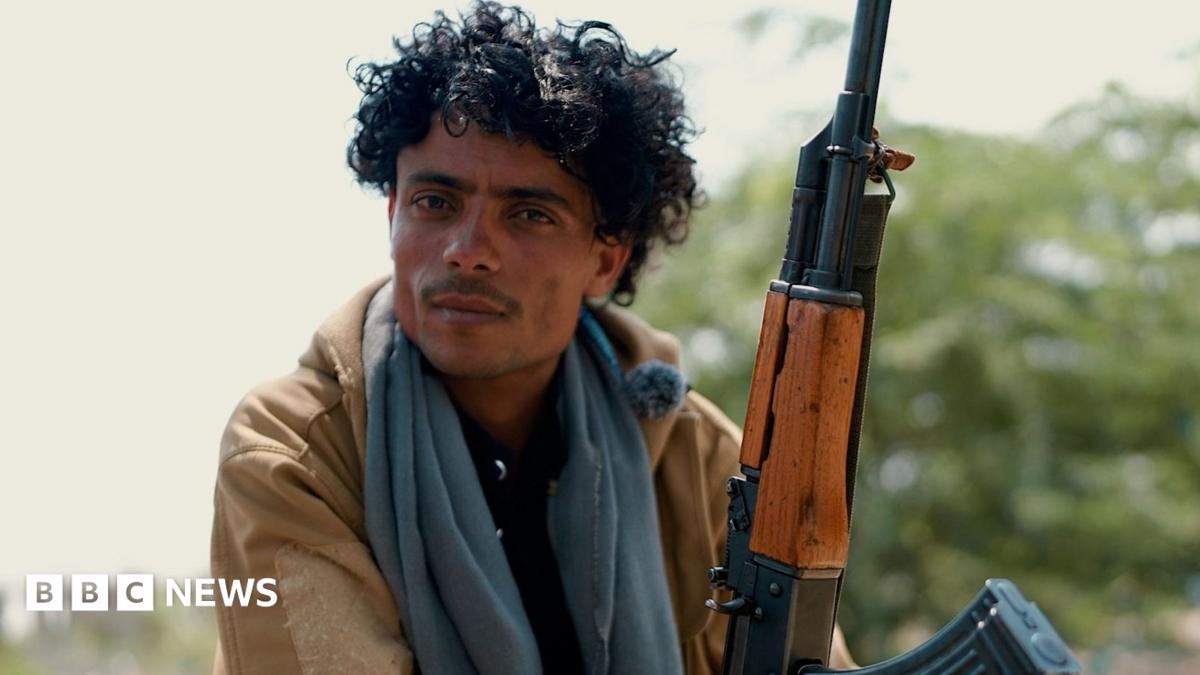
He told me he had sent his children to a displacement camp because they could no longer cope with the shelling and gunfire. He had stayed with his wife and sisters to look after their animals.
“I am terrified,” he said, “but I have no choice, we will all go hungry without our animals and die anyway.”
He gave only his first name, fearful of repercussions if the Houthis take over the area in the days ahead. Contacts from the Houthi side have told us they are consolidating troops, preparing for a major offensive. When we asked government forces about this they said they are aware and were preparing too.
At the closest checkpoint to the front line, we met some fighters who had just returned from positions high on the mountain, just a few hundred metres from advancing Houthis. One of them said the bodies of 18 government soldiers lay in an area his unit could fire across but not reach.
“We shoot over them, but we can’t pull them out,” he said.
Fighting around Taiz has intensified since the Houthis seized the strategic Red Sea port of Mokha, 85km to the west of the city, on 10 September, after a ceasefire that had largely held for four years unravelled.
The group took control of a swathe of territory overlooking the strategic Bab al-Mandab Strait – a crucial shipping corridor linking Europe and Asia. This contributed to a rise in oil prices as fears rose of further disruption to supplies from the region.
As Brazilians head into national elections, there’s a familiar name on the ballot: Bolsonaro. Not former President Jair Bolsonaro. It’s his son Flavio, who is presenting himself to the electorate as a more moderate version of his father.
Election coverage has been dominated by a major corruption scandal – the biggest banking fraud case in the country’s history. Brazilians are accustomed to corruption scandals involving political figures. The coverage tends to be framed as: they’re all equally corrupt.
Contributors: Andrew Fishman – President & co-founder, Intercept Brasil David Nemer – Professor, University of Virginia Andre Pagliarini – Professor, Louisiana State University Natalia Portinari – Reporter, O Globo
On our radar: Donald Trump’s decision to bar three news outlets from the White House appears to have backfired after journalists organised a media boycott and a judge overturned the ban. Tariq Nafi has been tracking the latest duel between the US president and the media.
Spain’s neo-Nazis: spectacle vs reality
A fringe neo-Nazi movement in Spain, Nucleo Nacional, has attracted a growing online following by packaging incendiary and slickly produced content. The mainstream media attention the group has received has made a marginal organisation appear far larger and more influential than it is. The Listening Post’s Elettra Scrivo travels to Madrid – where she comes face-to-face with Nucleo Nacional’s members – to look at the reality that lies behind the spectacle.
Featuring: Miquel Ramos – Author, ‘Antifascistas’ Urszula Mrozowska – Digital researcher in hate speech and extremism
Sitting on the Hart High bench as the final seconds ticked off the clock in a Foothill League game against Saugus on Friday night, Matix Frithsmith, with his blond hair full of sweat, was asked if he was tired.
“I’m good for anything,” he said.
He wasn’t joking.
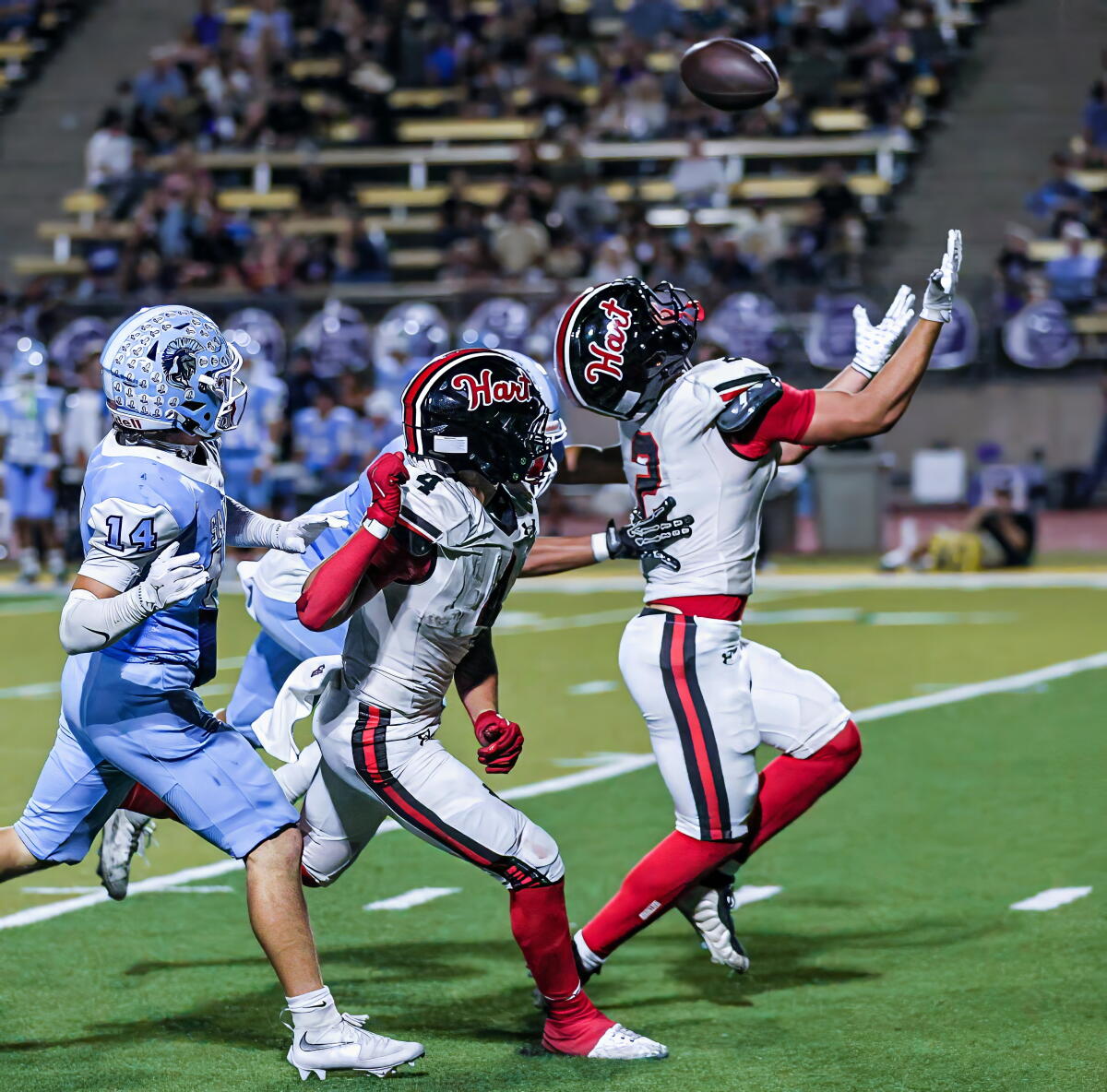
Turning in an individual performance that caused Saugus coach Jason Bornn to call him a “generational player” for the Santa Clarita Valley, Frithsmith rushed for 211 yards and four touchdowns to rally Hart to a 34-17 victory.
His 90-yard touchdown run immediately after Saugus turned over the ball on downs at the 10-yard line in the fourth quarter clinched the victory. Frithsmith switched from running back to quarterback late in the third quarter because of an injury to Camren Ketner. The play hadn’t been practiced in two weeks. He took the snap out of shotgun formation and just ran left until he reached the end zone. He got a key block from his baseball teammate, Josh Rogozik, and his legs did the rest.
“It was just fun to go out there and do something we haven’t really practiced a lot,” he said. “I told my offensive line we need something big right here and that’s all on them.”
Frithsmith also caught four passes and pulled off perhaps the biggest save of the night thanks to his coolness under pressure. Hart faced a fourth and one in the first half. Then came a bad snap to the quarterback. Frithsmith, at running back, saw the ball on the turf, picked it up and threw it to Rogozik for a 14-yard gain and first down.
“I knew I had to make a play,” he said. “I just threw it up hoping he’d catch it, trying to make something out of nothing.”
On Harts first offensive play at College of the Canyons, Frithsmith lost the ball on a fumble. Everything after that was him refusing to go down without two or three Saugus players pulling him down.
“He’s pretty special,” Bornn said. “He’s one of the best to come out of the Santa Clarita Valley.”
Helping Hart (4-1) was a strategy to deny the ball to Saugus’ best player, receiver Landon Lattimore, who came in with 12 touchdowns. He had returned two kickoffs for touchdowns against Hart coach Jake Goossen over the past two years, so Goossen was determined to not let it happen again. There was a kickoff that went out of bounds and two punts of 11 and three yards, trying to keep the ball away from Lattimore, who was limited to a 29-yard touchdown in the third quarter on a shovel pass to give Saugus its last lead at 17-14.
The first half was all about keeping the ball out of the hands of Frithsmith and Lattimore. Hart held a 14-10 halftime lead by getting the ball more times in the hands of Frithsmith, who rushed for 83 yards and caught three passes for 24 yards. Lattimore had only one reception until late in the half when he turned short passes into gains of 17 and 26 yards.
Saugus opened the third quarter with an effective drive capped by Lattimore’s touchdown. Frithsmith answered with a one-yard touchdown run and 21-17 lead. Hart’s defense came through with its stop at the 10, and Frithsmith broke off his 90-yard scoring run with 7:29 left.
Silas Tucker of Hart makes a great catch for a 40-yard reception against Saugus.
(Craig Weston / For The Times)
By winning, Hart takes over as the league title favorite waiting for its clash with longtime champion Valencia.
The Hart sideline had royalty wandering around. Former Sherman Oaks Notre Dame coach Kevin Rooney and former Hart coach Mike Herrington, both Hall of Famers who had more than 300 coaching victories, were providing support to Goossen, who played for Rooney. Also there was former St. Bonaventure coach Jon Mack.
The Krankies – Scottish comedy duo Ian and Janette Tough – were a huge hit on TV in the 1980s, but Janette’s health battle sadly forced Wee Jimmy Krankie to retire permanently
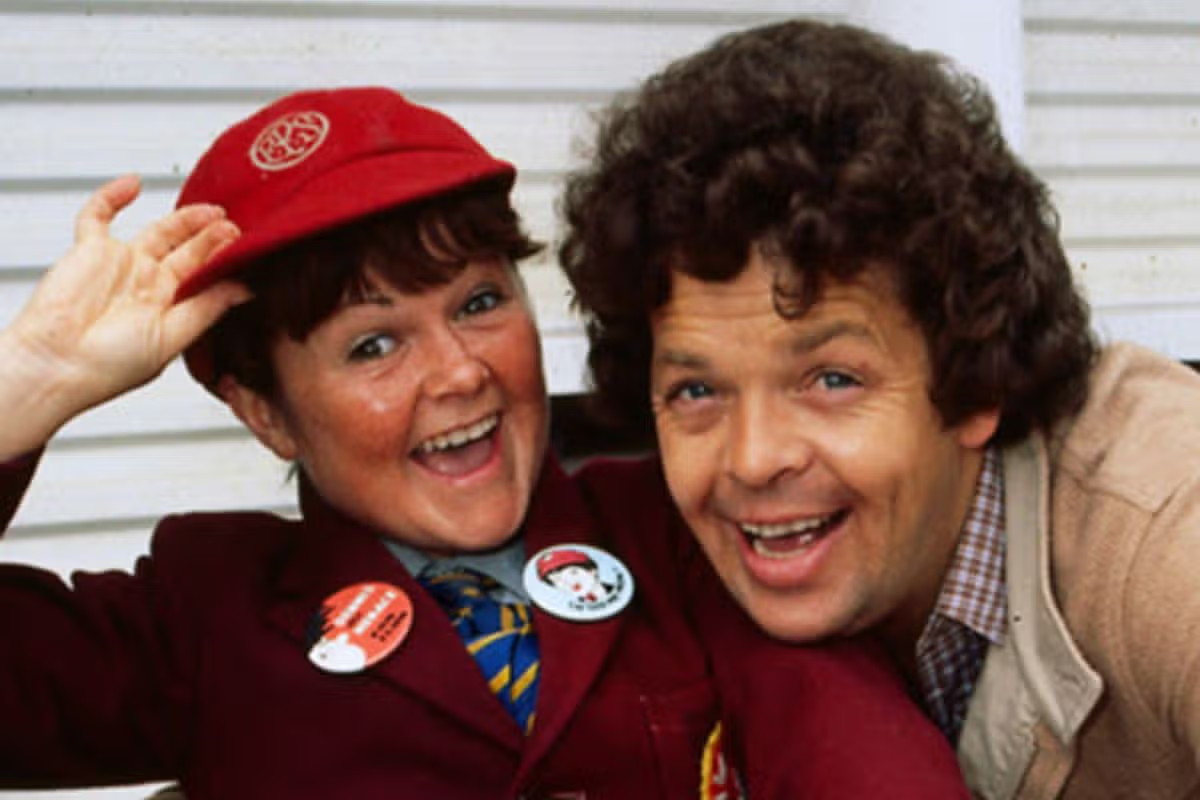
Ian and Janette Tough are the real-life husband and wife duo behind iconic double act The Krankies
For a generation of TV viewers, few catchphrases trigger nostalgic memories of anarchic 1980s television quite like “Fan-dabi-dozi!” From the late 1970s through to the 1990s, Ian and Janette Tough – the real-life husband and wife duo behind iconic double act The Krankies, who coined the catchphrase – were titans of light entertainment.
Playing a long-suffering dad and his naughty son, Wee Jimmy Krankie, the pair – now both 79 years old – were staples of Saturday night prime shows and children’s TV.
After shooting to stardom on the Royal Variety Performance in 1978, they became household names on programmes like Crackerjack before landing their own series, from The Krankies Klub to The Krankies Elektronik Komik.
A TV resurgence followed in the 1990s when they featured on Dawn French and Jennifer Saunders‘ TV programmes and also starred in a number of pantomimes.
But after several decades at the top, the pair eventually stepped away from the spotlight, leaving a legion of fans wondering what came of the beloved Scottish duo.
Speaking to the Mirror seven years ago, the couple refuted claims from friend Christopher Biggins that political correctness had brought an end to their innuendo-laden panto performances.
Instead, they revealed that medical issues had sadly forced Wee Jimmy to hang up his school uniform for good.
“I was diagnosed with osteoporosis three years ago,” Janette disclosed, then aged 73. “My back’s not good and I can’t do as much as I used to. So, when Ian and I went off on a Caribbean cruise to celebrate our golden wedding last month we decided it’s time to put our feet up.”
The pair had accidentally courted controversy in 2017, during their run in Dick Whittington alongside close friend John Barrowman. “One woman called it smutty” Janette recalled. “We did a scene in bed with John. Wee Jimmy said ‘I can feel your Tinkie Winkie’ and pulled out a Teletubby. Then John said ‘No – this is MY Tinkie-Winkie’ and pulled out a big one.”
Janette continued: “We were doing a revue act in 1981, which featured a magician who had a leopard called Scorpio in his act.
“He had a lion tamer called Rocky and an assistant called Angie – so I had a little ding-dong with Rocky and Ian did the same with Angie. Ian used to joke that I’d come home smelling of leopard while he’d get back with glitter on his bits. We had an anywhere, anytime attitude to sex but we each knew what the other was doing.”
Despite announcing their retirement in 2019 – with Janette also still feeling the lasting effects of a horrific pantomime fall in which she fractured her skull in the early noughties – the pair have continued to make occasional TV appearances.
And fans were delighted last year when the pair unexpectedly popped up in the remastered version of the classic 90s video game Tomb Raider.
A framed pictured of the pair was seen hanging on an office wall as Lara meet the editor of The Times before combing through the newspaper archives.
Reacting to the unexpected appearance, Janette joked to The Scottish Sun: “She did well to dig us up – we’ve been retired for years now.”
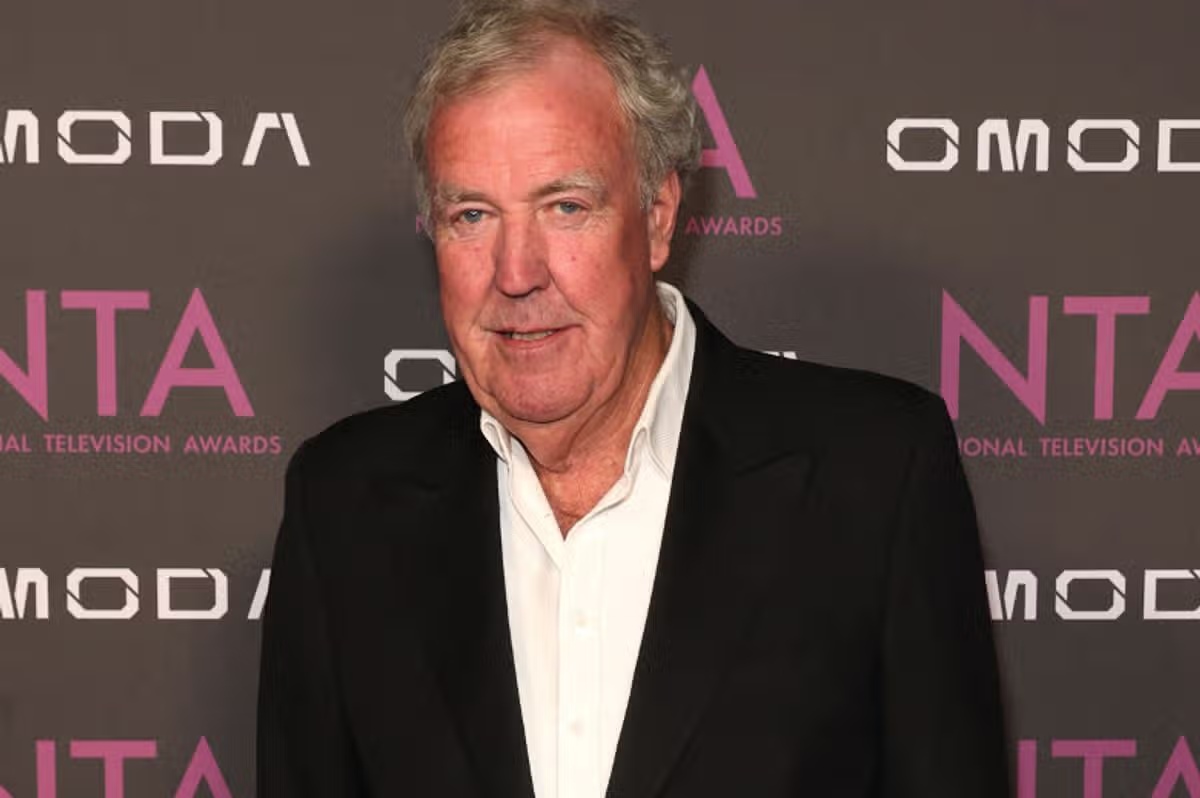
JEREMY Clarkson’s partner, Lisa Hogan, is “proud” of his decision to go public with his cancer diagnosis, saying it has helped thousands of people.
The former Top Gear presenter is in remission after revealing on the latest series of Clarkson’s Farm that he had been diagnosed with “aggressive” prostate cancer.
Lisa Hogan revealed she was ‘proud’ of her partner-of-nine-years for going public with his battleCredit: PAJeremy revealed his diagnosis in a heartbreaking episode of Clarkson’s FarmCredit: Amazon Prime
Lisa says The Sun columnist was initially reluctant to share his diagnosis with the public.
Speaking to the Daily Star, she said: “I’m really happy he caught his prostate cancer early and I’m really proud of him for putting it on the show, because that was a really big decision.
Sign up for the Showbiz newsletter
Thank you!
“When I was filming him in hospital, at first he said please don’t.
“It was (producer) Andy Wilman who convinced him to do it, to help everybody else.
“When the show came out, Prostate Cancer UK had 30,000 people going on to their website in one day.”
Thecharityconfirmed that in the 24 hours after Jezza, 66,dropped the bombshell news, some 16,749 men took their online risk checker.
That was the highest figure since former Prime Minister David Cameron, 59, revealed last year that he’d also had prostate cancer.
The organisation also had 43,543 visitors to its website – the highest of the year so far and double the number they’d normally receive.
Hogan says Clarkson has also benefited from opening up to those around him.
“Yes, of course it was a terrible worry,” she added. “But what I did encourage him to do was to talk to his friends.
“He didn’t want to initially, but he’s got lots of friends who’ve been through the same thing and he’s been talking to them about it. I think that’s really helped.”
Clarkson revealed in June that he is in remission.
Recently speaking withThe Times, Jeremy said of his health: “I am well. I am not unwell.
“I mean, I was unwell, but only for a very short period of time.”
He also revealed in June lifestyle changes after his cancer battle as he admitted “I want to see my grandchildren grow up”.
Jeremy said to The Sunday Times: “I really like seeing my grandchildren. I want to watch them grow up.
“I drive much more slowly. I’m a bit of a dawdler. I go for walks a lot. I have vegetarian food.”
He shares three children – Emily, Finlo and Katya – with his ex-wife Frances Cain.
His eldest, Emily Clarkson, has two children with her husband Alex Andrew.
The Stockholm 3 blood check is said to be more accurate at spotting aggressive tumours than the prostate-specific antigen test currently used by theNHS.
The test will be offered to up to 10,000 men aged 45 to 74 at a discounted £99 and given free on the NHS to 2,000 more on lower incomes.
ANGIE Best has revealed that she’s back in hospital after a suffering ‘setback’ following her battle with colon cancer.
The former model, 74 – who announced that she was diagnosed with the disease in January – shared that she wascancer-freeback in July.
Angie Best has revealed that she’s back in hospital after a suffering ‘setback’ following her battle with colon cancerCredit: Instagram/@angiebestofficialThe star revealed that she is cancer-free back in JulyCredit: angiebestofficial/ Instagram
“Colon cancer is a growth of cells that begins in a part of the large intestine called the colon,” Mayo Clinic states.
Angie, who is the ex-wife offootballlegendGeorge Best, has been keeping fans up to date on social media after having traditional medicine, chemotherapy and immunotherapy, as well as an alternative mistletoe therapy in Switzerland.
Sign up for the Showbiz newsletter
Thank you!
Taking to her page earlier today, Angie said: “Update my homies. I find myself back in the hospital.
“I have an infection. They think it’s bacterial. Bt I have to stay here a few days for results and to make it better.
She has been sharing health updates on social mediaCredit: instagram
The signs of bowel cancer you need to know – remember BOWEL
B:Bleeding
There are several possible causes of bleeding from your bottom, or blood in your poo.
Bright red blood could come from swollen blood vessels, haemorrhoids or piles, in your back passage.
Dark red or black blood could come from your bowel or stomach.
Blood in your stools is one of the key signs of bowel cancer, so it’s important to mention it to your doctor so they can investigate.
2. O: Obvious change in loo habits
It’s important to tell your GP if you have noticed any changes in your bowel habits that last three weeks or longer.
It’s especially important if you have also noticed signs of blood in your poo.
You might notice you need to go to the loo more often, you might have looser stools or feel like you’re not going enough or fully emptying your bowels.
Don’t be embarrassed, your GP will have heard a lot worse! Speak up and get it checked.
3. W: Weight loss
This is less common than the other symptoms, but an important one to be aware of. If you’ve lost weight and don’t really know why, it’s worth mentioning to your GP.
You may not feel like eating, feel sick, bloated and not hungry.
4. E: Extreme tiredness
Bowel cancer that causes bleeding can cause a lack of iron in the body – anaemia. If you develop anaemia you’re likely to feel tired and your skin might look pale.
5. L: Lump or pain
As with lots of other forms of cancer, a lump or pain can be a sign of bowel cancer.
It’s most likely you’ll notice a pain or lump in your stomach or back passage.
See your GP if it doesn’t go away, or if it affects how you eat or sleep
“See you on the other side.”
She captioned the post: “Slight setback but nothing that can’t be fixed.”
Many rushed to the comments section to share that she is in their thoughts, including her reality star son Calum, who wrote: “I love u and we have got this.”
Another said: “You are in my prayers.”
“Sending love and hugs and strength xx,” a third chimed in.
A fourth added: “Wishing you a speedy recovery sending love and prayers.”
After major surgery to remove atumour from her colon in July, Angie told fans the incredible news that she is free of the disease.
Sharing her good news on Instagram, she wrote: “Bit different from all the miserable videos of the last 7 months. I’m a truly happy grateful girl, it’s over.”
In a video update, a relaxed Angie explained: “The chemo and the immunotherapy prior had shrunk my 30cm lump down to a little tiny bit that was attached to the colon.
“They shrunk it, now we go in and cut it out… A bit like an interior designer coming in and moving the furniture around, but it still works.
“So then it’s done, they sew you up, then they wait three days, and in those three days, they give you fluids only.
“So of course I lost so much weight, this is why I look so drawn, but I’m not worried about that because I’ve just been eating some shrimp tempura and I’m gonna gain that weight back again without no worries about that.
“On the fourth day, they give you your first meal, very sensible meal, all white.
“And then they wait for the next morning to see if you go to the bathroom.
“I did. And again the next day and again the next day, so everything was working as it should perfectly in my little colon.
“I’m so happy because now I can officially say with gratitude and love that I am cancer free and healing. All I’ve got to do now is get better.
“I’ve got to heal and I can do that. That’s what I’m good at. God knows it’s the only thing I’m good at.
“But I can’t come home yet because this was such a major operation. I have to wait eight days and sit and wait, but I’m gonna use that time to heal and get better.
“I’ve got so much I want to do. I’m going to reinvent myself at the ripe old age of 74. Wish me luck!”
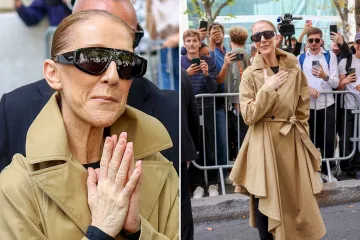
AN emotional Celine Dion has been hailed a ‘true fighter’ as she sobbed through her return to stage after her battle with stiff-person syndrome.
The singer, 58, who was diagnosed with the rare autoimmune neurological disorder in 2022, is performing at the Plenitude Arena in Nanterre, west of Paris, tonight.
Emotional Celine Dion hailed ‘true fighter’ as she sobs through return to stage after battle with stiff-person syndromeCredit: APThe singer couldn’t control her emotions as she stood out on stageCredit: AP
According to Patient Info, SPS “is a very rare, long-term condition that causes painful muscle spasms and debilitating muscle stiffness”.
The singer, who was diagnosed with the rare autoimmune neurological disorder in 2022, is performing at the Plenitude Arena in Nanterre, west of Paris, tonightCredit: AFPThe star looked stunning in an all black maxi dress, silver necklace and her hair slicked backCredit: GettyCeline looked very emotional as she performed to her fansCredit: AFP
What is stiff person syndrome?
Stiff person syndrome or SPS is a condition caused by persistent spasms.
This usually involves multiple muscles, primarily the lower limbs, experts at University College London say.
Most people who develop the illness will receive a diagnosis from the ages of 40-60-years-old.
It’s a neurological disease with features of autoimmune conditions. The first signs would be intermittent spasms which then become continuous.
Other symptoms include:
Minor sensory stimuli (being more sensitive to noise, light and touch) Severe spasms
Impaired breathing (in advanced cases).
The experts said that spasms don’t usually occur during your sleep.
How is it treated?
In most cases people with SPS respond to high doses of diazepam, which is often used as anti anxiety medication.
Pain relievers will also improve the symptoms but these will not cure the disorder.
Many people with SPS will experience falls because they lack defensive reflexes, experts at the National Institute of Neurological Disorders and Stroke added.
“I missed you. I’m going to sing like you without crying.”
Many rushed to X, formerly known as Twitter, to share their love and support towards the star.
One said: “You really did it Celine Dion! Thank you for coming back, you did better than ever legend.”
“What a come back! Celine Dion in Paris – powerful, emotional and simply unforgettable. A true legend,” another wrote.
A third added: “The best to ever do it has returned! Great to see Celine back after so many health challenges and she still sounds amazing.”
A fourth chimed in: “I admire her strength, her courage and her incredible talent.”
A fifth said: “So happy for Celine Dion. All she wanted is go back on stage. She did it. What a fighter!”
Celine will be performing another 25 shows at the arena.
Her last date this year is October 17, and then she will return next year in May for her remaining gigs.
It comes after she made her made her first public performance after revealing she is living with SPS when she closed the Olympics opening ceremony in Paris for the 2024 Olympics.
Some of Celine’s songs include My Heart Will Go On, The Power of Love and All By Myself.
The first naval battle between two Unmanned Surface Vessels (USVs) has taken place in the Black Sea. The Ukrainian Navy said on Saturday that one of its naval drones sank a Russian vessel.
AN AMERICAN heavy metal group has confirmed they are locked in a legal battle with the estate of their late bandmate.
The Blood and Thunder hitmakers have been forced to release a statement to their Instagram page addressing the previously-unearthed feud and how they will proceed.
An American heavy metal group has confirmed they are locked in a legal battle with the estate of their late bandmateCredit: GettyGuitarist Brent Hinds passed last August, but a lawsuit has been filed from his family’s estateCredit: Getty
Oblivion singers Mastodon, a Grammy-nominated band formed in Atlanta, told how what they deem a “meritless lawsuit” is centred on their late Brent Hinds.
The band’s guitarist Brent quit the group in March 2025 after 25 years together, prior to his death in a motorcycle crash in the August.
Sign up for the Showbiz newsletter
Thank you!
The group’s founding member passed aged 51, after his Harley-Davidson collided with a BMW SUV.
Prior to his death it appeared there were frictions between the musician and the band, and this only seems to have developed a year since the tragedy.
Brent quit the group in March 2025 after 25 years together, prior to his death in a motorcycle crash in August 2025Credit: GettyRepresentatives for his estate also suggest Brent’s image was also used to present the band’s Marrow Deep album, in the same legal challengeCredit: Getty
Mastodon have now told of the fresh legal woe and uploaded a statement which read: “Sadly, a private business dispute with the estate of our dear departed friend Brent Hinds was made public.
“We strongly deny allegations of ill intent on our part and intend to vigorously defend what we believe is a meritless lawsuit.
“We don’t intend to speak publicly on this going forward, as we feel this wouldn’t honour Brent’s memory or the legacy of his musical gifts”.
Fans were quick to respond to support the group, who now are formed of Troy Sanders, Bill Kelliher, Brann Dailor, Nick Johnston and João Nogueira.
One wrote: “Nobody’s business but yours. The fans are here for the music my guys. Congrats on the excellent new album”.
A second put: “We love Brent, we love Mastodon”.
A third posted: “This is really disheartening. Hoping things can be resolved”.
Last year, Brent told Billboard that his departure from the group was not mutual.
He then said the remaining members “kicked me out”.
This came after the band said they had “mutually decided to part ways”.
The new lawsuit has seen a civil complaint filed by the Hind estate, against the band’s members, on behalf of the late musician on September 3 according to loudwire.com.
As per The Atlanta Journal-Constitution, the lawsuit claims Mastodon failed to pay Brent for his share of the business after his exit.
It claims although the wheels were in motion for the group to buy him out of his share in “band related business” he had not in fact signed the paperwork prior to his passing.
As such, it claims his stake remains valid.
Representatives for his estate also suggest Brent’s image was also used to present the band’s Marrow Deep album, in the same legal challenge.
The lawsuit claimed: “Defendants selected and placed a recognizable image of Brent on the album cover of Marrow Deep and disseminated that cover to advertise, market, distribute and sell physical albums, digital downloads and streams, merchandise and related goods or services”.
FORMER glamour model Katie Price has shared a worrying health update about her mum, Amy, amid her terminal illness battle.
Amy Price was diagnosed with a terminal lung disease called Idiopathic Pulmonary Fibrosis (IPF) back in 2017 with the irreversible scarring of the lungs making it difficult for her to breathe.
Amy Price Katie Price posed up together at the screening of her Sky documentaryCredit: PAAmy Price has been in and out of hospital amid her ongoing battle with a terminal diseaseCredit: Instagram
During a Good Morning Britain interview in May, Katie, 48, told how her mum was “really not well.”
The admission came two months afterAmy washospitalised in Marchafter being diagnosed with an infection.
Sign up for the Showbiz newsletter
Thank you!
Amy has been in and out of hospital, battling the cruel disease for years.
Now, Katie has shared a health update on her mum and it doesn’t sound positive as she’s made a return to the hospital.
The glamorous 74-year-old made sure she was right by her daughter’s side for her big night.
Katie told how her mum enjoyed seeing her, Princess and Junior Andre on TV at the NTAsCredit: GettyKatie and her sister Sophie believed her mum was going to die while filming her documentaryCredit: Instagram
She wore a beautiful white and blue floral dress and was seen posing up for snaps with a beaming Katie.
Birds of a Feather star Pauline Quirke was diagnosed with dementia in 2021.
10:58, 09 Sep 2026Updated 10:58, 09 Sep 2026
Pauline Quirke’s son appeared on Lorraine today
Pauline Quirke’s son Charlie has spoken out about his mum amid her dementia battle, revealing “every day is different”.
The actress went public with her condition last year after first being diagnosed with dementia in 2021. Since then, the Birds of a Feather star has stepped out of the spotlight.
And on Wednesday (September 9), her son Charlie appeared on ITV’s Lorraine, where he spoke about a new campaign he is a part of for Alzheimer’s Research UK.
He said: “Alzheimer’s Research UK has made this brand campaign, and it’s putting a positive light on something that doesn’t have a lot of positivity around it. We believe someone alive today could be the first person to be cured of Alzheimer’s disease.”
Charlie then issued a fresh update on his beloved mum. Lorraine asked him: “When I was telling everyone you were in this morning, and you know the affection for your mum is huge, they just all want to know how she is?”
Charlie replied: “Mum, she’s great. Every day is different, it’s part of our journey. We still do as much as we can, we still go out for lunch, I made her sit through the West Ham win last night.”
Charlie added, “We’ve got such a close family unit that it makes it easier on our journey. But touch wood, she’s happy.”
Lorraine said: “That’s the main thing, that she’s happy and she’s safe and she feels surrounded by people that love her.”
Former Emmerdale actress Pauline’s dementia diagnosis became public knowledge last year, though her son Charlie Quirke disclosed in November that Pauline could still identify her relatives.
He revealed to BBC Breakfast at the time: “My mum knows exactly who we are. Every time she sees all of us, she smiles, laughs, says ‘I love you’, says ‘hello’.”
Pauline’s spouse, Steve, admitted they remain uncertain about precisely where the actress stands regarding the dementia, a condition that leads to deteriorating cognitive and memory abilities.
He explained: “Unfortunately, we are not in the state where we can do much about it. Just take every day, and try to take the best moment out of that day you can.
EastEnders airs Monday to Thursday at 7:30pm on BBC One.
The former Grand Tour host, 66, has delighted fans with his Clarkson’s Farm series in recent years, with the Amazon Prime Video show taking home the first ever Reality Docuseries at the NTAs.
“I had a heart thing and a bit of cancer but we live in a time when doctors can fix things very easily,” he said. “It was annoying rather than emotional – I missed a lot of the harvest, which I love.”
Speaking onstage during the ceremony he also took the opportunity to celebrate his co-stars, telling the star-studded: “Crikey! Some lovely programmes in that category.
“I don’t want to drone on forever but I just want to say on behalf of everyone who makes this show, thank you.”
Jeremy stunned fans – and his Clarkson’s Farm castmates – when he spoke candidly about his health in the most recent series, and was seen telling Kaleb Cooper that the disease was “aggressive” but had been discovered early.
He also revealed that he had undergone an operation to remove part of his prostate. In an update after the episode aired, he shared that he is now in remission.
Jeremy’s appearance at the NTAs comes after Kaleb gave the Mirror an update after 11 sheep were stolen from Clarkson’s Farm last week.
The Clarkson’s Farm breakout star told us on the red carpet: “We had 11 sheep stolen. It’s in the police’s hands now, so we’re just waiting to hear back from their investigation.
“But it’s going to be incredibly hard to track down because, of course, it’s been so dry this year, so we can’t find tracks, you know? They’re checking all the cameras in the local area at the moment to see if they can track it back.”
The Clarkson’s Farm star said that while sheep theft was not something he heard about particularly often, its impact on farmers could be devastating.
He added: “I wouldn’t say it happens a lot. I think it happens, but you don’t hear of it very often. But it’s very serious. You’ve actually taken someone’s livelihood away.
“[They rely on] that money to keep the farm going, keep people paid and jobs, and so on. So I think it’s very serious. We had 11. I’ve heard of some cases where it’s been about 50.”
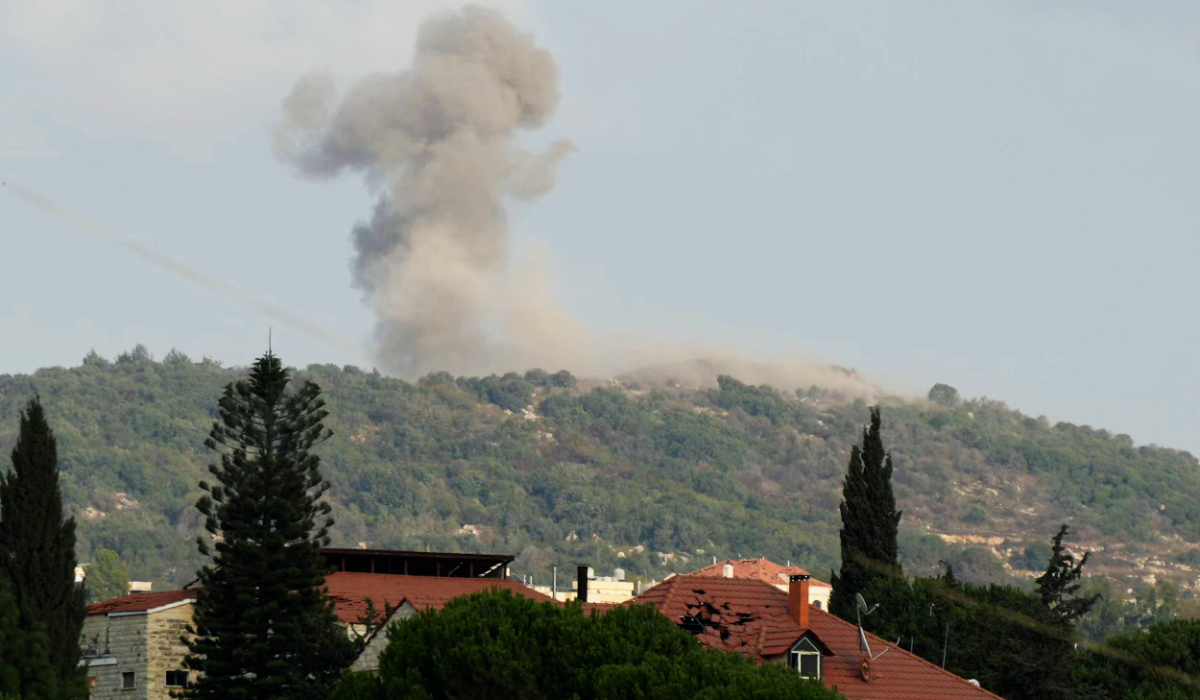
BEIRUT: Since a ceasefire went into effect between Israel and Hezbollah more than two months ago, fighting has stopped in much of Lebanon, but not on a strategic hill overlooking parts of a main southern city.
In recent weeks, Ali Taher hill has been the scene of daily shelling and airstrikes by Israel’s military. Hezbollah, a militant group backed by Iran, has repeatedly attacked Israeli forces in the area with drones.
The United States, which is mediating talks between Lebanon and Israel, had wanted Hezbollah to hand over the hill to the Lebanese army as part of larger plan to disarm the militant group and dismantle its infrastructure. But Hezbollah has refused.
Lebanon and Israel reached a framework agreement in June stating Israel will withdraw from Lebanon as Hezbollah is disarmed. The militant group was not a party to the negotiations and has rejected calls to disarm in areas north of the Litani river, which is where Ali Taher is located.
A full-on battle over this hill near the city of Nabatiyeh could escalate fighting across the country, and unrest in Lebanon complicates efforts to resolve the war in Iran.
On Thursday night, Israel’s military announced it had taken “operational control” of Ali Taher and a network of tunnels beneath it that Hezbollah uses to shelter its fighters and weapons. It is unclear how far Israel’s control extends. Just before Israel’s announcement, its air force was still targeting the hill, according to Lebanese state media.
There has been no official statement from Hezbollah since Israel’s announcement.
US pushes Lebanon to pressure Hezbollah
Hezbollah firmly rejected a proposal from the Lebanese government to hand over Ali Taher to the country’s army. It fears Israel would then seize control of the hill from the Lebanese army and then demand the handover of more territory.
Israel had occupied Ali Taher for 18 years before it withdrew from Lebanon in 2000.
The hill has a strategic location overlooking several villages as well as main roads leading to Nabatiyeh. Losing full control of it would disrupt Hezbollah’s presence and supply lines in the area.
The Israeli military says the site is also important to Hezbollah because of tunnels it built there, with funding from Iran.
Israel said in its statement Thursday that the hill housed underground command centers, weapons storage rooms, generators, living quarters, showers and a kitchen. Israel said it cleared Ali Taher of Hezbollah fighters and was working to “neutralize underground infrastructure sites.”
Hezbollah legislator Ihab Hamadeh questioned why the Israeli military was still attacking the hill if it was really in control of the area, according to the Arabic-language version of Russia’s state-funded news outlet Sputnik. An Associated Press photographer who visited the nearby village of Kfar Rumman on Friday saw no sign of Israeli military presence on the hill.
The hill, topped with a shrine to a Muslim scholar, sits north of the Litani river, which has become the de facto boundary of the area captured by Israel since its latest war with Hezbollah began in early March.
Fighting in the area has heated up in recent weeks
Israel has been conducting military operations around Ali Taher since July, said Nasser Khdour, a Middle East researcher at the Armed Conflict Location & Event Data Project, or ACLED, a US-based group that tracks conflicts around the world.
Hezbollah official Mahmoud Qamati told a Lebanese podcaster in late August that the group’s fighters were repelling attempts by Israeli troops to take Ali Taher. But he, and others, downplayed the significance of the site should Israel take it.
“Ali Taher is important, but if it is lost it does not mean the end of Hezbollah,” Qamati said.
In mid-August, Israel carried out a series of airstrikes on southern Lebanon that it described as retaliation for a Hezbollah drone attack on Ali Taher that seriously wounded three soldiers. The Israeli strikes, which killed 11 people, including women and children, were the deadliest since the US-brokered ceasefire went into effect in late June.
On Aug. 27, Israel carried out a series of airstrikes, killing one person and wounding six, after the military said Hezbollah fired two explosive drones at Israeli troops in the area. Hezbollah did not claim responsibility for any of the attacks.
Lebanon says Israel is hindering its army
Lebanon’s Deputy Prime Minister Tarek Mitri told an Arab TV station in late August that the Lebanese army was ready to take over Ali Taher.
He accused Israel of blocking the army due to its own political considerations ahead of Israeli national elections on Oct. 27.
“The problem is not in the Lebanese army’s readiness but in Israel’s stance,” he said.
Lebanese and Israeli officials are set to meet for negotiations in Rome later this month. Meanwhile, Hezbollah, which has always refused to speak directly to the US, appears to be changing its policy after the major setbacks it has suffered during its wars with Israel since 2024.
A Lebanese official told The Associated Press that indirect contacts are going on between the US and Hezbollah, but refused to give any details. He spoke on condition of anonymity in line with regulations.
The US ambassador to Lebanon, Michel Issa, said recently that Washington is ready to speak with Hezbollah if the group agrees to disarm.
Still, Hezbollah is not likely to take any move forward regarding talks with the US without a green light from its main backer, Iran. While talks with the US over their war have stalled, Iran has sought guarantees that Israel will halt its attacks on Hezbollah as part of any permanent deal.
Capture of Ali Taher could lead Israel to other Hezbollah strongholds
The capture of Ali Taher would open the way to Nabatiyeh and also lead to the nearby Apple Province and Rihan Mountain, where Hezbollah has been building up its presence since the late 1990s.
Israeli leaders have repeatedly pledged to leave troops in Lebanon and threatened to escalate military pressure until Hezbollah disarms.
“Israeli control of the area is an operational and military setback for Hezbollah,” said Khdour of ACLED. He said clearing these sites helps Israel protect towns in the northern part of its country, and increases pressure on Hezbollah.
“This will strengthen Israel’s position in any future negotiations over its withdrawal,” said Khdour.