Bass

How Hollywood’s production crisis became a key issue in the L.A. mayor’s race

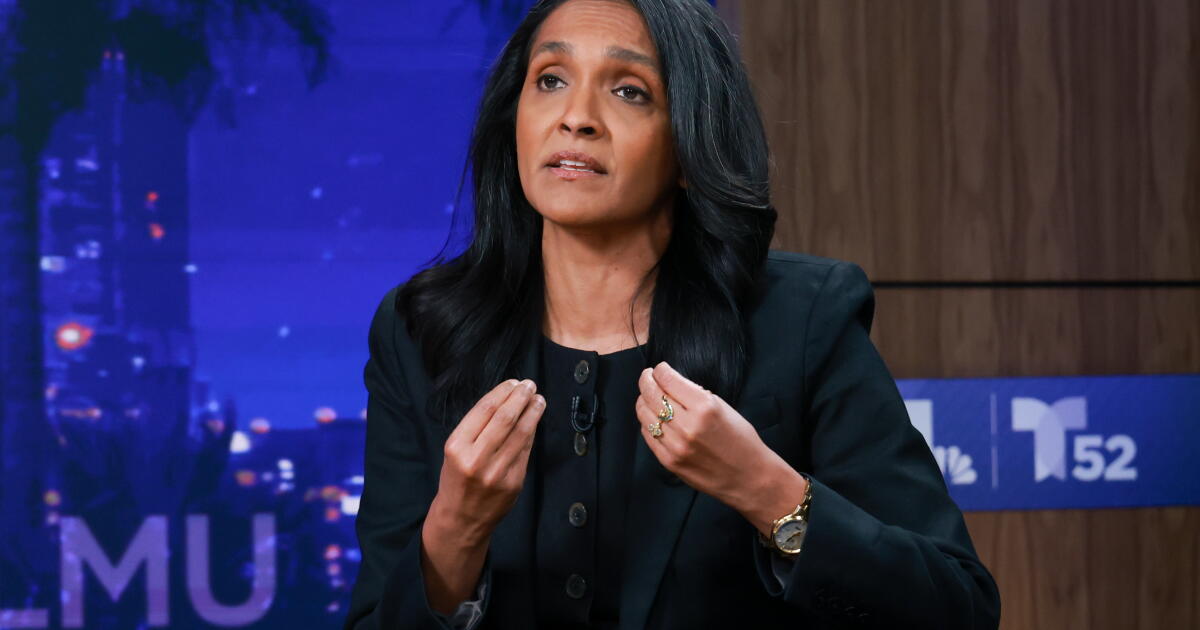
Los Angeles City Councilmember Nithya Raman, who serves the 4th District, makes her way across an empty, unnamed backlot, presenting her case to be the city’s next mayor.

“Studio lots like this one used to be filled with people, costumers, electricians, set medics, caterers, thousands of Angelenos making a living,” she says in the video posted on social media. “Now these lots are quiet. Since 2018, shooting days in the city have fallen by half.”

After telling voters this issue is “personal” (her husband is a TV writer and producer), criticizing Mayor Karen Bass’ leadership on the matter and outlining her own plans, Raman proclaims, “I’m running for mayor to make sure Los Angeles stays the film and TV capital of the world.”

Placing the concerns of the entertainment industry at the center of the city’s mayoral race would have been unthinkable even in the last election cycle. But the production crisis, which has rocked Hollywood and pummeled its workforce, has reached a critical juncture. The state of L.A.’s signature industry is now a political flashpoint alongside affordability, crime and homelessness in the upcoming election.

A person films an interaction with mayoral candidate Spencer Pratt

A person films an interaction between mayoral candidate Spencer Pratt and another person on his cellphone during a “Community Meet and Greet” event out of a house for sale on Long Ridge Avenue in a residential neighborhood of Sherman Oaks on Saturday.

(Etienne Laurent/For The Times)

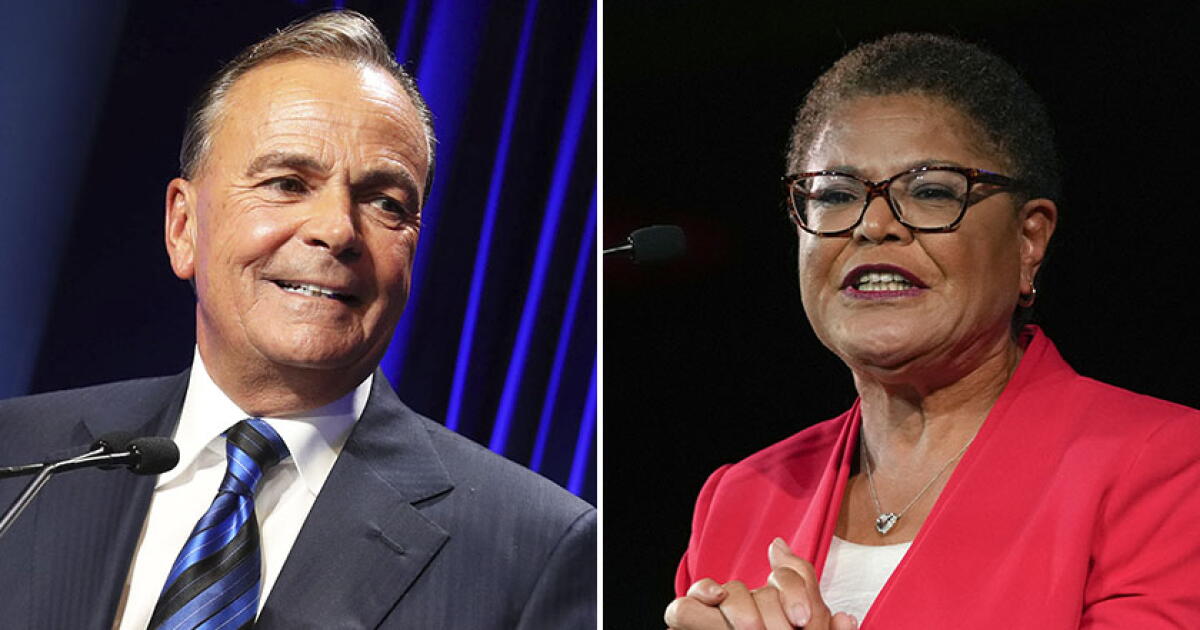
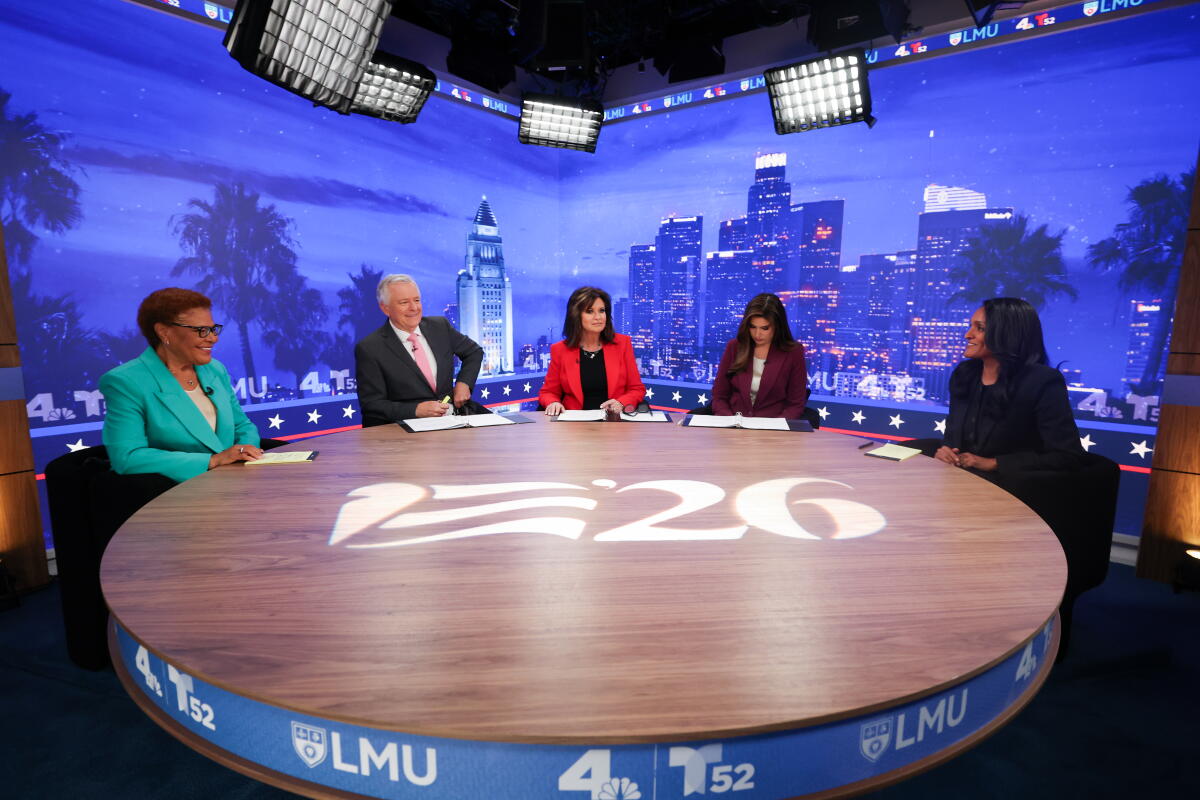
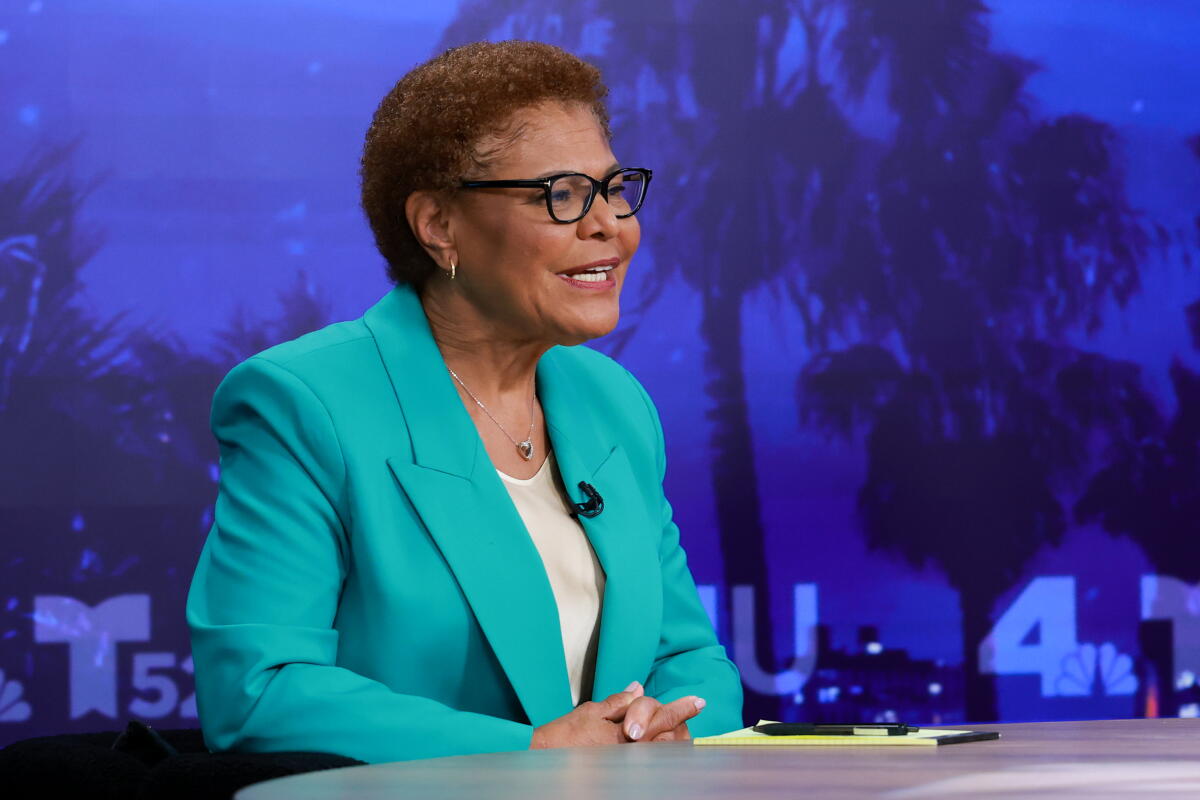
In campaign ads, interviews and the recent televised debate, the top three contenders: incumbent Mayor Bass, former reality TV villain Spencer Pratt and Raman, have made the ongoing production slump a pivotal topic, highlighting their plans to revitalize the industry while deploying the issue to undercut one another.

For decades, elected officials have not had to focus on the film and TV business, let alone turn it into a campaign issue. It was simply a given that local production would continue to play a dominant role in the city’s economy as it has for more than a century.

But the cumulative effects of consolidation, runaway production to tax-friendly states and countries and the end of the streaming boom has caused Los Angeles to lose billions in economic activity, shed some 57,000 jobs over the last four years and led to the closing of more than 80 film and television production service businesses across the city since 2022.

“For us, ‘save Hollywood’ is more than a slogan and more than headline. It is what needs to be done,” said Pamala Buzick Kim, one of the co-founders of Stay in LA, a grassroots campaign aimed at increasing film and television production in Los Angeles.

To be sure, the biggest driver of where studios and producers film are state and federal tax credits, over which the city has no control.

But Buzick Kim and others argue that “there is lots the mayor can do, hand-in-hand with the City Council.”

Mayor Karen Bass walks with Nilza Serrano during Avance's politics and tacos event

Mayor Karen Bass, center, walks with Avance Democratic Club President Nilza Serrano, to the right of Bass, during Avance’s politics and tacos event at Ernest E. Debs Regional Park in Los Angeles on Saturday.

(Christina House/Los Angeles Times)

For starters, say filmmakers and advocates, much can be done to tackle the city’s sclerotic bureaucracy, onerous regulations and a slow and costly permitting process that has pushed filmmakers to flee to friendlier and cheaper locales.

While steps have been put in place recently, including a pilot program offering reduced-cost filming permits for shoots that demonstrate a “low impact” to the surrounding community, many complain such steps have come too little and too late.

A man examines woodwork in a shop

Scott Niner, president and owner of Dangling Carrot Creative, checks on woodwork being produced at his shop in North Hollywood.

(Jason Armond/Los Angeles Times)

“The industry is in collapse and people have been talking about fixing things for years, but all we get are incremental little changes,” said Ed Lippman, a location manager of 34 years who lives in Sherman Oaks and has worked on such shows as “ER” and “The X-Files” and movies including “Galaxy Quest.” “And if the city is not being business-friendly, the business will go elsewhere.”

Compounding the problem, the Los Angeles area has more than 100 jurisdictions, many of which have their own set of rules and regulations regarding filming.

“There needs to be universal standards,” said Travis Beck, a location manager for commercials, small films and music videos. “Burbank is different from Glendale, which is different from Pasadena.”

The recent kerfuffle over filming “Baywatch,” the lifeguard reboot at Venice Beach, underscored both the efforts to bring production back to L.A. — enticed by a $21-million tax credit — and the complex, baffling red tape required to film here.

When shooting began in March, the production encountered a number of hiccups, including that it needed nearly double the parking space it had received a permit for, which was not part of the original approvals.

An anonymous crew member claimed on Facebook that government restrictions had forced production to relocate from Venice Beach. Production staff denied they had relocated. However, the incident prompted a backlash, becoming a rallying cry over L.A.’s burdensome filming bureaucracy.

The “Baywatch” team quickly met with city and county officials and resolved the issue, securing an agreement for a 20% parking discount from the city, and the mayoral candidates used it as an opportunity to score political points.

Pratt slammed the city’s permitting problems.

“LA turned its back on Hollywood — now the golden goose needs CPR,” he wrote on his Substack.

Bass highlighted her administration’s leadership on the matter.

“The City of Los Angeles will always clear bureaucratic barriers, making it easier and more affordable to film in the entertainment capital of the world,” she wrote on X last month.

On April 21, the mayor unveiled programs to offer productions 20% discounts on city-owned parking lots and other equipment, reduced filming fees at places like the Griffith Observatory and reopened the Central Library for filming. Last August, she appointed Steve Kang, president of the Los Angeles Board of Public Works, as the city’s film liaison.

Raman has pledged her support for expanding the state’s $750-million tax incentive program, streamlining permitting and lowering fees and eliminating those for small productions. She has also said she will establish a dedicated city film office with a liaison who understands production.

Nithya Raman speaks to a crowd outdoors behind Nithya for Mayor chalk message on ground

Councilmember and mayoral candidate Nithya Raman speaks to a crowd at the “Families for Nithya” event at Vineyard Recreation Center in Los Angeles on Saturday.

(Myung J. Chun/Los Angeles Times)

“Los Angeles is losing Hollywood,” Raman said in a statement. “Not because productions want to leave, but because we’ve made it too hard for them to stay.”

On his Substack and various podcast interviews, Pratt has promised to slash location fees in half, speed up permit approvals, reduce on-set city staff for the majority of productions and waive all fees for shoots with budgets under $2 million.

All three candidates have attacked one another over their approach to Hollywood.

Pratt and Raman have said Bass moved too slowly to address spiraling production and retain film jobs, saying she enacted measures only recently as the mayoral race was heating up.

Speaking on the Monks & Merrill podcast, Pratt criticized Bass’ moves to cut costs to film at the Griffith Observatory, saying, “Who needs that shot right now with the homeless poop all around it?”

The incumbent mayor has defended her administration’s record with the entertainment industry.

Bass and Pratt have taken Raman to task, calling her out for what they say is her lack of advocacy during her time on the City Council.

“She feels very strongly about it. But never offered one motion on the industry, and when motions came up on the industry she either recused herself, or got up and walked out,” said Bass during a debate this month.

Citing a potential conflict of interest over her husband’s work in television, Raman refrained from voting on several motions related to Hollywood.

Many working in the industry would like to see full-throttled support coming from the mayor’s office that will get results. They note how New York City has successfully promoted itself as a leading film destination over the years. (Kang, the city’s chief film liaison, said the city is working on a similar marketing campaign to promote filming that will launch by early fall.)

“For all the talk about, ‘We need to support and bring back filming,’ if they just did basics like lowering the fees and simplifying the process … that would actually help people and get things produced,” said Chris Fuentes, 66, who worked for 30 years as a location manager until he retired last year.

“We’ve heard a lot of great things, but not all things are possible in the mayor’s remit,” said Buzick Kim, noting that tax incentives are a state and federal issue.

Still, she said, “the mayor must understand that Hollywood needs to be made a priority and to find and create inspired thinking to make things easier and cheaper.”

Kang agrees, but says there are limits to what the mayor can achieve.

“We definitely can do a lot to really open up the entertainment industry, but at the same time, we recognize the larger impact needs to come from Sacramento and Washington, D.C., because L.A. just does not have the resources to compete with other jurisdictions in providing millions of dollars in tax incentives,” he said.

For most working in the industry, they just want city leadership that will execute on more than just talking points.

“This is the birthplace of cinema,” Beck said. “It shouldn’t be so hard to film here.”

Source link

For all the chatter by mayoral candidates, can anyone fix L.A.’s enduring problems?

I’m going to start this story on a quiet tree-lined street in Mar Vista, where a couple I met with on Thursday — the day after the L.A. mayoral debate — have a problem.

It’s not an unusual matter, as things go in Los Angeles. On both sides of the street, the sidewalk rises and falls, uprooted and cracked by shallow roots because over many decades, the trees were not properly maintained.

John Coanda, 61, who grew up in Los Angeles, was never bothered by torn-up sidewalks as a kid.

“In fact,” he said when he first emailed me about his predicament, “my friends and I sometimes used the ramping pavement as jumps for our bicycles.”

But his wife, Barbara, was diagnosed in 2024 with ALS, and she uses a wheelchair. When John pushes her, they can’t use the sidewalk if they want to go to the store or meet with friends, or just enjoy a nice pass through the neighborhood without getting into a vehicle.

So John pushes Barbara’s wheelchair in the street, which creates an obvious safety problem. And despite John’s best efforts to get City Hall to fix the sidewalks, he’s not expecting help anytime soon.

I’ll circle back to this story in a bit, but first, about that debate.

I recruited a half-dozen L.A. residents to watch and send me their thoughts about how the candidates tackled the important issues. And then I felt guilty for having done so, because the candidates didn’t do much tackling at all.

Spencer Pratt is shown on a television while journalists work during the 2026 Los Angeles mayoral debate.

Candidate Spencer Pratt is shown on a television while journalists work during the 2026 Los Angeles mayoral debate at Skirball Cultural Center.

(Jason Armond / Los Angeles Times)

They hit their talking points, for sure, and Mayor Karen Bass, Councilmember Nithya Raman and TV personality Spencer Pratt each had their moments. But by the end of the debate, and two straight nights of gubernatorial debates as well, I came away thinking there were no clear winners, but there was a definite loser.

Voters.

This is the fault of the format more than of the candidates themselves. The deck is stacked against meaningful, substantive discussions, especially when moderators ask — as they did several times — for one-word answers.

“Moderator questions are so meaningless … and they make it easy for candidates to take potshots at each other,” said longtime political sage Darry Sragow. “The format is guaranteed to elicit nothing that matters.”

It’d be better to have single-issue debates, and to have candidates pressed for details by journalists who cover those issues and can push back against unrealistic promises and expose a lack of depth.

My debate watchers did some of that themselves. CSUN librarian Yi Ding had praise and criticism for each candidate, but was looking for concrete plans and didn’t get many.

Ding was also disappointed that two other mayoral candidates — Ray Huang and Adam Miller — were not invited to the debate, and I agree with her. Both have been polling low, but with so many undecided voters, and such high unfavorability ratings for Bass, they should have been in the mix.

Mike Washington, a retired pharmacist and West Adams resident, said Bass has done better than previous mayors on homelessness and he didn’t think Raman or Pratt came off as worthy of bumping her out of City Hall.

“The public would have benefited from more questions related to the challenges young people are facing,” said Juan Solorio Jr., president of the San Fernando Valley Young Democrats club. His colleague David Ramirez agreed, saying he was hoping for “more discussion about the cost of living for young adults,” but he and Solorio are both backing Bass.

West L.A. software developer Mike Eveloff asked the million-dollar question in one of his many observations during the debate:

“Why is LA spending record amounts on homelessness, fire, police, and infrastructure while results deteriorate? Streets and sidewalks crumble. Even the city emblem right in front of City Hall is deteriorated. With the World Cup and Olympics approaching, voters need to know: Do these leaders have the financial discipline and operational competence to manage a fourteen billion dollar city?”

Venice resident Dennis Hathaway, author of “An Octogenarian’s Journal,” said he thinks “these kinds of debates are pretty non-edifying.” And, as someone I wrote about two years ago regarding busted sidewalks in his neighborhood, he shared this lament about Thursday’s debate:

“No mention of broken sidewalks, potholed streets, other deteriorated infrastructure. To me, that’s a much more important subject than non-citizens voting in city elections.”

(Bass did say during the debate that there was a new infrastucture plan in place, and that’s a step in the right direction. But there was no discussion, and when you read the details, 2028 Olympics projects will be prioritized, and it’ll take years to figure out how to fund thousands of additional much-needed fixes.)

The Coandas live not far from Hathaway, and their lives have been upended first by Barbara’s diagnosis and then by John getting laid off in February from his job as a data analyst. Barbara still teaches French via Zoom, and John is tending to her needs. They started a Gofundme campaign to help pay their bills.

With Barbara in a wheelchair, John contacted the city’s Safe Sidewalks L.A. program last fall, and I think it’s fair to say that name is somewhere between a misnomer and a bad joke.

The “program” responded by email on Halloween, appropriately enough, informing him that under the City Council-approved “Sidewalk Repair Program Prioritization and Scoring System,” his request for help merits only 15 points out of a possible 45.

“Currently,” he was informed, “the estimated wait time for completion of an Access Request with a score of 15 is in excess of 10 years.”

Happy Halloween.

Over the years, responsibility for sidewalk repairs has shifted between the city and homeowners. There’s a rebate program available to people who repair their own sidewalks, but it’s capped at an amount that doesn’t always cover the costs. And ruptured pavement is keeping lots of lawyers busy with trip-and-fall lawsuits that cost the city millions each year.

Barbara Durieux Coanda and her husband, John Coanda, make their way down the ramp in front of their home in Mar Vista.

Barbara Durieux Coanda, who has ALS, and her husband, John Coanda, make their way down the ramp in front of their home in Mar Vista.

(Genaro Molina / Los Angeles Times)

Coanda told me he doesn’t have the funds at the moment to pay for repairs, and even if he did, there are several more sidewalk disaster zones on both sides of his street, so he’d still have to push his wife’s wheelchair in the street even if he fixed the cracks in front of his own house.

Barbara graciously said she thinks the city has other, higher priorities, but in November her husband contacted the office of Councilmember Traci Park, saying he was told that he would have to wait 10 years for repairs.

“Sadly,” he wrote, “I don’t think my wife will live that long.”

A Park staffer wrote back, saying, “The turnaround time does sound realistic given the budgetary crisis the city finds itself in.” But, the staffer added, maybe the council member’s office could “help move the needle on this request.”

Coanda said he’s been too busy with his wife’s issues to follow up. But Pete Brown, Park’s communications director, told me Friday afternoon that the office is exploring ways to pay for fixes that don’t take 10 years, including the use of discretionary funds.

I don’t know how that might play out, but I do know that L.A. doesn’t need another debate like the last one.

We need a mayor and council members who refuse to accept that it takes 10 years to create safe passage for a wheelchair.

In the national capital of broken sidewalks, we need concrete plans.

steve.lopez@latimes.com

Source link

Two winners, one loser in tonight’s L.A. mayor’s debate

Karen Bass, Spencer Pratt and Nithya Raman each came into tonight’s mayoral debate with goals for what may be their only time together on stage.

As the incumbent mayor, Bass had to weather blows from her challengers while trying to sell voters on her fitness for another term, despite a disastrous 2025.

As a reality TV star with no political experience, Pratt needed to show that he could offer substance instead of just AI fanboy videos and the name-calling — “Karen Basura” — he has indulged in on social media.

Raman’s task was perhaps the hardest. As a city councilmember whose two previous campaigns were backed by the local Democratic Socialists of America chapter, she needed to convince Pratt-curious voters that she’s more conservative than Bass. Yet for others, she needed to appear liberal enough to peel away support from the mayor and come out as a progressive lioness to excite Democrats in a year where GOP candidates like Pratt have to answer for the disaster that is President Trump’s second term.

Only one of the three failed.

At times, Raman was tongue-tied trying to answer simple questions. Moderators kept telling her she was going over her time. Answering a yes/no question about whether noncitizens should be allowed to vote in city elections, the councilmember went on and on, until the moderator cut her off.

While Raman offered some policy plans, she also played a card straight out of Trump’s arsenal. She claimed that Pratt and Bass were teaming up against her — an unlikely scenario that drew laughs from the audience. She got more and more frustrated, to the point that when Bass was allowed time for a rebuttal, she dejectedly proclaimed, “I haven’t been offered that in a lot of this debate.”

Raman, who had endorsed Bass’ reelection before throwing her hat in at the last minute, came off as inexperienced, touchy and unprepared.

The line of the night was Pratt dismissing Raman as a “random councilmember” — which is how the L.A. political world responded to her entry into the race. She was so upset about Pratt’s remark that she continued to whine about it to a KNBC reporter after the debate.

What’s shocking about Raman’s flop is that she should know how important it is to project well to a television audience, given that her husband is a screenwriter. Her tone was flat, when she needed to be passionate.

No one had to remind Pratt of that. He was parrying tough questions on a big stage for the first time, facing an audience who knew him only as the Angry L.A. White Guy he has reveled in playing.

He mostly succeeded.

At his best, Pratt came off as a boisterous bro with enough charm to call himself “humble” without coming off as obnoxious. He dominated the flow of conversation without coming off as commandeering, even interrupting Raman at times to let Bass speak. At one point, he even said “Sorry” when he had taken up too much time and the moderators cut him off.

He was light on specifics, other than saying he was going to do better than the others and that he would prioritize public safety above all. Instead, he was the one person on stage who used anecdotes to sell himself, citing conversations about abused animals, downtown workers too afraid to eat outside and film producers hiring local gang members to keep their shoots safe.

As a TV personality-turned-influencer, Pratt knows that storytelling is far more effective than drowning the audience in statistics, as Bass and Raman did.

But the bad Pratt flared up at times. He earned a reprimand from KNBC anchor and debate co-moderator Colleen Williams when he called the mayor an “incredible liar.” Affecting high-pitched voices to mock Bass and Raman came off as juvenile and possibly sexist. And when it came to last summer’s federal immigration raids that terrorized Southern California, Pratt appeared flummoxed when Bass pointed out that 70% of those arrested didn’t have criminal records — a use of stats that hit.

Bass was also who she had to be — measured, forceful and raring to defend her record, without coming off as defensive. She wasn’t exactly inspirational, but she didn’t have to be. The city’s powerful labor unions have backed her, along with much of the Democratic establishment.

Raman and Pratt are right in deeming Bass the old guard of a beat-up city — but the old guard didn’t get there without knowing how to win.

Source link

What do Jeanie Buss, Colin Jost and Dave Winfield have in common? A stake in L.A. mayor’s race

The roster of campaign contributors to Los Angeles mayoral candidates has something in common with the courtside seats at Lakers games: Both are sprinkled with the rich and famous.

There’s Colin Jost, “Saturday Night Live’s” Weekend Update host, popping up as a donor to Councilmember Nithya Raman. Mayor Karen Bass, meanwhile, counts former Major League Baseball star Dave Winfield among her contributors.

Lakers governor and part-owner Jeanie Buss is there too, as a donor to reality TV personality Spencer Pratt. All three gave the maximum $1,800 contributions to their chosen candidates.

With Los Angeles at the center of the entertainment industry, big names like Jost, Winfield and Buss (none of whom responded to requests for comment) are par for the course in local elections. There might have been even more celebrity contributions were it not for the late-breaking entries of Pratt and Raman in the race, said political consultant Mike Trujillo.

“It’s a very short timeline that is not usual for a mayor’s race where you’re challenging an incumbent,” said Trujillo, who isn’t affiliated with any of the mayoral campaigns. “It takes a while to get these celebrities.”

Trujillo said he expects more big names will contribute if no candidate wins a majority in the June 2 primary, which would trigger a runoff in the Nov. 3 general election.

In 2022, “E.T.” director Steven Spielberg gave $1,500 to Bass’ first campaign for mayor as well as $125,000 to the independent expenditure group “Communities United for Bass for LA Mayor 2022.” J.J. Abrams, the director of “Star Wars: The Rise of Skywalker,” also gave $125,000 to the group.

Jeffrey Katzenberg, the co-founder of DreamWorks Animation, gave nearly $2 million to the pro-Bass group.

Winfield and Buss weren’t the only names associated with the sports world to wade into the mayoral maelstrom.

Brian McCourt, son of former Los Angeles Dodgers owner Frank McCourt, contributed the maximum $1,800 to Bass’ reelection campaign. He is the president of the McCourt Foundation, which runs the Los Angeles Marathon.

Magic Johnson’s son, Andre Johnson, who now runs Magic Johnson Enterprises, also gave the maximum to Bass.

Bass also collected donations from “Grey’s Anatomy” actor James Pickens Jr. and from Pauletta Washington, Denzel Washington’s wife. In 2025, Bass received $1,800 from Edythe Broad, the widow of billionaire developer Eli Broad and co-founder of the Eli and Edythe Broad Foundation.

Raman received dozens of contributions from successful Hollywood writers, producers and directors. She is married to Vali Chandrasekaran, a writer for hit TV shows including “30 Rock” and “Modern Family.” She took in maximum contributions from stand-up comedian Adam Conover as well as musician Joanna Newsom, the wife of Andy Samberg.

The most recent campaign contribution reports showed Pratt raising nearly $540,000 since Jan. 1, more than any other candidate. About $131,000 of his contributions were in so-called un-itemized contributions of under $100, significantly more than any other candidate.

Among the itemized contributions, Pratt reported getting $1,800 from Rick Salomon, the professional poker player who is known for a 2004 sex tape with Paris Hilton. Salomon’s daughter Tyson Salomon, a social media influencer, gave $1,250 to Pratt.

Two other mayoral candidates, tech entrepreneur Adam Miller and community organizer Rae Huang, also raised more than $200,000 each, though there were fewer household names in their contributions

Miller loaned his own campaign $2.5 million.

Source link

Kamala Harris endorses L.A. Mayor Karen Bass for reelection

Former Vice President Kamala Harris endorsed Los Angeles Mayor Karen Bass for reelection on Monday.

“Mayor Karen Bass is the leader Los Angeles needs right now. She has done what so many said couldn’t be done — the first ever two-year decline in homelessness, reducing crime to levels this city hasn’t seen since the 1960s, and refusing to back down when the federal government came after our neighbors,” Harris said in a statement. “She has my full support for re-election.”

The endorsement comes as ballots have begun arriving in Californians’ mailboxes at a critical moment in the race to lead the nation’s second-largest city. Although Bass leads in polls, she is viewed unfavorably by many Angelenos for her perceived lack of leadership in the aftermath of the devastating Palisades fire.

A quarter of voters supported Bass in a March poll by the UC Berkeley Institute of Governmental Studies that was co-sponsored by The Times. City Councilmember Nithya Raman had the backing of 17%, and conservative reality TV star Spencer Pratt had 14%. A quarter of voters were undecided.

Though Bass led the other prominent mayoral candidates, political strategists say the numbers are troubling for the incumbent because she is facing off against lesser-known rivals and because 56% viewed her unfavorably. And Pratt and Raman had raised more money than Bass this year through April 18, according to fundraising disclosures filed with the city’s Ethics Commission. However, Bass had nearly $2.3 million in the bank because she started fundraising for reelection two years ago.

Though Bass and Harris were rivals to be selected as presidential nominee Joe Biden’s running mate in 2020, the two Democrats have known each other for more than two decades and have a long shared history. Bass was sworn in by Harris as the 43rd mayor of Los Angeles in 2022. Two years later, at the Democratic National Convention where Harris became the party’s presidential nominee, Bass spoke about working with her more than a decade ago on youth homelessness and fixing the child welfare system when Bass led the California Assembly and Harris was a state prosecutor.

Harris also endorsed Rob Bonta for reelection as state attorney general, Malia Cohen for reelection as state controller and Lt. Gov. Eleni Kounalakis for state treasurer. Here’s a look at those races and the rest on the ballot.

Source link

Man from viral video gives home run ball back to young Guardians fan

Guardians fan Evelyn Moore got a pretty cool souvenir from Monday’s game against the Tampa Bay Rays — a two-run home run ball hit by Cleveland second baseman Daniel Schneemann.

The 11-year-old softball player from New Philadelphia, Ohio, almost got the ball right after Schneemann hit it in the bottom of the fifth inning.

But, as seen in video footage that quickly went viral on social media, a man appeared to snatch it away as Evelyn was trying to pick it up near the rail in the left-center field stands at Progressive Field.

He eventually gave it to her, however, and now the girl’s mother wants folks on social media to leave him alone.

“This man’s life shouldn’t be ruined over this,” Nikki Moore-DeVore said. “Jokes and memes are one thing, but it’s getting excessive. It’s too much.”

Moore-DeVore said her family — which also includes her husband, Jon DeVore, and her son, Theo Moore, 9 — attend several Guardians games a year. They sit in the outfield stands, where Evelyn — an avid baseball fan and baseball card collector — likes to take her glove down to the rail and try to persuade Cleveland outfielders to toss her a ball.

Video of Schneemann’s home run shows the ball flying over the left-center field wall, where a bearded man wearing a throwback Cleveland Indians hat and T-shirt tried to catch it in the air. Instead, it bounced off his hands toward the rail to his left.

Two baseball players wearing batting helmets smile and bump hands

Cleveland Guardians’ Daniel Schneemann, right, is greeted at the plate by teammate David Fry after hitting a two-run home run in the fifth inning of a game against the Tampa Bay Rays on Monday in Cleveland.

(Sue Ogrocki / Associated Press)

Evelyn ran down from her seat two rows up, dropped to the ground and attempted to secure the ball in front of her. The man ran over and also dropped to the ground next to her, starting a brief struggle for control of the ball.

The man eventually emerged triumphantly.

“I did not really see how the ball came over to us. I just saw it bounce in our direction and my daughter go down to get it,” Moore-DeVore said. “And I saw the scuffle kind of from behind, but I couldn’t see much of the hands or anything like that. I just saw the shoulders shifting around.

“And then she got up empty-handed, and people started booing. The guys sitting in front of me were like, ‘That was her ball!’ My husband was booing. He was not happy, but we didn’t want to ruin the game.”

Evelyn also was upset by the turn of events, her mother said, “but she didn’t cry.”

“She actually took it like a champ,” Moore-DeVore said. “Every inning, she still went up to the rail to try to get one of the players to throw a ball to her. She didn’t give up.”

Meanwhile, Theo approached the man to request he return the ball to his sister. Moore-DeVore said her son told her the man politely refused.

“I was just proud of him for going over there and taking it upon himself to try to help his sister,” Moore-DeVore said.

The Rays broadcast of the game showed the incident involving Evelyn and the man, with the announcers taking the girl’s side. On social media, fans shared the video and shamed the man for his behavior, with some looking to make his identity public.

Later in the game, Rays sideline reporter Ryan Bass visited the family at their seats and presented both kids with baseballs.

That’s when Evelyn became emotional.

“She cried happy tears,” her mother said. “I think she just felt seen. The incident made her feel small, and Ryan made her feel seen.”

Bass posted about the moment on X.

“We had to make it right,” Bass wrote, adding in a separate post: “We got the chance to make a sweet little girl’s night. There’s nothing better. Kindness is free. Always remember that.”

Before the bottom of the eighth inning, Evelyn went down to her usual post at the rail to try to persuade an outfielder to toss her a ball. She returned with the home run ball from three innings earlier.

“She came back with the biggest smile on her face: ‘Mom, he gave it back to me!’” Moore-DeVore said. “The guys in front of me were like, ‘yeah, he’s, like, getting a lot of social media flack.’ … I’m sure he realized eventually that it was probably the wrong action to take, just not good etiquette.”

In return, Moore-DeVore said, Theo offered the man — whose name has not been revealed despite the internet’s attempts — one of the balls that Bass had given him and his sister.

“He respectfully declined,” she said, “so my son gave it to another kid.”

Moore-DeVore said both of her kids are “on cloud nine” over how everything turned out — and she wants everyone else to get over it as well.

“I don’t want this one moment to ruin this guy,” she said. “And my kids, they wouldn’t want that. They’re sweet kids. I feel like, if kids their age can forgive and offer him a peace offering, grown adults and other fans can, too.”

Source link

Bass, Barger meets with Trump to push for L.A. fire recovery funds

Los Angeles Mayor Karen Bass and L.A. County Supervisor Kathryn Barger met privately with President Trump and administration officials Wednesday to press for federal support and yet-unpaid wildfire recovery funding as the region continues to rebuild from the 2025 fires.

“This afternoon we met with President Trump and Administration officials to advocate for families who lost everything,” Bass and Barger said in a statement. “We had a very positive discussion about FEMA and other rebuilding funds as well as the support of the President to continue joining us in pressuring the insurance companies to pay what they owe — and for the big banks to step up to ease the financial pressure on L.A. families.”

Barger said the two leaders had a “high-level discussion” with the president in the Oval Office, sharing stories about what fire survivors are experiencing day to day. She added that “we left details behind with the President,” but did not specify whether Trump made any funding or policy promises during the meeting.

“First and foremost, today’s meeting was to thank the President for his initial support of infusing federal resources to expedite debris removal, as well as his recent tweet about insurance companies, which have already proven fruitful,” she said in a statement provided to The Times.

Bass was similarly reserved about the discussions, telling reporters that “we will follow up with the details,” but signaled progress is being made on federal support.

“I think what’s important is that we certainly got the president’s support in terms of, you know, what is needed, and then the appropriate people were in the room for us to follow up. And that was Russ Vought, who is the head of the Office of Management and budget,” Bass told KNX on Wednesday.

The meeting comes on the heels of a yearlong standoff between California leaders and the Trump administration over wildfire recovery funding, disaster response and whether the federal government should have a say in local rebuilding permitting.

California leaders, led by Gov. Gavin Newsom, have accused the Trump administration of withholding billions in critical wildfire aid, prompting a lawsuit over stalled recovery funds. Officials allege political bias in the delay of billions of dollars from the Federal Emergency Management Agency.

Newsom visited Washington in December. When he made his rounds on Capitol Hill, he met with five lawmakers, including three who serve on the Senate and House appropriations committees, to renew calls for $33.9 billion in federal aid for Los Angeles County fire recovery.

But the governor said he was denied a meeting with FEMA and would not say whether he had attempted to meet with Trump to discuss the issue.

Bass, meanwhile, appears to have found a path to the president on a subject that has been paramount for her community.

The fruitful meeting comes after Trump lobbed insults at the mayor at a news conference earlier this year, where he called her “incompetent” for how she handled last year’s wildfire recovery efforts. He alleged that under Bass’ leadership, the city’s delay in issuing local building permits will take years when it should have taken “two or three days.”

California officials, including Newsom, have urged the Trump administration to send Congress a formal request for the $33.9 billion in recovery aid needed to rebuild homes, schools, utilities and other critical infrastructure destroyed or damaged when the fires tore through neighborhoods more than 15 months ago.

What Bass and Barger’s meeting with the president ultimately produces remains to be seen.

The billions in recovery aid have not yet materialized, but the meeting could potentially give those discussions new momentum.

The White House did not immediately respond to a request seeking comment about the meeting.

Earlier this month, Trump criticized insurance provider State Farm on Truth Social for its handling of the devastating Los Angeles County wildfires. He accused the insurance giant of abandoning its policyholders when tragedy struck.

“It was brought to my attention that the Insurance Companies, in particular, State Farm, have been absolutely horrible to people that have been paying them large Premiums for years, only to find that when tragedy struck, these horrendous Companies were not there to help!” Trump wrote.

But the rebuke didn’t come out of the blue. It stemmed from a controversial February visit to Los Angeles by Trump administration officials.

Trump tapped Environmental Protection Agency Administrator Lee Zeldin in an effort to strip California state and local governments of their authority to permit the rebuilding of homes destroyed in the Eaton and Palisades fires.

Within the week, Zeldin was in Los Angeles, bashing Newsom and Los Angeles officials at a roundtable with fire victims and reporters, saying that residents were suffering from “bureaucratic, red tape delays and incompetency” and that leadership was “denying them … the ability to rebuild their lives”.

During the trip, officials heard direct complaints from local leaders and fire victims about insurers being slow, restrictive and insufficient with their claim payouts.

After these meetings, Trump directed Zeldin to investigate the insurers’ responses. State Farm, facing roughly $7 billion in fire-related claims, is also under formal investigation by California’s insurance commissioner over its handling of the crisis.

Despite tensions with the administration, Bass and Barger appeared confident that progress was being made on the insurance and funding issues.

“Our job is to fight for our communities,” their joint statement concluded. “When it comes to this recovery, our federal partners are essential, and we are grateful for the support of the President.”

Source link

Welcome to Bass’ virtual State of the City (Part II)

Good morning, and welcome to L.A. on the Record — our City Hall newsletter. It’s Noah Goldberg, with an assist from David Zahniser, Sandra McDonald and Alene Tchekmedyian, giving you the latest on city and county government.

Mayor Karen Bass is planning to give her second State of the City address of the year on Monday, with a digital twist from years past.

Traditionally the speech is given — in person — before City Council members and other machers at City Hall or another location. This year’s speech will be delivered by video.

Of course, Bass already did one State of the City speech this year, holding forth on the Olympics, the World Cup and Palisades fire rebuilding in a February address at Exposition Park.

The video State of the City will probably be more about the city budget, which also will be released Monday. The city is facing a budget gap of a few hundred million, according to Matt Szabo, the city administrative officer.

“Mayor Bass will update L.A. on the State of our City through a video that anyone can watch, anytime, anywhere,” said Paige Sterling, a spokesperson for Bass. “From Day One through today, Mayor Bass’ focus is changing the direction of L.A. by reversing long-standing [and long ignored] trends on homelessness, housing, public safety and infrastructure.”

You’re reading the L.A. on the Record newsletter

Sign up to make sense of the often unexplained world of L.A. politics.

Parisian payback

The city controller released information this week that showed how much L.A. paid for flights to Paris for L.A.’s delegation to the 2024 Summer Olympics.

One purchase stuck out: $22,000 for a first-class ticket for Bass to fly to Paris and back. It was purchased March 6, the same day Bass boarded the flight to the City of Light, according to the city, which released the information in response to a public records act request.

One reason for the high cost was the last-minute purchase, the mayor’s office said, which it said was the consequence of a packed mayoral schedule that makes advance planning difficult.

Secondly, the city was transferring over its travel booking platform to a company called Concur, and the only flights available for the mayor to purchase to arrive in Paris in time on the platform were first-class seats.

The mayor then reimbursed the city for $12,270, with half coming from her personal bank account, while the other half came from her Karen Bass For Mayor 2022 account, according to checks. That left the city on the hook for $10,000.

“Mayor Bass voluntarily paid for the majority of the ticket herself. City rules didn’t require her to, but she did it anyways. This was the only flight that would get her there on time, and this was the only ticket available,” said Kolby Lee, a spokesperson for the mayor.

Bass and a council delegation, including Councilmember Katy Yaroslavsky, were in Paris that March to “see behind the curtain” about how a city prepares to host the Games, Bass said at the time.

Yaroslavsky’s round trip cost the city $1,600.

Raman out of council leadership

Sometimes the drama at City Hall comes in the fine print. Last Friday, the City Council released its agenda for its April 14 meeting. Casual observers would be forgiven for missing a small change on the first page.

Under Council President Marqueece Harris-Dawson’s name, and under the name of President Pro Tempore Bob Blumenfield, there was a third name: Assistant President Pro Tempore John S. Lee.

That makes Lee No. 3 in council leadership, appointed to the position by Harris-Dawson. For all intents and purposes, the largely ceremonial position means he gets to sit on the dais and preside over council if Harris-Dawson and Blumenfield can’t make it.

But on the fourth floor of City Hall, where council offices are, the move had staffers chattering.

Lee replaces Councilmember Nithya Raman, who threw her hat in the ring to run for mayor against Bass — an ally of Harris-Dawson.

Bass had previously thrown her weight behind Raman during the council member’s tough 2024 reelection campaign.

Some thought Harris-Dawson was punishing Raman for her surprise bid against Bass, but Raman said that wasn’t the case.

“When I first announced my candidacy for Mayor, I told the Council President that I would step back from all of my appointed roles. One change has now been made. I remain focused on serving my district and the City of Los Angeles,” Raman said in a statement.

Harris-Dawson didn’t immediately respond to a request for comment.

There’s a long tradition of council members stepping down from leadership positions or getting the ax when they run for higher office.

In 2021, then Councilmember Joe Buscaino was voted out as president pro tempore after making disparaging remarks about numerous council members (including Raman) while he was running for mayor.

In 2011, then-Councilmember Eric Garcetti stepped down from his role as council president during his run for mayor.

Spotlight on Soto

Los Angeles City Atty. Hydee Feldstein Soto, who is seeking reelection in the June 2 primary, is taking heat from challenger Marissa Roy for her appearance last weekend at the Hope Fest LA rally at the L.A. Coliseum.

The event was put on by Hope California, which is led by evangelical pastor Ché Ahn, a supporter of President Trump and a write-in candidate for California governor. Ahn spoke at a Stop the Steal rally in Washington, D.C., the day before the Jan. 6, 2021, storming of the Capitol, and has repeated the unfounded claim that Joe Biden stole the election from Trump. (“I don’t have facts. I don’t have proof. That’s just my own personal opinion,” Ahn, who also opposes abortion, told The Times.)

Feldstein Soto is pro-choice and anti-Trump, and the speakers immediately preceding her expressed anti-gay and anti-trans views.

Roy said the positions expressed at the rally were wildly out of step with those of Los Angeles voters, and criticized the city attorney’s appearance at the rally as “disturbing.”

“Los Angeles is overdue for a City Attorney who fights for the people,” Roy said in a statement.

At the rally, Feldstein Soto spoke about the scourge of human sex trafficking, including of children along the Figueroa corridor in Los Angeles. She had been invited to the event by a human trafficking survivor to speak about their shared commitment to the issue, spokesperson Naomi Goldman said.

“The primary purpose of the City Attorney’s attendance was to shine a light on the exploitation of women and girls, and to stand in solidarity with those affected. She stayed at the event briefly to deliver her remarks and then departed,” Goldman said.

State of play

— THE KIDS ARE ALRIGHT: A strike that would have shut down schools for nearly 400,000 students was averted at the eleventh hour early Tuesday after the Los Angeles Unified School District reached a tentative agreement with the union that represents workers including custodians, bus drivers and cafeteria workers. Mayor Bass stepped into negotiations at the last minute to help avert a disruptive work stoppage.

— LA USD$: The price of the union deal will be nearly $1.2 billion in annual contract costs, and questions remain about whether the district can afford it.

— ONE AND DONE?: Mayoral candidate Spencer Pratt went on the Joe Rogan Experience this week and told the podcaster that Angelenos are fed up with their leadership. He explained the rules of the city’s June 2 primary to Rogan, saying that there would be no runoff — as most analysts expect — if a candidate wins 51% of the vote. “I think I become mayor June 2 and it won’t even go to November,” Pratt said.

COUNTY BUDGET: The county unveiled its nearly $50-billion budget plan Monday, proposing $2.7 million invested to beef up the team of people investigating fraud within a deluge of recent sex abuse lawsuits, suggesting a broadening probe at the district attorney’s office. The supervisors must now review, then vote on the budget.

— HAHN AND OFF: L.A. County Supervisor Janice Hahn was booed by her neighbors in San Pedro at a Tuesday night town hall meeting after she spoke in support of a proposed substance abuse rehabilitation center in the South Shores neighborhood. “There will be a difference of opinion on this project, but let’s not tear each other apart,” Hahn urged residents, who picketed last weekend at the site of the proposed project.

— E-HIKE: A Los Angeles City Council panel is pushing to ban electric bikes from most city recreational trails, saying the machines pose a threat to hikers and equestrians. The council’s Arts, Parks, Libraries, and Community Enrichment Committee voted 3 to 0 in favor of the measure, which now goes to the council’s Transportation Committee before potentially advancing to the full City Council, which would have to approve the ban before it takes effect.

QUICK HITS

  • Where is Inside Safe? The mayor’s signature program moved more than 25 people off the street and inside in Koreatown this week.
  • On the docket next week: The mayor will release her budget on Monday, along with her second State of the City. She is planning to hold a news conference on the budget Monday.

Stay in touch

That’s it for this week! Send your questions, comments and gossip to LAontheRecord@latimes.com. Did a friend forward you this email? Sign up here to get it in your inbox every Saturday morning.

Source link