ballroom project

GOP bill would fund $1 billion in White House security upgrades for Trump’s ballroom

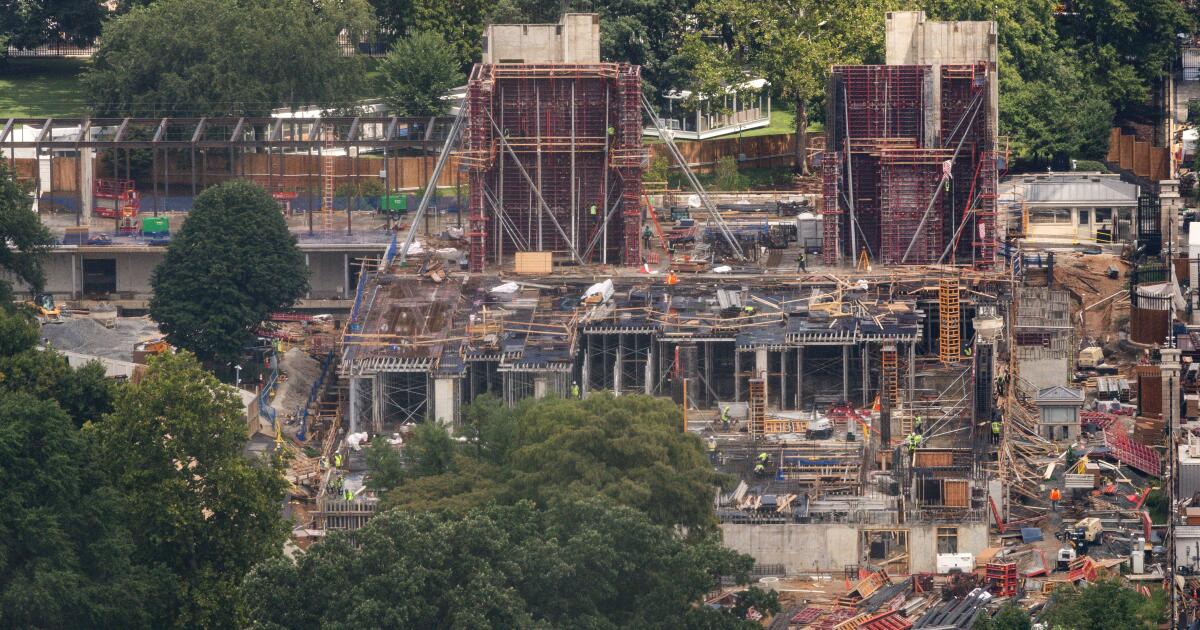
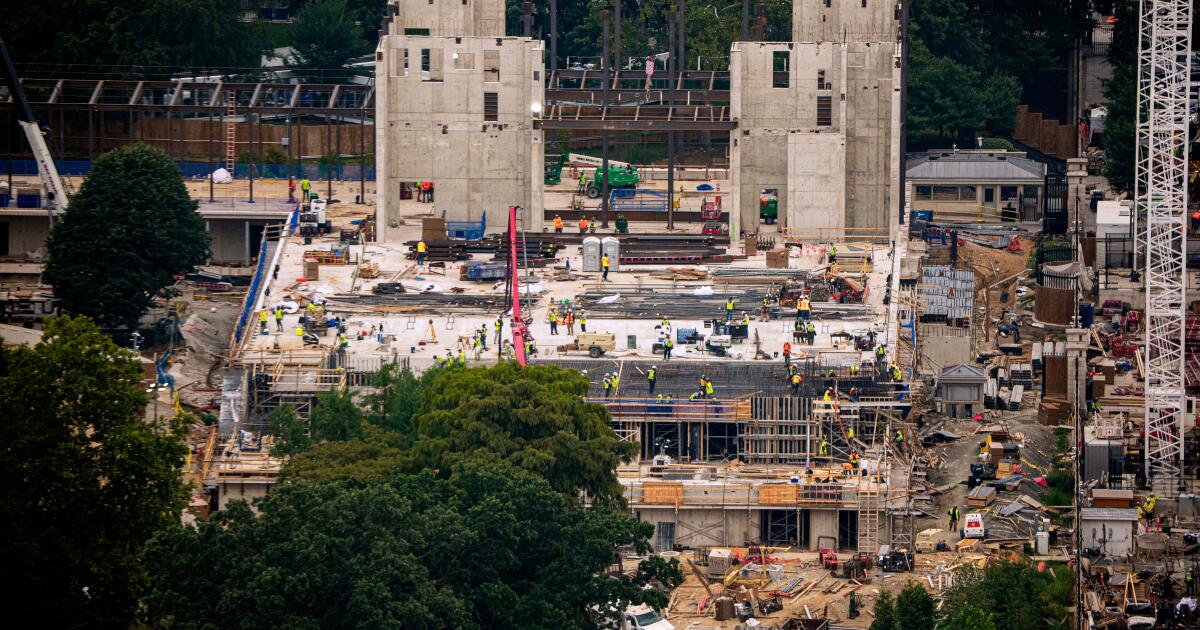
Senate Republicans have added $1 billion in White House security upgrades to legislation that would fund immigration enforcement agencies, a proposed boost for President Trump’s ballroom project after a man was charged with trying to assassinate him at the White House Correspondents’ Assn. dinner last week.

The GOP bill released late Monday would designate the money for the U.S. Secret Service for “security adjustments and upgrades” related to the ballroom project, which Trump and Republicans have been pushing since Cole Tomas Allen allegedly stormed the April 25 media dinner at the Washington Hilton with guns and knives. The legislation says the money would support enhancements to the ballroom project, “including above-ground and below-ground security features,” but also specifies that the money may not be used for non-security elements.

White House spokesperson Davis Ingle praised Republicans for including the money for the “long overdue” project, saying it would “provide the United States Secret Service with the resources they need to fully and completely harden the White House complex, in addition to the many other critical missions for the USSS.”

The money is part of a larger bill to pay for Immigration and Customs Enforcement and Border Patrol, as Democrats have been blocking funds for both agencies since mid-February. Congress passed bipartisan legislation to fund the rest of the Homeland Security Department on April 30 after a record-long shutdown, but Republicans are using a partisan budget maneuver to push through the ICE and Border Patrol dollars on their own. The House has not released its bill yet, but the Senate is expected to start voting on its version of the legislation next week.

It is unclear exactly how the $1 billion would be used, and the amount far exceeds the proposed $400 million for construction of the ballroom. The White House has said in court documents that the East Wing project would be “heavily fortified,” including bomb shelters, military installations and a medical facility underneath the ballroom. Trump has said it should include bulletproof glass and be able to repel drone attacks.

The National Trust for Historic Preservation has sued to block construction of the project, but a federal appeals court said last month that it can continue in the meantime.

The White House has said that private money would pay for the construction but public money would be used for security measures. Some Republicans have suggested that public money pay for all of it, arguing the security breach at the dinner shows the president needs a secure place to host events.

“It would be insane” to hold the dinner at a hotel again, said Republican Sen. Lindsey Graham of South Carolina, who introduced a bill to pay for the ballroom’s construction with Sen. Katie Britt, R-Ala.

Democrats have said they will oppose any efforts to pay for the ballroom.

“While Americans are struggling to make ends meet as a result of President Trump’s failed policies, Republicans are focused on providing tens of billions of dollars for the President’s vanity ballroom project and cruel mass deportation campaign,” said Illinois Sen. Dick Durbin, the top Democrat on the Senate Judiciary Committee, which oversees the U.S. Secret Service.

Jalonick writes for the Associated Press. AP writer Darlene Superville contributed to this report.

Source link

Judge orders Trump administration to halt White House ballroom construction unless Congress OKs it

A federal judge on Tuesday ordered the Trump administration to suspend its construction of a $400 million ballroom where it demolished the East Wing of the White House, barring construction work from proceeding without congressional approval.

U.S. District Judge Richard Leon in Washington granted a preservationist group’s request for a preliminary injunction that temporarily halts President Trump’s White House ballroom project.

Leon, who was nominated to the bench by Republican President George W. Bush, concluded that the National Trust for Historic Preservation is likely to succeed on the merits of its claims because “no statute comes close to giving the President the authority he claims to have.”

“The President of the United States is the steward of the White House for future generations of First Families. He is not, however, the owner!” the judge wrote.

Leon suspended enforcement of his order for 14 days, acknowledging that the case “raises novel and weighty issues, that halting an ongoing construction project “may raise logistical issues.” He also recognized that the administration is likely to appeal his decision.

The judge ruled that any construction work that’s necessary to ensure the safety and security of the White House is exempt from the scope of the injunction. Leon said he reviewed material that the government privately submitted to him before concluding that halting construction wouldn’t jeopardize national security.

Trump, in a social media post, criticized the trust for suing him over a project that he said is being built at no cost to taxpayers. “Doesn’t make much sense, does it?” he wrote.

The White House did not immediately respond to a request for comment on the ruling.

The preservationists sued to obtain an order pausing the ballroom project until it undergoes multiple independent reviews and receives congressional approval.

The White House announced the ballroom project over the summer. By late October, Trump had demolished the East Wing to make way for a ballroom that he said would fit 999 people. The White House said private donations, including from Trump himself, would pay for the planned construction of a 90,000-square-foot ballroom.

Trump proceeded with the project before seeking input from a pair of federal review panels, the National Capital Planning Commission and the Commission of Fine Arts. Trump has stocked both commissions with allies.

On Feb. 26, Leon rejected the preservationist group’s initial bid to temporarily halt the ballroom’s construction. He said the privately funded group had based its challenge on a “ragtag group” of legal theories and would have a better chance of success if it amended the lawsuit, which it did.

The administration has said above-ground construction on the ballroom would begin in April.

“We are two weeks away,” plaintiffs’ attorney Thaddeus Heuer said during a March 17 hearing. “The imminence is now imminent.”

During the hearing, Leon sounded skeptical of what he referred to as the government’s “shifting theories and shifting dynamics” for its arguments in the case.

“I don’t think it’s a new theory,” Justice Department attorney Jacob Roth told the judge.

Leon expressed frustration at Roth’s attempts to equate the massive ballroom project with relatively modest construction work at the White House under previous administrations.

“This is an iconic symbol of this nation,” the judge said.

The administration argued that other presidents didn’t need congressional approval for previous White House renovation projects, large and small.

“Many of those projects were highly controversial in their time yet have since become accepted — even beloved — parts of the White House,” government attorneys wrote.

Kunzelman writes for the Associated Press. AP writer Darlene Superville contributed to this report.

Source link