Voter ID proponents say California Democrats lying about Trump support
SACRAMENTO — Supporters of a high-profile Nov. 3 ballot measure that would require Californians to show identification when they vote accused state Democratic leaders of falsely stating that President Trump has endorsed the initiative.
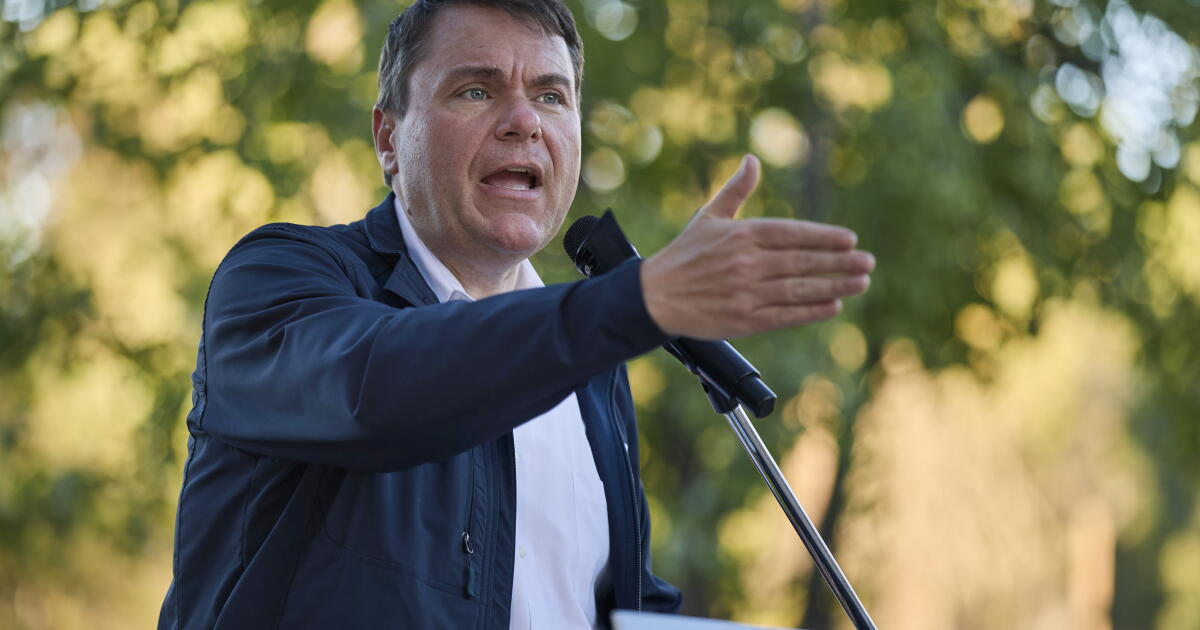
Republican Assemblymember Carl DeMaio of San Diego, one of the measure’s authors, on Thursday called Democratic gubernatorial candidate Xavier Becerra a “bald-face liar” over comments he made during Wednesday’s gubernatorial debate hosted by CNN.
Becerra said during the debate with Republican Steve Hilton that Trump was instrumental in the voter ID measure, Proposition 39, qualifying for California’s November ballot. Trump for years has tried to cast doubt about American elections, and unsuccessfully pushed Congress to pass a strict voter ID and proof of citizenship measure known as the SAVE America Act.
“Prop. 39 is an initiative that is backed by Donald Trump,” Becerra said during the hourlong debate. “He couldn’t get his SAVE Act out of Congress, which tries to interfere in elections. So he’s gone around the country and put initiatives on the ballot. In California, it’s Prop. 39.”
Though Proposition 39’s provisions are less restrictive than those in the SAVE America Act, its proponents echo Trump’s unsubstantiated claims that voter fraud and noncitizen voting are widespread in California and therefore stricter ID measures are needed.
DeMaio said the ballot measure qualified for the ballot because of strong support from California voters, including many Democrats and independents. Supporters collected more than 1 million petition signatures in support of the measure, surpassing the 874,641 needed to qualify.
“It was not put on the ballot by Donald Trump,” said DeMaio, who also founded the conservative advocacy group Reform California.
Becerra is “showing that he’s not willing to be truthful with California voters,” DeMaio said.
Meredith Shields, press secretary for the Yes on Prop. 39 committee, reiterated that Trump hasn’t taken a position on the initiative.
“The opposition will do anything to advance their cause and protect their power,” Shields said. “It will come as a surprise to no one that career politicians don’t always tell the truth, and they certainly aren’t telling the truth here.”
The White House didn’t immediately respond to a request for comment about Trump’s position on Proposition 39.
The measure would require anyone voting in person in California to present a government-issued ID, and those voting by mail ballot to include the last four digits of the ID number provided when they registered to vote. State and county election officials would be required to verify the U.S. citizenship of registered voters using government data and publicly report the findings.
The ballot measure is backed by DeMaio and several deep-pocketed Trump supporters. Julie Luckey, director of the group Californians for Voter ID, is the mother of billionaire tech entrepreneur Palmer Luckey, a major Trump fundraiser and Republican donor. Richard Uihlein, chief executive of the shipping and packing supplies company Uline, has given the campaign $17 million.
Representatives for Becerra and the No on Prop. 39 campaign on Thursday argued that Trump pushed for voter ID in California before Proposition 39 officially qualified for the ballot, pointing to a March 11, 2025 news release on Reform California’s website acknowledging Trump’s support.
In January 2025, Trump endorsed “CA Voter ID” as a “condition” for continued federal funding to the state, according to the release, which was updated this year with an editor’s note to clarify that Proposition 39 hasn’t been endorsed by Trump.
“Carl DeMaio knows Prop. 39 is central to Trump’s voter suppression playbook, and he’s doing everything he can to hide that from voters,” said Jonathan Underland, spokesperson for Becerra’s campaign.
The No on Prop. 39 campaign repeatedly has sought to link Trump to the measure, which has not been a surprise given that the Republican president remains extremely unpopular among a majority of Californians.
“The fact that Donald Trump has endorsed it tells you everything you need to know,” Assembly Speaker Robert Rivas (D-Hollister) and Senate pro Tempore Monique Limón (D-Santa Barbara) said in a statement released by the “No” campaign this year.
U.S. Sen. Alex Padilla (D-California) suggested to reporters at a rally organized by the “No” campaign last month that Trump is behind Proposition 39.
“Carl DeMaio has been the face of this in California, but don’t be fooled into thinking this has nothing to do with Donald Trump and the MAGA agenda nationally,” Padilla said.
Separately, DeMaio on Thursday accused Secretary of State Shirley Weber, another Democrat, of falsely stating that Proposition 39 would end California’s vote-by-mail system. The vast majority of Californians use mail-in ballots.
Weber, in a television interview that aired this week on KCRA in Sacramento, said the state already requires ID for those who register to vote.
“But if you tell me everybody has to take their ID to the poll, Californians should be concerned because 90% of them don’t want to do that,” she said. “They want to vote by mail, and you would effectively eliminate vote by mail.”
DeMaio questioned whether Weber understood what Proposition 39 proposes.
“If she truly is concerned about trust and confidence in our elections, she should start with her own behavior by refraining from spreading misinformation about Prop. 39 and our election,” he said.
Weber, when asked about her statement this week, said in an email to The Times that Proposition 39 would “cause disruption” in the state’s mail-in voting system because it would require voters “to write private personal information on the ballots.”
A Weber campaign spokesperson followed up with another response Thursday.
“What Dr. Weber actually said was that, if passed, this very poorly drafted proposition could cause people to decide not to vote by mail because it creates unnecessary and burdensome steps,” the spokesperson said.