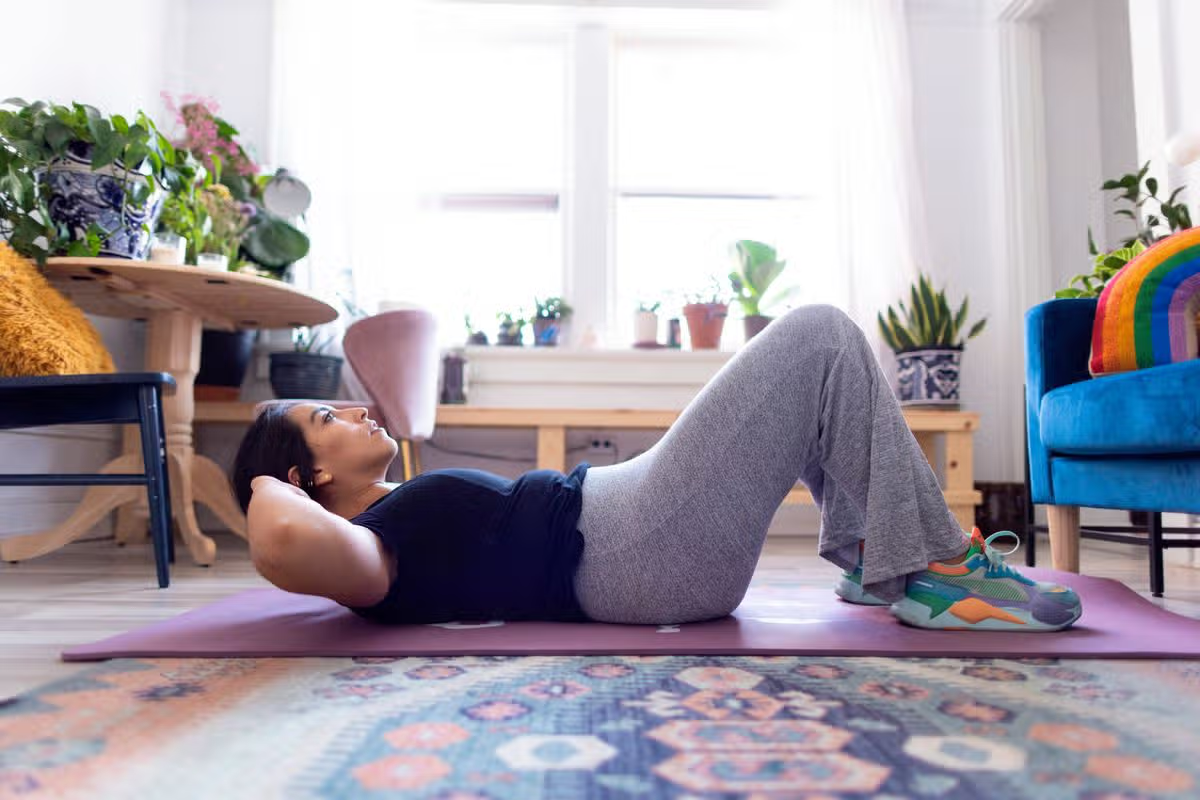
People are frantically trying to get in shape for their summer holidays – but it could be a lot more effective

There are better ways to improve your abs than sit-ups, an expert said(Image: Getty)
It’s the time of year when people are looking at their waistbands and thinking they’d like to make one last push to get it all a bit flatter. Many will be crashing out sit-ups like mad – however one expert has suggested that this exercise might not be the best way.
Dr Lee Brown, senior lecturer in strength and conditioning at the University of East London, has said that people might be making a mistake. He told the Guardian “It’s embedded in the archaic practices of boxing coaches and therefore everyone seems to follow it. But they’re far from the best exercise for training your core.”
Sit-ups are a classic bodyweight core exercise designed to strengthen the abdominal muscles, hip flexors, and chest. They involve lifting the upper body from a flat, lying position up toward the knees.
However Dr Brown said that the abdominal muscles are used a lot less than people imagine. Also if you’re doing too many sit-ups, it can cause problem.
“If you’re doing too many sit-ups, it can cause problems with the lower back. Overworking the hip flexors can make them hypertonic [stiff and tight]. Your torso leans forward because you have overly toned and tight hip flexors, creating an imbalance and a dumping ground for shearing forces in your lower back.”
Brown recommends moves such as planks, side planks, farmer’s carries (walking while holding a heavy weight in each hand), suitcase carries (walking with a weight in one hand to challenge stability) and bird dogs (lifting the opposite arm and leg from all fours). Pilates and yoga can also help build core strength.
“I worked with a sprinter who’d had a back injury and had been doing sit-ups forever,” Brown says. “I asked him how long he could hold a plank for. He said less than 30 seconds. Six weeks later, he could hold one for seven minutes and his back pain had gone.”
A study published last year in the Journal of Clinical Medicine looked at 117 people with and without back pain to find out whether core strength was implicated. Participants were asked to perform the plank, one of the most popular trunk muscle stabilisation exercises prescribed to enhance neuromuscular control and spinal support. Researchers from Daemen University in New York were surprised to find that back pain sufferers were able to hold a plank for “significantly longer” than those without, suggesting they had better levels of abdominal strength.