axes

Another airline axes 1,000 flights due to soaring fuel costs

A MAJOR airline in Europe has cancelled 1,000 flights next month due to soaring fuel costs caused by the Iran crisis.

Scandinavian Airlines System (SAS) is the second airline to do so, following Air New Zealand.

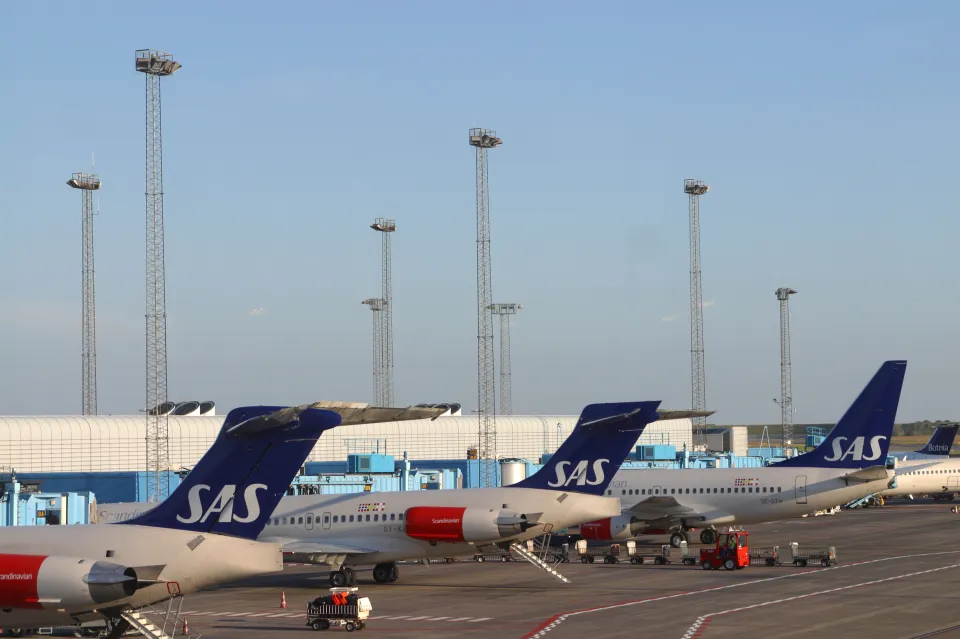
Several SAS aircraft parked on the tarmac at Copenhagen Airport, Denmark.
SAS is the first European airline to cancel flights due to the soaring cost of jet fuelCredit: Alamy

While the majority will be shorter domestic routes, some other longer routes could also be affected.

The main flights affected are across Norway, Sweden and Denmark.

In a statement, the airline said: “Given the ongoing situation in the Middle East, including the sharp and sudden increase in global fuel prices, we are taking measures to strengthen our resilience.”

“One such measure is a limited number of short-term flight cancellations.”

GROUNDED

European airport forced to cancel ALL flights today affecting 57,000 passengers


GROUNDED

British Airways cancels all flights to Dubai until June amid ongoing Iran conflict

SAS CEO ​Anko van ⁠der Werff told local media: “The price of jet fuel has doubled in ten days. ‌

“Even ⁠if we try to absorb cost hikes as far as we can this is a shock that strikes directly at the aviation industry.”

He confirmed hundreds of flights have already been cancelled this month, although urged that it was a fraction of their usual 800 flights a day.

He added: “We are cancelling a few hundred flights in March, but trying to protect our traffic as much as possible.”

More are expected to be affected after the Easter holidays.

The airline has also confirmed that they have increased flight prices, one of the first to do so in response to the conflict and alongside Qantas and Cathay Pacific.

SAS is the first major airline in Europe to axe flights because of of the cost of fuel going up.

This has been caused by the Iran conflict, with fears of it continuing due to the closure of the Strait of Hormuz, a major shipping route.

Earlier this month, Air New Zealand also confirmed they would be cancelling flights due to fuel costs.

The airline’s chief executive of Nikhil Ravishankar said the five per cent reduction in flights would last until May.

This works out to around 44,000 passengers, with the majority of services affected being short haul and domestic.

Most UK airlines are not currently affected due to a process called ‘hedging’ where they pay a set price for oil.

IAG – who owns British Airways – confirmed that 80 per cent of fuel was hedged for month.

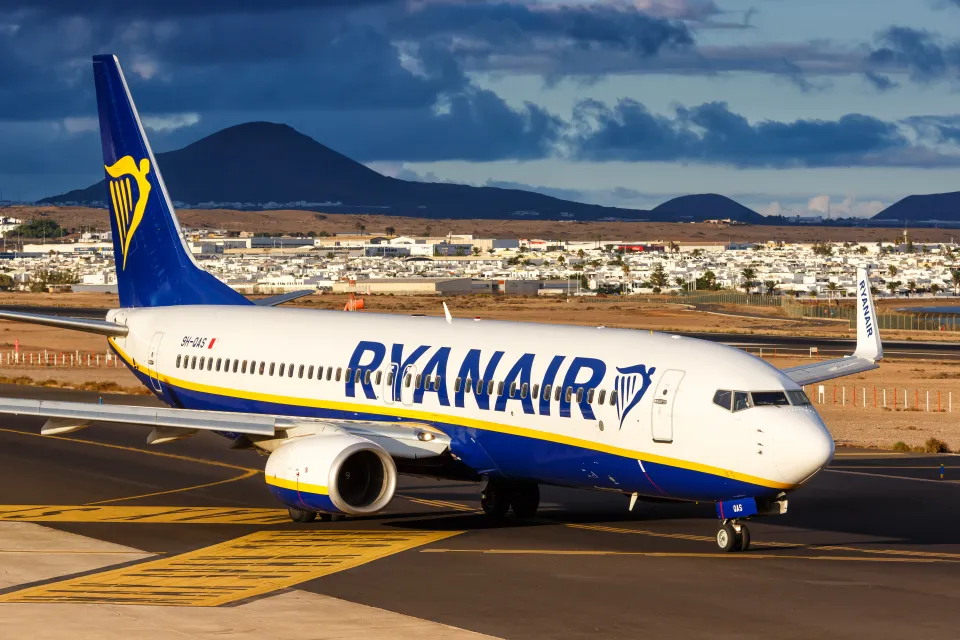
Ryanair echoed this, saying that 84 per cent was hedged for the current quarter.

However, they could still be affected if the Iran conflict continues.

Before the conflict, prices were around $90 (£67) per barrel. This has now increased to as much as $200 (£149) per barrel.

We’ve explained what the Iran crisis means for your holiday.

And here are the European destinations booming in demand due to the ongoing conflict.

A Boeing 737-700 from SAS airline parked at Bergen airport in Norway, attached to a jet bridge.
More than 1,000 flights have been cancelled next monthCredit: Alamy

Source link

Netanyahu says Israel will forge regional alliance to rival ‘radical axes’ | Israel-Palestine conflict News

Israel to join with India, Greece, Cyprus and other Arab, African, Asian countries that ‘see eye to eye’, says PM.

Israeli Prime Minister Benjamin Netanyahu has announced that Israel plans to build a network of allied nations in or around the Middle East to collectively stand against what he called “radical” adversaries.

Netanyahu made the comments on Sunday while announcing the upcoming visit to Israel of Indian Prime Minister Narendra Modi, whose country the Israeli leader said would be part of the “axis of nations that see eye to eye” with Israel.

Recommended Stories

list of 3 itemsend of list

Netanyahu, who is wanted by the International Criminal Court on war crimes charges, also referred to Greece, Cyprus and other unnamed Arab, African and Asian countries.

“In the vision I see before me, we will create an entire system, essentially a ‘hexagon’ of alliances around or within the Middle East,” Netanyahu said, according to the Times of Israel.

“The intention here is to create an axis of nations that see eye to eye on the reality, challenges, and goals against the radical axes, both the radical Shia axis, which we have struck very hard, and the emerging radical Sunni axis.”

Modi said he fully agrees with Netanyahu on the “bond between India and Israel”, including the “diverse nature of our bilateral relations”.

“India deeply values the enduring friendship with Israel, built on trust, innovation and a shared commitment to peace and progress,” Modi wrote in a post on X.

Since the start of Israel’s genocidal war on Gaza, its assaults have been weakening the Iran-led “axis of resistance”, including Hezbollah in Lebanon. Israel and Iran also directly clashed last June in a 12-day war, in which the US military also joined to attack Iran’s nuclear sites.

Netanyahu did not elaborate on what he meant by “emerging radical Sunni axis”, but he has previously identified the Muslim Brotherhood as its leading element.

Relations between Israel and several predominantly Sunni Muslim states have soured amid the bloodshed in Gaza, including with Turkiye, whose President Recep Tayyip Erdogan has sharply criticised Netanyahu, and Saudi Arabia, which has accused Israel of genocide.

Prospects for normalisation between Israel and Saudi Arabia also appear to be eroding. In recent months, the kingdom has rebuked Israel’s recognition of Somalia’s breakaway region, Somaliland, as well as the Israeli moves towards annexation in the occupied West Bank.

Since 2020, Israel has pushed to establish formal ties with Arab and Muslim states as a way to shore up its regional standing as part of the US-backed so-called “Abraham Accords”.

Under that framework, Israel has been enjoying close relations with the United Arab Emirates, Bahrain and Morocco.

Source link