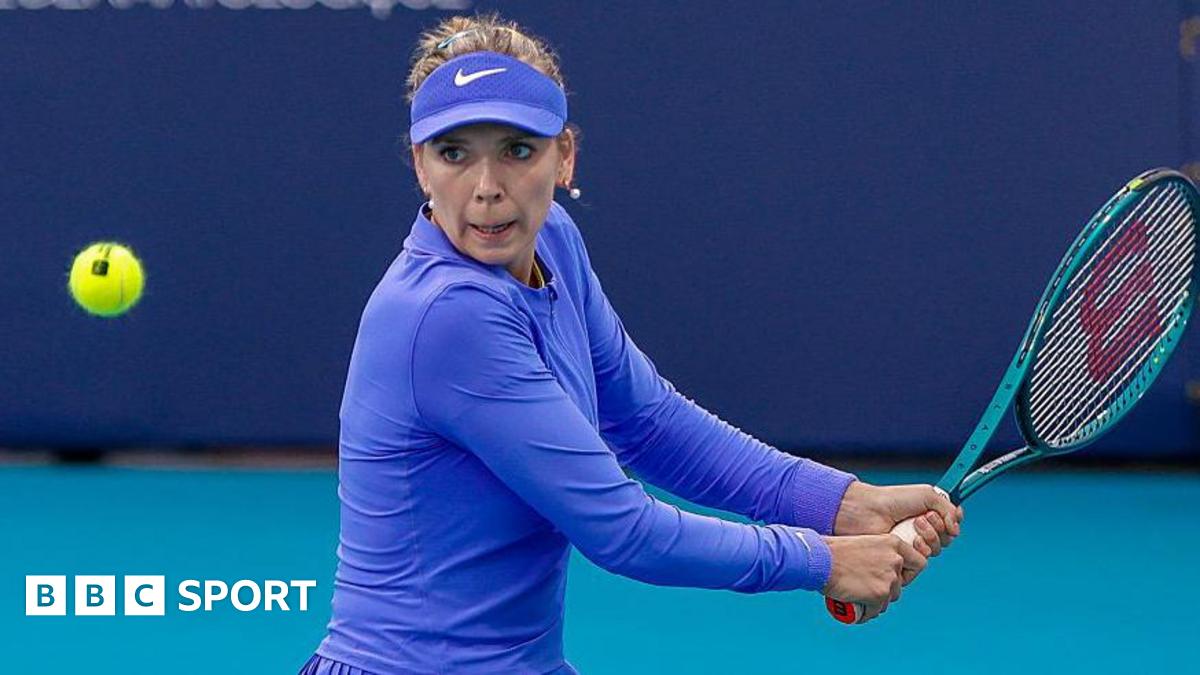
Britain’s Katie Boulter suffered a first-round defeat to Romania’s Elena-Gabriela Ruse at the Upper Austria Ladies Linz Open.
Boulter, 29, went down 7-6 7-6 on clay to world number 87 Ruse, who will now face Ukraine’s Dayana Yastremska or American Ann Li in the last 16.
Boulter lost her first two service games in the opening set but twice broke before she was edged out in a tie-break.
The British number three broke Ruse’s serve for a third time to take an early advantage in the second set but her opponent immediately responded in a see-saw encounter.
Boulter staved off match point at 6-5 down to force another tie-break, but Ruse claimed two mini breaks to move 5-2 ahead before serving out to seal her win.
World number 62 Boulter won the fourth WTA Tour title of her career at the Ostrava Open in February and reached the last eight at the Merida Open in Mexico.
However, she did not make it past the second and third rounds respectively at Indian Wells and the Miami Open prior to this loss.
Austrian officials highlight addiction and ill-health while advocating for stricter age restrictions.
Published On 27 Mar 202627 Mar 2026
Austria plans to ban children under 14 from using social media, with an official saying certain online sites are addictive and making young people “sick”.
“Austria is introducing a compulsory minimum age of 14 for the use of social media platforms,” conservative junior minister for digitisation, Alexander Proll, told a joint news conference on Friday.
Recommended Stories
list of 3 itemsend of list
Proell added that draft legislation would be drawn up by June. Cabinet members from Austria’s two other governing parties were also in attendance.
“We will decisively protect children and young people in future from the negative effects of social media,” Vice Chancellor Andreas Babler of the Social Democrats said.
“We will no longer stand by and watch while these platforms make our children addicted and often also sick … The risks associated with this use were ignored for long enough, and now it is time to act,” he added.
Babler said the government would not list individual platforms the ban would apply to, but would decide based on how addictive their algorithms are and whether they include content such as “sexualised violence”.
The announcement comes days after a Los Angeles jury found Alphabet’s Google and Meta liable for $6m in damages in a landmark social media addiction lawsuit.
The case involved a 20-year-old woman who said she became addicted to the apps at a young age due to their platform design. Meta says it plans to appeal the decision.
Also on Friday, the United Kingdom advised parents of children under five to limit screen time to a maximum of one hour per day.
Similar to Austria, other nations in Europe and elsewhere have banned the use of social media for children.
In January, the French parliament voted in favour of banning children aged below 15 from social media, amid growing concerns about online bullying and mental health risks.
Countries including the UK, Denmark, Spain and Greece are also studying a ban.
The European Parliament has called for the European Union to set minimum ages for children to access social media, although it is up to member states to impose age limits.
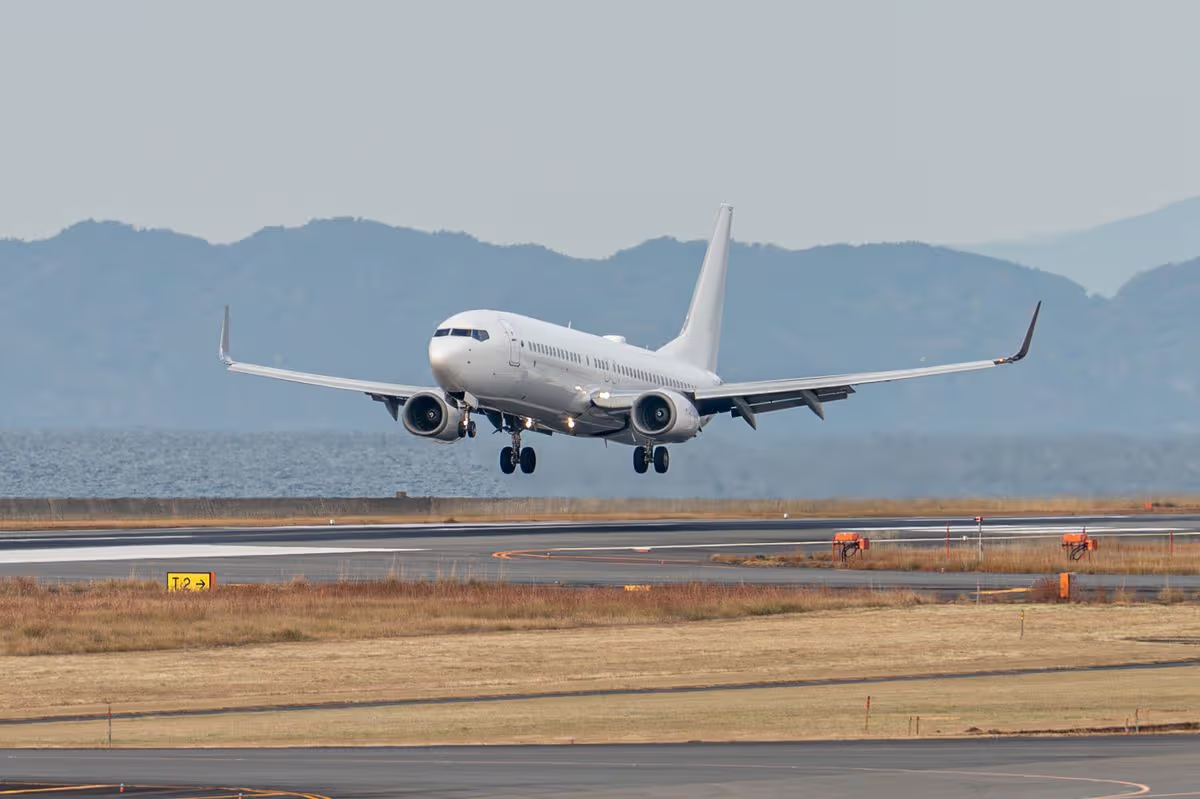
There’s some challenging airports across Europe(Image: Taro Hama/Getty)
Jetting off on holiday should be an exciting occasion, however some European holiday hotspots require landing at challenging airports. Four popular European destinations have been ranked among the most dangerous airports in the world.
While many planes take off and land safely at the airports every day, pilots need to be aware of the dangers.It could be tricky runways, weather changes or challenging terrain.
As a result, the pilots undergo specialist training to safely land at these airports. This can be done through ground training, a simulator and in the air.
The European Union Aviation Safety Agency (EASA) ensures safety across the entire continent, with high standards at airports. The majority of airports in Europe are category A, which requires standard training.
Category B airports have “slightly out of the ordinary” features, while category C requires specialist training. Here are some of Europe’s most challenging destinations.
Innsbruck Airport, Austria
Many people head to Innsbruck to take in the stunning Austrian Alps, yet the mountains pose a challenge for pilots. It has been reported that only captains are permitted to land planes at Innsbruck Airport, which is deep in a valley.
The challenging manoeuvre to land in the valley is often made harder by low-level wind. Depending on the weather conditions, the pilot may need to make a tight turn during the approach. There’s also a limited possibility for a missed approach due to the mountains surrounding the airport.
Gibraltar International Airport, Gibraltar
Gibraltar has a rather unusual airport setup as a main road crosses the airport. Traffic is stopped around 15 times a day to let planes land and take off.
For pilots, the challenges come due to abnormal wind effects, turbulence and wind due to the famous Rock of Gibraltar. Diversions and go-arounds are common, with some flights even abandoning attempting to land.
Cristiano Ronaldo Airport, Madeira
Madeira’s runway may look rather precarious due to it being a bridge right by the water. However, it has actually helped to improve safety at the airport.
To land at the island, pilots need special training in order to be granted permission. Experienced pilots have to cross mountains and exposed coastlines before lining up perfectly with the narrow runway while often facing high winds.
Sadly, a fatal accident occurred in 1977 when 131 of the 164 people on a plane died when it fell off at the end of the runway. The accident led to the construction of the runway extension bridge.
Courchevel Airport, France
The airport in the French Alps is often ranked as one of the most dangerous in the world. It has the world’s shortest runway and is the highest tarmacked runway in Europe.
Courchevel Airport is 6,588ft (2,008m) above sea level and its runway is just 1,762 ft (537m) long. Only small aircrafts and helicopters are allowed to land there.
To add to the difficulty, the runway doesn’t have lighting systems, and the area is often battered by extreme weather conditions in the autumn and winter.
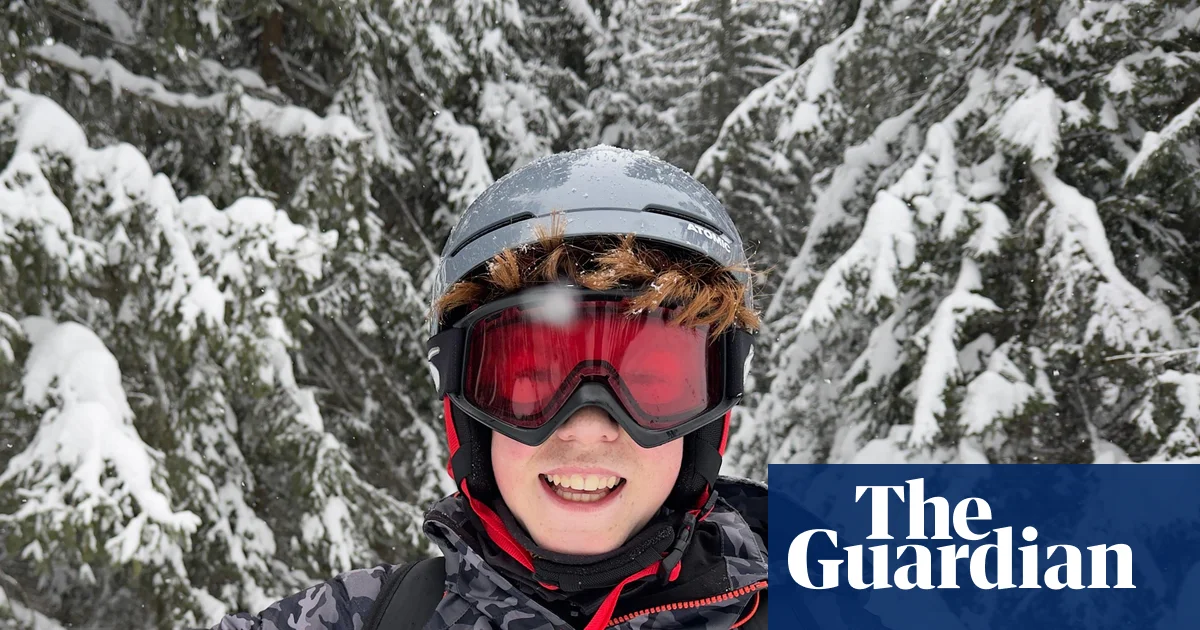
‘Want to come skiing in Austria at half-term?” I asked my 13-year-old son. “It’ll be just like one of those luxury chalet holidays, only we’ll make our own beds, cook our own dinners and carry our gear back to our accommodation ourselves.” Osian didn’t hear the caveats. “Sounds amazing,” he said, his eyes glazing to a cinematic sweep of white powder and the chance to perfect his 360.
For many families, the dream of a catered chalet – and its ready-lit fires, homemade strudels and chauffeured lift shuttles – remains just that. Apartments offer access to the slopes at less vertigo-inducing prices, but they tend to come with a minimum seven-night stay. If you only have a few days to spare, or a budget that won’t stretch to a full week’s lift pass, hotels fill the gap, but then you’re back navigating the moguls of cost.
Schruns in Austria’s Montafon valley has easy access to five ski-ing areas. Photograph: Andreas Haller
Instead, Osian and I were youth hostelling. I booked the last room available in the February school holidays at St Josefsheim, in the small western Austrian town of Schruns, and started scrolling Vinted for salopettes. Opened in December 2021 within a stately, blue-shuttered villa built in the early 1900s as a hospital and maternity facility,this is the first – and, so far, only – hostel in the Montafon ski area. Five minutes’ walk from the town’s railway station, and across the road from a bus stop, it is also, crucially, just two minutes’ ski-booted shuffle from a gondola station.
Above the ground-floor restaurant and bar are 13bedrooms and bunkrooms, some doubles, the others sleeping up to eight people incosy wooden sleeping pods. Although there is not, yet, any kind of communal games room or lounge, there is a shared kitchen and, in a playful homage to the building’s former function as a baby unit, a run of bathrooms tiled in pinks and blues.
The hostel operates a contactless self check-in system and early check-ins aren’t possible, so when we arrived on a lunchtime train from Zurich, we found ourselves unable even to leave our luggage until our allotted 3pm arrival time. Luckily, the restaurant manager, Christian, spotted us lurking on the steps and offered to watch our suitcases while we went off to explore the town and sort out ski hire.
Lower-key than many Austrian resorts, the five ski areas strung out along the Montafon valley, in Vorarlberg’s southern corner, are known for their snowsure pistes, all covered by the WildPass lift pass. This also gives access to the valley’s buses and trains,meaning it’s easy to hop between them to pick and mix your own slopeside schedule; Golm, in Vandans, is brilliant for younger children, with a new kindergarten and Golmi Land fun park, while Silvretta Montafon, directly above Schruns, is the largest ski area in the valley with 140km of marked runs. Access to all those pistes, and having almost everything you need within five minutes’ walk, makes Schruns a popular base for families – as does its restrained après-ski scene.
Cosy curtained sleeping pods in St Josefsheim hostel. Photograph: Winfried Heinze/Silvretta Montafon
Wandering back to St Josefsheim in the late afternoon, kitted out with skis, boots and helmets, we came across flotillas of sea-shantying sailors and choreographed human sunbeams dancing away the sky’s snow-clouded gloom in the town’s annual carnival celebrations.
Inside our twin room, however, it was less carnival and more cocoon. Roomy and bright, from door handle to flooring, nothing creaked or rattled. A cord strung between hooks either side of the main window, made a handy line for hanging damp clothes, and shoe racks in the corridors helped us maintain the wholesome spotlessness. Making up our beds with the cheery gingham bed linen provided, we unpacked our ski clothes into the room’s pristine pink lockers, then padded down to the communal kitchen for an early dinner.
With only two cooking stations, the kitchen can fill up quickly if everyone goes at the same time and, because it was carnival and most of the town’s restaurants were closed, everybody did. Osian and I squeezed on to a table with a German family, who told us this was their first time skiing from a youth hostel. “We like Schruns and usually book an apartment, but finding something for only a few days, which we wanted this time, is not so easy. This was an affordable alternative.”
The Golm ski area is great for families with younger children. Photograph: Mauritius Images/Alamy
Early next morning, we found the kitchen was already packed with families spooning muesli into bowls, slicing through local cheeses and sipping steaming coffees. Not us, though. Collecting our gear from the cellar’s ski room, we clomped across to the bus stop and took the five-minute journey to the Zamang lift to meet Natascha Zandveld, from the Silvretta Montafon ski company, heading up the slopes for breakfast at the newly renovated Kapellrestaurant. There, we filled up on scrambled eggs and bacon while soaking up the panorama of peaks and pistes beyond the floor-to-ceiling windows.
In summer, cows graze the mountainsides and Osian insisted he caught a whiff of hay on the lift up. “It’s a working farming community here rather than a resort,” Natascha told us. “Tourism in Montafon began with locals renting rooms in their homes to visitors prescribed alpine air by their doctors, and most hotels are still family-run.”
Snow clouds began to billow on the horizon, so we clipped in and set off while there was still a seam of sunlight above us. Our first run was a long, glorious blue, threading through towering pines. Sunlight spilt on to the snow between their trunks and when we stopped for hot chocolate, at Gasthaus Kropfen mountain hut, it was so warm on the terrace we peeled off our jackets.
The next day, we took the bus in the other direction, to Golm. The sky was awash with inkblot clouds, but the snow beneath our skis was as soft as whipped cream. Higher up it was hard to tell where the piste ended and the sky began, but on the lower slopes we snaked between fir trees slouched under the weight of snow, the forested tracks blissfully quiet early in the day. We refueled at Haus Matschwitz, a steam-fogged mountain chalet doing a fast trade in fluffy kaiserschmarrn (sweet pancakes cut into bitesized pieces) and jam roly poly-like germknödel.
Burning calories on the ski slopes of Montafon. Photograph: Silvretta Montafon
“Burn calories, not electricity,” a local sustainability initiative urged and we greedily obliged, carving squeaky powder all afternoon to make space for dinner back at St Josefsheim. Inside its bar, local people mingled with guests beneath a suspended vintage gondola cabin and there was a buzz in the restaurant, too, as we ordered plates of schweinsbraten (roast pork with caraway-laced bread dumplings) and pillowy keesknöpfli (Austrian mac’n’cheese).
On our final evening, we took another bus, to Garfrescha, to go night tobogganing. Snow fell thick and fast as a retro chairlift hauled us nearly 1,400m up the mountain before our sledges propelled us back downhill in a rush of giddy abandon. “This is amaaaazing!” whooped Osian, vanishing into the dark ahead of me, both of us convulsed with laughter.
Waiting for the bus at the bottom of the mountain, we looked up at the cluster of exclusive chalets above us, steam rising from their hot tubs and the sound of clinking glasses within. In taking local buses, joining the carnival crowds and talking to other travellers at St Josefsheim, we had felt more connected to this valley – and each other. That, it turned out, was the real luxury.