attacks

Met Police investigate potential Iran links to London arson attacks | News

The latest attack at a Jewish site in the UK capital occurs at Kenton United Synagogue and causes minor damage.

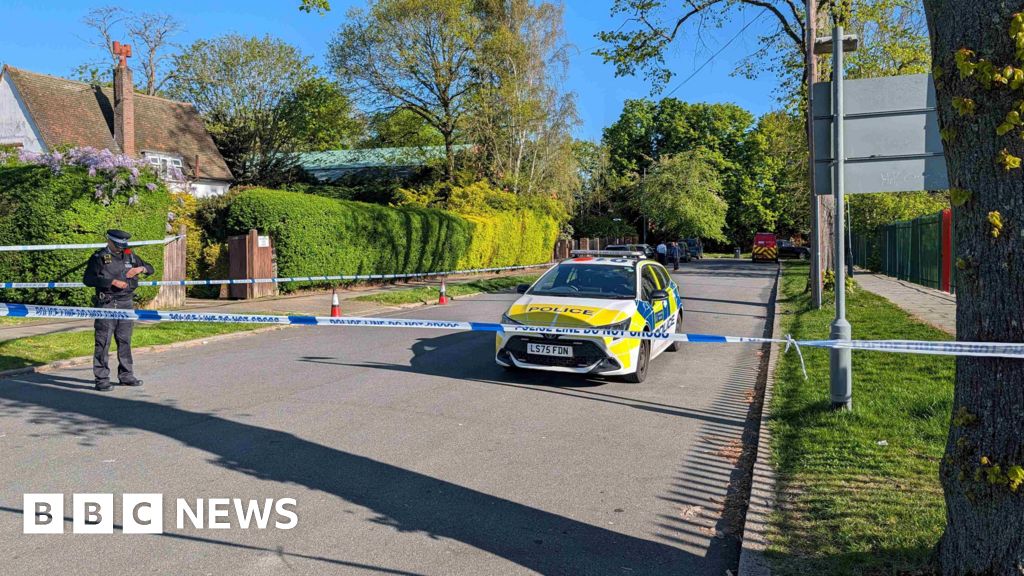
The United Kingdom’s Metropolitan Police are investigating whether a recent spate of arson attacks on Jewish sites in North London could be linked to Iranian proxies.

Counter Terrorism Policing is leading investigations into the incidents, the Met Police said on Sunday, after an arson attack at the Kenton United Synagogue in northwestern London occurred overnight.

Recommended Stories

list of 3 itemsend of list

There have been no injuries in the blazes, the latest of which caused minor damage.

Vicki Evans, deputy assistant commissioner of the Metropolitan Police, said most of the attacks have been claimed by the Harakat Ashab al-Yamin al-Islamia group (Islamic Movement of the Companions of the Right), often shortened to Ashab al-Yamin.

She said the group has also claimed several incidents at places of worship as well as business and financial institutions in Europe in recent months.

Evans said police were aware of “public reporting that this group may have links to Iran”.

She added that she has spoken before about Iran’s “routine uses of criminal proxies” and police were considering whether this tactic of “recruiting violence as a service” was being used in London.

Ashab al-Yamin emerged online in March and has claimed responsibility for several attacks on Jewish sites in Europe. It also claimed responsibility for an attack on the Persian-language Iran International news channel in London.

Recent arson incidents in London have included a bottle containing accelerant being thrown inside the Finchley Reform Synagogue in North London on Wednesday and Jewish-owned Hatzola ambulances being set alight in the car park of a synagogue in Golders Green on March 23. On Friday night, a man tried to light a bag containing three bottles of fluid outside the former premises of the Jewish Futures charity in Hendon.

The UK’s chief rabbi, Ephraim Mirvis, said the Kenton fire was the third “cowardly” attack on Jewish sites in the British capital in less than a week.

“A sustained campaign of violence and intimidation against the Jewish community of the UK is gathering momentum,” Mirvis said on X. “Thank God, no lives have been lost, but we cannot, and must not, wait for that to change before we understand just how dangerous this moment is for all of our society.”

Prime Minister Keir Starmer said he was “appalled” by the recent attacks at Jewish sites and those responsible would be brought to justice.

“This is abhorrent and it will not be tolerated. Attacks on our Jewish community are attacks on Britain,” he said in a post on X.
Source link

Lebanese return to devastated south as fragile 10-day truce takes hold | Israel attacks Lebanon News

Hezbollah warns it has its ‘finger on the trigger’ in case of Israeli violations of the temporary ceasefire.

Displaced Lebanese have begun cautiously returning to their homes in the south after Lebanon and Israel agreed to a 10-day truce, even as the Lebanese army calls on residents to delay their return and Hezbollah warns it has its “finger on the trigger” in case of Israeli violations.

Tens of thousands of people poured into areas of southern Lebanon on Friday morning hours after the truce went into effect, many heading back to homes and villages battered by more than a month of Israeli attacks.

Recommended Stories

list of 3 itemsend of list

“People just couldn’t wait,” reported Al Jazeera’s Zeina Khodr from Nabatieh, one of the hardest hit areas.

“Even if it’s 10 days, they want to return to their homes. Some of them are just coming to see what remains of their homes, what remains of their lives.

“They want to show that they don’t want to give up their lands,” added Khodr.

While the ceasefire largely appeared to hold, Lebanon’s army accused Israel of several early violations on Friday, including intermittent shelling of ‌southern Lebanese villages.

Lebanon’s National News Agency also reported that unexploded ordnance killed a boy in the town of Majdal Selem, while rescuers uncovered the bodies of at least a dozen people killed in earlier attacks in Tyre.

French President Emmanuel Macron warned that the ceasefire “may already be undermined by ongoing military operations” and called for “the safety of civilians on both sides of the border”.

Hezbollah said its fighters “will keep their finger on the trigger because they are wary of the enemy’s treachery”.

Israeli air strikes and a ground invasion of parts of southern Lebanon have killed more than 2,100 people and displaced some 1.2 million in the latest round of fighting, according to Lebanese authorities.

Hezbollah attacks, meanwhile, killed two Israeli civilians, while 13 Israeli soldiers were killed in Lebanon, according to Israel.

Israeli officials have said they intend to maintain control over Lebanese territory extending to the Litani River as a “buffer zone” against Hezbollah.

‘Unliveable’

As residents assessed the damage to their hometowns, some pledged to stay, while others – finding nothing to return to or fearing the fragile truce could collapse – said they would leave again.

“There’s destruction and it’s unliveable. Unliveable. We’re taking our things and leaving again,” said Fadel Badreddine, who returned to Nabatieh with his young son and wife. “May God grant us relief and end this whole thing permanently – not temporarily – so we can return to our homes and lands.”

Al Jazeera’s Khodr said “wherever you look you see damage, destruction” in Nabatieh. “So much has been lost in this conflict in the past 46 days.”

If the ceasefire holds, it could ease one of the main points of tension in US-Iran negotiations. Iran and mediator Pakistan had maintained that Lebanon should be covered in a separate US-Iran ceasefire framework, while Israel claimed it was not part of that deal and continued its attacks.

Ali Akbar Dareini, a researcher at Iran’s Center for Strategic Studies, said the Israel-Lebanon ceasefire had removed one obstacle to wider negotiations between the US and Iran because Tehran views the regional conflict as interconnected, describing this as a “unity of fronts”.

Pakistani Prime Minister Shehbaz Sharif, whose country hosted last week’s ceasefire talks between the US and Iran, welcomed the Israel-Lebanon truce on Friday and expressed “hope that it will pave the way for sustainable peace”.

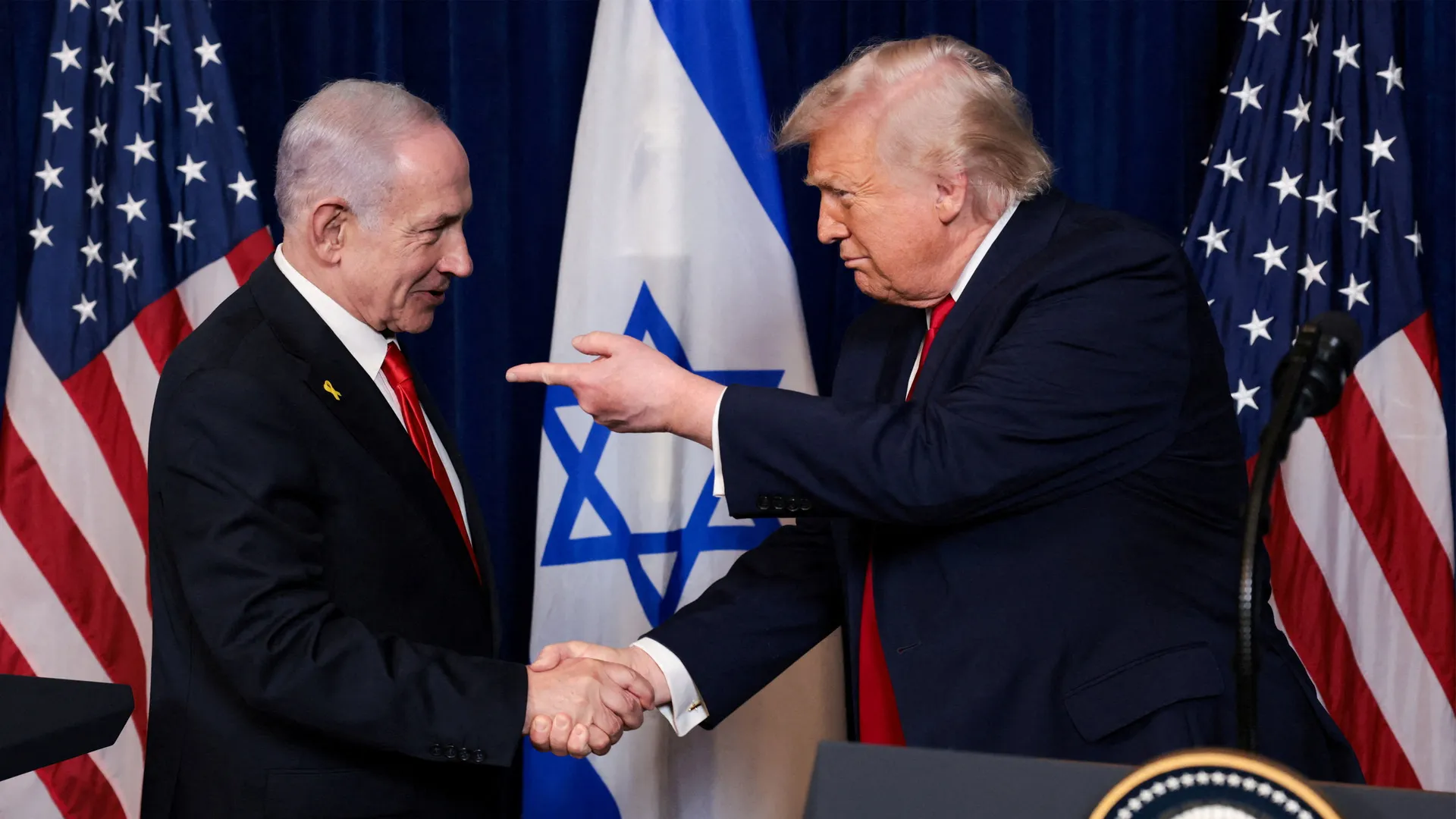
He also praised the mediation role of US President Donald Trump, who has invited Israeli Prime Minister Benjamin Netanyahu and Lebanese President Joseph Aoun to the White House for “meaningful talks”.

“Pakistan reaffirms its unwavering support for the sovereignty and territorial integrity of Lebanon, and will continue to support all efforts aimed at lasting peace in the region,” Sharif said on X.

Source link

‘Trump forced Israel into a ceasefire’ with Lebanon | Israel attacks Lebanon

NewsFeed

Abed Abou Shhadeh, a political commentator based in Israel, says the ceasefire between Israel and Lebanon is ‘extremely problematic, not only for Netanyahu, but for the Israeli public who were promised for two and a half years now, absolute victory’.

Source link