ASML

India’s Tata and Dutch giant ASML sign semiconductor deal during Modi visit | International Trade News

Prime Minister Narendra Modi says his talks with the Dutch PM also focused on expanding cooperation in defence and security.

India’s Tata Electronics has signed a deal with Dutch technology giant ASML to build a major semiconductor plant in western India, as Prime Minister Narendra Modi visited the Netherlands during his European tour.

The agreement, announced on Saturday, will support the development of Tata’s semiconductor facility in Dholera, Gujarat – Modi’s home state.

Recommended Stories

list of 4 itemsend of list

ASML, Europe’s largest technology company by market value, manufactures advanced lithography machines used to produce high-end microchips found in products ranging from mobile phones to cars.

The Dutch company said it would help “establish and ramp up” production at the plant by supplying its cutting-edge chipmaking tools.

Tata Electronics plans to invest $11bn in the facility, which is expected to manufacture chips for artificial intelligence, the automotive industry and other sectors.

ASML chief executive Christophe Fouquet said the company saw “many compelling opportunities” in India’s growing semiconductor industry.

“We are committed to establishing long-term partnerships in the region,” Fouquet said in a statement.

The deal comes as India and the Netherlands move to deepen economic ties, with New Delhi seeking foreign technology and investment to boost manufacturing and create jobs.

The European Union has increasingly viewed India – the world’s most populous country and one of its fastest-growing economies – as a key future market.

During his visit, Modi held talks with Dutch Prime Minister Rob Jetten and met King Willem-Alexander.

“My conversations with Prime Minister Rob Jetten were extensive and covered a wide range of topics,” Modi wrote on X.

“One of them was defense and security. I spoke about the possibility of drawing up an action plan for the defense industry as quickly as possible. We can also collaborate in sectors such as space travel, maritime systems, and maritime security.”

Modi also addressed members of the Indian diaspora and is expected to inspect centuries-old Chola copper plates being returned to India by Leiden University.

Indian and Dutch officials are also discussing a more flexible visa arrangement for Indian students and workers in the Netherlands.

Modi will next travel to Sweden for talks with Prime Minister Ulf Kristersson focused on trade, innovation and green technology cooperation. The visit marks his second trip to the country since attending the first India-Nordic summit in 2018.

Source link

ASML Raises 2026 Outlook as AI Driven Chip Demand Accelerates

ASML occupies a critical position in the global semiconductor supply chain as the sole producer of extreme ultraviolet lithography systems. These machines are essential for manufacturing the most advanced chips used in artificial intelligence applications. As demand for AI computing has surged, driven by data centre expansion and high performance processing needs, the semiconductor industry has entered a new investment cycle focused on capacity growth.

Strong earnings and upgraded forecast

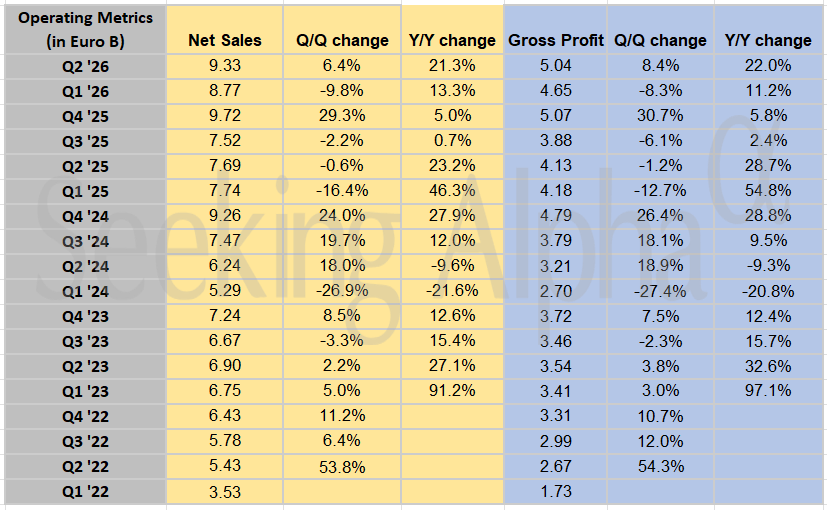
ASML reported first quarter earnings that exceeded expectations and raised its 2026 revenue outlook to between 36 billion and 40 billion euros. This revision signals stronger than anticipated order inflows and reinforces the scale of demand emerging from the AI sector.

The company’s performance reflects a broader trend in which chip demand is outpacing supply. According to CEO Christophe Fouquet, customers are accelerating expansion plans well beyond the near term, indicating confidence in sustained AI driven growth.

ASML as a strategic enabler of AI growth

Investors increasingly view ASML as a foundational player in the AI ecosystem rather than a conventional manufacturer. Its tools are used by leading chipmakers such as TSMC, which produces advanced processors for firms like Nvidia and Apple.

This positioning places ASML at the upstream end of the value chain. Instead of competing in chip design or production, it supplies the essential infrastructure that enables both. As a result, its growth is tied to the entire semiconductor sector rather than any single company.

Supply constraints and industrial limits

Despite strong demand, structural constraints remain significant. Semiconductor fabrication plants require years to build and involve complex global supply chains. ASML itself faces production bottlenecks due to the precision and cost of its machines, which can reach hundreds of millions of dollars per unit.

Even with plans to increase shipments of its leading systems in 2026 and 2027, capacity expansion is gradual. This creates a persistent imbalance where demand continues to exceed supply, reinforcing pricing power across the industry.

Geopolitical and regulatory risks

A key uncertainty for ASML lies in export controls, particularly regarding sales to China. Proposed restrictions in the United States, including the MATCH Act, could limit the company’s ability to supply Chinese customers. Currently, China represents a significant portion of ASML’s revenue.

However, the global shortage of advanced chips may mitigate this risk. Reduced access to one market could be offset by demand from others, especially as countries and companies compete to secure semiconductor supply chains.

Market response and valuation concerns

ASML’s share price has risen sharply, reflecting investor optimism around AI driven growth. The company is often described as a “picks and shovels” investment, benefiting from the broader expansion of the industry regardless of which firms dominate end products.

At the same time, analysts caution that valuations are elevated. The current pricing assumes sustained high growth, leaving limited room for setbacks related to supply constraints or regulatory changes.

Analysis

The upgrade in ASML’s forecast highlights a structural shift rather than a temporary cycle. AI is not only increasing demand for chips but also reshaping the entire semiconductor value chain. ASML’s monopoly in EUV technology gives it a unique strategic advantage, effectively making it a gatekeeper for next generation chip production.

However, this dominance also exposes the company to geopolitical pressures and operational challenges. The interplay between technological leadership, supply limitations, and regulatory dynamics will determine whether current growth trajectories can be maintained.

ASML’s stronger outlook underscores the depth of the AI driven semiconductor boom. While demand momentum remains robust, the company operates within a constrained and politically sensitive environment. Its future performance will depend on balancing rapid industry expansion with the physical and geopolitical limits shaping the global chip ecosystem.

With information from Reuters.

Source link