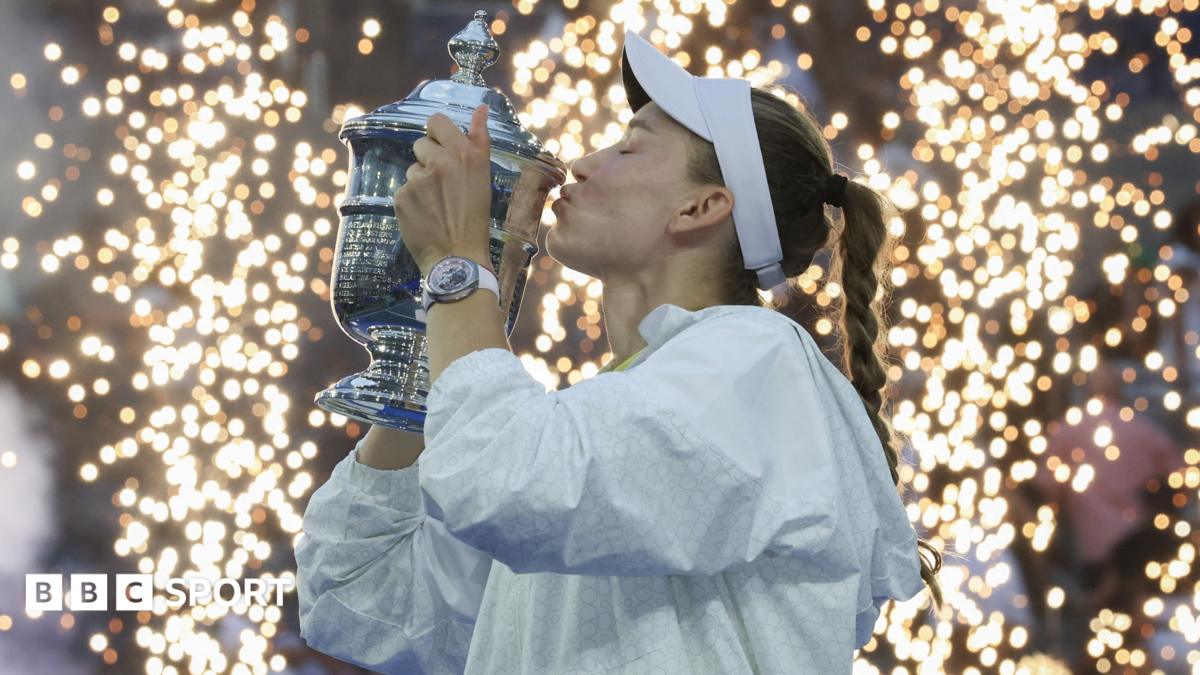
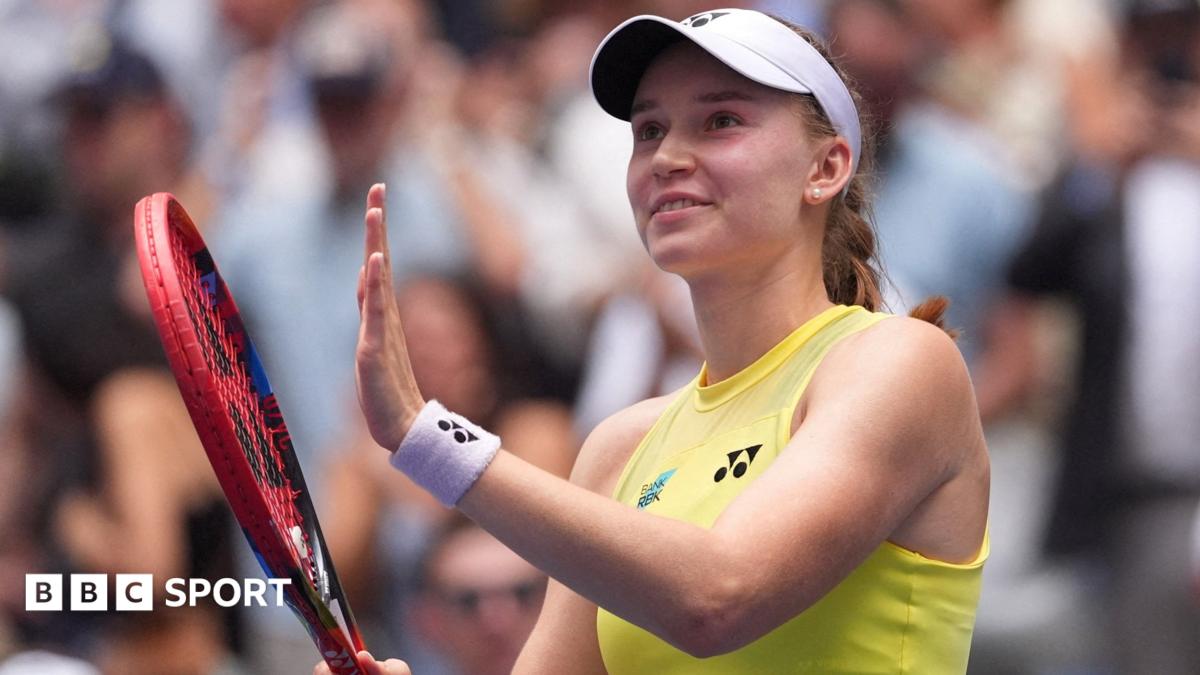
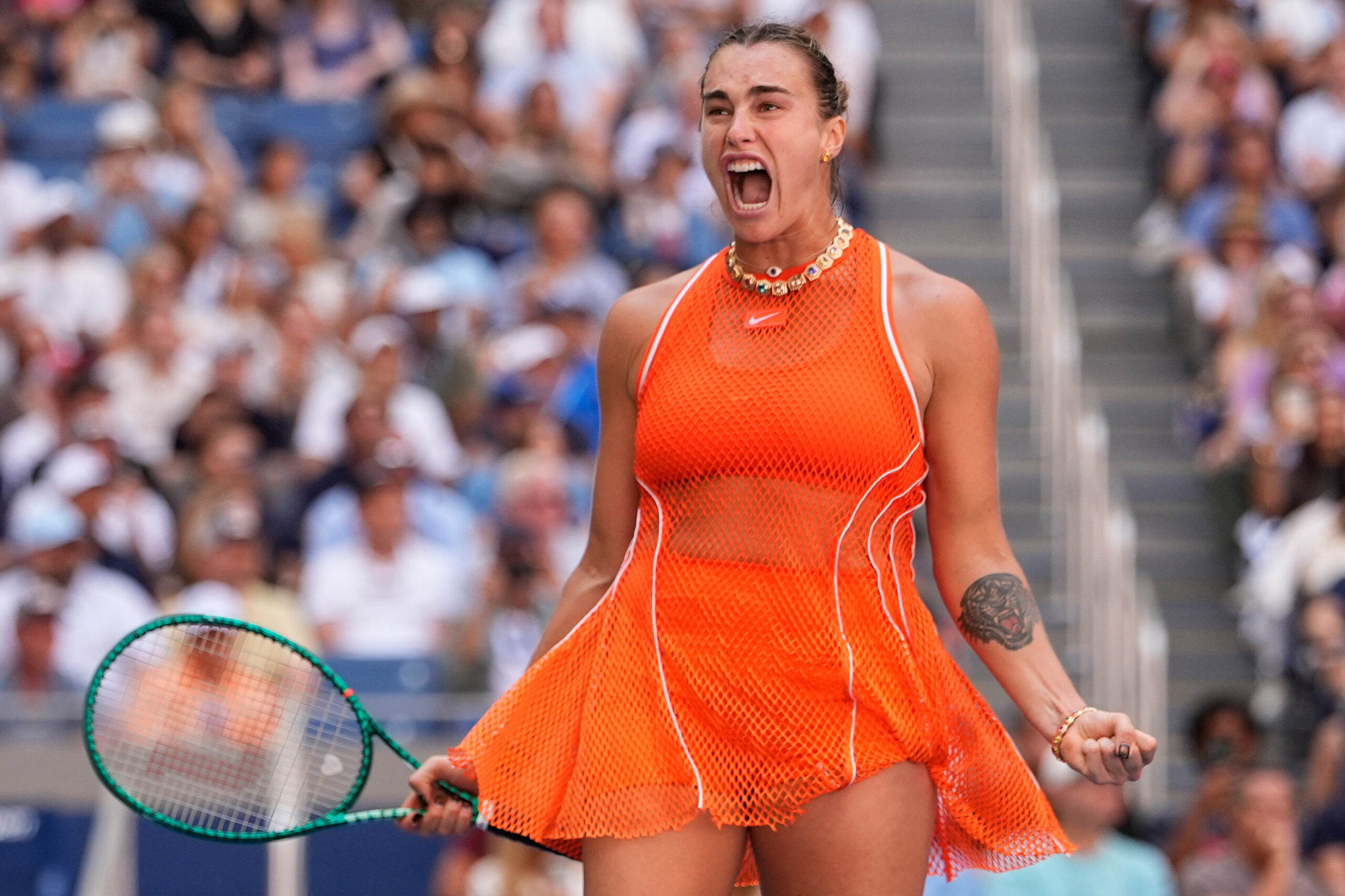
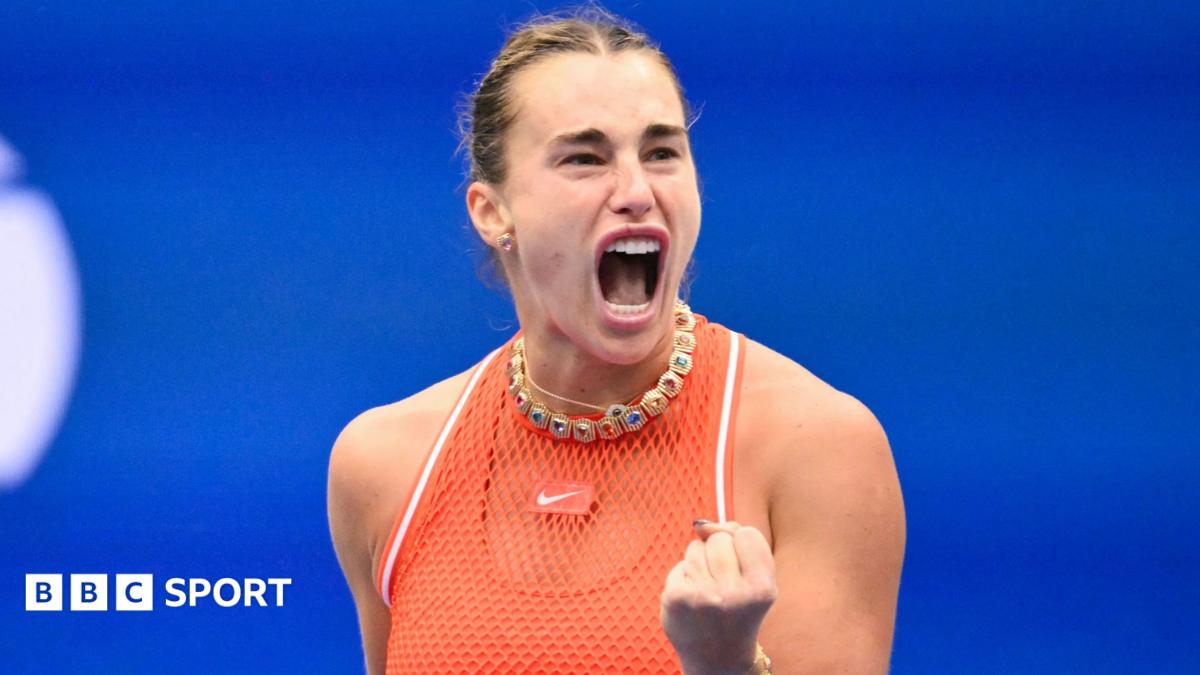
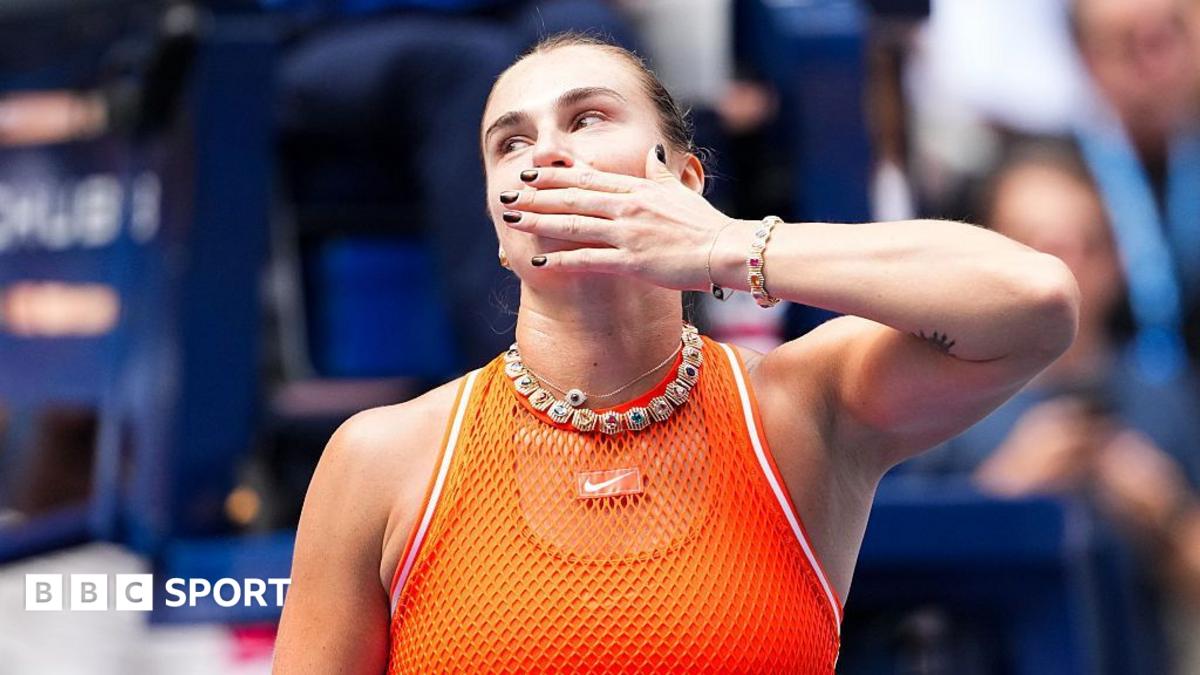
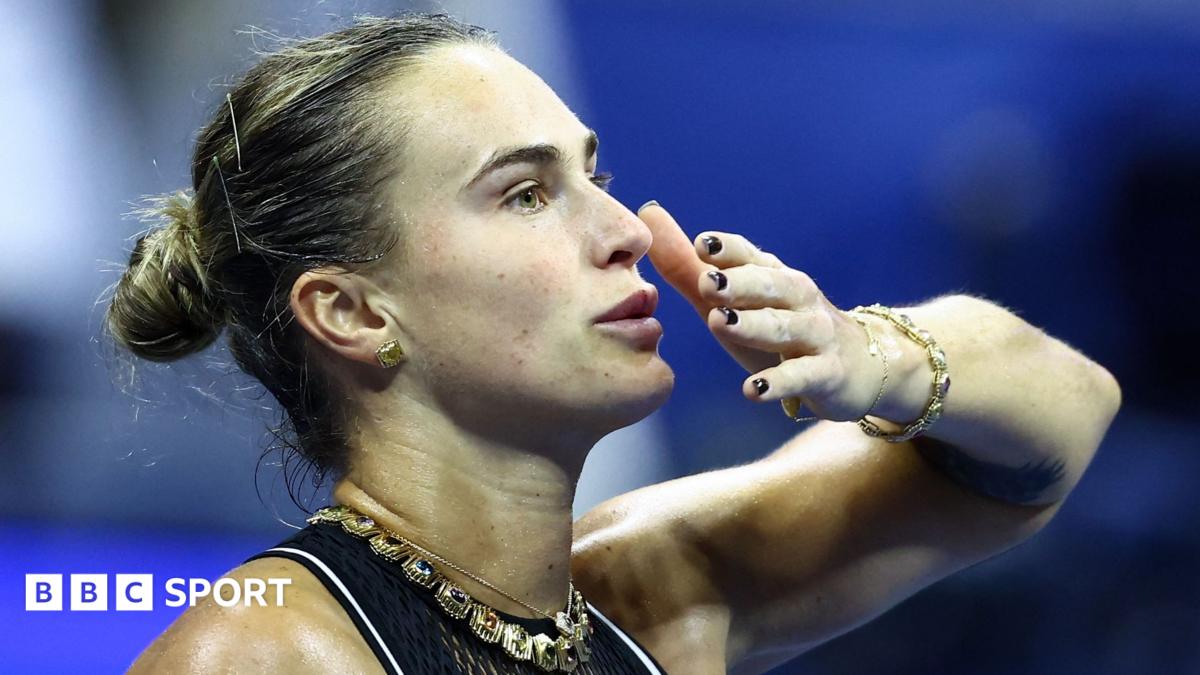
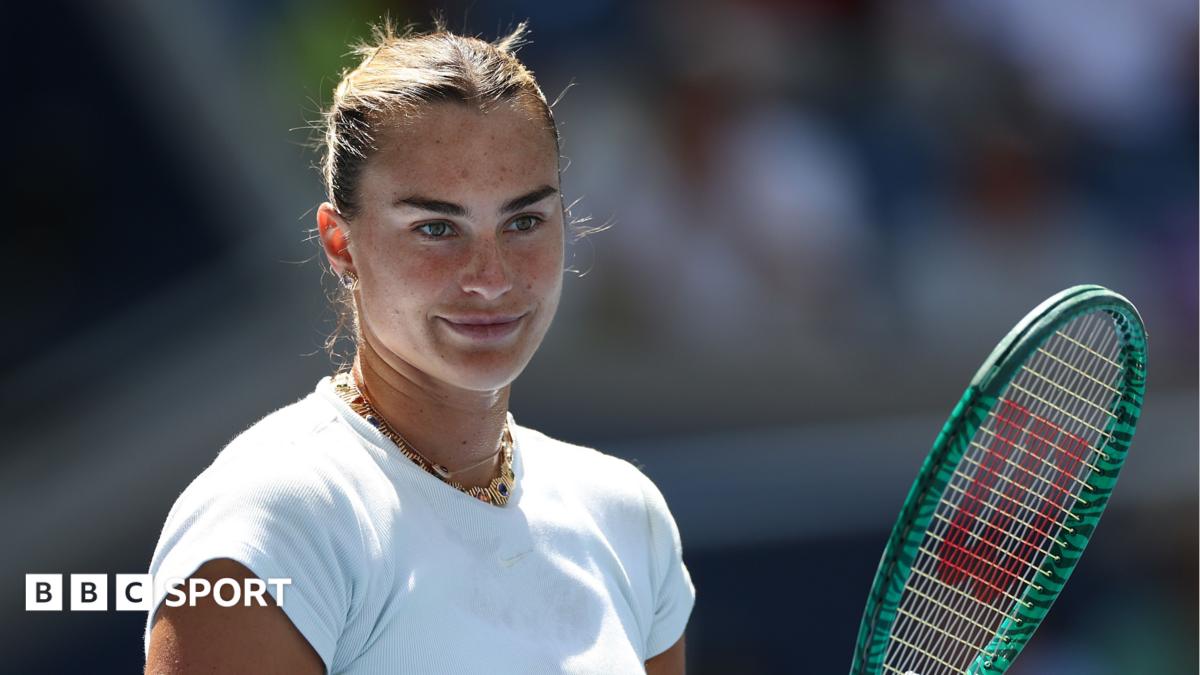
Rybakina rarely shows emotion on the court but there was a brief flash of a smile as she clinched her second major victory of an outstanding 2026 season.
That illustrated the sense of satisfaction she felt after winning a title few had predicted – not only because she had never previously gone beyond the last 16 in New York but the circumstances coming into the final major of the season.
With her penetrating serve and thunderous groundstrokes, Rybakina has a brand of first-strike tennis that can take the racquet out of anyone’s hands.
Therefore it has been a surprise she has not enjoyed greater success on the Flushing Meadows hard courts, perhaps a result of her personality not being particularly suited to the brash nature of New York.
“I was coming here for the last 10 years and it was never successful. I’m falling in love with New York more and more,” Rybakina, 27, said.
What makes the second seed’s victory even more remarkable is that she was unsure if she would be fit enough to even play.
Rybakina was unable to walk for several days after injuring her ankle in the Cincinnati Open quarter-finals, putting her chances of competing here in serious jeopardy.
Not only was Rybakina able to play, but she cruised through her opening four matches thanks to a huge service game that rarely allowed opponents to get into points.
Rybakina’s next two wins over China’s Zheng Qinwen and home favourite Coco Gauff required more work after losing the first sets, proving she had the durability to come through tough battles.
Against Sabalenka, she showed both facets of her game, bullying her from the baseline and digging in when necessary to leave her only a French Open title away from the career Grand Slam.
“Some magic is happening. I was unlucky with injury and just going day by day,” Rybakina told Sky Sports.
“We didn’t know how it was going to be so I’m super happy and still can’t believe it.”
NEW YORK: Elena Rybakina won her first US Open title and punctuated her climb to the top of women’s tennis by beating Aryna Sabalenka 6-4, 5-7, 6-2 on Saturday.
Rybakina had already been guaranteed to replace Sabalenka at No. 1 in the rankings next week and for good measure took the US Open title that Sabalenka had won the previous two years.
“It’s tough to find words right now, honestly,” Rybakina said. “I don’t expect nothing like this coming to this tournament. I’ve been dealing with a little bit with an injury, but somehow everything aligned together on my side.”
It was the third Grand Slam title for Rybakina and the second this year — both against Sabalenka on hard courts. She opened the season by beating Sabalenka for the Australian Open title.
This time, she stopped Sabalenka’s 19-match winning streak at the US Open, where she hadn’t lost since falling to Coco Gauff in the 2023 final.
“I really felt like home here and cannot wait to come back next year,” Sabalenka said. “I wish I could perform a little bit better but I guess next year.”
Rybakina earned $5.5 million, the largest prize in Grand Slam history, and tied Sabalenka and French Open winner Mirra Andreeva with a tour-high three titles this season.
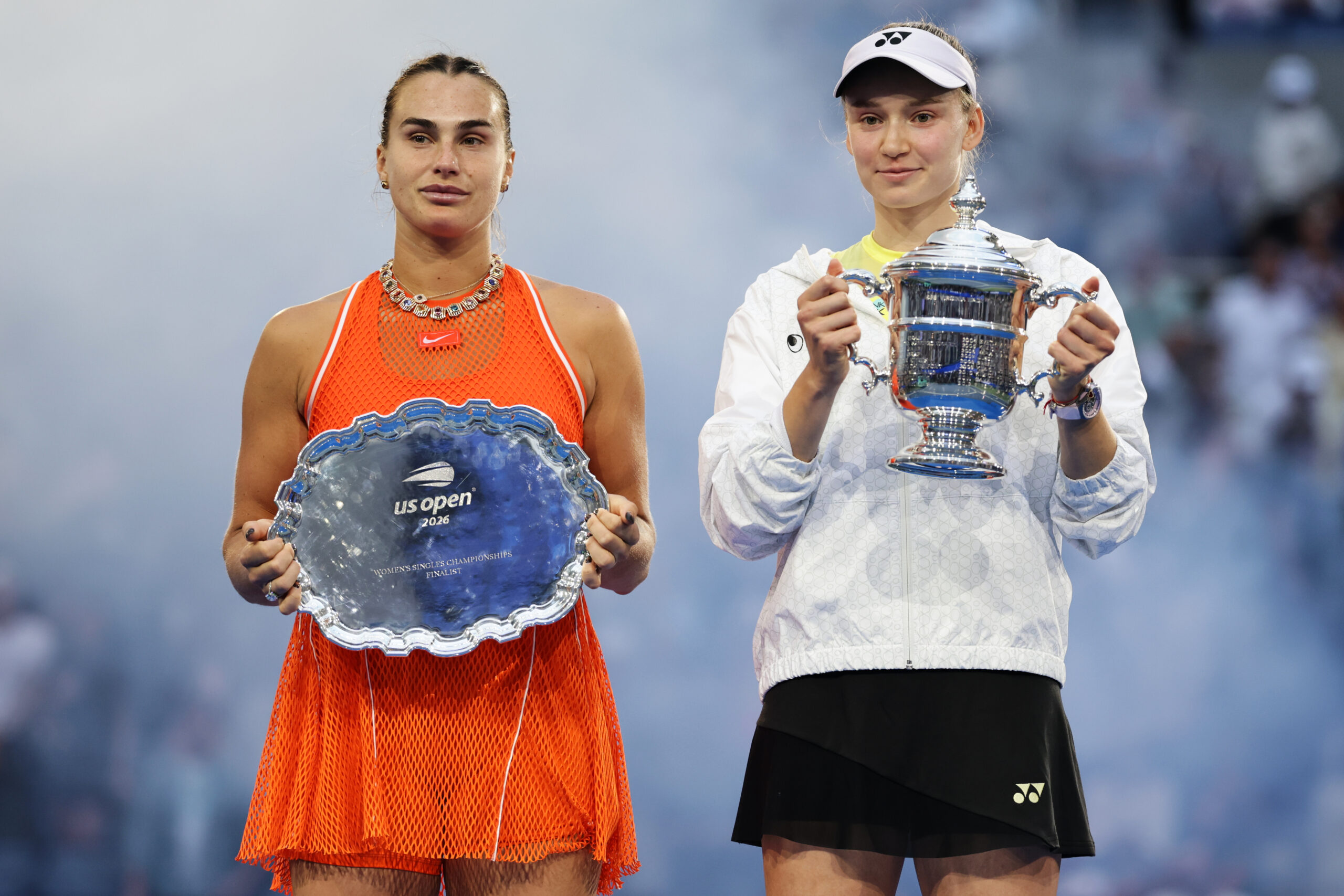
Aryna Sabalenka, of Belarus, left, and Elena Rybakina, of Kazakhstan, right, hold up their trophies after Rybakina won the women’s singles final of the US Open tennis championships Saturday, Sept. 12, 2026, in New York. (AP)
Sabalenka took home $2.8 million but it was clear how little that meant to her, as she smashed her racket after a brief hug with Rybakina at the net.
Sabalenka was trying to become the first person since Serena Williams from 2012-14 to win three in a row at Flushing Meadows.
Rybakina dethroned the champ without even having her best stuff. The WTA Tour leader in aces got less than half of her first serves in but instead put Sabalenka under constant pressure with a strong return game, racking up 12 break chances and converting three, which was all she needed.
The third meeting of No. 1 vs. No. 2 in a US Open women’s final since 2000 was the first to go the way of the challenger. Williams was the top seed for the other two, beating her sister Venus in 2002 and Victoria Azarenka in 2013.
The numbers didn’t signify much this time, because they are going to flip Monday. Sabalenka has held the top spot for 99 consecutive weeks, but Rybakina gained enough points to unseat her simply by reaching the semifinals.
She didn’t stop there.
The 27-year-old who was born in Russia but represents Kazakhstan won her first major title at Wimbledon in 2022 and now needs just the French Open to complete the career Grand Slam.
And it’s clear her power — and her ability to absorb her opponent’s — was something that unnerved Sabalenka.
A native of Belarus, Sabalenka sometimes swings from her heels, like a golfer trying to unleash a 300-yard drive, grunting “Aaaaahhhh!” as she takes her mighty cuts.
Rybakina’s power comes more easily. There is little sound coming from her side of the net besides the squeaking of her sneakers, and she rarely shows any hint of stress.
“I think Elena is probably — not nonchalant, I don’t want to say that, because she’s not nonchalant — but just no reaction ever,” Gauff said after losing to Rybakina in the semifinals.
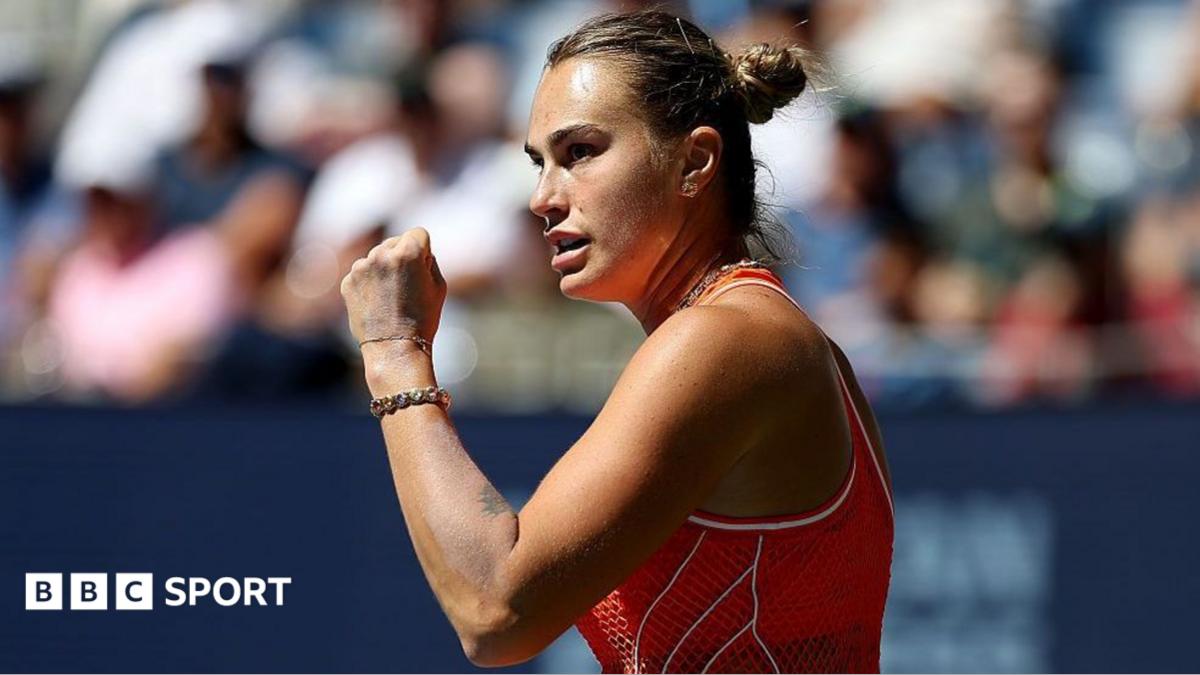
Belarus’ Aryna Sabalenka reacts during her women’s singles final match against Kazakhstan’s Elena Rybakina. (Reuters)
Rybakina did show some frustration after pulling a backhand wide with a break point in the opening game of the third set, but soon she had taken charge of the match for good.
Sabalenka had won the two other meetings this season, on the hard courts at Indian Wells and Miami, and leads their rivalry 10-8.
But her season then took a strange dip after those victories. Sabalenka fell to Naomi Osaka in the fourth round at Wimbledon, then returned to action with consecutive fourth-round exits in Toronto and Cincinnati.
Rybakina had to take a brief break after she was forced to stop playing in her quarterfinal match against Iga Swiatek in Cincinnati because of a foot injury, but she was healthy in time for a tournament where she had never done particularly well, failing to advance past the fourth round until this year.
“I honestly was coming here for the last 10 years, and it was never successful — nothing close to that,” Rybakina said. “It’s just incredible. I’m falling in love with New York more and more.”
Arthur Ashe Stadium, meanwhile, had been Sabalenka’s house, with four straight trips to the final and six to at least the semis. Whatever troubled her during the summer seemed forgotten once she was back in New York — until Saturday.
Sabalenka repeatedly looked toward her coaches’ box with her palms up, wondering why everything was going so poorly, and showed much more frustration than that when she double-faulted to hand Rybakina a 3-2 lead in the first set. Rybakina hit the serve back and the ball bounced directly to Sabalenka, who whacked it into the crowd, earning a warning from the chair umpire.
Sabalenka eventually began putting consistent pressure on Rybakina in the second set. She picked up two break points with a chance to end the set with a 5-4 lead, and though Rybakina won four straight points to get out of that jam, Sabalenka got another chance in the next service game and this time capitalized, stepping into a return to set up a miss by Rybakina.
Aryna Sabalenka was fully aware she would have to win the US Open to stand any chance of stopping Elena Rybakina overtaking her as world number one.
Even that would not necessarily be enough. And as the pair prepare to meet in Saturday’s final, Sabalenka knows her 99-week stay at the top of the world rankings is at an end.
Kazakhstan’s Rybakina is assured of replacing Sabalenka at the top of the rankings, guaranteeing that by reaching the semi-finals.
Having also beaten the Belarusian to win this year’s Australian Open title, Rybakina now has the opportunity to inflict further damage.
But that provides extra motivation for Sabalenka before their fourth meeting of the year.
“It is going to be red rag to a bull for her – she is not going to be happy,” said former British number one Annabel Croft on BBC Radio 5 Live.
“Now she has the opportunity to end this year on a high.”
Sabalenka, who has beaten Rybakina in Indian Wells and Miami since the Melbourne final, still has history in her sights as she bids to become only the third woman in the Open era to win the New York singles title three years in a row.
The four-time Grand Slam champion’s victory over American third seed Jessica Pegula in the semi-finals was her finest display in months, playing with a fire and freedom that had been missing previously.
Afterwards, Sabalenka played down the significance of losing her ranking, joking she did not care about it.
But she clearly does. Sabalenka’s coach Anton Dubrov said as much when he spoke about how the issue has been hanging over her.
“I actually like this [losing the ranking] happened. It’s ended and it’s extra fuel,” Dubrov said.
“There is no more extra draining [of mental energy] or thinking about it.
“There’s a next chapter right now. You have to chase again. It’s extra motivation for you. Just go and get it.”
NEW YORK: Aryna Sabalenka moved a win away from her third straight US Open title, beating Jessica Pegula 7-5, 6-2 on Thursday night.
Sabalenka blasted her way out of what was a dead-even match for most of the first set, pouncing on Pegula’s second serves and turning the second set into perhaps her most impressive stretch of tennis in the tournament.
“No complaints,” Sabalenka said. “I’m just super happy that I was able to pull out such tennis.”
The No. 1 seed will face No. 2 Elena Rybakina or No. 4 Coco Gauff on Saturday, needing a victory to become the first player to win three in a row in Flushing Meadows since Serena Williams from 2012-14.
Rybakina will replace Sabalenka atop the women’s tennis rankings next week, and Sabalenka said this week she would be fine ceding No. 1 after she held it 99 consecutive weeks if it she was able to win another US Open trophy.
It will be hard to prevent that if she hits the ball Saturday the way she did against Pegula.
Sabalenka pounded 29 winners to Pegula’s 12, turning their third straight meeting at the end of the US Open into a rout, after her victory in the 2024 final and 2025 semifinals were tight most of the way.
“I was so desperate for the win, I wanted it badly,” Sabalenka said.
She has won 19 straight matches at the US Open since losing to Gauff in the 2023 final.
After 99 weeks, there will be a new women’s world number one – and it will be Elena Rybakina.
Rybakina confirmed she will replace Aryna Sabalenka at the top of the world rankings on Monday with her US Open quarter-final victory over China’s Zheng Qinwen.
Despite losing a set for the first time in the tournament, Rybakina fought back and saved a break point in the deciding set to complete a 3-6 6-1 6-4 win.
She is the first Kazakhstani man or woman to reach the top of the singles standings.
Rybakina has been in hot pursuit of Sabalenka this season and arrived in New York as one of three women who threatened the Belarusian’s position, alongside Americans Jessica Pegula and Coco Gauff.
However, the other three contenders each needed to win the title and hope Rybakina exited before the semi-finals to capture the number one spot.
Sabalenka’s consecutive 99-week reign as world number one stretches back to 21 October 2024 and stands as the sixth-longest streak in WTA history.
The top two players could yet meet in the US Open final – just as they did at this year’s Australian Open, where Rybakina prevailed in three sets.
For Rybakina, the trophy is more important than her new ranking.
“It’s just a number right now. My goal is to win the tournaments which I play,” the 27-year-old sad.
“It’s an amazing achievement, but you know how quickly everything can change in tennis ranking-wise.”
Rybakina will face either Coco Gauff or Mirra Andreeva in Thursday’s semi-finals, while Sabalenka takes on Jessica Pegula.
Sabalenka began the match in cruise control, breaking in sixth seed Noskova’s opening service game and racing into a 5-2 lead, before being broken as she served for the set.
Although she dominated the subsequent tie-break, the double fault she hit in her last service game – one of four in the match – would prove a feature of her performance, as would her failure to convert break points.
She wasted three early in the second set before conceding a break in the sixth game with a double fault at 30-40 as Noskova forced a decider.
After hitting two more double faults to be broken for a third time, she looked down and out after Noskova held to love for a 4-2 lead, but won the next three games to turn the match around.
She then won the tie-break – for a 10th successive time at the US Open, in a run dating back to 2021 – to complete her comeback, sealing the victory with a nerveless second-serve ace.
This was only Sabalenka’s second quarter-final victory since March, with the top seed unable to replicate her early season hard-court success – which included titles in Brisbane, Indian Wells and Miami – on the clay or grass.
She suffered last-16 exits in Toronto and Cincinnati in the build-up to the US Open, but has rediscovered something approaching her best form at the tournament where she is yet to lose a quarter-final in six attempts.
For Noskova, this defeat, during which she hit more winners, fewer unforced errors, and saved seven of her nine break points, ends a run of 11 consecutive singles wins at Grand Slams.
EW YORK: Aryna Sabalenka kept alive her hopes for a third straight US Open championship by fighting off Linda Noskova 7-6 (1), 3-6, 7-6 (10-7) on Tuesday in a thrilling quarterfinal matchup of major champions.
Sabalenka finished off the match with a second-serve ace to turn back the Wimbledon champion and reach the semifinals in Flushing Meadows for the sixth straight year.
Sabalenka — who needed to win to maintain the No. 1 ranking — will face either No. 3 Jessica Pegula or No. 26 Emma Navarro on Thursday in the semifinals.
Noskova, the No. 6 seed, won her first major title at the All England Club and narrowly missed becoming the first woman since Serena Williams in 2016 to follow a title on the grass by reaching the final four on the hardcourts of New York.
The match began with five successive breaks of serve – mostly due to excellent returning by both players – but it was Sabalenka who finally took charge.
Doubles specialist Townsend, who walked out wearing a long, black-feathered outfit, continued to frustrate Sabalenka and forced her to serve out the set at the second opportunity, before making the breakthrough in the second set.
But Sabalenka, aware she must lift the trophy to have a chance of retaining her number one ranking, produced an immediate reply as she broke back to love.
That signalled the start of Sabalenka’s dash to the finish line. The top seed lost just five points across the final five games to end Townsend’s challenge in 75 minutes.
Sabalenka was full of praise for Townsend, saying: “What an incredible player she is, approaching the net, a great returner, moving well, very brave.
“You can see how focused she was. It was really challenging playing her, especially here.
“Thank you so much [to the crowd] for being so respectful to me. I knew coming into this match that you guys would be on her side, but you were sometimes cheering for me and I really appreciate that.”
At home on the US Open hard courts, Sabalenka has not failed to reach the semi-finals here since 2020.
But, following a fourth-round exit at Wimbledon, she is aiming to avoid a first season without a major title since 2022.
Noskova’s sense of relief was cleared as she crouched to the ground after taking her sixth match point about an hour after earning her first.
The 21-year-old served for the match in the second set, but missed her first two match points as Kostyuk battled back from 5-3 down to force a decider.
The players exchanged breaks of serve in a tense final set, but it was Noskova who emerged, once again, with a 5-3 advantage.
Noskova failed to take her next two match points as a couple of misses helped Kostyuk to deuce, and missed her fifth after saving a break point, before finally getting over the line after an emotionally draining two and a half hours on court.
“I am more than relieved, this match was so tough, emotionally a bit more than physically,” Noskova said.
“Today was very close, it could have ended both ways. With all the chances I had in the second set, it was tough to still kind of restart.”
Aryna Sabalenka briefly halted her US Open match against Kamilla Rakhimova because of a strong smell of cannabis before cruising into the fourth round in New York.
Top seed Sabalenka raised the issue after going 3-0 up in the first set against Uzbekistan’s Rakhimova, telling umpire Eva Asderaki-Moore that “someone is smoking weed”.
The Belarusian asked the umpire to intervene “because it’s so strong”.
Asderaki-Moore spoke to an official on her radio and made a smoking gesture to someone behind her, before play continued.
Two-time defending champion Sabalenka went on to secure a confident 6-3 6-4 victory on Louis Armstrong Stadium as she chases a fifth Grand Slam singles title.
Sabalenka said afterwards she was not sure where the smell of cannabis was coming from but asked fans to be more mindful.
Smoking is not permitted on site at Flushing Meadows but the smell of cannabis sometimes wafts on to court from the nearby Corona Park.
It is legal to smoke it in New York for adults aged 21 and over.
“It’s a bit tricky to handle that smell while you’re trying to compete at your best,” Sabalenka said.
“I don’t know if it was coming from the crowd or was from the outside because the wind blows it into the stadium.
“I just hope they’re gonna be a bit more aware of that stuff.”
Sabalenka is not the first player at this year’s US Open to complain about the smell of cannabis at Flushing Meadows.
Britain’s Katie Boulter previously said it was distracting, while Harriet Dart and Francesca Jones also noticed the smell.
In past years players including Novak Djokovic and Alexander Zverev have also complained.
Victory marked Sabalenka’s 16th straight win at Flushing Meadows as she bids to become the first woman since Serena Williams in 2012-2014 to complete a hat-trick of US Open singles titles.
The 28-year-old showcased her trademark power from the start against Rakhimova, dropping just four points on serve in a confident opening set.
Although Rakhimova fought well in the second set, Sabalenka secured the crucial break to go 5-4 up before safely serving out victory.
Sabalenka served 10 aces to Rakhimova’s two and did not face a single break point.
She will face either American Taylor Townsend or Russian 15th seed Diana Shnaider – who beat her in the French Open quarter-finals in June – next.
Sabalenka’s pace and power was too much for world number 160 Iatcenko, who managed just three winners compared to the 24 put away by the top seed.
Iatcenko looked a bundle of nerves in the biggest match of her career, but composed herself to get on the scoreboard for 5-1 and immediately broke out into a relieved smile.
It was merely respite as Sabalenka held to love in less than 90 seconds to clinch the opening set.
Despite only being on court for 24 minutes, Iatchenko decided she wanted a bathroom break to change her kit – but more likely for a mental reset than anything else.
Sabalenka kept loose while she waited by practising her serves and maintained her rhythm as she surged a double break ahead for 3-0 in the second set.
It was not all plain-sailing for Sabalenka as she lost serve in a sloppy fourth game, but reasserted her authority with two more breaks as Iatchenko was taught a harsh lesson.
The Russian can console herself with the knowledge she has gained valuable experience against the world number one on the biggest court on the planet – and a bumper paycheck.
Coming into the US Open, she had earned $300,000 (£220,000) in her career but takes another $190,000 (£140,000) home from New York to reinvest into her future.
Earlier on Wednesday, third seed Pegula continued her quest for a maiden Grand Slam singles title with a comfortable victory over fellow American Sofia Kenin.
Pegula also has a shot of replacing Sabalenka as world number one if she wins the title, as does fourth seed Coco Gauff, and kept her dream alive with a 6-3 6-1 win.
There were also straight-set wins for Wimbledon runner-up Karolina Muchova, two-time major semi-finalist Marta Kostyuk and teenage American sensation Iva Jovic as the patten of few shocks in the women’s draw over the opening two rounds continued.
Sabalenka’s four Grand Slam singles titles – two Australian Open and two US Open triumphs, all on hard courts – are more than most players can dream of.
However, she has also lost four major finals and six semi-finals, despite a consistency on the biggest stages that is unrivalled among her peers.
The concern in recent months has been Sabalenka’s mental focus disappearing in less pressurised situations.
This was most recently apparent in her Cincinnati Open fourth-round defeat by 20-year-old Czech opponent Sara Bejlek. Sabalenka led 5-1 in a first-set tie-break and 4-1 in the second set, but continued to lack composure in the rallies as Bejlek rallied to win 7-6 (9-7) 6-4.
At her previous tournament in Toronto, she lost to Russian world number 19 Ekaterina Alexandrova in the last 16 as her serve crumbled.
During the clay-court swing, Sabalenka capitulated after winning the first set against Hailey Baptiste in Madrid, Sorana Cirstea in Rome and, most notably, Diana Shnaider at Roland Garros.
“I work on my mental side of the game. I’ve been trying to reset my mind and to come back stronger,” a bullish Sabalenka said in New York.
Carlos Alcaraz will start his US Open title defence against Russia’s Roman Safiullin in the first serious examination of his fitness following a long-term wrist injury.
Second seed Alcaraz, who won the men’s title in New York last year, has not played a competitive singles match for more than four months because of inflammation in his playing right wrist.
Despite his lack of action, the 23-year-old Spaniard is still considered by many as the favourite to triumph again – particularly because his great rival Jannik Sinner is not playing due to a knee injury.
The pair may have been a cut above the rest of the tour for the past two seasons, but Alcaraz coming back from a prolonged absence with such a delicate injury and beating the rest of the field – even though he is a generational talent – would be remarkable.
The seven-time major champion missed this season’s French Open and Wimbledon as a result of the issue, which did not require surgery, before making his return to court in the US Open mixed doubles alongside Serena Williams earlier this week.
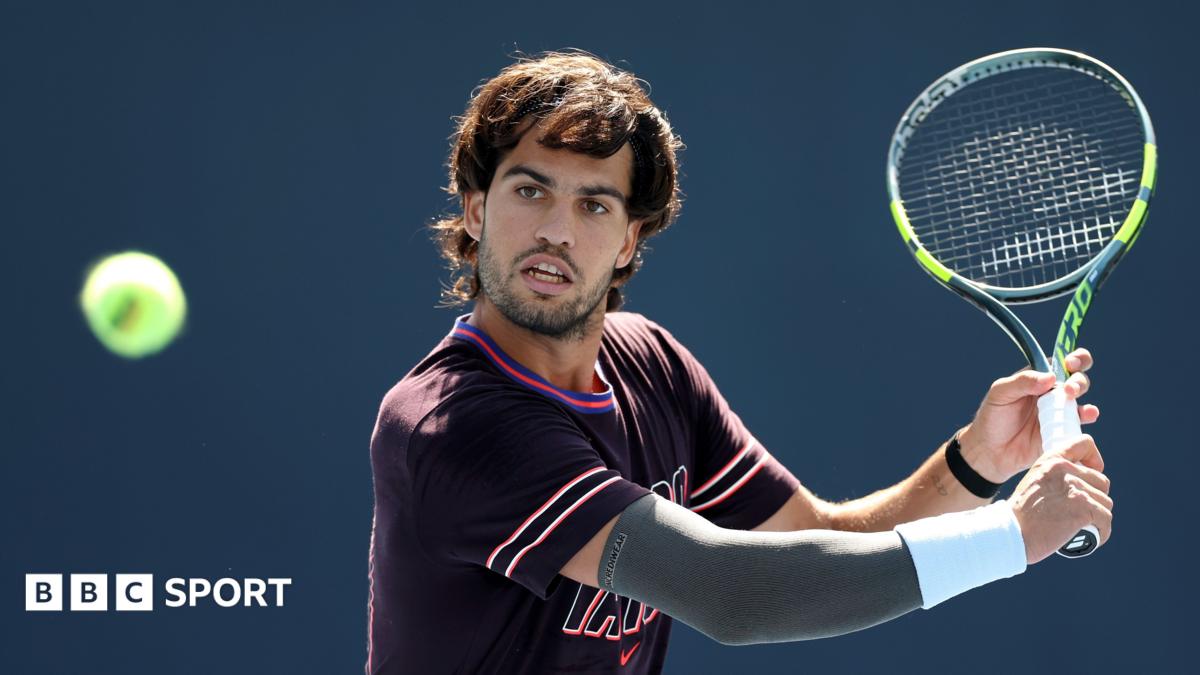
Wearing a long compression sleeve on his right arm, Alcaraz did not look totally convincing in the exhibition-like event. Understandably, he appeared to be holding back on his serve and return as he eased himself back into matchplay.
There is no doubt that a Grand Slam singles bout played over five sets will be another step up physically. Safiullin, with a hefty serve and attacking groundstrokes, is not an ideal opponent to start against.
The 29-year-old Russian, who reached the Wimbledon fourth round last month before falling to Novak Djokovic, is likely to take time away from Alcaraz, test the Spaniard’s durability at the baseline and generally make him feel uncomfortable.
Predicting how Slam draws will pan out is always a fool’s errand, but if Alcaraz does get past Safiullin and goes as far as the fourth round, there are more potential opponents who appear daunting given the length of his absence.
If you analyse Alcaraz’s projected draw by the seedings, he could face rock solid American Tommy Paul or unpredictable Kazak Alexander Bublik in the last 16.
Athletic Frenchman Arthur Fils and huge-serving Ben Shelton are potential quarter-final opponents. Djokovic could lie in wait in the semi-finals.
Nobody outside of Alcaraz and his core team knows how his wrist is likely to stand up to the rigours of playing five-set matches in the heat of a Grand Slam tournament.
A challenging start at Flushing Meadows and a potentially intimidating second week will tell us.