art

Cool design and wild art on a city break in Metz, north-east France | France holidays

As I stand and look at a six-metre skeleton of a domestic cat named Felix, the words of Alice in Wonderland spring to mind: “Curiouser and curiouser.” The sculpture is part of a thought-provoking and enchanting exhibition at the Centre Pompidou-Metz, and this isn’t the first time I’ve felt a sense of wonder during my weekend in this lesser-known city in north-eastern France. While most of us know what to expect from a city break in, say, Paris, Lyon or Bordeaux, Metz throws up surprises at every turn.

The giant feline sculpture is the work of Italian visual artist Maurizio Cattelan (of banana-duct-taped-to-a-wall fame), whose works form part of Dimanche Sans Fin (Endless Sunday), an exhibition he has curated that brings together more than 400 works from Paris’s Centre Pompidou, which closed for a five-year renovation last October. Each piece depicts a different way the “day of rest” could be interpreted, whether it’s the innocent play of Picasso’s sculpture Little Girl Jumping Rope (1950-1954) or Max Ernst’s figure playing chess in the King Playing with the Queen (1944).

In a room dedicated to artists’ portraits of their mothers, Cattelan’s Shadow (2023) shows his mum hiding in a fridge (the thought of cooking a Sunday roast might drive many of us to take such action).

I’m being shown around by Cattelan’s co-curator, Zoé Stillpass. “It was amazing to have all the pieces from the Paris Pompidou to play with,” she says. “The banana exhibit, which makes you question the idea of ‘the masterpiece’ and why we give value to something, has a room to itself here.”

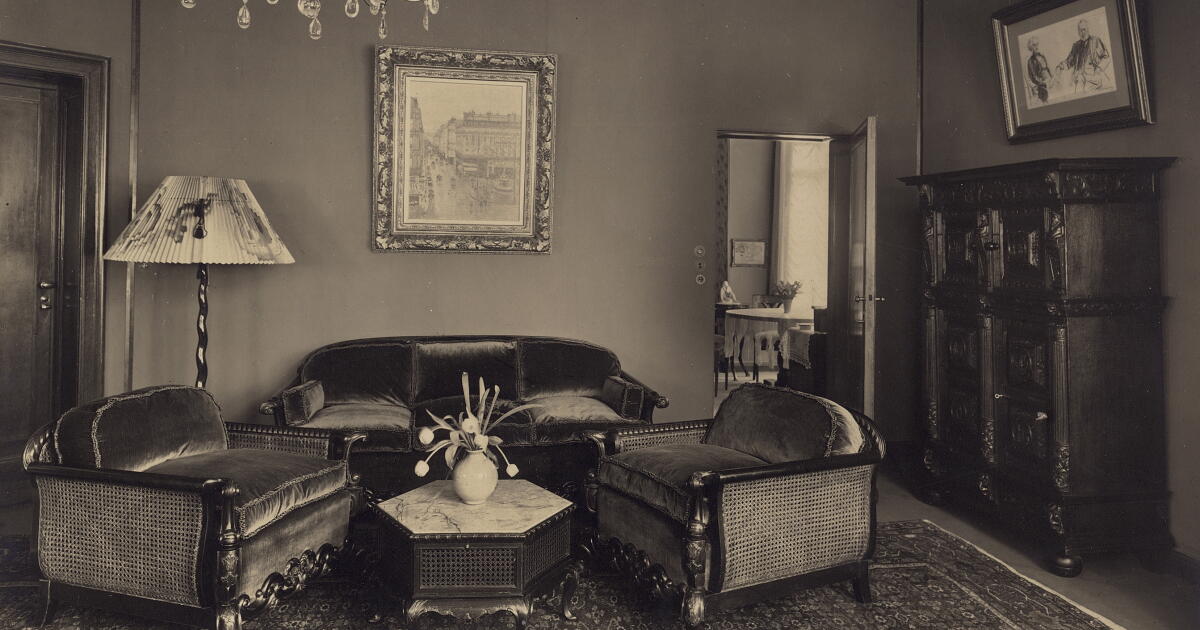
The interior of Philippe Starck’s Maison Heler. Photograph: Julius Hirtzberger

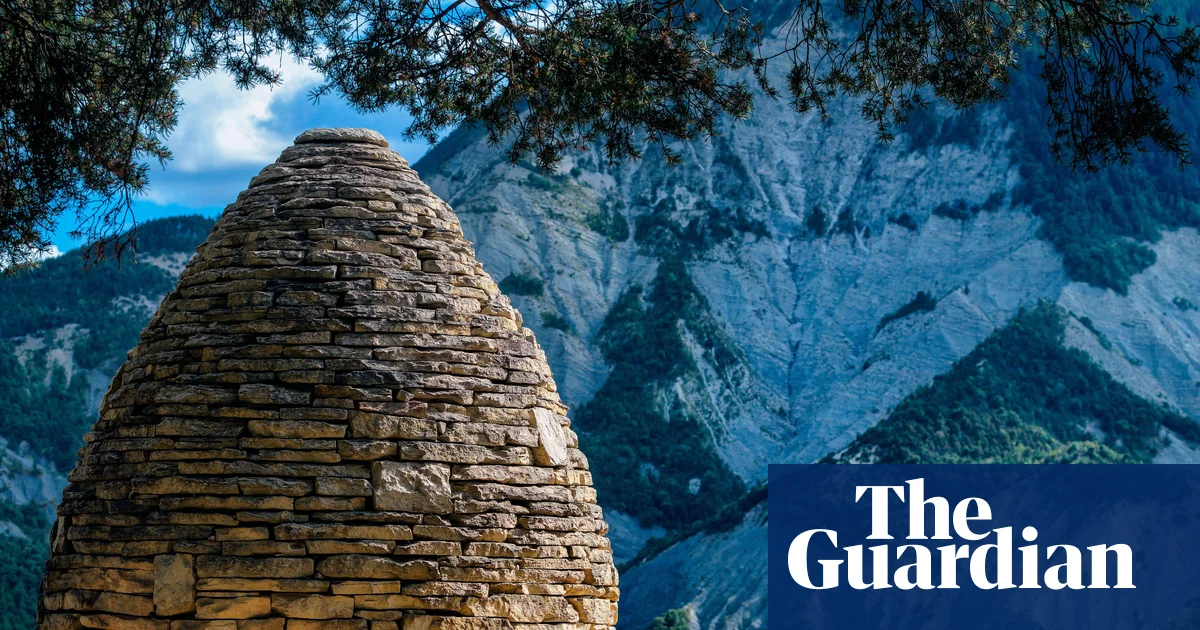
But my jaw had dropped before I’d even set foot in the exhibition, when I set eyes on the Pompidou-Metz itself. It opened in 2010 and is an extraordinary feat of design. Japanese architect Shigeru Ban took inspiration from a Chinese bamboo-woven hat to create hexagonal lattice of laminated wood and draped white fibreglass roof. The building fills a wide open space that was once occupied by a Roman amphitheatre.

Metz was something of a playground for architecture long before the Pompidou arrived. Before I’d left the station, I’d had an introduction to the city’s Germanic Imperial Quarter. Built between 1905 and 1908 during Kaiser Wilhelm II’s occupation of Alsace-Lorraine, the station is more akin to a church than a transport hub, with a striking stained-glass window depicting Charlemagne, the eighth-century Frankish king, carved pillars, mosaics and a beautiful glass-roofed arcade. Outside is a stately water tower that once serviced the steam engines.

Architects designed the Imperial Quarter to feel old, with winding streets, leafy squares and the stately Avenue Foch with its ornate mansions. Elsewhere, in Place Saint-Louis in the real old town, the stone arcades occupied by money-changers in the 14th century are now home to cafes and restaurants, with terraces sprawling into the square.

Maison Heler, with Manfred’s house atop a nine-storey tower block. Photograph: Pierre Defontaine/Grand Est tourism

Renaissance architecture also gets a look in with the Maison des Têtes on En Fournirue, which dates from 1529 and has five detailed busts above its leaded windows. All these attractions are easily reached on the free electric shuttle bus that loops round the city centre.

Later, a solar-powered boat trip along the River Moselle gives a view of the city’s monuments from the water, including a Japanese Torii gate and Protestant church the Temple Neuf, with its steel-grey roof tiles shimmering in the sun.

The city’s most imposing monument is the Cathédral Saint-Étienne. Built in yellow Jaumont limestone, it dates from the 13th century, but some of its most striking features are much more modern. Among its 6,500 sq metres of stained-glass windows – one of the world’s largest expanses – are works from the 1960s by Marc Chagall. Vivienne Rudd from the city’s tourist office is showing me around. She explains how Chagall tells the story of Adam and Eve in his intricate design, with its abstract lines and ethereal figures: “You can see how Eve is in front of the tree of knowledge, holding a snake, and you can see Adam’s face hiding in the blue panes.” In the windows in the north transept, she shows me where to spot Jesus’s head and his crown of thorns. It takes some concentrating, but then I spy it.

“If you can’t see it, you have to go and drink a shot of mirabelle eau-de-vie [the local plum-based spirit] and then come back and look,” she laughs.

Even without drinking Alice’s elixir, the sight of Metz’s new design hotel soaring into the sky makes me feel like I’ve shrunk. Celebrated Parisian designer Philippe Starck’s Maison Heler took 10 years to complete but finally opened last March, just a few minutes’ walk from the Pompidou-Metz. Its design is extraordinary: a turreted mansion house atop a rather nondescript nine-floor tower block.

Felix, a six-metre sculpture by Maurizio Cattelan at the Centre Pompidou-Metz. Photograph: Jean-Christophe Verhaegen/AFP/Getty Images

Its backstory is equally fantastical. Starck devised a novella, titled The Meticulous Life of Manfred Heler, in which the house, belonging to the eponymous main character, a lonely postwar inventor, is dramatically pushed upwards during an earthquake – hence the house on top of the tower block. The story also involves his love interest, a milkmaid named Rose, whose part in the story inspired the gentle pink decor of the bistro restaurant on the ground floor.

Bedrooms and corridors have an industrial vibe, with neutral tones and concrete walls, and Manfred’s bizarre scientific experiments are depicted in black-and-white photos. Light and colour come from the stained-glass windows – the work of the designer’s daughter, Ara Starck – which cast a beautiful glow across the wood-panelled restaurant and cocktail bar, set in Manfred’s house at the top.

As carefully designed as it is, it’s also affordable, and the food in both restaurants (mains from €23) is excellent. I tuck into white asparagus with hollandaise and cod with a light pea broth and saffron beurre blanc. When I try to read the novella, though, to get a better understanding, it proves utterly baffling – in keeping, perhaps, with this wonderfully curious city.

The trip was provided by Tourism Metz and the Maison Heler (doubles from €106 room-only). Dimanche Sans Fin runs until 25 Jan 2027 at Centre Pompidou-Metz

Source link

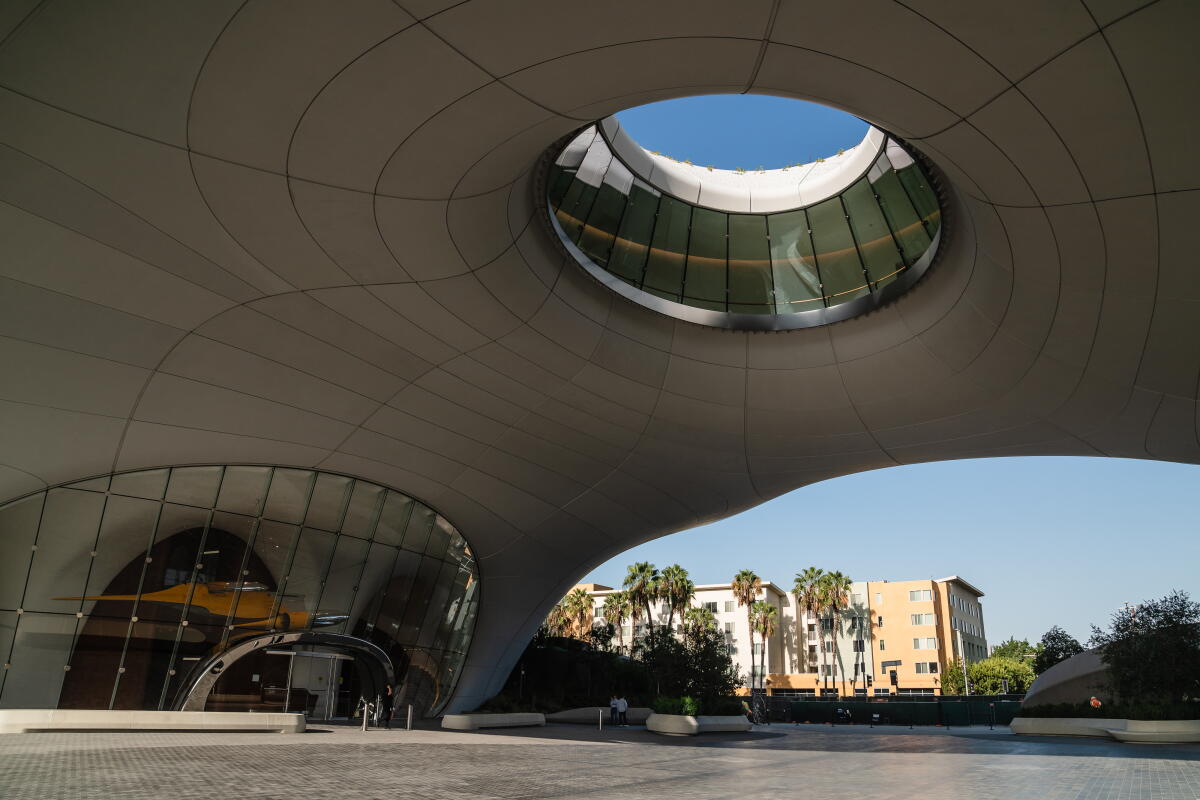
LACMA unveils opening date for new David Geffen Galleries

LACMA’s David Geffen Galleries, the pinnacle of a two-decade campus transformation, will officially open April 19.

That Sunday, a ribbon-cutting ceremony will kick off two weeks of priority member access to the galleries, with general admission beginning May 4, the museum said Thursday. Online ticket reservations open Thursday to members.

The announcement comes nearly a decade after news broke of business magnate David Geffen’s record-high $150-million donation toward the construction of a new museum building to be designed by Pritzker Prize-winning architect Peter Zumthor. Since the beginning, the Brutalist design has been polarizing — Angelenos have cheered or jeered the concrete vision.

The $720-million Geffen Galleries, which museum members got a first look at over the summer, will serve as the new home for LACMA’s permanent collection. It will display 2,500 to 3,000 objects at a time from its collection of approximately 170,000 objects. Stretching across Wilshire Boulevard, the structure houses 110,000 square feet in 90 exhibition galleries that will be organized thematically rather than by medium or chronology.

“The idea is for you to make your own path — not to speak at you, but to let you wander like you would through a park or a place,” LACMA Director and Chief Executive Michael Govan said in an interview with The Times. “That change in attitude, and how the building is built, is really exciting.”

Of the $720 million, Govan said, the majority came from private donors, with $125 million funded by L.A. County. Aside from paying off interest and principal, additional funds from a $875-million fundraising campaign will go toward public art, collection moving costs, office renovations and general landscaping.

The inaugural installation will use global bodies of water as an “organizing framework, emphasizing the cultural exchange, migration and commerce prevalent throughout the history of art,” LACMA said in a statement. Standout entries include Georges de La Tour’s “The Magdalen with the Smoking Flame” (c.1640), Vincent van Gogh’s “Tarascon Stagecoach” (1888) and Henri Matisse’s “La Gerbe” (1953). Art installation is currently in progress.

Guests look out the window of the Geffen Galleries upon a crowd below.

Guests tour the Geffen Galleries for an early preview on June 26, 2025.

(Allen J. Schaben / Los Angeles Times)

The four buildings that the Geffen Galleries replaced were “all broken up into little, tiny pieces, and they were not well traveled,” Govan said. The new structure is meant to make LACMA’s eclectic permanent collection more accessible on one extra-long floor.

“It’s kind of a worldview,” the executive said. “It’s big enough that it can hold the world.”

While the new building does not boast more gallery space than its predecessors — a point of public contention — Govan said that was never the plan due to county size regulations. Instead, the complementary additions of the Broad Contemporary Art Museum in 2008 and the Lynda and Stewart Resnick Exhibition Pavilion in 2010 added 100,000 square feet of gallery space. In all, the campus transformation brought LACMA’s total exhibition space from 130,000 square feet in 2007 to 220,000 square feet at present. (The Pavilion for Japanese Art, which has been undergoing a retrofit and renovation, is 10,000 square feet. It remains closed and will reopen at some point after the David Geffen Galleries.)

A person stands inside a concrete gallery inside the David Geffen Galleries.

A guest tours one of the 90 galleries within the new space during a preview opening on June 26, 2025.

(Allen J. Schaben / Los Angeles Times)

Along with complaints about the building’s size, the Geffen Galleries’ heavy use of concrete had been criticized as an impractical choice for hanging art. According to LACMA’s preparators, that’s not a problem given the right tools.

Among the building project’s donors were Tony Ressler, co-chair of the museum board of trustees, after whom the Geffen Galleries’ south wing will be named, the museum also announced Thursday. Willow Bay, a longtime board member, will join Ressler as board co-chair.

“LACMA is a global cultural force that brings millions of people together through the power of art, connecting communities across Los Angeles and around the world,” Bay said in a statement. “I am deeply grateful for Tony’s leadership and generosity, and honored to join him as co-chair at this transformative moment in LACMA’s history as we advance our mission of enhancing access to art and education.”

Bay and her husband, outgoing Disney CEO Bob Iger, in 2018 made a “historic capital contribution” to support the preservation of Chris Burden’s “Urban Light,” which has become an iconic L.A. landmark. (Disney earlier this week named parks chief Josh D’Amaro as Iger’s successor.)

LACMA previously announced that the north wing of the Geffen Galleries would be named in honor of the late former board co-chair Elaine Wynn, who contributed $50 million toward the construction project.

As LACMA looks to the future, Govan said the museum isn’t ruling out future expansion. But any additions would be off the Wilshire campus, in areas such as South L.A and the Valley.

The idea is, Govan continued, “Let’s change the model. Let’s just put the wings, you know, the rest of the museum, in other places and strategically located.”

A side view of the David Geffen Galleries.

The new David Geffen Galleries building is part of LACMA’s ambitious expansion plans.

(Allen J. Schaben / Los Angeles Times)

Expansion, he said, is important for an encyclopedic museum, responsible for chronicling art history across many genres, geographies and media.

“If you’re the Frick and you only collect things of a certain period, you don’t have to expand,” Govan said. “But if your job is to keep up with the practice of artists and the world being bigger and bigger in terms of what people recognize as art, then you have to keep expanding.”

For now, though, he’s content to create a “big, beautiful gathering place” for Los Angeles.

“I always refer to our plaza as the living room for Los Angeles,” Govan said. “So this idea of the public space was so important from the beginning, and you see how the campus integrates with this.”

Zumthor’s building design, which includes overhanging canopies, intentionally creates shade with outdoor events in mind, the executive explained. It’s all about diversity of experience.

“You can take your selfie at ‘Urban Light.’ You can go to the jazz concerts, go see dozens of masterpieces outdoors… you can go inside somewhere and really focus quietly on a single work of art,” Govan said. “I wanted the range of all those experiences in a package where you wanted to hang out for the day.”

Source link

Kennedy Center was always in the political spotlight but not like this

Last Tuesday, Philip Glass withdrew the delayed premiere in June of his latest symphony, No. 15. Originally meant to celebrate the 50th anniversary of the John F. Kennedy Center for the Performing Arts in 2022, it is a portrait of Abraham Lincoln, but the composer decided the values of the current Kennedy Center were “in direct conflict to the message of the symphony,” which is inspired by Lincoln’s 1838 Lyceum Address.

In rebuke to Glass, Kennedy Center spokesperson Roma Daravi’s quick response was: “We have no place for politics in the arts.”

Two nights later, the chairman of the Kennedy Center board (who also happens to be president of the United States) hosted at the “no place for politics” center a bevy of Republican politicians and donors for the gala premiere of “Melania,” a documentary about and produced by his wife, the first lady.

Three days after that, the president, with no warning to Congress (which administers the Kennedy Center), center staff or the public, announced on his social media platform that he would close the facility July 4 for two years to undertake a major renovation. This may get the center off the hook for putting together a new season, what with all its departures (voluntary and not) of competent artistic directors, but it also means the center’s one remaining major institution, and its crown jewel, the National Symphony, is suddenly homeless.

The fact is, the Kennedy Center has always been political. The same goes for orchestras. And Lincoln’s seeming role as a symphonic football is nothing new, either.

But political doesn’t — or, at least, once didn’t — necessarily imply partisan. In March 1981, two months into his presidency, Ronald Reagan turned up at the Kennedy Center for the premiere of a new production of Lillian Hellman‘s “The Little Foxes,” and was photographed happily congratulating a smiling Elizabeth Taylor backstage. Also present was the gruff playwright.

Hellman, who had been a member of the Communist Party and was called up in front of the House Un-American Activities Committee in 1952, and Reagan, an avid anti-Communist, couldn’t have had much use for each other politically. But there they were, soaking up art and glamour (if maybe not in that order) together. It was also in 1952 and thanks to Sen. Joseph McCarthy’s Communist witch hunts that the first inklings of a national performing arts center in Washington, D.C. developed.

Aaron Copland’s “Lincoln Portrait,” for speaker and orchestra, written in 1942 in the wake of the Pearl Harbor attack, had been slated for a performance at Dwight D. Eisenhower’s inauguration in 1952. Complaints about Copland’s leftist leanings pressured Eisenhower to cancel the performance, but left inklings in Ike’s mind that the nation needed a performing arts center in Washington, D.C. In 1955, he instituted a District of Columbia Auditorium Commission and that led to the National Cultural Center Act of 1958.

Bipartisan support became a no-brainer. Kennedy was an enthusiast and, in his presidency, both First Lady Jacqueline Kennedy and former First Lady Mamie Eisenhower worked together to support the cultural center. In 1963, just days before his assassination, JFK hosted a White House fundraiser for the center. A year later, President Lyndon B. Johnson broke ground for what was to become “a living memorial to John F. Kennedy” with the gold-plated spade that President Taft had used for the Lincoln Memorial.

Ground-breaking ceremonies for the John F. Kennedy Center

President Lyndon B. Johnson lifts a shovel full of dirt during ground-breaking ceremonies for the John F. Kennedy Center for the Performing Arts in 1964 while members of the Kennedy family look on.

(Bettmann Archive / Getty Images)

The Kennedy Center proved political from Day 1. Leonard Bernstein was commissioned to write a theatrical piece for the center’s opening in 1971, which turned out to be an irreverent “Mass” — musically, liturgically, culturally and, most assuredly, politically. Most of all it was an unmistakably protest against the Vietnam War. In his own protest, President Nixon stayed home.

“Mass” was ridiculed by critics and sophisticates. And so was the Kennedy Center in its monstrosity. But the composition ultimately came to be seen as a precursor of musical Postmodernism and possibly Bernstein’s greatest work, a monument in its own right. The Brutalist monumentalism of the Kennedy Center also grew over time to be loved, increasingly bringing cachet to a diverse nation’s artistic needs.

All of that has, however, been called into question by a new administration noisily remaking the center as partisan and politicizing even renovation and Lincoln.

You don’t take on renovation of a single concert hall overnight, let alone an entire performance center with several theaters, including a major concert hall and opera house. This requires architects and acousticians deeply schooled in theaters, and each has its own acoustical needs. You touch anything, and it will affect the sound. Both the opera house and concert hall could use acoustical work, but that is a very big deal. If this sudden renovation comes as a surprise to staff, that means there have been no consultations, no proposals, no models, no feedback. Best to add to the budget some hundreds of millions of dollars to fix mistakes.

Before even considering anything else, a space has to be found for the National Symphony. It is possible to create temporary structures or renovate existing buildings into acoustical wonders, as architect Frank Gehry and acoustician Yasuhisa Toyota have proved. In Munich, the temporary Isarphilharmonie, which has Toyota acoustics, is so successful that some are saying the city doesn’t need a new concert hall after all.

So, given the timing of this precipitous announcement, it is hard to believe that something isn’t also going on with attitudes toward Lincoln and Glass’ displeasure with the Kennedy Center administration. For what it’s worth, Presidents Ford, Carter, George H.W. Bush, Clinton and Obama have all narrated Copland’s “Lincoln Portrait.”

Lincoln has been central to Glass’ work for more than four decades. The composer first used Lincoln in Act V (known as “The Rome Section”) of Robert Wilson’s 12-hour opera, “the CIVIL warS: a tree is best measured when it is down” (a prescient title for current Kennedy Center thinking), which had been intended for the 1984 Olympic Arts Festival in L.A. but was never produced here for lack of funds.

Lincoln shows up in Glass’ 2007 opera, “Appomattox,” commissioned by San Francisco Opera and later revised and expanded for Washington National Opera in 2015. The opera offers a look at how the Civil War ended with high-minded statesmanship. The first act of Glass’ 2013 opera, “The Perfect American,” about the last days of Walt Disney, ends with a flashback of Walt, who idolized Lincoln, visiting Disneyland and getting into an argument about slavery with the animatronic Lincoln, which gets so worked up it attacks Walt.

Politics are rarely far away from orchestral or operatic life. At a recent appearance of the Chicago Symphony at the Soraya, Italian conductor Riccardo Muti followed an impressively grand performance of Brahms’ Fourth Symphony by telling the audience how the arts keep us honest and played as an encore the overture to Verdi’s “Nabucco,” as an example of how an opera could motivate public support for Garibaldi’s nationalist movement. Garibaldi also makes an appearance with Lincoln in the Glass/Wilson “Rome Section.”

A few days later at the Renée and Henry Segerstrom Concert Hall, the thrilling Orquesta Sinfónica de Minería from Mexico City revealed an inspiring model of Latin American cooperation. On the program was Cuban composer Paquito D’Rivera’s “Concerto Venezolano,” featuring the fearless improvising Venezuelan trumpet soloist Pacho Flores. The concerto also featured solos on the Venezuelan cuatro by Héctor Molina, but his name was only announced last minute, due to current travel uncertainty.

One of the greatest recordings of Shostakovich’s Fifth Symphony, his grab-you-by-the-gut answer to Stalin and celebration of Russia, is by the National Symphony under Mstislav Rostropovich, recorded in 1994 at the Kennedy Center. Stalin saw the symphony as his deification. Rostropovich exuded, in the Kennedy Center aura, the expression of an overwhelmingly triumphant celebration of the end of the Soviet repression. You can take the symphony and the opera out of the Kennedy Center, but you can’t take the essence of the Kennedy Center, the living memorial to the ideal of something larger than political ego, out of the symphony and opera.

Source link

Lactaid, toothpicks in video art? Sarah Sze’s experimental L.A. show

Interiority is a concept that multimedia artist Sarah Sze has been fixating on lately.

“So much of what we experience is actually interior,” Sze said in a recent video interview. “We’ve become so exterior focused. We’re so outward looking.”

At a time when it’s all too easy to consume a never-ending stream of social media images, the celebrated New York-based artist is more interested in scrolling through the images stored inside her own mind.

Her new show, “Feel Free,” champions the mind’s eye, in all its random, fragmented glory. It brings a collection of new paintings and two immersive video installations to Gagosian Beverly Hills.

Sze is known for her unconventional sculptures and large-scale paintings, which she’s shown in such venues as the Museum of Modern Art, LACMA and the U.S. Pavilion at multiple Venice Biennales. In 2023, she left her mark on both the inside halls and the exterior walls of the Guggenheim Museum, and her public sculptures have transformed a grassy hillside as well as a pine grove and an international airport.

Shadows cross Sarah Sze's face at Gagosian Beverly Hills gallery.

Sarah Sze’s Gagosian Beverly Hills show “Feel Free” is meant to feel intimate.

(Ariana Drehsler/For The Times)

At the Gagosian show, Sze leaned into the intimate and fragile, while continuing her signature experimental streak.

In one of her newest pieces, “Once in a Lifetime” — part sculpture, part video display — precarious clusters of bric-a-brac form a mechanical marvel that appears to defy gravity.

A stack of small projectors is cradled inside of a fantastical tower fashioned out of crisscrossed tripods, metal poles and ladders festooned with an assemblage of toothpick structures, empty cardboard containers that once held crayons and Lactaid, dangling prisms, arts & crafts scraps, and paper cut-outs of deer and wolves (figures that appear throughout the show).

The bare gallery walls surrounding the monument flash with rotating projections of construction sites where buildings are being erected and demolished, clouds drifting across tranquil blue skies, and city lights twinkling then slowly dissolving into floating fractals. The Dadaist piece is every bit as off-kilter and fascinating as the Talking Heads song that inspired its title.

"Once in a Lifetime, 2026" mixed media made out of "wood, projectors, tripods, ladder, lights, aluminum, ceramic, paper, and paint," by Artist and Professor Sarah Sze at Gagosian in Beverly Hills on Jan. 28, 2026. (Ariana Drehsler/For The Times)
"Once in a Lifetime" is part video display and part sculpture, made of tripods, toothpicks, lights, cardboard boxes and projectors that flicker images on the gallery walls.

“Once in a Lifetime” is part video display and part sculpture, made of tripods, toothpicks, lights, cardboard boxes and projectors that flicker images on the gallery walls. (Ariana Drehsler/For The Times)

“The most important thing about my show is that I hope it’s really challenging and exciting and gives young artists license to do what they want to do,” Sze said.

“When they come in and say, ‘Wait … I didn’t know you could put up toothpicks going to the ceiling and throw a video through it and make it into a movie. I didn’t know you could put a pile of things on the floor in front of a painting.’ It’s like, ‘OK! Yes, you can!’”

Meanwhile, large canvases in the main gallery space are covered with oil and acrylic paints and printed backdrops dotted with an assortment of images: sleeping female figures; hands pointing, drawing and flashing peace signs; the sun at different stages of setting; birds in flight; wolves and deer in their natural habitats. Layered on top are paint splotches and streaks, as well as taped-on paper and vellum, blurring and obscuring the collage of figures underneath.

Three large paintings hang on a white gallery wall.

“Escape Artist,” left, “White Night” and “Feel Free,” are new paintings by Sarah Sze at Gagosian Beverly Hills.

(Ariana Drehsler/For The Times)

“One of the things I was thinking about was when we dream and then we wake up, there’s this extreme, fleeting moment where you’re trying to grasp the dream,” Sze said. “The dream is disappearing at the same time, and you’re trying to re-create those images.”

She went on to describe “a landscape turning into a different landscape, and then you’re falling, and then you’re turning, and then someone appears that you didn’t expect to be there.”

In addition to this spree of the subconscious, the artist offers glimpses of her creative process. Pooled on the ground below the canvases (and even dangling from the rafters above) is an assortment of the tools of her trade — from tape measures to paint scrapers. Brushes, pens and pencils lie next to the ripped cuffs of cotton workshirts, and drops of blue and white paint are splattered on the floor, extending the artwork beyond the wall.

Sze spent five days installing the show inside the gallery and the commonplace supplies incorporated into the pieces are what she dubbed “remnants of the workspace.”

"Sleepers," a video installation, covers the wall of a dark room, with a single gallery window letting light in.

“Sleepers,” a video installation Sze debuted in 2024, plays with the light entering through a gallery window. Images of sleeping heads and forest animals play amid the sound of cello notes and deep breathing.

(Ariana Drehsler/For The Times)

If the paintings act as snapshots of dreamscapes, “Sleepers,” the video installation she debuted in 2024, sets those images in motion. Dozens of hand-torn paper fragments connected by rows of string become miniature projection screens, each flashing with images of the same sleeping heads, busy hands and forest animals. These are interspersed with flashes of TV static and ocean waves, all set to the sounds of humming, disjointed cello notes and deep breathing.

“Feel Free” by Sarah Sze

When: Tuesday-Saturday, 10 a.m. to 5:30 p.m., through Feb. 28
Where: Gagosian Beverly Hills, 456 N. Camden Drive in Beverly Hills

Directly in the center, a slender vertical window — part of the gallery’s architecture — illuminates the otherwise darkened room with a pillar of natural light, further contributing to the ethereal nature of the piece.

Viewed at the right angle, the piece resembles a giant eye. It’s the perfect visual cue to get visitors thinking about what we see and how we see it.

Source link

Kennedy Center to close for 2 years for renovations, Trump says

President Trump said Sunday that he will move to close Washington’s Kennedy Center for the Performing Arts for two years starting in July for construction, his latest proposal to upend the storied venue since returning to the White House.

Trump’s announcement on social media follows a wave of cancellations by leading performers, musicians and groups since the president ousted the previous leadership and added his name to the building. Trump made no mention in his post of the recent cancellations.

His proposal, announced days after the premiere of “Melania,” a documentary about the first lady, was shown at the center, is subject to approval by the board of the Kennedy Center, which has been stocked with his handpicked allies. Trump chairs the center’s board of trustees.

“This important decision, based on input from many Highly Respected Experts, will take a tired, broken, and dilapidated Center, one that has been in bad condition, both financially and structurally for many years, and turn it into a World Class Bastion of Arts, Music, and Entertainment,” Trump wrote in his post.

Neither Trump nor Kennedy Center President Ric Grenell, a Trump ally, have provided evidence to back up their claims about the building being in disrepair, and in October, Trump had pledged the center would remain open during renovations. In Sunday’s announcement, he said the center will close July 4, when he said the construction would begin.

“Our goal has always been to not only save and permanently preserve the Center, but to make it the finest Arts Institution in the world,” Grenell said in a post, citing funds Congress approved for repairs.

“This will be a brief closure,” Grenell said. “It desperately needs this renovation and temporarily closing the Center just makes sense — it will enable us to better invest our resources, think bigger and make the historic renovations more comprehensive. It also means we will be finished faster.”

The sudden decision to close and reconstruct the Kennedy Center is certain to spark blowback as Trump revamps the popular venue. The building began as a national cultural center and Congress renamed it as a “living memorial” to President Kennedy — a champion of the arts during his administration — in 1964, in the aftermath of his assassination.

Opened in 1971, it serves as a public showcase year-round for the arts, including the National Symphony Orchestra.

Since Trump returned to the White House, the Kennedy Center is one of many Washington landmarks that he has sought to overhaul in his second term. He demolished the East Wing of the White House and launched a massive $400-million ballroom project, is actively pursuing building a triumphal arch on the other side the Arlington Bridge from the Lincoln Memorial, and has plans for Washington Dulles International Airport.

Leading performing arts groups have pulled out of appearances at the Kennedy Center, most recently composer Philip Glass, who announced his decision to withdraw his Symphony No. 15 “Lincoln” because he said the values of the center today are in “direct conflict” with the message of the piece.

Last month, the Washington National Opera announced that it will move performances away from the Kennedy Center in another high-profile departure after Trump’s takeover of the U.S. capital’s leading performing arts venue.

The head of artistic programming for the center abruptly left his post last week, less than two weeks after being named to the job.

A spokesperson for the Kennedy Center could not immediately be reached and did not respond to an emailed request for comment.

Late last year, as Trump announced his plan to rename the building — adding his name to the building’s main front ahead of that of Kennedy — he drew sharp opposition from members of Congress, and some Kennedy family members.

Kerry Kennedy, a niece of John F. Kennedy, said in a social post on X at the time that she will remove Trump’s name herself with a pickax when his term ends.

Another family member, Maria Shriver, said at the time that it is “beyond comprehension that this sitting president has sought to rename this great memorial dedicated to President Kennedy,” her uncle. “It is beyond wild that he would think adding his name in front of President Kennedy’s name is acceptable. It is not.”

Late Sunday evening, Shriver posted a new comment mimicking Trump’s own voice and style, and suggesting the closure of the venue was meant to deflect from the cancellations.

She said that “entertainers are canceling left and right” and the president has determined that “since the name change no one wants to perform there any longer.”

Trump has decided, she said, it’s best “to close this center down and rebuild a new center” that will bear his name. She asked, “Right?”

One lawmaker, Rep. Joyce Beatty, an Ohio Democrat and ex-officio trustee of the center’s board, sued in December, arguing that “only Congress has the authority to rename the Kennedy Center.”

Price and Mascaro write for the Associated Press. AP writer Darlene Superville contributed to this report.

Source link

Dublin is the perfect city for a weekend break – this is how to spend it

Dublin offers partying, parks and pints galore which make it a perfect place to visit for 48 hours from the UK

Mark Jefferies brings you the best things to see and do in Dublin

Whenever I have been to Dublin I find there’s always a buzz of excitement in the air. There are so many places to visit with a warm and friendly atmosphere, and it’s all created by the locals. Whether it be music or museums, Guinness or gourmet food, it is a great location for a 48-hour break.

Our base was the Ruby Molly Hotel, fewer than 10 minutes away from the main action. Our room offered a calm haven away from all the hustle and bustle, and if you get back and still have the energy for a nightcap or some food, the bar is open late and the signature cocktails are recommended!

There are a lot of great pubs and bars in Dublin but perhaps the best place to start for a pint is The Guinness Storehouse, which is both a museum and the place where the black stuff is brewed in the city.

Anyone who has watched House Of Guinness on Netflix will know there is a lot of history and drama behind the dark drink. The Storehouse goes through the legacy of the Guinness family, the brewing innovations and the extraordinary advertising around the brand. At the end of your seven-floor tour you are rewarded at the top in the Gravity Bar with a pint and a chance to take in an incredible 360-degree view of the famous city.

If you get a taste for this kind of thing, there are also whiskey distilleries dotted around, including the famous Jameson Distillery, where you can also do a tour and sample more booze.

READ MORE: ‘I’ve visited Disney World more than 50 times – there’s one huge mistake everyone makes’READ MORE: ‘I travelled to mysterious UK island removed from maps and what I found was horrifying’

For those short on time, The Little Museum of Dublin is famous for its 29-minute guided tour celebrating the art of great Irish storytelling, with history, comedy and some of the friendliest people in Ireland.

The city’s Trinity College is also a place to visit with many landmarks, including a breathtaking library known as The Long Room which is home to more than 200,000 books.

Dublin is a great city to tour on foot, and while you’re there you’ll also be able to see a number of landmarks, including Dublin Castle, the Ha’penny Bridge and The Spire sculpture.

The city offers a Do Dublin Freedom Pass which includes public transport and the Hop-On Hop-Off Sightseeing Bus Tour, a great way to get around if you want to relax and learn about the history of the city at the same time, with many of the drivers adding in their own jokes or songs. Of course, all of this exploring can help you build up an appetite.

The Woollen Mills is a must-visit for literary fans, given that author James Joyce once worked in this very location. Expect hearty fare with plenty of Irish beef on the menu alongside long ray and chips.

Meanwhile, The Church Bar & Restaurant is, as the name suggests, set in a former church, with Taylor Swift as a recent guest when she dined there during the Eras Tour. The food is quintessentially Irish, and very tasty, and if you don’t have time to eat here, it’s worth a stop for a drink at the bar, where there is traditional Irish music and dancing in the evenings.

For something that feels a bit more decadent, Dublin’s newest rooftop experience, DÍON offers a wonderful way to spend an evening. The food and cocktails – as well as the amazing views – made it a perfect place for a romantic date. Dishes included Irish crab soldiers, dover sole, king prawns and fillet steak.

In terms of places to drink, there are far too many to mention. The pubs and bars seem to continue to thrive here, with live music in many of the bars. The Temple Bar area is considered to be for tourists only and you will pay more for pints there, but the pubs will be busy and the atmosphere is always good.

Recommendations from locals for the best pints include The Lord Edward, The Long Hall, The Cobblestone and Mulligan’s. I can also vouch for the odd-sounding Darkey Kelly’s and the oldest pub in Dublin, The Brazen Head. And if you want a change from Guinness and pubs, you could try the cocktails at Bar 1661 instead.

Book it

Rooms at the Ruby Molly Hotel start from €96 (approximately £83). Dublin hosts a brilliant series events around New Year’s Eve which are the climax of a winter programme. For more information on the city and further afield too head to ireland.com

Source link

Pop artist Kii Arens’ new show features Grammy winners in historic DTLA

Pop artist Kii Arens made a name for himself in music over the years, creating concert posters for bands and vocalists such as Radiohead, Elton John, Dolly Parton, the Weeknd, Sonic Youth, Tame Impala, Diana Ross and more.

That work is taking center stage at Arens’ new downtown Los Angeles gallery, FAB LA, in a show titled “And the Winner Is.” Curated by Arens and featuring poster art of Grammy winners, the exhibition is set to open Friday, two days before the 2026 Grammys descend on the city, and just in time to welcome plenty of visiting celebrity faces to the gallery’s third-ever event.

A glittering party scene is part of every exhibition Arens hosts, dating back to his previous gallery, LA-LA Land, which he opened two decades ago on Santa Monica Boulevard in Hollywood and ran until its lease came up last year.

FAB LA officially launched in October with “XO, LA: A Love Letter to Los Angeles,” an exhibition that reflected the eclectic voices and existential challenges that define L.A. culture with paintings, illustrations and mixed media works by Shepard Fairey, Corita Kent, Anthony Ausgang, Ashley Dreyfus, Paul Frank and others.

A man lays on a bench in an art gallery.

Pop artist Kii Arens lays on his desk in his new gallery, FAB LA, inside the historic Fine Arts Building on 7th Street in downtown Los Angeles. Posters from his new show, “And the Winner Is,” feature images of Grammy winners just in time for the big awards show.

(Genaro Molina / Los Angeles Times)

The flamboyant “Mick Rock’s Rocky Horror Art Show” followed in December. The exhibition was among the last events marking the famous cult film’s 50th anniversary, and featured Rock’s famous photographs alongside pieces by pop star designer Michael Schmidt and digital portraitist Plasticgod. As with previous events at LA-LA Land, the opening attracted rockers, drag queens and club world cognoscenti.

DJs Sean Patrick (Simon Says) and Chris Holmes (Paul McCartney’s touring DJ, and creative collaborator with Cosm) manned the decks, and “RuPaul’s Drag Race All Stars winner and podcaster, Alaska Thunderf—, performed as Tim Curry’s Dr. Frank-N-Furter, dancing and prancing around the grand environs.

There are galleries all over Los Angeles, but few can be described as works of art unto themselves. FAB LA is that and more.

Its majestic headquarters are housed inside downtown’s historic Fine Arts Building — a breathtaking palace-like structure with a 100-year history of craftsmanship and creativity.

Located near the intersection of 7th and Flower streets, the landmark building was featured in the 2009 film “(500) Days of Summer,” a hidden gem overshadowed in recent years by hectic street life, chain food spots and bustling business energy. Used primarily as an office building, its ornate design, carvings and sculptures — including a ground floor fountain with frolicking bronze youths — hadn’t invited much public attention or appreciation.

A man leaps in the air in front of a vintage building.

Pop artist Kii Arens catches some air in front of the historic Fine Arts Building where he has opened his new gallery, FAB LA. The building was designated a Historic-Cultural Monument in 1974 and restored in 1983.

(Genaro Molina / Los Angeles Times)

That changed late last year when Arens took over the first two floors.

“Historically, artists lived and worked inside this building,” he said during a recent opening. “This idea really resonated with me.”

Originally from St. Paul, Minn., Arens moved to L.A. in 2004 and promptly opened LA-LA Land. The Hollywood showroom debuted on election night 2004 with a group exhibition called “Happy War,” featuring anti-war works and Fairey as DJ. Wild and kitschy shows followed with opening fetes dedicated to colorful subjects including Andy Warhol, circus clowns, and Canadian television creators and puppeteers Sid and Marty Krofft.

In addition to creating art and DJing, Arens is also a musician, and his eclectic music projects reflect his nostalgic proclivities. They include a rock outfit called FLIPP, which he describes as, “the Sex Pistols meets the Spice Girls,” as well as a pop-duo called Jinx, and solo work that counts 4 Non Blondes’ Linda Perry as a collaborator.

Arens is a largely self-taught visual artist. His work has always leaned toward entertainment figures and musical subject matter, which led to major commissions for album covers and tour poster art — some of which will be featured in the upcoming exhibition at FAB LA.

Art prints of Elton John and Jim Morrison.

Poster prints of Elton John, left, and Jim Morrison, by Pop artist Kii Arens are part of his latest show, “And the Winner Is,” which features poster art of Grammy winners and is on display in Aren’s new gallery, FAB LA, which opened late last year.

(Genaro Molina / Los Angeles Times)

When LA-LA Land’s lease expired, Arens sought a new place that would embrace his experimental energy. He also wanted a unique backdrop for showcasing imagery that “treats pop culture as a shared memory for all to take in,” he said. “Something worthy of being preserved, not just consumed.”

The Fine Arts Building’s longtime real estate representative, Gibran Begum, was looking for the same thing. Preservation was part of the conversation when the two connected, but both were also focused on revitalization and augmenting the structure’s old-world charms with something fresh and modern. The goal was to once again bring art lovers to the neighborhood.

A cohesive arts event had been lacking in the area since the monthly Downtown Los Angeles Art Walk scaled down in the face of traffic and permit issues, and more recently COVID closures. The event recently resumed, and though it’s much smaller Arens said he has high hopes for its growth, and for FAB LA’s place in its future.

As does Begum, who calls the Fine Arts Building “a rare and special space.”

“The second you enter, you’re somewhere else, it’s almost like walking into something in Florence, Italy,” Begum said. “We were looking for someone to help rejuvenate and reenergize it and who understood the culture of it.”

A man waves at the camera in a vintage lobby.

Pop artist Kii Arens strikes a pose inside the historic Fine Arts Building where he has opened his new gallery, FAB LA. The building was designed in the Romanesque revival style by architects Albert R. Walker and Percy A. Eisen, who also created the Beverly Wilshire Hotel in Beverly Hills.

(Genaro Molina / Los Angeles Times)

Designed in the Romanesque revival style by revered architects Albert R. Walker and Percy A. Eisen, who also created the nearby Oviatt Building as well as the Beverly Wilshire Hotel in Beverly Hills, the building’s exterior is embellished with dramatic columns and arches. Its interior features gargoyles, griffins and other mystical figures by sculptor Burt W. Johnson, as well as hand-crafted tiles by Ernest Batchelder and murals by Anthony B. Heinsbergen. A vintage elevator ferries guests between floors.

The opulent building opened on Dec. 8, 1926, attracting an estimated crowd of 27,000, and was named a Historic-Cultural Monument in 1974.

Though various artists have shown in the building over its 100-year history, FAB’s vibrant vision, focused on the intersection of design and fine art media, feels like the right fit for the current moment.

“I almost feel like the ghosts of some of the artists are looking down at me and smiling, knowing that what they loved is happening here again,” Arens said.

This includes immersive gatherings, which are a big part of Arens’ plans for FAB. “We’ll have movie premieres, live music events, poetry and I definitely want to have fashion,” Arens said. “The room would make a great runway!”

Charity is also part of the picture.

“And the Winner Is,” serves as a fundraiser for Oxfam, which works to relieve global poverty. Arens said he’s been hosting charity events for the group for the last five years — always right around the Grammys.

“We’ll have a bunch of amazing vinyl records donated by Rhino, and we’ll have clothing donated from famous musicians. Matt Pinfield is DJing and so is Jeffrey Ross,” Arens said.

A Pop art poster of Liza Minnelli.

A poster of Liza Minnelli by Pop artist Kii Arens is part of his latest show, “And the Winner Is” which features poster art of Grammy winners and opens over Grammy weekend.

(Genaro Molina / Los Angeles Times)

The exhibition, which closes March 8, will feature some of what Arens calls his “greatest hits,” including an ebullient Liza Minnelli portrait, and other significant prints such as a black-light poster design of Dolly Parton, and a Van Halen print representing Eddie Van Halen’s famed red-, black- and white-splattered “Frankenstein” guitar design on a notebook.

“I’m into simplifying images until they become familiar, immediate and emotional,” Arens said of his work. “I like to strip images down to what people recognize instantly. The feeling comes first, then I’m focused on evoking optimism, color and joy.”

Up next: A show in April in association with the animation studio Titmouse and dedicated to the art of animation.

“In this moment where everything feels disposable, I want to make something that is solid, something you stand in front of, not scroll past,” Arens said.

Source link

Kennedy Center cancellations mount as Philip Glass drops out

World-renowned composer Philip Glass abruptly canceled June’s world premiere of Symphony No. 15 “Lincoln” at the Kennedy Center, saying its message does not align with the vision for the venue under the Trump administration.

“Symphony No. 15 is a portrait of Abraham Lincoln, and the values of the Kennedy Center today are in direct conflict with the message of the Symphony. Therefore, I feel an obligation to withdraw this Symphony premiere from the Kennedy Center under its current leadership,” Glass wrote Tuesday in a letter to the board that was shared with The Times.

“We have no place for politics in the arts, and those calling for boycotts based on politics are making the wrong decision,” Roma Daravi, vice president of media relations at the Kennedy Center, said in response.

President Trump has served as board chair since early last year when he fired the existing board and appointed former ambassador to Germany, Richard Grenell, as president. The newly installed board promptly installed Trump in his current position. The president’s pursuit of a deeply conservative agenda for the arts unleashed unprecedented chaos at the nation’s premiere performing arts center, resulting in massive upheaval and wave after wave of prominent artist cancellations.

The news that Glass was calling off his appearance also caught off guard the National Symphony Orchestra. The NSO commissioned the symphony in 2022 for the Kennedy Center’s 50th anniversary, and Glass was late to deliver. The symphony was scheduled to be performed with the NSO on June 12 and 13.

“We have great admiration for Philip Glass and were surprised to learn about his decision at the same time as the press,” Jean Davidson, the orchestra’s executive director, said in an email.

The news comes amid a growing chorus of high-profile cancellations that have occurred since the center’s board voted last month to rename the venue the Trump-Kennedy Center, and quickly added the president’s name above that of Kennedy’s on the exterior of the building.

Jazz drummer Chuck Redd pulled out of a Christmas Eve show and the jazz group the Cookers canceled two New Year’s Eve performances. Banjo player Béla Fleck also stepped away from concerts with the NSO and “Wicked” composer Stephen Schwartz said he no longer plans to host a May 15 gala at the center.

The arts world was rocked by the news earlier this month that the Washington National Opera’s board approved a resolution to leave the venue it has occupied since 1971. Kennedy Center leadership, including Grenell, quickly shot back that it was the board that asked the WNO to depart.

“We have spent millions of dollars to support the Washington Opera’s exclusivity and yet they were still millions of dollars in the hole — and getting worse,” Grenell wrote on social media.

Most recently, the center’s website announced that soprano Renée Fleming would no longer perform in two scheduled shows. “A scheduling conflict” was the reason cited, but speculation about the opera star’s departure swirled as the center’s artistic losses mounted amid widely reported plummeting ticket sales.

During the recent upheaval, arts watchers have begun wondering about the future of the NSO, which, along with the recently departed WNO, represents the twin pillars of artistic programming at the center.

According to Daravi, the NSO isn’t pulling out of the venue.

“The relationship is strong, and we have a wonderful season here with Maestro [Gianandrea Noseda] in his 10th year leading the NSO,” Daravi wrote in an email last week, noting the “record-breaking success at the recent Gala benefiting the NSO which launched the new season. The event raised $3.45 million, marking an all-time fundraising record for the organization.”

On Monday Trump sought to boost his financial management of the venue in a Truth Social post that read, “People don’t realize that the Trump Kennedy Center suffered massive deficits for many years and, like everything else, I merely came in to save it, and, if possible, make it far better that ever before!”

The center’s calendar is looking increasingly sclerotic as big names continue to defect, with the NSO providing much-needed padding as it moves on in the face of unending change.

Source link

Los Angeles coffee shops that double as art galleries

Eclectic and cozy define the spirit of this North Hollywood coffee shop owned by Jennifer Jackson and Libby Ward. The name (and whale logo) is a playful twist on corporate giant Starbucks (with “Starbuck” being a character in “Moby Dick”), and the satire extends to the names of the drink sizes: guppy (small), trout (medium) and whaley (large).

Inside, the whimsical nautical vibe continues in the front room with a floor mural, resembling the deep blue sea and various colorful sea creatures, done by local illustrator Tak Sparks.

Three back rooms with bold colored walls — green, blue, yellow and orange — feel like living rooms with wooden stools, desks, chairs and tables, area rugs, upholstered armchairs and worn leather seats. Out back, a shaded patio strung with Edison bulbs extends the seating.

The walls recently featured art by local comic artist/illustrator Josh Maikis, as well as art by two of the shop’s employees’ parents, J.H. Smith’s ink and intaglio prints and Carolyn Root’s wildlife paintings.

In the front space, bags of free coffee grounds are available for customers to take home for composting. There’s also a propagation station where you can leave or take plant clippings.

Beyond seasonal drinks and espresso-based drinks, try unusual signature offerings like the Shiny Squirrel, a blended espresso with caramel, whipped cream, white and dark chocolate, and sprinkles on top. Or, if coffee isn’t your thing, there are smoothies, hot chocolate and Italian sodas, and a wide array of teas. Jackson is also an herbalist and makes some of them, including Good Night Moon and Frankie Goes to Hollywood, with her own herbs.

Here, the coffee doesn’t stop at the beverages. Even a caprese sandwich has coffee in the balsamic vinegar.

Source link