Iran deliberates Hormuz arrangement amid uncertain prospects with US | US-Israel war on Iran News
Tehran, Iran – Iran’s authorities are weighing a finalised arrangement with Oman over the Strait of Hormuz, but top officials maintain that the strategic waterway’s full reopening will hinge on concessions from the United States.
Foreign Minister Abbas Araghchi on Saturday said the agreement with Oman was “very close”, but cautioned that a full reopening of the strait would depend on the US staying true to commitments given as part of a June memorandum of understanding (MoU) that were violated.
Recommended Stories
list of 3 itemsend of list
Iran has previously slammed the US for backing a southern Omani route in the waterway without coordination with Tehran, not halting Israel’s attacks on Lebanon, and refusing to unfreeze any of Iran’s money blocked abroad due to sanctions.
Separately on Saturday, Hossein Mohebbi, spokesperson for the Islamic Revolutionary Guard Corps (IRGC), told state media the reopening of the Strait of Hormuz “has its own specific mechanism and has nothing to do with the negotiations between Iran and Oman”.
He added the US will have no choice but to accede to “conditions” set by the Islamic republic to reopen the strategic strait, which Mohebbi said the IRGC views as not just an economic waterway, but a source of power tied to Iran’s geographical position that it intends to leverage.
The IRGC spokesman urged the administration of US President Donald Trump not to “interfere” in the talks with Oman, “which have nearly reached their conclusion”.
On Friday, the spokesperson for the national security commission of Iran’s hardline-dominated parliament also confirmed that the framework of an arrangement with Oman over the strait had been agreed upon, and a deal could be expected soon.
Hassan Qashqavi said the decision was pending a green light from “higher levels”.

In a televised interview, President Masoud Pezeshkian said he would “strongly defend” the MoU signed with the US in June and once again rejected speculation that he would abandon his office, despite claims by hardliners that he has used the threat of resignation as a way of combatting opponents who are against a diplomatic resolution with the US.
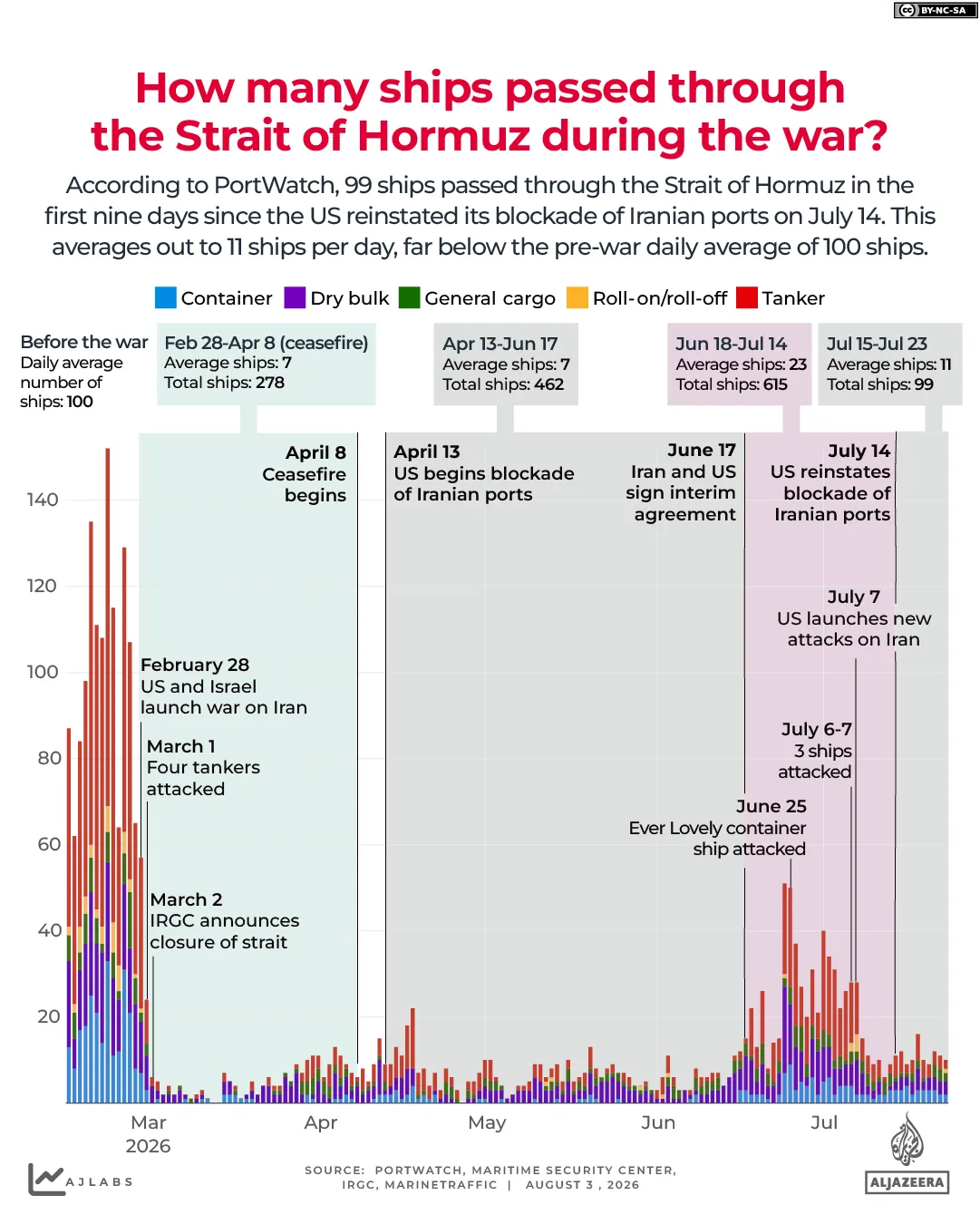
The Ministry of Foreign Affairs said earlier that a joint statement could be expected with Oman if a deal is reached to bring back some traffic to the strait, which has been mostly disrupted since the US and Israel attacked Iran on February 28.
Iran and Oman have agreed on the coordinates of routes to be taken by vessels through the waterway as part of the arrangement. Inbound traffic is to pass through a northern lane through Iranian territorial waters, while outbound traffic will go through a southern lane in Omani waters, coordinated with Iran.
US media have said the interim agreement is envisaged for 60 days and can be extended. They have also reported on discussions concerning naval mine clearance from a central corridor that could be utilised in the future, the passage of military vessels and a potential coordinated fee system for passing vessels.
There are questions over what will happen with a US naval blockade of Iran’s southern ports and a drawback of US military assets, which Iran has said will be necessary on the way to fully reopening the strait, through which about 20 percent of the world’s oil passes in peacetime.
Even more ambiguous are prospects of a broader long-term resolution that will also address the future of Iran’s nuclear programme, as well as years of harsh US sanctions over nuclear enrichment that have exacerbated economic shockwaves imposed against 90 million Iranians.
In the meantime, while military activity has significantly dropped across the region to give space to the Oman talks, tensions remain high and maritime security continues to dominate discussions.
The United Arab Emirates said a vessel belonging to the Abu Dhabi National Oil Company (ADNOC) was targeted by a missile while crossing the Strait of Hormuz on Saturday, but that there were no casualties.
In a statement, the UAE’s Ministry of Foreign Affairs said targeting commercial shipping and using the strait “as a tool of economic coercion or blackmail represents acts of piracy” by the IRGC “and constitutes a direct threat to the stability of the region, its peoples, and global energy security”.
The Iran-aligned Houthis in Yemen also continue to face off against Saudi Arabia and create disruptions for Saudi-linked vessels in the Red Sea and the Bab al-Mandeb Strait.
On Friday, the Houthis launched a deadly attack on an area of Marib controlled by the Saudi-backed, internationally recognised Yemeni government, with the government announcing a military response on several fronts on Saturday.
The Yemeni group also struck southwestern Saudi Arabia’s Najran on Thursday, a day after claiming two separate attacks on Saudi oil tankers.
Traffic in both the Bab al-Mandeb and Hormuz straits was down to just a handful of vessels on Wednesday on the back of the latest escalations, but has relatively rebounded while still far from unobstructed pre-war levels. Some ships have resorted to turning off their transponders to avoid being detected.
Global energy markets have once again welcomed the increasing prospects of a diplomatic agreement that could positively affect the Strait of Hormuz, with Brent crude standing at about $83 per barrel at Friday’s close.
Markets inside Iran also reacted positively on Saturday, the first day of the working week in Iran, with the national currency strengthening to 1.85 million rials against the US dollar, slightly recovering from all-time lows of about 1.94 million reached last week.
The main index of the Tehran Stock Exchange also climbed by 112,000 points or just over 2 percent to reach 5.52 million, near an all-time high.