Armed forces

Venezuelan Defense Minister Replaced amid Rodríguez Cabinet Overhaul

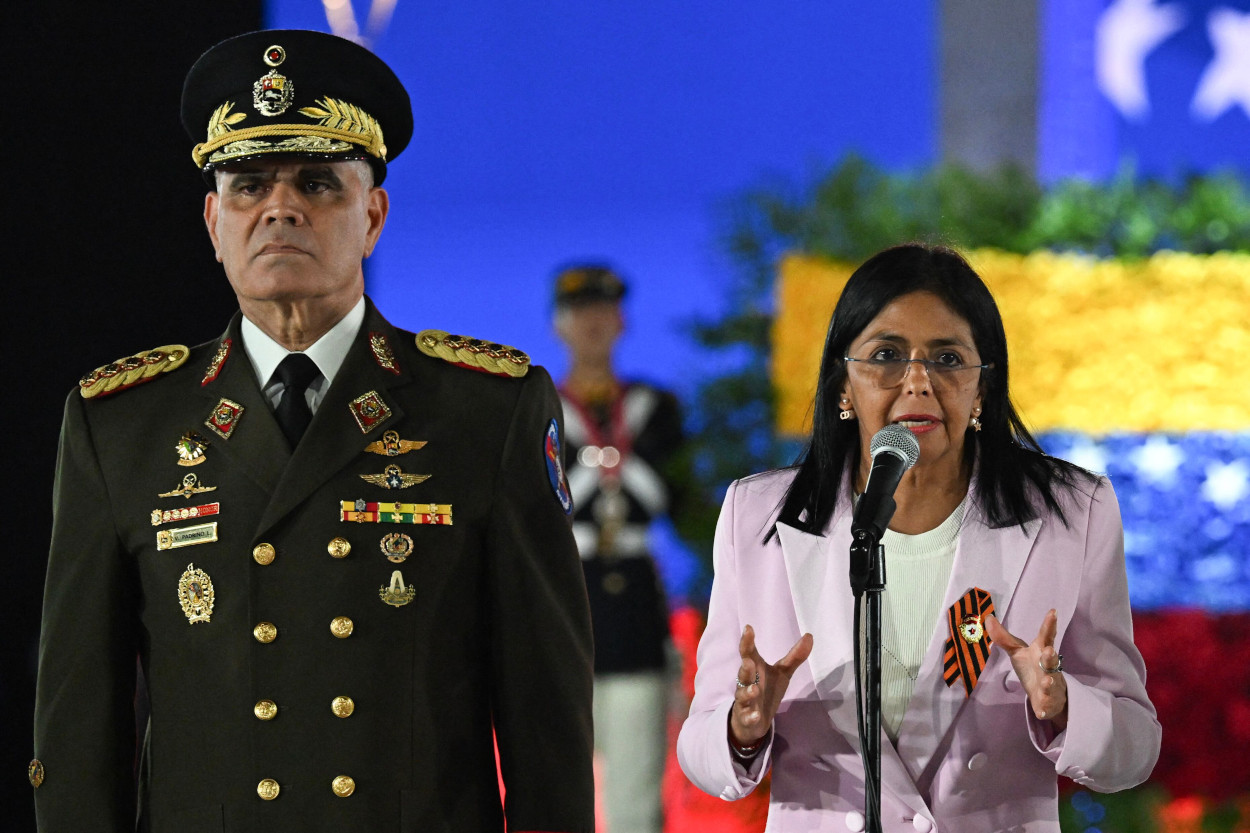
Acting President Delcy Rodríguez (right) thanked Padrino López (left) for his service as defense minister. (AFP)

Caracas, March 19, 2026 (venezuelanalysis.com) – Venezuelan Acting President Delcy Rodríguez tapped Gustavo González López as the country’s new defense minister on Wednesday, replacing Vladimir Padrino López after more than a decade in the post.

“We thank General Vladimir Padrino López for his loyalty and for having been the first soldier in the defense of our country for so many years,” Rodríguez wrote on social media. In response, Padrino thanked the acting president and stated that “serving the Homeland” had been his “highest honor.”

Padrino had served as defense minister since October 2014. The four-star general staved off a number of US-backed coup attempts, including the May 2020 “Operation Gideon” failed mercenary invasion. 

In 2025, the Biden administration announced a $15 million bounty for information leading to Padrino’s capture as part of a “narcoterrorism” indictment against several Venezuelan leaders, including President Nicolás Maduro. However, US officials have not presented evidence tying Venezuelan high-ranking officials to narcotics activities. 

Padrino’s removal follows the January 3 US military strikes against Venezuela that saw special forces kidnap Maduro and First Lady Cilia Flores. Despite months of defense exercises in the face of escalating US threats, Venezuelan forces, particularly air defenses, were quickly neutralized by US bombing and electromagnetic warfare on January 3.

The Venezuelan armed forces have yet to offer a complete account of the operation, including a definitive list of casualties that are said to surpass 100. Padrino condemned the US attacks and pointed to Washington’s military superiority, arguing that it would have been “suicidal” for Venezuelan air force jets to take off and engage with the enemy.

The 60-year-old Gustavo González López previously held posts as interior minister and director of intelligence services and has been under US sanctions since 2015. A career military officer, he briefly studied at the School of the Americas in the early 1990s. 

Following the January 3 attacks, González was chosen by Rodríguez to lead the presidential guard. He was pictured alongside the acting president during a visit to Caracas from CIA Director John Ratcliffe on January 16. General Henry Navas will replace González as Commander of the Presidential Guard of Honor.

Rodríguez announced several other cabinet changes on Wednesday. She had previously replaced the industry, oil, tourism, healthcare, communications, and eco-socialism ministers as well.

Jorge Márquez and Rolando Alcalá will take over the housing and electricity portfolios, respectively. Furthermore, Supreme Court magistrate Carlos Alexis Castillo will serve as labor minister amid rising demands for minimum wage increases and labor rights, replacing veteran official Eduardo Piñate.

Former Caracas mayor Jacqueline Faría was likewise appointed as the new transport minister, replacing Aníbal Coronado after two months in the post. Faría’s appointment followed a public transportation strike in Caracas as private bus operators push to increase single-ride fares to 120 bolívars, roughly US $0.25 at the present exchange rate.

Wednesday’s cabinet changes also included Raúl Cazal becoming culture minister, replacing Ernesto Villegas, who had held the post since 2017. Villegas is one of the candidates shortlisted by the Venezuelan National Assembly for the vacant ombudsman post.

Finally, Rodríguez picked academic Ana María Sanjuan as minister of higher education, replacing Ricardo Sánchez. A trained psychologist and professor at the Central University of Venezuela (UCV), Sanjuan had participated in political dialogue initiatives as a representative of moderate opposition sectors.

Edited by Lucas Koerner in Fusagasugá, Colombia.


Source link

European hotspot Greece given UK tourist travel update amid Iran conflict

Brits heading to Greece have been urged to check the latest travel advice as tensions linked to the Iran conflict raise wider security concerns across the region

Brits planning a Mediterranean getaway are being urged to check official travel guidance before heading abroad. Experts say no trip can ever be guaranteed completely safe amid growing tensions linked to the Iran conflict.

The latest reminder comes from the Foreign, Commonwealth & Development Office, which publishes travel advice for British holidaymakers. Its guidance for Greece stresses that travellers should read all advice carefully before departure.

On the UK Government travel advice website, officials warn: “No travel can be guaranteed safe.” It urges visitors to research destinations carefully and make sure they have comprehensive travel insurance before travelling.

The guidance also highlights passport rules that travellers must meet before entering the country. Greece follows Schengen Area rules, meaning passports must have been issued within the last 10 years and remain valid for at least three months after leaving the region.

British tourists can visit Greece without a visa for short trips. According to the government, travellers can stay in the Schengen area for up to 90 days within any 180-day period for tourism, family visits or business meetings.

However, new border procedures are also on the horizon for travellers heading to Europe. The European Union is introducing its Entry/Exit System, which will require visitors to register biometric details such as fingerprints or a photo when entering the bloc.

The system is expected to become fully operational from April 10. Officials warn the process could add several minutes to border checks for each passenger.

It comes as tensions continue to grow in the Middle East following the ongoing conflict involving Iran. The crisis has raised wider regional security concerns across parts of the eastern Mediterranean.

Neighbouring Cyprus, which lies roughly 800km from mainland Greece and around 300km from parts of the Middle East, has already been monitoring the situation closely. The island has previously served as an evacuation hub for foreign nationals during regional crises.

According to reports cited by international media and the United Nations, the latest escalation has fuelled fears of broader instability across the region. Military exchanges between Iran and its rivals have already heightened security alerts across several neighbouring countries.

The UK has also stepped up its military presence in the region. The HMS Dragon has been deployed to Cyprus as a precautionary measure. The Royal Navy says vessels may be deployed to support British nationals and regional security as required.

Despite the geopolitical tensions, Greece remains one of Europe’s most popular holiday destinations. Data from the Greek National Tourism Organisation shows the country welcomed more than 36 million international visitors in 2024.

Officials say the key message for travellers is to stay informed. Checking the latest government advice and ensuring documents meet entry requirements can help avoid problems when travelling abroad.

Source link

Foreign Office Cyprus update: terror attacks cannot be ruled out

The Foreign Office has issued fresh security warnings for British tourists after a drone strike on RAF Akrotiri raised fears the Middle East conflict could spill into the Mediterranean

Britons heading to Cyprus have been issued a fresh security warning after the Foreign Office said terror attacks “cannot be ruled out” on the popular holiday island.

The updated travel advice came days after a suspected drone strike hit the RAF’s Akrotiri airbase on March 2 2026, in an incident linked to the escalating war in the Middle East. Officials say the attack caused only minimal damage and no casualties – but it has raised fears the conflict could spill closer to Europe.

The Foreign, Commonwealth and Development Office (FCDO) updated its guidance on Thursday, warning travellers about the risk of further incidents and urging British nationals to stay alert.

It said: “Regional escalation poses significant security risks and has led to travel disruption.”

Cypriot authorities have warned that the island could be drawn into the crisis because of the British sovereign bases at Akrotiri and Dhekelia, which are used for operations across the region.

With British and allied aircraft operating from RAF Akrotiri, security analysts suggest the island has gained strategic importance in the current confrontation involving Iran and its proxies. RAF Akrotiri is the UK’s largest overseas airbase and has been deployed for missions against ISIS in Syria and Iraq as well as strikes on Houthi targets in Yemen.

Against that backdrop, the Foreign Office has updated its Cyprus guidance to say terrorist attacks remain a possibility. It also warned that the wider regional situation could affect travel.

The FCDO urged Brits visiting the island to:

  • monitor local and international media
  • follow instructions from local authorities
  • keep travel plans under review
  • ensure travel documents are up to date

Officials also said Brits inside the British sovereign base areas should follow instructions issued by the Sovereign Base Areas Administration.

Hundreds of thousands of Brits visit

Cyprus is one of the most popular holiday destinations for UK travellers, with hundreds of thousands of Brits visiting each year. While officials stress that tourist areas remain open and functioning normally, the updated warning reflects growing concern that the regional conflict could bring further security incidents.

The Foreign Office said travellers should remember that “no travel can be guaranteed safe” and urged anyone visiting the island to sign up for government travel alerts.

Source link